
Review · THAILAND
Authentic trek only walk in Chiang Rai jungle
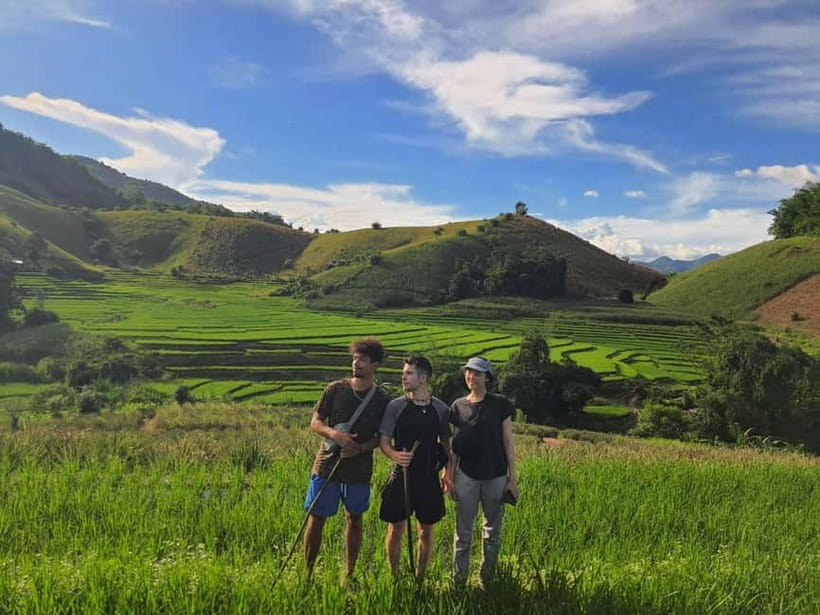
Chiang Rai’s best jungle day is not a gentle stroll. It is a proper hike, with steep slopes, fallen bamboo, rocky sections, village paths, and a cool waterfall waiting at the end. The reward is a day that feels far removed from town, with time for bamboo cooking and visits to several hill communities.
I like the mix of hands-on food and real walking. I also like the guides, especially James and Wat, who bring humor, explain the plants and local life, and keep an eye on the group. The main caution is simple: moderate fitness may undersell the route. If steep climbs, slippery ground, or ducking under branches sound difficult, choose an easier outing.
Key points to know before booking
- The hike is genuinely strenuous: Expect steep ascents, rocky ground, jungle trails, and obstacles such as fallen bamboo.
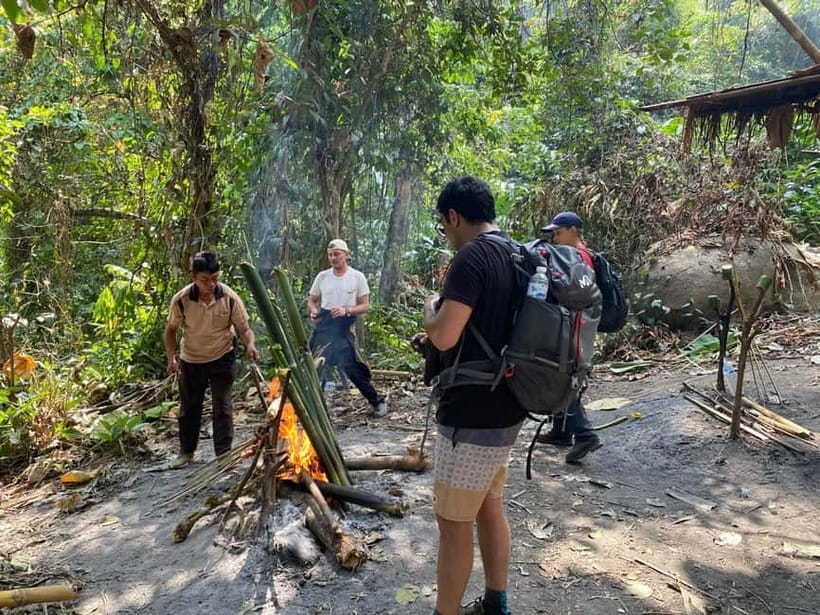
- Lunch is part of the adventure: You help prepare Thai food in bamboo and banana leaves, then eat it in the forest.
- The waterfall is the day’s natural reward: Bring swimwear and a towel for a refreshing stop after the hardest walking.
- Several communities are included: The route visits Lisu, Chinese, Akha, and Lahu villages, giving the day a strong cultural focus.
- James and Wat are memorable guides: The team is praised for clear English, jokes, local knowledge, and handmade bamboo souvenirs.
- The $57 price covers useful basics: Hotel transport, a TAT guide, and lunch are included, but drinks beyond water cost extra.
A real jungle walk, not a quick forest stop
This nine-hour outing begins with hotel pickup in Chiang Rai at 9 am. You should wait in the lobby about 10 minutes early, then settle in for the drive toward the walking route.
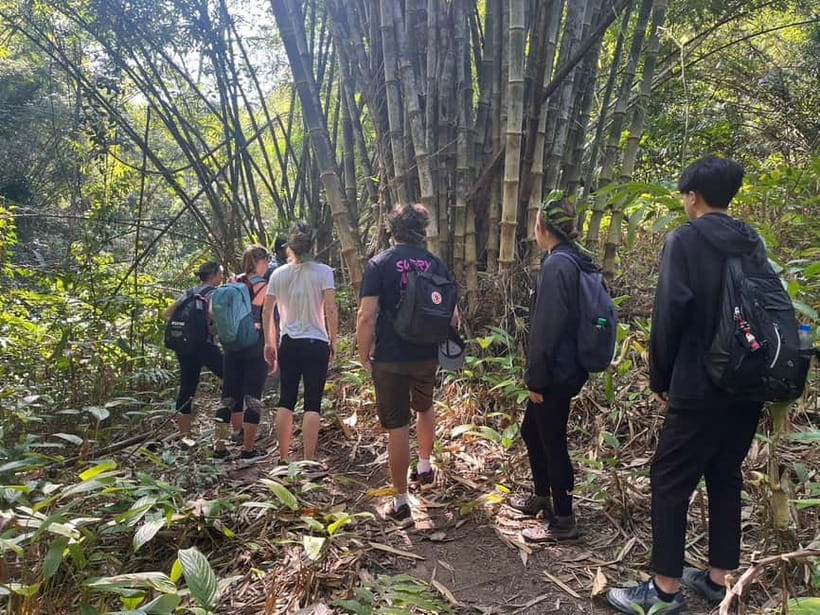
The day is built around walking rather than sightseeing from a vehicle. That distinction matters. Many northern Thailand excursions include a short forest path between stops, but this one gives you several hours on foot. The route can involve steep climbs, rough ground, and sections where you must use care with your footing.
You may also need to duck under fallen bamboo or clamber over uneven sections. The terrain changes as you go, so sturdy hiking shoes with good grip are far more useful than casual trainers. Keep your hands free, too. A small daypack is better than a shoulder bag that swings around while you climb.
The route runs through forest, plantations, village areas, and open viewpoints. That variety keeps the day interesting, but it also means you cannot treat the trek like a flat walk. One participant had to leave near the beginning because the climb was too demanding, so take the fitness warning seriously.
More Walking Tours in Thailand:
- Bangkok: City Highlights Temple and Market Walking Tour
★ 4.5 · 3,990 reviews - Bangkok: Grand Palace and Wat Phra Kaew Guided Walking Tour
★ 4.4 · 2,417 reviews - Bangkok: Wat Pho and Wat Arun Guided Walking Tour
★ 4.6 · 1,720 reviews
Lisu and Chinese villages give the morning a human focus
The first village stop introduces you to Lisu life and local traditions. The visit is not presented as a staged show. Instead, it gives you a chance to see a different part of northern Thailand and to learn about the people who live in the hills.
The next stop is a Chinese village, adding another thread to the area’s mix of communities. These visits help explain why northern Thailand cannot be reduced to one single local culture. Your guide can provide context in English or Thai, and the value of the stops depends in part on your willingness to look, listen, and ask respectful questions.
Keep your expectations practical. This is a short cultural visit within a physically active day, not a long museum-style lesson or a formal village tour. Shopping and photo stops are included in the schedule, but the focus remains on walking and seeing how communities fit into the surrounding hills.
The tour also continues to Akha and Lahu villages later in the route. Seeing several communities in one day makes the cultural side stronger, though you should remember that short visits can only offer an introduction. Treat people and homes with care, ask before taking photographs, and let your guide set the tone.
Tea plantations bring a calmer stretch to the walk
After the village visits, the route passes through tea plantations. This is one of the more peaceful sections of the day, with rows of tea plants and the smell of fresh leaves replacing the tighter feel of the forest.
The plantation stop also breaks up the physical rhythm. You get a chance to slow down, take photographs, and enjoy broad views before returning to denser trails. The scenery changes enough that the walk never feels like one long stretch of identical jungle.
Tea is an important part of northern Thailand’s hill economy, so the plantation adds useful local context to the outing. You are not simply looking at pretty rows of plants. You are seeing one of the crops that gives these highland communities a livelihood.
The route may also include other plants and fruit growing in the area. One day included wild fruit and rubber trees, giving the guide a chance to point out details that you might otherwise walk past. This is where a good guide adds real value. James, Wat, and the wider team are praised for making the walk both informative and entertaining.
Bamboo cooking turns lunch into the main event
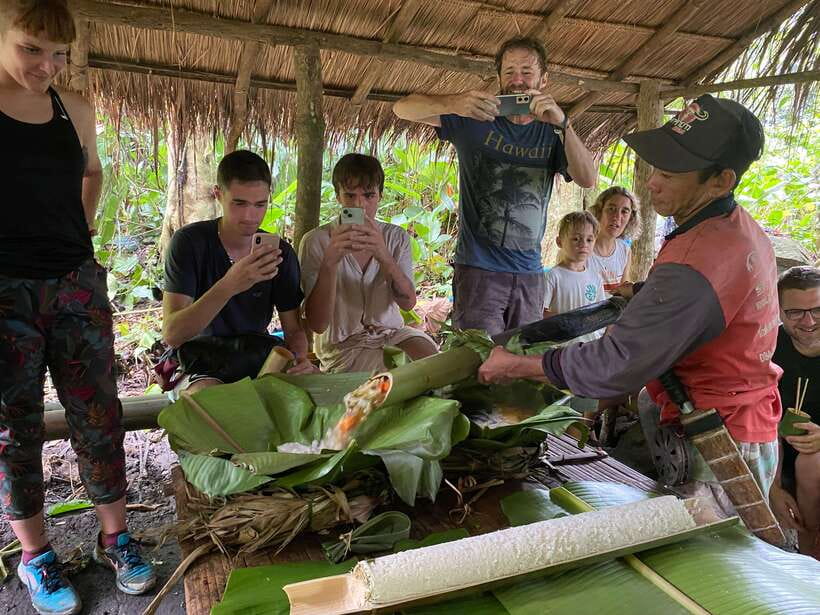
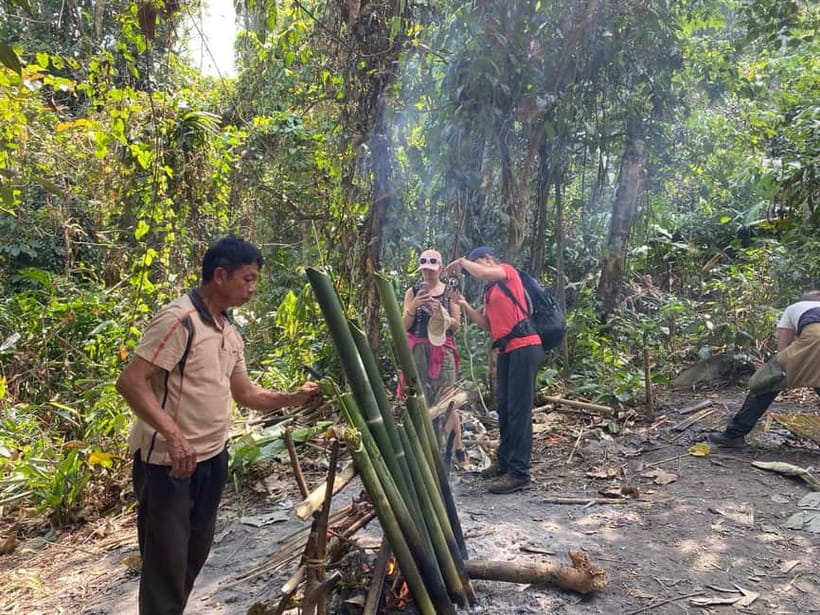
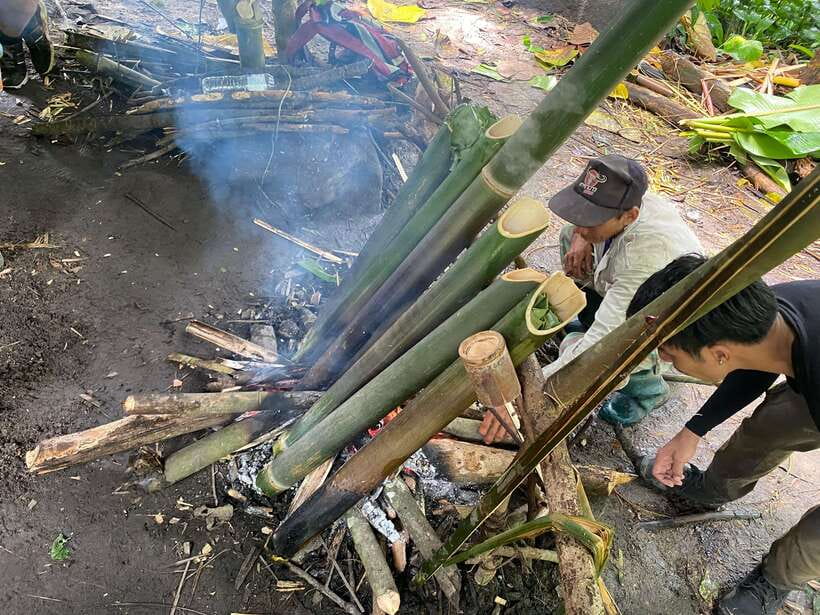
The strongest part of the day for many people is lunch. Rather than stopping at a restaurant, you help prepare traditional Thai food using bamboo gathered from the jungle and banana leaves.
This is not just a meal placed in front of you. The cooking gives the group a practical activity after the first major stretch of walking. You see how bamboo can serve as a cooking vessel, then sit down to eat the finished food in the forest.
The meal is included in the price, and the food receives especially strong praise. Expect traditional Thai flavors, though the exact dishes are not specified. If you have allergies, dietary restrictions, or a medical condition, tell the operator before booking so the meal and day can be handled safely.
The cooking also makes the experience feel more connected to the setting. You are using a material from the surrounding jungle, preparing food with simple tools, and eating far from a standard tourist restaurant. It is the sort of activity that gives you a story to bring home, not just a photograph.
Some guides also carve small bamboo ornaments or souvenirs for the group. These handmade keepsakes are a thoughtful extra, though they should be viewed as a personal touch rather than a guaranteed item listed among the inclusions.
Same streets, a different guide:
- Chiang Mai: 3 Hour Old City and Temples Guided Walking Tour
★ 4.6 · 1,568 reviews - Phuket:Beach walk with elephants, rain & care. 2.5 hours
★ 4.9 · 969 reviews - Phuket: Bukit Elephant Park Sanctuary Walk and Feed Tour
★ 4.9 · 926 reviews - Bangkok Authentic Tasting Thai-Chinatown Walking Food Tour
★ 4.9 · 852 reviews
The waterfall earns its place on the route
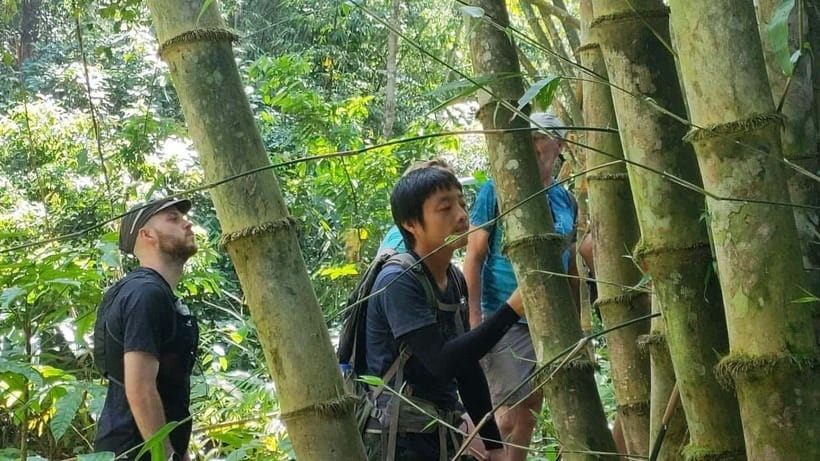
After lunch, the trail continues through thicker forest toward a waterfall. This section can be hot and tiring, which makes the water a welcome finish to the harder climbs.
Swimming is part of the experience, so pack swimwear and a towel where you can reach them. The water is described as clear and refreshing, and cooling off here is one of the day’s best rewards. You may also want a waterproof pouch for your phone or camera, though that item is not provided.
The waterfall is not reached by a simple roadside stop. You walk to it through the jungle, which gives the arrival more impact. The effort matters: after steep ground and warm conditions, the chance to get into cool water feels earned.
Take care on wet rocks. The route is already uneven, and moving between trail and water requires attention. If you are not a confident swimmer, you can still enjoy the stop without entering the water, but the activity is especially suited to people who want an active day with a swim.
Akha and Lahu villages round out the afternoon
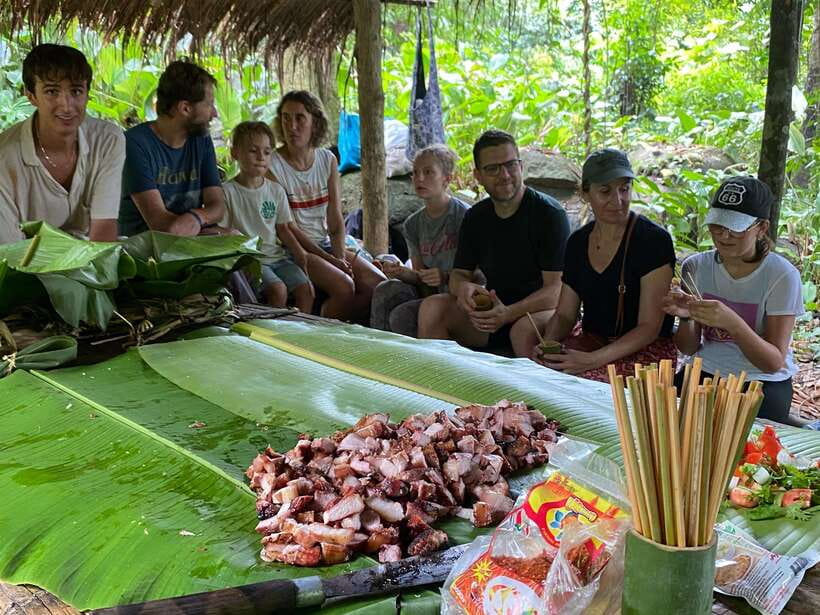
The later village visits add the Akha and Lahu communities to the day. By this point, you will have seen several kinds of settlement and spent enough time in the hills to understand that the villages are part of a larger working environment, not isolated photo backdrops.
Your guide can explain customs and daily life while you walk through or near the communities. The setting is also quieter than the main tourist areas around Chiang Rai, with jungle sounds and rural views shaping the experience.
Still, do not expect long, detailed visits at every village. The day has a lot to cover, and the walking takes time. The cultural stops work best as brief windows into local life, paired with questions and careful observation.
The route then returns toward Chiang Rai. The full outing lasts about nine hours, so you should expect to be tired by the end. That is part of the appeal for fit hikers, but it may be a drawback if you want a relaxed sightseeing day.
Guides make a practical difference
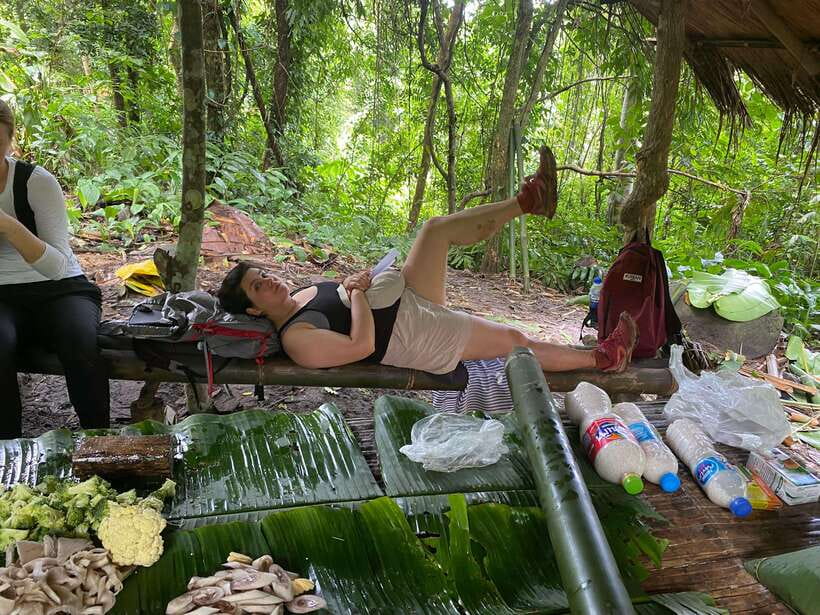
The guiding team is one of the tour’s strongest features. James, Wat, Tee, and Sammy are among the names associated with different departures, and James and Wat receive particular praise for their humor, English, and attention to the group.
A guide matters here for more than storytelling. Jungle trails can be confusing, steep, or awkward underfoot. A good leader helps set a sensible pace, points out hazards, explains plants, and makes sure the group stays together.
The guides also help the day feel social without forcing it. Cooking lunch, sharing the trail, and stopping at the waterfall naturally bring people together. A few friendly dogs may even accompany the group for part of the day, depending on the departure.
The tour is offered with English or Thai-speaking guides. The guide is described as TAT-approved, and hotel pickup and drop-off are included. One transport complaint involved a strong diesel smell in the vehicle, so if you are sensitive to odors or motion, it is worth keeping that possibility in mind. It appears to be an occasional issue rather than the main character of the trip, but practical warnings are useful.
What the $57 price really covers
At $57 per person, the tour offers reasonable value if you plan to use all its parts. You are paying for a full day, hotel transport, a guide, a substantial lunch, several village visits, a tea plantation stop, a waterfall, and a long guided walk.
The included bamboo meal is more meaningful than a standard lunch stop because it is also an activity. Transport is another cost you avoid arranging separately, especially if your hotel is in Chiang Rai and the trailhead is outside town.
Drinks beyond water are not included. Bring enough water for a demanding day, along with sunscreen and insect repellent. The schedule is long, so a small snack may also be sensible, although no snack inclusion is specified.
The value depends heavily on your fitness and interests. If you want a serious walk, local contact, and a hands-on meal, the price is attractive. If you mainly want a few scenic photographs and easy access to a waterfall, you may not get your money’s worth because the physical effort is central to the experience.
What to pack for the nine-hour outing
Pack light, but do not treat this as a casual day trip. I would bring:
- Hiking shoes with solid grip
- Sun hat and sunscreen
- Insect repellent
- Swimwear and a towel
- Water and a camera
- A small bag that leaves both hands free
Wear clothes that can handle heat, dirt, and water. The trail may require you to bend under branches or steady yourself on rough ground, so loose, practical clothing is better than anything delicate.
Tell the operator about dietary restrictions and medical conditions before the trip. The activity requires a moderate level of fitness, though the steep sections suggest that strong walkers will be more comfortable than people who only occasionally hike.
The route can feel different in wet conditions. One departure during the rainy season was described as a private outing, but you should not assume every date will be private. Rain can also make trails more slippery, so ask about current conditions if your trip falls during a wet period.
Who should book this experience?
I would choose this for an active visitor who wants more than temples and vehicle-based stops around Chiang Rai. It suits people who enjoy a full day outdoors, like meeting local communities, and are willing to work for their views and swim.
It is also a good fit if food is part of your travel style. Cooking lunch in bamboo gives the day a clear identity, and the meal breaks up the walking in a useful way.
I would not recommend it for anyone with mobility difficulties, poor balance, or a strong dislike of steep ground. Families and older visitors should assess the route carefully rather than relying only on the phrase moderate fitness. The terrain can be intense, and one participant had to leave early because the climb was too much.
The tour is also less suitable if you want a quiet, private day by default. Group arrangements can vary, and the activity includes social cooking and shared walking.
Should you book the Chiang Rai jungle trek?
Book it if you want a proper northern Thailand hike with a waterfall, hill villages, tea plantations, and a memorable bamboo-cooked lunch. James, Wat, and the wider guide team add warmth and humor, while the varied route gives you far more than a short forest walk.
Skip it if you need flat paths, polished transport, or a tightly controlled sightseeing schedule. The best reason to choose this trip is the combination of effort and reward: you work through the hills, cook your own lunch, cool off at the waterfall, and return to Chiang Rai with a better sense of the countryside beyond town.
FAQ
How long does the Chiang Rai jungle trek last?
The experience lasts about nine hours, including hotel pickup, guided walking, village visits, lunch, and the return to Chiang Rai.
What time is hotel pickup?
Daily pickup is scheduled for 9 am. You should wait in your hotel lobby 10 minutes before the scheduled time.
Is hotel transport included?
Yes. Hotel pickup and drop-off in Chiang Rai are included.
Which languages are available?
The live guide service is available in English and Thai.
What villages does the tour visit?
The route includes Lisu, Chinese, Akha, and Lahu villages.
Is swimming part of the experience?
Yes. The route reaches a waterfall where you can cool off in the water. Bring swimwear and a towel.
How difficult is the hike?
The hike requires a moderate level of physical fitness, with steep climbs, varied terrain, jungle trails, and some sections involving fallen bamboo or rocky ground.
Is lunch included?
Yes. Lunch is included, and you help prepare traditional Thai food using bamboo and banana leaves. Drinks other than water are not included.
What happens if I need to cancel?
You can cancel up to 24 hours before the activity for a full refund. You can also reserve now and pay later, subject to the booking terms.
New routes in Thailand
- Local Life, Culture & Food Walking Tour at Chinatown★ 4.7 · 119 reviews
- Khao Lak: Full-Day Khao Sok Jungle Walk and Canoeing Tour★ 4.7 · 149 reviews
- Chiang Mai: Temple And City Walking Tour Part I★ 4.7 · 244 reviews
- Chiang Mai: Historic Temples and City Guided Walking Tour★ 4.7 · 650 reviews
- Chiang Mai Untouched Elephant: Nature Walk & Waterfall Trek★ 4.7 · 77 reviews
- Chiang Mai: Local Food and Markets Guided Walking Tour★ 4.3 · 175 reviews
- Bangkok: City Highlights and Landmarks Private Walking Tour★ 4.3 · 142 reviews
- Bangkok: Chinatown by Night Walking Tour★ 4.5 · 162 reviews
Thailand Walking Tours, compared.

City Highlights Temple and Market Walking Tour
Read our review →
Grand Palace and Wat Phra Kaew Guided Walking Tour
Read our review →
Chiang Mai: 3 Hour Old City and Temples Guided Walking Tour
Read our review →
Phuket:Beach walk with elephants, rain & care. 2.5 hours
Read our review →
Phuket: Bukit Elephant Park Sanctuary Walk and Feed Tour
Read our review →
Bangkok Authentic Tasting Thai-Chinatown Walking Food Tour
Read our review →
Chiang Mai: Temple And City Walking Tour Part I
Read our review →Browse the lists this tour appears in