
Review · ATHENS
Athens: Guided Mythological Walking Tour
Athens is easier to understand when you connect its streets and monuments with the old stories that shaped them. This two-hour mythology walk links gods, lovers, monsters, and divine grudges with places you might otherwise pass without a second glance. Guides including Penelope and Christina have led it with humor, detail, and plenty of time for questions.
I like the route’s mix of famous landmarks and lesser-noticed corners. I also like that the tour explains ancient social customs and daily life, not just the family drama of Zeus and company. The main caution is that the storytelling can be quite detailed, so this is better for curious minds than for anyone seeking a light stroll with only a few quick legends.
Key points to know before you book
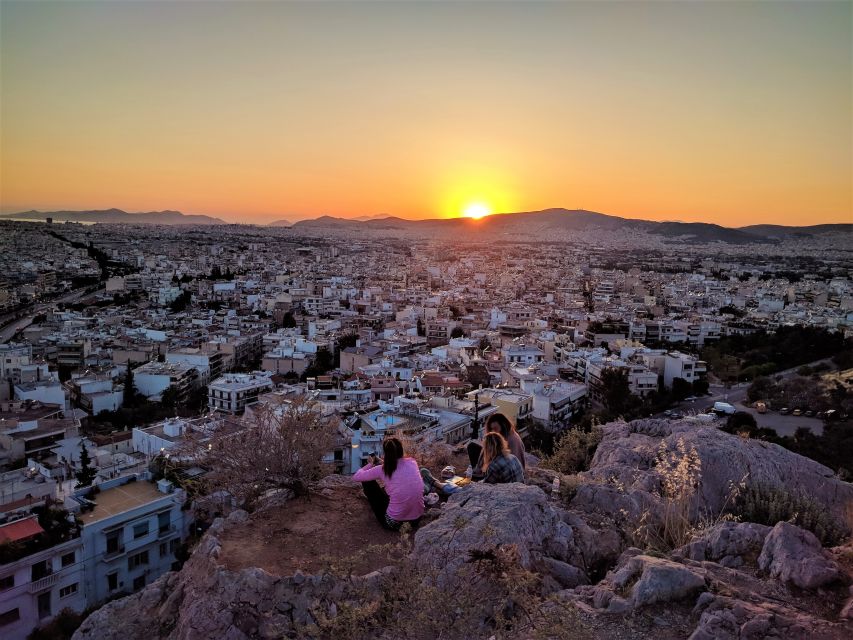
- A city walk with a mythological lens: See central Athens, Syntagma, Plaka, and Monastiraki while learning how gods and legends relate to the city.
- Guides who make the difference: Penelope receives especially strong praise for her storytelling, humor, English, and ability to keep children and adults involved.
- A useful mix of myth and history: Expect stories about Zeus, Athena, satyrs, nymphs, human customs, architecture, statues, and ancient society.
- A two-hour route with no site admissions: You walk past important monuments, but entrance fees, food, and hotel transfers are not included.
- Good for families and mythology fans: Children around 10 and 11, teenagers, adults, and serious mythology enthusiasts have all found material to enjoy.
- Comfortable shoes matter: The route covers several central neighborhoods, with much of the experience taking place outdoors.
Why mythology helps you see Athens differently
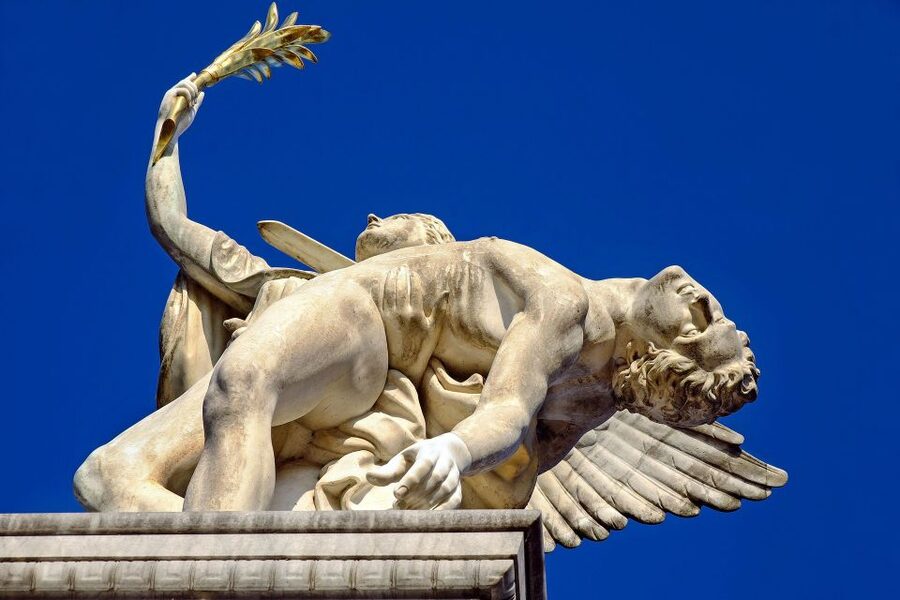
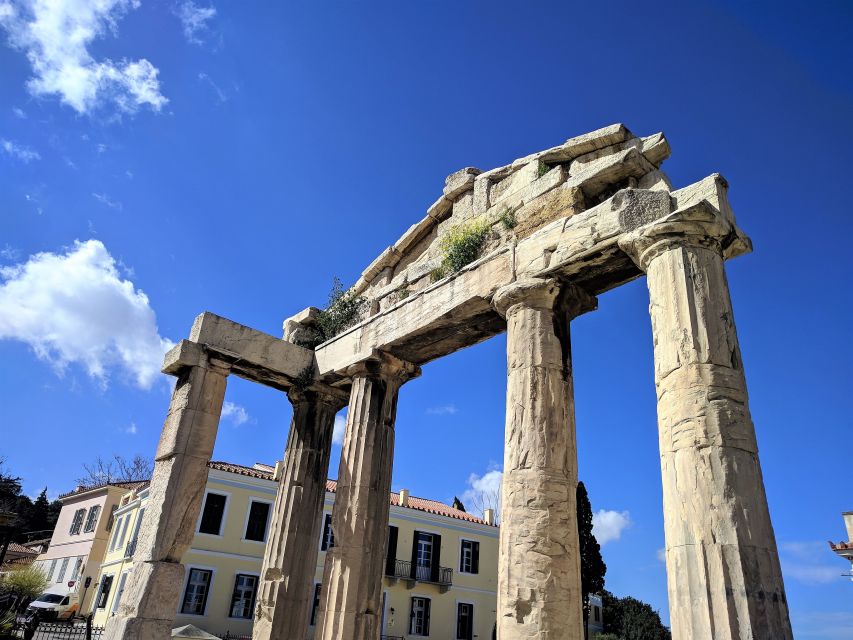
Athens can feel like a collection of ruins, neoclassical buildings, busy streets, cafés, and grand squares. A mythology guide gives those pieces a connecting thread. A statue is no longer just decoration. A building may point to a god, a hero, an idea about human behavior, or a story about how Athens understood its place in the world.
The tour focuses on the less polished side of Greek mythology too. These tales are not only about brave heroes and noble gods. They include jealousy, seduction, deception, punishment, arguments, affairs, and transformations. That makes them surprisingly useful for understanding ancient values and fears.
I especially like the way this approach can reveal the gap between modern ideas and ancient Greek society. You hear about the relationship between humans and gods, but also about customs, power, family, pride, and the way Athenians explained the world around them.
The tour is conducted in English. Penelope has guided many of the recent departures, while Christina has also led the walk. Penelope is repeatedly praised for keeping a group engaged, answering questions clearly, and adjusting her presentation for children. That matters here because the subject includes many names and overlapping family connections.
More Guided Walks in Athens:
- Athens: Acropolis and Parthenon Guided Walking Tour
★ 4.6 · 5,882 reviews - Acropolis and Parthenon Guided Walking Tour
★ 5.0 · 4,755 reviews - Acropolis: Acropolis and Parthenon Guided Walking Tour
★ 4.7 · 3,442 reviews
Starting at Korai 4 and the Academy of Athens
The meeting point is in front of the Starbucks café at Korai 4. This is a practical central starting point, though you should allow enough time to find the exact spot in the city center.
From there, the route moves toward the Academy of Athens. The walk to this area takes about 20 minutes according to the planned route. This opening stretch gives the guide time to introduce the main gods, the role of myth in Greek culture, and the difference between a simple children’s tale and a story that once helped explain politics, nature, morality, and human behavior.
The Academy of Athens is especially useful as an early stop because its architecture carries classical Greek references. You may learn how buildings, statues, and decorative details connect to gods and ideals from antiquity. This is one of the tour’s strengths: you are not only listening to a story in the abstract. You are looking at Athens while the guide explains what you are seeing.
Do not expect an archaeological-site visit here. The activity does not include entrance tickets, and the main focus is on the outdoor route and the guide’s explanation.
The Numismatic Museum and overlooked details

The route continues toward the Numismatic Museum, with around 15 minutes of walking. The museum itself is a notable Athens landmark, but this activity does not include admission. You see the area as part of the street walk and learn from the guide’s interpretation.
This section helps broaden the tour beyond the most familiar Olympian gods. Greek culture was not built only around grand temples. Coins, symbols, civic identity, portraits, and public images all carried meaning. The guide may use nearby architecture or decorative details to explain how ancient ideas continued to shape later Athens.
That is also where the tour earns its price for people who like close observation. Several participants have said they began noticing statues, buildings, and small features they had walked past before. You will not be rushed from one famous sight to the next with only a date and a name. The goal is to teach you how to look.
If you prefer a tour built around entering major museums, this section may feel limited. The value is in the explanation, not in seeing the museum’s interior collection.
Akadimias and the city between major sights

The walk through Akadimias takes about 20 minutes. This part of the route is less about one dramatic monument and more about how the modern city sits alongside classical references.
A good guide can make this stretch useful by keeping the story moving while you walk. Penelope has been praised for linking philosophy, literature, history, and mythology rather than treating each subject as a separate box. That suits Athens, where the old stories are tied to ideas about justice, pride, fate, beauty, and the limits of human power.
The tour’s detail level is worth considering. Some people want a relaxed introduction with three or four famous myths. This experience can go much further into characters, relationships, symbolism, and the way stories changed over time. You may hear enough names and connections to require a little concentration.
I see that as a benefit if you enjoy mythology, anthropology, literature, or ancient history. If you are walking in the hot middle of summer and want a simple orientation, the amount of information may feel heavy. Wear light clothing, bring water, and expect to pay attention.
More Walking Tours in Athens:
- Greek Food Walking Tour in Athens
★ 5.0 · 4,740 reviews - Athens: Guided Greek Food Walking Tour with Tastings
★ 4.9 · 2,859 reviews - Acropolis monuments & Parthenon Walking Tour with Optional Acropolis Museum
★ 5.0 · 2,678 reviews - Athens Acropolis and Parthenon Walking Tour
★ 4.5 · 1,355 reviews
Syntagma Square and the public face of Athens
The route reaches Syntagma Square after another planned 20-minute walk. This is one of the city’s most important public spaces, and it gives the tour a change of scale. Instead of narrow streets and individual statues, you get a broad setting where modern Athens, national identity, public ceremony, and older Greek symbolism meet.
Syntagma is a useful orientation point for your stay. Even if you have already passed through it, the guide may help you connect the square to the wider city and explain details you missed on your own. One participant who had already spent several days in Athens still found new places and new information along the route.
The mythological material does not stop simply because the setting is modern. Ancient stories continued to influence Greek art, civic imagery, and the way later generations presented the country’s past. The guide’s job is to show those links without turning the walk into a dry lecture.
In summer, shade and heat are real factors. Penelope has been praised for choosing shade when possible, taking breaks, and keeping the group comfortable. That is reassuring, but conditions depend on the day and the exact route, so bring a hat and water.
Mitropoleos and the shift toward old Athens
The walk continues to Mitropoleos, with about 15 minutes listed for this section. Here, the route begins to feel more connected to the older central neighborhoods and the layered character of Athens.
This is a good place to notice how different periods sit close together. The tour does not promise entry into every monument, but it does give you a way to read the streets. The guide may point out how religious buildings, public statues, and architectural forms reflect changing beliefs and older classical references.
The mythology is also tied to human behavior. Ancient stories often explain why people suffer, why gods punish arrogance, why desire causes trouble, or why a city claims the protection of one deity rather than another. Those themes make the walk more than a parade of names.
I like this part because it gives the legends some social weight. You learn not only what happened to a god or hero, but what the story may have told Athenians about marriage, power, loyalty, pride, and duty.
Plaka, where the stories become easier to picture
The route then enters Plaka, with about 30 minutes planned for the walk. This is the most atmospheric part of the experience. Its streets provide a pleasant setting for stories about gods, nymphs, satyrs, heroes, and humans crossing paths.
Plaka is also where the tour’s promise of seeing Athens through a different lens is clearest. You may have already wandered here for food or shopping, yet a guide can show you details that make the area feel less familiar. Statues, facades, corners, and monuments become prompts for stories.
This is not a tour of Plaka’s restaurants, and food is not included. Still, the neighborhood is useful as part of a first-day orientation. A previous guide, Christina, has offered restaurant, café, and bar suggestions after the walk. Such recommendations are not a formal inclusion, so treat them as a possible bonus rather than something guaranteed with every guide.
Families should pay attention to the tone of the myths. Greek mythology includes romance, violence, revenge, and adult themes. The guides have kept children and teenagers engaged, including children around eight, ten, and eleven, but parents may want to decide how much mythological drama suits their own family.
Finishing in Monastiraki
The walk ends in Monastiraki after the Plaka section. This is a useful finish because you are left in a central area with many options for continuing your day. The experience does not include hotel drop-off, so you make your own way onward.
The route is advertised as two hours. The walking sections listed in the plan are approximate and add up to more than a simple point-to-point stroll, so the pace may feel purposeful. The exact balance between walking, stopping, and storytelling can vary with group size, questions, weather, and the guide.
That flexibility is part of the appeal. Small groups can become almost conversational, and low-season departures may have only a few people. In that setting, you can ask about a confusing genealogy, a strange punishment, or the meaning behind a statue without feeling like you are holding up a large crowd.
How much value do you get for $47?
At $47 per person, this is not the cheapest way to walk around central Athens. You are paying for an English-speaking guide and a prepared theme, not for transport, meals, or access to archaeological sites.
The value makes sense if you want interpretation. A free wander through Athens can show you the same streets, but it will not necessarily explain why a statue matters, how myths connect to architecture, or what ancient stories say about social customs. The guide’s commentary is the product.
I would book this early in an Athens stay if you want help getting your bearings. It covers several central districts and can point you toward monuments and streets worth revisiting. I would not book it as a substitute for the Acropolis, a museum visit, or an archaeological tour. You see important places from the outside, but you do not receive entry to the sites.
The price is easier to justify for a small group, a family with children, or anyone who already knows the basic myths and wants more context. It is less compelling if you only want quick photographs or a short, casual walk.
Free cancellation is available up to 24 hours before the start time, and you can reserve while paying later. Those policies help if your Athens schedule may change, but the main booking decision should still come down to your interest in the subject.
Who will enjoy this Athens mythology walk?
I would recommend it to:
- Mythology fans who want more than the familiar stories of Zeus, Athena, and Hercules.
- Families with older children and teenagers who enjoy stories and can handle a fairly detailed presentation.
- First-time visitors who want a central-city orientation tied to culture and legend.
- Returning visitors who have already seen the major sights and want to notice less obvious details.
- Students and readers interested in philosophy, literature, anthropology, and the development of Greek culture.
- People who like conversation, since smaller departures allow more questions and personal explanation.
I would be cautious if you dislike names, family connections, or long explanations. The tour can be fun, but it is not shallow entertainment. Several guides have been praised for the amount of information they provide, and that same strength may overwhelm anyone looking for only a few amusing tales.
Practical advice for a better walk
Wear comfortable walking shoes. The route crosses several central neighborhoods, and even a two-hour city walk feels longer when your footwear is poor.
Bring water, especially from late spring through summer. A hat is sensible, too. Guides have made an effort to use shade and take breaks in hot weather, but Athens can still be intense.
Arrive at the Starbucks café in front of Korai 4 with a little spare time. The meeting point is specific, and a calm arrival is better than starting the tour while searching the surrounding streets.
Ask questions. This experience becomes better when you ask how two myths connect, why a god was associated with a city, or how a story relates to daily life. The guides are prepared for discussion, not just recitation.
Should you book the Athens Guided Mythological Walking Tour?
Book it if you want Athens to feel more legible. The best part is not simply hearing that Zeus had complicated relationships or that gods punished human arrogance. It is learning to connect those stories with the city’s statues, buildings, neighborhoods, customs, and public spaces.
I would choose this tour over a generic orientation walk if mythology genuinely interests you. Penelope in particular has shown a gift for humor, clear English, family engagement, and detailed storytelling. Just remember that guide assignments can vary.
Skip it if you need archaeological-site entry, dislike extended explanations, or want a purely relaxed stroll. For everyone else, $47 buys a thoughtful way to see central Athens, with enough myth, history, and local detail to make your next walk through the city more rewarding.
FAQ
Where does the tour begin?
It begins at Korai 4, in front of the Starbucks café.
Where does the tour finish?
The walk finishes in Monastiraki.
How long does the tour last?
The advertised duration is two hours.
What language is the tour conducted in?
The live tour guide speaks English.
Are archaeological entrance fees included?
No. Entrance to archaeological sites is not included.
Are meals or hotel transfers included?
No. Meals, hotel pickup, and hotel drop-off are not included.
Can I cancel the booking?
Yes. You can cancel up to 24 hours in advance for a full refund. A reserve-now-and-pay-later option is also available.
New routes in Athens
- The Acropolis, Athens Walking City Tour and Acropolis Museum★ 5.0 · 442 reviews
- Athens Street Food Walk★ 5.0 · 385 reviews
- Acropolis monuments, Parthenon and Plaka, Monastiraki walking tour★ 5.0 · 182 reviews
- Athens Shore Excursion: Acropolis Walking Tour★ 4.5 · 131 reviews
- Athens Street Art Walk★ 5.0 · 309 reviews
- Athens at Night Small-Group Walking Tour with Dinner★ 5.0 · 230 reviews
- Athens Off the Beaten Track Private City Walking Tour★ 5.0 · 304 reviews
- Athens Highlights: Myths & Philosophers Walking Tour★ 5.0 · 125 reviews
Athens Walking Tours, compared.


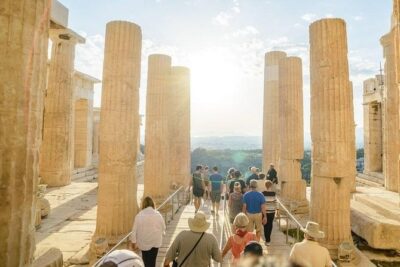
Acropolis monuments & Parthenon Walking Tour with Optional Acropolis Museum
Read our review →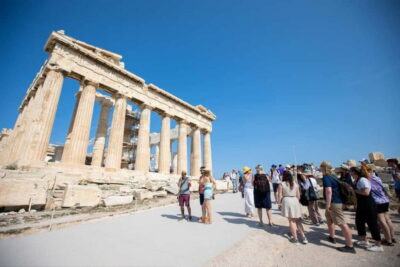
Acropolis, Parthenon & Athens Old City Heritage Walking Tour
Read our review →
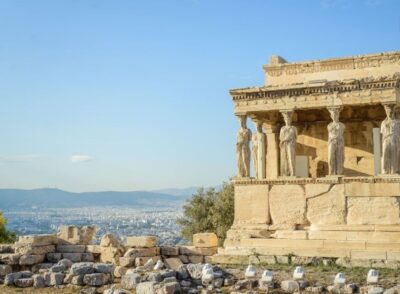
The Acropolis Walking Group Tour with a French Guide
Read our review →
Athens Food Tour with 10+ Tastings of Greek Traditional Dishes
Read our review →Browse the lists this tour appears in