
Review · ATHENS
Athens Acropolis and Parthenon Walking Tour
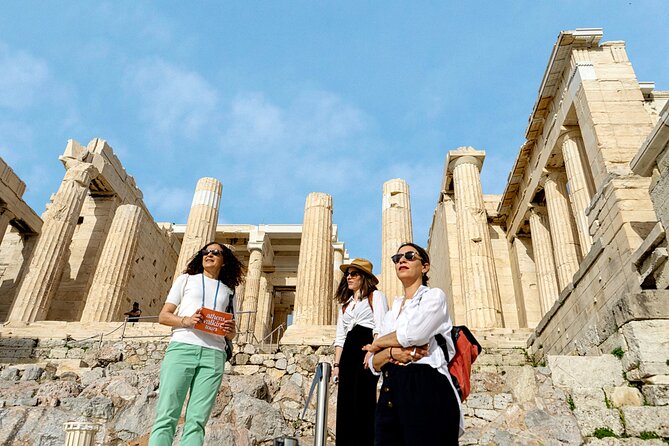
The Acropolis and Parthenon are much easier to understand when someone points out what you are seeing. This two-hour walk covers the hill’s major monuments, from the birthplace of Greek theater to the Caryatids of the Erechtheion and the temple dedicated to Athena.
I like the personal earsets, which help you hear the guide in a large group, and I like the steady pace with stops for photos, shade, and questions. The main catch is the ticket setup: the lowest price does not include admission, so you must arrange a valid ticket before joining the tour.
Key points to know before booking
- The tour covers the Acropolis highlights in about two hours, making it a good fit for a short stay in Athens.
- Personal earsets keep the guide audible, although sound quality can occasionally suffer from static or wind.
- The ticket option matters: admission costs €30 when it is not included, and you must have a valid ticket to enter.
- The walk is uphill and uneven, with little comfort from sun, heat, crowds, and exposed stone.
- Guides focus on stories and context, with names such as Alexia, Andrea, Elena, Dora, Hermes, and Phillipa praised for clear explanations.
- You receive an Athens map and guide magazine, useful for planning the rest of your time in the city.
Why a guided Acropolis visit helps
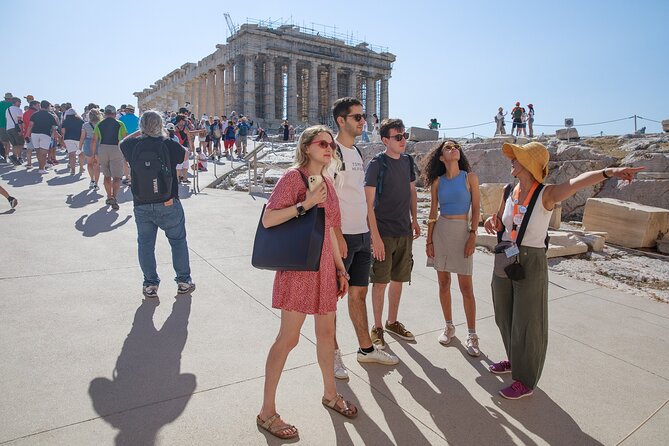
The Acropolis is not just one building. It is a hilltop complex layered with temples, theaters, sanctuaries, gateways, and later remains. Without context, you can easily spend your visit admiring the Parthenon while missing the meaning of the other monuments.
This tour gives you a clear route and a person to answer questions as you walk. The guide explains how the Theatre of Dionysus relates to the birth of drama, why Athena mattered to Athens, and how the Acropolis served both religious and civic purposes.
I especially like the balance between explanation and movement. Guides stop often instead of delivering one long speech at the top. That helps you catch your breath, look around, and take photographs without feeling hurried.
The group can include up to 24 people. That is not an intimate private walk, but the earsets make a group of this size workable. You do not need to stand shoulder to shoulder with the guide to hear every word.
More Walking Tours in Athens:
- Athens: Acropolis and Parthenon Guided Walking Tour
★ 4.6 · 5,882 reviews - Acropolis and Parthenon Guided Walking Tour
★ 5.0 · 4,755 reviews - Greek Food Walking Tour in Athens
★ 5.0 · 4,740 reviews
Meeting at Lukumades near the Acropolis
The meeting point is Lukumades at Dionysiou Areopagitou 3, near the base of the Acropolis. You meet your guide there at the time selected when booking, then walk toward the archaeological site as a group.
Arrive early. Acropolis entry times are strict, and the group cannot wait for latecomers. There are also security checks for everyone, similar to airport screening, and peak-season waits can exceed 30 minutes.
If you choose the option without admission included, the ticket process needs special attention. The tour company has prepaid access arrangements, but you still need a valid entrance ticket. After booking, you receive a separate email with a link to purchase the Acropolis ticket. Complete that step within 48 hours of booking and no later than 24 hours before the tour.
The ticket-inclusive option costs more, but it is simpler. At the listed base price of $41.12 per person, you should compare the total cost rather than the headline price. If admission is not included, add the €30 entrance fee and account for the extra ticket step.
The lower slopes and the Theatre of Dionysus
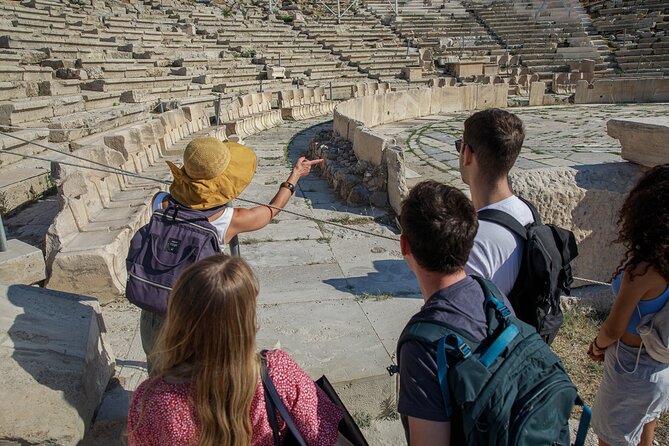
The walk begins with the lower area of the Acropolis and the Theatre of Dionysus. This is one of the tour’s best early stops because it gives you a sense of how ancient Athens used the hillside before you reach the famous temples above.
The theater is linked with the works of Aeschylus, Sophocles, and Euripides. Your guide helps you picture an Athenian audience watching tragedies and comedies in a setting that helped shape Western theater.
The route includes the Sanctuary of Dionysus and the Temple of Asclepios, also called the Asklepeion. The latter was connected with Asclepius, the god of medicine, and served as a place where people sought healing.
These lower stops also make the uphill walk feel less abrupt. Several people praised the pacing and the regular pauses. You still need a moderate level of fitness, but a careful guide can make the climb manageable for older visitors who are comfortable walking on uneven ground.
The Odeon of Herodes Atticus and views toward Philopappos Hill
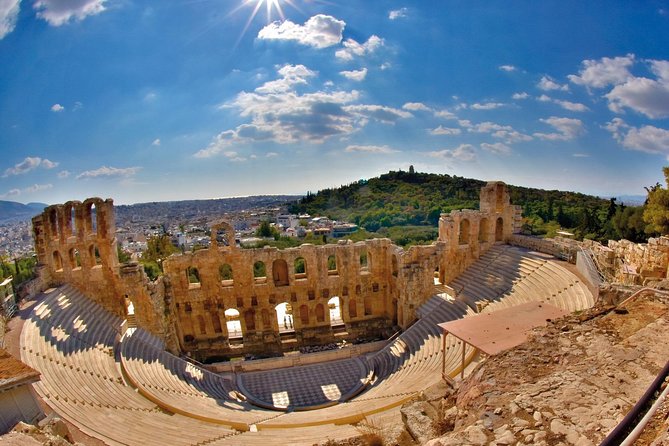
The Odeon of Herodes Atticus is a striking stone theater built in AD 161. It remains a performance venue, which gives the site a useful link between ancient Athens and the modern city.
You will see the theater from the Acropolis route rather than attend a performance. The guide explains its original purpose and its continued cultural role, while you take in the scale of the stone structure below.
The route also includes a view toward Philopappos Hill, known in antiquity as the Hill of the Muses. Its monument honors Philopappos, a Roman benefactor of Athens. This is a good pause for photographs and a reminder that the Acropolis tells more than a purely classical Greek story.
Do not expect a long stop at every point. The tour has many monuments to cover in roughly two hours. If you want extended time at the Odeon or Philopappos Monument, you may need to return on your own.
Same streets, a different guide:
- Acropolis: Acropolis and Parthenon Guided Walking Tour
★ 4.7 · 3,442 reviews - Athens: Guided Greek Food Walking Tour with Tastings
★ 4.9 · 2,859 reviews - Acropolis monuments & Parthenon Walking Tour with Optional Acropolis Museum
★ 5.0 · 2,678 reviews - Acropolis, Parthenon & Athens Old City Heritage Walking Tour
★ 4.5 · 876 reviews
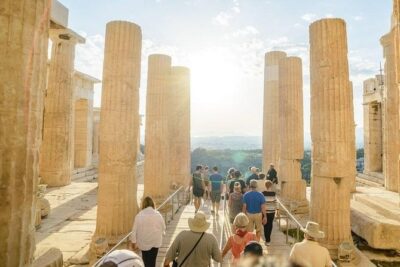
Passing through the Propylaea
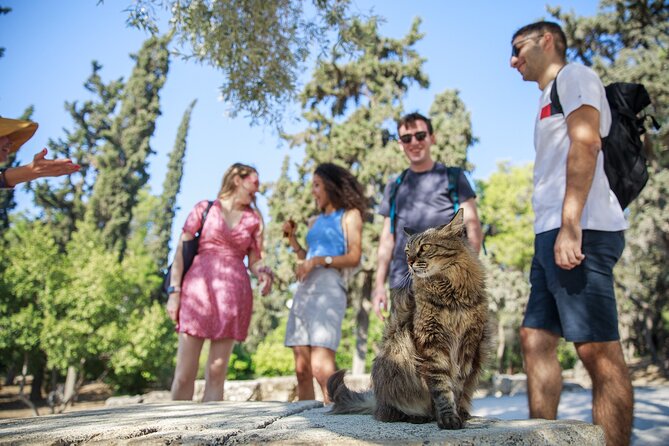
The Propylaea is the grand gateway to the Acropolis. Designed by Mnesikles, it was meant to create a formal approach to the sacred hill.
As you pass through, notice how the entrance frames the experience. The route turns the climb into a sequence: lower sanctuaries, monumental gateway, then the temples and Parthenon above.
The Propylaea is also a practical reminder that this is an archaeological site, not a polished museum. Stone surfaces can be uneven, and the slope can be slippery or tiring in poor weather. Wear shoes with a firm grip, and do not assume that a short distance means an easy walk.
The Temple of Athena Nike
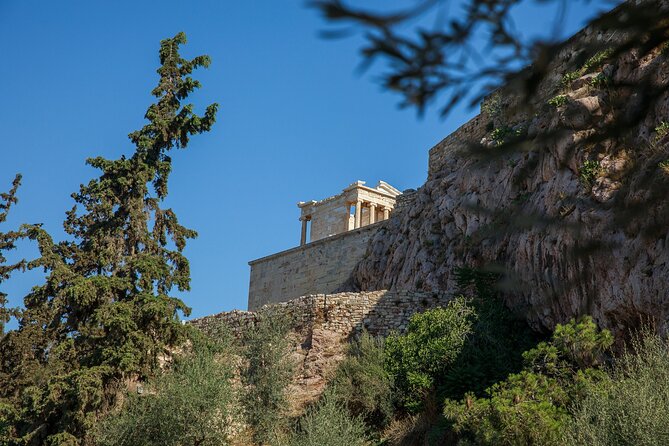
At the southwestern edge of the Acropolis, the small Temple of Athena Nike sits on a raised bastion. It honors Athena in her role as the goddess of victory.
The temple is more compact than the Parthenon, but its position gives it strong visual appeal. From here, you can look across Athens and understand why this high point carried such symbolic weight.
The scheduled explanation here is brief, about five minutes. That is enough for an introduction and photographs, but not a detailed architectural study. If small temples and classical design interest you most, consider returning later with a guidebook or audio resource.
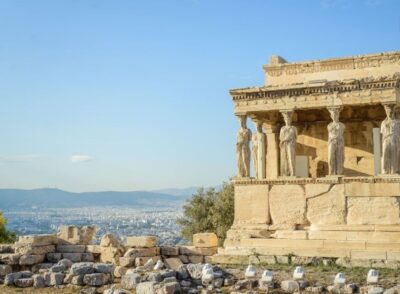
The Erechtheion and its famous Caryatids
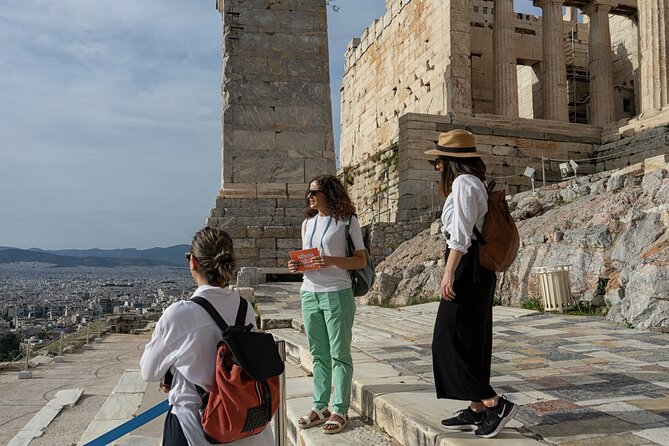
The Erechtheion is one of the most visually distinctive buildings on the hill. It was dedicated to both Athena and Poseidon and has an unusual layout shaped by several sacred traditions.
Its Caryatid Porch is the star feature. Six sculpted female figures appear to support the porch roof, creating a graceful contrast with the heavier geometry of the Parthenon.
The guide explains the building’s purpose and points out architectural details that are easy to miss from a distance. The stop lasts about 15 minutes, giving you time to listen and take photographs.
You will see the famous Caryatids at the monument, though the original sculptures are protected and displayed in museums. The tour does not replace a visit to the Acropolis Museum if you want a closer look at sculpture and objects from the site.
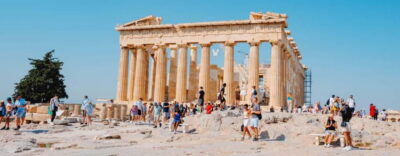
The Parthenon, the main event
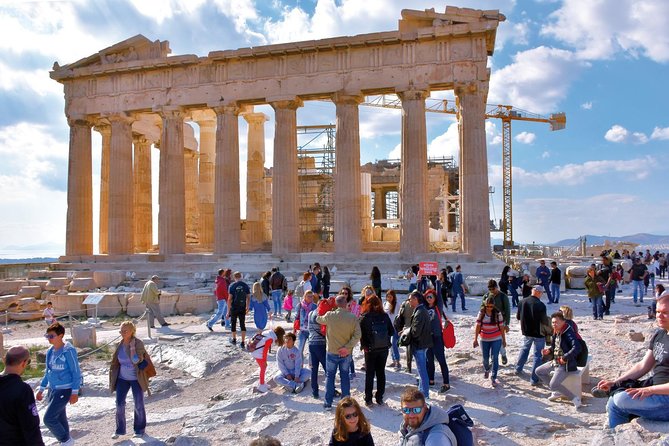
The Parthenon is the final major stop, with about 25 minutes set aside for it. That is a sensible amount of time for a short walking tour, since the temple deserves both explanation and a quiet look.
Dedicated to Athena Parthenos, the Parthenon represented the power and confidence of classical Athens. Your guide discusses its religious purpose, architecture, and place in the city’s identity.
The building is still under conservation, so scaffolding or restoration equipment may affect some views. That does not diminish the scale of the structure, but it does mean your photographs may not match postcard images.
This is where a good guide matters most. A list of dates and names can make the Parthenon feel distant. A skilled storyteller connects the building with mythology, politics, art, and daily life. Guides such as Elena have been praised for bringing legends to life, while Phillipa is noted for answering questions about history, mythology, architecture, and modern Athens.
You should also expect crowds. The Acropolis is one of Athens’ busiest sights, and even a ticket that avoids the office line does not remove security checks or congestion inside the site.
Earsets, guide quality, and group size
The tour provides personal earsets so you can hear the guide while walking between monuments. This is one of the most useful features, especially when the group spreads out or the site becomes noisy.
The equipment has worked very well for many people, but it is not flawless. Static, dropped sound, and garbled speech have occasionally been a problem. Wind can also make the guide difficult to hear, even with a headset.
That means you should speak up quickly if the sound cuts out. A guide cannot fix a silent or faulty unit unless you mention it.
Guide quality is a major strength of this experience. Names praised in feedback include Alexia, Andrea, Dora, Hermes, Elena, Victor, and Phillipa. The common thread is clear delivery, patience with questions, a friendly manner, and the ability to adjust the pace.
Do not expect the exact same guide every day. The experience depends partly on who leads your departure. The format gives the guide room to add stories and answer questions, but commentary can vary in tone. One person found political opinions distracting, so you may prefer a guide who keeps discussion centered on archaeology, mythology, and Athens’ past.
Heat, surfaces, toilets, and family considerations
The Acropolis is exposed and can be hot. Bring water, sunscreen, and a hat, and dress for the forecast. Comfortable clothes matter because the route includes uphill walking and uneven stone.
There are no toilets once you are inside the archaeological site, according to the practical guidance shared for this tour. Use facilities before entering.
Baby strollers are not allowed on the Acropolis archaeological site. The side entrance used for this experience has no cloakroom, so a baby pouch is the better choice. Children and adults alike need to manage the walking surface carefully.
The walk is not a race. Several guides have been praised for stopping in shaded areas, giving people time to rest, and keeping the pace comfortable. Still, you should have a moderate fitness level and be ready for a physical visit rather than a quick photo stop.
If you qualify for reduced admission, bring a valid passport or identification. Site staff may check age and nationality.
What the $41.12 price really buys
The listed price of $41.12 per person is reasonable if you value a licensed guide, a structured route, and help with the major monuments. The Athens map and guide magazine are useful extras, though the main value is the explanation you receive on the hill.
The price needs careful comparison. Admission is not included in the basic option, and the stated entrance fee is €30 per person. The ticket-inclusive upgrade may be worth it if you want less administrative work and a smoother arrival.
The tour does not include hotel pickup, food, or drinks. It begins near the Acropolis and ends in the Acropoli area, so you need to make your own way there and back.
For a first visit, I think the guided option earns its cost. You can walk around the hill independently for less, but you may miss why each monument matters and how the pieces fit together.
Who should book this Acropolis walk?
I would choose this tour if you have only a short time in Athens, want the major sights explained, or prefer not to manage the Acropolis route alone. It also suits people who like asking questions and want a steady pace rather than a self-guided audio track.
It is a good match for couples, families with older children, and older adults who can handle uphill walking. The earsets help if you do not want to crowd around a guide.
I would choose another format if you want a private experience, a very slow archaeological study, or extended time inside the Acropolis Museum. This is a compact group tour, not a full-day examination of ancient Athens.
Should you book it?
Book it if you want a clear introduction to the Acropolis and Parthenon in about two hours. The best reasons are the licensed guide, personal earsets, frequent stops, and coverage of more than just the Parthenon.
Before paying, check whether your selected option includes admission. Arrive early, bring water, wear shoes suited to rough stone, and plan your toilet stop before entering.
I would especially recommend it for a first visit when your schedule is tight. If you already know the site well or prefer to linger at every temple, use the tour as an introduction and return later on your own.
Free cancellation is available up to 24 hours before the start time. Changes made later are not accepted, and poor weather or too few bookings can lead to a rescheduled experience or full refund.
FAQ
How long does the Acropolis and Parthenon walking tour last?
The tour lasts approximately two hours. The route includes the main Acropolis monuments and several stops on the lower slopes.
Is the Acropolis entrance ticket included?
It depends on the option you select. The basic price does not include the €30 entrance fee. If you choose the option without admission, you must purchase a valid ticket through the link sent after booking.
Where does the tour meet?
The meeting point is Lukumades at Dionysiou Areopagitou 3, Athens 117 42, near the base of the Acropolis.
What sights are included?
The route includes the Theatre of Dionysus, Temple of Asclepios, Odeon of Herodes Atticus, Temple of Athena Nike, Propylaea, Erechtheion, and Parthenon. It also includes views toward Philopappos Hill.
Is the walk suitable for people with limited mobility?
You should have a moderate fitness level. The route includes uphill walking, uneven surfaces, and exposed areas. Baby strollers are not allowed on the archaeological site.
What should I bring?
Wear comfortable shoes and weather-appropriate clothes. Bring water, sunscreen, and a hat. If you qualify for reduced admission, bring valid identification or a passport.
New routes in Athens
- The Acropolis, Athens Walking City Tour and Acropolis Museum★ 5.0 · 442 reviews
- Athens Street Food Walk★ 5.0 · 385 reviews
- Acropolis monuments, Parthenon and Plaka, Monastiraki walking tour★ 5.0 · 182 reviews
- Athens Shore Excursion: Acropolis Walking Tour★ 4.5 · 131 reviews
- Athens Street Art Walk★ 5.0 · 309 reviews
- Athens at Night Small-Group Walking Tour with Dinner★ 5.0 · 230 reviews
- Athens Off the Beaten Track Private City Walking Tour★ 5.0 · 304 reviews
- Athens Gourmet Food Small Group Walking Tour★ 5.0 · 213 reviews
Athens Walking Tours, compared.


Acropolis monuments & Parthenon Walking Tour with Optional Acropolis Museum
Read our review →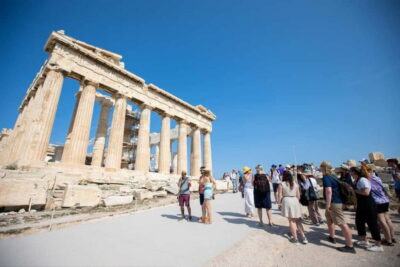
Acropolis, Parthenon & Athens Old City Heritage Walking Tour
Read our review →
The Acropolis Walking Group Tour with a French Guide
Read our review →
Athens Food Tour with 10+ Tastings of Greek Traditional Dishes
Read our review →Browse the lists this tour appears in