
Review · ATHENS
Athens: Acropolis and Parthenon Guided Walking Tour
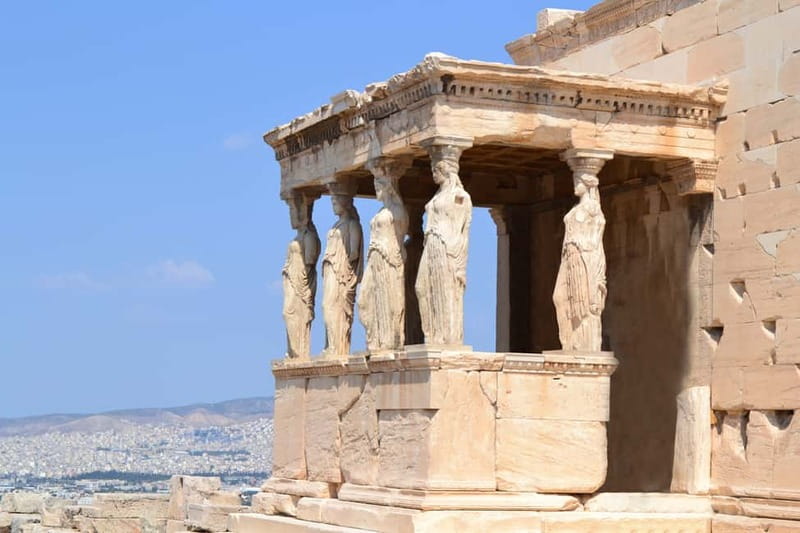
The best part of this Athens walking tour is the steady climb from the ancient Theatre of Dionysus to the Parthenon. You do not simply arrive at the famous temple and take photos. You follow the route ancient audiences, worshippers, and visitors once used, with the Theatre of Dionysus and the Erechtheion’s six Caryatids giving the hill a human story.
I like the South Slopes entrance, which can be easier than approaching from the North Slope, and I like the way a good guide turns architecture, mythology, and democracy into a clear story. The main drawback is physical: this is a two-hour uphill walk with uneven ground, strong sun, and no group access to the Acropolis elevator.
Key points to know before booking
- South Slopes entrance: The meeting point is at the Athenian Tours office on Mitsaion 2, near the route used to reach the Theatre of Dionysus.
- Two hours on foot: The tour covers the major Acropolis monuments at a purposeful pace, with little time for a slow, independent wander.
- English-speaking guide: Guides including Simon, Iris, Kostas, Alexia, and Angel have led visits praised for clear explanations, humor, and thoughtful pacing.
- Skip-the-line entry: Your Acropolis admission is included, allowing the group to avoid the regular ticket line.
- Morning is wise in summer: August heat can make the climb and exposed summit tiring, so an early starting time is the sensible choice.
- Not for every body: The route is unsuitable for wheelchair users, people with mobility impairments, people with heart problems, and children under six.
Starting at Mitsaion 2 and reaching the South Slopes
You meet your guide at the Athenian Tours office at Mitsaion 2, postal code 11742. The tour ends at the same meeting point, and hotel pickup is not included, so plan your route to the office before the start time.
The South Slopes approach is a useful feature. It leads you toward the Theatre of Dionysus and gives the visit a natural order, moving from performance and public life toward the religious center above. One strong point here is crowd management. Guides have been praised for getting groups through busy areas efficiently and finding quieter, shaded places for explanations.
Your guide supplies the historical thread, but you still need to arrive prepared. Wear shoes with a firm grip, bring water, a hat, and sunscreen, and carry only a small bag. Large luggage, baby strollers, and pets are not allowed.
The walk is not a race, but the two-hour schedule is fairly tight. You will pause to hear stories and take photographs, yet this is not the right choice if you want to sit for long periods at every monument. It works best as a well-organized introduction to the Acropolis.
More Guided Walks in Athens:
- Athens: Acropolis and Parthenon Guided Walking Tour
★ 4.6 · 5,882 reviews - Acropolis and Parthenon Guided Walking Tour
★ 5.0 · 4,755 reviews - Acropolis: Acropolis and Parthenon Guided Walking Tour
★ 4.7 · 3,442 reviews
Theatre of Dionysus: where Greek drama took shape
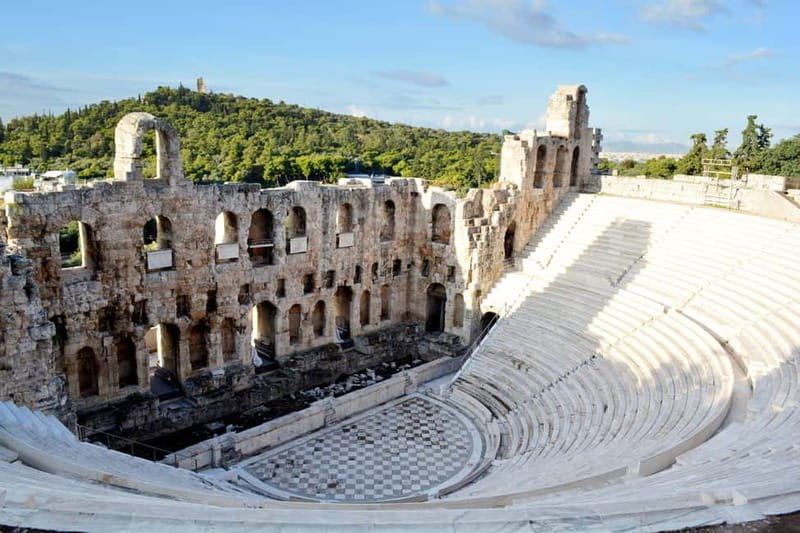
The Theatre of Dionysus is one of the most meaningful first stops. Ancient comedies and tragedies were performed here, connecting the stones beneath the Acropolis with the plays that shaped Western theatre.
Your guide can help you picture this as a working civic space rather than a pile of old seats. The theatre links architecture with public life, religion, performance, and the city’s shared identity. That context makes the later monuments easier to understand.
This stop also shows why the route matters. You begin below the summit and gradually climb, seeing the Acropolis as a complex of buildings and functions instead of one isolated temple. The walk upward adds a sense of progression, though the stone paths require care.
If you are visiting in hot weather, this lower section is still exposed in places. Bring water before you enter. The sun becomes more demanding as you gain height, and there may be little shade at the most famous viewpoints.
Asklepieion and the Odeon of Herodes Atticus
The remains of the Asklepieion of Athens add a quieter note to the tour. This healing sanctuary honored Asclepius and Hygeia, linking the Acropolis to ancient ideas about health, treatment, and divine help.
I like this stop because it prevents the visit from becoming only a parade of famous temples. It shows that the Acropolis served religious needs beyond worship of Athena. Your guide explains the remains as part of a larger sacred area, giving you more to notice as you walk.
The route then brings you near the Odeon of Herodes Atticus, the Roman theatre built in memory of Herodes Atticus’s wife. Its surviving structure is one of the most striking sights on the lower slopes, and the contrast between a Roman performance building and the older Greek monuments is useful to see in person.
The Odeon is not presented as a separate performance during this tour. You visit it and hear its story while walking, so keep your expectations practical. This is an overview visit, not a concert or a long archaeological study.
Climbing through the Propylaea
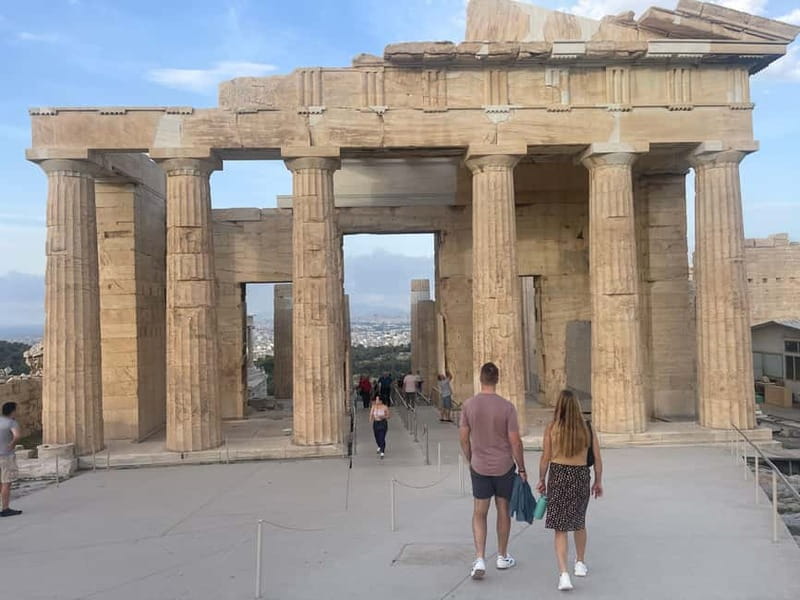
The Propylaea is the grand gateway to the Acropolis. Reaching it gives the climb a clear turning point: you move from the lower sanctuary area into the hilltop precinct.
The entrance was designed to impress, and your guide can point out how movement, scale, and approach shaped the experience. Even in its damaged condition, the gateway helps you understand that the Acropolis was planned as a ceremonial arrival, not an accidental cluster of buildings.
Near the gateway, you will see the Temple of Athena Nike. This smaller temple is easy to overlook when the Parthenon is ahead, so having a guide is useful. The dedicated explanation gives the building its proper place in the story of Athens and its patron goddess.
The steps and surfaces around the Propylaea can be uneven. Use the handrails where available and avoid rushing to keep up with the group. The tour cannot use the Acropolis elevator for group visits, which is one reason this experience is not suitable for people who need step-free access.
More Walking Tours in Athens:
- Greek Food Walking Tour in Athens
★ 5.0 · 4,740 reviews - Athens: Guided Greek Food Walking Tour with Tastings
★ 4.9 · 2,859 reviews - Acropolis monuments & Parthenon Walking Tour with Optional Acropolis Museum
★ 5.0 · 2,678 reviews - Athens Acropolis and Parthenon Walking Tour
★ 4.5 · 1,355 reviews
The Parthenon and the view across Athens
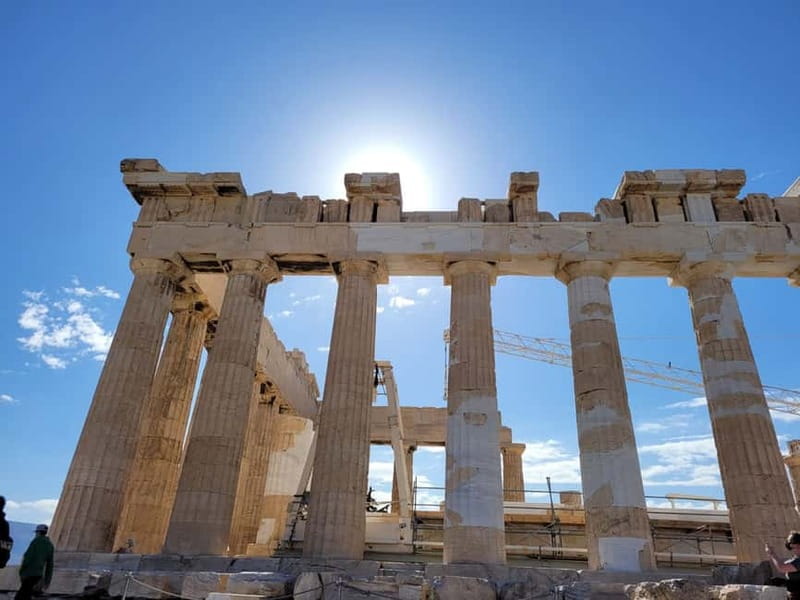
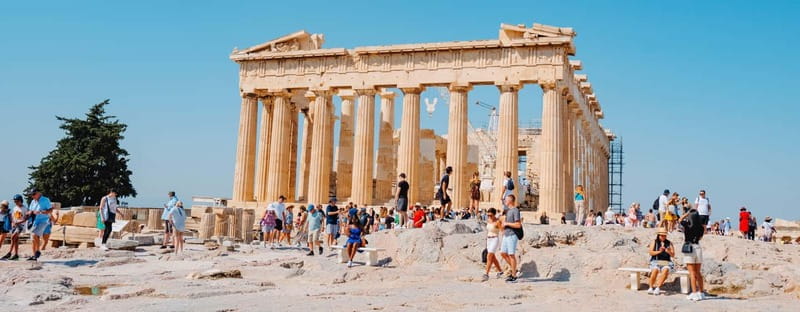
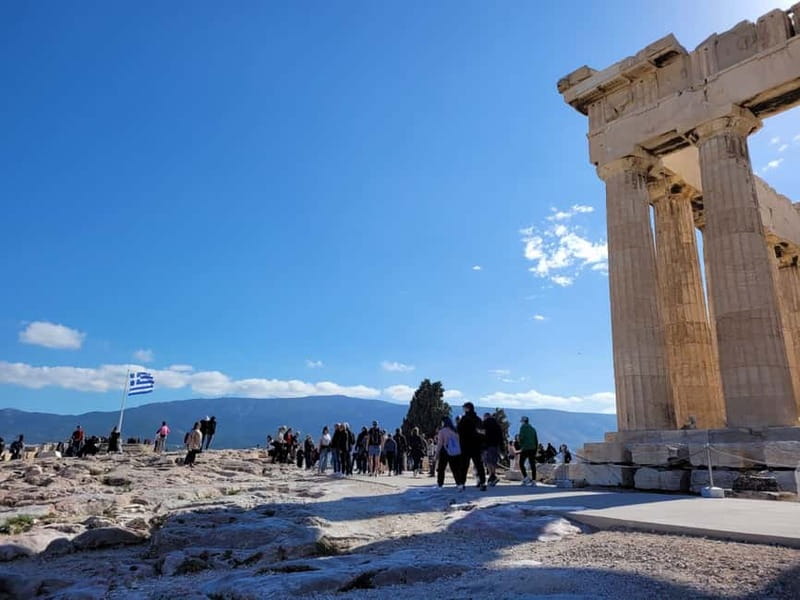
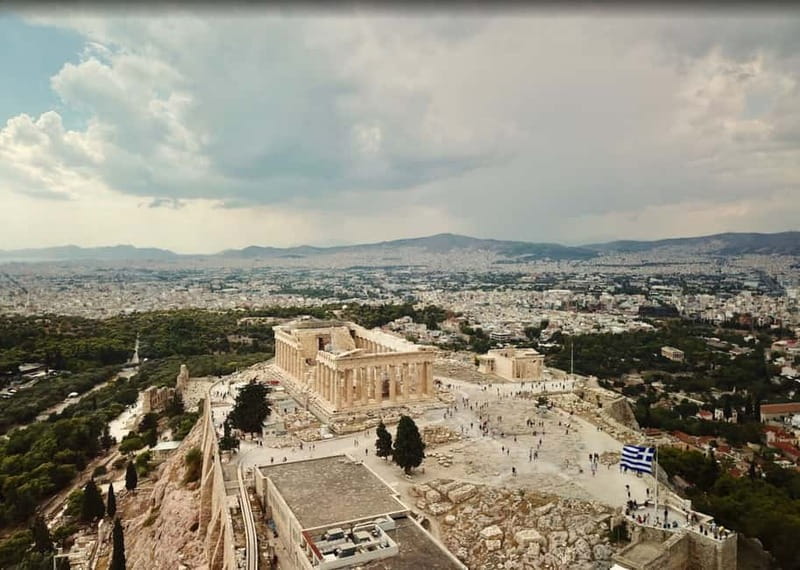
The Parthenon is the emotional center of the visit. Dedicated to Athena, patron goddess of Athens, it represents the high point of fifth-century Doric architecture and remains one of the clearest symbols of democracy and Western civilization.
You will not walk inside the temple, but standing among the columns lets you appreciate its size, order, and careful design. A guide can explain what you are looking at instead of leaving you with only the familiar postcard view. The strongest guides connect architecture with mythology, political ideals, and the city’s changing past.
The summit also opens broad views over Athens. The setting is a major part of the experience, but it comes with a practical cost: the hilltop is exposed, and summer heat can be intense. One guide, Kostas, was especially praised for August visits, but the sensible choice is still to book a morning slot whenever possible.
Photography is allowed throughout the tour. You may take pictures of the monuments and views, but video recording of the guide is not permitted. Crowded periods can also affect disposable earphone quality when other groups are using similar equipment nearby.
The Parthenon section can feel short if you are eager to study every angle. Your guide needs to keep the group moving, especially when several tour groups gather at the same points. If you want long, quiet viewing time, plan to return independently if your admission arrangements allow it.
The Erechtheion and its famous Caryatids
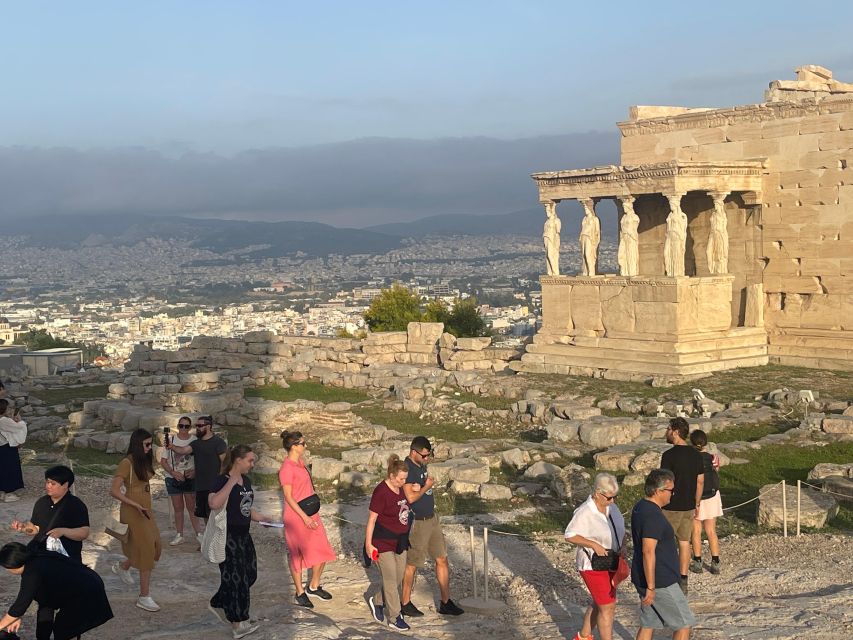
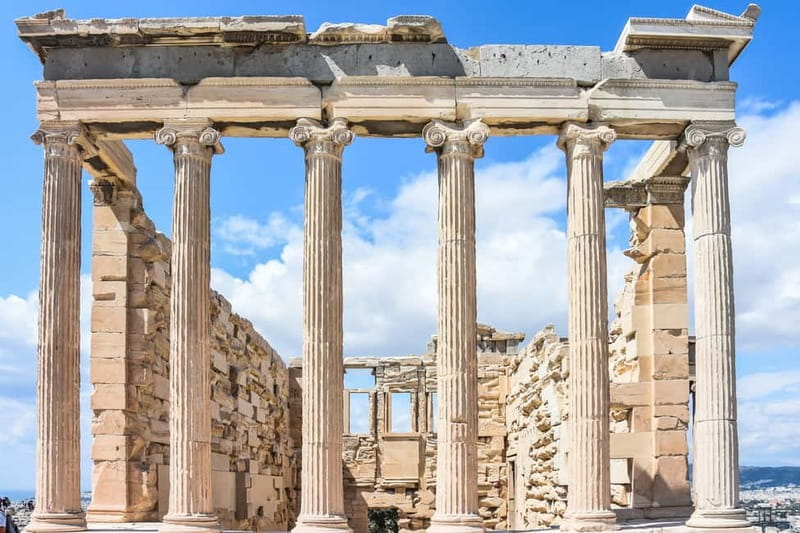
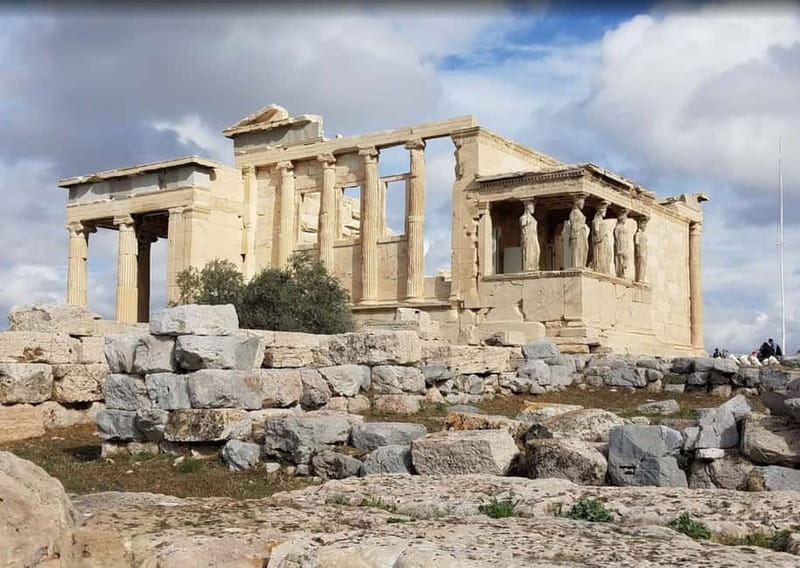
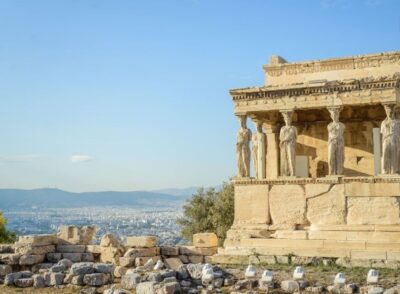
The Erechtheion is a welcome contrast to the Parthenon. Its asymmetrical design makes it unusual among the major Acropolis buildings, and its varied levels and sacred associations require more explanation than a quick photograph can provide.
The best-known feature is the porch supported by six sculpted female figures, commonly called Caryatids. They are among the most recognizable forms on the Acropolis, but the guide’s explanation helps you look beyond their beauty to the building’s unusual structure and religious role.
I especially value this stop for visitors who think ancient Greek architecture means only straight lines and identical columns. The Erechtheion is more complicated, more irregular, and more visually inventive. It rewards close attention.
The area can become crowded, so your group may need to stand to one side while the guide speaks. Guides such as Iris have been praised for finding quieter spots and shaded places before explaining what you are about to see. That small bit of planning matters when the summit is full.
What the guide adds to the two-hour visit
The guide is the main reason to choose this tour instead of simply buying admission and walking up alone. The monuments are impressive without help, but their connections are not always obvious when you are moving through a crowded archaeological site.
The strongest guiding style here combines archaeology, architecture, mythology, and practical crowd control. Simon has been praised for explaining architecture and Greek history with clarity. Christos brought training in archaeology and art history, while guides such as Alexia were especially attentive to shade, safety, photographs, and the needs of the group.
Guide assignments can change, so you should not book on the assumption that one particular person will lead your visit. What you can expect is an English-language tour designed to explain the major monuments while keeping the group together.
For groups larger than five, disposable earphones are provided. These help you hear the guide while walking, though sound can be affected by nearby groups using their own equipment. Stay close enough to keep visual contact, especially around the Propylaea and Parthenon.
Is the $35.57 price good value?
At $35.57 per person, the tour sits in a reasonable middle ground for a guided Acropolis visit. The price includes the English-speaking guide, Acropolis admission, and skip-the-line access. Those inclusions matter because a separate ticket purchase and an unguided visit do not give you the same explanation or group management.
The value is strongest for a first visit. You see the major stops in a single two-hour route, hear the basic story behind each monument, and avoid spending your limited Athens time working out where to go next.
The value is less clear for repeat visitors who already know the site and want to explore slowly. You are paying for structure and interpretation, so independent entry may suit you better if you prefer lingering, sketching, or taking photographs without a schedule.
The tour is also a better deal when you consider the effort of the site itself. The Acropolis can feel confusing when crowded, and a guide who knows where to pause can make the visit calmer. The price is not the lowest possible way to see the Parthenon, but it is fair for a short, guided introduction with admission included.
Practical preparation for the climb
Bring your passport or ID card, comfortable shoes, water, a sun hat, and sunscreen. The climb and exposed stone surfaces make these basic items important, not optional extras.
Do not bring large bags, luggage, baby strollers, or pets. Hotel pickup and drop-off are not included, and food and drinks are not supplied, so eat beforehand and organize your own water.
This tour is not suitable for children under six, wheelchair users, people with mobility impairments, or people with heart problems. The group cannot use the Acropolis elevator, and the route includes uphill walking and uneven surfaces.
If you select an option without tickets, you must buy your Acropolis and Acropolis Museum admission in advance and contact the operator to confirm the correct time slots. The guide can supply only adult, full-price tickets at the meeting point, paid in cash. The tour can run only when the required tickets are ready and available at the correct time.
Cancellation is allowed up to 24 hours before the start for a full refund, and you can reserve now and pay later. On free-entry days at the Acropolis or Acropolis Museum, prices are adjusted so you are not charged for complimentary admission.
Who should book this Acropolis tour?
I would choose this tour for a first-time Athens visitor who wants the main monuments explained in plain English without spending half a day on site. It is also useful for anyone who prefers a guide to handle the route, ticket access, and group movement.
The tour suits people who enjoy history but do not want a long academic lecture. The best guide style combines clear facts with stories, humor, mythology, and links to modern life. That keeps the two hours moving.
I would skip it if you need step-free access, have difficulty with uphill walking, or want complete freedom to set your own pace. I would also consider an independent visit if you already know the Acropolis well.
For most first visits, the strongest reasons to book are the South Slopes approach, included admission, skip-the-line access, and the chance to understand the Theatre of Dionysus, Propylaea, Parthenon, and Erechtheion as parts of one connected site. Book a morning time in summer, arrive ready to walk, and you will get the most from the $35.57 price.
FAQ
Where does the Acropolis walking tour begin?
You meet the guide at the Athenian Tours office at Mitsaion 2, postal code 11742.
Where does the tour end?
The activity ends back at the meeting point.
How long does the tour last?
The tour lasts two hours. Starting times depend on availability when you book.
Is Acropolis admission included?
Yes. Entrance tickets to the Acropolis are included with the tour.
Does the tour include skip-the-line entry?
Yes. Skip-the-line tickets are included for the Acropolis attractions covered by the visit.
What language is the tour conducted in?
The tour is conducted in English with a live English-speaking guide.
Are earphones provided?
Disposable earphones are provided for groups of more than five people. Audio quality may be affected by equipment used by other groups during crowded periods.
Can I use the Acropolis elevator?
No. The elevator cannot be used on group tours.
What should I bring?
Bring your passport or ID card, comfortable shoes, a sun hat, sunscreen, and water.
Can I cancel the tour?
Yes. You can cancel up to 24 hours in advance for a full refund. You can also reserve now and pay later.
New routes in Athens
- The Acropolis, Athens Walking City Tour and Acropolis Museum★ 5.0 · 442 reviews
- Athens Street Food Walk★ 5.0 · 385 reviews
- Acropolis monuments, Parthenon and Plaka, Monastiraki walking tour★ 5.0 · 182 reviews
- Athens Shore Excursion: Acropolis Walking Tour★ 4.5 · 131 reviews
- Athens Street Art Walk★ 5.0 · 309 reviews
- Athens at Night Small-Group Walking Tour with Dinner★ 5.0 · 230 reviews
- Athens Off the Beaten Track Private City Walking Tour★ 5.0 · 304 reviews
- Athens Highlights: Myths & Philosophers Walking Tour★ 5.0 · 125 reviews
Athens Walking Tours, compared.


Acropolis monuments & Parthenon Walking Tour with Optional Acropolis Museum
Read our review →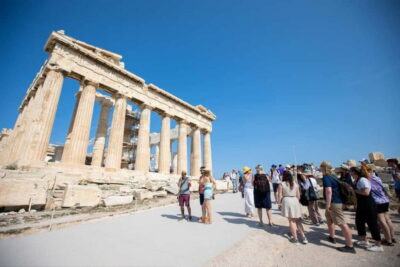
Acropolis, Parthenon & Athens Old City Heritage Walking Tour
Read our review →
The Acropolis Walking Group Tour with a French Guide
Read our review →
Athens Food Tour with 10+ Tastings of Greek Traditional Dishes
Read our review →Browse the lists this tour appears in