
Review · LGBTQ-FRIENDLY
San Francisco: Castro LGBTQ Walking Tour
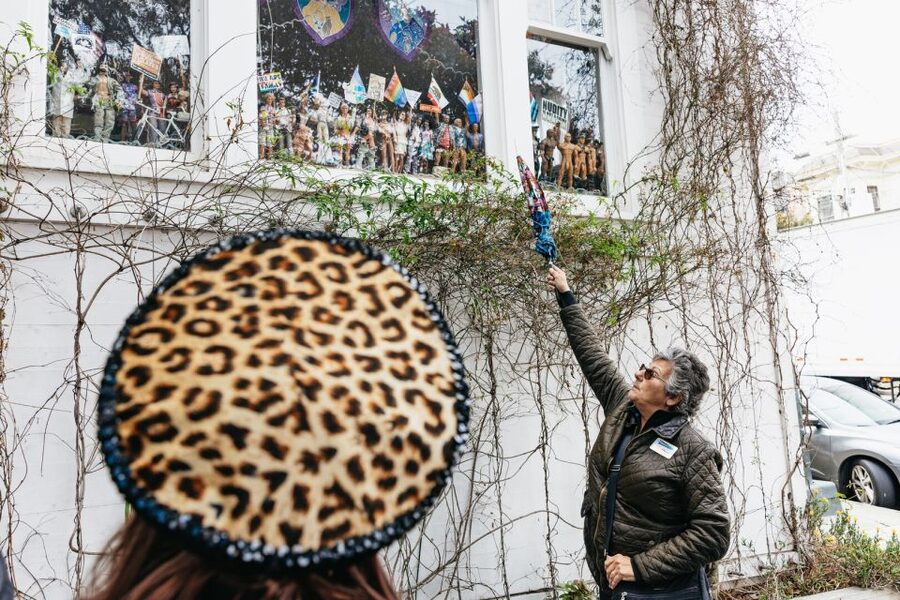
The Castro is more than a neighborhood with rainbow flags and lively storefronts. It is a place where local streets connect to world events, and this two-hour walk puts that story in human terms. Guide Kathy, a longtime Castro resident and LGBTQ activist, leads you through the places tied to Harvey Milk, the AIDS crisis, wartime persecution, and the community’s continuing fight for equality.
I like the tour’s clear historical focus and its easy, ADA-compliant route. You get important landmarks without facing San Francisco’s famous hills, and Kathy’s personal connection gives the walk a strong sense of place. The main consideration is that the subject matter can be painful, especially at the Pink Triangle Park and AIDS memorial sites, so this is an educational tour with emotional weight, not simply a light neighborhood stroll.
Key points to know before you book
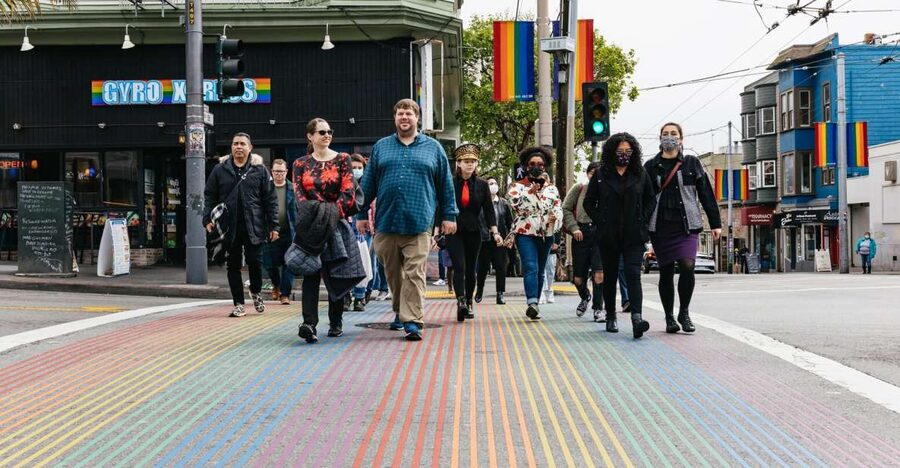
- Kathy brings personal local experience: She has lived in the Castro for decades and leads the walk as an LGBTQ activist.
- Harvey Milk’s neighborhood comes into focus: You see where he lived, worked, and advocated for equality.
- The route covers major memorials: Expect Pink Triangle Park, the AIDS Memorial Quilt and Names Project, and other important sites.
- The Rainbow Honor Walk adds a global view: Bronze plaques honor LGBTQ people whose work changed world history.
- The walk is practical for many visitors: It lasts two hours, has no large hills, and is wheelchair accessible.
- The subject is sometimes difficult: The tour discusses persecution, AIDS, violence, and ongoing civil rights struggles with care.
Starting at 400 Castro Street
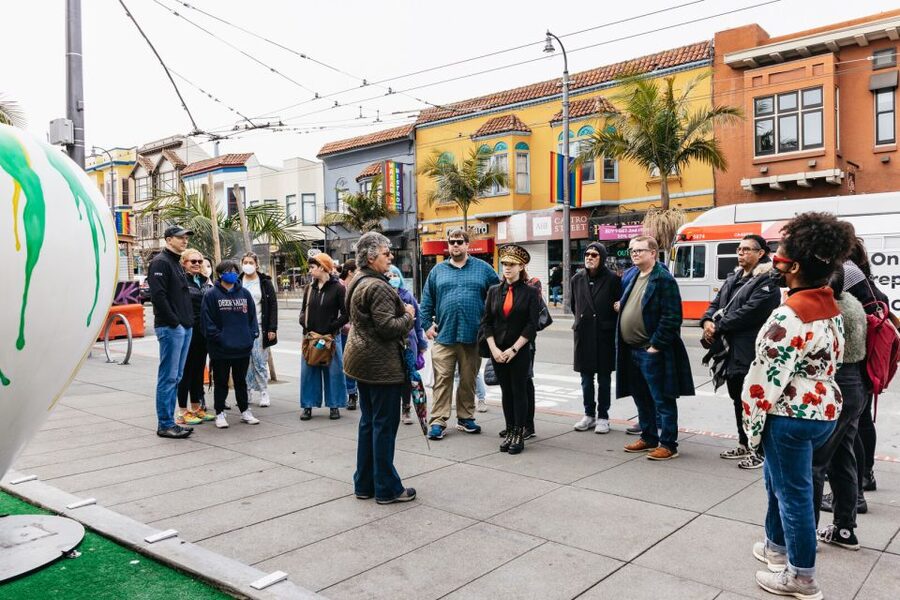
The meeting point is at 400 Castro Street, in front of SoulCycle, at the corner of Castro and Market Streets. It is next to the Big Rainbow Flagpole Landmark, so use that landmark to get your bearings.
One practical warning matters here: the map location is correct, but an accompanying location photo may show the Castro Theatre instead. Do not wait in front of the theater by mistake. Go to 400 Castro Street and look for the guide near SoulCycle and the large rainbow flagpole.
The tour runs in English and lasts about two hours. It does not include hotel pickup, so you need to make your own way to the Castro. Wear comfortable shoes, and leave luggage or large bags behind. The route is easy, but you will still be on your feet for much of the walk.
More LGBTQ-Friendly Walks in the USA:
- Pride Tours NYC’s LGBTQ Historical Walking Tour
★ 5.0 · 89 reviews - Berlin: Gay Berlin Out in Schöneberg Walking Tour
★ 4.8 · 281 reviews - Florence: LGBTQ Renaissance Walking Tour with Mila
★ 4.9 · 85 reviews
Why the Castro matters beyond San Francisco
This neighborhood is often presented as the world’s largest LGBTQ community. The useful point is not the label alone. The Castro became a place where LGBTQ people could build public lives, organize politically, support one another, and challenge laws that treated them as outsiders.
The walk connects those local efforts to wider changes in civil rights. You learn how the Castro’s community life influenced public debate far beyond San Francisco, while also hearing about the setbacks, losses, and pressure that shaped the movement.
That balance makes the tour worthwhile. It does not treat the neighborhood as a cheerful backdrop for photographs. You see the flags, gathering places, and public art, but you also learn why those symbols exist and what they cost people who fought to make them possible.
Harvey Milk Plaza and the story of a local leader
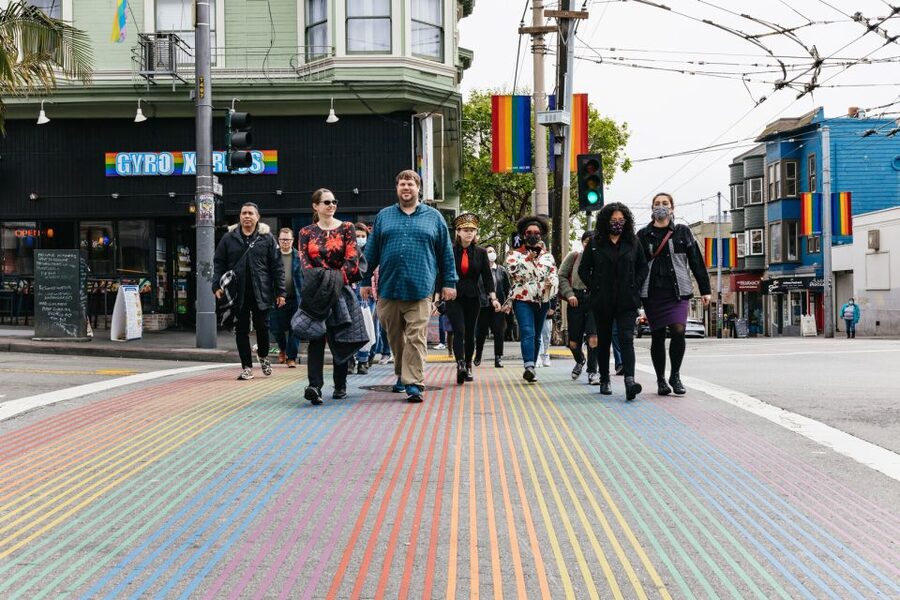
Harvey Milk Plaza is one of the central stops. It introduces Harvey Milk not as a distant political figure, but as a person tied closely to the Castro’s streets and daily life.
Kathy explains where Milk lived, worked, and organized. That connection between ordinary places and major political change is one of the walk’s strongest features. You begin to understand how a neighborhood shopkeeper and local advocate became a major LGBTQ civil rights leader, and why his influence reached well beyond San Francisco.
The story includes Milk’s death and the effect it had on the community. The tone is respectful and serious, but the tour does not turn the Castro into a memorial frozen in the past. The emphasis remains on the neighborhood as a living place where the work continues.
If you already know the broad outline of Harvey Milk’s life, you can still gain something from seeing the physical setting. If his story is new to you, this stop gives you a useful starting point for understanding LGBTQ political history in San Francisco.
Pink Triangle Park and the cost of remembrance
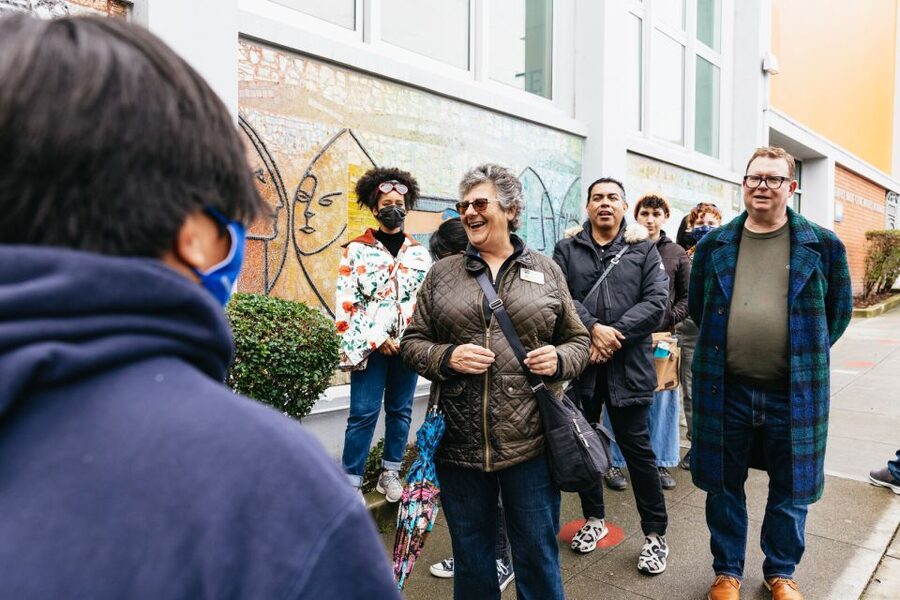
Pink Triangle Park and Memorial is one of the more sobering stops. It remembers the thousands of gay men persecuted during World War II, using a local memorial to point toward a much wider history of state persecution and hatred.
This is where the tour’s emotional side becomes especially clear. You are asked to pause and reflect, not just collect another fact. The stop can be heartbreaking, but it is important because it shows why memory and public symbols matter to a community that has repeatedly been forced to defend its right to exist openly.
The memorial also gives the tour a wider time frame. The story is not limited to the Castro’s most famous decades or to American politics. It reaches back to wartime persecution and then connects those events to later fights for safety, dignity, and legal equality.
If you prefer a purely entertaining city walk, this section may feel heavy. If you want to understand the reasons behind the neighborhood’s public identity, it is essential.
More Walking Tours in the USA:
- History and Hauntings of Salem Guided Walking Tour
★ 5.0 · 14,564 reviews - New Orleans Premier Ghost, Voodoo and Vampire Walking Tour
★ 4.5 · 12,856 reviews - Little Havana Food and Walking Tour in Miami
★ 5.0 · 8,882 reviews - Chicago: Gangsters and Ghosts Walking Tour
★ 5.0 · 7,155 reviews
The AIDS Memorial Quilt and Names Project
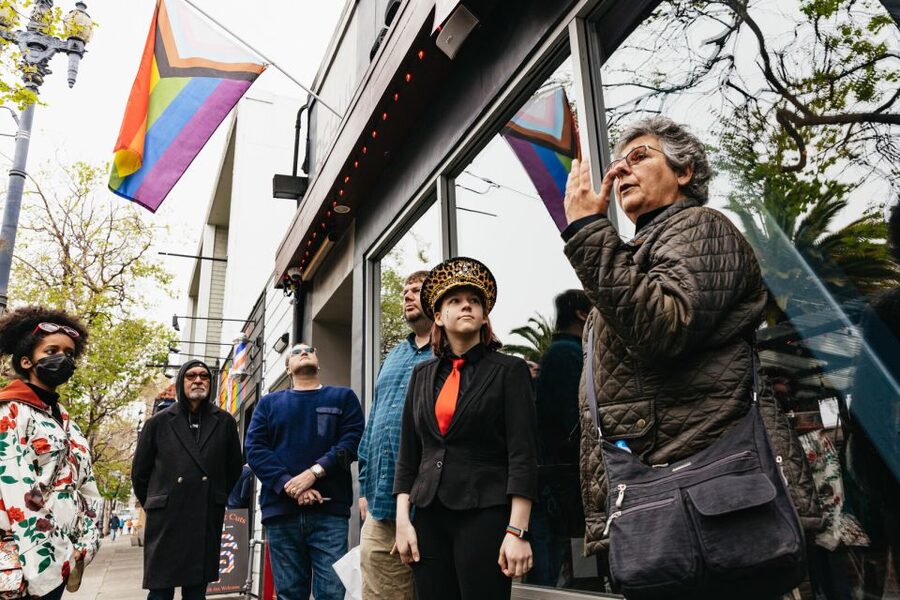
The AIDS Memorial Quilt and Names Project add another layer of remembrance. The tour places the AIDS crisis within the Castro’s story, showing how illness, grief, activism, and community support became part of everyday life.
This stop can be especially moving because it shifts the focus from laws and political leaders to individuals and families. The Names Project reminds you that the AIDS crisis was not an abstract event. It affected real people whose lives were recorded and remembered through personal acts of mourning.
The subject can be difficult, but Kathy’s approach is described as both empathetic and direct. That matters here. A guide who simply recites dates would miss the human meaning of the memorial. Kathy helps connect the site to the community’s response and to the larger struggle for public understanding and equal treatment.
You should allow yourself room to listen at this point. The tour includes a lot of information, and the emotional stops are easier to absorb when you do not rush from one landmark to the next.
The Rainbow Honor Walk and public memory
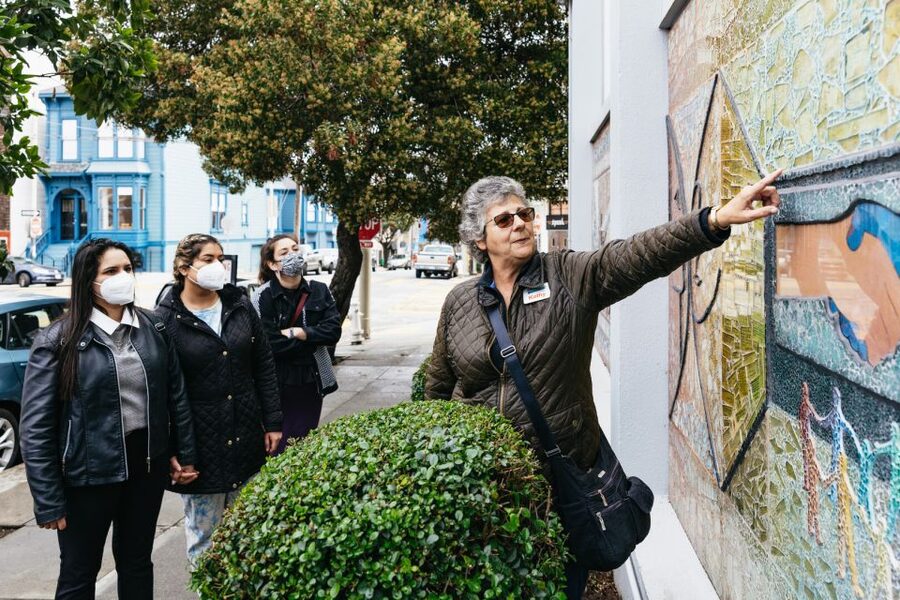
The Rainbow Honor Walk uses bronze sidewalk plaques to honor LGBTQ people who made an impact on world history. This is a simple idea with a strong effect: instead of placing every important person in a museum, the neighborhood puts their names directly into the pavement.
As you walk, the plaques turn an ordinary street into a history lesson. They broaden the story beyond San Francisco and remind you that LGBTQ contributions reach into politics, art, science, literature, activism, and other fields.
This part is also less solemn than the memorial stops. It gives the tour a sense of possibility and achievement after the difficult sections. You see how the community remembers people who helped change public life, not only those who suffered.
The exact plaques you focus on may depend on the walking route and the guide’s pacing. Still, the Rainbow Honor Walk is one of the tour’s most distinctive features because it keeps history visible at street level.
A guide who connects facts with community life
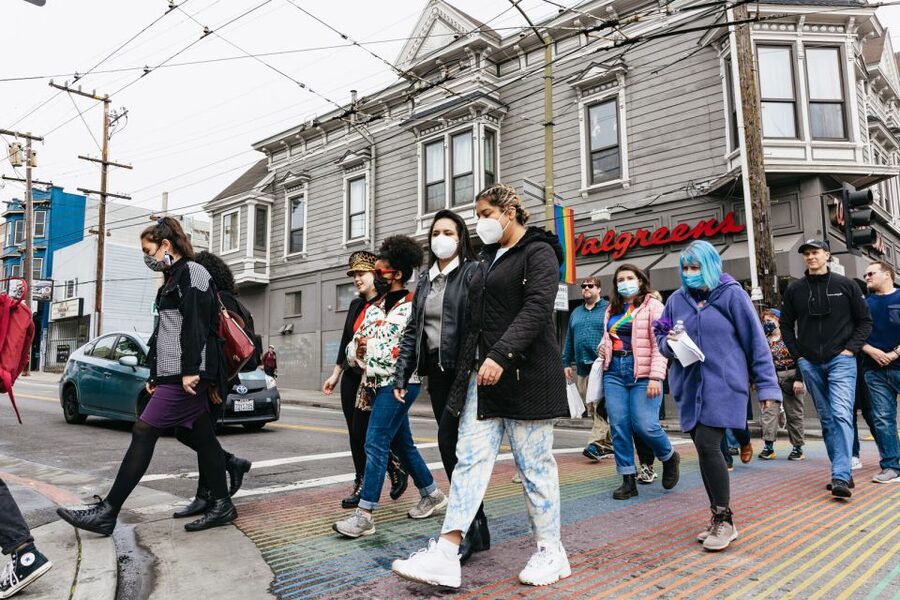
Kathy is the main reason this tour feels personal rather than textbook-like. She has lived in the Castro for decades and brings both local familiarity and experience as an LGBTQ activist.
Her style includes serious explanation, humor, and time for questions. She also encourages people to share their own stories, which can make the walk feel more like a thoughtful conversation than a one-way lecture. That said, the focus stays on the Castro and its historical role, so you should expect substance rather than casual sightseeing alone.
Her approach works for a mixed group. The tour has welcomed singles, couples, families, and people from different countries. You do not need to identify as LGBTQ to take part, and you do not need to arrive with a strong background in the subject. The tour is suited to anyone who wants a better grasp of the community’s past and present, including visitors who want to become more informed allies.
Past participants have described Kathy as warm, inspiring, funny, and exceptionally well informed about San Francisco LGBTQ events. The repeated praise is consistent: she explains difficult subjects clearly and creates a welcoming atmosphere.
An easy walk, with practical limits
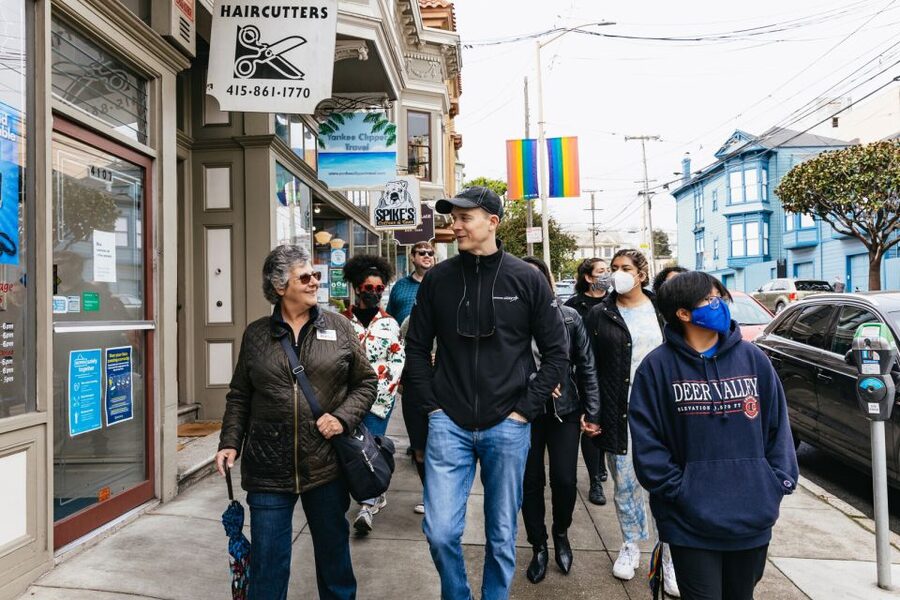
The route is ADA compliant and has no large hills. That is a real advantage in San Francisco, where even a short neighborhood walk can include steep grades. The accessible route makes the tour a reasonable choice for wheelchair users and for anyone who wants to avoid a strenuous outing.
You should still wear comfortable shoes. ADA compliance does not mean you will be seated throughout, and the walk lasts two hours. The group stops at various sites, giving you time to listen and rest, but you should plan for steady movement between them.
Tours run rain or shine. Bring suitable clothing for the day, since the experience takes place outdoors. Large bags and luggage are not allowed, which makes sense on city sidewalks but is worth planning around if you are arriving directly from a hotel or airport.
The route’s accessibility is one of the tour’s best practical features, but you should contact the provider before booking if you have needs that go beyond the stated wheelchair access. The supplied details confirm an easy, hill-free, ADA-compliant route, but they do not describe every surface or restroom arrangement.
Is $40 a fair price?
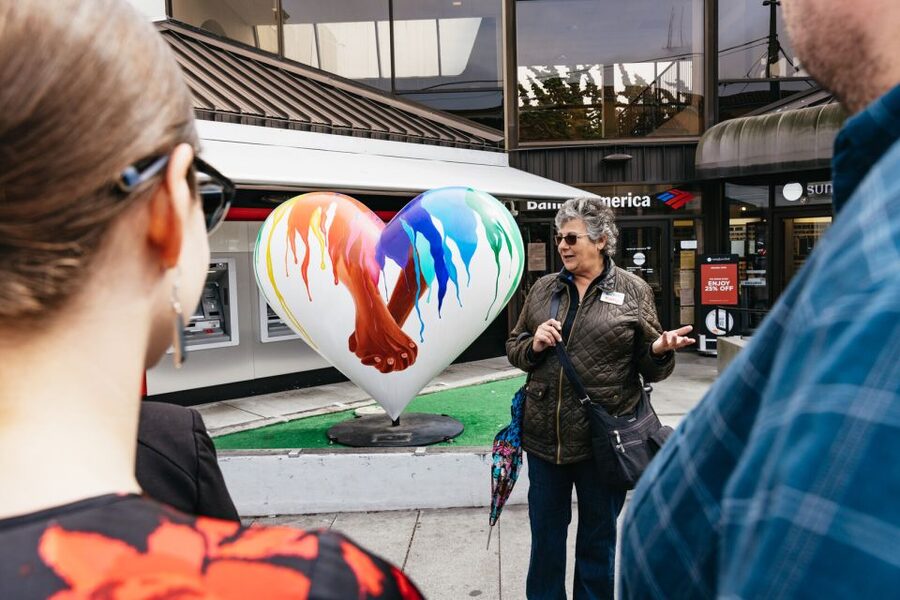
At $40 per person, this is not the cheapest way to spend two hours in San Francisco. The value depends on what you want from a city walk.
If you simply want to see the Castro’s main streets, you can explore on your own for free. You can also notice the rainbow flagpole, public plaques, and neighborhood landmarks without paying for admission. What you cannot easily recreate is the organized historical connection between those places.
The price pays for a local guide, a clear route, and context that would otherwise require several hours of reading and self-guided research. Kathy’s decades in the neighborhood are especially useful because she can connect public landmarks with the community’s lived experience.
I consider the cost fair if LGBTQ history is a main reason you are visiting the Castro, or if you want a focused introduction before exploring on your own. It is less compelling if you prefer wandering without a schedule, dislike serious historical subjects, or already know the neighborhood and its major stories well.
Free cancellation up to 24 hours before the tour and the option to reserve now and pay later reduce the risk of fitting it into a changing San Francisco itinerary.
Who will get the most from this walk?
This tour suits first-time visitors who want more than a quick photograph beside a rainbow flag. It also works well for families with older children and young adults, couples, solo visitors, and people traveling from outside the United States.
You will get the most from it if you are willing to listen, ask questions, and consider uncomfortable parts of history. The tour is educational and sometimes emotional, but it also includes humor and a strong sense of community.
It may not suit you if you want a nightlife tour, a food walk, or a general sightseeing circuit covering many parts of San Francisco. The experience stays focused on the Castro and LGBTQ history. That focus is its strength, but it also means you should not book it expecting a broad city tour.
How to fit it into your San Francisco day
The two-hour length makes this easy to place in a larger plan. You can schedule it as your main Castro activity, then continue exploring the neighborhood at your own pace afterward.
Starting near Castro and Market Streets also makes the meeting point easy to identify once you reach the neighborhood. Arrive with enough time to find 400 Castro Street, especially because the incorrect location photo could cause confusion.
I would choose this walk early in a Castro visit. It gives you context for the places you see afterward and helps you understand why ordinary streets carry so much meaning. If you have already spent time in the neighborhood, the tour can still fill in the political and social connections you may have missed.
Should you book the Castro LGBTQ Walking Tour?
Book it if you want a thoughtful, local account of how the Castro shaped LGBTQ civil rights and how its community remembers both progress and loss. Kathy’s long connection to the neighborhood, the visits to Harvey Milk Plaza and Pink Triangle Park, and the Rainbow Honor Walk make this far more useful than a quick photo stop.
The tour is especially strong for first-time visitors, families, allies, and anyone looking for an accessible route without San Francisco’s steep hills. Go prepared for serious material, wear comfortable shoes, and keep the afternoon flexible enough to reflect on what you have heard.
At $40, it is a good buy for guided context and local perspective. If that sounds like the kind of history you want to carry home, this is a worthwhile way to spend two hours in the Castro.
FAQ
Where does the Castro LGBTQ Walking Tour meet?
The tour meets at 400 Castro Street, in front of SoulCycle at the corner of Castro and Market Streets. It is next to the Big Rainbow Flagpole Landmark.
How long does the walking tour last?
The tour lasts two hours. Starting times vary, so check availability when booking.
Is the tour wheelchair accessible?
Yes. The route is ADA compliant, easy to walk, and has no large hills.
Who leads the tour?
The tour is led in English by Kathy, a longtime Castro resident and LGBTQ activist.
What landmarks are included?
The tour includes Harvey Milk Plaza, Pink Triangle Park and Memorial, the AIDS Memorial Quilt and Names Project, the GLBT Historical Society, the Rainbow Honor Walk, and other LGBTQ historical sites.
What should I bring, and what is not allowed?
Bring comfortable shoes. Luggage and large bags are not allowed. Tours run rain or shine.
New routes in the USA
- Savor Bar Harbor Culinary Walking Tour in Maine★ 5.0 · 169 reviews
- Savor Bar Harbor Culinary Walking Tour★ 4.5 · 75 reviews
- 90-minute Ghost Walking Tour in Bar Harbor★ 4.5 · 161 reviews
- The Story of Austin: Downtown History Walking Tour★ 5.0 · 216 reviews
- The Original Fells Point Ghost Walk by Baltimore Ghost Tours★ 4.5 · 73 reviews
- Baltimore Walking Foodie Tour in Fells Point★ 5.0 · 182 reviews
- The Madam’s Curse Walking Ghost Tour★ 4.5 · 103 reviews
- Austin Small Group Morning Walk★ 5.0 · 412 reviews
LGBTQ-Friendly, compared.

Browse the lists this tour appears in