
Review · POLAND
Warsaw: Old Town Guided Walking Tour
Warsaw’s Old Town looks old, but its story is one of destruction and determined rebuilding. This two-hour walk links royal Warsaw, the medieval market square, Jewish history, and the 1944 Uprising, giving you the background needed to understand why the restored streets matter so much.
I like the mix of major sights and quieter lanes, plus practical tips on Polish restaurants, cafés, and traditional pastries. I also like the guides’ human touch: Anthony, Antek, Thomas, and Anton are often praised for clear explanations, humor, patience, and personal stories. The main drawback is pace. You cover a lot in two hours, and a group of up to 25 to 30 people can feel less personal than a private walk.
Key points to know before you book
- A fast route through Warsaw’s biggest stories: Royal power, wartime ruin, Jewish heritage, and postwar rebuilding all fit into one walk.
- Start beneath Sigismund’s Column: Castle Square is easy to recognize, and the guide carries a white umbrella.
- Expect history with humor: Guides such as Anthony, Antek, Thomas, and Anton balance serious subjects with warmth and wit.
- The best view comes near the end: The Old Town viewing terrace opens toward the Vistula River and the city.
- The tour goes beyond the postcard center: New Town, ghetto boundary markers, and the Warsaw Uprising Monument add needed context.
- The price needs a careful look: The $13 booking charge covers the reservation and guide payment, despite the tour also being described as pay what you wish.
Why this short walk matters in Warsaw
You can stroll around Warsaw Old Town on your own in an hour or two. You will see the colorful façades, the market square, and the Royal Castle. What you may miss is the reason these scenes are so important.
Much of Warsaw was destroyed during the Second World War. The Old Town you see today was rebuilt with remarkable care, based on historic plans, artwork, and surviving records. A guide can point out how the rebuilt center fits into the wider story of a city that lost much of its architecture and a huge part of its population.
That context gives the walk its strength. It is not only a pretty tour of Polish streets. You move from royal power to occupation, from Jewish life to resistance, and from ruin to reconstruction. The tone needs care, and the strongest guides appear to handle that balance well.
The tour has a rating of 4.9 from 599 reviews, and the praise is remarkably consistent. People often single out the guides’ humor, clear English, historical command, and ability to keep the group engaged. I would not treat that as a promise that every guide will have the same style, but the named guides receive repeated praise for making difficult material understandable.
More Old Town Walking Tours in Poland
- Warsaw: Old Town Highlights Walking Tour in English
★ 4.7 · 1,516 reviews - Old Town Krakow & Wawel Castle Walking Tour
★ 5.0 · 1,508 reviews - Krakow: The Old Town Walking Tour
★ 4.8 · 794 reviews
Meeting Sigismund beneath Castle Square
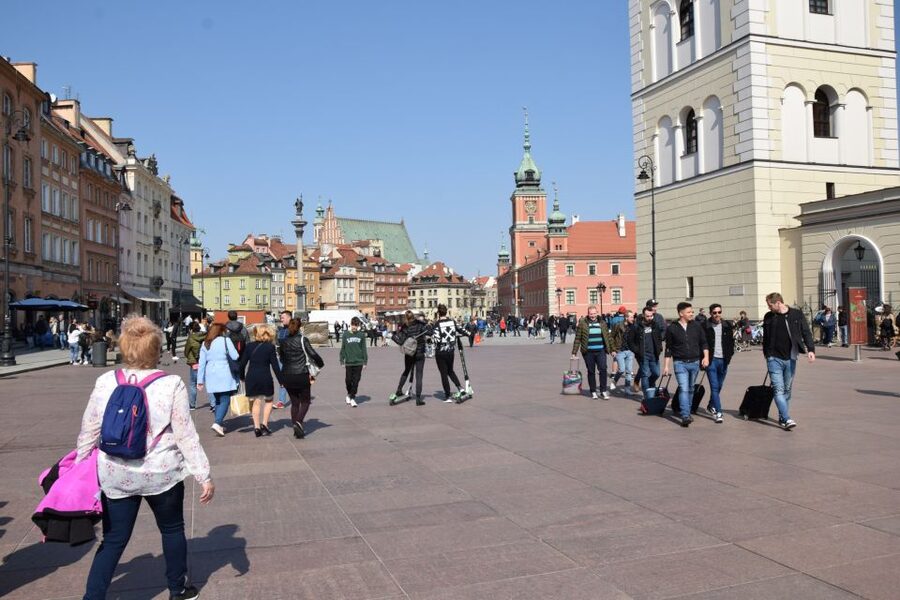
Meet in Castle Square, in front of the 22-meter-high Sigismund’s Column. The white umbrella is the key marker, so you do not need to arrive far ahead. Five to ten minutes early should be enough.
The column honors King Sigismund III Vasa, who moved Poland’s capital from Kraków to Warsaw in the late sixteenth century. It gives the tour a fitting opening: you are looking at a symbol of royal authority while facing the Royal Castle and the entrance to the Old Town.
Castle Square is also a useful orientation point. From here, you can see how the Royal Route, the castle area, and the Old Town connect. If this is your first morning in Warsaw, the location helps you get your bearings quickly.
The group may include as many as 25 to 30 people. That is still a manageable size for a public walking tour, but you should stay close when crossing streets or moving through narrow passages. The guides appear to make an effort to stop in shade during warm weather and to wait for slower walkers, yet this is not a private tour with a completely flexible pace.
Royal Castle and the gardens
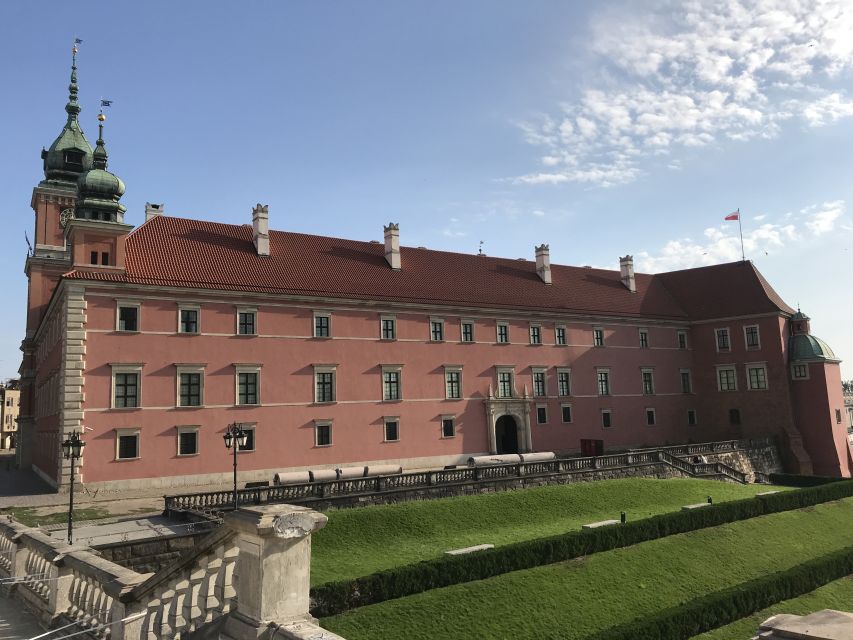
The first major stop is the Royal Castle and its gardens. The castle served as a seat of Polish rulers and parliament, so it represents more than royal decoration. It is tied to the political life of the country and to Warsaw’s role as capital.
This tour does not promise an extended interior visit. You should think of the castle as a guided exterior and historical stop, with time in the Royal Gardens rather than a museum tour. If you want to study the castle rooms, paintings, and state apartments, plan a separate visit.
The gardens offer a calmer change of rhythm. After the open space of Castle Square, you get a chance to see the royal complex from another angle and hear how power was displayed in the capital. The gardens also provide useful photo opportunities without requiring the time of a full castle entry.
This is one place where the two-hour limit matters. You will receive a strong introduction, not a room-by-room lesson. I like that arrangement for a first visit because it leaves time for several other parts of Warsaw, but history fans may want to return on their own.
Market Square and the Warsaw Mermaid
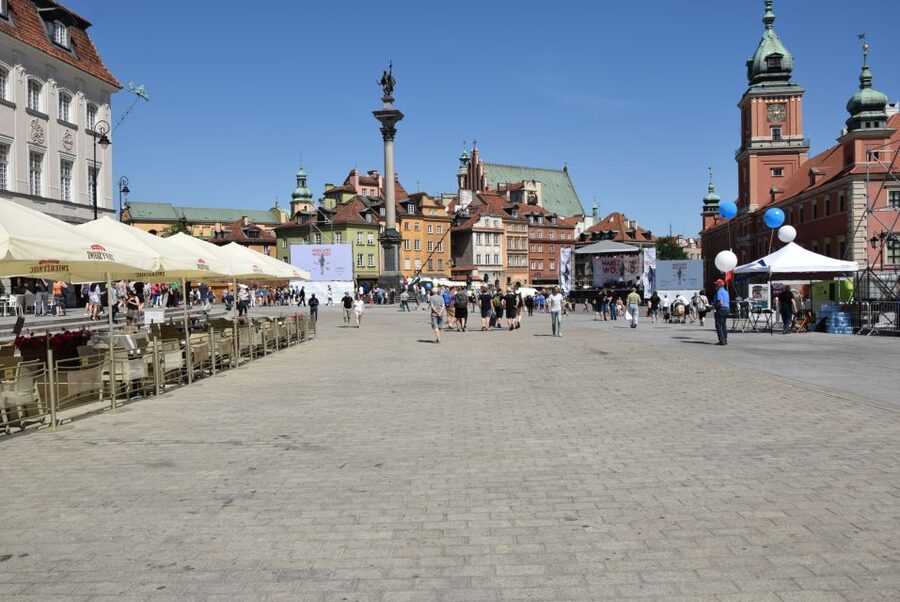
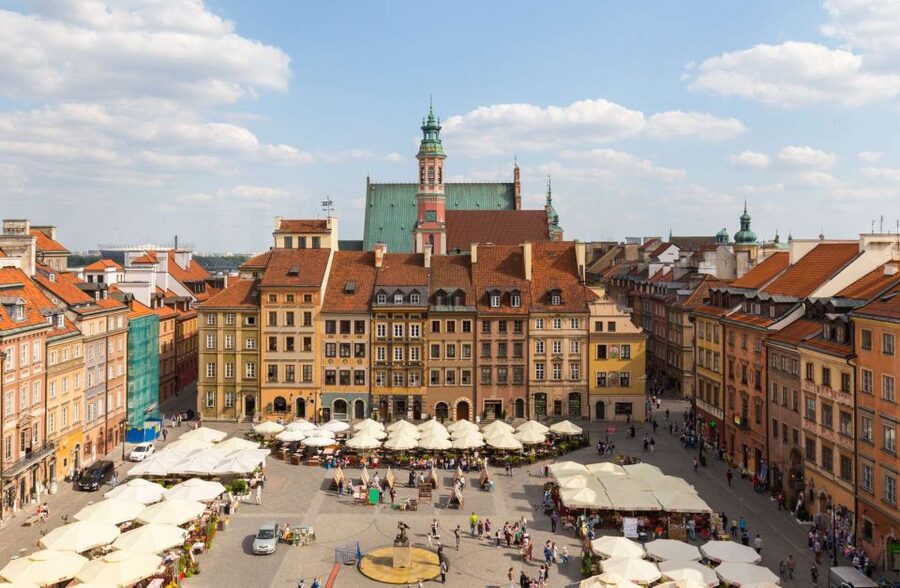
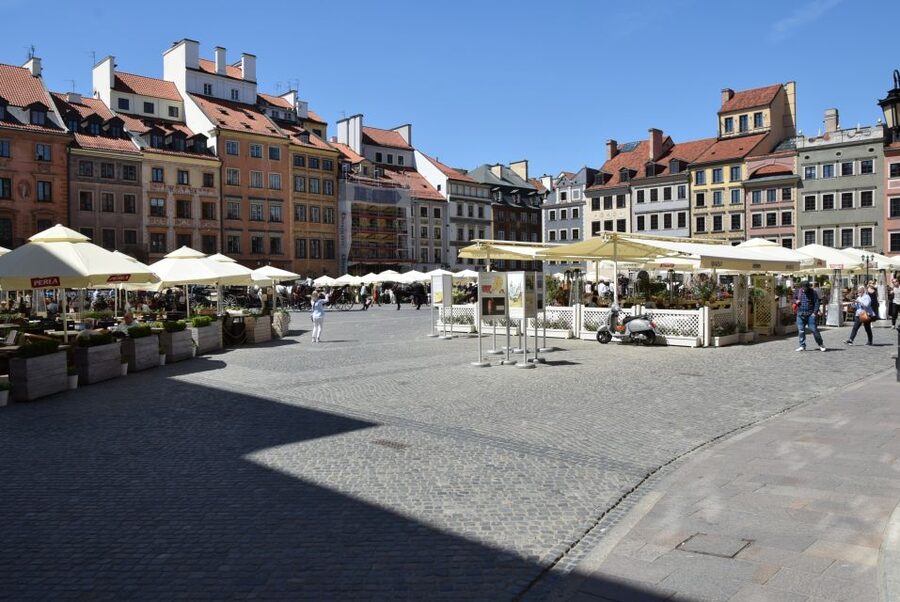
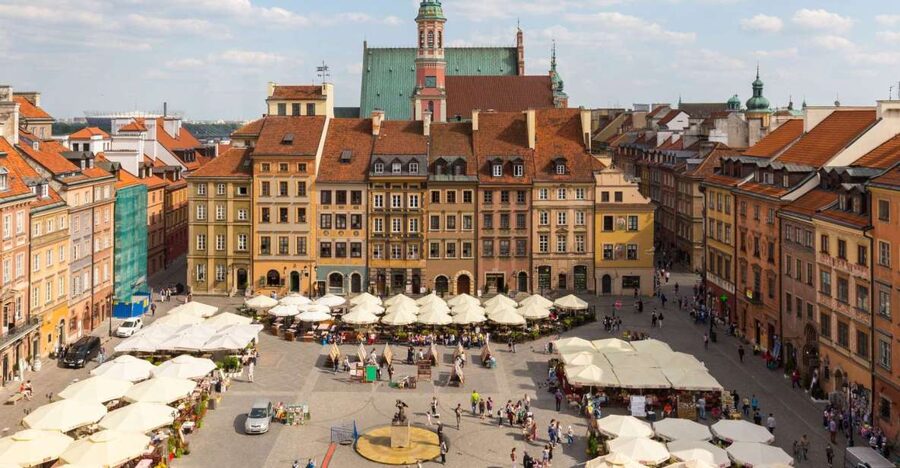
From the castle area, the walk enters the Old Town proper. The Market Square is the visual centerpiece, with its surrounding façades and the statue of the Warsaw Mermaid at the center.
The mermaid is one of Warsaw’s best-known symbols. Take your picture, but also listen to the explanation of why she became linked with the city. The square is attractive at any time, though it can fill with people, especially in good weather.
The guide’s use of side streets is valuable here. Instead of spending the whole visit in the busiest part of the center, the group uses less crowded lanes to see details that are easy to miss. You still get the classic photographs, but the walk does not become a simple circuit of the most obvious spots.
The narrowest house façade is another small but memorable stop. It is an architectural curiosity rather than a grand monument, and it shows the odd little details that give Old Town its character. These brief discoveries help break up the heavier wartime material later.
Same streets, a different guide:
- Creepy Krakow: 2-Hour City Walking Tour
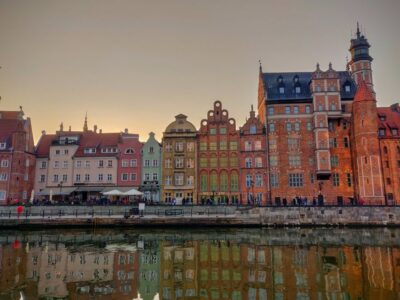
★ 4.7 · 1,131 reviews - Gdańsk City Sights & History Guided Walking Tour in English
★ 4.8 · 876 reviews - Krakow: Kazimierz Jewish Quarter Walking Tour
★ 4.8 · 571 reviews - Kraków: Old Town & Wawel Castle Walking Tour in English
★ 4.8 · 532 reviews
Churches, walls, and the Old Town view
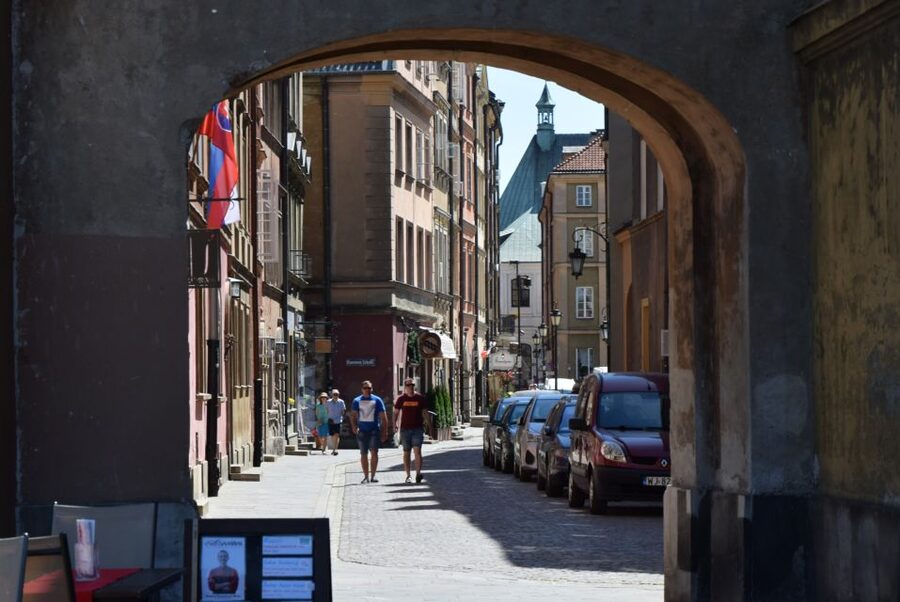
St. John’s Cathedral and the Jesuit Church bring you into Warsaw’s religious and architectural past. Each has its own story, and the guide uses them to explain how the old center functioned as a civic and spiritual hub.
You should not expect a long indoor visit or a full religious art tour. The value here is the setting and explanation. A guide can help you notice the scale, placement, and changing role of these buildings instead of treating them as quick photo stops.
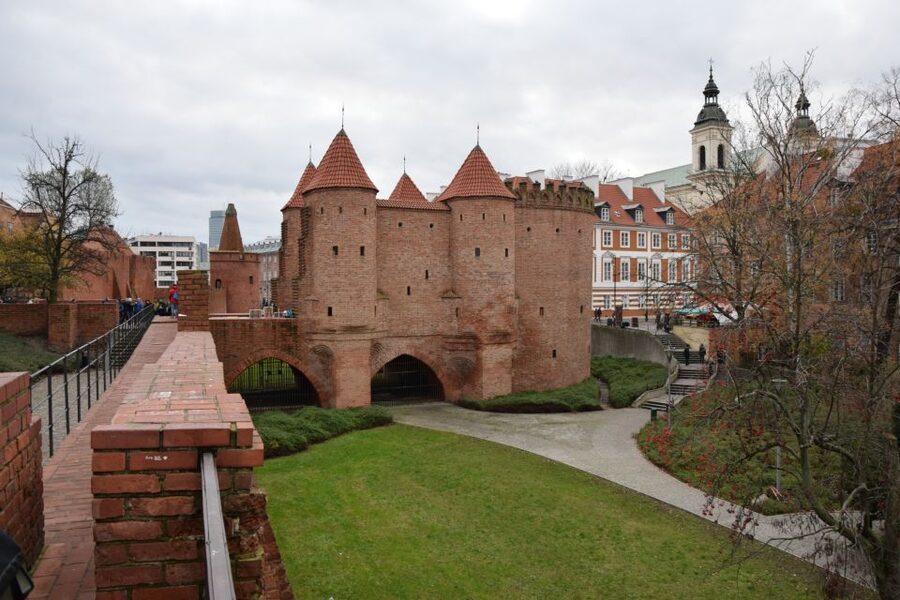
The route then reaches the old city wall and the Barbican. These defensive structures recall the medieval city, when Warsaw was smaller and protection mattered. The surviving sections are not huge, but they make the earlier shape of the town easier to understand.
A viewing terrace in the Old Town provides one of the clearest visual rewards. You look toward the Vistula River and across the city, seeing how the historic center relates to modern Warsaw. Bring a camera, but do not rush the stop. This is a useful point for connecting the compact Old Town with the much larger capital beyond it.
New Town and Marie Curie’s birthplace
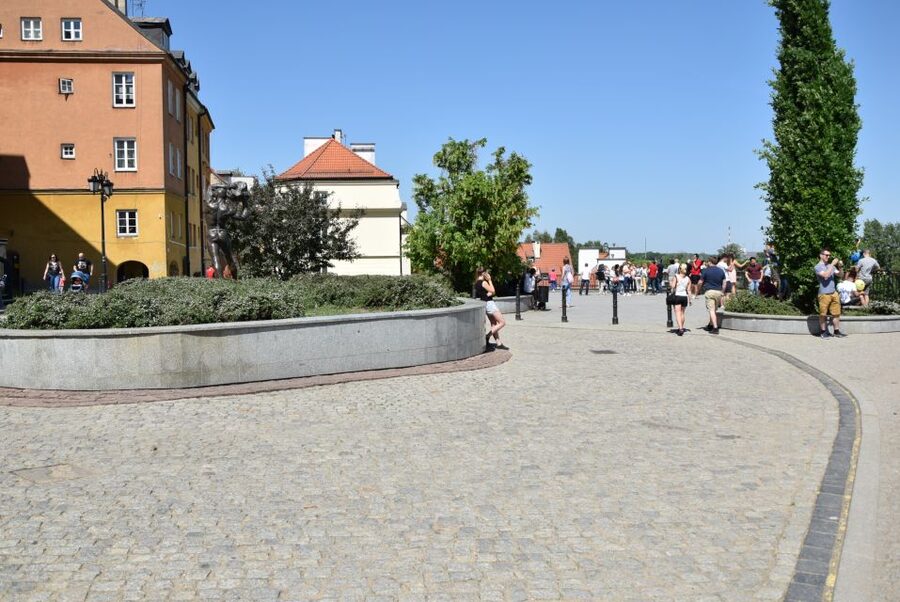
The walk continues into New Town, sometimes called the New Old Town by guides because it has its own historic identity while sitting directly beyond the medieval core.
This area gives you a less concentrated version of the center. The streets and squares feel different from the Old Town Market Square, and the route helps you understand that Warsaw’s historic center was never just one small plaza.
The birthplace of Marie Curie adds a personal story to the itinerary. She was born in Warsaw and later became famous for her scientific work. The stop links the city with one of Poland’s best-known figures while showing that Warsaw’s past includes science and education as well as kings, churches, and war.
The exact time at each location can vary. The itinerary is designed as a continuous walk, so you are unlikely to linger for long at every site. If Marie Curie is a main interest for you, treat this as an introduction and save a museum visit for another part of your stay.
Jewish Warsaw and the ghetto boundary
The section on Jewish Warsaw is one of the most important parts of the walk. The guide takes you to ghetto boundary markers and explains the wartime history of the Jewish community, the ghetto, and the 1943 Jewish Uprising.
This subject can be difficult, and it should be. The value of having a guide is that the markers become more than isolated objects in the pavement or walls. You begin to understand how the ghetto was imposed on the city and how Jewish life was shaped by Nazi persecution.
The tour connects this story with the wider destruction of Warsaw during the Second World War. That connection matters. The city’s wartime experience was not one single event, and Jewish history should not be treated as a brief footnote between prettier sights.
The itinerary includes the Ghetto Wall Monument area rather than promising entry to a museum. You may want more time afterward at the POLIN Museum of the History of Polish Jews or other memorial sites, but those are not part of this two-hour walk. The tour gives you a serious starting point and a clearer map for further study.
The 1944 Warsaw Uprising Monument
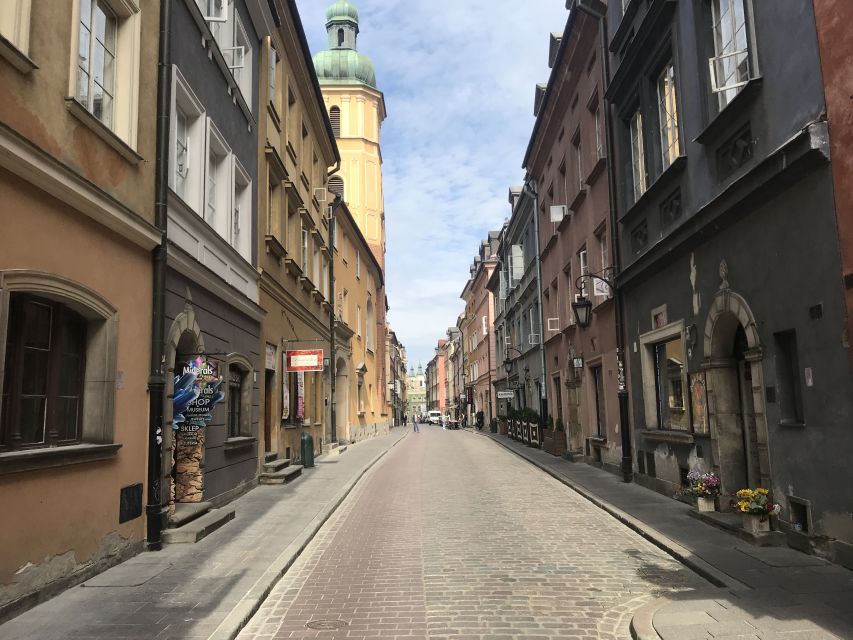
The final major stop is the Warsaw Uprising Monument at Plac Krasińskich. The guided explanation here lasts about 15 minutes, making it one of the more focused history stops on the route.
The Warsaw Uprising of 1944 was an armed attempt by the Polish underground to liberate Warsaw from German occupation before Soviet forces took control of the city. The event ended in defeat and brought further destruction, loss of life, and suffering. Your guide explains the significance of the uprising and why it remains central to Polish memory.
This is where the route’s earlier stops come together. You have seen the royal center, the defensive walls, Jewish heritage sites, and the rebuilt Old Town. At the monument, those separate threads become part of a larger account of occupation, resistance, and national identity.
The tour finishes near Plac Krasińskich, at the address Plac Krasińskich 01. That is useful because you are not returned to Castle Square. You will need to plan your next move from the finish, though the guide’s restaurant and café advice can help you decide where to go afterward.
How the guides shape the experience
The strongest feature is the guiding style. Anthony, also called Antony in some feedback, is repeatedly praised for humor, care, and a strong grasp of Warsaw’s past. Antek is praised for personal stories and for making the city feel close and human. Thomas receives praise for explaining painful history clearly while using humor at the right moments.
Other guides named in the feedback include Anton, Andrew, Magda, Bratek, and Gavel. The experience may therefore vary in tone, but the recurring pattern is clear: you can expect a live guide rather than a memorized audio-style presentation.
Several guides are praised for answering questions and helping with practical issues. One guide helped with parking advice before the tour, while another took extra care with a slower parent. Those details matter if you are traveling with family or need a little more patience from the group.
Humor is part of the style, including some dark humor. That will suit you if you prefer history explained in a relaxed, direct way. If you want a solemn memorial tour with no jokes, this may not be your ideal format. The guides appear to use humor to keep the group attentive, not to make light of tragedy, but personal taste still matters.
Price, group size, and the pay what you wish detail
At $13 per person, the tour is good value if you want a strong orientation to Warsaw in two hours. You cover royal sights, the Old Town, New Town, Jewish heritage, and the 1944 Uprising without paying for several separate visits.
There is an important pricing detail. The experience is described as a general pay what you wish tour, while the $13 charge covers the reservation fee and the guide’s payment. Read the booking terms carefully so you understand exactly what is included and whether an additional tip is expected.
This distinction caused confusion for at least one participant who discovered that other people on the same walk had joined a free reservation and planned to tip the guide directly. That could create an awkward moment. I would clarify the payment arrangement before booking, especially if you prefer a simple all-in price.
Cancellation is flexible: you can cancel up to 24 hours ahead for a full refund, and you can reserve now and pay later. The tour runs for two hours, with English and German available.
Who will get the most from this walk
I would choose this tour for a first visit to Warsaw, especially if you want context before exploring museums and memorials on your own. It is also a good fit for a short city break, since the route covers the core sights without taking an entire day.
History-minded visitors will appreciate the connection between the Old Town, Jewish Warsaw, and the 1944 Uprising. Families may like the stories and shorter stops, though younger children could find the wartime sections heavy.
You should be comfortable walking outdoors for two hours. The route includes city streets, squares, walls, gardens, and a viewing terrace, so wear practical shoes and dress for the weather. Winter feedback shows that the walk continues in snow and freezing temperatures, while summer feedback points to shade stops when needed. Rain will make the experience less pleasant, since much of the time is outside.
If you already know Warsaw well, the hidden lanes and personal stories may still add something. But if you want long museum visits, detailed architectural study, or a private pace, choose a more specialized tour.
Should you book the Warsaw Old Town walk?
Book it if you want a lively introduction to Warsaw that treats beauty and tragedy as part of the same story. The strongest reasons are the broad route, the thoughtful wartime context, the river view, and guides such as Anthony, Antek, and Thomas, who bring both humor and feeling to the walk.
Think twice if the pay what you wish pricing feels unclear, if you dislike group tours, or if you want extensive time inside the Royal Castle or museums. For most first-time visitors, though, $13 and two hours buy a useful map of the city and a much better understanding of what you are seeing.
FAQ
Where does the Warsaw Old Town walking tour begin?
It begins in Castle Square, in front of the 22-meter-high Sigismund’s Column.
How do I recognize the guide?
Look for a guide holding a white umbrella. Arriving five to ten minutes before the scheduled start is sufficient.
How long does the tour last?
The walking tour lasts two hours.
Which languages are available?
The tour is available in English and German.
What places are included?
The route includes the Royal Castle Gardens, the Royal Castle area, Old Town Market Square, New Town Market Square, ghetto boundary markers, and the Warsaw Uprising Monument. It also covers churches, the city wall, the Barbican, Marie Curie’s birthplace, and an Old Town viewing terrace.
Does the tour include the inside of the Royal Castle?
The experience includes a visit to the Royal Castle area and Royal Gardens. It does not specify an extended interior visit to the castle.
How large can the group be?
Public tours are limited to a maximum of about 25 to 30 people.
What does the $13 price cover?
The $13 charge covers the reservation fee and the guide’s payment. The tour is also described as a general pay what you wish tour, so check the payment details before booking to understand whether a separate tip is expected.
New routes in Poland
- Krakow: Jewish Quarter Guided Walking Tour★ 4.8 · 119 reviews
- Szczecin: Old Town Highlights Private Walking Tour★ 4.7 · 76 reviews
- Old Town Poznan: Guided Walking Tour in English★ 4.6 · 78 reviews
- Krakow: Old Town Guided Walking Tour★ 4.6 · 94 reviews
- Kraków: Old Town & Wawel Castle Walking Tour in English★ 4.8 · 532 reviews
- Krakow: Old Town Highlights Walking Tour★ 4.5 · 173 reviews
- Krakow: 2h Kazimierz (Jewish Quarter) Walking Tour★ 4.5 · 75 reviews
- Krakow: Old Town Highlights Private Walking Tour★ 4.9 · 79 reviews
Poland Walking Tours, compared.
Gdańsk City Sights & History Guided Walking Tour in English
Read our review →
Warsaw Ghetto Private Walking Tour with Hotel Pickup
Read our review →Browse the lists this tour appears in