
Review · FRANCE
Colmar: Unusual Walking Tour with a local guide
Colmar’s best surprise is that its story goes well beyond the pretty canals of Petite Venise. This two-hour walk with local guide Nicolas links medieval streets, Alsatian customs, Auguste Bartholdi’s statues, and the grand buildings left by the German Imperial era.
I like the relaxed pace and the small group, capped at six people. I also like that the walk leaves the postcard center and reaches Colmar’s southern district, where the Cour d’Appel, Château d’Eau, and Central Train Station tell a different story. The main drawback is practical: this is a walking tour for people who can manage city streets, not for anyone with significant mobility limits.
Key points to know before you book
- A local view of Colmar: Nicolas grew up in the city and explains its streets, symbols, and local customs in clear English or French.
- More than Petite Venise: You pass through the famous quarter but also visit less obvious corners and the southern district.
- A useful history lesson: The tour explains how Alsace moved between French and German control and how that past shaped Colmar.
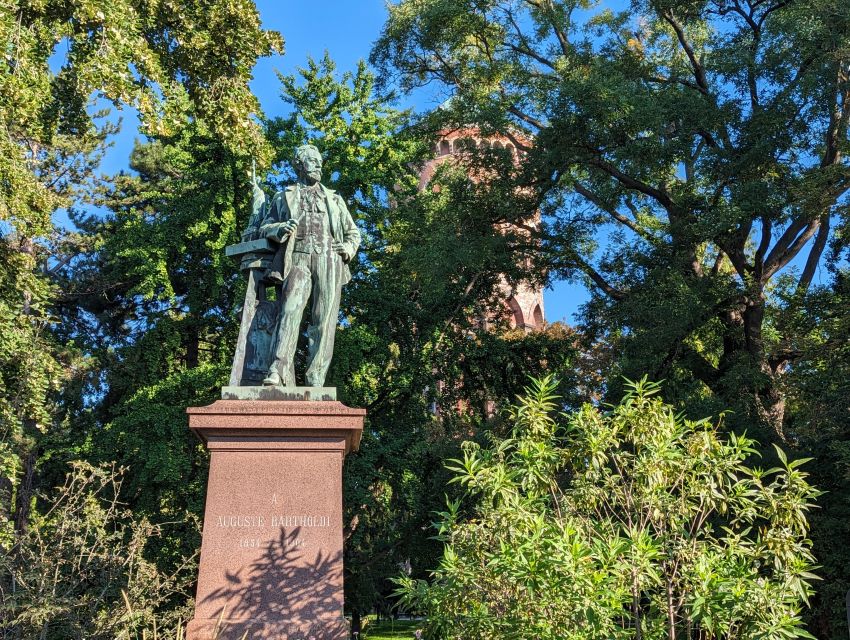
- Bartholdi’s hometown: Several statues by Auguste Bartholdi help you understand the sculptor behind the Statue of Liberty.
- Small and conversational: Groups are limited to six, making it easy to ask questions or request more detail on a particular subject.
- Good first-day choice: Nicolas can help you get your bearings and suggest places to eat and drink after the walk.
Why this Colmar walk is different from a standard old-town tour
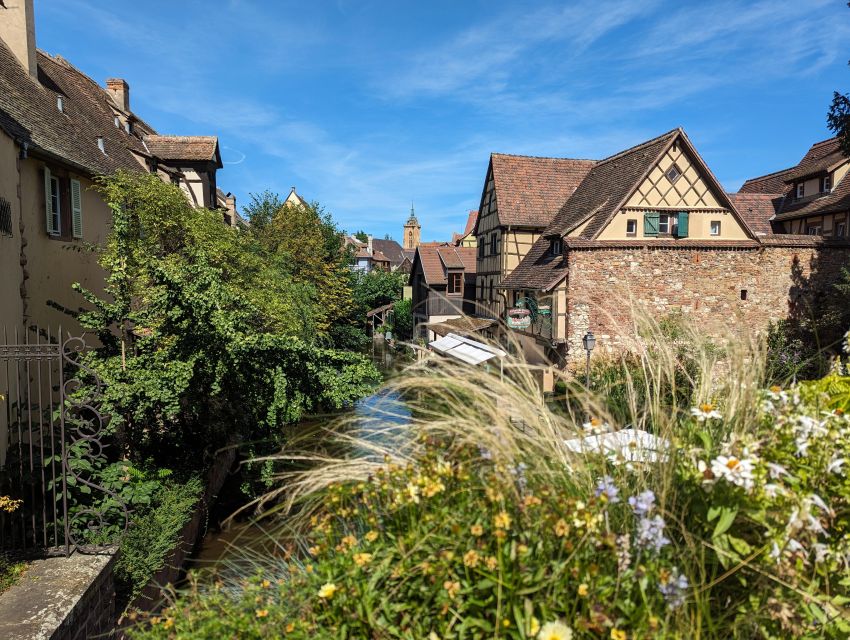
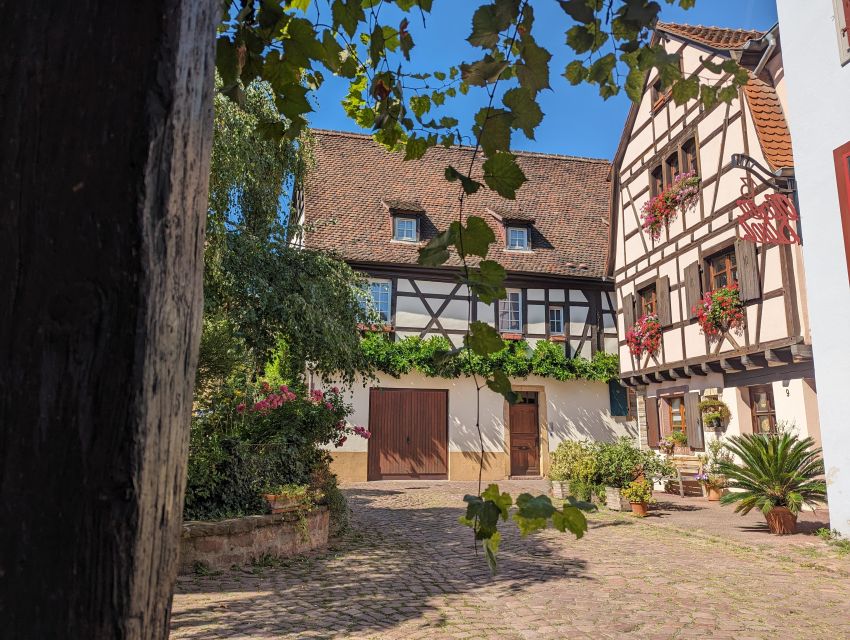
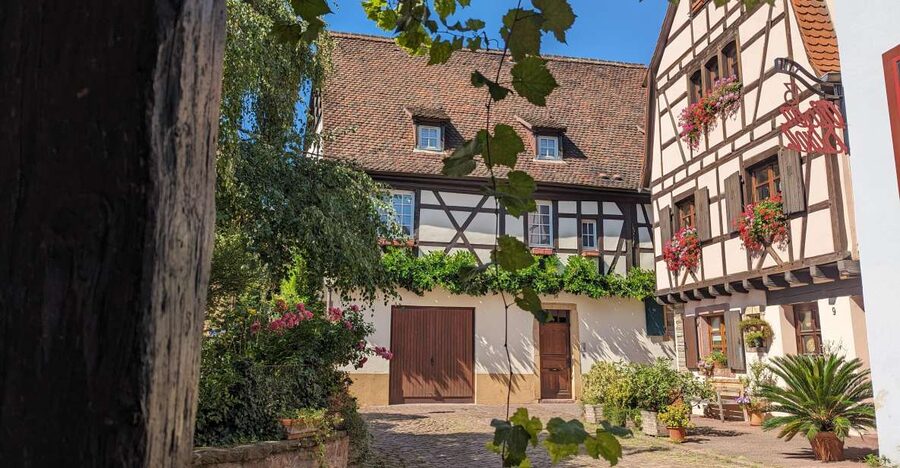
Most first visits to Colmar begin in the old center. That makes sense. The half-timbered houses, canals, flower boxes, and narrow lanes are the city’s visual calling card. But if you only follow the busiest path through Petite Venise, you see the surface of Colmar and miss much of its character.
This walk uses the old town as a starting point, then pushes beyond it. You learn how ordinary people lived in the Middle Ages, how the Alsace region developed its particular identity, and why Colmar’s buildings show both French and German influence.
I especially like that the tour is not built around a single famous monument. It is about connections. A street detail leads to a story about local life. A statue leads to Bartholdi. A grand public building leads to the German Imperial period. That approach helps you read the city instead of simply photographing it.
Nicolas is the guide most often named in the tour information. He grew up in Colmar, has a background in tourism, and is comfortable explaining the city in English or French. His style appears to be friendly, calm, and open to questions, with humor used to keep the history moving.
More Guided Walks in France:
- Paris Top Sights Half Day Walking Tour with a Fun Guide
★ 5.0 · 2,893 reviews - Paris: Montmartre Highlights Walking Tour with a Local Guide
★ 4.9 · 2,318 reviews - Paris: Montmartre Cheese, Wine & Pastry Guided Walking Tour
★ 4.8 · 2,255 reviews
Starting at the Bruat Fountain in Champ de Mars
The meeting point is the Bruat Fountain, in the middle of Parc du Champ de Mars. This is a sensible place to begin because it sits between the modern city and the old center, giving the walk a natural transition from present-day Colmar into its historic streets.
You should arrive ready to walk for two hours. The tour is not described as a museum visit, so expect outdoor explanations rather than indoor exhibitions. Comfortable shoes matter, particularly on older streets and narrow lanes.
The small-group format is a real advantage here. With no more than six participants, you can hear the guide more easily and ask about details that catch your attention. A larger group can turn a walking tour into a parade. This one is better suited to conversation.
The early start offered on some schedules may also help you avoid the heaviest crowds. Colmar’s most photogenic streets can become busy, especially around Petite Venise. Beginning earlier gives you more room to listen and look around.
Medieval Colmar, explained through local life
The first major section takes you into the medieval city. The focus is not only on dates, rulers, and battles. Nicolas explains what life was like for local people and uses anecdotes to make the period easier to picture.
That matters because Colmar’s old buildings can otherwise become a row of attractive façades. You may notice timber framing, signs, narrow passages, or unusual architectural details without understanding why they are there. A local guide can point out the small clues that turn a pretty street into a record of how the town worked.
The Alsace story is also more complicated than a simple French regional history. Colmar and the wider region have been shaped by periods of French and German control, along with the effects of major conflicts. The tour explains those changes in a way that connects politics to local identity.
This is one of the strongest parts of the experience for anyone who wants context. You are not just told that Alsace has a mixed culture. You get a clearer idea of how language, borders, customs, and loyalties affected the people who lived here.
Nicolas also appears willing to adjust the conversation to the group. If you ask about local culture, football, regional pride, or the effects of the First and Second World Wars, he can take the discussion in that direction. That flexibility is easier in a six-person group than on a large scheduled tour.
Petite Venise without following only the crowds
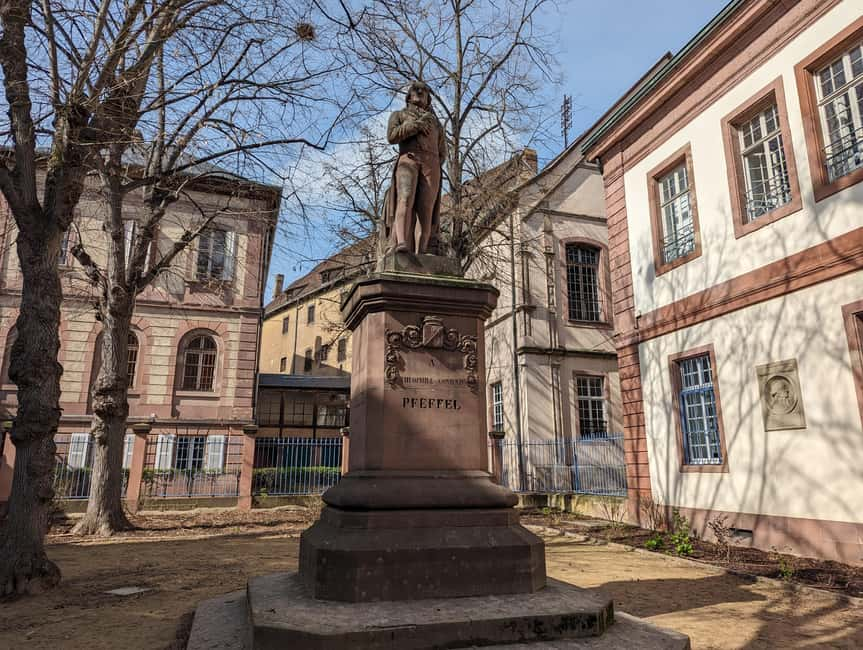
Petite Venise is the part of Colmar most people already know from photographs. The canals and colorful buildings are worth seeing, but the busiest routes can make the area feel more like a stage set than a neighborhood.
This tour includes the quarter while trying to avoid the most crowded streets. That makes a difference. You get the familiar scenery, but the guide can also show you a different way through it and explain details that are easy to miss when you are focused on taking pictures.
I would not book this walk expecting complete solitude. Petite Venise is one of Colmar’s main attractions, and no guide can remove the crowds entirely. The value is in choosing a better route and giving the scene some meaning.
Nicolas’s advice about restaurants and local places to drink is especially useful here. The central lanes contain plenty of places aimed at visitors, so a guide who knows the town can help you step away from the most obvious choices. The tour does not include food or drinks, but the recommendations can shape the rest of your day.
More Walking Tours in France:
- Authentic Parisian Gourmet Food Tour with 10 Local Dishes & Wines
★ 5.0 · 4,754 reviews - Montmartre Hidden Gems and Scenic Highlights Walking Tour
★ 5.0 · 2,684 reviews - Montmartre Hill French Gourmet Food and Wine Tasting Walking Tour
★ 5.0 · 2,588 reviews - Paris Île de la Cité and Notre-Dame Walking Tour With Crypt
★ 5.0 · 2,272 reviews
Finding Bartholdi in his hometown
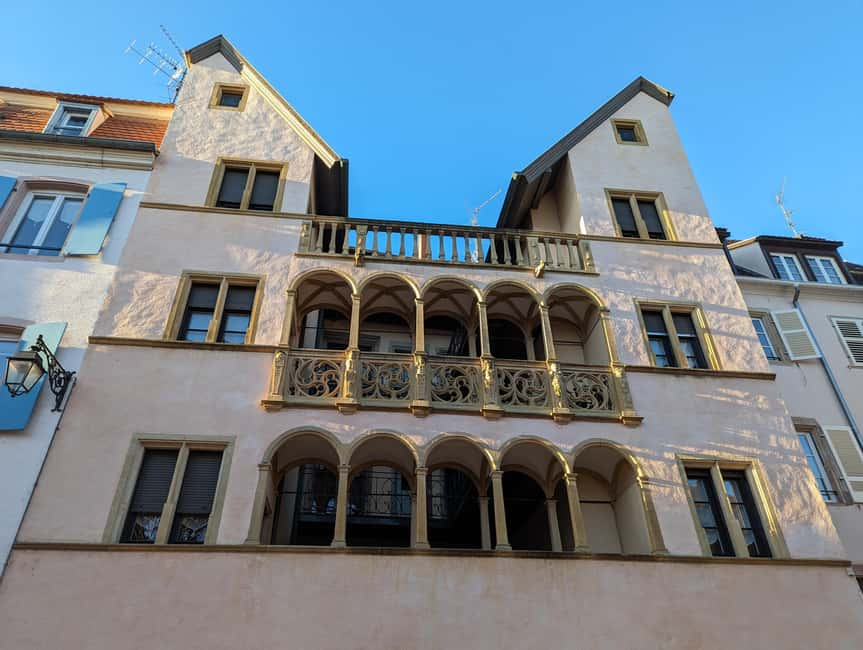
Auguste Bartholdi is one of Colmar’s most famous sons. He created the Statue of Liberty, but his connection with the city goes well beyond that one achievement.
The walk points out several of his statues and uses them to explain both the sculptor and the local figures he chose to honor. This adds a human layer to Colmar’s public spaces. Instead of seeing a monument as decoration, you learn why it is there and what it says about the city.
This section should appeal to art lovers, but you do not need a special interest in sculpture to enjoy it. Bartholdi’s work gives you another way to understand Colmar’s civic pride and the people regarded as local heroes.
It is also a good example of the tour’s wider method. Famous sights are not treated as isolated stops. They are connected to local personalities, regional history, and the way Colmar presents itself.
The German Imperial district in southern Colmar
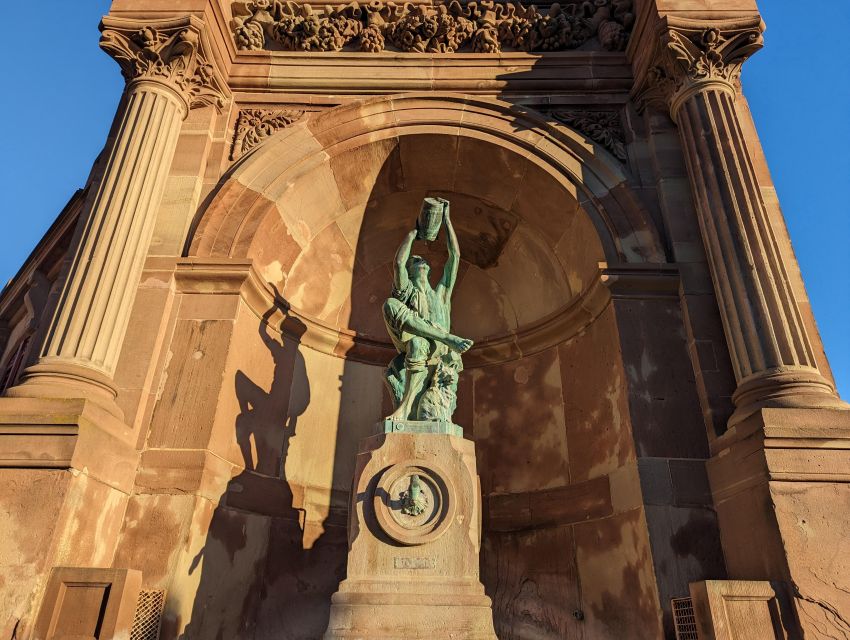
The southern district is the part most likely to be missed on a quick independent walk. Its buildings do not have the same cozy look as the old center, but they show another important chapter in Colmar’s past.
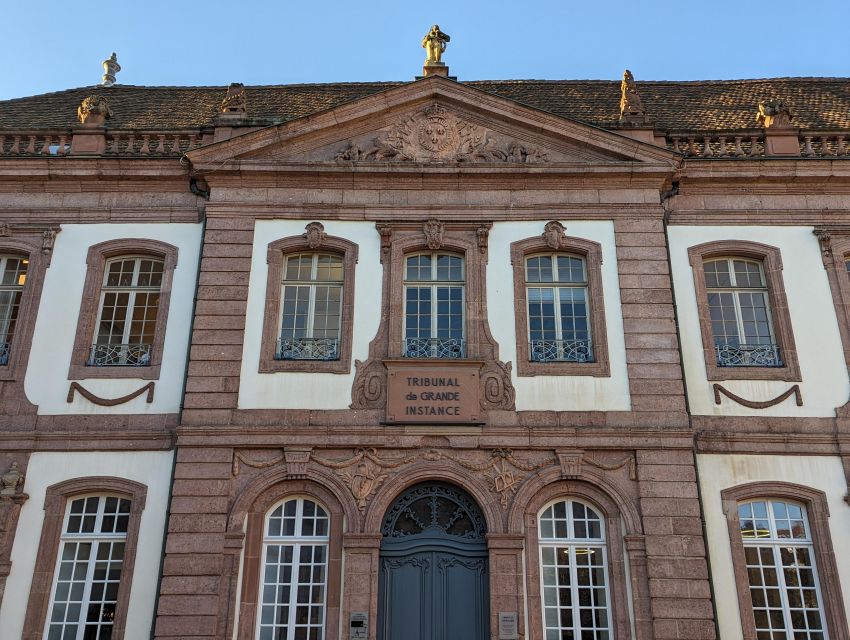
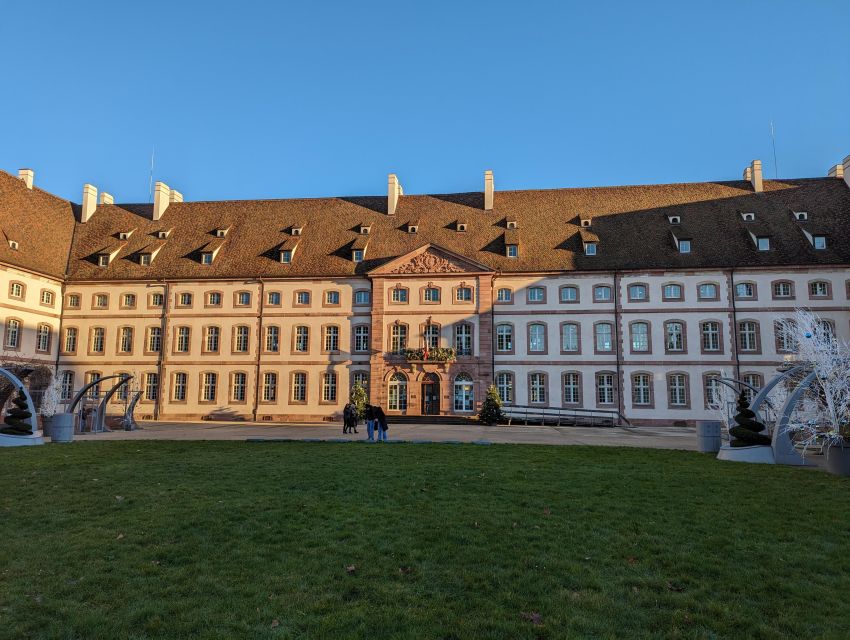
The Cour d’Appel is described as monumental. The Château d’Eau is huge and practical rather than pretty in the usual tourist sense. The Central Train Station adds another large-scale building to the route. Together, these sights reveal the planning and architectural ambitions of the German Imperial era.
This change of scenery is one of the tour’s best features. You move from medieval lanes and canals to broad public structures and institutional buildings. The contrast helps you see that Colmar is not simply a preserved old town. It is a city shaped by different governments, periods, and ideas of public power.
The southern district may not be the place you would choose for a short visit if you were interested only in picture-postcard views. That is precisely why having a guide helps. Nicolas gives the buildings a reason to be on your route.
The guide’s style and the small-group advantage
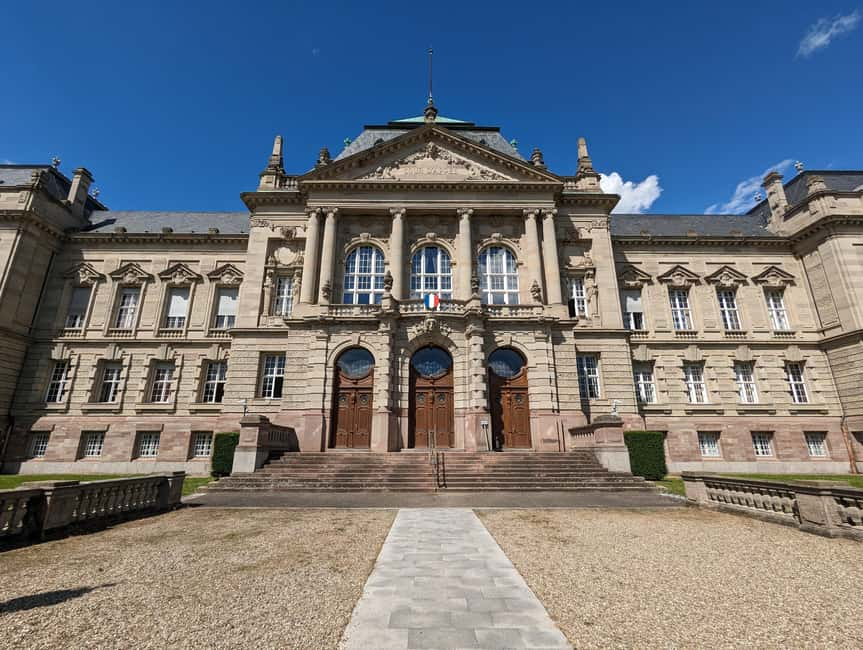
The strongest praise for this experience centers on Nicolas’s way of explaining Colmar. He is repeatedly described as friendly, relaxed, enthusiastic, and easy to understand in English. Several comments also point to his humor and his willingness to answer questions.
That combination matters. A guide can know a great deal and still deliver a dull walk. Here, the information is presented through stories, local sayings, personal knowledge, and small details that you would likely pass without noticing.
The group size of six creates a more personal setting. You can ask why a building matters, stop for clarification, or tell the guide what interests you. The walk can also stay in one language when needed, which is helpful for English-speaking visitors.
The tour is not a private experience, so you should still expect to share the guide with other people. But six is small enough that the walk should feel more like a conversation than a lecture.
The guide’s local connection is another advantage. Nicolas does not simply recite a prepared outline about Colmar. He can talk about the city where he grew up, its local pride, its football culture, and its place in Alsace. That personal point of view is especially useful in a region where national history and local identity do not always line up neatly.
Pace, timing, and physical demands
Two hours is a useful length for a first introduction. It is long enough to cover the old center, Petite Venise, Bartholdi-related sights, and the southern district without taking up your entire day.
The pace is described as calm and well managed. That should suit anyone who wants to listen carefully rather than rush from one photograph to the next. It also leaves time afterward for lunch, a museum, a wine visit, or independent exploring.
The main physical issue is straightforward: you are walking through the city for two hours. The experience is not suitable for people with mobility impairments, and no transport is included.
Rain is also worth considering. The walk operates outdoors, and one February group enjoyed it despite rainy weather, but bad weather can affect your comfort. Bring suitable clothing if the forecast looks uncertain.
I would schedule this near the start of your Colmar stay. The route gives you a mental map of the city, and the food and drink suggestions are more useful when you still have time to act on them. You can then return to the areas you liked best on your own.
Is $41 good value?
At $41 per person, the price is reasonable if you want more than a quick orientation. You are paying for two hours with a local guide, a group limited to six, and a route that covers parts of Colmar many first-time visitors skip.
The value is strongest for people who enjoy history and want help interpreting what they see. A free walk through Colmar can show you the canals and façades, but it will not necessarily explain the changes between French and German rule, the meaning of local monuments, or the importance of the Imperial buildings.
It is less useful if you already know Colmar well or prefer to wander without a fixed route. You may also find the price harder to justify if your only goal is taking photographs in Petite Venise.
There are no listed entrance fees or tastings included. This is a walking and interpretation experience, not a food tour or museum ticket. Its value comes from the guide’s time, local perspective, and the way the sights are tied together.
The tour has a 4.9 rating from 194 reviews, with the strongest praise focused on Nicolas’s historical explanations, clear English, gentle pace, humor, and practical suggestions for the rest of a visit. Those are the qualities I would care about most when choosing a short city walk.
Who should book this Colmar experience?
I would recommend it to first-time visitors who want to understand Colmar before exploring alone. It is also a good match for couples, families with older children, and small groups who prefer questions and conversation over a large guided procession.
The tour can work well for teenagers because the guide uses anecdotes and humor rather than presenting history as a list of dates. A 15-year-old was included in a rainy-day outing, and the group still found the experience enjoyable.
English-speaking visitors should feel comfortable booking. Nicolas’s English is repeatedly described as clear, and the tour is offered in English or French.
You should think twice if you have serious mobility concerns, dislike walking for two hours, or want an activity centered on tastings. One separate comment mentions a winery outing, but that is not part of this Colmar walking tour. The advertised experience includes the walk and the local guide, not wine visits.
Dogs may be welcome, since one outing was described as dog friendly, but this is not stated as a formal condition for every departure. If you plan to bring a dog, confirm before booking.
Practical booking advice
The meeting point is the Bruat Fountain in Parc du Champ de Mars, not inside Petite Venise. Check the exact starting time when you reserve, since availability changes by date.
You can cancel up to 24 hours before the tour for a full refund, and the reserve-now-pay-later option keeps your plans flexible. These policies are useful if your Colmar visit depends on train connections or changing weather.
The guide speaks French and English. If you need one language throughout the walk, mention that when arranging the booking or at the meeting point. The small group makes that easier to manage than a large multilingual tour.
Give yourself enough time to reach the fountain. The guide’s phone contact before the walk has been helpful to participants, but you should still plan to arrive early rather than cross the city at the last minute.
Should you book it?
Book this tour if you want Colmar to make sense, not just look pretty. Nicolas’s local knowledge, clear storytelling, and practical food advice add real value, especially on a first visit.
The best reason to choose it is the route. You get the medieval center and Petite Venise, but you also see Bartholdi’s public art and the German Imperial buildings in southern Colmar. That wider view gives the city more depth without taking more than two hours.
Skip it if you want a food tasting, a museum tour, or a completely private walk. For most visitors who can comfortably walk city streets, though, $41 is a fair price for a small, well-paced introduction to Colmar and Alsace.
FAQ
Where does the Colmar walking tour meet?
The guide waits at the Bruat Fountain in the middle of Parc du Champ de Mars.
How long does the tour last?
The walking tour lasts two hours.
What languages are available?
The live guide offers the tour in French and English.
How large is the group?
The group is limited to six participants.
What places does the tour visit?
The route includes the medieval city, parts of Petite Venise, sites connected with Auguste Bartholdi, and Colmar’s southern district. It also highlights the Cour d’Appel, Château d’Eau, and Central Train Station.
Is the tour suitable for people with mobility impairments?
No. The activity is not suitable for people with mobility impairments because it involves two hours of city walking.
New routes in France
- Avignon Walking Tour including Pope’s Palace★ 4.5 · 158 reviews
- The Official Emily in Paris Locations Walking Tour★ 4.9 · 383 reviews
- Strasbourg: Historic Center Walking Tour★ 4.7 · 88 reviews
- Strasbourg: Private Walking Tour of the Historical Center★ 4.2 · 107 reviews
- Strasbourg: Guided Walking Tour★ 4.7 · 127 reviews
- Strasbourg : European District Walking Tour★ 5.0 · 95 reviews
- Paris: Montmartre Food Tasting Walking Tour with Secret Dish★ 4.8 · 107 reviews
- Paris: Emily Inspired Walking Tour★ 4.9 · 312 reviews
France Walking Tours, compared.

Authentic Parisian Gourmet Food Tour with 10 Local Dishes & Wines
Read our review →
Paris Top Sights Half Day Walking Tour with a Fun Guide
Read our review →
Montmartre Hidden Gems and Scenic Highlights Walking Tour
Read our review →
Montmartre Hill French Gourmet Food and Wine Tasting Walking Tour
Read our review →
Montmartre Highlights Walking Tour with a Local Guide
Read our review →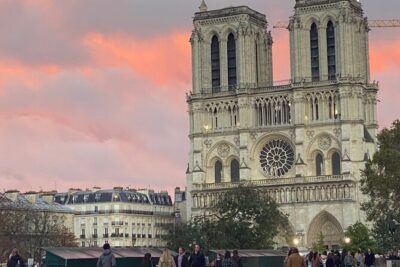
Paris Île de la Cité and Notre-Dame Walking Tour With Crypt
Read our review →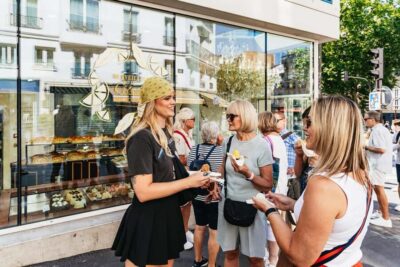
Montmartre Cheese, Wine & Pastry Guided Walking Tour
Read our review →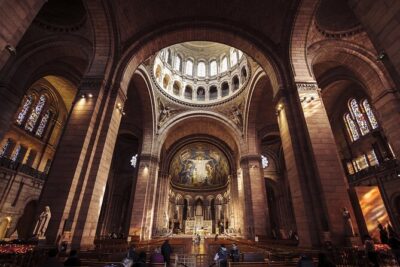
Paris in a Day: Louvre or Orsay, Eiffel Tower, City Walk & Cruise
Read our review →Browse the lists this tour appears in