

Review · CHARLESTON
Charleston walking tour with a Citadel history professor
Charleston’s past comes alive in the places you could easily walk past: a narrow old alley, a worn graveyard, an ornate church, or a building whose shape tells you how people once lived. On this three-hour walk, Citadel history professor Eric Lager connects those details to Charleston’s colonial beginnings, Revolution, Civil War, architecture, religion, and famous characters.
I like the small group limit of 12, which makes it easier to hear Eric and ask questions. I also like the way the tour goes beyond dates, bringing in building design, religious life, political power, and the people who shaped the city. The main consideration is simple: three hours on foot can feel long in heat or rain, and the tour is not suitable for wheelchair users.
Key points at a glance

- Led by a Citadel history professor: Eric Lager teaches South Carolina and Charleston history and has nearly 20 years of college teaching and public-history experience.
- Three hours in the historic district: The route uses streets, alleys, graveyards, parks, churches, theaters, and civic landmarks to explain the city’s past.
- Small groups by design: The maximum group size is 12, with many sessions described as smaller.
- History beyond dates: Expect architecture, religion, military events, politics, culture, and personal stories woven together.
- A strong first-day activity: The tour gives you context that can make later walks around Charleston more rewarding.
- Bring the basics: Wear comfortable shoes and carry water. The tour runs rain or shine unless conditions become unsafe.
Why a professor-led Charleston walk feels different
Charleston has no shortage of attractive streets. You can admire pastel houses, church steeples, ironwork, and shaded lanes on your own. The harder part is understanding what you are seeing and why it matters.
Eric Lager’s background gives this walk a clear academic foundation, but the experience is designed as a conversation rather than a classroom lecture. He covers Charleston from its founding in 1670 to the present, using stories to connect major events with the people and buildings in front of you.
That approach matters in a city where one block can hold several centuries of American history. A church may lead to a discussion of religious freedom. A graveyard may reveal social rank, disease, family life, or a forgotten public figure. A street corner may explain how law, commerce, and political authority worked in colonial Charleston.
You should expect plenty of detail. Several sessions have lasted close to three hours, with one described as about two hours and 45 minutes. Eric is also known for taking questions, so the pace may shift slightly depending on what the group wants to explore.
More History Walking Tours in the USA
- Historic Charleston Guided Sightseeing Walking Tour
★ 5.0 · 6,216 reviews - Hidden Alleyways and Historic Sites Small-Group Walking Tour
★ 5.0 · 2,335 reviews - Charleston historical walking tour with a Professor of History at The Citadel
★ 5.0 · 1,284 reviews
Starting at 108 Meeting Street
The meeting point is at 108 Meeting Street, along the brick wall on the sidewalk in front of a building with four small white Ionic Greek columns. The building now serves as a graphic design center for the City of Charleston and is not open to the public.
Look across the street for Hibernian Hall and the pink Mills House Hotel. That hotel has restrooms, but there are none at the actual meeting location, so plan ahead before the walk begins.
This is a useful place to start because you are already in Charleston’s historic core. You will not spend the opening minutes waiting for transport or moving between neighborhoods. The experience is a walking study of the city itself.
Arrive ready to walk. Comfortable shoes are essential, and water is a smart addition, especially in warm weather. There is no hotel pickup or drop-off, so you need to make your own way to Meeting Street.
Alleys, graveyards, and Charleston’s older layers

The most appealing part of this tour is its willingness to leave the broad streets behind. Charleston’s old alleys and graveyards offer a closer look at the city’s past than a quick architectural stroll can provide.
An alley can show how homes, businesses, servants’ quarters, and public spaces once fit together. A graveyard can raise questions about family, faith, status, and the people whose names have faded from public memory. These locations are not just atmospheric stops. They help Eric explain how Charleston worked as a colonial port and later as a major Southern city.
You will also hear about famous and infamous figures from the past. The value here is not simply collecting colorful anecdotes. Personal stories give human scale to events such as the American Revolution, the Antebellum Era, and the Civil War.
If you prefer a light sightseeing walk with only a few historical facts, this may feel too detailed. If you enjoy asking why a city developed as it did, the extra context is the point.
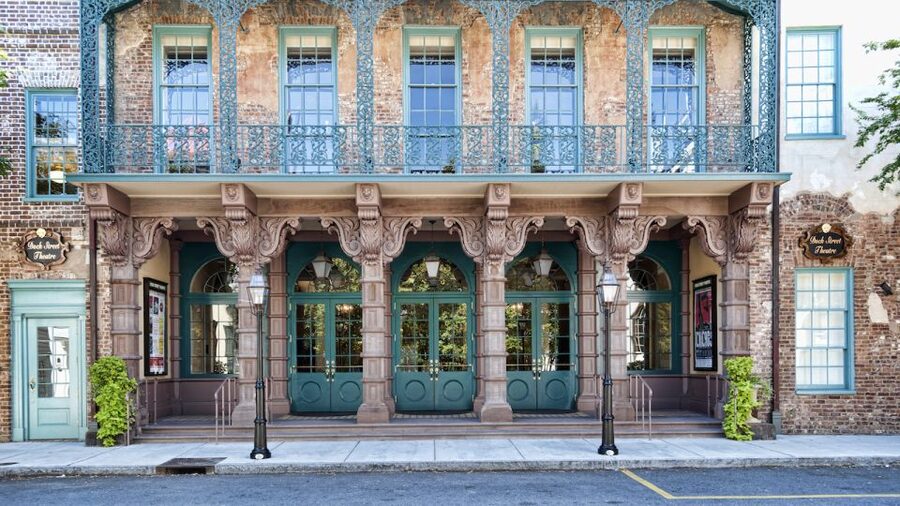
Dock Street Theater and the French Huguenot Church

The Dock Street Theater and French Huguenot Church provide two different windows into Charleston.
The Dock Street Theater represents the city’s long connection with public entertainment and civic life. A stop here can help place Charleston’s cultural history alongside its commercial and political development.
The French Huguenot Church brings religious history into the walk. Charleston was shaped by people from different European backgrounds, and the church offers a direct way to discuss the role of French Huguenots and religious communities in the city.
The important thing is how these stops fit into the wider story. You are not simply photographing attractive facades. Eric explains the cultural and religious forces behind them, along with the architectural details you might miss on your own.
House museums are not included in the price, and the tour does not include entry into them. That keeps the experience focused on the streets and public spaces rather than turning it into an indoor museum visit.
More History Walking Tours in Charleston:
- Charleston: Old Walled City Historical Walking Tour
★ 4.7 · 705 reviews - Charleston: History and Architecture Guided Walking Tour
★ 4.8 · 349 reviews - History and Hauntings of Salem Guided Walking Tour
★ 5.0 · 14,564 reviews - Lisbon: History, Stories and Lifestyle Walking Tour
★ 4.8 · 10,902 reviews
The Four Corners of Law and Washington Park
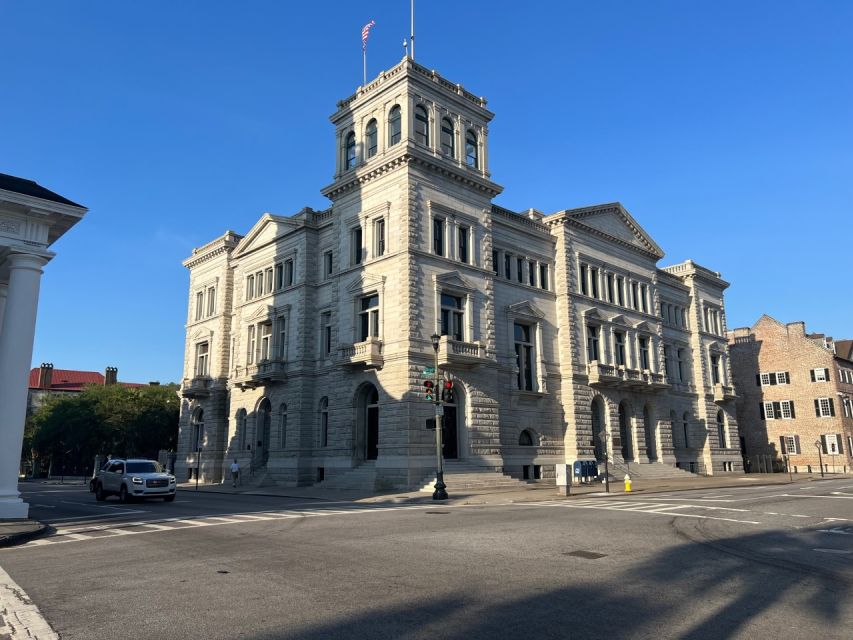
The Four Corners of Law is one of the tour’s most useful civic-history stops. This intersection brings together buildings associated with different forms of authority, including religious, governmental, and legal power.
The name itself gives Eric a starting point for explaining how Charleston’s public life was organized. Instead of treating the city as a collection of pretty buildings, the tour asks who made decisions, how rules were enforced, and how public institutions shaped everyday life.
Washington Park adds another layer. Parks and civic spaces can reveal how a city presented itself, remembered its past, and created places for public life. As Eric discusses the park, you will likely see Charleston less as a frozen colonial setting and more as a city that has changed while retaining older structures.
These stops are especially useful if you want more than architectural trivia. They connect the built environment with government, religion, social order, and memory.
Architecture explained in plain terms
One of the strongest features of this walk is the attention to building design. Eric explains why Charleston homes and public buildings were constructed in particular ways, rather than simply pointing out that they are old or attractive.
That can change the way you see the city. A narrow house, a porch, a column, or the placement of a doorway may reflect climate, social rank, household function, cultural influence, or the needs of an earlier period.
The architectural discussion also gives you something practical for the rest of your visit. After the tour, you can walk through the historic district and recognize patterns instead of seeing each building as an isolated facade.
Several people who have taken the walk found that the city looked different afterward because they understood more about its buildings and the people who used them. That is a meaningful return on three hours: you gain a way to read Charleston for yourself.
Eric Lager’s teaching style

Eric’s academic credentials matter, but his delivery matters just as much. The experience is described as clear, funny, approachable, and carefully researched. He answers questions directly and encourages conversation rather than relying on a memorized script.
His background covers the Colonial Era, American Revolution, Antebellum Era, and Civil War. That range allows him to place Charleston’s early founding alongside later conflicts and changes, instead of treating each period as a separate topic.
The humor helps keep a large amount of information manageable. Still, this is not a comedy walk with a few historical facts added. The subject matter includes slavery, war, religion, politics, and social power, and the tour takes those subjects seriously while keeping the tone friendly.
I would choose this tour for people who enjoy asking questions and listening closely. It is also a good fit for families with older children or teenagers who can handle a long walking session and a steady flow of historical information. Younger children may find the material too dense, depending on their interest.
Small groups make a real difference
Many Charleston walking tours allow groups of up to 20 people. This one guarantees no more than 12, and sessions described by participants have often had around 10 people or fewer.
That difference is practical. You can hear the guide more easily, stay close to the group, and ask a question without interrupting a large crowd. Eric can also speak with people individually, which helps the walk feel more personal.
A smaller group does not automatically make a tour better, but it matters when the guide covers detailed material. If you want to discuss architecture, a family connection, or a particular period of history, you have a better chance of doing so here.
The tradeoff is that spaces can sell out. If this is a priority for your Charleston visit, book early rather than assuming you can join at the last minute.
Is $40 a fair price?
At $40 per person, this tour costs more than a casual self-guided walk, but the comparison is not quite fair. You are paying for three hours with a trained historian, a planned route, a small group, and interpretation that would take considerable reading to assemble on your own.
The value is strongest if you want context. Eric does not only identify the Dock Street Theater or French Huguenot Church. He explains how architecture, religion, politics, culture, military events, and personal stories fit together.
The price does not include food, drinks, hotel transportation, or entry to house museums. You should also budget for your own refreshments and make restroom arrangements before meeting at 108 Meeting Street.
For someone who only wants a quick orientation and photographs, $40 may feel high. For a history-focused visitor who wants one substantial walk, the price is reasonable, especially because the three-hour format offers more time than a brief introductory tour.
Weather, pace, and accessibility
The tour operates rain or shine unless conditions are unsafe. That means you should check the forecast and bring suitable clothing rather than assuming the walk will move indoors.
Heat, humidity, and rain can make three hours feel very different from three hours on a cool morning. Water and comfortable shoes are listed as essentials. A light rain jacket or sun protection may also be sensible, but the confirmed requirement is simply to prepare for an outdoor walk.
The route is not suitable for wheelchair users. The use of old streets, alleys, and graveyards may also present uneven walking conditions, though no specific surface details are provided. If you have mobility concerns, contact the provider before booking and ask whether the current route can meet your needs.
Pets are not allowed, except for assistance dogs.
Who should book this Charleston history walk?
I would recommend it first to anyone who wants Charleston’s story explained rather than simply displayed. It suits history enthusiasts, architecture fans, Civil War and Revolutionary War students, and people who enjoy a guide who can handle detailed questions.
It also works well at the beginning of a Charleston visit. You will gain a framework for later exploring the historic district, visiting museums, and noticing architectural details.
You may want a different activity if you prefer a short walk, a food-centered outing, a ride instead of walking, or a tour with little narration. This experience is built around sustained attention. Three hours is a commitment, but the small group and professor-led format make the time easier to manage.
FAQ
How long is the Charleston walking tour?
The advertised duration is three hours. Some sessions have ended slightly earlier, at about two hours and 45 minutes.
Who leads the tour?
Eric Lager leads the tour. He is a history professor at The Citadel and has nearly 20 years of combined experience teaching at the college level and working in public history.
What historical periods does the tour cover?
The tour covers Charleston from its founding in 1670 to the present, including the Colonial Era, American Revolution, Antebellum Era, and Civil War.
How large is the tour group?
The group is guaranteed to have no more than 12 people. Some sessions have had 10 or fewer participants.
Where does the tour meet?
The meeting point is along the brick wall on the sidewalk in front of 108 Meeting Street, across from Hibernian Hall and the pink Mills House Hotel.
Are restrooms available at the meeting point?
There are no restrooms at 108 Meeting Street. Restrooms are available at the Mills House Hotel across the street.
What sights are included?
The walk includes places such as the Dock Street Theater, French Huguenot Church, the Four Corners of Law, Washington Park, old alleys, and graveyards.
Are house museum admissions included?
No. Entry into house museums is not included in the tour price.
What should I bring?
Wear comfortable shoes and bring water. The tour takes place outdoors and runs rain or shine unless conditions are unsafe.
Is the tour wheelchair accessible?
No. The tour is not suitable for wheelchair users.
Should you book it?
Book this walk if you want Charleston explained by someone who teaches its history for a living. The strongest reasons are Eric Lager’s subject knowledge, the small group limit, the mix of architecture and historical storytelling, and the chance to see alleys and graveyards that you might skip on your own.
I would schedule it early in your visit, wear proper walking shoes, and arrive prepared for three hours outdoors. If your ideal Charleston activity is a quick overview or a relaxed ride, choose something shorter. If you want the city’s streets to make more sense by the end of the morning or afternoon, this $40 history walk is a strong choice.
New routes in Charleston
- Charleston: Old Walled City Historical Walking Tour★ 4.7 · 705 reviews
- Charleston: 90-Minute Ghost and Dungeon Walking Tour★ 4.2 · 266 reviews
- Charleston: 90-Minute Ghost & Graveyard Walking Tour★ 4.5 · 75 reviews
- Charleston: History and Architecture Guided Walking Tour★ 4.8 · 349 reviews
- Charleston Ghost & Graveyard Night-Time Guided Walking Tour★ 4.5 · 1,100 reviews
- Charleston historical walking tour with a Professor of History at The Citadel★ 5.0 · 1,284 reviews
- Charleston’s Pleasing Terrors Night-Time Walking Ghost Tour★ 5.0 · 1,345 reviews
- Charleston Haunted Booze and Boos Ghost Walking Tour★ 5.0 · 1,569 reviews
Charleston Walking Tours, compared.

Historic Charleston Guided Sightseeing Walking Tour
Read our review →
Ghosts of Charleston Night-Time Walking Tour with Unitarian Church Graveyard
Read our review →
Hidden Alleyways and Historic Sites Small-Group Walking Tour
Read our review →

Charleston French Quarter or Brunch Food Tour with 7+ Tastings
Read our review →
Charleston Haunted Booze and Boos Ghost Walking Tour
Read our review →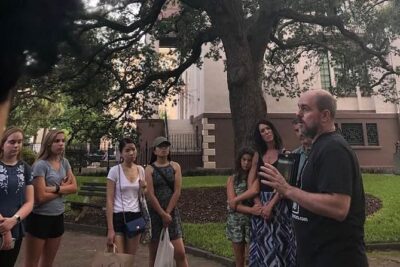
Charleston’s Pleasing Terrors Night-Time Walking Ghost Tour
Read our review →
Charleston historical walking tour with a Professor of History at The Citadel
Read our review →Browse the lists this tour appears in