

Review · CHARLESTON
Charleston historical walking tour with a Professor of History at The Citadel
Charleston’s past is best read on foot, where a former theater, old statehouse, church, courthouse, and harbor all sit within a compact historic center. This tour puts that story in the hands of Eric Lager, Ph.D., a history professor at The Citadel, who guides a small group through nearly four centuries of local and national events.
I like the 12-person limit, since it keeps the group close enough to hear and ask questions. I also like the academic depth without a classroom feel. Lager’s style, according to the many detailed accounts of his tours, mixes political, religious, architectural, and military history with humor and room for side questions.
The main consideration is pace. Three hours of walking and almost constant information can feel full, especially in hot, cold, or rainy weather. You also view Fort Sumter from the Battery rather than taking a boat to the fort.
Key points at a glance
- A real history professor leads the walk: Eric Lager, Ph.D., teaches at The Citadel and brings a strong background in American and European 19th-century history.
- The group is capped at 12: You get a better chance to hear clearly and ask questions than on a large city tour.
- The route links major Charleston eras: The walk moves from colonial buildings and churches to the Revolution, early republic, secession, and the Civil War.
- Fort Sumter is viewed from shore: You see the site from the Battery, but admission and boat transportation to the fort are not part of this tour.
- The walk ends on the Battery: The finish is near 39 East Battery and the Rainbow Row area, a useful spot for continuing your sightseeing.
- It suits serious history fans best: The tour covers a lot in three hours, so it favors people who enjoy detail more than a quick, casual introduction.
Why this Charleston walk feels different
Many city walks give you a list of dates and buildings. This one is designed more like a compact seminar conducted outdoors. You move from place to place, but the real subject is how Charleston’s buildings connect to changing power, religion, commerce, government, and war.
Lager’s background matters here. You can ask a question about a church, a political dispute, an architectural style, or the Civil War and expect the answer to connect with the wider story. The experience is especially useful if you enjoy learning why a building matters, not simply taking a photograph of it.
The small group helps. With no more than 12 people, you are less likely to lose the guide’s voice in the street. You also have a fair chance to ask about a detail that catches your attention. That personal exchange is one of the strongest reasons to choose this tour over a cheaper, larger walk.
I would book it near the beginning of your Charleston stay. The route gives you a working map of the historic center and points out places you may want to revisit later. Several people who took the tour found the three hours passed quickly, but the amount of material means you should arrive ready to concentrate.
More History Walking Tours in the USA
- Historic Charleston Guided Sightseeing Walking Tour
★ 5.0 · 6,216 reviews - Hidden Alleyways and Historic Sites Small-Group Walking Tour
★ 5.0 · 2,335 reviews - Charleston: Old Walled City Historical Walking Tour
★ 4.7 · 705 reviews
Starting at Mills House and Dock Street Theater
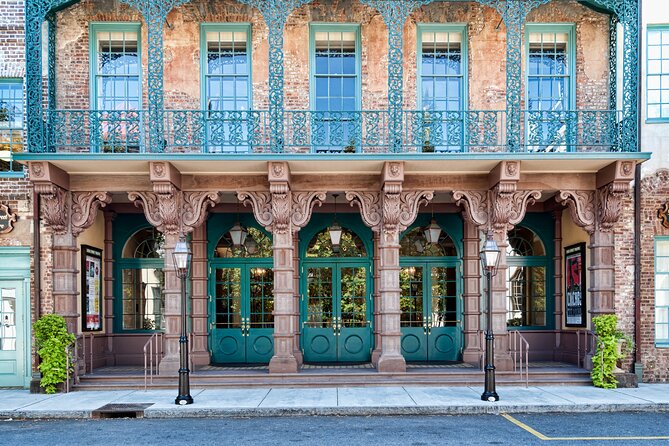
The meeting point is at 108 Meeting Street, outside the historic Mills House Charleston. The hotel provides the opening connection to the Civil War era, including its role during the early part of that conflict. It is a fitting start because the walk quickly signals that Charleston’s story is not limited to pretty façades.
From there, the route reaches Dock Street Theater. You learn about the first theater built in North America and the colorful, sometimes infamous characters tied to its past. This stop is short, but it gives the tour a useful change of tone. Charleston’s story includes public entertainment and personalities as well as generals, politicians, and clergy.
The theater also sets up one of the tour’s strengths: buildings are treated as evidence. Instead of passing a façade with a quick date, you get a sense of the people and events attached to it. If you prefer a light stroll with only a few facts, this may feel like a lot. If you like history with human characters, it is a good early stop.
The Pink House and Washington Square
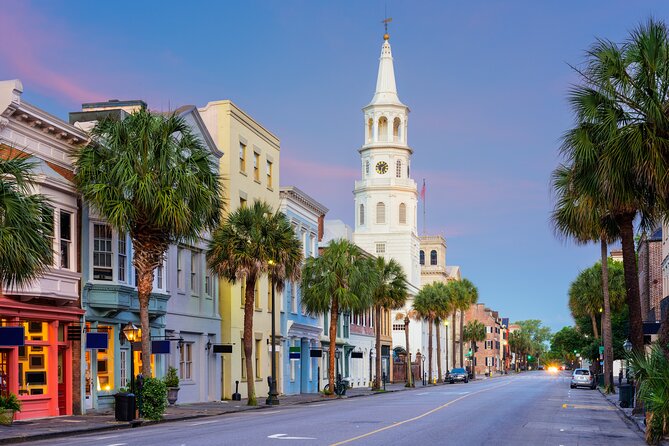
The Pink House Gallery is one of the oldest buildings on the route, dating to about 1712. The stop lasts only a few minutes, but its age helps place Charleston’s surviving architecture in time. You are not simply looking at an old building. You are seeing a structure from the city’s early period still woven into the modern street plan.
Washington Square offers more room to pause. The square contains several monuments, and the guide uses it to broaden the story beyond individual houses. The 15-minute stop is one of the longer pauses in the first half of the walk, which helps break up the steady movement between buildings.
I appreciate this kind of sequence. The Pink House gives you a single, concentrated example. Washington Square then shifts your attention to civic memory and public space. The contrast makes the route easier to follow, even when the information comes quickly.
Civic power at City Hall and the old statehouse
At Charleston City Hall, you learn how the building changed over time. It once served as a meat market and a bank before becoming City Hall. That evolution says a great deal about how the city’s needs changed, and it gives the guide a chance to explain Charleston through its institutions rather than only its homes and churches.
The Charleston County Courthouse adds another layer. The building was once the old South Carolina statehouse, so the stop ties local streets to state government. This is where a professor’s approach can be useful. A building that might otherwise seem like a formal civic façade becomes part of a larger story about authority and public life.
These stops are also a reminder that the walk is not just an architecture tour. You cover government, commerce, religion, war, and social change. The tour’s broad scope is a strength, though you may want to take notes or plan a return visit if you hope to remember every detail.
More History Walking Tours in Charleston:
- Charleston: History and Architecture Guided Walking Tour
★ 4.8 · 349 reviews - Charleston walking tour with a Citadel history professor
★ 5.0 · 105 reviews - History and Hauntings of Salem Guided Walking Tour
★ 5.0 · 14,564 reviews - Lisbon: History, Stories and Lifestyle Walking Tour
★ 4.8 · 10,902 reviews
St. Michael’s Church and two important houses
St. Michael’s Church is one of the central stops. The church edifice was completed in 1761 and is described as Charleston’s oldest church building. Its age gives the guide a chance to discuss the city’s religious past and the way worship spaces shaped the historic center.
The Heyward-Washington House follows. This is the house where George Washington stayed during his visit to Charleston in 1791. Admission to the house is not included, so the stop should be understood as an exterior visit unless you arrange separate entry.
That distinction matters when you budget. The $40 price covers the walking experience and its fees, but some buildings along the route have separate admission charges. You are paying for the guide’s three-hour interpretation, not a package of interior tours.
The Old Exchange, Provost Dungeon, and French Huguenot Church
The Old Exchange and Provost Dungeon is another stop where the route connects several periods. You see the last public building built by the British in North America, and you learn that the Constitution was ratified there in 1788. The stop is brief, but the location carries major political weight.
The French Huguenot Church shifts the focus to Charleston’s French Huguenot community. It is also identified as the first church built in the Gothic Revival style. This is a strong stop for anyone interested in how religion, migration, and architecture meet in one place.
The route does not treat these buildings as isolated curiosities. They help explain the city’s British connections, constitutional history, religious communities, and architectural development. That range is what makes the tour feel more substantial than a basic orientation walk.
Through the French Quarter to Hibernian Hall
The French Quarter is one of the most attractive stretches of the walk. Here you have time to take in the area’s character while Lager explains its place in Charleston’s story. The 15-minute stop is long enough to look around, but it remains part of a moving tour rather than a long free period.
Hibernian Hall brings the conversation back to politics and design. You learn about the building where the seeds of disunion were sown, along with America’s connection to Greek Revival architecture. The building’s role gives the guide a natural way to discuss the tensions that led toward secession.
This section may be especially rewarding if you enjoy architecture with political meaning. You are not just hearing that a building is Greek Revival. You are also learning how a place can reflect the ideas and conflicts of its time.
Fort Sumter from the Charleston Battery
The final major subject is Fort Sumter, where the first shots of the Civil War were fired. You view the fort from the Battery on Charleston Harbor. The tour does not take you out to the monument, and admission to Fort Sumter is not included.
That limitation is worth stating plainly. If your main goal is to walk inside Fort Sumter, you need a separate boat excursion. If you want the geographic setting and the story of the opening shots as part of a wider Charleston tour, the Battery viewpoint works well.
The route ends at 39 East Battery, near the Rainbow Row section of Charleston. This is a practical finish. You are left in a central historic area rather than returned to the starting point, so plan your next move accordingly. The ending also gives the Civil War discussion a clear physical setting, with the harbor in view.
Price, walking effort, and weather
At $40 per person, this is a strong value for anyone who wants a serious three-hour lesson from a specialist. The price is less attractive if you want only a quick overview or plan to spend most of your time inside paid attractions. Several stops are exterior explanations, and the two named paid sites, the Heyward-Washington House and Old Exchange and Provost Dungeon, are not included.
The tour requires a moderate level of physical fitness. You walk for about three hours, with stops along the way. Bottled water is not provided, so bring your own. Private transportation is also not included, though the route is near public transportation.
Weather deserves attention. The walk operates only in suitable weather, and poor conditions can lead to a new date or a full refund. Even when the tour goes ahead, Charleston’s heat, cold, or rain can affect your comfort. Wear practical shoes and check the forecast before setting out. A cold-weather tour can still be rewarding, but you may spend less time enjoying the streets if you are underdressed.
You can cancel for a full refund up to 24 hours before the start time. Inside that window, refunds and changes are not accepted under the stated policy.
Who will enjoy this tour most
I would choose this for a history buff, an architecture fan, or anyone who prefers a detailed conversation to a quick city loop. It is also a good fit for solo visitors and couples who want an intimate group and the freedom to ask questions.
Families with older children may enjoy it, especially if they already like history. Younger children may struggle with the length and the steady flow of information. The walk is also less suitable for anyone looking for a ride, a short photo stop, or a tour focused mainly on food and shopping.
The experience is in English. Service animals are allowed. Since the group is capped at 12, booking ahead makes sense, particularly because it is commonly reserved weeks before the date.
Should you book the Charleston History Walk?
Book it if you want Charleston explained by a trained historian rather than reduced to a string of dates. Eric Lager’s combination of academic background, humor, and willingness to answer detailed questions is the central reason to choose it. The small group, broad route, and Battery finish add real value.
Skip it if you want entry to Fort Sumter, extensive interior access, private transport, or a relaxed walk with little narration. For everyone else, this is a smart first-day activity: it gives you the city’s framework, sharpens what you see afterward, and offers far more substance than a quick pass through the historic district.
FAQ
Where does the Charleston historical walking tour begin?
The tour begins at Mills House Charleston, Curio Collection by Hilton, at 108 Meeting Street, Charleston, South Carolina 29401.
Where does the tour end?
It ends at 39 East Battery near the Rainbow Row area of Charleston.
How long does the tour last?
The walking tour lasts approximately three hours.
How many people can join the tour?
The group is limited to a maximum of 12 people.
Who leads the tour?
The tour is led by Eric Lager, Ph.D., a professor of history at The Citadel.
Is the tour offered in English?
Yes. The tour is offered in English.
Does the tour go inside Fort Sumter?
No. You view Fort Sumter from the Battery on Charleston Harbor. The tour does not travel out to the fort.
Are admission fees to the Heyward-Washington House and Old Exchange included?
No. Admission to those two sites is not included in the tour.
What is the cancellation policy?
You can cancel at least 24 hours before the start time for a full refund. Cancellations or changes made within 24 hours are not accepted, and poor weather may result in a different date or a full refund.
New routes in Charleston
- Charleston: Old Walled City Historical Walking Tour★ 4.7 · 705 reviews
- Charleston walking tour with a Citadel history professor★ 5.0 · 105 reviews
- Charleston: 90-Minute Ghost and Dungeon Walking Tour★ 4.2 · 266 reviews
- Charleston: 90-Minute Ghost & Graveyard Walking Tour★ 4.5 · 75 reviews
- Charleston: History and Architecture Guided Walking Tour★ 4.8 · 349 reviews
- Charleston Ghost & Graveyard Night-Time Guided Walking Tour★ 4.5 · 1,100 reviews
- Charleston’s Pleasing Terrors Night-Time Walking Ghost Tour★ 5.0 · 1,345 reviews
- Charleston Haunted Booze and Boos Ghost Walking Tour★ 5.0 · 1,569 reviews
Charleston Walking Tours, compared.

Historic Charleston Guided Sightseeing Walking Tour
Read our review →
Ghosts of Charleston Night-Time Walking Tour with Unitarian Church Graveyard
Read our review →
Hidden Alleyways and Historic Sites Small-Group Walking Tour
Read our review →

Charleston French Quarter or Brunch Food Tour with 7+ Tastings
Read our review →
Charleston Haunted Booze and Boos Ghost Walking Tour
Read our review →
Charleston’s Pleasing Terrors Night-Time Walking Ghost Tour
Read our review →
Charleston Ghost & Graveyard Night-Time Guided Walking Tour
Read our review →Browse the lists this tour appears in