
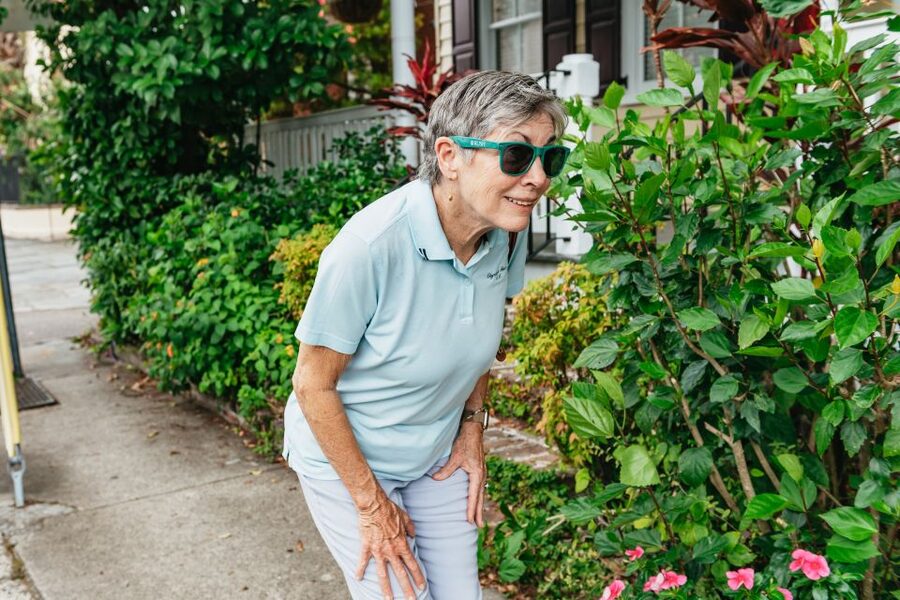
Review · CHARLESTON
Charleston: Old Walled City Historical Walking Tour
Charleston’s past is packed into a surprisingly small area, and this walking tour makes you read the city street by street. You’ll move through the old walled district, from cobblestone lanes and colonial homes to churches, public buildings, and the waterfront. The stories range from piracy and rice wealth to fires, epidemics, bombardments, and a devastating earthquake.
I like two things here. First, the guides bring a strong local connection, including 7th-generation Charlestonian Bruce and longtime guide Alfie, who has led tours since 1982. Second, the tour does not dodge difficult subjects. The main consideration is the pace: you cover plenty of ground in two hours, often on uneven streets, and some guides speak quickly when excited.
Key points at a glance
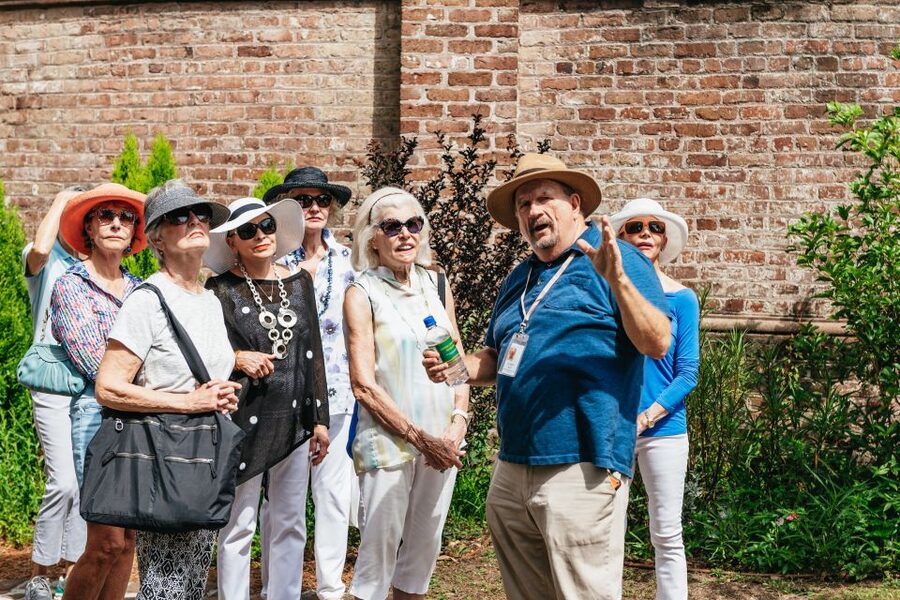
- A local view of Charleston: Guides including Al, Bruce, Eric, and Alfie add personal stories to the city’s older history.
- A useful first-day tour: The route gives you a strong sense of the historic center, waterfront, churches, homes, and major landmarks.
- History beyond pretty buildings: You’ll hear about piracy, rice planters, epidemics, fires, hurricanes, sieges, bombardments, and the earthquake.
- A serious walking commitment: Comfortable shoes, water, sunscreen, and weather-ready clothing matter, especially on cobblestones.
- Good value at $30: Two hours with a live English-speaking guide is a fair price for a broad introduction to Charleston.
- Guide quality matters: Al, Bruce, Eric, and Alfie receive especially warm praise, though the assigned guide can vary by date.
Why this is a smart introduction to Charleston
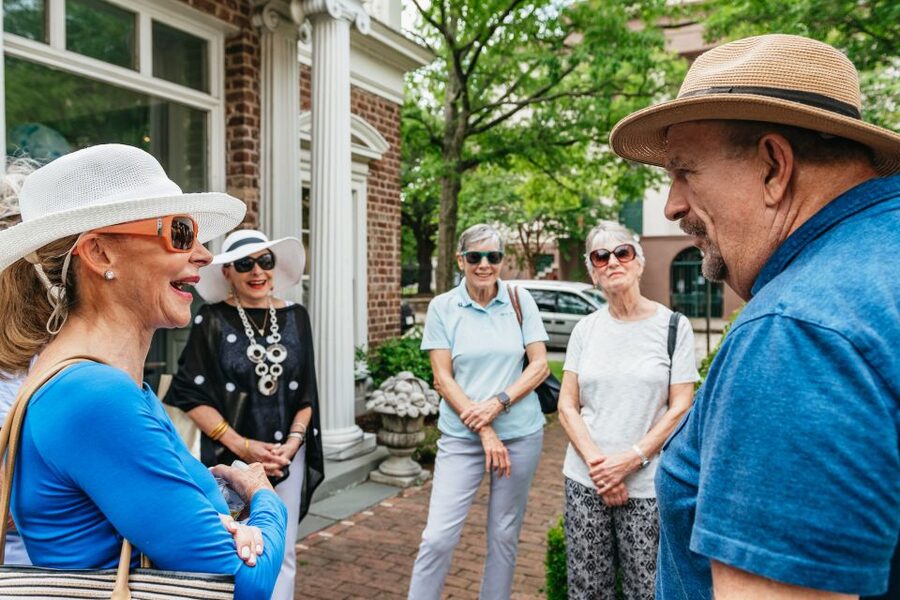
Charleston can look easy to understand. Its pastel homes, church steeples, wrought-iron details, and narrow streets make a pleasant first impression. But the city’s appearance tells only part of the story.
This tour gives you the background needed to read those streets. You’ll see how Charleston grew from a colonial settlement into a wealthy port, how rice planters shaped its society, and how repeated disasters forced the city to rebuild. The route also puts the city’s beauty beside its harder truths, which is important if you want more than a photo stop.
At $30 per person, the tour offers solid value. You are paying for two hours of guiding rather than entry to a single museum or house. That makes it especially useful at the start of a Charleston visit, when you want to learn the layout and decide which places deserve a longer visit later.
The activity is conducted in English, with a live guide. It is not a ride or a hop-on, hop-off circuit. You walk from stop to stop and hear the city explained in place, which gives the buildings and streets more meaning.
More History Walking Tours in the USA
- Historic Charleston Guided Sightseeing Walking Tour
★ 5.0 · 6,216 reviews - Hidden Alleyways and Historic Sites Small-Group Walking Tour
★ 5.0 · 2,335 reviews - Charleston historical walking tour with a Professor of History at The Citadel
★ 5.0 · 1,284 reviews
Meeting on Meeting Street
The starting point is the sidewalk at the corner of Meeting Street and Chalmers Street, with Chalmers being the cobblestone street. Look for the meeting area near Shop Historic Charleston.
This location puts you in the right setting immediately. You are not beginning at a distant transport hub or a generic meeting room. You start among old streets and historic buildings, then move into the French Quarter and surrounding parts of the old city.
Arrive ready to walk. The route includes cobblestones, city sidewalks, stops for explanations, and stretches where the guide continues talking as the group moves. The tour information calls the walking substantial, and that is worth taking seriously.
The French Quarter sets the tone

The French Quarter receives the longest listed portion of the route, about 50 minutes. That gives your guide time to explain the area rather than simply point at a few façades.
Expect colorful pre-colonial and post-colonial homes, storefronts, churches, and public buildings. The value here is the connection between architecture and events. A house becomes more interesting when you know who lived there, how the district changed, or how a fire, storm, or epidemic affected the surrounding streets.
The route also brings out Charleston’s layers. Colonial beginnings, rapid growth, piracy, and the rise of rice planters all fit into the story. These subjects can move quickly, so do not be shy about asking your guide to repeat a name or date.
Guides such as Al and Eric are often praised for linking architecture with local stories. Bruce is a 7th-generation Charlestonian, and Alfie’s long experience adds another kind of perspective. The exact guide is not guaranteed, but the strongest part of this tour is the person leading it.
Dock Street Theatre and the Old Exchange
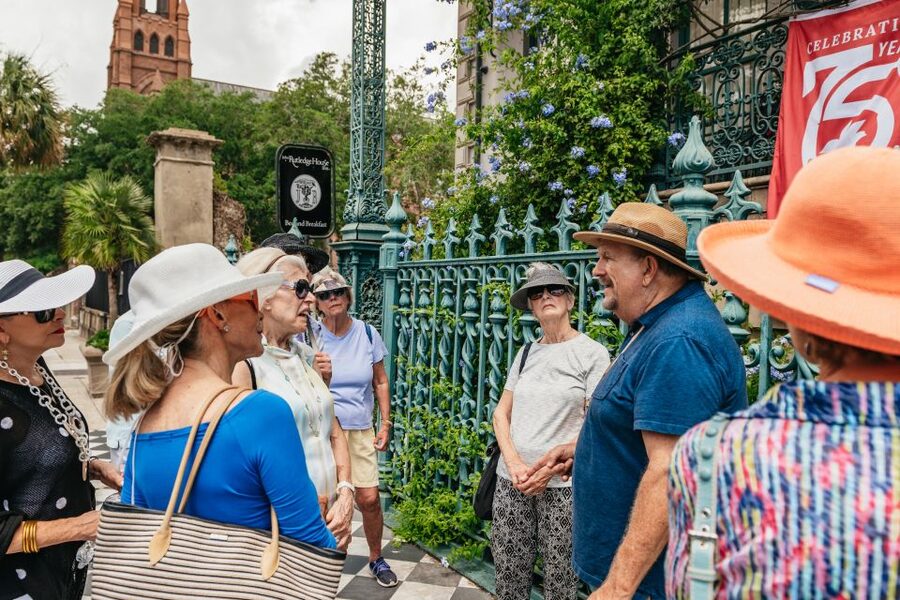
The stop at Dock Street Theatre lasts about 15 minutes. This is a good place to pause and look closely at Charleston’s public architecture while your guide explains its place in the city’s cultural and civic story.
After that comes the Old Exchange and Provost Dungeon, with about 12 minutes listed. This stop adds a darker edge to the walk. The building is tied to Charleston’s colonial public life, while the dungeon points to the confinement and punishment that existed beneath the city’s formal institutions.
You should expect an exterior-focused visit rather than a long indoor museum session. The tour is designed to keep moving, so the guide gives context at the site and then takes you onward. If you prefer detailed museum displays, this will not replace a separate visit, but it gives you a useful reason to return.
More History Walking Tours in Charleston:
- Charleston: History and Architecture Guided Walking Tour
★ 4.8 · 349 reviews - Charleston walking tour with a Citadel history professor
★ 5.0 · 105 reviews - History and Hauntings of Salem Guided Walking Tour
★ 5.0 · 14,564 reviews - Lisbon: History, Stories and Lifestyle Walking Tour
★ 4.8 · 10,902 reviews
Waterfront Park and the harbor side of the story
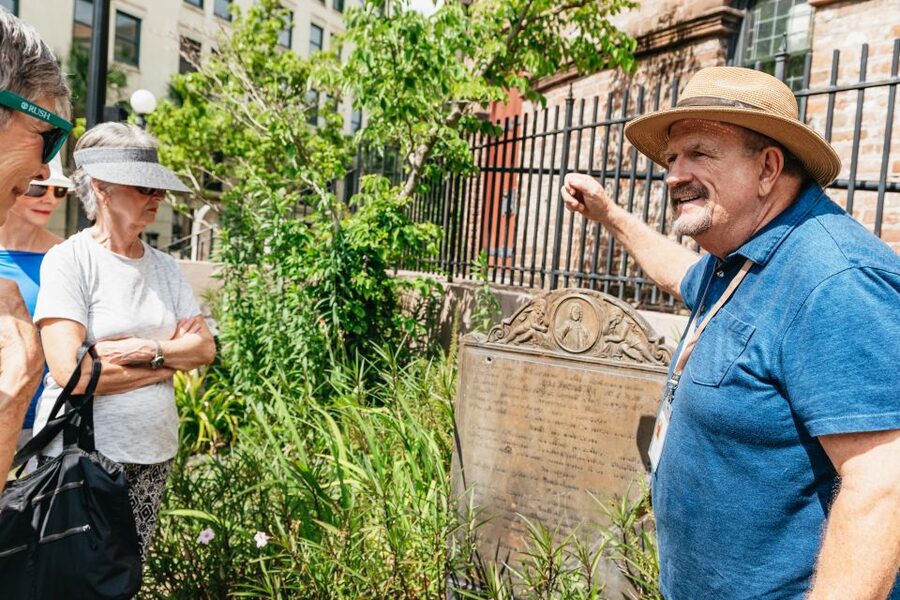
Waterfront Park takes about 15 minutes, including scenic views along the way. The route shifts from tight historic streets to open views, which provides a welcome change after the older lanes.
This is also where Charleston’s relationship with the water becomes easier to picture. The city’s growth depended on its port, while its position exposed it to hurricanes, bombardments, sieges, epidemics, and other threats. Your guide can connect the waterfront to the broader story of a port city that gained wealth and faced repeated danger.
The park is a natural place for photographs, but keep listening. The point is not just a nice view. It is the chance to understand why Charleston developed where it did and why the water brought both opportunity and trouble.
Rainbow Row and the Heyward-Washington House
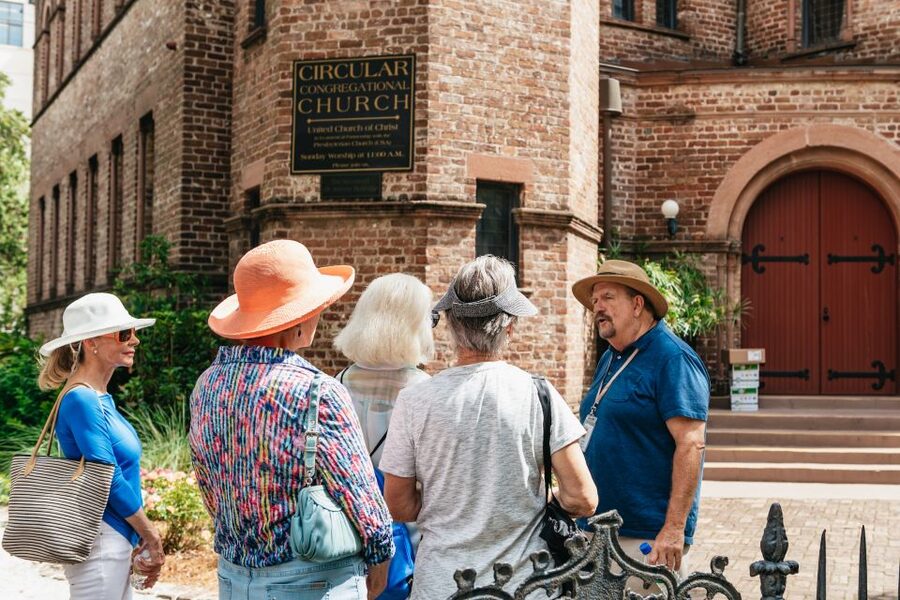
Rainbow Row is a short stop, listed at about seven minutes. Its colorful buildings are among the most recognizable sights on the route, and you will have time for photographs and a quick explanation of the row’s place in the historic district.
The stop at Heyward-Washington House lasts about five minutes. That is brief, so think of it as an introduction rather than a full house tour. You will see the building from the route and hear why it matters, but the schedule does not leave room for a lengthy interior visit.
These stops show one of the tour’s strengths and limits. You see many important places in a single walk, but you do not spend long inside any one attraction. I like that approach for a first visit, especially if you are still deciding what to explore on your own.
Churches, tombstones, and Charleston’s disasters
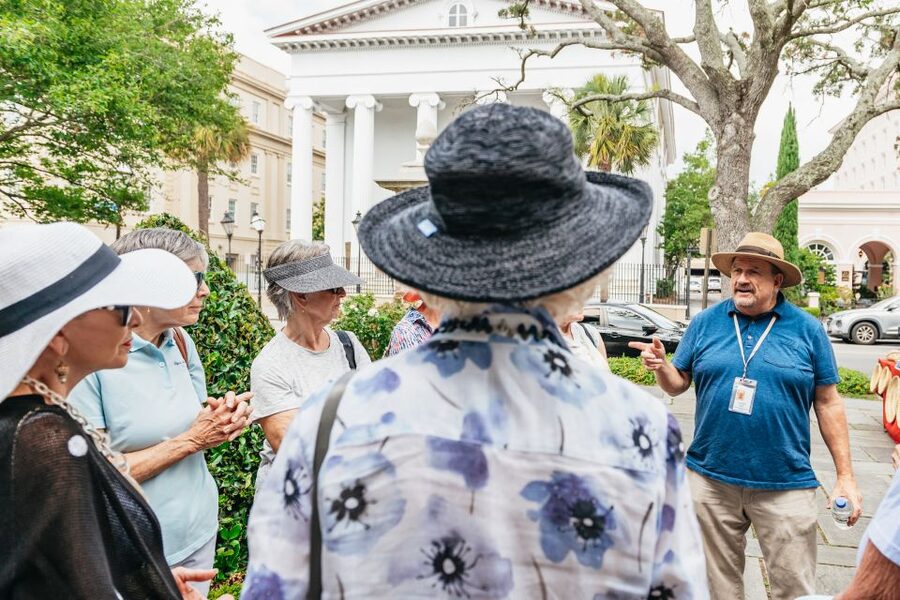
St. Michael’s Episcopal Church is listed as a 12-minute stop. The church adds another architectural and historical marker to the walk, and the surrounding area helps show how religious buildings shaped the old city.
The tour also uses tombstones as historical evidence. Your guide may explain the symbols and markings you see, helping you read a cemetery or churchyard instead of treating it as background scenery. That small detail makes the walk more active. You begin looking for clues yourself.
The disaster story is one of the most distinctive parts of the experience. Charleston endured seven major fires, hurricanes, epidemics, sieges, bombardments, and a major earthquake. These events explain why the city’s buildings, streets, and surviving landmarks matter so much.
The subject matter is broad, so the guide must choose carefully. You are unlikely to receive every detail about every disaster in two hours. What you do get is a framework for understanding how often Charleston had to recover and rebuild.
The guides make or break the experience
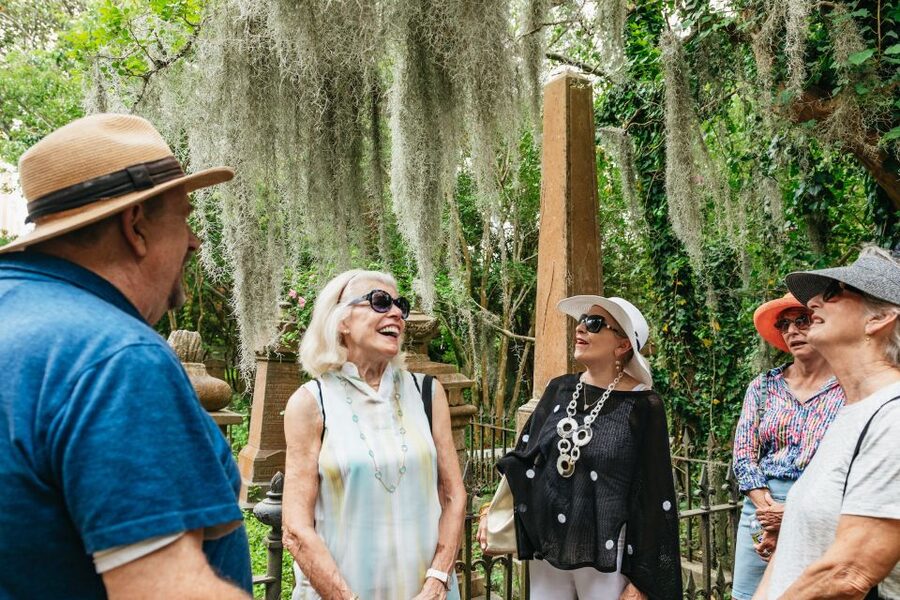
The guide is the main reason to book this rather than simply walk the same streets with a map. The strongest guides combine dates and architecture with stories about people and daily life.
Al is repeatedly praised for his enthusiasm, humor, and ability to explain Charleston’s past. Bruce brings the unusual perspective of growing up in Charleston as a 7th-generation local. Eric is often described as engaging and strong on both history and architecture. Alfie, who has guided since 1982, offers years of experience and a clear affection for the city.
Other guides may lead the walk, including Kent, Bob, Judi, and Ed. You cannot count on requesting a particular person unless the operator confirms it. Still, the consistent pattern is clear: a good guide answers questions, adjusts the route when needed, and turns a two-hour walk into a conversation rather than a speech.
The personal stories can be a real bonus. One guide was praised for sharing memories of growing up in Charleston and stories about notable residents. Another tailored the discussion to the group’s interests. That flexibility is useful when your group has questions about architecture, local life, famous people, or the difficult parts of Charleston’s past.
One practical point: a few people found that an enthusiastic guide spoke too quickly or let their voice drop at times. If you have trouble hearing, position yourself near the guide and ask for a repeat when needed.
Walking comfort, weather, and pace
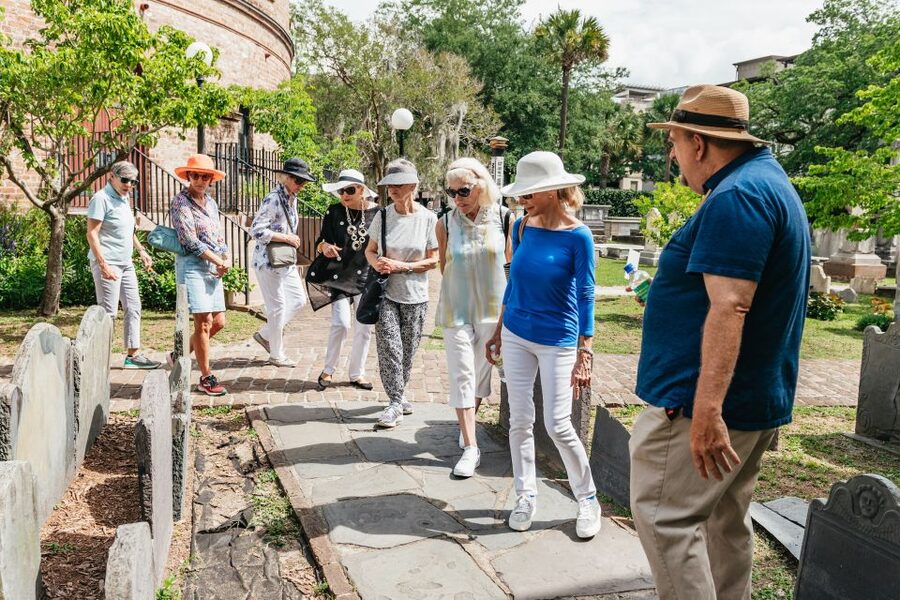
Wear your most reliable walking shoes. The route uses historic streets, including cobblestones, and you cover a fair amount of ground in two hours. The walk is not described as strenuous, but the distance and surface can still be tiring.
Bring water and sunscreen. Charleston’s heat and sun can make a pleasant route feel harder, especially during warmer months. Weather-appropriate clothing is important because much of the activity takes place outdoors.
The pace varies with the guide and the group. Some guides choose shaded streets when possible, and one guide adjusted the route for a traveler using a wheelchair. That is encouraging, but the tour still involves substantial walking, so ask about your specific needs before booking if mobility is a concern.
Families can fit into the experience, especially when children are comfortable listening while walking. A guide was praised for being patient with children, but the tour’s history-heavy format may suit older children better than very young ones.
Who will get the most from this tour?
I would choose this tour for a first morning in Charleston. It gives you the basic layout, introduces major sights, and leaves you with enough context to plan the rest of your stay.
It suits you best if you:
- Like history, architecture, and local stories
- Prefer walking over riding between sights
- Want a guide who can answer questions
- Enjoy seeing famous landmarks alongside less obvious streets
- Are comfortable with a serious amount of outdoor walking
- Want a balanced account that includes hard subjects, not just pretty homes
It may be less suitable if you want long interior visits, a slow photography walk, or a tour with little historical detail. Two hours passes quickly, and the amount of information can feel heavy if you prefer a light sightseeing outing.
My verdict at $30 per person
This is a strong-value Charleston introduction. You see the French Quarter, Dock Street Theatre, the Old Exchange, Waterfront Park, Rainbow Row, Heyward-Washington House, and St. Michael’s Episcopal Church, while the guide fills in the stories between them.
The best part is the human connection. Guides such as Al, Bruce, Eric, and Alfie give the walk personality, and several are especially good at combining local memories with older events. The main tradeoff is that the route covers a lot, so explanations can be fast and some stops are short.
Book it if you want a practical first look at Charleston and enjoy learning while you walk. Skip it if cobblestones, heat, or a two-hour history lesson sound tiring. For most first-time visitors who like walking and want the city to make sense, $30 is money well spent.
FAQ
How long does the Charleston Old Walled City Historical Walking Tour last?
The tour lasts two hours.
How much does the tour cost?
The listed price is $30 per person.
Where does the tour meet?
Meet on the sidewalk at the corner of Meeting Street and Chalmers Street, the cobblestone street, near Shop Historic Charleston.
What language is the tour conducted in?
The tour is conducted in English with a live guide.
Which places are included on the route?
The route includes the French Quarter, Dock Street Theatre, the Old Exchange and Provost Dungeon, Waterfront Park, Rainbow Row, Heyward-Washington House, Charleston’s historic district, and St. Michael’s Episcopal Church.
What should I bring?
Bring comfortable shoes, sunscreen, water, and clothing suited to the weather.
Is this a strenuous walking tour?
It involves a substantial amount of walking on city streets and some cobblestones. One guide adjusted the route for a traveler using a wheelchair, but you should consider your own mobility needs before booking.
New routes in Charleston
- Charleston walking tour with a Citadel history professor★ 5.0 · 105 reviews
- Charleston: 90-Minute Ghost and Dungeon Walking Tour★ 4.2 · 266 reviews
- Charleston: 90-Minute Ghost & Graveyard Walking Tour★ 4.5 · 75 reviews
- Charleston: History and Architecture Guided Walking Tour★ 4.8 · 349 reviews
- Charleston Ghost & Graveyard Night-Time Guided Walking Tour★ 4.5 · 1,100 reviews
- Charleston historical walking tour with a Professor of History at The Citadel★ 5.0 · 1,284 reviews
- Charleston’s Pleasing Terrors Night-Time Walking Ghost Tour★ 5.0 · 1,345 reviews
- Charleston Haunted Booze and Boos Ghost Walking Tour★ 5.0 · 1,569 reviews
Charleston Walking Tours, compared.

Historic Charleston Guided Sightseeing Walking Tour
Read our review →
Ghosts of Charleston Night-Time Walking Tour with Unitarian Church Graveyard
Read our review →
Hidden Alleyways and Historic Sites Small-Group Walking Tour
Read our review →

Charleston French Quarter or Brunch Food Tour with 7+ Tastings
Read our review →
Charleston Haunted Booze and Boos Ghost Walking Tour
Read our review →
Charleston’s Pleasing Terrors Night-Time Walking Ghost Tour
Read our review →
Charleston historical walking tour with a Professor of History at The Citadel
Read our review →Browse the lists this tour appears in