
Review · ROME
Rome: Colosseum Arena, Roman Forum & Palatine Hill Tour
The most memorable part of this Rome tour is the walk through the Gladiator’s Gate onto the Colosseum Arena Floor. You get a close look at the amphitheater before moving through its first and second tiers, then continue into the ruins where ancient Rome handled politics, religion, and daily business.
I like two things here: the tour combines three major sites in one well-planned visit, and the arena access gives you a viewpoint that a standard Colosseum ticket may not provide. The guide also adds useful context, from seating by social class to the power struggles around the Temple of Caesar. The main drawback is the pace. Three hours can stretch longer, and the hills, stairs, heat, and uneven stone demand real stamina.
Key points to know before booking
- Arena Floor access: Enter through the Gladiator’s Gate and walk onto an area usually restricted to visitors.
- Three major ancient sites: The route covers the Colosseum, Palatine Hill, and Roman Forum in about three hours.
- Live guide or audio guide: Check your selected option carefully. The audio-guide choice does not include a live guide or group headsets.
- A physically active outing: Expect stairs, uphill walking, uneven paving, and little shade in hot weather.
- Small group size: The group can include up to 24 people, with headsets supplied for guided groups.
- Strict entry rules: Small bags only. Large backpacks, suitcases, glass bottles, tripods, drones, and sharp objects are not allowed.
How the three-hour Rome route works
The meeting point is on Via delle Terme di Tito, near the Colosseum. You meet the guide there before entering the archaeological area. The tour ends at the Colosseum, so you remain in a useful central spot for lunch, the Metro, or your next Rome sight.
The experience is divided into roughly one hour at each main stop, though the real timing can vary. A guide may spend longer at the Colosseum, and some tours have run well past the expected three-hour finish. If you have a train, dinner reservation, or timed Vatican entry later, leave a generous gap.
The maximum group size is 24. That is not an intimate private tour, but it is small enough for headsets and a manageable walking group. Headsets matter here. The Colosseum and Forum are noisy, crowded places, and you may not always be standing directly beside the guide.
Other routes people walk in Rome:
- Rome: Guided Food Walking Tour with Wine in Trastevere
★ 4.9 · 3,105 reviews - Rome: Trastevere & Campo de Fiori Street Food Walking Tour
★ 4.9 · 2,768 reviews - Rome: Paranormal Night Walking Tour & Secret Backstreets
★ 4.9 · 1,921 reviews
Entering the Colosseum through the Gladiator’s Gate
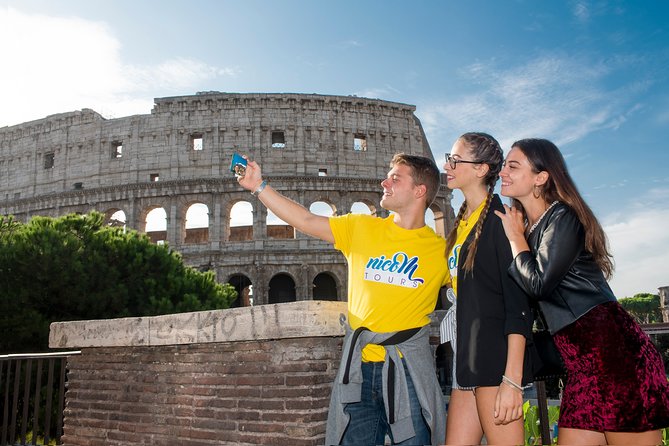
The tour starts with the site most visitors have come to Rome to see. After security, you enter the Colosseum and make your way toward the Arena Floor through the Gladiator’s Gate. This is the strongest selling point of the experience.
From the arena, you look up at the enormous tiers and imagine the amphitheater filled with spectators watching staged combat and other public spectacles. The guide explains how gladiator games worked and how the building organized its audience. The seating system followed social rank, so where a person sat told you something about his place in Roman society.
The Arena Floor is not a long visit to a private, empty platform. Expect crowds and a controlled route. Still, standing at this level changes the scale of the building. You are no longer looking only at a grand shell from the outside. You can see the structure from the viewpoint of the performers and understand how the arena related to the surrounding seating.
The arena access is worth considering carefully. Some people find it a powerful addition, while others find the extra cost less convincing than expected. The ticket value supplied with the tour is listed as €24 per person for Colosseum entry with arena access, plus a €2 reservation fee. The arena is a special viewpoint, but it does not turn the Colosseum into a private experience.
You then continue to the first and second tiers. These levels give you broader views of the amphitheater and its surroundings. The guide’s job here is especially useful because the remaining stone and missing sections can be hard to read without explanation.
The Colosseum is also the most crowded part of the route. Even with reserved entry, security and the sheer number of people can slow things down. A timed tour helps you avoid the uncertainty of arriving without a reservation, but it cannot remove the crowds inside.
Palatine Hill and the best views of the old city
From the Colosseum, the route continues toward Palatine Hill. This is where the tour becomes less about the famous building and more about the old center of Roman power.
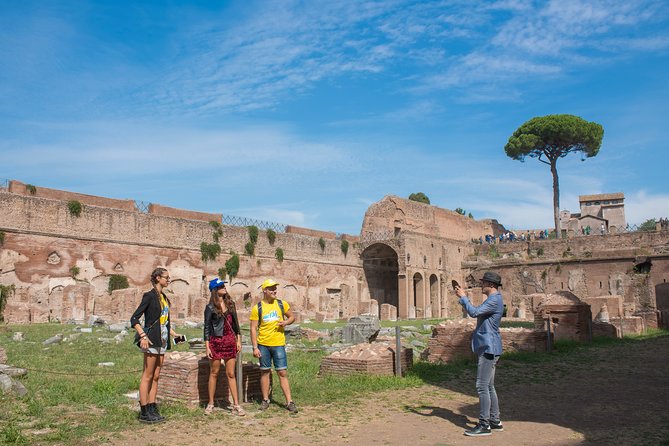
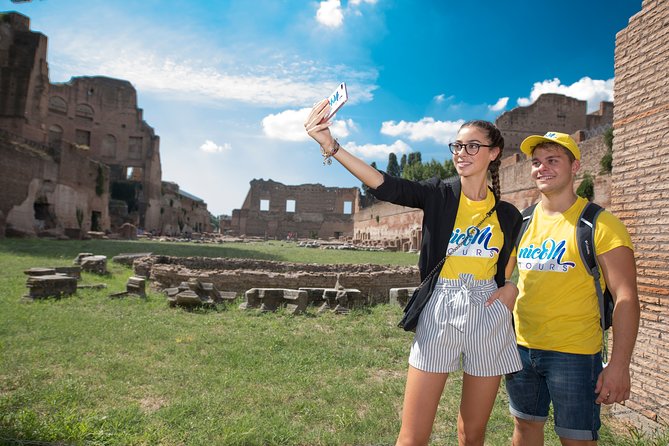
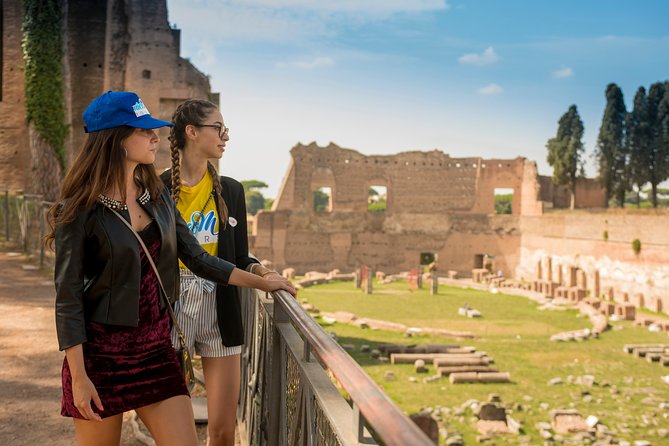
The hill is linked with Rome’s earliest legends and later became the home of emperors and wealthy Roman families. On the walk, the guide points out palace ruins and explains how the hill developed into an elite residential area. The remains are spread across open ground, so you need to pay attention to both the commentary and your footing.
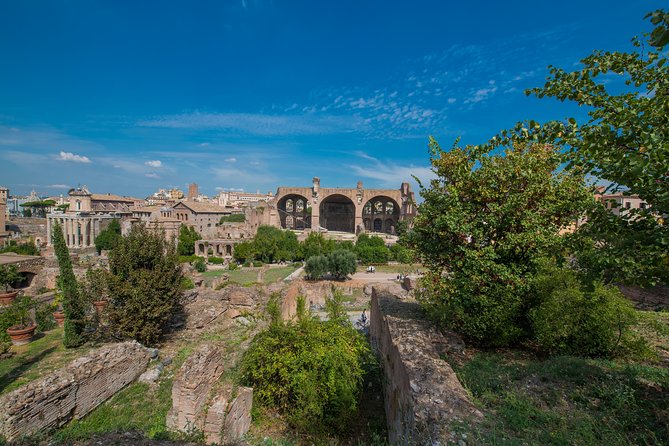
Palatine Hill also rewards you with some of the finest views in this part of Rome. From above, you can look across the Roman Forum and understand how the monuments fit together. I like this part because the hill gives you space to step back from the crowds and see the ancient city as a whole.
It is not an easy stroll. The route includes uphill sections, stairs, and uneven surfaces. In summer, the stone and open areas can become very hot. Bring a refillable water bottle, since fountains are available at points along the route, and wear shoes with a firm sole.
One useful limitation is that the guided portion may not cover every corner of Palatine Hill. If the guide finishes the official route and you still have time and energy, continue farther up the hill and explore the wider archaeological area on your own. The ticket gives you access, but the structured tour does not necessarily inspect every ruin.
The Roman Forum, where Rome did business and politics
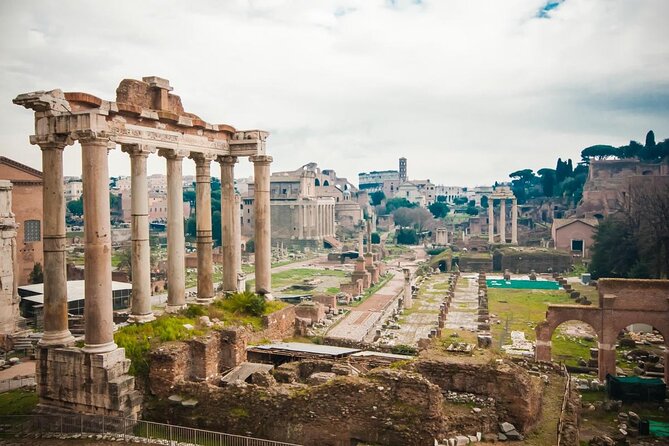
The Roman Forum is the final major stop. This was the center of ancient public life, and it can be difficult to understand without a guide. You see temples, meeting spaces, arches, roads, and fragments of buildings, but much of the original city has disappeared.
The guide helps connect these scattered remains to Roman life. The route includes the Temple of Caesar, the Temple of Saturn, and the Curia. The Temple of Caesar is linked with the aftermath of Julius Caesar’s assassination, while the Curia was a meeting place for the Senate. The Forum is full of stories about ambition, alliances, betrayal, and political survival.
I find the Forum more rewarding after the Colosseum and Palatine Hill. You first see public entertainment, then imperial power, then the political and commercial center that made Roman government work. The three sites are different, and that contrast gives the tour its shape.
The Forum can also feel rushed if the group has spent extra time at the Colosseum. Some guides explain a great deal from one position near the entrance or at the top of the stairs, rather than walking steadily through every section. That approach saves energy but may leave you wanting more direct time among the ruins.
If you prefer to read signs, pause for photographs, or move at your own speed, the Forum is the place where the group format may feel limiting. On the other hand, without a guide, the remains can seem like a field of broken columns. You gain structure from hearing what happened at each place and why it mattered.
Same streets, a different guide:
- Rome: Trastevere Street Food Walking Tour with Local Expert
★ 4.8 · 1,784 reviews - Rome: Small-Group Guided Day or Night Walking Tour
★ 4.8 · 1,009 reviews - Rome by Night Walking Tour – Legends & Criminal Stories
★ 4.5 · 1,003 reviews - Rome Food Tour in the Historic Centre with 8+ Food Tastings
★ 5.0 · 1,000 reviews
Guides, headsets, and the choice you must check
The booking offers a live-guide option and an audio-guide option. They are not the same product. A live guide includes the professional guide and group headsets. The audio-guide option does not include a live guide, and you need your own headphones, a fully charged smartphone, and the POP GUIDE app downloaded from the App Store or Google Play.
Read the option wording before paying. One confusing feature of this experience is that the headline description can make the tour sound live-guided even when the selected audio option is self-guided. If you want a person walking with you, select the live-guide version.
Guide quality can vary. Guides associated with strong experiences include Patricia, Nancy, Ian, Amir, and Alessandro C., each praised for clear explanations, patience, humor, or strong organization. That does not mean you can request one of them or that your guide will be one of these people.
The main concern is English clarity. Some guides speak quickly or have accents that are difficult for some listeners to follow. That problem is made worse when the headset receiver has poor sound. A friendly, well-organized guide can make the ruins come alive, but a rushed delivery or unclear audio reduces the value of a guided tour.
If you are having trouble hearing, tell the guide early. Stand close enough to keep visual contact, and ask for a repeat when needed. This is much easier than discovering at the Roman Forum that you have missed half the explanation.
Price and what the $71.20 covers
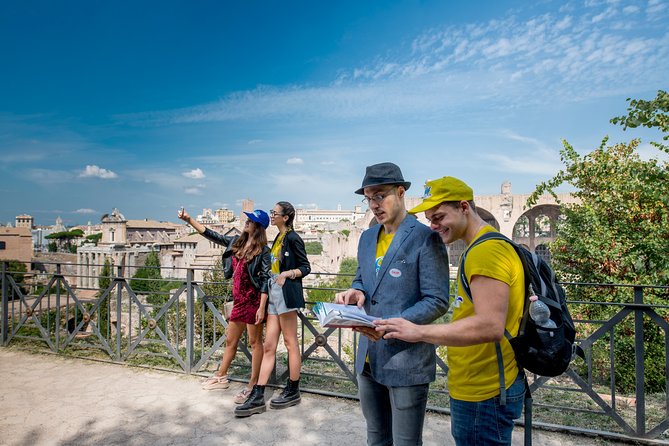
At $71.20 per person, this is not a bare entrance ticket. The price includes Colosseum admission with arena access, the €2 reservation fee, a professional guide in the live-guided version, headsets for groups, and assistance seven days a week.
The included Colosseum ticket is listed at €24 per person, but the rest of your payment covers the guide service, reservations, group operation, and access arrangements. The value depends on how much you want interpretation. If you enjoy ancient history and want the major sites explained as you walk, the price is reasonable for a convenient half-day visit.
If you mainly want to wander, take photographs, and read at your own pace, you may not feel you received full value. The arena supplement is also personal. I would pay it if standing on the floor of the Colosseum is important to you. I would skip it if your main goal is a general view of the amphitheater and the wider archaeological park.
The strongest value comes from combining three difficult sites in one timed outing. The weakest value appears when the guide is hard to understand, the audio equipment fails, or the tour runs so long that you lose time for your next plan.
Heat, walking, security, and what to carry
Treat this as an active walking tour, not a seated history lesson. You may climb stairs, walk uphill, cross uneven paving, and stand in exposed areas. Moderate physical fitness is advised.
Morning slots are the safer choice in hot months. Even an early start can become uncomfortable by the end, and the Palatine and Forum offer limited shade in many sections. Wear a hat, use sun protection, and carry water in a permitted container. Water fountains along the route let you refill.
Security at the Colosseum is strict. Metal detectors are used, and there is no bag check service. Large bags, backpacks, suitcases, glass bottles, spray cans, alcohol, pointed umbrellas, tripods, drones, knives, scissors, and other sharp objects are forbidden. Only small bags are permitted, and security staff inspect them.
Make sure every participant’s booking name is accurate. Incorrect or incomplete names can cause entry problems, and you may be asked to show identification. This is especially important for a family or group booking, where one wrong surname can affect the day.
Who should book this Colosseum tour?
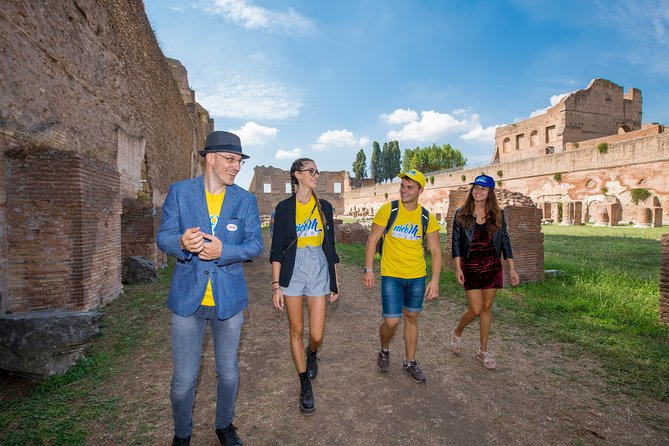
I would choose this tour if you are visiting Rome for the first time, want the three headline ancient sites in one outing, and prefer historical explanation over independent wandering. Families with older children can also benefit from the clear sequence: gladiators, emperors, then Roman politics.
I would be cautious if you have limited mobility, tire quickly, dislike crowds, or need the tour to finish exactly after three hours. The route is demanding, and the Forum and Palatine sections can feel long after the Colosseum.
It is also not ideal for a toddler who needs a flexible pace. The group has a schedule, and the uneven ground and stairs make it hard to split off and rejoin. If you are traveling with a young child, think carefully about the timing and the child’s tolerance for heat and standing.
Should you book it?
Book it if the Arena Floor matters to you and you want the Colosseum, Palatine Hill, and Roman Forum explained in one visit. The combination is efficient, and the views from Palatine Hill add something beyond the usual Colosseum photograph.
Before booking, confirm that you selected the live guide rather than the audio option, check all names against identification, and allow extra time after the scheduled finish. Bring water, small bags, comfortable shoes, and patience for crowds.
I would not book this as a quick stop between fixed appointments. I would book it as a major half-day activity, start as early as practical, and continue exploring Palatine Hill after the guided portion if your energy holds. Free cancellation is available up to 24 hours before the start time, but changes or cancellations inside that window are not refundable.
FAQ
How long does the Colosseum, Forum, and Palatine Hill tour last?
The scheduled duration is approximately three hours, with about one hour allocated to the Colosseum, one hour to Palatine Hill, and one hour to the Roman Forum. Some tours may run longer, so avoid booking a tight appointment afterward.
Is Arena Floor access included?
Yes. The experience includes Colosseum entrance with arena access, including entry through the Gladiator’s Gate and a visit to the Arena Floor.
Does the tour include the first and second Colosseum tiers?
Yes. The route includes the Colosseum’s Arena Floor, first tier, and second tier.
Is there a live guide?
That depends on the option selected at booking. The professional guide and group headsets are included with the live-guided option. The audio-guide option does not include a live guide.
What do I need for the audio-guide option?
Bring your own headphones, download the POP GUIDE app before arrival, and fully charge your smartphone.
Where does the tour meet and finish?
The meeting point is Via delle Terme di Tito, 93, 00184 Roma. The tour ends at the Colosseum, Piazza del Colosseo, 1, 00184 Roma.
What should I bring?
Bring comfortable walking shoes and water. In hot weather, a hat is useful. Only small bags are allowed, and large backpacks, suitcases, glass bottles, tripods, drones, and sharp objects are prohibited.
Can I cancel for a full refund?
You can cancel at least 24 hours before the experience begins for a full refund. Cancellations or changes made less than 24 hours before the start time are not accepted for a refund.
New routes in Rome
- Rome: Colosseum and Ancient Rome Guided Walking Tour★ 4.5 · 95 reviews
- Rome Walking Tour: Pantheon, Trevi, Navona & Hidden Gems★ 4.8 · 501 reviews
- Rome: Guided Walking Tour and Pantheon Priority Entry Ticket★ 4.3 · 317 reviews
- Rome: Trastevere Food Walking Tour with Beer and Wine★ 4.9 · 71 reviews
- Rome: Trevi Fountain, Spanish Steps & Pantheon Walking Tour★ 4.6 · 336 reviews
- Rome: Underground Trastevere Guided Walking Tour★ 4.8 · 87 reviews
- Rome Trastevere Walking Food Tour★ 4.8 · 97 reviews
- Rome: Relics from the Passion of the Christ Walking Tour★ 4.9 · 84 reviews
Rome Walking Tours, compared.
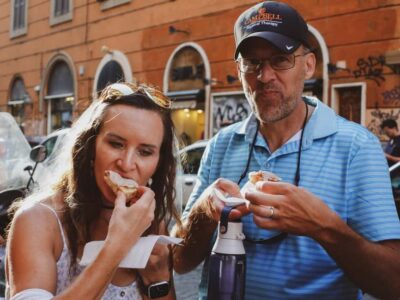
Guided Food Walking Tour with Wine in Trastevere
Read our review →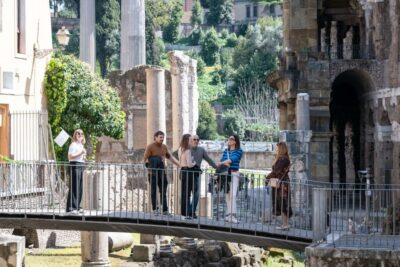
Trastevere & Campo de Fiori Street Food Walking Tour
Read our review →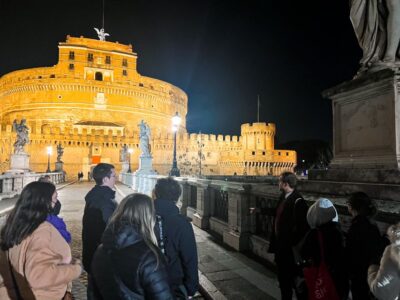
Paranormal Night Walking Tour & Secret Backstreets
Read our review →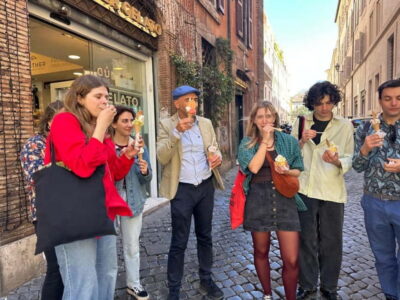
Trastevere Street Food Walking Tour with Local Expert
Read our review →
Rome by Night Walking Tour – Legends & Criminal Stories
Read our review →
Rome Food Tour in the Historic Centre with 8+ Food Tastings
Read our review →
Guided City Center Evening Sightseeing Walking Tour
Read our review →Browse the lists this tour appears in