
Review · MEXICO CITY
Walking Tour of the Historic Center of Mexico City
Mexico City’s historic center makes sense when you walk it as a story. This tour links the Mexica capital, Spanish rule, independence, revolution, and modern city life in a compact route from the Zócalo to the House of Tiles. I like the way it connects Aztec ruins with colonial buildings, rather than treating them as separate attractions. I also like the stop inside the Ministry of Education, where Diego Rivera’s murals turn a government building into a lesson about work, politics, festivals, and social struggle.
The small groups, capped at 10 people, make it easier to hear the guide and ask questions. Guides such as Fernanda, Alexia, Luis, Nat, and Benjamin are repeatedly praised for clear English, humor, patience, and useful local recommendations. The main tradeoff is physical: you walk for roughly three hours over streets that can be uneven, with few places to sit, and a slower group may not reach every planned stop.
Key points before you book
- The route covers nine major sights between the Zócalo and the side of Palacio de Bellas Artes and the House of Tiles.
- Templo Mayor and the Ventana Arqueológica show how the Mexica city survives beneath modern Mexico City.
- Diego Rivera murals inside the Ministry of Education are one of the tour’s most distinctive stops.
- Groups are limited to 10 people, a useful size for questions and street crossings.
- This is an overview, not a series of full museum visits, and some interiors require separate admission.
- Good walking shoes, water, and sun protection matter, especially at Mexico City’s altitude and on warm days.
A three-hour introduction to Mexico City’s layered past
The route gives you a useful way to read Centro Histórico. Mexico City is not simply an old Spanish city, and it is not only a modern capital built over an ancient one. Its streets show several eras at once. A cathedral faces the Zócalo, colonial buildings sit near Mexica remains, and murals inside a government complex tell the story of ordinary people and political change.
I like this approach for a first visit because the guide keeps moving while explaining the larger picture. You are not expected to spend an hour inside one museum. Instead, you get short stops, context, and a list of places worth returning to on your own.
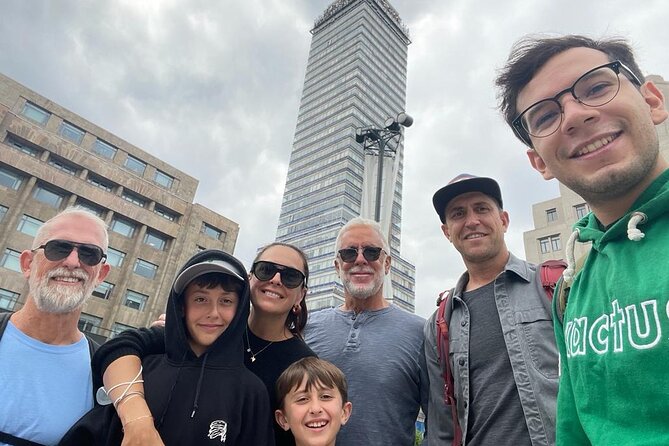
The English-language tour runs for about three hours and begins at the Plaza de la Constitución, better known as the Zócalo. It ends at Edificio Guardiola, beside Palacio de Bellas Artes and the House of Tiles. The group size is limited to 10, and guides can be identified by green shirts and umbrellas.
More History Walking Tours in Mexico
- Historic Downtown Walking Tour
★ 5.0 · 1,289 reviews - Mexico City: Historic Downtown Walking Tour
★ 4.8 · 1,039 reviews - Historical and Cultural Walking Tour of San Miguel de Allende
★ 5.0 · 641 reviews
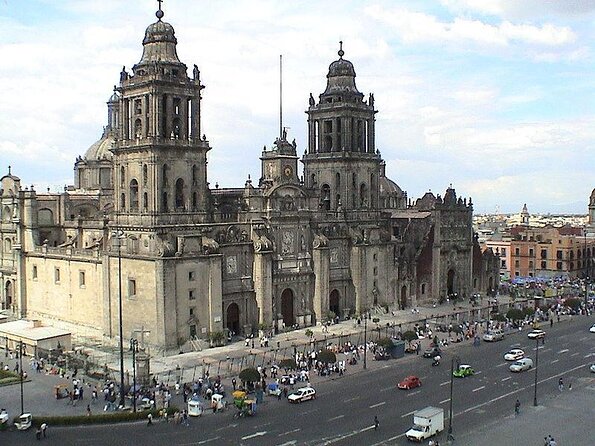
Starting at the Zócalo and Metropolitan Cathedral
The Zócalo is the right place to begin. It is broad, central, and surrounded by the institutions that shaped Mexico City: the National Palace, the Supreme Court of Justice, the cathedral, and shops connected with the city’s long jewelry and silver trade.
You will spend about 15 minutes here, with no admission charge. That sounds brief, but the square gives the guide room to explain how the city’s political and religious power gathered around one open space. It also helps you get your bearings before the walking begins in earnest.
Next comes the Metropolitan Cathedral, viewed from outside for about 10 minutes. The guide explains its construction and origins, along with its Baroque and neoclassical features. This is useful if you like architecture but do not want a dry lecture. The building’s long construction history reflects the way Mexico City changed over time.
The tour does not include admission to the cathedral. Since this stop is exterior, you should think of it as an introduction, not a detailed visit. If the cathedral interests you, leave time to return later and explore it independently.
Reading Templo Mayor beneath the modern city
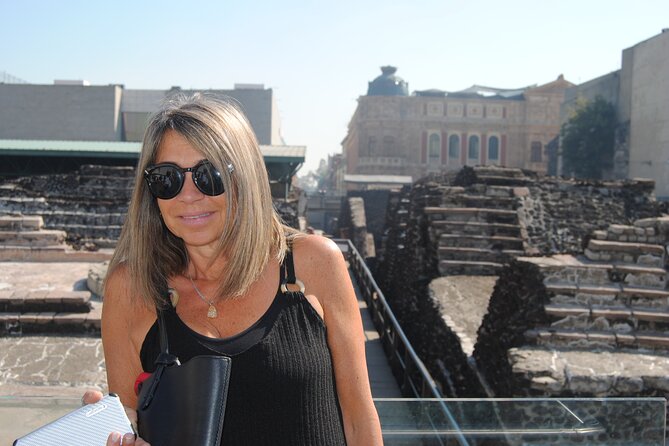
The Templo Mayor stop brings the pre-Hispanic city into sharper focus. The tour views the archaeological ruins from outside and explains the temple’s importance to the Mexica, including its connection with the gods of rain and the sun.
This is one of the most valuable parts of the walk because it makes the city’s geography easier to understand. Modern streets can hide the fact that the Spanish capital was built over the Mexica center. Looking at the ruins beside the colonial core helps you picture how conquest changed the city without erasing its earlier foundations.
The stop is not a full archaeological-site visit, and the information provided does not include an entrance ticket here. Still, the exterior explanation gives you enough context to decide if you want to return for a longer visit. I would pay close attention to the guide’s explanation of the site’s location, since that is what ties the ruins to the cathedral and the Zócalo.
Diego Rivera’s murals inside the Ministry of Education
The Museo Vivo del Muralismo is the tour’s most distinctive interior stop. You enter the Ministry of Education and spend about 25 minutes looking at murals by Diego Rivera. The building contains roughly a third of the murals he painted during his career.
This is much more than a quick art stop. The murals show festivals, traditions, trade, political conflict, and social struggle in early 20th-century Mexico. You get a visual account of Mexican life rather than only a timeline of presidents and battles.
The stop is especially helpful if you have seen Rivera’s work elsewhere but want to understand how his public art functioned. The guide can connect the scenes to Mexican society and politics, making the images easier to read. Admission is included.
Allow some flexibility here. One guide, Fernanda, was specifically praised for making room to spend a few extra minutes in the courtyard with the murals. That matters because 25 minutes can pass quickly, especially when the building and artwork hold your attention.
More Old Town Walking Tours in Mexico:
- Underground Vaults Walking Tour in Edinburgh Old Town
★ 4.5 · 8,506 reviews - Prague: 3-Hour Walking Tour of Old Town & Prague Castle
★ 4.7 · 5,696 reviews - Dubrovnik: Old Town Walking Tour
★ 4.8 · 5,174 reviews - Split: Old Town and Diocletian Palace Walking Tour
★ 4.9 · 4,727 reviews
Santo Domingo and the colonial trading city
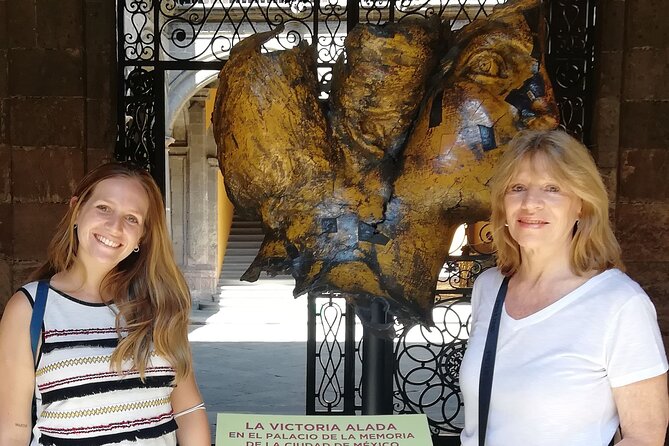
Plaza de Santo Domingo shifts the focus to the viceroyalty of New Spain. The square witnessed major events during colonial rule and was tied to trade in spices and goods arriving from Asia. The guide also discusses the Holy Inquisition and French attempts to conquer Mexico.
The value of this stop lies in the breadth of the story. You are not hearing only about elegant façades. You are also hearing about commerce, religion, political pressure, and the international links that shaped colonial Mexico.
You spend around 15 minutes here, without an admission fee. It is another exterior stop, so the guide’s storytelling does much of the work. I would use this part of the tour to ask questions about how colonial power affected daily life, since the plaza opens the door to subjects that are easy to miss when you only photograph the buildings.
Plaza Tolsá brings the history into the present
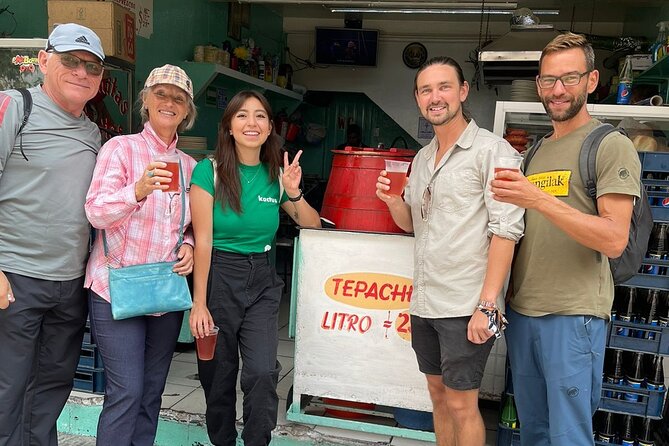
Plaza Tolsá is the planned rest stop, with about 20 minutes in the shade. That pause is welcome after several blocks of walking. The guide uses the time to discuss indigenous languages, Day of the Dead traditions, music, politics, and Mexican food.
This is where the tour moves beyond architecture. You get a chance to connect older events with Mexico as you experience it now. The exact conversation will depend on your guide and your questions, but the format allows for a more personal exchange than a formal museum talk.
The square also gives you views of the equestrian statue of Charles IV, known locally as El Caballito, or the little horse. You will see the exterior of the National Museum of Art and the Mining Palace. These buildings help show the variety of styles gathered in the historic center.
The shade break is practical, not decorative. Several people found the walking demanding, particularly on uneven or cobblestoned streets. If you need a slower pace, say so early. Guides are described as patient about comfort, street crossings, and short breaks, but the group still has a route to cover.
The Ventana Arqueológica and the city beneath your feet
The Ventana Arqueológica is a short stop of about five minutes, but it adds a memorable idea: Mexico City keeps parts of its past under the pavement and inside later buildings.
The guide explains how the archaeological remains were found and points out the hidden layers beneath a street near the main temple. You will not spend long here, yet the stop reinforces the central theme of the whole walk. The historic center is not a single period preserved in place. It is a modern city built around, above, and alongside earlier ones.
Admission is included. The stop may appeal most to people who enjoy the small details of urban history, especially the question of how archaeological evidence survives in a working city.
Palacio de Bellas Artes, Palacio Postal, and House of Tiles
The route then reaches Palacio de Bellas Artes, one of the city’s essential landmarks. The tour allows about 15 minutes, with no admission charge listed for the stop. You can appreciate the building’s exterior, and the guide discusses the artistic importance of both its outside and inside.
Treat this as an orientation visit rather than a full museum experience. The tour does not provide enough time for a careful look at every gallery or performance space. If the palace becomes a highlight for you, return later and give it more time.
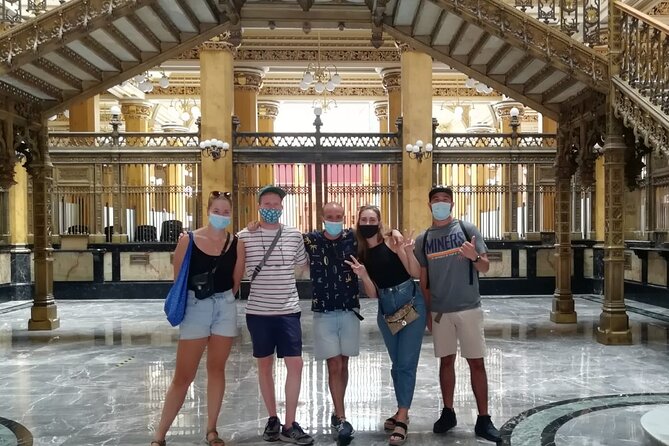
Palacio Postal follows for about 10 minutes. This ornate building still operates, and the guide explains the economic and political meaning behind its grand design. That point is worth hearing. A palace like this was not built only to look beautiful. It also projected the power and ambition of the institutions working inside it.
Admission is not included at this stop. The route focuses on the exterior and the building’s role in the city, so you should not expect a separate interior tour.
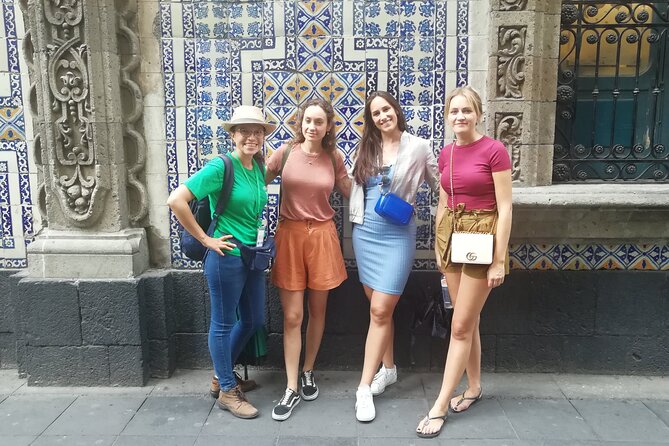
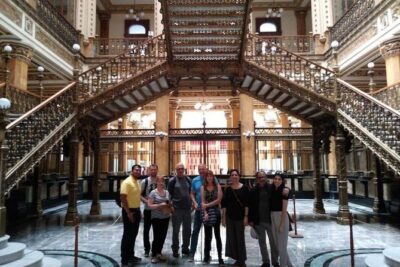
The final stop is the House of Tiles, or Casa de los Azulejos, one of Mexico City’s most photographed façades. The blue-and-white tilework makes it easy to recognize, but the guide’s context helps turn a photo stop into part of the larger story of the center.
The tour ends beside Palacio de Bellas Artes and the House of Tiles, at Edificio Guardiola on Avenida 5 de Mayo. This is a useful finish because you are left near several major sights and can continue exploring on foot.
What the guides add to the experience
The route is consistent, but the tone depends on the guide. Fernanda is described as warm, funny, punctual, and able to balance modern humor with serious history. Alexia is noted for thoughtful commentary on both the sites and present-day life. Luis is praised for his passion for Mexico City, clear English, steady pace, and helpful recommendations.
Nat has been especially good at answering questions and sharing local stories with small groups. Benjamin brings humor and a strong grasp of the buildings and history. Guides named Sarah, Gabby, Eduardo, Oscar, Thomas, and Fer also receive strong praise for patience, enthusiasm, and clear explanations.
That range matters because a walking tour rises or falls on communication. You are often standing on a busy street, with traffic and crowds around you. A guide who keeps the group together, speaks clearly, watches crossings, and notices when people need shade can make the difference.
The tour’s strongest pattern is not a single guide or one speech. It is the combination of clear English, a lively presentation, and room for questions. You should still remember that this is an overview. It will not provide a scholarly treatment of every building or a full tour of each museum.
Walking conditions, timing, and group size
You should plan for continuous walking across the three-hour route. Some parts of the center have cobblestones or uneven surfaces, and there may be limited seating between stops. The altitude can also make a long walk feel harder if you have just arrived in Mexico City.
Wear comfortable shoes and bring water. A hat or other sun protection is sensible because guides make an effort to find shade, but the route cannot stay shaded at every stop. The Plaza Tolsá pause provides a useful break, yet it does not turn the tour into a relaxed, sit-down activity.
The maximum group size is 10. That is small enough for the guide to answer questions and adjust the pace within reason. It also means the experience may feel more like walking with a few other people than joining a large sightseeing crowd.
The meeting point is Plaza de la Constitución. Transportation to the meeting point is not included, and tips, food, and sweets purchased during the outing are also separate. No tour price is provided here, so I would judge the value by what you want from the experience: a structured English introduction with a guide, not a series of included museum admissions.
The tour is near public transportation, and service animals are allowed. Most people can participate, but the walking distance and uneven streets are the key practical limits.
Who should book this historic-center walk?
I would choose this tour for a first visit to Mexico City, especially if you want the main historical framework before returning to individual sites. It suits solo visitors, couples, friends, and anyone who prefers a small group with time for questions.
It is also a good fit if you want more than architecture. The route covers indigenous culture, colonial trade, religion, politics, murals, food, music, and modern city life. That mix gives you useful context for later visits to the National Palace, Templo Mayor, the cathedral, and Bellas Artes.
You may want something else if your priority is long interior visits. The tour sees several major buildings from outside, and some admissions are not included. It may also be a poor match if three hours of walking over uneven streets would be uncomfortable.
Free cancellation is available until 24 hours before the start time for a full refund. Cancellations or changes within 24 hours are not refunded, and poor weather or failure to meet the minimum group size can lead to a new date or a full refund.
Should you book it?
Book this walking tour if you want a clear, compact introduction to Centro Histórico and value a guide who can connect ancient Mexico with the colonial and modern city. The Templo Mayor context, Diego Rivera murals, Plaza Tolsá rest stop, and final run of Bellas Artes, Palacio Postal, and the House of Tiles give the route a satisfying range.
Skip it if you want deep access to every interior or if walking on uneven streets is a concern. For most first-time visitors who can manage the pace, the tour offers a useful foundation, a small group, and plenty of reasons to keep exploring after it ends.
FAQ
How long is the walking tour?
The tour lasts approximately three hours.
Where does the tour begin?
It begins at Plaza de la Constitución in Mexico City’s Centro Histórico.
Where does the tour end?
It ends at Edificio Guardiola on Avenida 5 de Mayo, beside Palacio de Bellas Artes and the House of Tiles.
What language is the tour offered in?
The tour is offered in English.
How many people can join the group?
The maximum group size is 10 travelers.
Is admission to the attractions included?
Admission is included for the Museo Vivo del Muralismo and the Ventana Arqueológica. The cathedral and Palacio Postal do not include admission, while several other stops are viewed without an admission charge.
Does the tour enter the Metropolitan Cathedral?
The cathedral is explained from the outside. Admission is not included.
Does the tour include Diego Rivera’s murals?
Yes. The tour enters the Ministry of Education to see murals by Diego Rivera, and admission is included.
Is transportation to the meeting point included?
No. Transportation to the meeting point is not included.
Can I cancel for a full refund?
Yes, if you cancel at least 24 hours before the experience begins. Cancellations or changes made within 24 hours are not refunded.
Is the tour suitable for people who have difficulty walking?
The tour is a three-hour walk with some uneven or cobblestoned streets and limited seating. Most people can participate, but you should consider your comfort with sustained walking.
New routes in Mexico
- Playa del Carmen: 3-Hour Local Food Walking Tour★ 4.8 · 267 reviews
- Mexico City: Lucha Libre Show, Walking Tour & Tequila★ 4.6 · 156 reviews
- Mérida: 3-Hour Walking Food Tour★ 4.9 · 287 reviews
- Mexico City: Guided walking tour through the most historic parts of the city.★ 4.5 · 172 reviews
- Historical & Cultural Walking Tour of San Miguel de Allende★ 4.8 · 225 reviews
- Guadalajara: Culture, Architecture, and Market Walking Tour★ 5.0 · 81 reviews
- Historical and Cultural Walking Tour of San Miguel de Allende★ 5.0 · 641 reviews
- Tulum Local Walking Food Tour★ 5.0 · 340 reviews
Mexico City Walking Tours, compared.
Frida Kahlo VIP [Museum Tickets Included] Walk, Markets & Churros
Read our review →
Guided walking tour through the most historic parts of the city.
Read our review →
Browse the lists this tour appears in