
Review · MEXICO CITY
Mexico City: Guided walking tour through the most historic parts of the city.
Mexico City’s past is layered right under your feet on this three-hour walk. You begin at the Zócalo, look across at the Metropolitan Cathedral, trace the Aztec roots of Mexico-Tenochtitlan, and finish at Bellas Artes after passing colonial courtyards, grand post offices, tiled façades, and the ruins of Templo Mayor. The big strength is the historical structure: three eras are tied together instead of presented as a pile of disconnected facts.
I like two things especially. First, the guides bring plenty of energy and answer questions across history, food, and daily life. Guides such as Areli, Oscar, Laura, Alexia, Luis, and Netza have been praised for clear storytelling and useful local suggestions. Second, you get advice you can use right away, from choosing street food to finding your way around public transport. The main drawback is simple: three hours on foot can feel long, and one group felt the opening explanation lasted too long before the walking began.
Key points to know before booking
- Three eras in one walk: Follow Mexico City from the Aztec capital through the Viceroyalty and into the Republic.
- A practical introduction: Learn about public transport, food stalls, photo spots, and everyday city habits.
- A strong run of landmarks: The route links the Zócalo, Cathedral, Templo Mayor, Santo Domingo, Palacio de Correos, Casa de los Azulejos, and Bellas Artes.
- Guide quality matters: The experience depends on your assigned guide, but past guides including Areli, Oscar, Alexia, Laura, Gabriela, and Netza have earned especially warm praise.
- Bring walking gear: Comfortable shoes, sun protection, cash, water, and weather-ready clothing will make the three hours easier.
- Good value at $30: You get a guide and teaching materials, but food, transport, and entrance fees cost extra.
Why this walk works as a first look at Mexico City
Centro Histórico can feel like several cities pressed into one district. Aztec foundations sit beside Spanish colonial buildings, while nineteenth-century monuments and modern street life fill the gaps. A first visit can easily become a pleasant but confusing stroll unless someone explains how the pieces fit.
That is the job of this tour. The guide uses the route to tell a broad national story, then adds smaller details about food, public habits, famous figures, and local customs. You are not simply ticking off buildings. You are learning why the center looks the way it does and how to read it.
The walk is also useful early in your stay. You finish near the Palace of Fine Arts, with a better sense of the central district and practical ideas for where to eat and what to explore next. Several guides also offer suggestions for later sightseeing, which helps you turn a three-hour orientation into a plan for the rest of your visit.
More History Walking Tours in Mexico
- Historic Downtown Walking Tour
★ 5.0 · 1,289 reviews - Mexico City: Historic Downtown Walking Tour
★ 4.8 · 1,039 reviews - Walking Tour of the Historic Center of Mexico City
★ 5.0 · 870 reviews
Starting beneath the Cathedral at the Zócalo
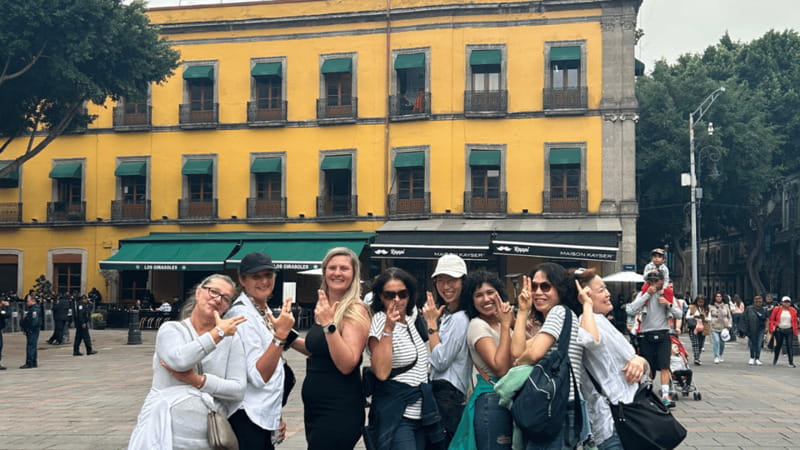
Meet outside the main entrance of the Metropolitan Cathedral, facing the main square and its large Mexican flag. Look for the guide in a green uniform with a green umbrella. This detail matters because the square can be busy, and a clear meeting signal saves time.
The Zócalo is the right place to begin. It is the symbolic heart of Mexico City, surrounded by major buildings and layered with political and religious meaning. Here, the guide introduces Mexico-Tenochtitlan, the Aztec empire, the Spanish conquest, and the city that grew over the older capital.
Expect about 25 minutes in the square. The opening talk gives you the map for the whole walk, though you may prefer a guide who keeps it moving. One group specifically felt that too much time was spent standing still before the route began. If you like history in a clear, structured sequence, you will appreciate the context. If you learn best while walking, this is the part to watch.
The Zócalo also provides an early lesson in modern city life. You see how public space, government, religion, commerce, and ceremony meet in one place. The tour’s strength is connecting that daily scene with the centuries behind it.
Inside the Metropolitan Cathedral
The Cathedral visit lasts about 20 minutes. Its scale and architectural detail make it a useful counterpoint to the open square outside. Your guide explains how the colonial period changed the city and how the Catholic Church shaped public life under the Viceroyalty.
This stop is not only about admiring a large church. It helps explain the shift from the pre-Hispanic capital to the Spanish colonial city. You get a clearer idea of how power, faith, and architecture were used to reshape Mexico after the conquest.
The pace is fairly brisk, so do not expect a long independent visit. Keep your eyes up and listen for the connection between the building and the surrounding district. If you want detailed time for every chapel or architectural feature, plan to return on your own.
Templo Mayor and the Aztec city below
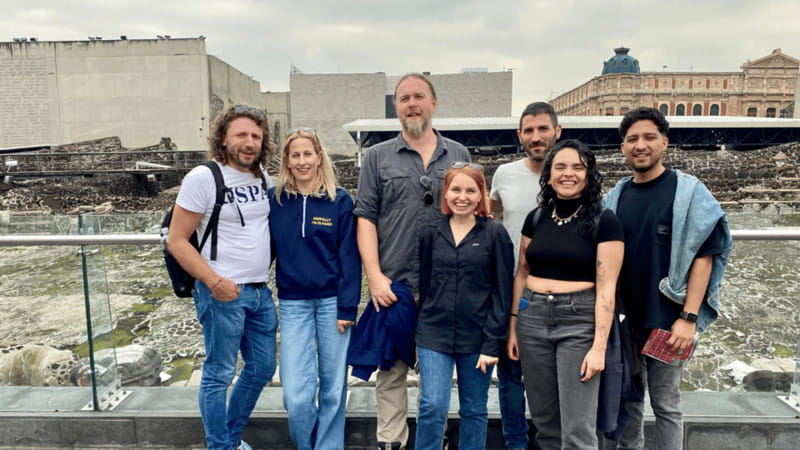
The Templo Mayor area is the historical hinge of the tour. The remains recall the ceremonial center of Mexico-Tenochtitlan, while the surrounding streets show how later buildings were placed over the earlier city.
The tour gives you about 30 minutes here. The guide explains the ruins and the significance of the Aztec capital, helping you picture a city that is no longer visible in full. This is where the idea of layered history becomes concrete rather than abstract.
Check the exact entry arrangements when booking. Entrance fees are not included, and the listed route describes a guided visit to the Templo Mayor Museum area. You should not assume that admission to every interior space is covered by the $30 price.
The best part is the interpretation. Without context, exposed ruins can look like scattered stone. With a good guide, they become part of a larger story involving Moctezuma, conquest, religion, and the growth of modern Mexico City. Guides such as Gabriela and Gaby have been praised for adding myths, legends, and cultural details to the historical account.
Same streets, a different guide:
- Playa del Carmen Walking Food Tour
★ 5.0 · 1,274 reviews - Frida Kahlo VIP [Museum Tickets Included] Walk, Markets & Churros
★ 5.0 · 982 reviews - Historical and Cultural Walking Tour of San Miguel de Allende
★ 5.0 · 641 reviews - Merida Walking Food Tour. Authentic & Local Cuisine
★ 5.0 · 451 reviews
Santo Domingo and the colonial city
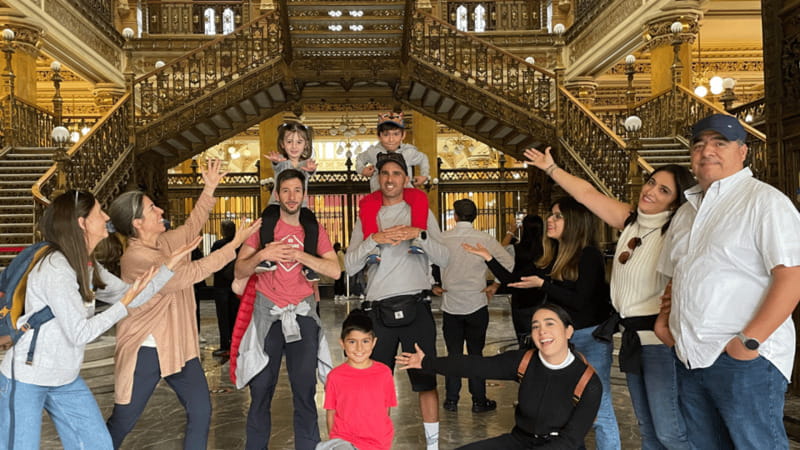
The stop at Plaza de Santo Domingo lasts about 25 minutes and is mainly a photo stop. The guide discusses the Dominican order and its influence, giving you another view of colonial society beyond the Cathedral.
This is a good place to notice how different religious orders shaped separate parts of the city. The square also lets the tour move from grand national events to the practical layout of colonial streets and institutions.
You may spend part of this stop listening and part taking photographs. Keep your expectations realistic: the tour does not promise long interior visits at every landmark. Its purpose is to show you the district’s main structure and point out details you might miss alone.
Palacio de Correos and the city’s grand public face
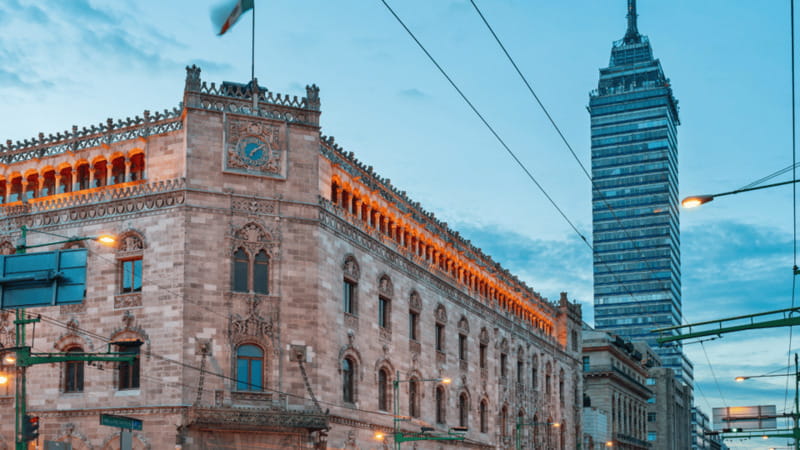
The Palacio de Correos de México brings the route into the late nineteenth and early twentieth centuries. The stop combines photographs, a visit, and free time, for about 25 minutes.
Its ornate design offers a sharp change from the Cathedral and Templo Mayor. Here, the guide can explain how the Republic presented itself through public buildings, infrastructure, and grand civic style. That makes this stop useful in the story of Mexico’s third major era, the Republic.
You get a chance to look around rather than simply pose for a photograph. Still, the available time is limited. If architectural details are your main interest, note what catches your eye and return later for a slower look.
Casa de los Azulejos and the short route to Bellas Artes
Casa de los Azulejos is one of the route’s most immediately recognizable façades. The building’s blue-and-white tilework makes it a natural photo stop, but the guide also places it within the changing social and architectural character of central Mexico City.
The visit takes around 20 minutes. This is another quick encounter rather than a full museum session. That works well if you want a broad introduction, but less well if you prefer to linger indoors at each stop.
From there, the route continues toward the Palace of Fine Arts. The changing buildings along the way help you see Centro Histórico as a living district rather than a row of isolated monuments. You are walking through areas where daily business, food, transport, tourism, and national memory all overlap.
Ending at the Palace of Fine Arts
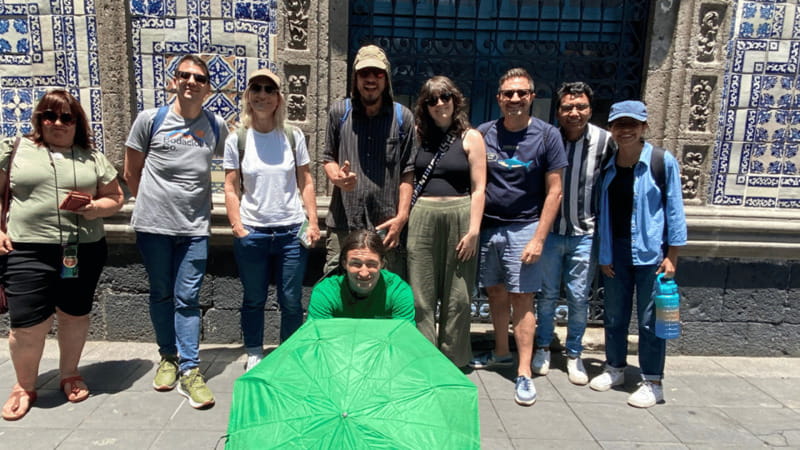
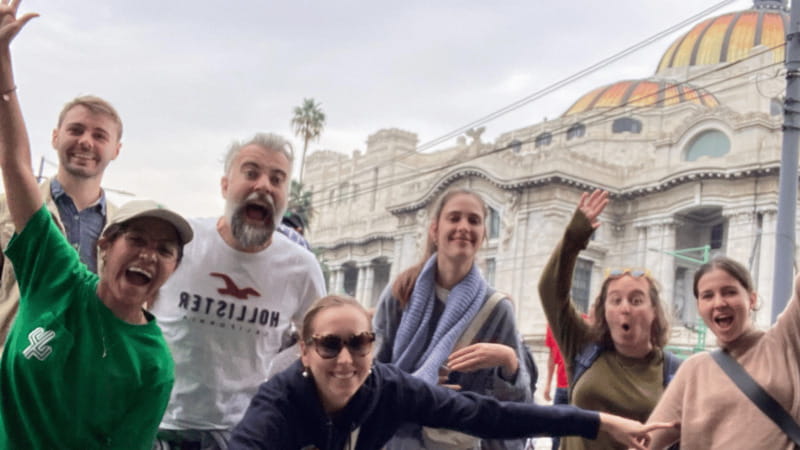
The tour ends at the Palace of Fine Arts after a roughly 20-minute photo stop. Its monumental exterior provides a fitting finish to a route that has moved from the Aztec world through colonial rule and into modern national identity.
The ending point is practical. You can continue exploring from here, make your way to nearby attractions, or follow the guide’s suggestions for food and later activities. The tour does not provide transport back to your accommodation, so plan your next move before you arrive.
Because the route ends at a major landmark rather than returning to the Cathedral, check your plans for the rest of the day. You will need to arrange your own transport to and from the meeting point.
The guides make the biggest difference
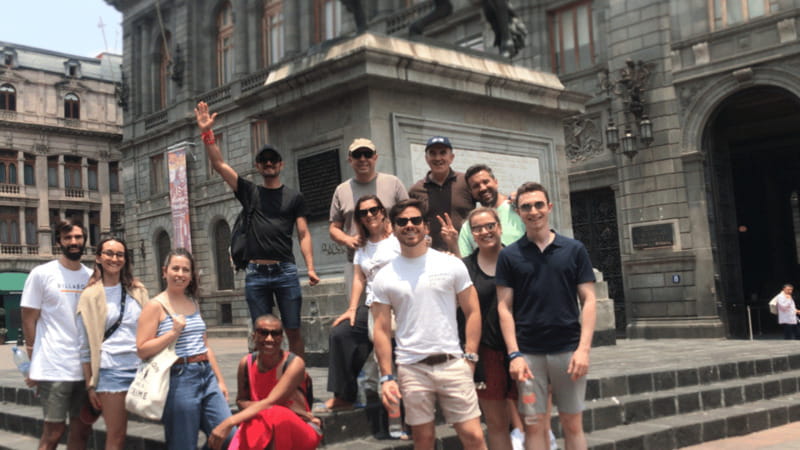
The guide is the heart of this experience. Past guides have included Areli, Oscar, Luis, Gabriela, Alexia, Laura, Netza, Thomas, Eduardo, Benjamin, Gaby, and others. The strongest qualities are repeated: warmth, clear explanations, energy, patience with questions, and the ability to connect historic events with food and modern life.
Areli was praised for explaining the city’s past with respect and helping the group choose street food. Oscar has been noted for his stories, friendly manner, and broad grasp of national history. Alexia has been singled out for strong energy, clear background information, and useful lunch ideas. Netza has been praised for making history entertaining and adapting the route during Day of the Dead season.
The guide assigned to you will shape the tone. That is normal for a walking tour, but it is worth understanding before you book. The structure is solid, yet storytelling style can vary. Small groups are possible, and a group of five was especially appreciated for allowing more personal attention.
The tour runs in English or Spanish. Some material may be presented in its original language, so ask questions if a term or explanation is unclear.
Food advice and everyday city skills
Food is not included, but the tour can still help you eat better afterward. Guides explain how locals judge food stalls and point you toward places for tacos and other local choices. You should bring cash if you plan to buy anything during or after the walk.
This is one of the more useful parts of the experience because it moves beyond monuments. You learn how to make decisions in the city instead of relying only on a list of restaurants. Do not expect a food tour, though. Any meal or snack is your own expense, and eating is not a formal part of the price.
You also hear about public transportation and small city habits, including why some streets are kept clean and how local preferences shape where people eat. These details help you function in Mexico City after the tour ends.
Is $30 a fair price?
At $30 per person, the value is good if you want a guided introduction to the central district. You receive three hours of walking, a local guide, and teaching materials. The route covers a lot: major history, landmark architecture, practical advice, and several photo opportunities.
The price does not include transport, food, beverages, or entrance fees. Those extras can raise the day’s total, especially if you choose to enter paid sites. Still, comparable independent sightseeing would require planning, research, and a good deal of reading while standing in busy public spaces.
I would see this as an orientation tour rather than a complete museum experience. Pay for it if you value explanation and local advice. Skip it if you prefer to explore at your own speed, spend long periods inside each building, or avoid a fixed three-hour walk.
Who should book this walking tour?
This is a strong choice for a first visit to Mexico City, especially if you want the historic center explained in plain language. It suits curious adults, families able to walk for three hours, and anyone who wants food and transport tips alongside history.
It can also work well for people who already know a little about Mexico but want to connect the Aztec, colonial, and republican periods. The stories about figures such as Cortés, Moctezuma, Pancho Villa, Zapata, Porfirio Díaz, Diego Rivera, and influential women give the route a human focus.
You should reconsider it if walking is difficult. The tour is not suitable for wheelchair users, and people over 95 are excluded. Bring comfortable shoes, sunglasses, a hat, sunscreen, cash, and clothing suited to the forecast. The tour runs in all weather, so rain or strong sun can affect your comfort.
If you bring children, pack water, snacks, and something to keep them occupied. One guide kept younger children engaged with details such as quinceañera dresses, but the historic explanations may still feel long for some children.
Should you book it?
Book this tour if you want a clear first reading of Mexico City’s historic center, with a guide who can explain what you are seeing and help you make better choices afterward. Its best qualities are the three-era structure, the lively guide-led storytelling, the practical food advice, and the broad run of landmarks from the Cathedral to Bellas Artes.
I would book it near the start of your stay, then use the afternoon or following days to revisit the places that catch your interest. Just allow extra time to reach the meeting point, remember that food and entrance fees cost more, and expect a real walk rather than a slow museum visit.
FAQ
How long does the Mexico City walking tour last?
The tour lasts three hours.
Where does the tour begin?
It begins at the main entrance of the Metropolitan Cathedral, facing the Zócalo and its large flag. Look for a guide wearing a green uniform and standing with a green umbrella.
Where does the tour end?
The tour ends at the Palace of Fine Arts, also called Palacio de Bellas Artes.
Which languages are available?
The live guide is available in English and Spanish. Some content may be shown in its original language.
What is included in the price?
The $30 price includes the walking tour through central Mexico City, a local guide, and didactic material.
Are food and drinks included?
No. Food and beverages are not included. Bring cash if you want to buy food during or after the walk.
Are entrance fees included?
No. Entrance fees are separate from the tour price.
What should I bring?
Bring comfortable shoes, sunglasses, a hat, sunscreen, cash, and clothing suited to the weather. The tour takes place even when weather conditions change.
New routes in Mexico
- Playa del Carmen: 3-Hour Local Food Walking Tour★ 4.8 · 267 reviews
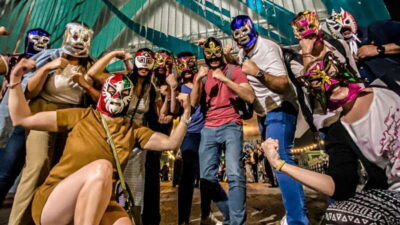
- Mexico City: Lucha Libre Show, Walking Tour & Tequila★ 4.6 · 156 reviews
- Mérida: 3-Hour Walking Food Tour★ 4.9 · 287 reviews
- Historical & Cultural Walking Tour of San Miguel de Allende★ 4.8 · 225 reviews
- Guadalajara: Culture, Architecture, and Market Walking Tour★ 5.0 · 81 reviews
- Walking Tour of the Historic Center of Mexico City★ 5.0 · 870 reviews
- Historical and Cultural Walking Tour of San Miguel de Allende★ 5.0 · 641 reviews
- Tulum Local Walking Food Tour★ 5.0 · 340 reviews
Mexico City Walking Tours, compared.
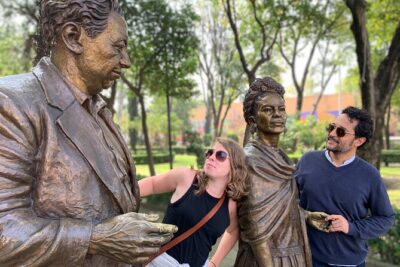
Frida Kahlo VIP [Museum Tickets Included] Walk, Markets & Churros
Read our review →
Browse the lists this tour appears in