
Review · BUCHAREST
Bucharest: Guided Walking Tour with Romanian Snack
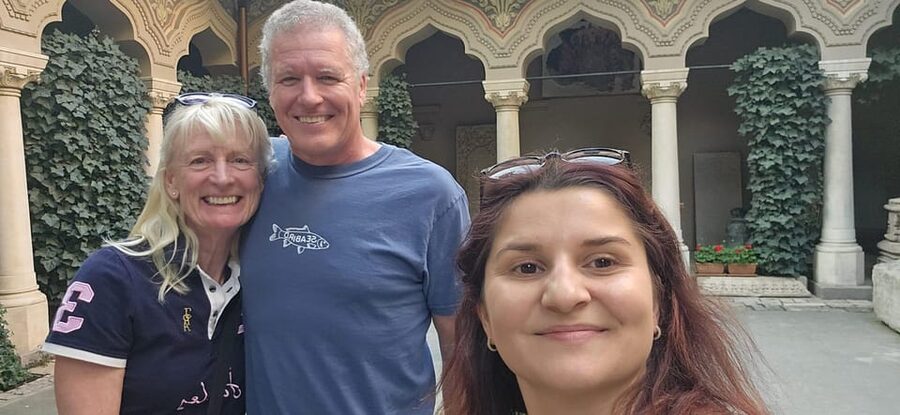
Bucharest makes the most sense when you see its history layered in the streets. This three-hour walk moves from medieval court ruins to French-style avenues and the scars of the 1989 revolution, with a local guide explaining how the pieces fit together. The route begins at Unirii Square and ends near the Romanian Athenaeum, so you cover a useful stretch of central Bucharest without wasting time on transport.
I like the small group size, capped at 10 people, and the way the tour mixes major sights with easy-to-miss details. I also like the guides’ personal approach. Mara, Elena, Julian, Mihaela, Andrea, and others have been praised for clear English, good humor, local suggestions, and the ability to answer questions rather than recite a script.
The main drawback is price. At $45 per person, this is more expensive than many European walking tours, and the three-hour route is almost entirely outdoors. You will get strong historical context and personal attention, but you should bring comfortable shoes and decide if that extra guidance is worth the premium.
Key points before you book
- See the city in historical order: The route moves from medieval Bucharest through royal-era architecture and into the communist and post-1989 period.
- Start with Palace of the Parliament views: Unirii Square gives you a clear introduction to the scale of Nicolae Ceaușescu’s building project.
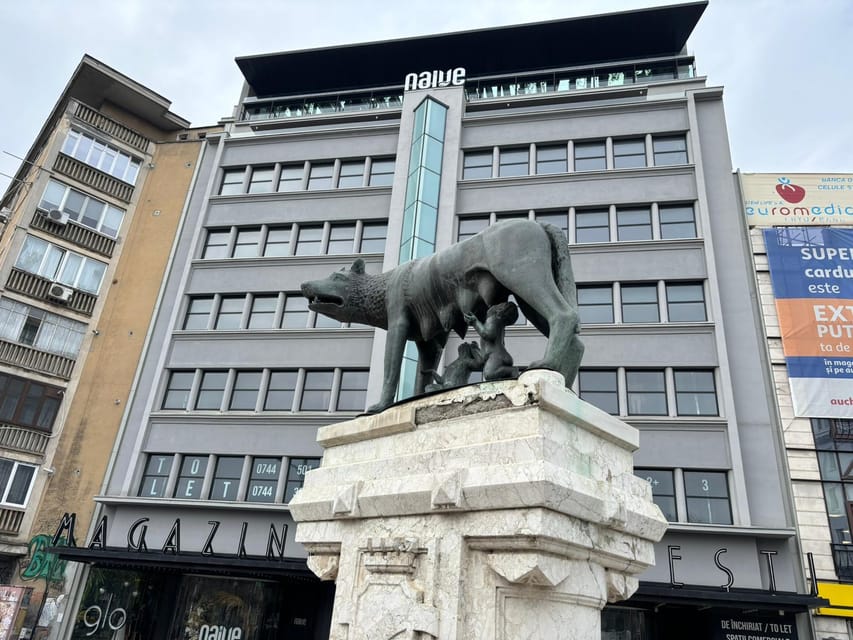
- Visit the Old Town beyond its restaurants: St. Anthony’s Church, the Old Court ruins, Stavropoleos Monastery, and Cărturești Carusel add depth to the busy center.
- Hear personal explanations of communism: Revolution Square is the place to ask direct questions about Romania before and after 1989.
- Expect a snack, not a full meal: One Romanian specialty is included. The exact item can vary, and past stops have included a sandwich or pastry.
- Plan for the Athenaeum entrance fee: Entry is optional and costs 15 lei, about 3 EUR, in cash.
Why this is a useful first walk in Bucharest
Bucharest can feel scattered at first. Grand government buildings sit beside worn apartment blocks, churches appear behind busy streets, and restored facades share space with buildings that still show years of neglect. A map helps, but a local explanation helps more.
This tour gives you a broad first look at central Bucharest in one continuous route. You begin at Piata Unirii, walk through the medieval and modern center, follow Calea Victoriei, and finish at Revolution Square and the Romanian Athenaeum. That path gives you a basic framework for later exploring on your own.
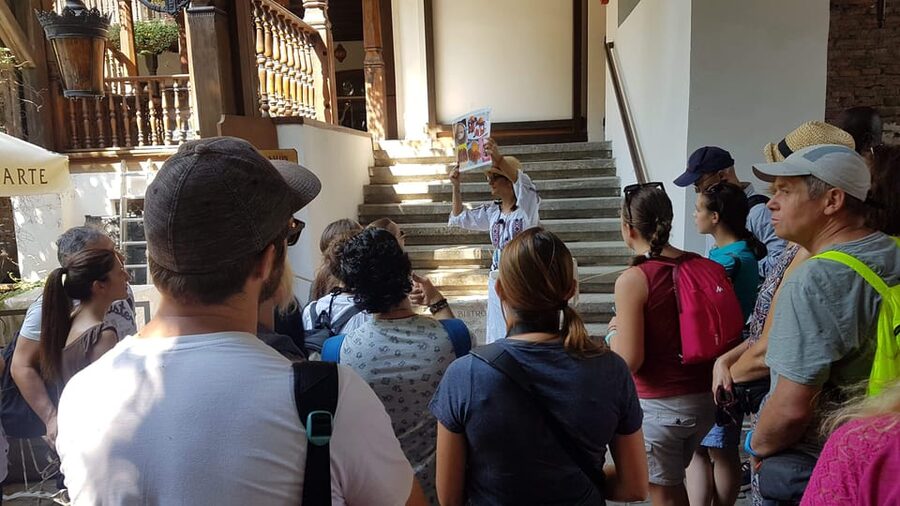
The strongest part is the range of subjects. You are not getting only architecture. The guides discuss royal Romania, French cultural influence, communist rule, the 1989 revolution, present-day life, food, and local recommendations. Several guides have also used old photographs, personal stories, and small visual aids to make the past easier to picture.
I would book this near the start of a Bucharest stay. You can ask about restaurants, cafes, shops, and other places to visit, then use those suggestions during the rest of your trip. The tour also helps you decide which buildings deserve a second look.
More Guided Walks in the world:
- Magical London: Harry Potter Guided Walking Tour
★ 4.7 · 22,044 reviews - History and Hauntings of Salem Guided Walking Tour
★ 5.0 · 14,564 reviews - Amsterdam Anne Frank: Small-Group Walking Tour & Local Guide
★ 4.8 · 12,789 reviews
From Unirii Square to the Palace of the Parliament
Meet your guide in front of One Sip cafe on Unirii Boulevard. Piata Unirii metro station is the closest transport connection, making the meeting point fairly simple to reach from other parts of the city.
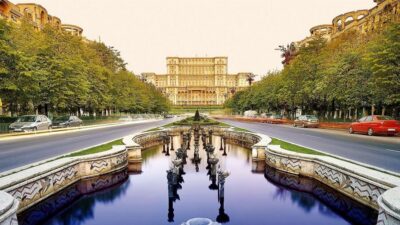
The opening view is of the Palace of the Parliament, the huge building often described as the second-largest administrative building in the world. You do not tour the interior on this walk, but seeing it from Unirii Square gives you the right starting point for understanding communist-era Bucharest.
The building’s scale is difficult to grasp from a photograph. Your guide can place it in the wider story of Ceaușescu’s rule and the drastic reshaping of the city. This is also a good moment to ask questions, since the tour later returns to the human and political cost of that period at Revolution Square.
The square itself is broad and urban rather than intimate. If you prefer small lanes and old buildings, the opening section may feel more like orientation than sightseeing. Still, the Palace provides a striking first image, and it explains why Bucharest’s center can feel so different from a typical old European capital.
Medieval Bucharest at St. Anthony’s Church and the Old Court
The walk then turns toward St. Anthony’s Church, also known as Biserica Sfantul Anton. It is presented as the oldest church in Bucharest, and its location near the former Royal Court makes it an important stop for understanding the city’s medieval roots.
Next come the ruins of the old Royal Court. This is not a grand palace complex on the scale of Western European royal sites. Instead, you see surviving traces surrounded by the active city. That modest scale is part of the appeal. The remains show that Bucharest’s early power center was woven into ordinary urban life rather than isolated from it.
Nearby Hanu’ lui Manuc adds another layer. The historic inn connects the old center with the practical world of merchants, travelers, and trade. It also offers a change of pace from formal monuments. Courtyards and historic commercial buildings help you picture Bucharest as a working crossroads.
This section rewards a guide who can explain what is no longer visible. Without context, the church, ruins, and inn can seem like separate stops. With a good explanation, they become part of the same medieval story.
The Old Town, with more than bars and souvenir shops
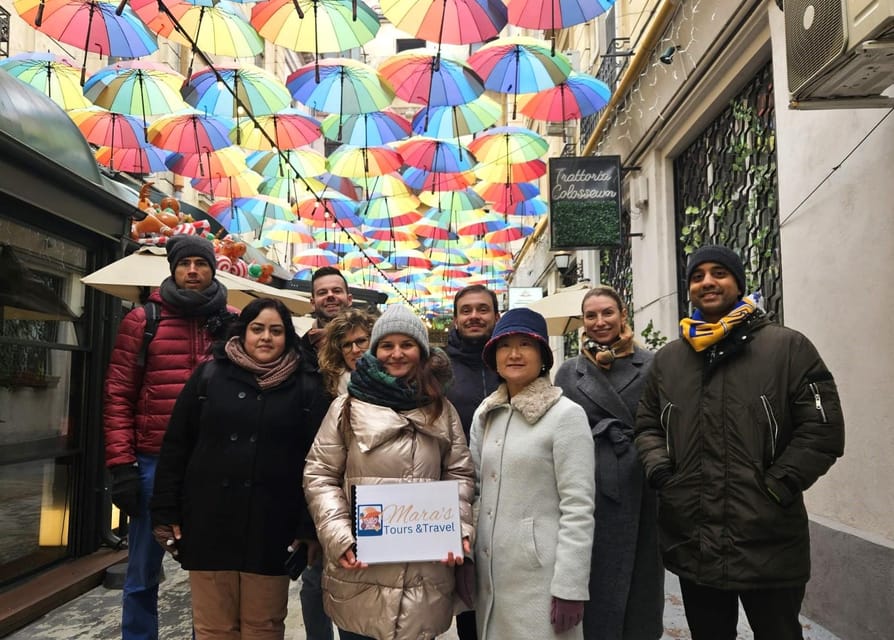
Bucharest’s Old Town is now one of the city’s busiest areas, packed with restaurants, cafes, nightlife, and restored facades. The tour gives you a short guided look rather than leaving you to wander without a plan.
The advantage is efficiency. You see the major points and learn where the historic center changes into modern downtown. The disadvantage is that the area can be crowded and noisy, especially at popular times. This is not a quiet, preserved village. It is a working entertainment district built over an older city.
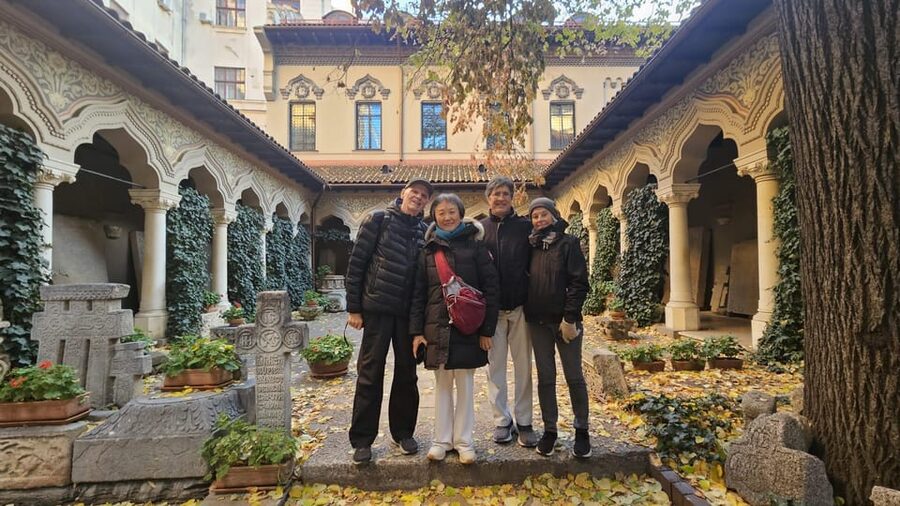
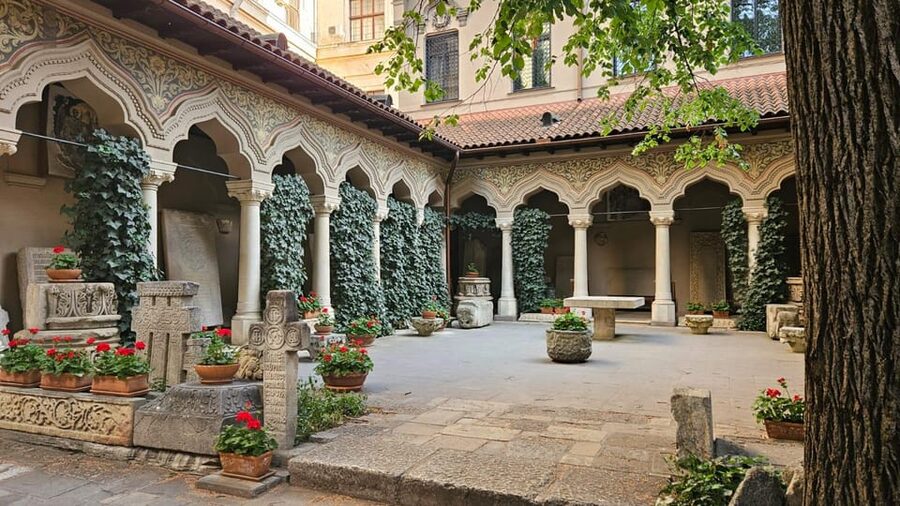
Stavropoleos Monastery is one of the more graceful stops. Its intimate scale and decorative detail offer a welcome contrast to the broad avenues and oversized government buildings elsewhere on the route. You have time to visit, though the advertised itinerary contains a timing typo for this stop, so treat the total tour length of three hours as the reliable figure rather than expecting a long stay inside.
The monastery is especially useful for visitors who want to see a more delicate side of Romanian architecture. It also gives your guide a chance to discuss religious and cultural life beyond the political landmarks.
More Walking Tours in the world:
- Reykjavik Food Walk – Local Foodie Adventure in Iceland
★ 5.0 · 18,952 reviews - New Orleans Premier Ghost, Voodoo and Vampire Walking Tour
★ 4.5 · 12,856 reviews - Edinburgh: Harry Potter Magical Guided Walking Tour
★ 4.8 · 11,944 reviews - Edinburgh Castle: Guided Walking Tour with Entry Ticket
★ 4.7 · 11,699 reviews
Cărturești Carusel and Bucharest’s restored face
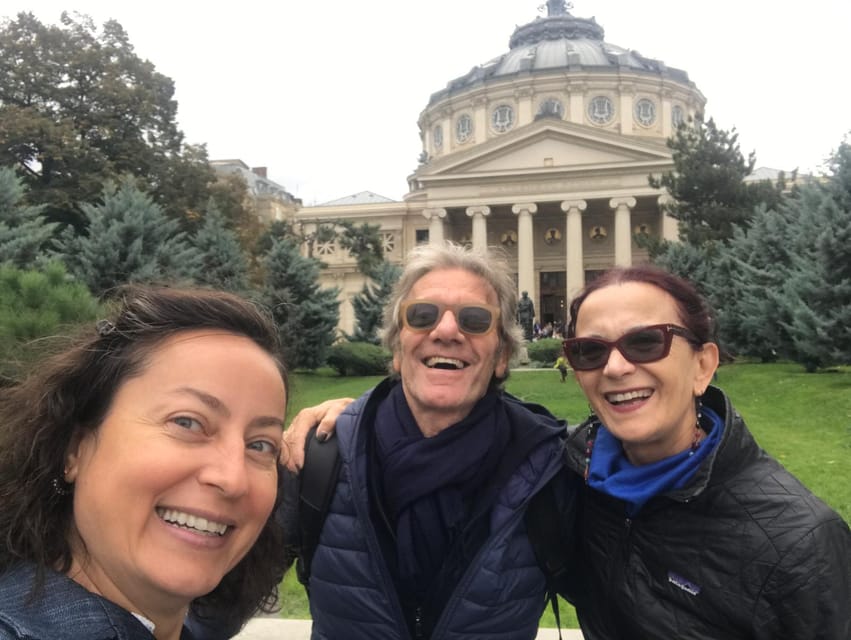
Cărturești Carusel is a modern bookshop in a beautifully restored historic building. The interior is known for its pale, curved design and open balconies, making it a popular photo stop. The visit is brief, about 10 minutes, but that is enough to look around and understand why the building has become a favorite central address.
I like this stop because it shows Bucharest as a city still finding new uses for old spaces. The tour is not only about ruins and monuments. It also points to current urban life and the way historic buildings can be repaired, reused, and enjoyed by locals and visitors.
Do not expect a long shopping break here. The stop is part of the walking narrative, not a dedicated bookstore visit. If you want time to browse, return later.
Calea Victoriei and the Little Paris chapter

Calea Victoriei is the architectural centerpiece of the walk. This major avenue is lined with elegant buildings influenced by French styles, which helps explain Bucharest’s old nickname, Little Paris.
The street is more than a pretty backdrop. It reflects the ambitions of Romania’s 18th- and 19th-century elite, when the capital looked toward Western Europe for ideas in architecture, culture, and public life. Your guide can point out how the city’s appearance changed during this period.
The route also shows the uneven condition of Bucharest’s built heritage. You may see carefully restored facades close to buildings that look worn or unfinished. That contrast is useful, not disappointing. It gives you a more honest view of a city still managing its old architecture while dealing with modern pressures.
Allow yourself time to take photographs, but keep your attention on the explanations. The most interesting details are often above street level, around entrances, balconies, and decorative stonework. Comfortable footwear matters here because the walk is long enough for hard pavement to become tiring.
Revolution Square and the meaning of 1989
The final historical section centers on Revolution Square. This is where the tour moves from attractive architecture into recent political history.
Your guide explains what communist rule meant for Romania and Bucharest, then discusses the 1989 revolution and the changes that followed. This is one of the most valuable parts of the tour because it connects monumental buildings with ordinary life. You can ask about censorship, daily routines, political change, and how Romania developed after the fall of Ceaușescu’s regime.
The square also gives you a chance to look closely at the physical reminders of that period. The experience depends heavily on the guide here. Mara, Elena, Julian, and Mihaela have each been praised for making political history clear, personal, and approachable. They also appear comfortable discussing modern Romania rather than treating 1989 as a sealed-off chapter.
This stop can feel serious, but it is not presented as a lecture. The best guides use anecdotes, photographs, and conversation to make the events easier to follow. If you have questions about Romania today, save them for this part of the walk.
Carol I and the Romanian Athenaeum finish
The equestrian statue of Carol I brings the route back to royal Romania. Carol I was an important figure in the country’s modernization, and the statue gives the tour another chance to discuss the monarchy and the changing identity of the capital.
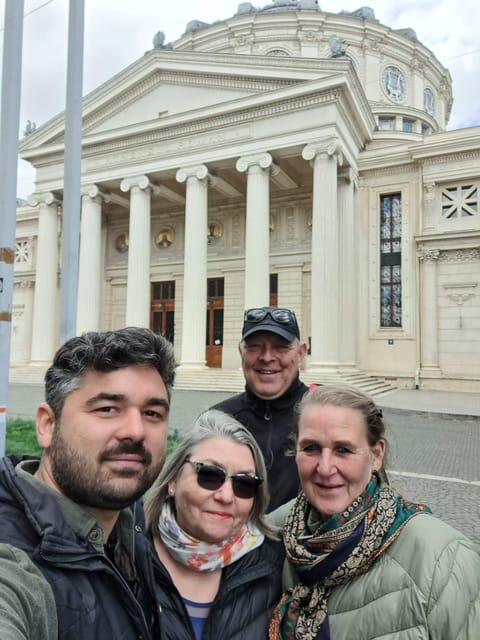
The walk ends at the Romanian Athenaeum, one of Bucharest’s best-known cultural buildings. The outside view is included. Entering is optional and costs 15 lei, around 3 EUR, payable in cash. Bring the correct payment if you want to go inside, since card payment is not listed for this fee.
Ending here works well. After seeing medieval remains, communist-era landmarks, and French-influenced avenues, you finish at a building linked with music, culture, and national pride. The route does not return you to Unirii Square, so note that the finish is at the Athenaeum rather than the starting point.
The Romanian snack and what it adds
One famous Romanian snack is included in the price. The exact food is not specified, and the experience can vary. Past stops have included a sandwich from a pastry shop, while another guide pointed out local pastry options after the walk.
Treat this as a taste of local food rather than lunch. If you need a full meal, eat before the tour or plan dinner afterward. The snack is still useful because food gives you an easy way to ask about Romanian habits and regional specialties.
The food stop also breaks up the walking. One guide was praised for finding a sandwich shop, while another suggested pastry and restaurant addresses for later. These small recommendations may be worth as much as the included bite if you are new to Bucharest.
Guides, group size, and the pace
The group is limited to 10 participants, though some departures may be much smaller. Several bookings have ended up with only two people or even one person, which can make the walk feel nearly private. You should not assume that will happen, but the small maximum is a real advantage.
The named guides include Mara, Elena, Julian, Mihaela, Andrea, and others. The most consistent strengths are clear English, warmth, patience, and an ability to handle questions. The guides are also praised for adapting the pace, pausing in shaded areas, allowing photo stops, and helping with water or restroom breaks when needed.
The tour runs in English. Italian is also listed among the guide languages, but the practical information says the tour operates in English, so confirm your preferred language when booking if that matters.
Three hours is enough for a useful city overview, but it is not enough for long interior visits at every stop. You will spend more time walking and listening outside than entering buildings. In hot weather, an evening departure may be more comfortable. In winter, wear shoes with good grip, as one January group walked through snow and ice.
Is $45 a fair price?
At $45, this is not Bucharest’s cheapest walking option. A budget-minded visitor can find less expensive city walks, and one participant specifically felt the price was high compared with similar tours elsewhere in Europe.
The value comes from the small group, the three-hour route, and the guide’s local interpretation. You are paying for a structured walk that joins medieval sites, royal architecture, communist history, and modern Bucharest. You also receive a Romanian snack and the chance to ask for tailored food and sightseeing suggestions.
I would call it fair value for a first visit, especially if you have limited time or want a personal introduction rather than a large group lecture. It is less compelling for repeat visitors who already know central Bucharest or prefer to explore at their own pace.
Free cancellation is available up to 24 hours before departure, and you can reserve now and pay later. Those terms help if your schedule is still changing, but they do not alter the basic price comparison.
Who should book this Bucharest walk?
Book it if you want a clear introduction to the city, care about modern political history, and prefer a guide who can answer questions. It suits solo visitors, couples, families with older children, and anyone who wants restaurant and cafe suggestions along with the main sights.
The tour is also a good fit if you are nervous about Bucharest’s mixed architectural character. A local guide can explain why the city looks the way it does instead of leaving you to judge it only by its polished landmarks.
Skip it if you dislike three hours on foot, want extensive interior visits, or are mainly looking for a cheap orientation walk. The $45 cost needs to be justified by the personal guiding and historical context.
For most first-time visitors, I would book it early in the stay, preferably at a time that suits the weather. Go with comfortable shoes, water, and 15 lei in cash if you want to enter the Athenaeum. The route gives you a solid foundation for exploring the rest of Bucharest on your own.
FAQ
How long is the Bucharest walking tour?
The tour lasts three hours.
How much does the tour cost?
The listed price is $45 per person.
Where does the tour begin?
Meet your guide in front of One Sip cafe on Unirii Boulevard. The closest metro station is Piata Unirii.
Where does the tour finish?
The tour ends at the Romanian Athenaeum.
Is the tour conducted in English?
Yes. The tour runs in English. Italian and English are listed as available guide languages.
How large is the group?
The group is limited to 10 participants.
Is a Romanian snack included?
Yes. One famous Romanian snack is included. The exact item is not specified.
Can I enter the Romanian Athenaeum?
Entrance is optional and costs 15 lei, about 3 EUR. The fee is cash only.
Can I cancel for a full refund?
Yes. You can cancel up to 24 hours in advance for a full refund.
New routes in the world
- Baltimore Walking Foodie Tour in Fells Point★ 5.0 · 182 reviews
- Baku Oil Heritage & Old Town Walking Tour★ 5.0 · 232 reviews
- Baku Walking Tour (Old City)★ 5.0 · 127 reviews
- The Madam’s Curse Walking Ghost Tour★ 4.5 · 103 reviews
- Austin Small Group Morning Walk★ 5.0 · 412 reviews
- Austin Downtown Private Walking Food Tour With Secret Food Tours★ 5.0 · 71 reviews
- Austin Murder Walk★ 5.0 · 310 reviews
- Austin Haunted Pub Crawl Walking Tour★ 4.5 · 232 reviews
Bucharest Walking Tours, compared.
Bucharest: City Highlights Guided Walking Tour
Read our review →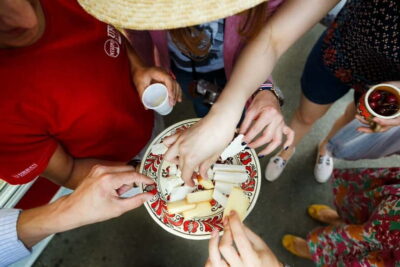
Bucharest: Hidden Markets Walking Tour with Tastings
Read our review →
Bucharest: Ghost Stories & Romanian Mythology Walking Tour
Read our review →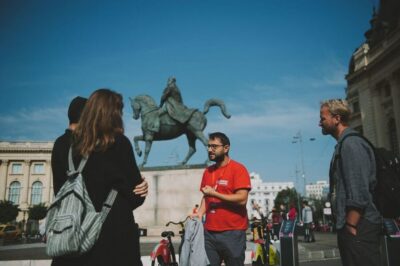
Browse the lists this tour appears in