
Review · CHARLESTON
Highlights of Charleston Guided Walking Tour
Charleston’s past is not confined to museums. It is built into church walls, narrow streets, brightly painted houses, and old commercial buildings. This two-hour walking tour links the French Quarter and South of Broad with a guide who explains how religion, trade, war, slavery, and politics shaped the city. Bill Harris is often the guide, and his style is less scripted sightseeing and more lively history lesson.
I like the route for two clear reasons: it gives first-time visitors a useful map of central Charleston, and it does not skip the city’s harder stories. I also like the small-group limit of 20 people, which makes it easier to hear the guide and ask questions. The main drawback is that this can be a talk-heavy tour. One dissatisfied participant felt the group spent too long standing in one place and walked too little.
Key points at a glance
- A focused Charleston route: See the French Quarter and South of Broad without trying to cover the whole city.
- History beyond pretty buildings: The Old Slave Mart and Old Exchange add political and human context to the architecture.
- Strong guide personalities: Bill Harris is praised for humor, wide-ranging historical knowledge, and a direct approach. Vanna is also described as warm, funny, and well informed.
- Mostly outdoors: Bring water, sunscreen, a hat, and rain gear. Restrooms may not be available along the route.
- Good first-day choice: The tour helps you understand central Charleston before exploring on your own.
- Admission costs are separate: The Old Slave Mart Museum and Old Exchange require extra payment if you go inside.
Why this two-hour walk works for first-time visitors
Charleston can feel easy to explore because its historic core is compact. That can also fool you. A beautiful house may represent a religious minority, a shipping fortune, a political battle, or a painful chapter in the city’s past. Without context, you see façades. With a good guide, you begin to understand the forces behind them.
This route keeps the focus tight. Starting at 200 East Bay Street, you move through the French Quarter and then toward South of Broad, ending near the Meeting Street and Broad Street intersection. That location is useful because you are left in a central part of town, close to more historic streets, restaurants, and other sights.
The tour is offered in English and lasts about two hours. That is long enough for a serious introduction without taking an entire morning or afternoon. You will not see every corner of Charleston, but you will get a clear framework for exploring more on your own.
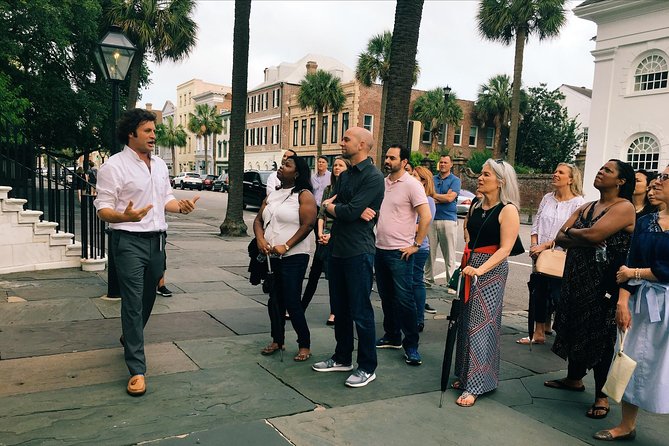
The group limit is 20 people. That is not private touring, but it is small enough to hear a speaker more easily than you would on a large motor coach. The tradeoff is that your experience depends heavily on the guide’s pace and style. Bill Harris is often singled out for being funny, direct, and able to connect local events with broader American and world history. If you prefer a short list of dates and quick photo stops, his approach may feel expansive.
More City Highlights Walking Tours in Charleston:
- Historic Charleston Guided Sightseeing Walking Tour
★ 5.0 · 6,216 reviews - Ho Chi Minh City Street Food Tour & Sightseeing By Motorbike
★ 5.0 · 9,413 reviews - Dublin Highlights and Hidden Gems Guided Walking Tour
★ 5.0 · 6,020 reviews
St. Philip’s Church and the opening chapter
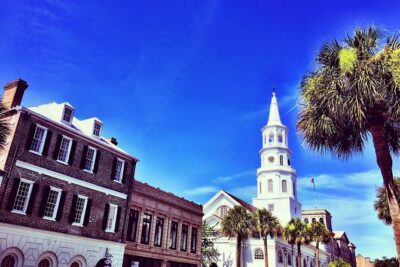
The first stop is St. Philip’s Church, where you spend about 10 minutes viewing the historic congregation. The point is not simply the building. Your guide uses the church to discuss Charleston’s religious and civic development, showing how places of worship also became important gathering points in the growing city.
This is a useful opening because it places Charleston’s story in a wider setting. The guide may connect local religious life with colonial politics and the development of the city. The exact emphasis can vary, but the tour’s strongest guides are willing to explain how different pieces fit together rather than tossing out isolated facts.
You should expect to remain outside for much of the stop. The tour is designed around views and explanations rather than guaranteed interior visits. If you want a detailed look inside each building, allow time for separate visits after the walk.
The French Huguenot Church and Charleston’s religious mix
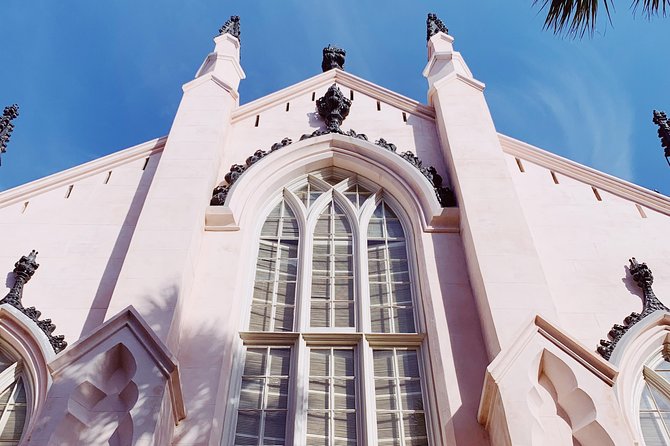
The French Huguenot Church is described as the only church of its denomination in North America. That makes it one of the route’s more distinctive stops. It gives you a chance to see that Charleston was shaped by more than one religious tradition.
A guide with a strong grasp of religion can make this stop especially useful. Bill Harris has been praised for bringing religious history into the larger story of Charleston, including the reasons certain groups came to the area and how belief affected community life. You are not just looking at an old church. You are considering how migration, faith, identity, and power shaped the city.
The 10-minute stop is brief, so do not expect a full architectural tour or a long examination of the congregation. Its value is as one piece of a larger explanation. If religious history interests you, this may be one of the points where you will want to ask a follow-up question.
The Pink House and Charleston’s visual character
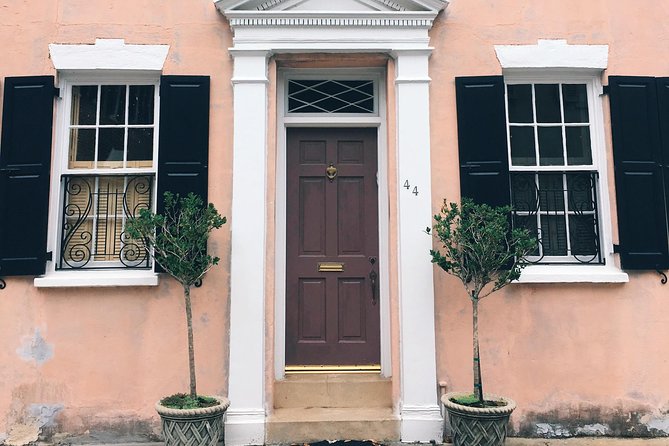
The Pink House Gallery is identified as the oldest private residence in Charleston. Its small scale and bright color make it an easy sight to remember, but the guide’s explanation gives it more weight than a quick photograph would.
This stop also shows why a walking tour works well here. You can compare the Pink House with neighboring buildings at street level and notice how Charleston’s historic core is made up of many different periods and styles. The city is not a single preserved set piece. It is a collection of homes, churches, commercial buildings, and public spaces shaped over time.
The stop lasts about 10 minutes and is primarily a viewing point. You should not assume that the tour includes entry to the gallery or private residence. The route is strongest when you treat these locations as prompts for history, architecture, and questions rather than as a series of indoor attractions.
More Guided Walks in Charleston:
- Charleston Ghost & Graveyard Night-Time Guided Walking Tour
★ 4.5 · 1,100 reviews - Charleston: History and Architecture Guided Walking Tour
★ 4.8 · 349 reviews - Magical London: Harry Potter Guided Walking Tour
★ 4.7 · 22,044 reviews - History and Hauntings of Salem Guided Walking Tour
★ 5.0 · 14,564 reviews
The Old Slave Mart Museum and the story Charleston cannot soften
The Old Slave Mart Museum is the most important stop for understanding the tour’s moral purpose. It is described as the only museum in Charleston dedicated to the history of enslaved people in the city. Admission is not included, so you will need to pay separately if you want to enter.
The building and its subject demand a careful guide. Charleston’s prosperity was tied to slavery, and a tour that only celebrates grand houses and elegant streets gives you a distorted picture. This stop places the city’s wealth, trade, and social order in a harder but necessary context.
The guide may provide background outside the museum, but a 10-minute stop cannot replace time inside an exhibition. If this subject matters to you, consider returning later with enough time to visit the museum properly. The walking tour gives you a useful introduction and helps you recognize why the site matters. It does not include the museum’s admission or guarantee an extended indoor visit.
Some of the strongest feedback about this experience centers on its willingness to discuss less comfortable facts. That makes the Old Slave Mart stop more than a photo opportunity. It is where the pleasant surface of Charleston is tested against the history that helped create it.
The Old Exchange and the machinery of early Charleston
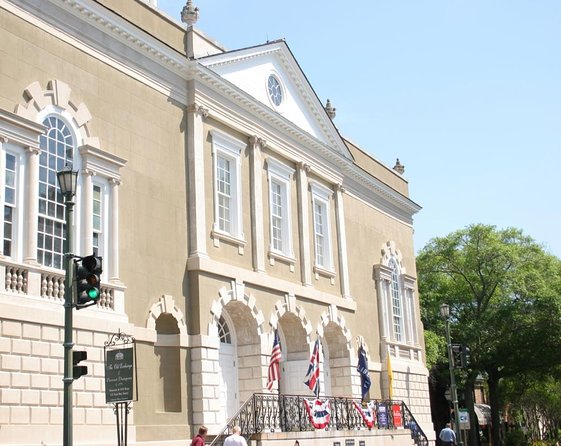
The Old Exchange and Provost Dungeon represents the commercial and political heart of pre-Revolutionary Charleston. It adds another layer to the tour by showing how the city worked as a center of trade, government, and public life.
The building is also useful for connecting local history to events beyond South Carolina. Guides such as Bill Harris are praised for explaining Charleston alongside the colonies, the wider Atlantic world, and the political pressures that led toward the American Revolution. That broader framing is one of the main reasons this tour may suit people who want more than architectural trivia.
Admission is not included. If you decide to go inside, plan for a separate ticket and additional time beyond the walking tour. The route gives you the setting and context, while an interior visit can provide a closer look at the building’s own story.
At this point, you may notice the tour’s central pattern: a building is introduced, then placed within a wider discussion of power, commerce, religion, and society. That approach rewards curiosity, but it also explains why the tour can feel slow if you want constant movement.
Rainbow Row and the final photo stop
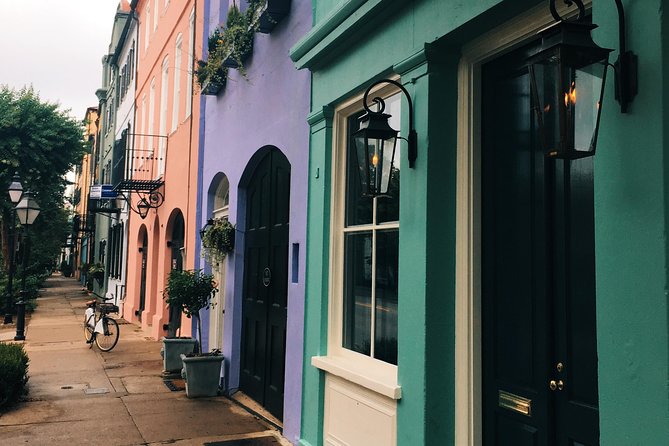
Rainbow Row is the best-known visual stop on the route and is often the image people associate with Charleston. The row of colorful historic houses is easy to photograph and makes a cheerful ending after the more serious subjects earlier in the walk.
The stop works better when you understand that these houses are part of a working historic neighborhood, not simply a decorative postcard. Your guide can help you read the street as a place shaped by commerce, domestic life, preservation, and tourism.
The tour generally ends near Meeting Street and Broad Street, though the precise endpoint can change with the group’s walking speed and the guide’s decisions. That flexibility is minor, but it is worth knowing if you have a timed reservation afterward.
A guide-led history lesson, not a fast sightseeing circuit
The guide is the experience here. The tour has a fixed route, but the quality of the walk depends on how the guide handles questions, timing, and difficult history.
Bill Harris receives especially strong praise for his humor, personality, and command of detail. He is described as someone who can connect Charleston to national and international events while keeping the conversation lively. Several comments also point to his ability to adjust the discussion to a group’s interests, ranging from a lighter orientation to a more serious examination of the city’s past.
Vanna is also described as personable, funny, and well informed. Because guides can vary, I would not book this expecting one exact personality or performance. If requesting a guide is possible, Bill is the name most closely associated with the experience, but availability is not guaranteed.
You should also know what the tour is not. It is not a trolley ride, and it is not a silent stroll from one photo stop to another. You may spend a fair amount of time listening in front of one site. That is a plus if you want interpretation and a minus if your main goal is to cover distance.
The current rating is 4.9 from 2,206 ratings, with 98 percent recommending the experience. Those figures suggest a reliable overall product, but the one-star account is useful because it identifies the chief risk: a guide who talks at length can make the route feel less active than expected.
Weather, walking, and what to bring
The route is almost entirely outdoors. Charleston’s heat, sun, and sudden rain can affect your comfort, so bring sunscreen, sunglasses, a hat or parasol, and bottled water. Water may not be available for purchase along the route, making this a simple item to pack before you arrive.
Wear comfortable shoes. The tour requires a moderate level of fitness, and you will be on your feet for about two hours, even if the distance is not extreme. Children can attend but must be accompanied by an adult. The tour is designed with adults in mind, though children and young adults have taken part successfully. Notify the provider if you plan to bring a stroller.
Use a restroom before meeting the group. Facilities are not always available along the route. Registered service animals are allowed, but ordinary pets are not.
Check in five to 10 minutes early. The group cannot wait for late arrivals, so arriving at the meeting point at 200 East Bay Street with a few minutes to spare is important. If you drive, the suggested garages are at 1 Cumberland Street and 89 Cumberland Street, both about a five-minute walk away. Parking costs extra.
The tour generally operates in light rain, but dangerous conditions such as lightning, flooding, or high winds can lead to cancellation. You can bring your own rain gear, and if the operator cancels for weather, you can choose a new date or receive a full refund.
What the price is really buying
The supplied details do not state the tour price, so I cannot judge the dollar amount directly. I can judge the structure of the value. Your ticket pays for the guide, the route, and the interpretation. It does not cover parking, gratuity, the Old Slave Mart Museum, or the Old Exchange.
That can still be good value if you want a strong orientation to central Charleston. A guide can help you understand several major sights in two hours, then you can decide which ones deserve a longer independent visit. The value is lower if you only want access to buildings or prefer to explore quietly with a guidebook.
Admission being separate is not unusual for a walking tour, but budget for it if you want to enter both museums. Gratuity is optional and appreciated, especially if your guide gives you the thoughtful, engaging experience this tour aims to provide.
Who should book this Charleston walk
I would choose this tour for a first visit, especially if you want to understand Charleston before spending time on your own. It suits people who enjoy history, architecture, religion, politics, and candid discussion of slavery and the city’s past.
It also works well for families with older children, couples, and friends who want a shared introduction. The small group limit is helpful for questions, though the experience may be more lecture-based than active.
I would skip it if you dislike standing still, want extensive indoor access, or prefer a short, tightly timed route. I would also avoid booking it immediately before an important reservation because the endpoint and pacing can shift slightly.
Should you book the Highlights of Charleston Guided Walking Tour?
Book it if you want Charleston explained by a lively local historian rather than simply pointed out. The route covers major sights, but the real value is the connection between them: churches, commerce, slavery, politics, and preservation all become part of one story.
Bring water, arrive early, wear good shoes, and accept that the guide may talk more than you walk. If you can request Bill Harris, do so, while remembering that Vanna and other guides may lead the tour as well. For a first look at the French Quarter and South of Broad, this is a thoughtful and useful choice. Just leave room in your schedule for the history, not only the photographs.
FAQ
How long is the Highlights of Charleston Guided Walking Tour?
The tour lasts approximately two hours.
Where does the tour begin?
It begins at 200 East Bay Street, Charleston, South Carolina 29401.
Where does the tour end?
It generally ends near the intersection of Meeting Street and Broad Street. The exact endpoint can change depending on the group’s pace and the guide.
Is the tour offered in English?
Yes. The experience is offered in English.
Are admission tickets included?
The tour guide is included. Admission to the Old Slave Mart Museum and the Old Exchange and Provost Dungeon is not included. Parking fees are also separate.
What should I bring?
Bring comfortable walking shoes, bottled water, sunscreen, a hat, sunglasses or a parasol, and rain gear when needed.
Are children and pets allowed?
Children must be accompanied by an adult. Registered service animals are allowed, but pets are not permitted.
What happens if the weather is bad?
The tour usually operates in rain, but it may be canceled for dangerous conditions such as lightning, flooding, or high winds. If the operator cancels, you can reschedule or receive a full refund. You may cancel up to 24 hours before the start time for a full refund.
New routes in Charleston
- Charleston: Old Walled City Historical Walking Tour★ 4.7 · 705 reviews
- Charleston walking tour with a Citadel history professor★ 5.0 · 105 reviews
- Charleston: 90-Minute Ghost and Dungeon Walking Tour★ 4.2 · 266 reviews
- Charleston: 90-Minute Ghost & Graveyard Walking Tour★ 4.5 · 75 reviews
- Charleston: History and Architecture Guided Walking Tour★ 4.8 · 349 reviews
- Charleston Ghost & Graveyard Night-Time Guided Walking Tour★ 4.5 · 1,100 reviews
- Charleston historical walking tour with a Professor of History at The Citadel★ 5.0 · 1,284 reviews
- Charleston’s Pleasing Terrors Night-Time Walking Ghost Tour★ 5.0 · 1,345 reviews
Charleston Walking Tours, compared.
Historic Charleston Guided Sightseeing Walking Tour
Read our review →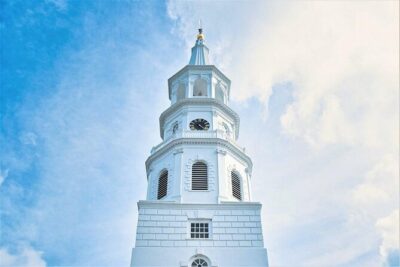
Ghosts of Charleston Night-Time Walking Tour with Unitarian Church Graveyard
Read our review →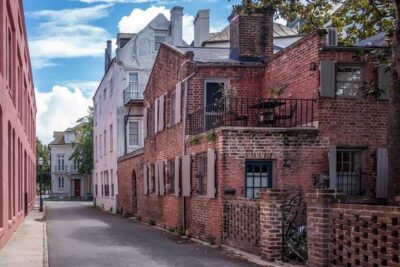
Hidden Alleyways and Historic Sites Small-Group Walking Tour
Read our review →
Charleston French Quarter or Brunch Food Tour with 7+ Tastings
Read our review →
Charleston Haunted Booze and Boos Ghost Walking Tour
Read our review →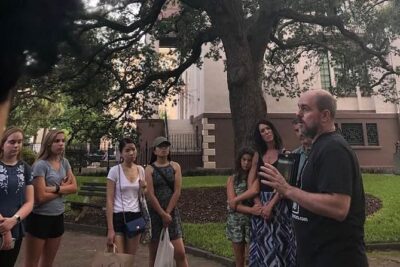
Charleston’s Pleasing Terrors Night-Time Walking Ghost Tour
Read our review →
Charleston historical walking tour with a Professor of History at The Citadel
Read our review →
Charleston Ghost & Graveyard Night-Time Guided Walking Tour
Read our review →Browse the lists this tour appears in