
Review · CHARLESTON
Historic Charleston Guided Sightseeing Walking Tour
Charleston’s story is written into its streets, churches, homes, and harbor. This two-hour walk starts at City Hall and links the Four Corners of Law, the French Quarter, Rainbow Row, and White Point Garden, giving you a useful first look at the old peninsula without burying you in dates.
I like the easy, flat route and the way the guides connect buildings to larger events, from the Revolutionary War to slavery and the city’s recovery after the Civil War. I also like the range of guides, including Evans, Al, Dennis, and Duggar, whose styles bring in architecture, local stories, humor, and practical suggestions. The main drawback is simple: Charleston heat, cold, or rain can make two hours outside feel much longer, and there are no public restrooms along the route.
Key points to know before you book
- City Hall is the starting classroom: The tour opens at the Four Corners of Law, where civic, religious, and legal Charleston meet.
- The French Quarter packs in the landmarks: Expect the Dock Street Theatre, churches, the Powder Magazine, the former Slave Mart site, and the Pink House area.
- Rainbow Row is a short stop: You see the famous colorful houses, but the tour does not turn into a long house-by-house visit.
- South of Broad gives the walk its charm: Antebellum homes, the Battery, and White Point Garden provide the strongest visual moments.
- Guides shape the experience: Evans, Al, Dennis, and Duggar have been especially praised for storytelling, humor, architecture, and historical detail.
- Preparation matters: Arrive 15 minutes early, bring water, wear comfortable shoes, and use the restroom before setting off.
Why this two-hour walk is a smart first look at Charleston
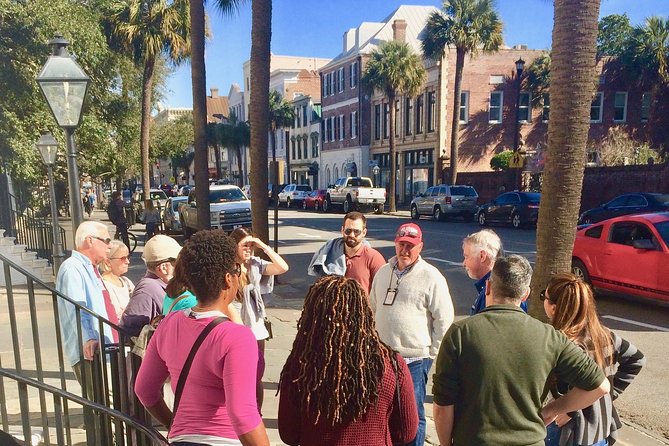
At $30 per person, this tour offers a fair introduction to Charleston’s central historic district. You are paying for a licensed local guide, a small group capped at 20 people, and two hours of context that you would miss by simply following a map between pretty buildings.
I like guided walks in Charleston because the city can look almost too polished at first glance. A pastel house, wrought-iron gate, or church steeple may photograph well, but the important story is usually in why it was built, who lived there, who worked there, and how the city changed over time.
This walk helps you make those connections early in your visit. You can use the rest of your stay to return to places that caught your interest, visit museums in more depth, or follow restaurant and book suggestions from the guide.
The tour is conducted in English and is offered at several departure times. That makes it easy to fit into a short visit, though the exact route and stops can vary by guide. It is best to think of this as a guided survey of historic Charleston rather than a deep visit inside each landmark.
More History Walking Tours in the USA
- Hidden Alleyways and Historic Sites Small-Group Walking Tour
★ 5.0 · 2,335 reviews - Charleston historical walking tour with a Professor of History at The Citadel
★ 5.0 · 1,284 reviews - Charleston: Old Walled City Historical Walking Tour
★ 4.7 · 705 reviews
Starting at City Hall and the Four Corners of Law
Meet your guide in front of Charleston City Hall at 80 Broad Street. Arrive 15 minutes before the start, since the group sets off promptly. The opening stop lasts about 15 minutes and gives you a useful sense of how Charleston organized public life.
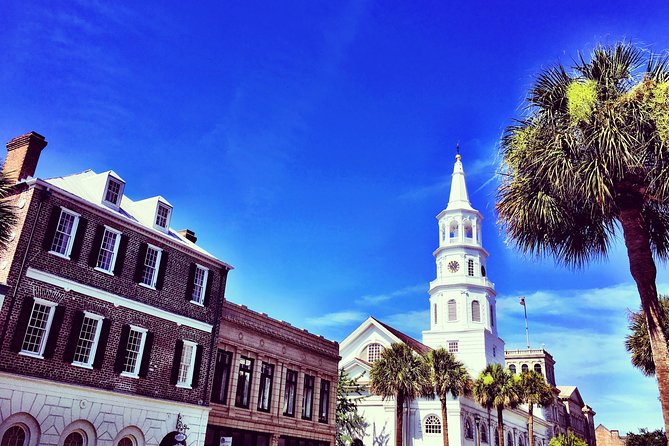
City Hall is one part of the Four Corners of Law. The other corners are the courthouse, the post office, and St. Michael’s Church. Having these buildings together makes a strong opening point. You are not only looking at old architecture. You are seeing government, justice, federal service, and religion gathered at one major intersection.
St. Michael’s Church adds a personal connection to the national story. George Washington is known to have worshipped there, a detail that helps place Charleston within the early United States rather than treating it as an isolated Southern city.
This opening also sets the pattern for the rest of the walk. Your guide points out a place, then explains the people and events tied to it. That approach is more useful than a list of construction dates, especially if this is your first visit.
The French Quarter brings Charleston’s stories close together
The French Quarter portion takes roughly 45 minutes, though the exact sequence can change. This is the busiest stretch for landmarks, and it is where a good guide makes the biggest difference.
The Dock Street Theatre is one of the headline stops. It is described as America’s first theater, giving the building a place in the story of early American entertainment and urban life. You may not go inside, so check your expectations: this is a look at the site and its history from the walking route, not a theater performance or interior tour.
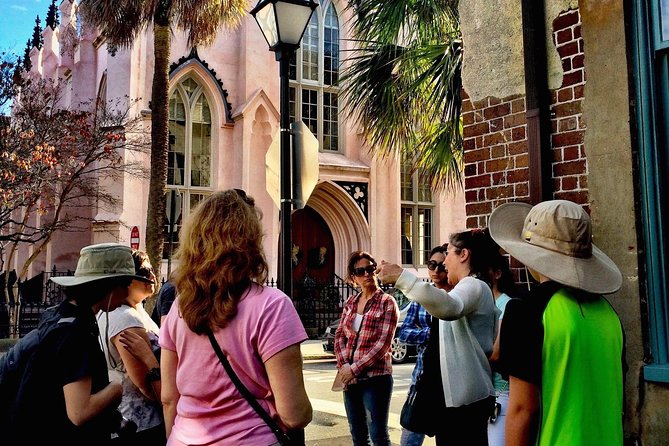
St. Philip’s Church and the French Huguenot Church show the range of religious traditions that shaped Charleston. Their buildings also help explain why the city has such a distinctive collection of steeples and historic streets. A guide can point out details you might otherwise pass without noticing.
The Powder Magazine adds a military chapter. The former Slave Mart Museum area brings the city’s involvement in slavery directly into the walk. This is important. Charleston’s attractive streets cannot be separated from the people forced to build, maintain, and work within its economy. The tour includes slavery as part of the city’s past rather than presenting only grand homes and famous names.
The Pink House is another memorable architectural stop. Depending on the route, you may see several of these sites from outside, with the guide filling in the story. That format keeps the walk moving, but it also means you should not expect entry into every building.
The strongest guides appear to be those who can shift between large events and small details. Evans has been praised for linking specific places to major figures and turning points. Al is noted for architecture, local facts, and a willingness to answer questions. Dennis is described as a clear storyteller with a good sense of humor, while Duggar brings an entertaining style and practical restaurant suggestions.
You cannot choose the guide with certainty from the tour details, but those names give you a sense of the range. The experience depends partly on who leads your group, yet the repeated praise centers on clear storytelling, humor, and strong command of Charleston’s past.
Rainbow Row is a quick stop with a big visual payoff
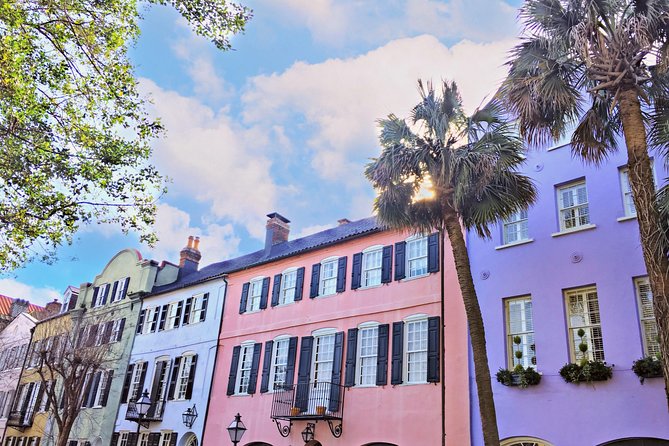
The walk then reaches Rainbow Row, the famous line of 13 colorful houses near the waterfront. This stop takes about 10 minutes, so it is designed for a look, photographs, and an explanation of why the row matters.
I like this brief approach. Rainbow Row is one of Charleston’s most photographed sights, but a photo alone tells you very little. The guide places it within South of Broad and connects it to the larger collection of historic homes nearby.
Do not plan on a long interior visit here. Admission is not included, and the tour passes through the area rather than treating the houses as a museum. If you want photographs without a crowd of schedule pressure, pay attention to the guide’s timing and be ready when the group moves on.
More History Walking Tours in Charleston:
- Charleston: History and Architecture Guided Walking Tour
★ 4.8 · 349 reviews - Charleston walking tour with a Citadel history professor
★ 5.0 · 105 reviews - History and Hauntings of Salem Guided Walking Tour
★ 5.0 · 14,564 reviews - Lisbon: History, Stories and Lifestyle Walking Tour
★ 4.8 · 10,902 reviews
South of Broad and the Battery slow the pace
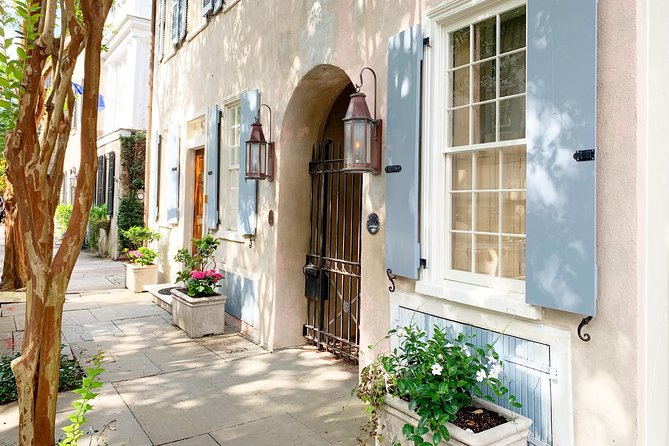
The final portion covers South of Broad, including the Battery and White Point Garden. Allow about 30 minutes for this section, though the tour does not cover the full length of the Battery.
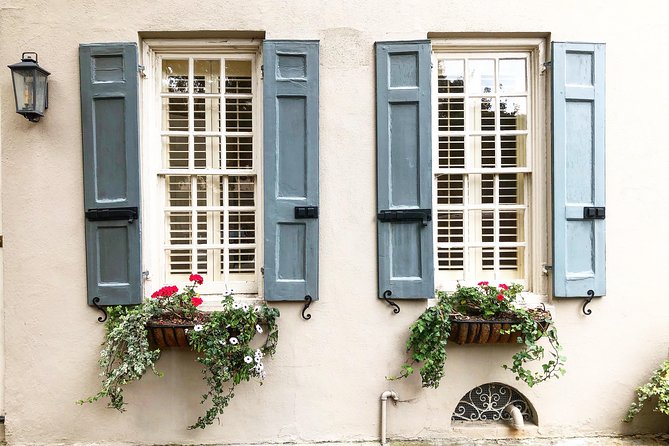
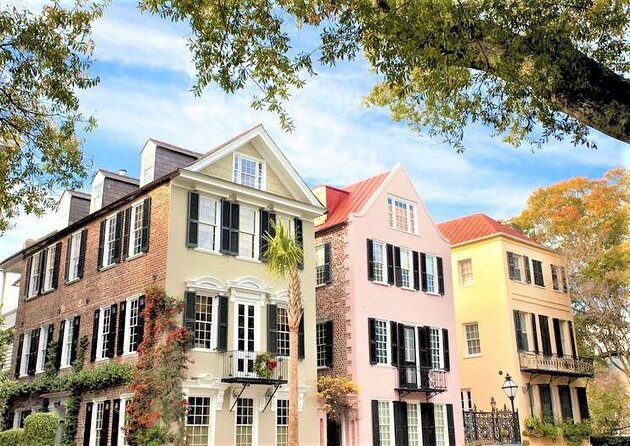
This is where Charleston’s residential beauty becomes the main attraction. You will see historic homes, antebellum mansions, gardens, and waterfront views. The guide can help explain why homes were designed as they were and how owners adapted buildings to Charleston’s weather and storms.
White Point Garden provides the broadest view of the walk, including Fort Sumter across the water. That view adds military and harbor context to everything you have heard earlier. Charleston’s history is not only found in churches and homes. It also reaches into the harbor, where trade, conflict, and defense shaped the city.
The walk ends somewhere in South of Broad, depending on the guide and route. If you need to return to the starting point, the guide will walk you back if requested. This matters if you have parked near City Hall or have another appointment downtown.
The route is generally flat, with no hills, which makes it manageable for many people. It is still two hours on your feet, often in sun or damp weather. Comfortable walking shoes are essential, and water is more important than the low physical effort might suggest.
What the guide adds that a self-guided walk cannot
You can walk these streets on your own, but you will lose the thread. Charleston has so many preserved buildings that it is easy to spend an hour admiring façades without understanding how they fit together.
A guide gives you a timeline. You move from civic buildings to churches, from theater and military sites to slavery, then into residential Charleston and the harbor. That sequence helps the city feel like a living place rather than a collection of postcard views.
The guide also adds local judgment. Al has been especially valued for explaining architecture and the work required to protect buildings from storms and hurricanes. Other guides have offered restaurant suggestions and book recommendations for continuing your learning after the walk.
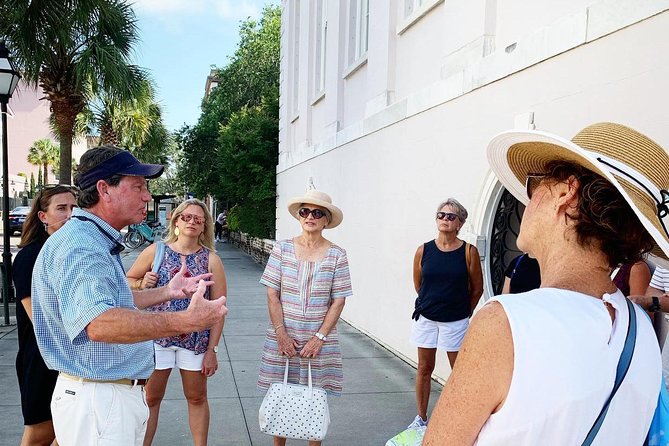
The best part is the chance to ask questions. A group capped at 20 is not private, but it is small enough for the guide to pause and respond. If you want a quiet, self-paced morning with no group interaction, this may feel structured. If you want an informed introduction, the group format works well.
Practical details that can make or break the experience
Bring your own water. Water is not provided, and there are few places to buy it along the route. In Charleston’s summer heat, this is not a minor suggestion.
Use the restroom before arrival. There are no public restrooms along the route, and the walk continues through several neighborhoods without a planned break.
Check the forecast. The tour operates in most weather, but dangerous conditions can lead to cancellation, rescheduling, or a full refund. Rain is possible, so a light rain layer may be useful, though you should not assume the tour will stop simply because the weather is unpleasant.
The route is suitable for most people and service animals are allowed. The flat streets help, but the tour still requires continuous walking and standing. If someone in your party has limited endurance, ask for the pace and route details before booking.
Public transportation is nearby, and several pay-as-you-go garages and open-air lots serve downtown. The suggested garage is at 85 Queen Street. Parking time and cost are not included in the $30 tour price, so build that into your plans.
If people in your group book under different names, contact the provider so they can place you with the same guide. This is a small step, but it prevents an avoidable split.
Who will get the most from this Charleston tour
I would choose this walk for a first visit, a short weekend, or the opening morning of a longer stay. It gives you enough orientation to understand where the French Quarter ends, how South of Broad fits into the peninsula, and which sights deserve more time later.
It also suits families and mixed-age groups because the pace is moderate and the route is flat. The stories can hold the attention of people who are not strict history fans, especially when the guide uses humor and personal storytelling.
History lovers will appreciate the range of subjects: colonial and early American life, the Revolutionary War, slavery, post-Civil War rebuilding, architecture, religion, and coastal storms. You should not expect a specialist seminar on any one topic, but you will leave with many paths to follow.
This is less suitable if you want extensive interior access. Most stops are viewed from the street, and route details vary. It is also not ideal for anyone hoping to cover the entire Battery, since the walk explores only part of it.
Should you book the Historic Charleston Guided Sightseeing Walking Tour?
Book it if you want a reasonably priced, well-paced introduction to Charleston with a strong chance of getting a lively local storyteller. The $30 fee is good value for two hours, especially when you use the tour to plan the rest of your visit.
Bring water, wear comfortable shoes, arrive early, and treat the route as an overview rather than a series of museum admissions. I would especially choose it for first-time visitors who want context before exploring alone.
Skip it if you dislike group walks, need guaranteed indoor stops, or want a private route tailored to one subject. For most people interested in Charleston’s buildings, people, and difficult past, this is a practical place to begin.
FAQ
Where does the tour begin?
The tour begins in front of Charleston City Hall at 80 Broad Street, Charleston, South Carolina.
Where does the tour end?
The end point varies based on the guide and route. The group finishes in South of Broad, and the guide will walk you back to the starting point if requested.
How long does the walking tour last?
The tour lasts approximately two hours.
What sights are included?
The route generally includes City Hall and the Four Corners of Law, the French Quarter, the Dock Street Theatre, St. Philip’s Church, the former Slave Mart Museum area, the Powder Magazine, the French Huguenot Church, the Pink House, Rainbow Row, the Battery, and White Point Garden. Stops can vary by guide.
Is the tour suitable for most people?
Most people can participate, and the route is generally flat. Comfortable walking shoes are strongly advised.
Should I bring water?
Yes. Water is not provided, and there are very few places to buy it along the route. Bring a bottle, especially in summer.
What happens if the tour is canceled because of bad weather?
You will be offered a different date or a full refund. The tour usually operates in rain, but it may be canceled in potentially dangerous weather.
More City Highlights Walking Tours in Charleston
- Highlights of Charleston Guided Walking Tour
★ 5.0 · 2,206 reviews - Ho Chi Minh City Street Food Tour & Sightseeing By Motorbike
★ 5.0 · 9,413 reviews - Dublin Highlights and Hidden Gems Guided Walking Tour
★ 5.0 · 6,020 reviews - Vienna: Guided Walking Tour of City Center Highlights
★ 4.7 · 4,989 reviews
New routes in Charleston
- Charleston: Old Walled City Historical Walking Tour★ 4.7 · 705 reviews
- Charleston walking tour with a Citadel history professor★ 5.0 · 105 reviews
- Charleston: 90-Minute Ghost and Dungeon Walking Tour★ 4.2 · 266 reviews
- Charleston: 90-Minute Ghost & Graveyard Walking Tour★ 4.5 · 75 reviews
- Charleston: History and Architecture Guided Walking Tour★ 4.8 · 349 reviews
- Charleston Ghost & Graveyard Night-Time Guided Walking Tour★ 4.5 · 1,100 reviews
- Charleston historical walking tour with a Professor of History at The Citadel★ 5.0 · 1,284 reviews
- Charleston’s Pleasing Terrors Night-Time Walking Ghost Tour★ 5.0 · 1,345 reviews
Charleston Walking Tours, compared.

Ghosts of Charleston Night-Time Walking Tour with Unitarian Church Graveyard
Read our review →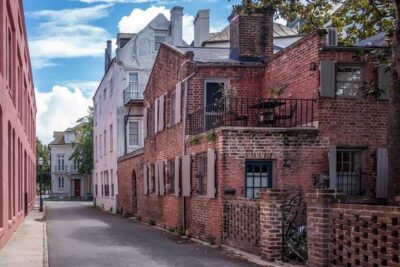
Hidden Alleyways and Historic Sites Small-Group Walking Tour
Read our review →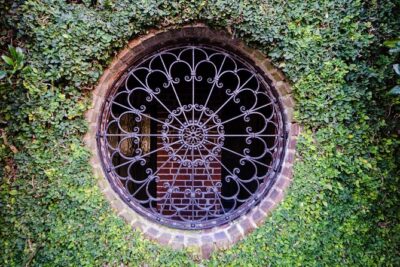

Charleston French Quarter or Brunch Food Tour with 7+ Tastings
Read our review →
Charleston Haunted Booze and Boos Ghost Walking Tour
Read our review →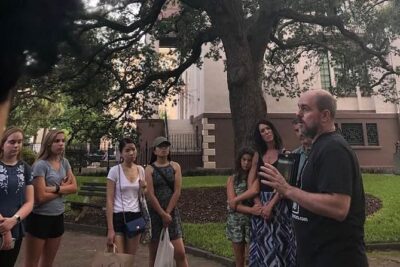
Charleston’s Pleasing Terrors Night-Time Walking Ghost Tour
Read our review →
Charleston historical walking tour with a Professor of History at The Citadel
Read our review →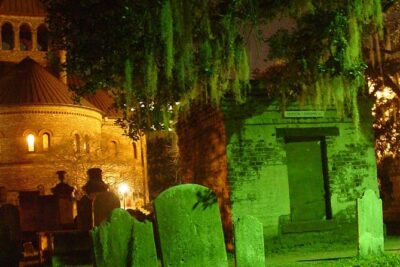
Charleston Ghost & Graveyard Night-Time Guided Walking Tour
Read our review →Browse the lists this tour appears in