
Review · BUCHAREST
Bucharest Highlights Walking Tour
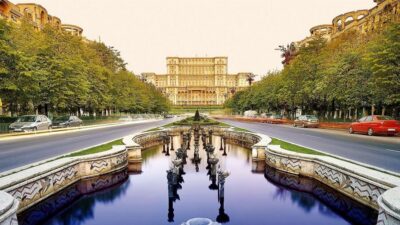
Bucharest’s story comes into focus on foot, from old caravan inns and Orthodox courtyards to royal power, communism, and the huge Palace of Parliament. This 2.5-hour route gives you a fast but thoughtful first look at the city, ending in front of its most famous building.
I like the way the tour links architecture to politics and trade, rather than treating each building as an isolated sight. I also like the guides’ reported approach: Ed, Dan, Alex, Andrei, and Lucia have all been praised for clear English, humor, patient answers, and useful food and sightseeing advice. The main drawback is simple: you are outdoors for the whole walk, and winter conditions can be bitter.
Key points at a glance
- A clear route through six centuries: Begin at Manuc’s Inn and finish at the Palace of Parliament.
- Strong first-day orientation: You see the Old Town, financial district, royal center, Cismigiu Park, and communist-era landmarks in one outing.
- History tied to real buildings: Caravan trade, Orthodox faith, monarchy, Stalin-era design, and dictatorship all appear along the way.
- Local guides make the difference: Guides including Ed and Dan are praised for stories, humor, questions, and practical advice.
- Small enough to feel manageable: The maximum group size is 25 people, though the exact group size can vary.
- Bring layers: Cold weather is the clearest recurring concern, and the tour requires suitable weather to operate.
Why this route works as a first look at Bucharest
At $21.77 per person, this is priced as an affordable orientation walk rather than a full sightseeing package with paid admissions. You are paying mainly for the guide’s explanations and for a route that connects places you could visit separately, often without understanding how they fit together.
I see the strongest value in the range covered. In one outing, you move from the city’s trading roots to the National Bank area, from Orthodox religious architecture to the royal center, and from elegant nineteenth-century buildings to the enormous communist-era administrative district.
The tour also helps correct a common first impression of Bucharest. The city can seem visually uneven, with ornate buildings beside plain blocks, restored façades beside neglected ones, and old streets opening onto monumental avenues. A good guide explains why the city looks this way. The route is not just a parade of attractive façades. It is a quick lesson in how Bucharest was reshaped by trade, monarchy, war, communism, and democracy.
The walk is offered in English and uses a mobile ticket. It begins at Piața Sfântul Anton 64 and finishes at Piața Constituției, directly in front of the Palace of Parliament. That one-way design matters. You do not finish where you started, so plan your next stop from the Palace rather than assuming you will return to the Old Town with the group.
More City Highlights Walking Tours in the world:
- Ho Chi Minh City Street Food Tour & Sightseeing By Motorbike
★ 5.0 · 9,413 reviews - Historic Charleston Guided Sightseeing Walking Tour
★ 5.0 · 6,216 reviews - Dublin Highlights and Hidden Gems Guided Walking Tour
★ 5.0 · 6,020 reviews
Manuc’s Inn and the trading city
The opening stop, Manuc’s Inn, is a smart choice. Hanul lui Manuc is among Bucharest’s oldest buildings, and the courtyard setting gives the introduction a sense of place. This is where the guide lays out the city’s beginnings and explains how Bucharest grew through movement, trade, and contacts with the wider region.
You spend about 20 minutes here, with no admission charge listed. That gives enough time for an introduction without using up too much of the tour before the main route begins.
The key idea is that Bucharest was not originally defined by grand palaces and broad boulevards. It grew as a trading settlement. Manuc’s Inn helps you picture a city where merchants, animals, goods, and travelers passed through courtyards built for business and shelter.
Hanul Gabroveni and Bucharest’s caravan inns
A short walk brings you to Hanul Gabroveni, another reminder of the city’s commercial roots. The guide explains that roughly two centuries ago, one in four buildings in the old center was a caravan-serai, or trading inn. Only three remain today, and this is one of them.
That detail gives the Old Town a useful frame. The narrow streets and old buildings were not simply designed for strolling or dining. They served a working city tied to regional trade.
The stop lasts about 20 minutes and is free to view. I especially like this part because it gives you something to look for during the rest of your stay. Instead of seeing the Old Town as a collection of cafés and façades, you can start noticing how its buildings once supported commerce.
The BNR Palace and Bucharest’s former financial district
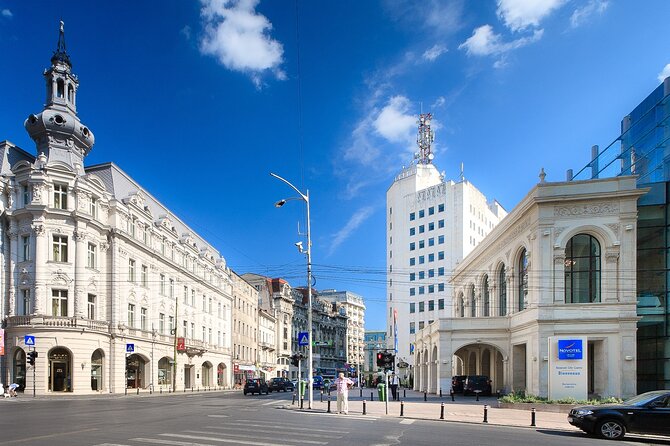
The next stop shifts from old trade to modern finance. Around the BNR Palace, you are surrounded by the National Bank, the former Stock Exchange, the Palace of Trading and Commerce, and other state and private banks.
The stop is brief, about 10 minutes, but the setting carries a lot of meaning. The guide places you in what was once Bucharest’s financial district and explains how money, government, and commerce shaped this part of the city.
This is one of the places where a guide adds real value. From the street, a bank or former exchange can look like just another historic building. With context, the area becomes part of a larger story about Romania’s changing economy and the city’s attempt to present itself as a modern European capital.
More Walking Tours in the world:
- Magical London: Harry Potter Guided Walking Tour
★ 4.7 · 22,044 reviews - Reykjavik Food Walk – Local Foodie Adventure in Iceland
★ 5.0 · 18,952 reviews - History and Hauntings of Salem Guided Walking Tour
★ 5.0 · 14,564 reviews - New Orleans Premier Ghost, Voodoo and Vampire Walking Tour
★ 4.5 · 12,856 reviews
Stavropoleos Monastery and Orthodox Bucharest
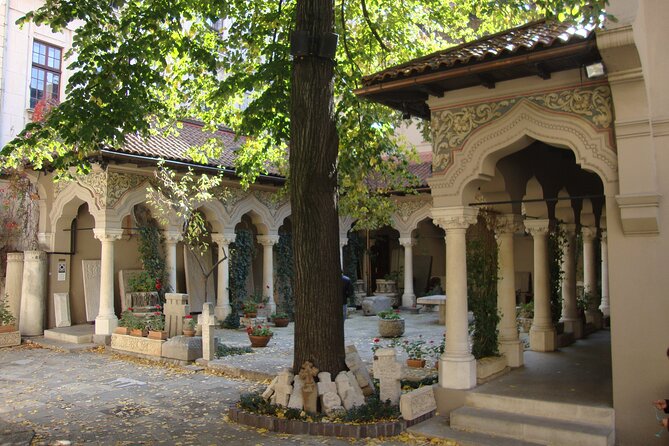
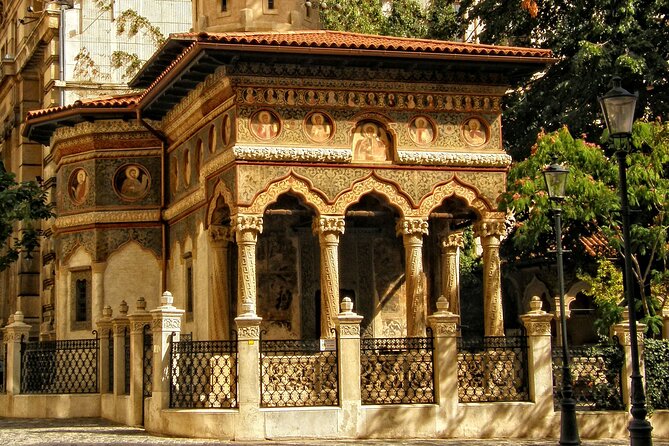
Stavropoleos Monastery offers a change of mood. Romania is predominantly Christian Orthodox, and this small monastery is presented as an important example of Orthodox architecture and religious life.
You spend about 10 minutes here. Admission is listed as free, though the tour does not promise an interior visit or a formal religious service. Treat it as a focused architectural and cultural stop rather than a long museum visit.
I like the balance this brings to the route. Bucharest is often introduced through politics and grand civic buildings, but religious architecture shows another side of the city. The monastery helps explain why Orthodox traditions remain important in Romanian culture and why courtyards, stonework, decorative details, and quiet sacred spaces matter amid the busy city center.
CEC Palace and Bucharest’s ornate face
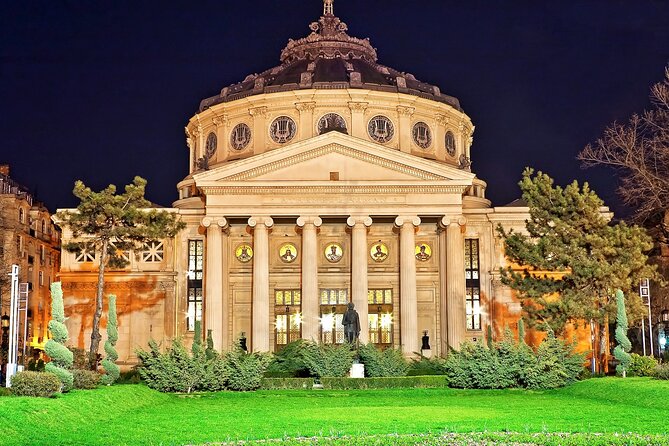
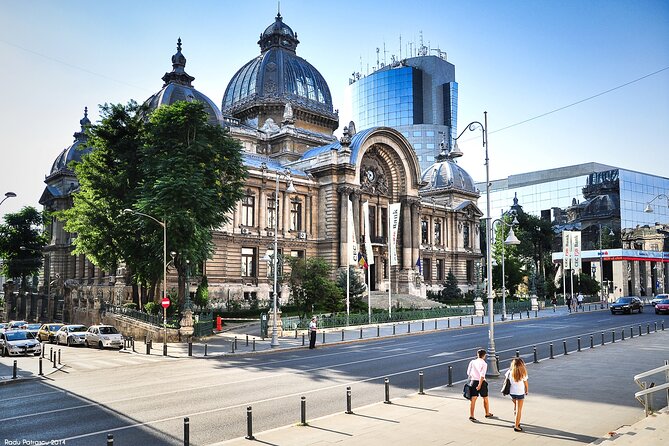
Across the route, Palatul CEC is one of the major visual highlights. The building is often considered among the finest examples of old architecture in Bucharest, and the guide uses it to explain why many of the city’s apparently old buildings are, by European standards, fairly recent.
This is a useful distinction. Bucharest has a long existence, but its architectural character was repeatedly remodeled and reshaped. The city you see today reflects several building periods rather than one preserved medieval core.
The stop takes about 10 minutes. Admission is not included, and the itinerary does not promise entry, so expect to study the exterior and hear the explanation from the street. That is still worthwhile, especially if you care about architecture. Have your camera ready, but listen for the reasons behind the design instead of simply collecting another façade.
Macca Villacrosse Passage and old-city spending
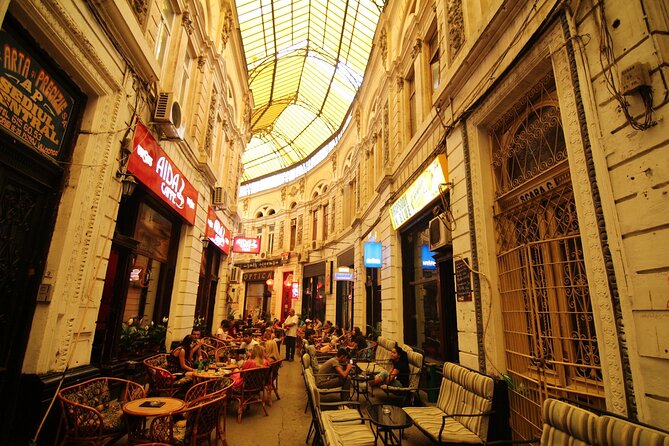
The Macca Villacrosse Passage is a compact stop, only about five minutes, but it adds a lighter note to the financial district. The idea is straightforward: where money gathered, places to spend it followed. These covered galleries once represented the fashionable commercial side of the city.
The passage is a good example of why a walking route works better than a list of major monuments. You get a sense of how people used the city, not just which institutions held power.
Because the stop is short, you should not expect an extended break here. It is more of a quick architectural and social observation before the route continues toward the royal center.
The Royal Palace and Romania’s political shifts
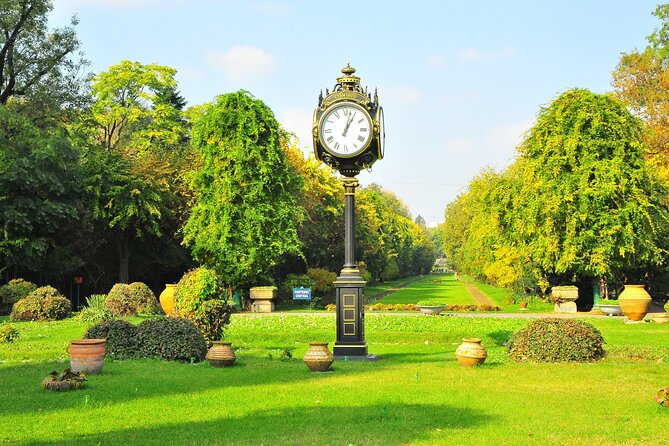
At the Royal Palace, the guide connects monarchy, communism, and democracy. The building and surrounding area carry the marks of Romania’s recent political changes, making this one of the most important stops for understanding the country beyond its older legends.
The visit lasts about 10 minutes, and admission is not included. The focus is on the exterior setting and the political story tied to it.
This is where the tour’s historical structure becomes especially useful. You have already heard about trade, banking, and religion. Now the route turns to the institutions that governed the country and the changes that followed. A strong guide can keep this from becoming a list of dates by connecting the place to the visible city around you.
Sala Palatului and the Stalin-era style
Sala Palatului brings you into a very different architectural period. The building is described as a clear example of Stalin-era design, so the stop gives you a chance to read the visual language of communist power.
You spend about 10 minutes here, with no admission charge listed. The value lies in comparison. After ornate religious buildings, commercial passages, banks, and royal architecture, the scale and style here feel more formal and ideological.
This contrast is one of the tour’s best features. Bucharest is not a city where every historic period has been neatly separated. Different eras sit close together, and the route lets you compare them within one afternoon.
Cismigiu Park and a welcome change of pace
Cismigiu Park is the route’s greenest pause and Bucharest’s oldest park. After several urban and political landmarks, it gives your eyes a rest and breaks up the hard surfaces of the central streets.
The stop is about 10 minutes. Do not expect a long park visit or free time to explore every path. Instead, use it as a short breathing space and a chance to see how Bucharest’s residents enjoy an older public park.
This is also a useful reminder that the tour is not only about buildings. The city’s public spaces help explain daily life, and Cismigiu adds a softer counterpoint to the banks, palaces, and monumental government architecture.
The Palace of Parliament and the final view
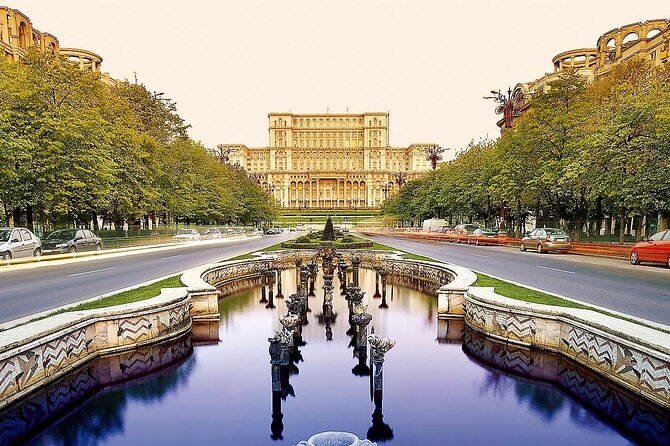
The tour ends at the Palace of Parliament in Piața Constituției, after about 20 minutes devoted to the building. It is described as the second-largest administrative building in the world after the Pentagon, while being heavier than it.
You should expect an exterior presentation here rather than an included interior visit. Admission fees and taxes are not included, and the tour details do not promise entry to the palace. If seeing the inside is important to you, arrange that separately and do not assume this walk covers it.
The building is an unavoidable symbol of communist Romania and of the massive urban changes imposed on Bucharest. Ending here gives the route a strong visual finish, but it also leaves you with a complicated impression. The Palace is impressive in scale, yet its size is tied to a painful political period. A good explanation helps you see both facts at once.
The guide can shape the whole experience
The route is fixed, but the tone can vary with the guide. Ed is repeatedly described as engaging, funny, and highly informed about Bucharest’s architecture and past. Dan is praised for answering questions, sharing Romanian music and songs, allowing breaks, and extending the outing beyond the planned time when needed.
Alex has provided a more customized experience for a private group, including an extra stop at an old pharmacy awaiting renovation. That option should not be treated as part of the standard route, but it shows how the experience may adapt when the group is small or private.
Andrei has offered food and sightseeing suggestions, while Lucia has been noted for explaining local history with humor. These details matter because the route covers difficult subjects, including dictatorship, political change, and urban destruction. A guide who can explain clearly without turning the walk into a lecture makes a real difference.
The best approach is to ask questions. The guides have been praised for making time for them, and the city’s architecture gives you plenty to ask about.
Timing, group size, and comfort
The advertised duration is about two hours and 30 minutes, though one outing ran longer because the guide allowed time for bathroom breaks, hot drinks, and relief from the cold. You should not build a tight appointment immediately after the scheduled finish.
The maximum group size is 25 people. That is large enough for a lively group but still manageable for a walking tour if everyone stays close. Smaller groups may feel more personal, and a private booking may allow more customization, but the standard experience does not promise a private format.
The tour requires good weather to operate. Winter visitors should wear extra layers, and the cold can be a real issue when you are standing still for explanations. Comfortable walking shoes are sensible, though the supplied details do not specify the exact distance or terrain.
The meeting point is near public transportation, and confirmation is provided at booking. Most people can participate. Since the route finishes at the Palace of Parliament, check your onward plans before you start.
Who should book this Bucharest walk
I would choose this tour if you are visiting Bucharest for the first time, have limited time, or want a solid orientation before exploring on your own. It is also useful if you enjoy architecture but need help connecting buildings to the political and social story behind them.
It suits solo visitors particularly well because the guides make an effort to include questions and keep the group together. It can also work for couples and families who want a simple overview without committing to a full-day excursion.
I would be more cautious if you dislike outdoor tours, cold weather, or historical commentary. The route includes several short stops, so anyone wanting long interior visits, extensive museum time, or a slow photography walk should choose a different activity.
At $21.77, the price is fair for the coverage and the guide’s role. You will not receive included admissions or a major indoor attraction, but you will get a useful structure for seeing central Bucharest and deciding what deserves a second visit.
Should you book it?
Book it if you want to get your bearings quickly and understand why Bucharest mixes caravan inns, ornate banks, Orthodox buildings, royal sites, Stalin-era architecture, parks, and one enormous communist monument.
I would schedule it near the start of your stay. Listen closely for restaurant and sightseeing suggestions, note the places you want to revisit, and plan for cold or wet conditions. The tour is strongest as an introduction, not as a substitute for entering every major attraction.
The clearest reason to book is the combination of route and guide. The stops are worthwhile on their own, but Ed, Dan, Alex, Andrei, or Lucia can turn a scattered set of buildings into a readable story about Romania. If that is the kind of first day you want, this is a sensible buy.
FAQ
How long does the Bucharest Highlights Walking Tour last?
The tour lasts approximately two hours and 30 minutes. It may run longer if the guide allows extra time for questions, breaks, or cold weather.
Where does the tour begin?
The tour begins at Piața Sfântul Anton 64, Bucharest, Romania.
Where does the tour finish?
The tour ends at Piața Constituției, in front of the Palace of Parliament.
Is the tour offered in English?
Yes. English is the listed language for the experience.
What is included in the tour?
A fun and informed guide is included. The guide provides the introduction and commentary during the walking route.
Are entrance fees included?
No. All fees and taxes are excluded. Admission is not included for the CEC Palace, Royal Palace, or Palace of Parliament stops.
How many people can join the tour?
The activity has a maximum group size of 25 people.
Can I cancel for a full refund?
Yes, if you cancel at least 24 hours before the experience start time. Cancellations made less than 24 hours in advance are not refunded. If poor weather or an insufficient minimum number of participants causes cancellation, you are offered another date or experience, or a full refund.
New routes in the world
- Baltimore Walking Foodie Tour in Fells Point★ 5.0 · 182 reviews
- Baku Walking Tour (Old City)★ 5.0 · 127 reviews
- Baku Oil Heritage & Old Town Walking Tour★ 5.0 · 232 reviews
- The Madam’s Curse Walking Ghost Tour★ 4.5 · 103 reviews
- Austin Small Group Morning Walk★ 5.0 · 412 reviews
- Austin Haunted Pub Crawl Walking Tour★ 4.5 · 232 reviews
- Austin Downtown Private Walking Food Tour With Secret Food Tours★ 5.0 · 71 reviews
- Austin Murder Walk★ 5.0 · 310 reviews
Bucharest Walking Tours, compared.
Bucharest: City Highlights Guided Walking Tour
Read our review →
Bucharest: Hidden Markets Walking Tour with Tastings
Read our review →
Bucharest: Ghost Stories & Romanian Mythology Walking Tour
Read our review →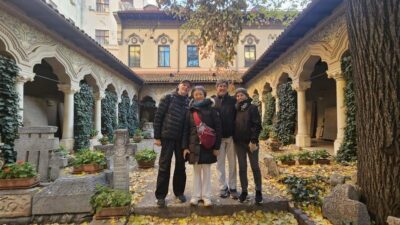
Bucharest: Guided Walking Tour with Romanian Snack
Read our review →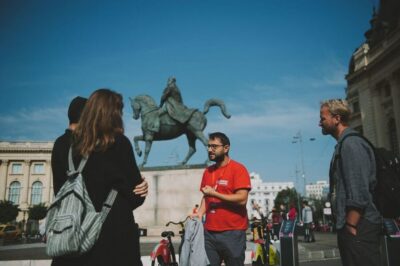
Browse the lists this tour appears in