
Review · BRUGES
Historical Walking Tour: Legends of Bruges
Bruges reveals itself best at walking speed, and this tour gives you a well-shaped first look at the city in just over two hours. You move from the Markt and Belfort to the canals, beguinage, brewery, churches, and Burg Square, with stories about beer, swans, medieval power, and a stubborn fight with the French king. The local legends are the real draw.
I like the route’s smart coverage: you see most of Bruges’ famous sights without wasting time on transport. I also like the guide-led storytelling, especially when the guide uses visual aids or adds personal knowledge of the city. Guides named Louis, Victoria, Sander, Martin, Wouter, and Thomas have all been singled out for clear, funny, engaging talks.
The main drawback is the pace. Eleven stops in roughly 135 minutes means you often pause outside rather than enter museums or monuments, and a cold or wet day can make the walk hard, especially with a toddler. The very low price also means you should plan to tip the guide generously.
Key points to know before you book
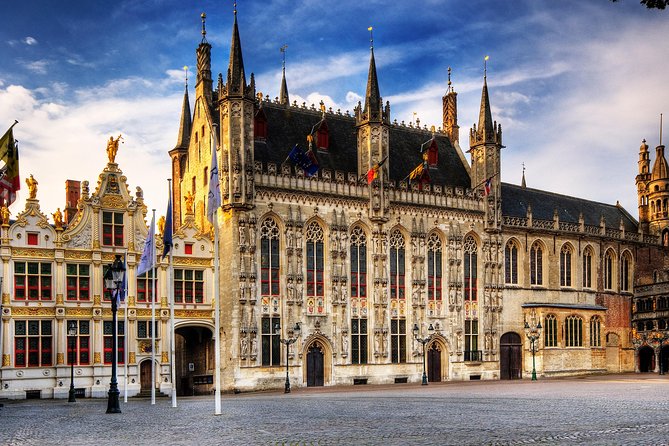
- Eleven central Bruges stops: The route links Markt, Belfort, Gruuthusemuseum, St John’s Hospital, the Beguinage, Minnewater Lake, the Church of Our Lady, Groeninge, Huidenvettersplein, and Burg Square.
- A strong first-day tour: You get the city’s main sights, basic historical context, and practical suggestions for places to revisit.
- Local storytelling matters: Guides such as Louis, Victoria, Martin, Sander, and Wouter are praised for humor, personal flair, and clear explanations.
- Very low listed price: The $3.62 charge makes this easy to fit into a tight budget, but tips are recommended.
- A walk, not a museum pass: Admission to the stops is listed as free, but the tour mainly explains sights from outside or in public areas.
- Small enough to ask questions: Groups can reach 24 people, though some departures may be much smaller.
Why this route works for a first look at Bruges
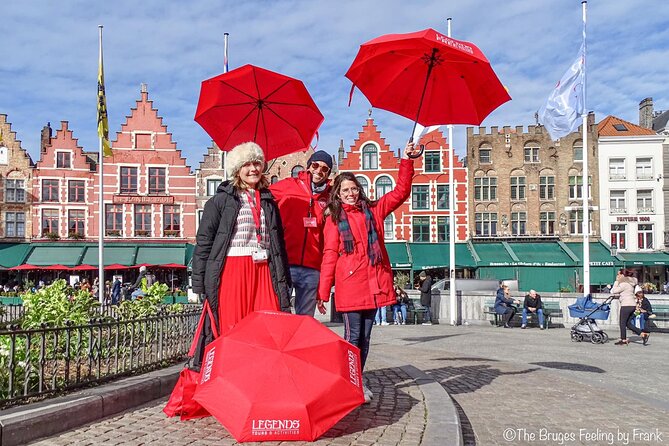
Bruges can feel almost too pretty at first. Stepped gables, quiet canals, old brick, horse carriages, and grand squares arrive one after another. Without context, you may take plenty of photographs but miss why the city mattered.
This tour gives you a timeline as you walk. The opening in the Markt explains Bruges as a medieval trading center, then the route moves through political power, religious life, trade, craft, and local folklore. You are not simply looking at buildings. You are learning what each place did.
The route also makes good geographic sense. It begins at Pieter de Coninck en Jan BreydelMarkt and ends at Burg Square, so you finish near one of the city’s key historic centers rather than being left at a remote attraction. At about 2 hours and 15 minutes, it fits neatly into a morning or afternoon.
I would take it early in your stay. You can then return to the sights that interest you most, use the guide’s suggestions for food and shopping, and decide which museums deserve your own time. One especially useful tip from the walk is that Belfort tower tickets should be bought in the morning if you plan to climb separately. The walking tour itself does not appear to include a tower climb.
More History Walking Tours in Belgium
- Historical Walking Tour: Legends of Antwerp
★ 5.0 · 1,837 reviews - Historical Walking Tour: Legends of Gent
★ 5.0 · 1,761 reviews - Brussels: Historical Walking Tour with Chocolate & Waffle Tasting
★ 5.0 · 1,165 reviews
Markt and Belfort: Bruges begins with trade and power
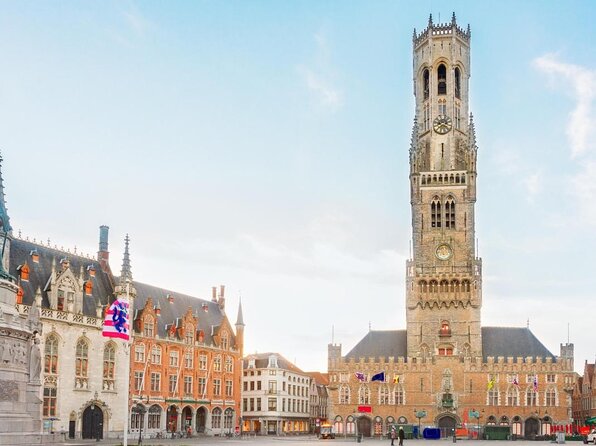
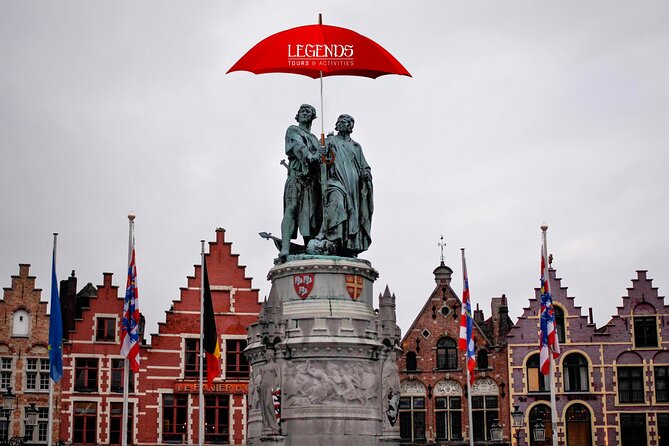
The tour starts in the Markt, Bruges’ broad central square. Here you get the basic story of the city as a medieval trading hub, along with the uneasy relationship between Bruges and the French king.
That political thread gives the square more weight. You begin to understand that Bruges was not just a pretty commercial town. It had money, influence, and enough independence to make powerful rulers nervous. The guide uses the square to set up the conflicts and ambitions that shaped later stops.
The next stop is the Belfort, the famous bell tower. The tour visits the halls behind the belfry and explains the tower’s role during the Middle Ages. Bells were not decoration. They helped organize civic life and signaled important events.
You should keep your expectations clear here. This is a talk about the Belfort and its medieval role, not a guaranteed climb to the top. If panoramic views are your priority, ask the guide about the separate tower visit and remember the morning ticket advice.
Gruuthuse and St John’s Hospital: wealth beside care
At the Gruuthusemuseum, the guide introduces the city palace of the wealthy Gruuthuse family. Their fortune came from a monopoly connected to a specific part of the beer trade, a detail that brings Bruges’ commercial past down to earth.
This is one of the route’s better reminders that old wealth often came from ordinary products. Beer was not merely a drink for medieval Bruges. It was part of trade, taxation, household life, and social power.
The tour then reaches Sint-Janshospitaal, or St John’s Hospital. It is described as one of the oldest surviving hospitals in the world and as a foundation of medieval society. That makes it an important counterpoint to the palace.
At Gruuthuse, you hear about privilege and commerce. At St John’s, you hear about care and religious duty. The stop is especially useful if you want more than architecture. It shows how a medieval city supported people who were sick, poor, or in need.
The route does not give you a full museum visit at either stop. If you want to study the hospital’s art or the palace interiors, set aside separate time. The walking tour provides the frame, then you choose where to spend longer.
The Beguinage: eight centuries of women living together
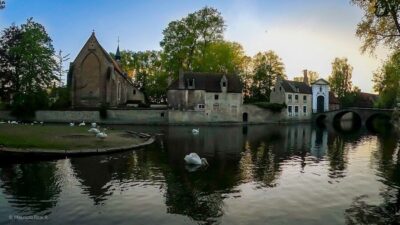
The Princely Beguinage Ten Wijngaarde is one of the most atmospheric stops. The guide leads you into the picturesque beguinage, where a community of women has lived together for more than 800 years.
This is a quiet change of mood after the commercial center. The beguinage shows another side of urban life, built around community and religious purpose rather than trade or political power. Give yourself a moment to notice the setting instead of treating it as just another photo stop.
Because the tour covers many places, your time here is limited to about ten minutes. That is enough for an explanation and a short walk, but not enough for a slow, contemplative visit. I would mark the beguinage as a place to revisit if its calm atmosphere appeals to you.
More Crime and Mystery Walking Tours in Belgium:
- Historical Walking Tour: The Story of Bruges – by Legends
★ 4.7 · 483 reviews - Private Historical Tour: Legends of Antwerp
★ 5.0 · 125 reviews - Bruges Guided Walking Tour: Stories, Mysteries and People
★ 4.2 · 71 reviews - Prague: Ghost Walking Tour Where Legends Come To Life
★ 4.4 · 5,253 reviews
De Halve Maan Brewery: beer, nicknames, and a pipeline
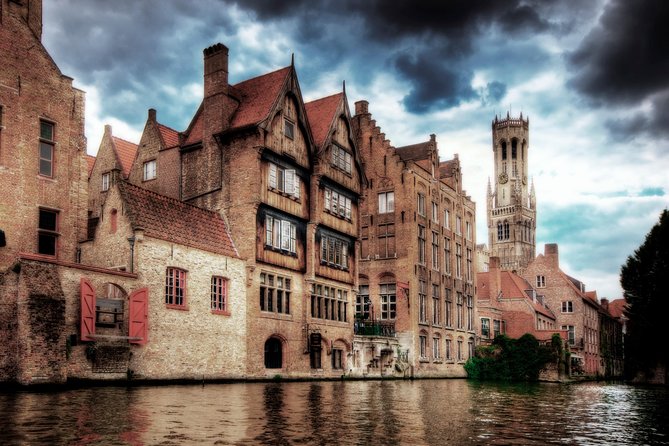
Outside De Halve Maan Brewery, the guide tells the story behind Bruges’ nickname, the Fools of Bruges. The tale adds humor to the historical walk and helps explain the city’s long relationship with beer.
You also see part of the beer pipeline that runs beneath Bruges. That detail is exactly the sort of thing you could miss while walking alone. It connects a modern practical solution with an old local trade, and it gives the stop a nice bit of oddball character.
The brewery is a stop outside the building, so do not confuse this portion of the walk with a brewery tour or tasting. The guide explains the story, but a separate brewery visit would be needed if you want to go inside.
Some guides also add small extras. One stop on this route has included complimentary chocolate, such as a truffle or a sample at a chocolate shop. Treat that as a possible guide-led touch rather than a guaranteed inclusion, since the formal details list no chocolate tasting.
Minnewater Lake and the swans of Bruges

At Minnewater Lake, often called the Lake of Love, the tour turns to swans and local politics. You hear why swans appear on Bruges’ canals and how the city came into conflict with Emperor Maximilian of Austria.
This is a good example of the tour’s mix of fact and legend. The stories make the canals easier to remember, while the conflict with Maximilian adds another layer to Bruges’ difficult relationship with rulers outside the city.
The lake is also a natural place to slow the group down. The route has already covered busy squares, churches, and commercial stories, so the open water provides a visual pause. On a rainy or freezing day, though, this outdoor stop can feel exposed.
That weather point matters. The experience requires good weather, and a cold day can make the full walk uncomfortable. One family had to leave early with a toddler because of freezing conditions. Wear shoes suited to uneven city streets and check the forecast before setting out.
The Church of Our Lady and Flemish art
The Church of Our Lady is one of Bruges’ major landmarks. The guide explains its brick tower, described as the second tallest brick tower in the world, and points out its connection with Michelangelo and the tombs of the last Dukes of Burgundy.
This is a compact but important lesson in Bruges’ artistic and political reach. The church is not only a tall landmark. It links local brickmaking, powerful rulers, sculpture, and the Burgundian period.
The tour then passes through the garden of the Groeningemuseum, where works by major Flemish masters are displayed. You are not getting a full gallery visit in five minutes, but the garden stop helps you place Bruges within the wider story of Flemish art.
If you want to see the paintings properly, plan a separate museum visit. The benefit of this walk is that it tells you why the museum matters and helps you decide if it belongs on your personal list.
Tanner’s Square and Burg: the city’s working and political heart
Huidenvettersplein, the old Tanner’s Square, offers one of the route’s more practical bits of social history. This was where skins were greased and turned into leather, a smelly business that supported the city’s economy.
It is a useful correction to the postcard view of Bruges. Medieval cities were not all elegant façades and quiet canals. They relied on trades that produced noise, waste, and strong smells. The square helps you picture the working city behind the grand buildings.
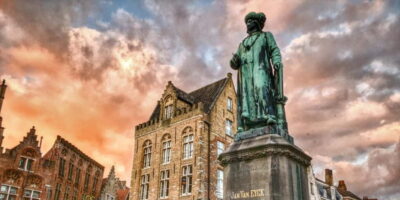
The route passes the old Fishmarket before finishing at Burg Square. Burg is the political heart and birthplace of Bruges, so it makes sense as the final stop. By this point, the walk has connected trade, government, religion, art, craft, and folklore.
Ending here also gives you a good chance to continue exploring. You can remain in the historic center, return to a nearby sight, or ask the guide for suggestions about food and other things to do. Guides who grew up in Bruges, including Celine and others named during past departures, can be especially useful for local pointers.
Guides, group size, and the human side of the walk
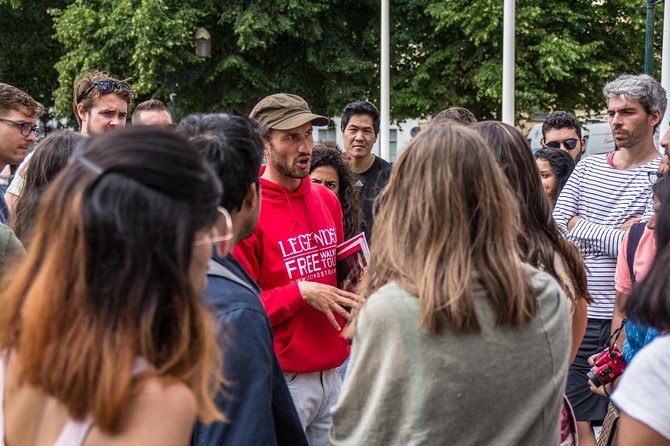
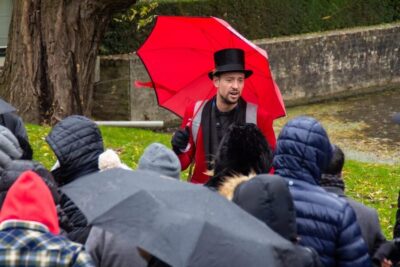
The guide can shape this experience more than the route does. The strongest descriptions focus on clear storytelling, humor, enthusiasm, and a personal connection to Bruges.
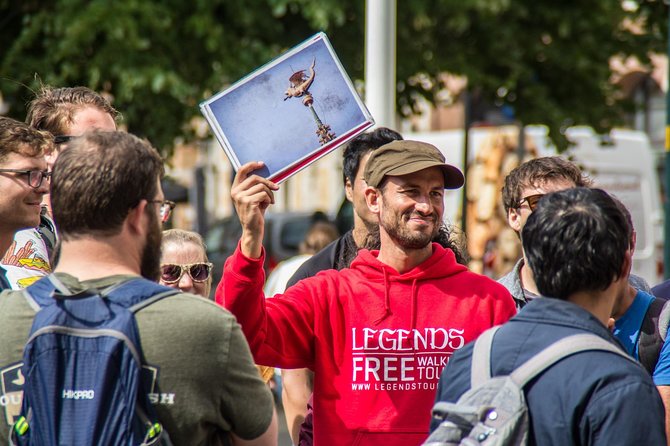
Louis is praised for making the past feel immediate and for answering questions fully. Victoria is noted for charisma, humor, and a blend of historical facts with personal flair. Sander receives praise for visual aids, friendly explanations, and an obvious connection to the city.
Martin is described as entertaining and strong on detail, while Wouter is praised for making the city come alive. Thomas is remembered for keeping the group engaged despite poor weather. Other guides named in the feedback include Erik, Emiel, Patrick, Sam, Willem, Nicholas, and Celine.
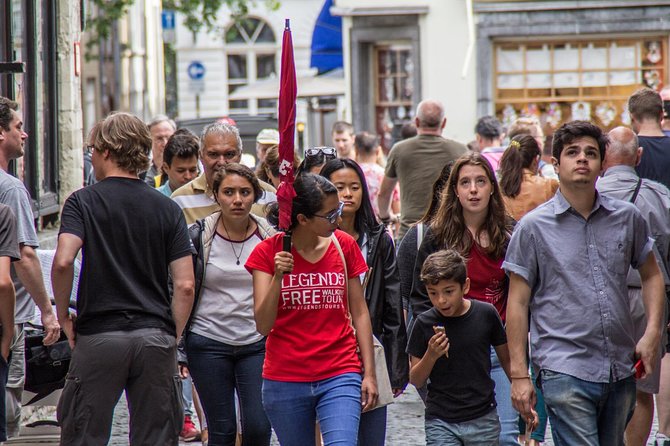
That range tells you something practical: the quality may depend on who leads your departure. The route is solid, but the storytelling style can vary. The maximum group size is 24, which is still workable for a city walk, though a smaller group makes questions easier. One departure had only four people, allowing a more personal conversation.
The tour is offered in English. You receive a mobile ticket, and confirmation comes at booking. Service animals are allowed, public transport is nearby, and most people can take part, but the walk still demands steady movement for more than two hours.
Is $3.62 a good value?
At $3.62 per person, this is unusually inexpensive for a guided introduction to Bruges. You get a route through 11 important locations, an English-speaking guide, and historical explanation without separate admission charges for the walk.
The price needs context. This is a tip-based style of tour, and tips are recommended. One comment specifically advises tipping the guide handsomely because the guide has costs connected with running the tour. I would treat the listed price as the starting cost, not the full value of the experience.
It remains excellent value if you want orientation rather than a long museum visit. You are paying very little for a structured route and a chance to ask questions. You should not expect included food, drinks, museum entry, or a tower climb unless your guide says otherwise.
Free cancellation is available up to 24 hours before the start time for a full refund. Cancellations or changes inside 24 hours are not refunded, and poor weather or failure to reach the minimum group size can lead to a new date, another experience, or a full refund.
Who should book Legends of Bruges?
I would choose this walk if you are visiting Bruges for the first time, have only a day, or want a useful introduction before exploring alone. It is also a good fit for history-minded families, provided children can manage a fairly long outdoor walk.
You will get the most from it if you enjoy stories about people, power, trade, and local customs. The route includes major architecture, but it is not an architectural lecture. It also has more social detail than a simple photo walk, though one person wanted even more about everyday social and cultural life.
I would be more cautious if you dislike group walking, need lots of indoor stops, or want extended time inside museums and churches. The tour covers ground, and its 10-minute pauses can feel brief. Winter weather deserves special attention.
Should you book this Bruges walking tour?
Yes, if you want a low-cost orientation with a lively guide and a well-chosen route. The strongest guides, including Louis, Victoria, Sander, Martin, Wouter, and Thomas, add humor and local feeling to the standard sights. Take it near the start of your stay, tip well, and use the route to plan your return visits.
Skip it only if you want a slow private tour, long museum visits, or guaranteed indoor comfort. For most first-time visitors with decent weather, the price, coverage, and local stories make Legends of Bruges a sensible first step.
FAQ
Where does the tour start?
The tour starts at Pieter de Coninck en Jan BreydelMarkt, 8000 Brugge, Belgium.
Where does the tour finish?
It ends at De Burg, Burg 15, 8000 Brugge, Belgium.
How long does the walking tour last?
The tour lasts approximately 2 hours and 15 minutes.
What language is the tour offered in?
The tour is offered in English.
How many people can join the tour?
The maximum group size is 24 people.
Is admission to the listed stops included?
The tour lists admission tickets as free for each stop, and all fees and taxes are included. Separate entry for attractions such as museums or the Belfort climb is not specified.
Does the tour include a Belfort tower climb?
The itinerary describes a visit to the halls behind the belfry and an explanation of the tower’s medieval role. It does not state that a climb to the top is included.
Is the tour suitable for most people?
Most people can participate, and service animals are allowed. Keep in mind that this is a walking experience lasting more than two hours.
Can I cancel for a full refund?
Yes. You can cancel at least 24 hours before the start time for a full refund. Cancellations or changes made less than 24 hours before the start time are not refunded.
What happens if bad weather cancels the tour?
If poor weather causes cancellation, you will be offered a different date or a full refund. The same applies if the minimum number of participants is not reached, with the option of a different experience also available.
New routes in Belgium
- Walking Tour: Highlights of Antwerp★ 5.0 · 98 reviews
- Historical Walking Tour in Antwerp Old City★ 5.0 · 277 reviews
- Private Historical Tour: Legends of Antwerp★ 5.0 · 125 reviews
- Evening Walking Tour: The Dark Side of Antwerp★ 5.0 · 193 reviews
- Brussels: Private 3-Hour Sightseeing Walking Tour★ 4.6 · 112 reviews
- Historical Walking Tour: The Story of Bruges – by Legends★ 4.7 · 483 reviews
- Antwerp: Historical Walking Tour in the Old City★ 4.8 · 373 reviews
- Ghent: Belgian Chocolate Walking Tour with Tastings★ 4.9 · 259 reviews
Bruges Walking Tours, compared.
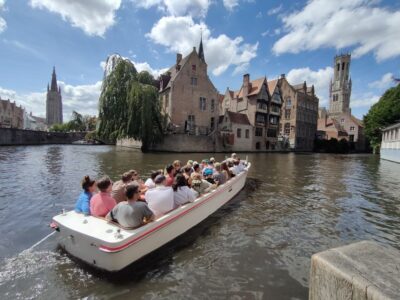
Small Group Boat Cruise and Guided Walking Tour
Read our review →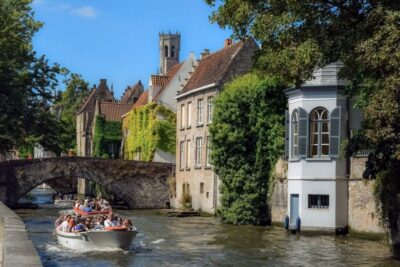
Walking Tour, Canal Boat Trip w/Beer Tasting Option
Read our review →
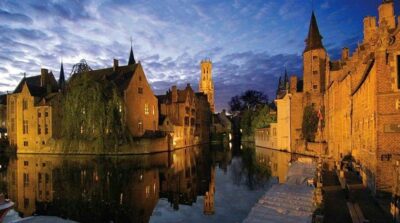
Historical Walking Tour: The Story of Bruges – by Legends
Read our review →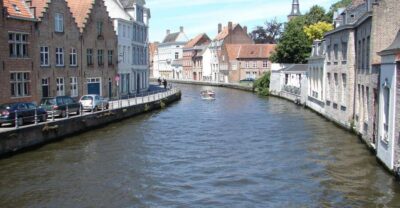
Browse the lists this tour appears in