
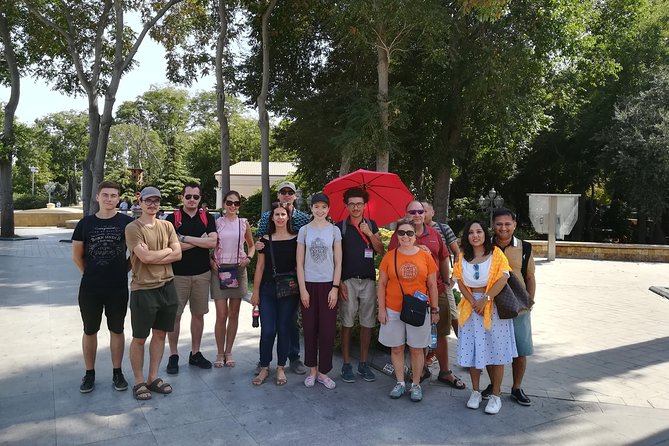
Review · OLD TOWN
Baku Oil Heritage & Old Town Walking Tour
Baku’s oil wealth is written into its streets. This 2.5-hour walk links the medieval walls of Icherisheher with grand palaces built when oil money turned a regional port into a cosmopolitan capital. The most useful part is the connection between the buildings: you learn why they appeared, who paid for them, and how ordinary life changed.
I like the personal guide attention, especially with guides such as Gani, whose humor, clear English, photographs, and prepared diagrams help make the past easier to picture. I also like the route’s balance: Maiden Tower and Shirvanshahs Palace provide medieval drama, while Istiglaliyyat Street explains the oil boom, modernization, and the first secular school for Muslim women.
The main consideration is that this is an exterior walking tour. You receive explanations at Maiden Tower and Shirvanshahs Palace, but entrance to those sights is not included. Bring comfortable shoes, and remember that the experience depends on good weather.
Key points to know before you book
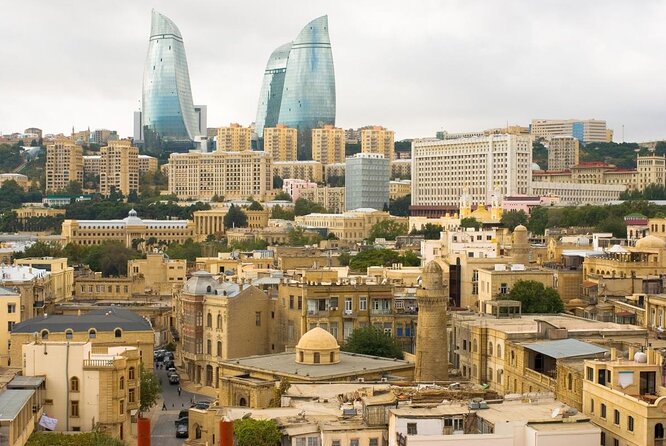
- Oil money becomes visible on Istiglaliyyat Street: See how wealthy industrialists used architecture to display status, charity, ambition, and family pride.
- Icherisheher is more than a photo stop: Walk through its gates, walls, narrow lanes, mosques, Maiden Tower, and Shirvanshahs Palace with historical context.
- Gani is a major part of the experience: His storytelling, humor, photos, and answers to questions have made this tour especially memorable for many people.
- The route covers old and modern Baku: Medieval monuments sit beside Imperial Russian streets, European-style buildings, Soviet influence, and an independent Azerbaijan.
- You do not enter the main paid sights: The focus is on the streets and exterior architecture, so budget separately if you want museum admission.
- The meeting point is central: The tour starts and ends at Fountain Square on Nizami Street, with bottled water included.
Why Baku’s oil story makes this walk worthwhile
Baku can look like several cities at once. Behind its medieval walls is Icherisheher, the old walled city. Outside those walls are formal streets and ornate buildings created during the Imperial Russian period and the late nineteenth and early twentieth century oil boom.
This tour gives you a way to read those layers. Instead of seeing a palace as a pretty façade, you hear about the oil baron who commissioned it, the family story behind it, or the social change it represents. That makes the walk more useful than a simple list of monuments.
The subject is not only money. You also hear about social and cultural change, Muslim women’s education, European architectural influence, Azerbaijan’s first independence, Soviet rule, and everyday life in Baku. That range is a strong reason to take the walk near the start of your stay. It gives you a working map of the city and ideas for what to explore afterward.
The tour is described as private, with undivided guide attention, while the activity information also allows a maximum of 30 participants. If you are booking with a larger party, confirm the exact group arrangement at the time of booking. In either case, the route is built around conversation rather than transportation from one sight to another.
More Old Town Walking Tours in the world:
- Underground Vaults Walking Tour in Edinburgh Old Town
★ 4.5 · 8,506 reviews - Prague: 3-Hour Walking Tour of Old Town & Prague Castle
★ 4.7 · 5,696 reviews - Dubrovnik: Old Town Walking Tour
★ 4.8 · 5,174 reviews
Fountain Square and the old trading heart of Baku
The walk begins at Fountain Square, on Nizami Street, and returns here at the end. Today the square is a central place for leisure and entertainment, but its earlier role was more commercial. During the first oil boom, this area developed as one of the main trading streets of a fast-growing city.
That opening gives you a useful frame for the rest of the tour. Baku’s transformation did not happen only around oil wells. Oil money affected shops, streets, schools, gardens, public buildings, private mansions, and the city’s social order.
The starting point is also practical. Since the walk ends at the same central location, you can continue to a meal or another city sight without arranging transport. Bottled water is included, but lunch is not.
Entering Icherisheher through the Gosha Gala gate
The Old City section lasts about an hour and begins at the Gosha Gala gate, the main entrance through the fortress walls. Passing through the gate changes the feel of the walk quickly. The broad avenues and grand façades give way to older stonework and narrow streets.
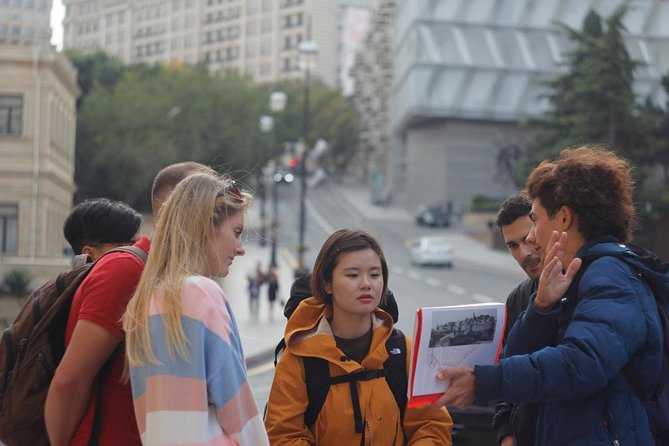
Icherisheher is presented as a UNESCO World Heritage area with four UNESCO sites. The guide uses historic photographs to explain what you are seeing, which is particularly useful when a modern street or restored wall hides how the area looked in an earlier period.
You will pause at the twelfth-century citadel walls and learn how the fortifications shaped the city. This is not a museum-style visit with long indoor stops. It is a walking lesson in how Baku developed within and beyond its defensive boundaries.
Maiden Tower, Muhammad Mosque, and the narrow lanes
At Maiden Tower, the guide explains the monument from the outside rather than taking you in. The tower is one of Baku’s most recognizable sights, and the exterior stop works well if your goal is orientation and background rather than a full museum visit.
The eleventh-century Muhammad Mosque provides another architectural marker within the Old City. You stop for an explanation, then continue through the lanes where the scale of Baku changes again. These streets are part of the appeal, but uneven or hard surfaces can make comfortable footwear important.
You also visit the Museum of Miniature Books. The supplied tour details do not specify an admission arrangement or a lengthy interior visit, so you should not assume that museum entry is included. Ask the guide if seeing the collection inside is important to you.
The walk continues to Shirvanshah’s Palace, a fifteenth-century complex. Again, the guide explains the site from the entrance rather than including an interior visit. That is a drawback for anyone wanting a full palace tour, but it keeps the route moving and allows more time for the city’s wider story.
More History Walking Tours in the world:
- History and Hauntings of Salem Guided Walking Tour
★ 5.0 · 14,564 reviews - Lisbon: History, Stories and Lifestyle Walking Tour
★ 4.8 · 10,902 reviews - Boston: Freedom Trail History Small Group Walking Tour
★ 5.0 · 6,450 reviews - Historic Charleston Guided Sightseeing Walking Tour
★ 5.0 · 6,216 reviews
Istiglaliyyat Street and the architecture of ambition
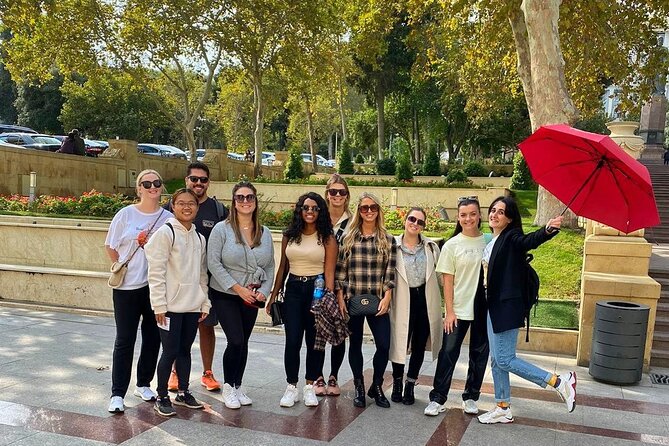
The transition from the Old City to Istiglaliyyat Street is one of the best features of the experience. This street was formerly called Nikolayevskaya and Kommunisticheskaya, and it was one of the principal streets of Imperial Russian Baku.
Here the oil boom becomes tangible. Wealthy oil barons wanted more than financial success. They commissioned grand buildings, supported institutions, and competed for public recognition. The result is a collection of structures influenced by European styles and shaped by Baku’s mixed population.
You pass Governor’s Garden, Baku’s Town Hall, the Philharmonic Hall, the Palace of Happiness, the Institute of Manuscripts, Ismaliyya Palace, the Literature Museum, and the statue of Nizami. The value is in seeing these places as a connected story rather than isolated stops.
The guide’s role matters most here. An ornate building can be hard to understand without its social setting. With photographs and diagrams, Gani has been especially effective at showing how earlier Baku looked and why particular patrons wanted certain designs. Lina has also guided the walk, offering a warm introduction to the Old City and practical suggestions for baklava and vegetarian food.
Philharmonic Fountain and the world of Ali and Nino
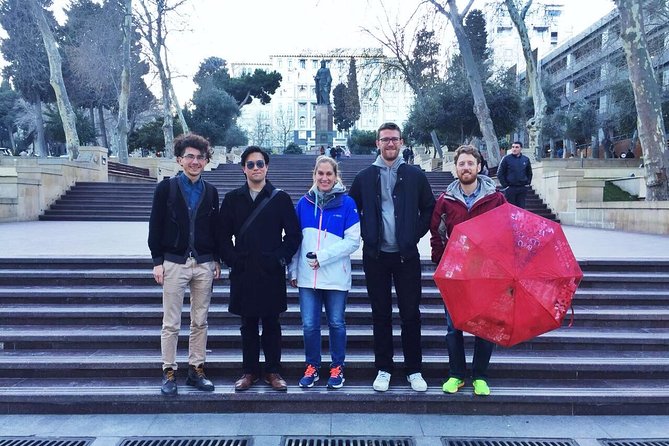
The Philharmonic Fountain marks an area created as Baku expanded beyond the fortress walls. This short stop links urban planning with literature through the story of Ali and Nino.
The reference is useful because the book offers a way to think about Baku as a meeting point of cultures, faiths, languages, and political forces. The tour does not treat the city as a collection of grand stones. It asks you to consider the people and cultural tensions that shaped those streets.
The stop lasts about ten minutes, so expect a focused explanation rather than a long break. If you like architecture and literature together, this is one of the route’s more distinctive moments.
Town Hall and the European face of the oil boom
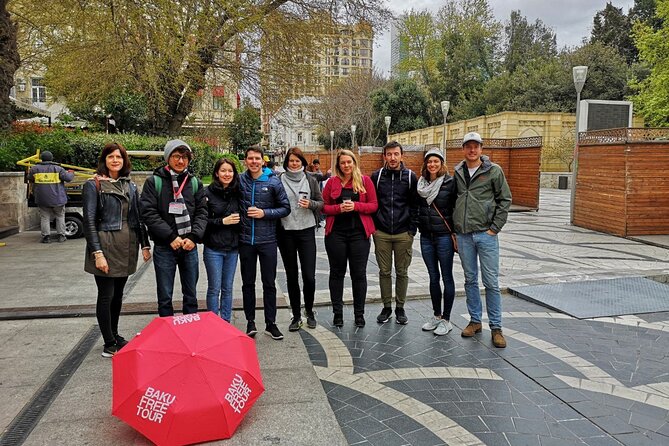
Baku City Executive Power, formerly the town hall, is one of the major architectural landmarks from the oil boom era. The building helps explain how European design influences reached Baku and how a cosmopolitan city presented itself to the outside world.
This is also where the tour moves beyond the simple idea that oil made wealthy people wealthy. Oil revenue changed civic architecture and public identity. Diverse groups living and working in Baku left their mark on the city, and monumental buildings reflected both local ambition and foreign influence.
You stop outside for about ten minutes. There is no private transportation, so the building is reached on foot as part of the continuous route.
Saadet Sarayi and a palace built for personal life
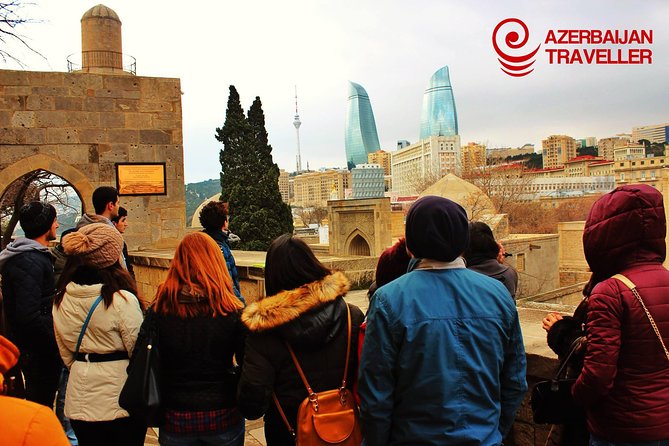
Saadet Sarayi brings the oil boom down to a personal scale. The building is tied to an oil baron and his wife, and its story is still connected with marriage today because the mansion now serves as a marriage registry.
That detail gives the architecture a human angle. Oil wealth was not only used for public buildings and displays of civic importance. It also shaped private homes, family stories, and ideas about status and romance.
The stop is brief, about ten minutes, but it adds variety to the route. You are not simply moving from one government building to another. You are seeing how the city’s most powerful families lived and how their buildings continue to serve Baku.
The former Taghiyev School for Girls
The former Taghiyev School for Girls, now the Institute of Manuscripts of Azerbaijan, is one of the most socially important stops. It tells the story of the first secular school for Muslim women and the wider process of modernization in Baku.
This is where the tour’s oil and social themes meet. Industrial wealth helped create the conditions for new institutions, but buildings alone did not produce change. The school represents arguments about education, women’s roles, religion, and the future of Azerbaijani society.
I would pay close attention here, especially if you want more than an architectural tour. The stop connects Baku’s grand oil-era buildings with the country’s path toward its first independence. That is a much larger story than the façade suggests.
Ismailiyya Palace and Venetian Gothic style
Ismailiyya Palace was commissioned by an oil baron in memory of his son. Its Venetian Gothic design makes it one of the route’s most striking architectural stops, but the personal reason behind the commission is what gives the building weight.
This is a good example of how the guide adds value. Without context, the palace is an impressive exterior. With the family story, you see it as an act of mourning, remembrance, and public display.
The palace is covered as an exterior stop, with about ten minutes for explanation. If you want to study every architectural detail, you may wish for more time, but the quick pace helps the tour cover a wide section of central Baku within two and a half hours.
What the guide adds to the walk
The strongest part of this experience is the guide’s storytelling. Gani is repeatedly praised for being funny, articulate, patient, and able to hold the attention of a group. His explanations cover architecture, political context, local culture, personal stories, and daily life rather than stopping at dates.
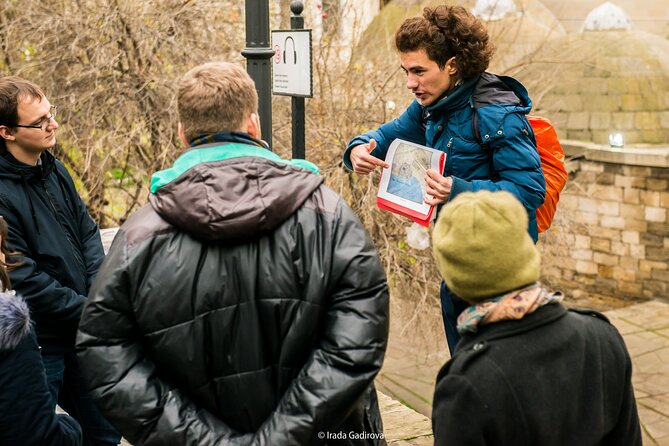
He also uses prepared photos and diagrams. That is a real advantage in Baku, where present-day streets can look very different from their oil-boom predecessors. Seeing an earlier view while standing in the same place helps you understand the scale of the city’s change.
The guide can also help with practical follow-up ideas. The experience includes suggestions about food, Azerbaijani phrases, baklava, vegetarian choices, and what to see next. I value that kind of help because it turns a short city walk into a useful first orientation.
The strong praise for Gani should not make you assume he will lead every departure. Lina is also identified as a guide, so check the assigned guide if that matters to you. The quality of the experience will depend partly on the person leading your particular walk.
Price, pace, and what is included
At $70 per person, the tour is not the cheapest way to walk around central Baku. Its value rests on the guide’s time and interpretation. If you walk the same streets alone, you can see the gates, façades, walls, and squares for free, but you will miss much of the connection between oil wealth, architecture, education, Soviet influence, and independence.
The price includes bottled water and the guided walk. It does not include lunch, private transportation, or admission fees. Since the major Old City sights are explained from outside, the cost is easier to justify for someone who wants a city introduction rather than several museum visits.
The advertised duration is approximately two hours and thirty minutes. The pace is active but not presented as a race, with several ten-minute stops and about an hour in the Old City. Families can manage it if children enjoy stories and walking. The tour has also worked well for older children, with ten- and twelve-year-olds enjoying the explanations.
The activity is booked, on average, 25 days ahead, so advance planning makes sense if your dates are fixed. Group discounts are available, and the ticket is mobile, which keeps arrival simple.
Who should take this Baku walking tour?
I would choose this experience if you are visiting Baku for the first time and want a clear introduction before exploring on your own. It suits people who care about buildings but also want the social story behind them.
It is particularly useful for:
- Visitors interested in oil, trade, architecture, and political change
- Families who prefer stories and photos to a long indoor museum visit
- Couples and small groups who want focused guide attention
- People staying centrally who can reach Fountain Square easily
- Anyone who wants food suggestions and ideas for the rest of the visit
I would choose another option, or add a separate museum visit, if your main goal is to enter Maiden Tower or Shirvanshahs Palace. This walk explains both from outside. You should also reconsider on a day of poor weather because the activity requires suitable conditions and takes place outdoors.
Should you book it?
Book this tour if you want Baku to make sense quickly. The route gives you medieval walls, oil-boom palaces, a school for Muslim women, literary connections, and a clear look at how the city changed beyond the fortress.
The best reason to book is the guide-led context, especially if Gani is leading your departure. The main limitation is equally clear: this is a walking and exterior architecture experience, not a series of museum entries.
For a first day in Baku, $70 can be fair value if you use the guide’s recommendations to shape the rest of your visit. Bring good shoes, allow for weather, and treat the walk as your foundation for exploring Icherisheher and the central city afterward.
FAQ
How long does the Baku Oil Heritage and Old Town Walking Tour last?
The tour lasts approximately 2 hours and 30 minutes.
Where does the tour begin?
It begins at KFC9RCP+28F on Nizami Street, near Fountain Square in Baku.
Where does the tour end?
The tour ends back at the meeting point in Fountain Square.
Is the tour private?
The experience is described as a private tour with personal guide attention. The activity information also gives a maximum of 30 travelers, so confirm the group arrangement when booking.
Are entrance fees included?
No. Admission fees are not included. The main stops at Maiden Tower and Shirvanshahs Palace are explained from outside, without entry.
Is transportation included?
No. Private transportation is not included. The experience is a walking tour.
What is included in the price?
Bottled water is included. Lunch and admission fees are not included.
Can I cancel for a full refund?
Yes, if you cancel at least 24 hours before the local start time. Cancellations or changes made within 24 hours are not refunded or accepted. If poor weather or an insufficient minimum number of participants cancels the tour, you will be offered another date or experience, or a full refund.
New routes in the world
- Baltimore Walking Foodie Tour in Fells Point★ 5.0 · 182 reviews
- Baku Walking Tour (Old City)★ 5.0 · 127 reviews
- The Madam’s Curse Walking Ghost Tour★ 4.5 · 103 reviews
- Austin Small Group Morning Walk★ 5.0 · 412 reviews
- Austin Haunted Pub Crawl Walking Tour★ 4.5 · 232 reviews
- Austin Downtown Private Walking Food Tour With Secret Food Tours★ 5.0 · 71 reviews
- Austin Murder Walk★ 5.0 · 310 reviews
- Auckland Small-Group Walking Tour with Treats★ 5.0 · 182 reviews
Old Town Walking Tours, compared.
Underground Vaults Walking Tour in Edinburgh Old Town
Read our review →
3-Hour Walking Tour of Old Town & Prague Castle
Read our review →
Old Town and Jewish Quarter Guided Walking Tour
Read our review →
Cartagena: Historic Center and Getsemaní Shared Walking Tour
Read our review →
Prague Ghost and Legend of Old Town Walking Tour
Read our review →
Browse the lists this tour appears in