
Review · AMSTERDAM
Absolutely Amsterdam – the Essential Introductory Walking Tour
Amsterdam reveals itself best at street level, and this tour tackles the city’s biggest questions while you walk: Why are the canal houses so narrow? How did a trading town become a global financial power? Why did Catholic worship continue after Catholicism was outlawed? The answers come through at ten central stops, from the old harbor to Dam Square.
I like the low upfront price and the tour’s broad reach. For about $5.93, you get a guided introduction to Amsterdam’s old center, with the option to tip based on the experience. I also like the mix of serious history and local oddities, including Dutch drug policy, crooked houses, open curtains, ugly bicycles, and royal gossip.
The main drawback is the pace and setting. This is a popular central route, so you will deal with crowds, traffic, bikes, and busy streets. The tour does not take you inside most sights, and the hidden church is discussed from outside using pictures.
Key points to know before you book
- Ten major stops in about two and a half hours: You cover a wide slice of central Amsterdam without spending time inside museums or palaces.
- History with a sharp local edge: Expect clear explanations of prostitution, Catholic tolerance, marijuana policy, colonial trade, wartime hunger, bicycles, and the monarchy.
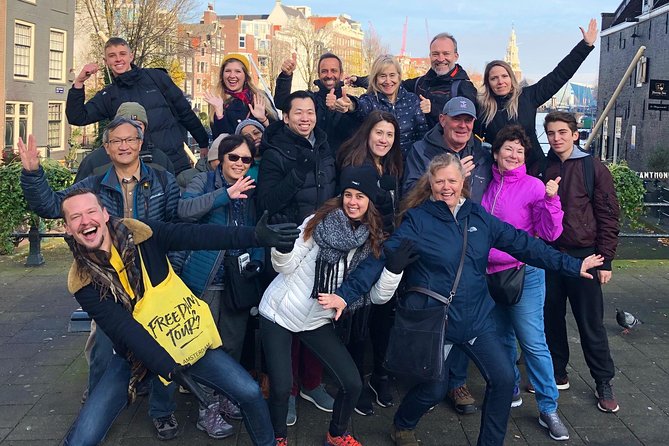
- A small group capped at 15 people: That should make it easier to hear the guide and ask questions than on a large coach-style walk.
- Guides vary by departure: Raymond, Jaap, Sergio, David, Gianni, Esi, and other guides have led this experience.
- Bring good walking shoes: The route covers plenty of ground, and Amsterdam’s crowded streets require attention around bicycles.
- The price is tip-based: The listed cost is only $5.93 per person, so plan to tip if the guide gives you a useful and engaging introduction.
Why this is a smart first walk in Amsterdam
This is not a single-theme tour. It is a fast, story-led orientation to the old center, connecting Amsterdam’s canals, commerce, religion, war, art, drugs, bicycles, and royal government.
That wide scope is the point. You will not get a long visit inside one attraction, but you will learn where the major districts sit and why they look the way they do. I find this useful on a first day because you can mark places to revisit later, such as the Royal Palace, the Waag, or the Ons’ Lieve Heer op Solder museum.
The tour is offered in English and lasts about two hours and 30 minutes. The group size is limited to 15, which is a good compromise between meeting other people and still being able to follow the guide.
The format is especially useful if you are new to Amsterdam. Several guides are praised for keeping the walking pace manageable while adding humor and visual aids. Guides have included local figures such as Raymond, described as a lifelong Amsterdam resident, along with Jaap, Sergio, David, Gianni, Esi, and others.
You should still expect an outdoor city walk, not a polished stage show. The guide may need to pause, regroup, and speak over street noise. That is part of the trade-off for seeing the city as it really works.
More Walking Tours in Amsterdam:
- Amsterdam Anne Frank: Small-Group Walking Tour & Local Guide
★ 4.8 · 12,789 reviews - Anne Frank’s Story – Guided Walking Tour through Amsterdam
★ 5.0 · 11,619 reviews - Amsterdam: Anne Frank Guided Walking Tour in DE/EN/IT/ES
★ 4.9 · 3,107 reviews
Beurs van Berlage and the city built on water
The walk begins at Beursplein 5, in front of the Beurs van Berlage. This is a useful opening because the building sits in an area tied to Amsterdam’s early trade and finance.
Here you learn how the Amstel River, water management, shipping, and commerce shaped the city. The tour uses this first stop to explain Amsterdam’s origins and the close link between engineering and money.
I like starting here instead of at a famous church or palace. It gives you a practical framework for the rest of the walk. Amsterdam was not simply decorated with canals after the fact. Water helped determine where people lived, traded, traveled, and built.
The stop lasts about 20 minutes and does not require an admission ticket. Look closely at the surrounding buildings, since the guide’s story is partly about how the old exchange district grew into a center of trade.
Damrak and the uneasy mix of faith and business
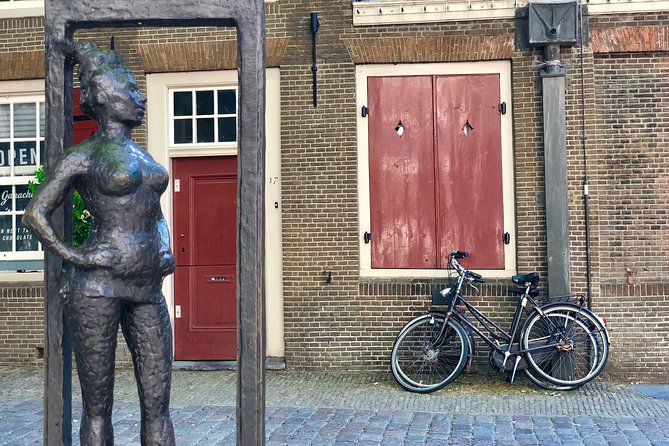
At Damrak, the route moves into the old harbor area. This is where the guide explains the origins of the Red Light District and the changing relationship between the Church, prostitution, commerce, and public morality.
The subject is handled as social history rather than a quick novelty stop. You hear how prostitution became a legal profession, how the neighborhood changed during the 20th and 21st centuries, and what problems it faces now.
This is one of the tour’s more useful features. Amsterdam’s liberal reputation can look simple from the outside, but the story is more complicated. Religious authority, taxation, public order, and private behavior have all shaped the district.
The stop lasts about 15 minutes. The area can be crowded, and you will need to stay alert around pedestrians, bicycles, and traffic. If you want a detailed explanation of the neighborhood’s present-day policies, ask the guide questions while the group is there.
Catholic worship at Ons’ Lieve Heer op Solder
At the Our Lord in the Attic Museum, the guide explains how Catholic worship continued after Catholicism became illegal in the 17th century.
You do not enter the hidden church during this walk. Instead, you see the building from the outside, and the guide uses interior pictures to explain how religious practice survived under strict conditions.
That limitation matters. If the hidden church is high on your list, you will need to return separately and buy an admission ticket. The walking tour gives you the context, but not the full museum visit.
Still, this is a strong stop because it turns the Dutch idea of tolerance into something concrete. The guide explains that tolerance did not always mean equal rights or open acceptance. Often, it meant allowing private worship under carefully controlled conditions.
Same streets, a different guide:
- Amsterdam: Anne Frank Guided Small Group Walking Tour
★ 4.8 · 2,722 reviews - Amsterdam: Cultural Highlights Walking Tour
★ 4.9 · 2,629 reviews - Amsterdam: Ganja Walking Tour
★ 4.2 · 2,127 reviews - Anne Frank Walking Tour Amsterdam Including Jewish Cultural Quarter
★ 5.0 · 1,879 reviews
Chinatown and Amsterdam’s drug policy
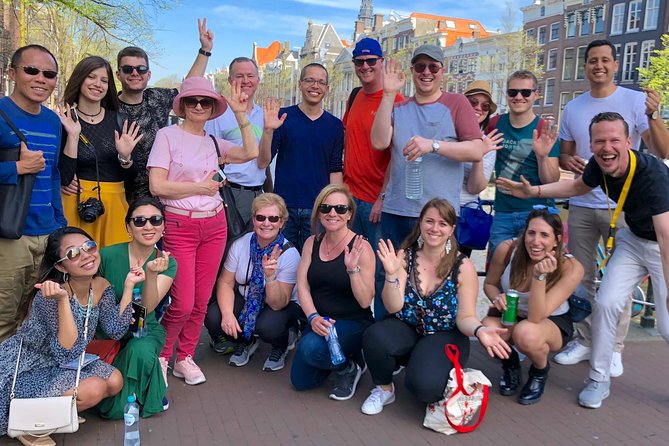
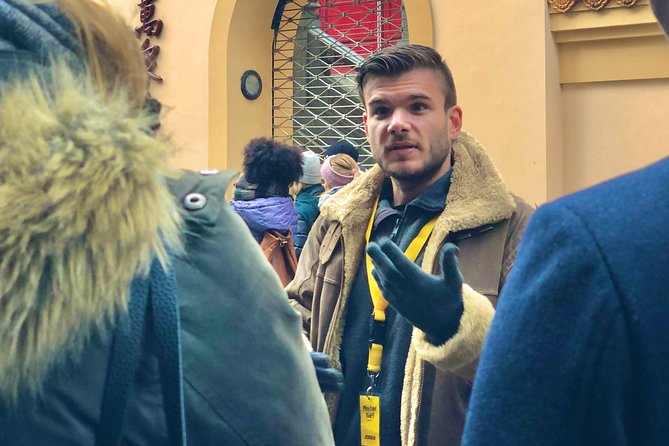
The Chinatown stop shifts from religious tolerance to Dutch drug policy. You learn how the neighborhood became a no-go area in the 1970s and how that period helped lead to the growth of coffeeshops selling marijuana.
This is a short stop, about 15 minutes, so expect a clear overview rather than a legal seminar. The value is in learning how policy developed from practical attempts to manage public problems.
The discussion also gives useful context for Amsterdam’s international image. The city’s coffeeshop system did not appear from nowhere, and it is not simply a symbol of carefree behavior. It grew from specific political and social choices.
No admission fee is needed here. Because the route passes through active streets, keep the group in sight and leave room for bicycles.
The Waag and Rembrandt’s first major success
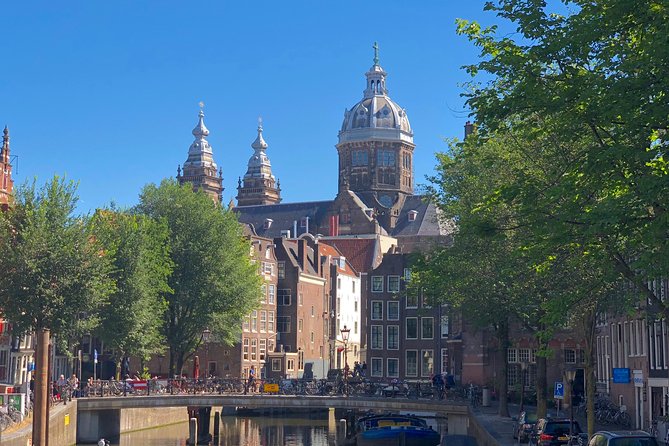
At the Waag, the guide connects Amsterdam’s medieval-looking architecture with art history. This is where you hear about the place linked to Rembrandt’s first major work and how that painting changed portrait-making.
The guide brings a copy of the painting so you can examine details that would be hard to see on a passing street corner. That visual aid makes the stop more than a name-drop.
The visit lasts about 10 minutes. You do not receive a full museum visit, and the admission ticket is not included. The point is to understand how Amsterdam’s civic buildings, medical institutions, artists, and wealthy patrons fit together.
I like this kind of short stop because it gives you a reason to look again when you pass the building later. You leave with a detail to remember, not just another date.
Oostindisch Huis and the price of the Golden Age
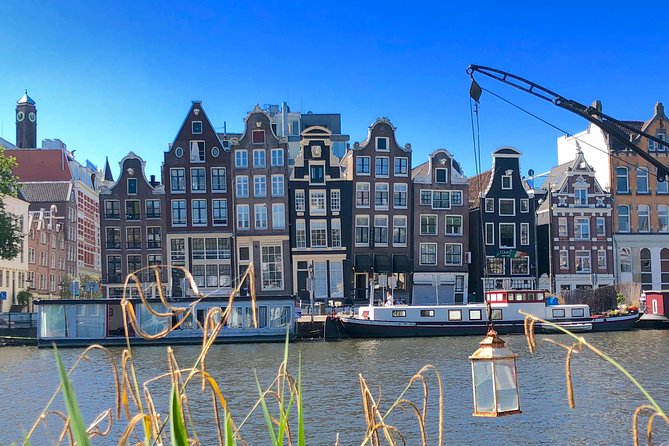
Oostindisch Huis is one of the most important stops on the route. During weekdays, the group can access a 17th-century courtyard hidden inside the building.
Here the guide explains how Amsterdam became the center of a global trading empire and one of the wealthiest cities in the world during the Dutch Golden Age. The building was the headquarters of the Dutch East India Company, described here as the first and largest corporation of its kind.
This is also where the tour avoids a glossy version of Dutch success. The story includes the company’s role in modern capitalism, but also its darker colonial and commercial legacy.
The weekday condition is important. If you take the tour on another day, you may not be able to enter the courtyard. Even from outside, the stop remains valuable, but the special architectural detail depends on access.
The stop lasts about 15 minutes and is free. I would pay close attention here, since this section helps explain many of the wealth, buildings, and global connections you see elsewhere in Amsterdam.
Waterlooplein and the Jewish Quarter during the war
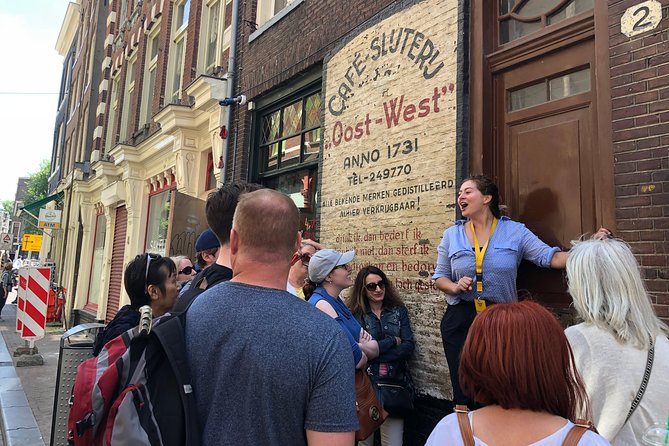
At Waterlooplein Market, the tour enters the former Jewish Quarter. The market is identified as Amsterdam’s oldest, but the main focus is the neighborhood’s wartime destruction and the survival choices people faced during the final hunger winter of the Second World War.
The guide explains how Nazi occupation decimated Amsterdam’s Jewish population and how the district changed afterward. The story also addresses a difficult point that is easy to miss when walking through a market: the neighborhood was not simply lost in the chaos of war. Deportation, occupation, and collaboration had specific consequences.
This stop gives the tour emotional weight. After hearing about trade and royal buildings, you are reminded that Amsterdam’s past also includes persecution, hunger, and a community almost destroyed.
The stop lasts about 15 minutes and is free. Waterlooplein is still an active public space, so the contrast between the market and the history beneath it can be striking.
The Amstel and Amsterdam’s crooked houses
At the Amstel, or at another canal if the weather or guide requires a change, the focus turns to the city’s most familiar views.
You learn why Amsterdam has canals and how the canal houses were designed. The guide covers their narrow fronts, their tendency to lean, the hooks above many facades, and the Dutch habit of leaving curtains open.
These details are practical and memorable. Narrow houses were tied to urban building patterns and taxation, while the hooks allowed goods to be lifted through upper windows. The leaning buildings are not all the result of one cause, and the guide separates deliberate design from gradual movement.
This is one of the best places to connect history with what you are seeing in front of you. Instead of treating the canals as a pretty backdrop, the tour explains why the city’s architecture looks so distinctive.
The weather matters more here than at many other stops. Bring suitable clothing, since the discussion happens outdoors and may shift to another canal if conditions change.
Oudemanhuispoort and the logic of Dutch cycling
Oudemanhuispoort is a former monastery that later became a hospital and now forms part of the University of Amsterdam. It is also a quieter, harder-to-find passage, giving the route a change of mood after the open canal streets.
The subject here is Dutch bicycle culture. The guide explains why Amsterdam has more bikes than people and why many bicycles look plain, old, or even unattractive.
That last point is a useful correction to the polished image of Dutch cycling. In a city where a bicycle is daily transport, practicality matters more than fashion. The stop also helps you understand why walking in Amsterdam requires constant awareness.
Bicycle traffic is a real consideration throughout the tour. You may need to step aside quickly, and you should not stop in a bike lane while taking photographs.
Dam Square and the move from republic to monarchy
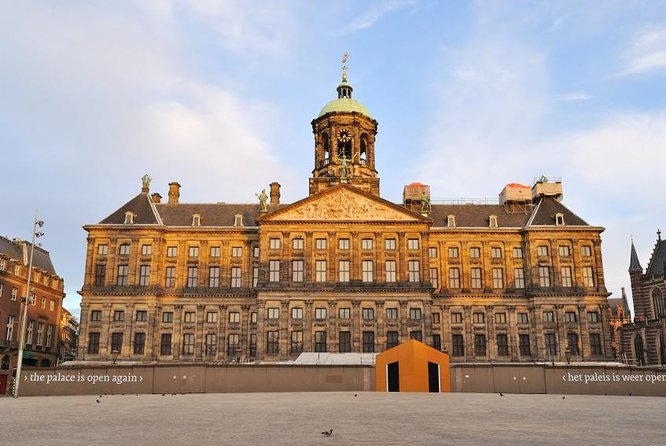
The final major stop is the Royal Palace on Dam Square. The guide explains the palace’s unusual history and how the Netherlands moved from a republic to a monarchy.
You also get an introduction to the current royal family, supported by pictures, along with a lighter look at recent royal gossip. That change in tone works well after the heavier discussion of war, colonial power, and religious restrictions.
The palace itself is not entered, and admission is not included. If you want to visit inside, plan a separate visit. The walking tour is about context, not an interior tour.
The route ends around Dam Square, near the center of the city. From here, you can return to a museum or district that caught your interest, using the walk as a practical plan for the rest of your stay.
What the $5.93 price really means
At $5.93 per person, this is an unusually inexpensive way to get a structured introduction to Amsterdam. The price makes sense because the experience is tip-based, so the listed amount should not be treated as the complete cost of a good tour.
I like this model when the guide earns trust through useful information, a good pace, and thoughtful answers. You can decide what the experience was worth at the end. The trade-off is that the final cost is less fixed than a standard paid tour.
The value is strongest for first-time visitors who want orientation. You get a route through the old center, explanations of major themes, and suggestions for places to revisit. The value is weaker if you want museum entry, a specialist art tour, or a quiet walk away from busy streets.
The tour is often booked about 24 days ahead, so reserving early is sensible if your schedule is fixed. Free cancellation is available up to 24 hours before the start time. If the minimum group size is not met and the tour is canceled, you are offered another date or experience, or a full refund.
Who should book this walking tour
I would choose this tour for a first visit, a short stay, or the first morning of a longer trip. It gives you a useful map of central Amsterdam and enough history to make later sightseeing more meaningful.
It also suits repeat visitors. A guide such as Ramses or Jaap may still add something new if you have seen the major sights before, especially through local stories and personal context.
You should be comfortable walking for roughly two and a half hours. Wear good shoes, carry a drink, and expect to share narrow streets with bicycles and other groups. Most people can participate, and service animals are allowed.
I would skip it if you dislike group walks, want a slower pace with long stops, or need guaranteed access inside attractions. The hidden church, Royal Palace, and other sites are discussed from outside rather than visited in full.
FAQ
How long does the Amsterdam walking tour last?
The tour lasts approximately two hours and 30 minutes.
What language is the tour offered in?
The tour is offered in English.
Where does the tour start?
It starts at Freedam Tours, Beursplein 5, 1012 GZ Amsterdam, Netherlands.
Where does the tour finish?
The route concludes at or around Dam Square, and the activity information also identifies the meeting point as the end location.
Does the tour enter the hidden church at Ons’ Lieve Heer op Solder?
No. The guide discusses the church from outside and uses pictures of the interior. Admission is not included.
Is the Royal Palace included inside the tour?
No. The Royal Palace is discussed from outside, and admission is not included.
What happens if I need to cancel?
You can receive a full refund if you cancel at least 24 hours before the experience starts. Cancellations or changes made within 24 hours are not refunded or accepted.
Should you book Absolutely Amsterdam?
Book it if you want a lively, low-cost introduction to central Amsterdam, especially at the start of your stay. The strongest parts are the wide range of subjects, the manageable group size, the visual aids, and the guides’ ability to make topics such as colonial trade, drug policy, cycling, and wartime history understandable.
Do not book it expecting a museum tour or a quiet stroll. You will cover ground, share crowded streets, and see several sights only from the outside.
For most first-time visitors, I think the price and range make this a sensible opening walk. Bring comfortable shoes, stay alert around bikes, and leave room in your schedule to return to the places that catch your interest.
New routes in Amsterdam
- Small Group Walking Tour in Amsterdam with Friendly and Fun Guide★ 5.0 · 281 reviews
- Humans of Amsterdam: Cultural Walking Tour incl. meeting 2 locals★ 5.0 · 320 reviews
- Private Tour: Amsterdam City Walking Tour and Canal Cruise★ 4.5 · 142 reviews
- Amsterdam: Private Introduction Walking Tour (TOP RATED)★ 5.0 · 223 reviews
- Amsterdam: Anne Frank and World War II Walking Tour (TOP RATED)★ 4.5 · 72 reviews
- Anne Frank and Jewish Quarter Amsterdam Private Walking Tour★ 5.0 · 684 reviews
- Secrets of Amsterdam Walking Tour plus Dutch Sweets Tasting★ 5.0 · 111 reviews
- Amsterdam Private Historical Walking Tour★ 5.0 · 75 reviews
Amsterdam Walking Tours, compared.

Amsterdam Anne Frank: Small-Group Walking Tour & Local Guide
Read our review →
Anne Frank Guided Walking Tour in DE/EN/IT/ES
Read our review →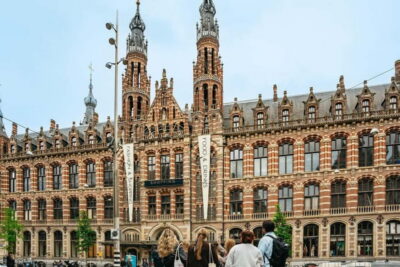

Anne Frank Walking Tour Amsterdam Including Jewish Cultural Quarter
Read our review →
Amsterdam Highlights Walking Tour: Small Group Experience
Read our review →
Anne Frank’s Last Walk & See Anne Frank House in Virtual Reality
Read our review →
Browse the lists this tour appears in