
Review · BARCELONA
Barcelona Walk Like a Local: El Born & Gothic 15+ Sights
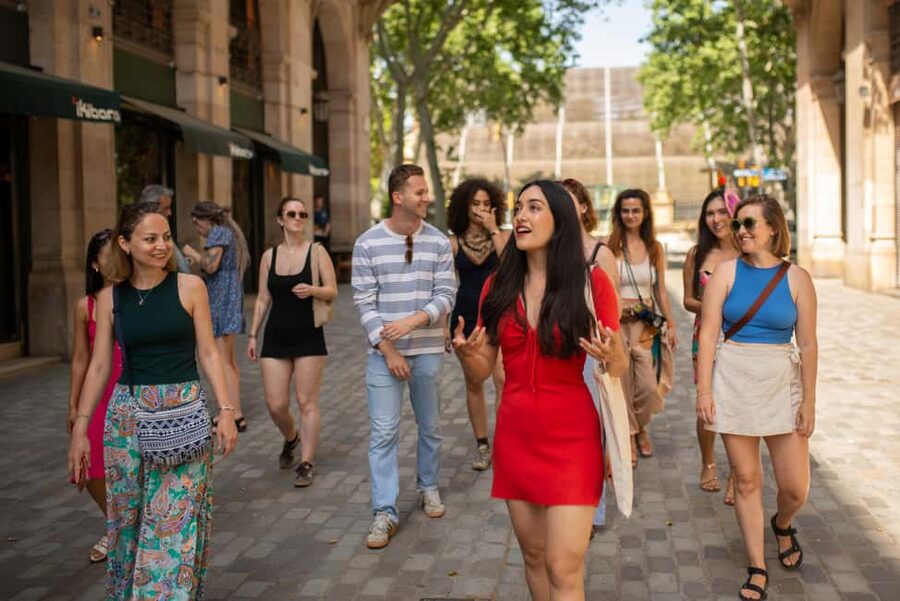
Barcelona’s old center is best understood on foot, where Roman stones, medieval lanes, church towers, artists’ hangouts, and odd little corners sit close together. This walk links El Born and the Gothic Quarter with more than 15 stops, mixing major sights with places you could easily miss alone.
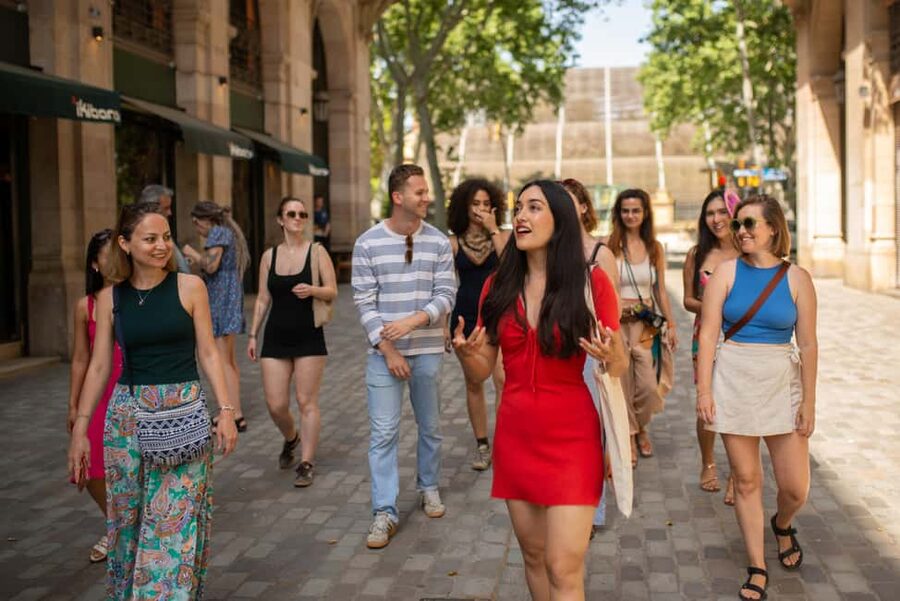
I like two things right away: the price is a modest $17 per person, and the guides focus on stories rather than a dry list of dates. Petra, Adriana, Jennifer, Santiago, and others have been praised for clear explanations, humor, restaurant tips, and a friendly way of handling questions.
The main tradeoff is pace. In 2 to 2.5 hours, you will see many places from the outside and hear why they matter, but you will not have time for full museum visits or long interior stops. Wear good shoes and come ready to keep moving.
Key points to know before you book
- Roman and medieval Barcelona in one walk: Follow the city from ancient foundations through Gothic streets and later artistic life.
- Santa Maria del Mar is a major highlight: See the church known as the Cathedral of the People in the heart of El Born.
- More than postcard sights: Look for the cursed Bridge of Sighs story, old shops, murals, quiet lanes, and unusual corners.
- Strong guide-led storytelling: Guides including Petra, Adriana, Jennifer, Santiago, Mariah, and Jen bring different personalities and local advice.
- A useful first-day introduction: The walk can help you plan later visits, meals, and independent exploring.
- Simple logistics: Meet by the large glass cube monument at Passeig de Picasso, 13, not inside the park.
Why this walk works for first-time Barcelona visitors
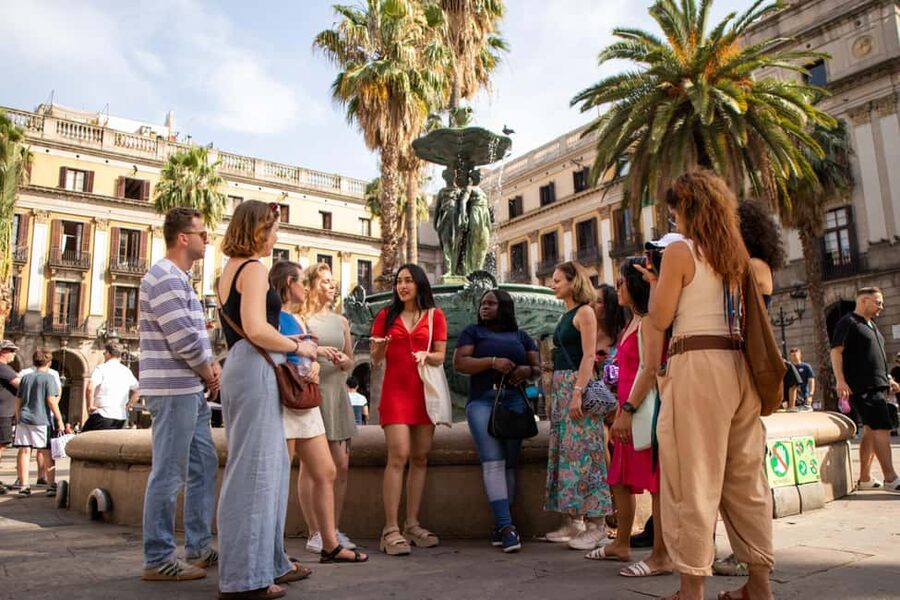
The old city can feel confusing at first. Streets bend, plazas appear without warning, and a grand church may sit behind an unassuming lane. A map can show you where you are, but it will not explain why one street feels Roman, why another belongs to the medieval merchant quarter, or why a bridge has such a strange reputation.
This is where a local guide helps. You are not simply covering ground. You are being given a working map of Barcelona’s oldest districts. The walk connects El Born’s artistic and commercial past with the Gothic Quarter’s religious, political, and Roman layers.
I also like the balance between famous places and smaller discoveries. You will see Barcelona Cathedral and Santa Maria del Mar, but you will also stop at Casa Gispert, La Casa de l’Ardiaca, Plaça Sant Felip Neri, and Els Quatre Gats. That mix gives the tour more character than a straight march between the city’s biggest landmarks.
The tour is in English, and the guide is live rather than recorded. That matters in narrow streets, where a good guide can adjust the pace, answer questions, or spend a little more time on the subject that catches your interest.
More Walking Tours in Barcelona:
- Barcelona Tapas and Wine Experience Small-Group Walking Tour
★ 5.0 · 5,804 reviews - Barcelona: Tapas Walking Tour with Food, Wine, and History
★ 4.8 · 4,261 reviews - Barcelona: Food Walking Tour with Tapas and Wine
★ 4.9 · 2,180 reviews
Starting at Passeig de Picasso and entering El Born
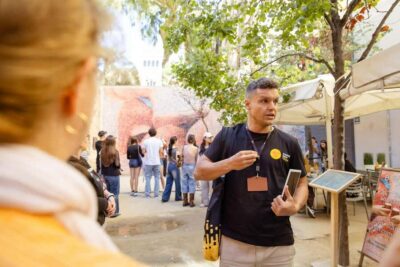
The meeting point is Passeig de Picasso, 13, beside a large glass cube monument. The instructions are worth taking seriously: do not go inside the park. Look for the guide standing beside the monument with a Side Routes sign.
That clear landmark should make the start fairly easy, especially if you are arriving in a busy old-city area. Still, give yourself time to find it. You do not want to begin a walking tour while trying to navigate from your phone.
The first major area is El Born, covered in about 30 minutes. This district is a good opening act because it feels both historic and creative. The route introduces the older city, local streets, artistic connections, and the way Barcelona’s past still shapes daily life.
You will hear about Picasso and revolutionary figures, along with stories tied to the neighborhood’s buildings and public spaces. The exact order and emphasis may vary by guide, but the point is clear: El Born is not just a pretty quarter for photographs. It is a place where trade, religion, politics, and art have overlapped for centuries.
Casa Gispert and the feel of an old local business

Casa Gispert receives about 10 minutes. This stop adds a practical piece of Barcelona life to the tour. Instead of looking only at monuments, you get a glimpse of a long-running local business and the commercial side of the old city.
The experience is especially useful if you like places that show how a neighborhood functions. Historic churches explain belief and power. Old businesses show how streets were used and how traditions can continue across generations.
Do not expect a lengthy shopping stop or a meal here. Food and drinks are not included, and the overall route keeps moving. Think of Casa Gispert as a short story about local commerce, not a market visit.
Santa Maria del Mar, El Born’s great church
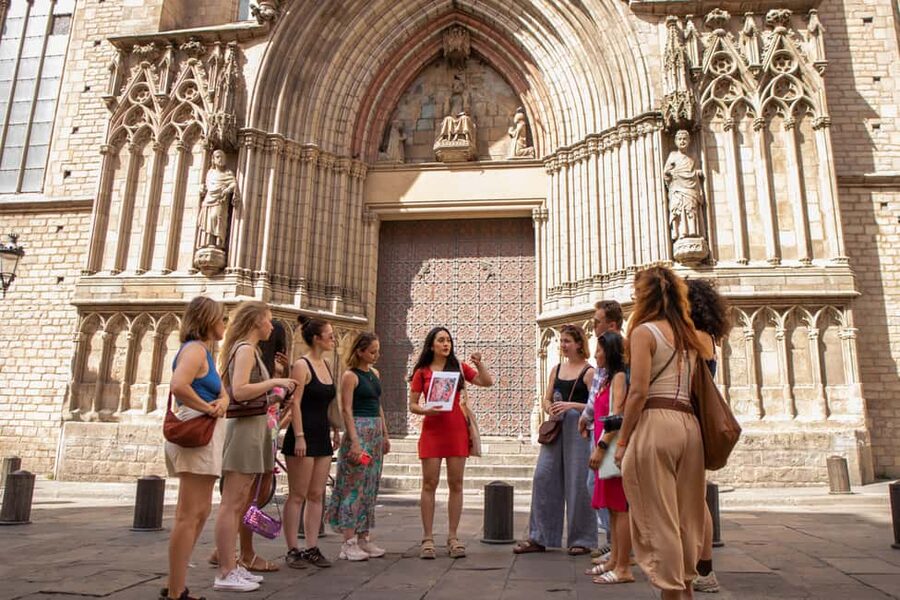
The walk then reaches Santa Maria del Mar, with about 15 minutes devoted to the church. Known as the Cathedral of the People, it is one of the tour’s clearest architectural highlights.
This is the sort of stop where a guide’s explanation adds real value. A church can look impressive from the outside, but its meaning becomes easier to grasp when you understand who built it, how the neighborhood related to it, and why it became such an important symbol for local people.
The short timing also tells you how to set expectations. You will have time to see the building and hear its story, but this is not a long architectural study or a dedicated church tour. If Santa Maria del Mar is a personal priority, plan a separate return visit.
Same streets, a different guide:
- Barcelona Tapas Walking Tour: Food, Wine & History
★ 4.5 · 1,928 reviews - Barcelona Helicopter, Sailboat & Old Town Private Walking Tour
★ 5.0 · 1,395 reviews - Barcelona: Old Town and Gothic Quarter Walking Tour
★ 4.8 · 1,393 reviews - Barcelona: City Walking Tour with a Local Guide
★ 4.9 · 1,384 reviews
Picasso, old-city streets, and the art of noticing
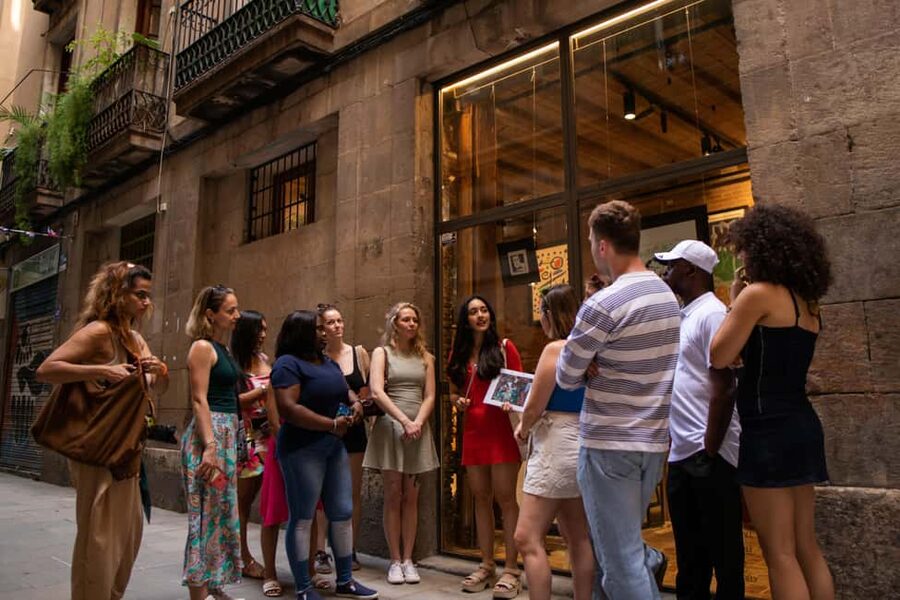
The Picasso Museum stop lasts about 10 minutes. The tour does not include a full museum visit, but the connection places Barcelona’s art story in the middle of the old quarter.
That is useful because the route is not locked in the medieval past. It follows the city into its modern artistic identity, touching on Picasso and the creative energy that still shapes El Born. You may also encounter murals and unexpected public art, including the World Comes to Life With Each Kiss mural, a popular photo stop.
A guide can help you notice details that would otherwise pass as background. Look up at facades, check side streets, and pay attention to the contrast between polished landmarks and rougher, more personal forms of street art.
The 45-minute Old City section is likely where the walk feels most exploratory. You will cover streets and corners rather than one single monument. This portion connects the earlier El Born stops with the Gothic Quarter and gives the tour its local-walk quality.
Entering the Gothic Quarter through Roman and medieval Barcelona
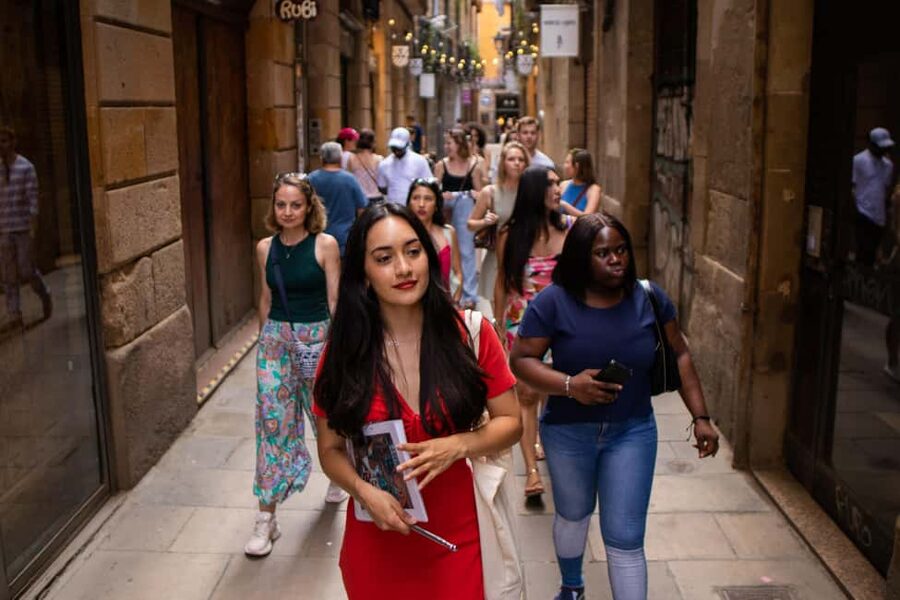
The Gothic Quarter receives roughly 30 minutes of guided attention. Its narrow streets can look uniformly medieval, but the tour also points to the lasting influence of Rome. Barcelona’s oldest center still carries traces of the Roman city beneath and around later buildings.
That layering is one of the best reasons to take this walk early in your visit. You begin to understand that Barcelona is not a single historical scene. Roman planning, medieval religious power, merchant wealth, political conflict, and modern art all occupy the same small area.
The Gothic Quarter is also where the route’s legends become more prominent. Expect the chilling tale connected with the Bridge of Sighs, along with quirky local stories that make the streets easier to remember. I prefer this style of history to a long lecture because a strange story gives you a reason to look closely at the place in front of you.
Barcelona Cathedral, Bishop’s Bridge, and La Casa de l’Ardiaca
Barcelona Cathedral receives about 15 minutes. It is one of the major religious landmarks on the walk, and its scale gives you a sharp contrast with the narrow lanes around it.
The stop is best for orientation and context. You will get the cathedral’s place in the old city rather than a detailed interior tour. If you want extended time inside, check whether a separate visit fits your plans.
Next comes Bishop’s Bridge, with about 10 minutes of explanation. This is a compact stop, but it is the kind of feature that rewards a guide. The bridge is easy to photograph, and its unusual form invites questions about how the Gothic Quarter was shaped and presented.
La Casa de l’Ardiaca follows for another 10 minutes. Together, these two stops show how the district mixes grand religious buildings with smaller structures and atmospheric passages. They also make good pauses for photographs, though the tight streets can become crowded and the guide may need to keep the group together.
Plaça Sant Felip Neri and the city’s darker stories
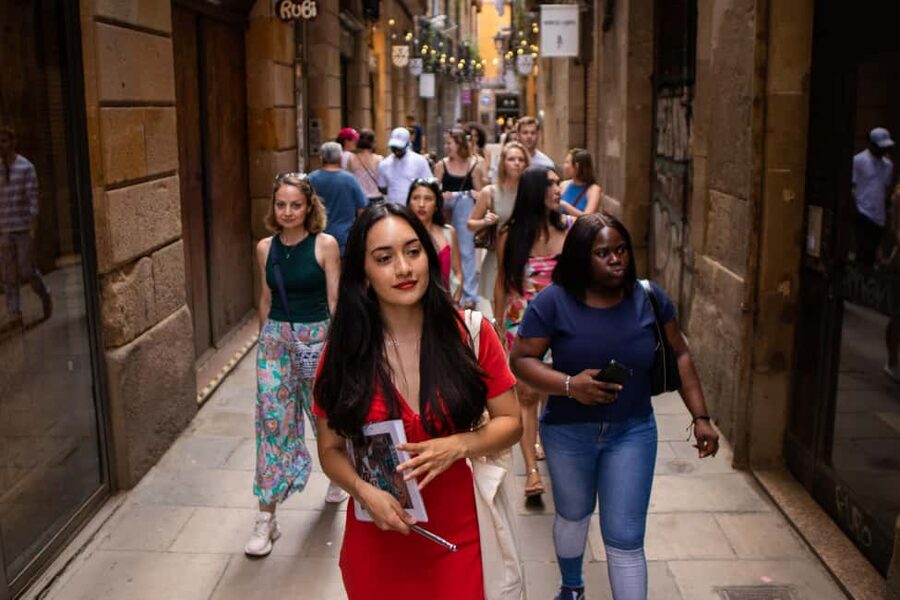
Plaça Sant Felip Neri gets about 10 minutes. This quiet square is one of the more emotional parts of the route because it carries a darker story than the cheerful plazas and art stops elsewhere.
The square helps explain why this tour is not only about attractive buildings. Barcelona’s past includes conflict, loss, and political struggle, and the old center preserves reminders of that side of the city. A thoughtful guide can give the place weight without turning the entire walk into a grim history lesson.
This is also a good moment to slow down mentally. The tour covers many stops, so a quiet square gives you a brief change of tone before the final cultural stop.
Finishing at Els Quatre Gats
The walk ends at Els Quatre Gats, where you have about 15 minutes of sightseeing. This famous gathering place links the old city with Barcelona’s artistic world and the figures who helped shape its modern reputation.
Ending here makes sense. The route begins with old streets, churches, and commercial traditions, then finishes in a setting associated with artists, ideas, and social life. You leave with more than a list of Gothic buildings. You see how Barcelona’s identity moved from Roman foundations and medieval institutions toward the art scene that still draws visitors today.
The tour does not include a meal or drinks, so treat the finish as a useful point for continuing on your own. Your guide may also offer restaurant suggestions. Adriana and Adrianna were specifically praised for practical food advice, while guides such as Petra and Jennifer were noted for helping people plan the rest of their time in the city.
What the guides add to the experience
The guide quality is central here. Petra is described as energetic, friendly, clear, and full of useful local advice. Adriana and Adrianna are praised for their grasp of El Born and the Gothic Quarter, along with restaurant recommendations. Jennifer and Jen are repeatedly noted for warmth, humor, strong storytelling, and the ability to include a group.
Santiago is described as approachable and enthusiastic about Barcelona’s past. Mariah is remembered for wit and humor. These names matter because the walk depends less on special equipment or exclusive access than on the person leading it.
The best use of your guide is to ask questions. Ask for a restaurant near your next stop, advice on which museum deserves your time, or help understanding the difference between the two historic districts. The guide is there to give local context, not just point at buildings.
Pace, price, and who should book
At $17, this is good value if you want an introduction to the old city. A comparable self-guided visit would require planning, map work, and research. Here, the price buys a live English-speaking guide, a route through two important districts, and a set of stories that can shape the rest of your stay.
The value drops if you want long interior visits. The Picasso Museum, both major churches, and other sites are covered in short segments. You are paying for orientation and storytelling, not admission tickets or a museum experience.
The walk suits couples, families, friends, solo visitors, and anyone who prefers a social way to get oriented. It is also a good choice for a first day in Barcelona because it can help you decide where to return. Solo visitors may especially appreciate the friendly, interactive format.
It is less suitable if walking for 2 to 2.5 hours is difficult, if you dislike uneven old-city streets, or if you want a slow photographic tour. Wear comfortable shoes. The tour runs in rain or sun, so bring weather protection and a camera.
Cancellation is free up to 24 hours before the start, and you can reserve now and pay later. Transportation to the meeting point is not included. A private group is available, but check the booking details to confirm the price and arrangement for your date.
Should you book this El Born and Gothic Quarter walk?
Book it if you want stories, orientation, and a broad first look at Barcelona’s oldest neighborhoods for a low price. The strongest parts are the mix of major churches, Roman and medieval context, art connections, local businesses, and unusual street corners.
Skip it if your priority is entering museums or spending a long time inside each cathedral. In that case, plan individual visits and use this walk only if you want a quick outside overview.
For most first-time visitors, I would take the walk early in the stay, then return to Santa Maria del Mar, Barcelona Cathedral, or the Picasso Museum with more time. That approach gives you both the useful big picture and the slower visits these places deserve.
FAQ
How long does the Barcelona El Born and Gothic Quarter walk last?
The stated duration is 2 to 2.5 hours. The route includes El Born, the Old City, the Gothic Quarter, churches, historic buildings, art-related stops, and more than 15 sights.
What language is the tour conducted in?
The live tour guide speaks English.
Where does the tour meet?
Meet at Passeig de Picasso, 13, beside the large glass cube monument. Do not go inside the park. The guide will stand by the monument with a Side Routes sign.
Where does the tour finish?
The walk finishes at Els Quatre Gats.
Are meals, drinks, or transportation included?
No. Transportation to the starting point and all meals and drinks are excluded.
Can I cancel or pay later?
You can cancel up to 24 hours in advance for a full refund. Reserve now and pay later is also available.
New routes in Barcelona
- Barcelona: “The Shadow of the Wind” Literary Walking Tour★ 4.5 · 176 reviews
- Picasso Museum and Walking Tour Plus Wine Tasting Upgrade★ 4.3 · 111 reviews
- From Barcelona: Montserrat Walking and Horseback Riding Tour★ 4.8 · 81 reviews
- Barcelona: Walking tour with Montjuic Castle & Cable Car★ 4.7 · 832 reviews
- Barcelona: Gothic Quarter Walking Tour w/ Montjuïc Cable Car★ 4.4 · 90 reviews
- Barcelona: Ramblas, Old Town & Gaudí Houses Walking Tour★ 4.9 · 239 reviews
- Barcelona: Hidden Gems Walking Tour Including 10+ Sights★ 4.9 · 121 reviews
- Barcelona: Picasso Walking Tour with Picasso Museum Tickets★ 3.5 · 93 reviews
Barcelona Walking Tours, compared.
Barcelona Tapas and Wine Experience Small-Group Walking Tour
Read our review →
Tapas Walking Tour with Food, Wine, and History
Read our review →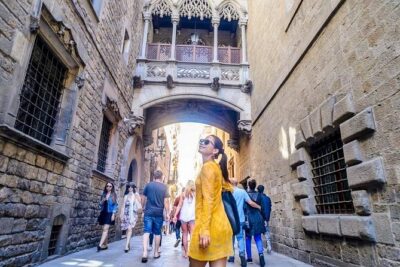
Barcelona Helicopter, Sailboat & Old Town Private Walking Tour
Read our review →

Helicopter Flight, Boat Ride, and Walking Tour
Read our review →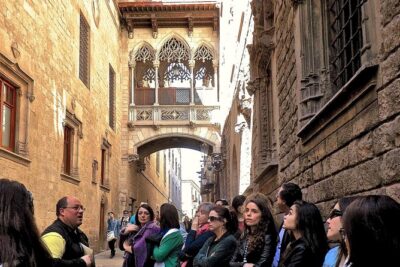
Barcelona Old Town & Gothic Quarter Small Group Tour
Read our review →
Barcelona Food Tour: Tapas, Paella, Sangria & 8+ Local Tastings
Read our review →Browse the lists this tour appears in