
Review · OLD TOWN
Cartagena: Historic Center and Getsemaní Shared Walking Tour
Cartagena’s past is not tucked away in a museum. It is under your feet, painted on the walls, sung in Getsemaní, and built into the stone defenses around the old city. This $12 walking tour connects conquest, slavery, independence, religion, music, and daily life in one useful introduction.
I like two things especially: the route gives you both the grand Walled City and the more relaxed streets of Getsemaní, and the guides often add practical advice about food, street prices, dancing, and places to visit later. The main drawback is the heat. You will walk for 150 minutes, sometimes in full sun, so water, sunscreen, and light clothing matter.
Key points to know before you go
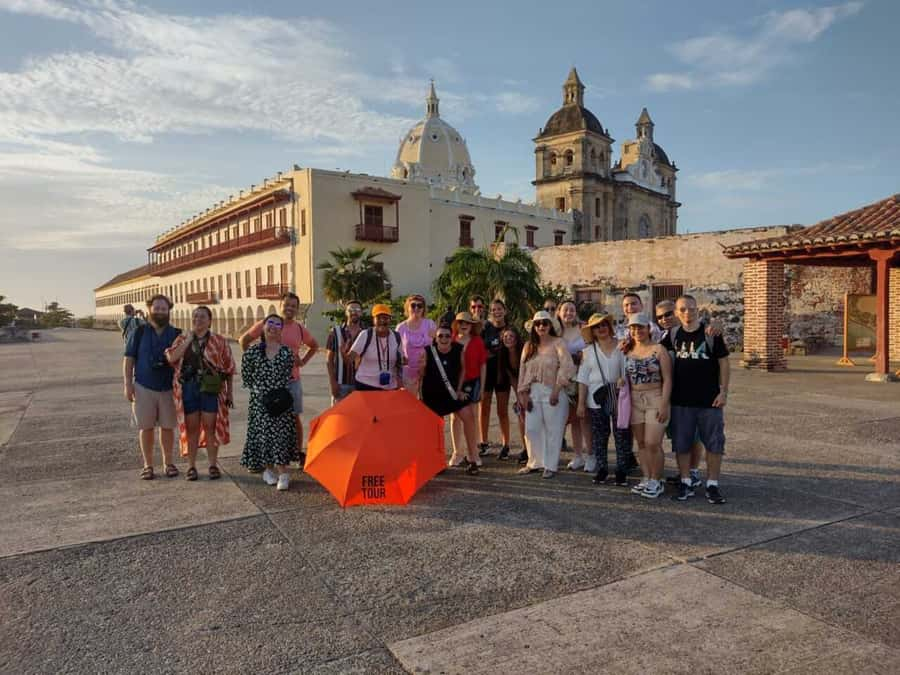
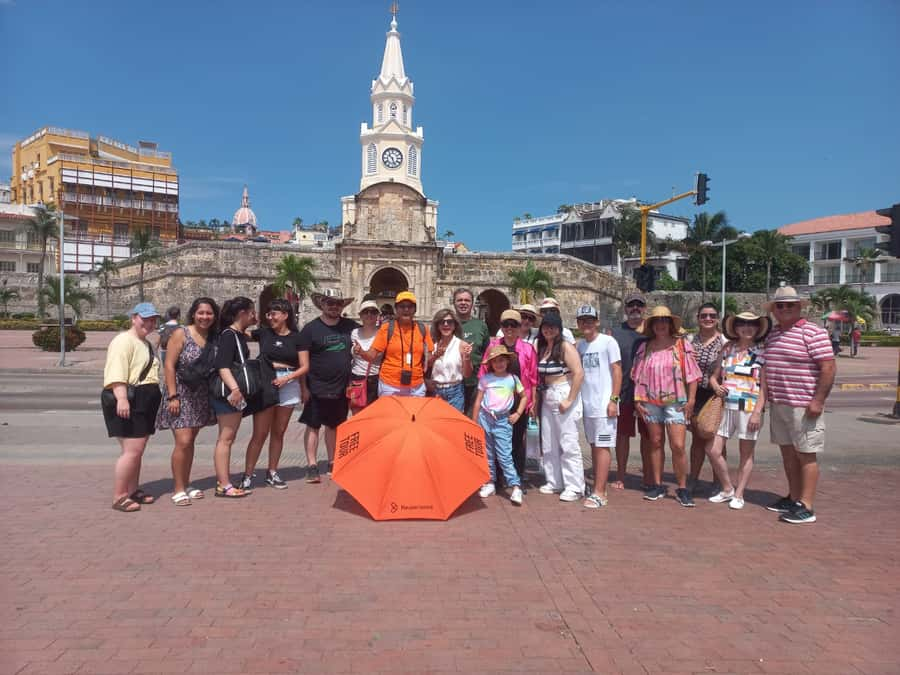
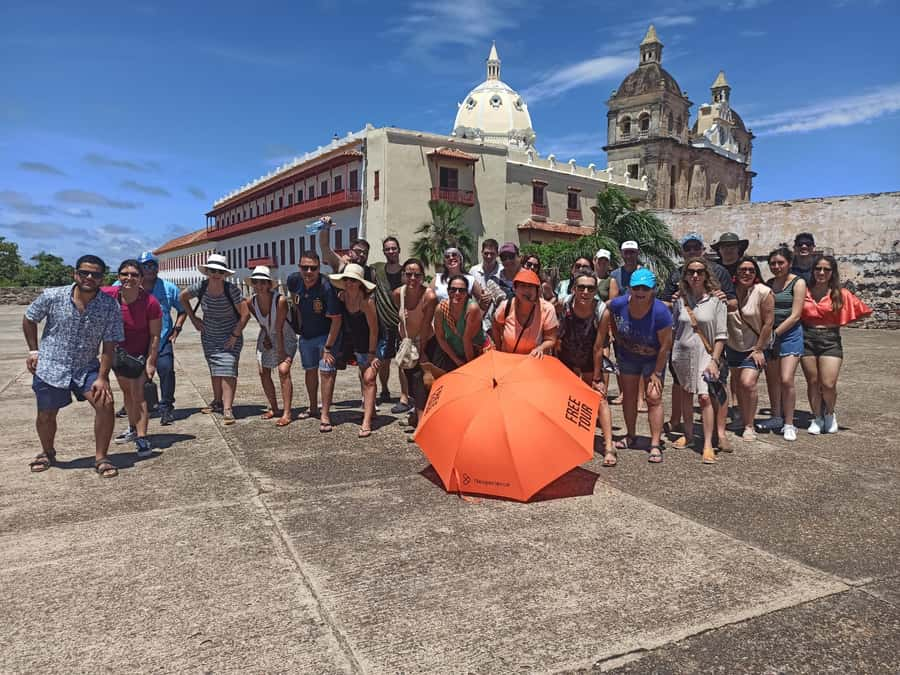
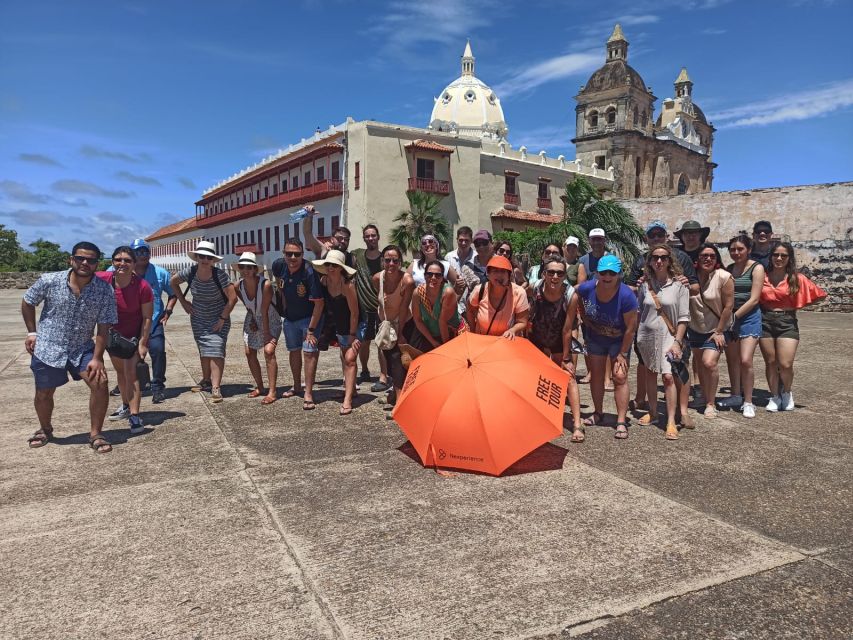
- The route begins at Plaza Cervantes, in front of the Clock Tower, where you look for the orange umbrella.
- History is told through real city spaces, from the slave route and old customs square to churches, bastions, and plazas.
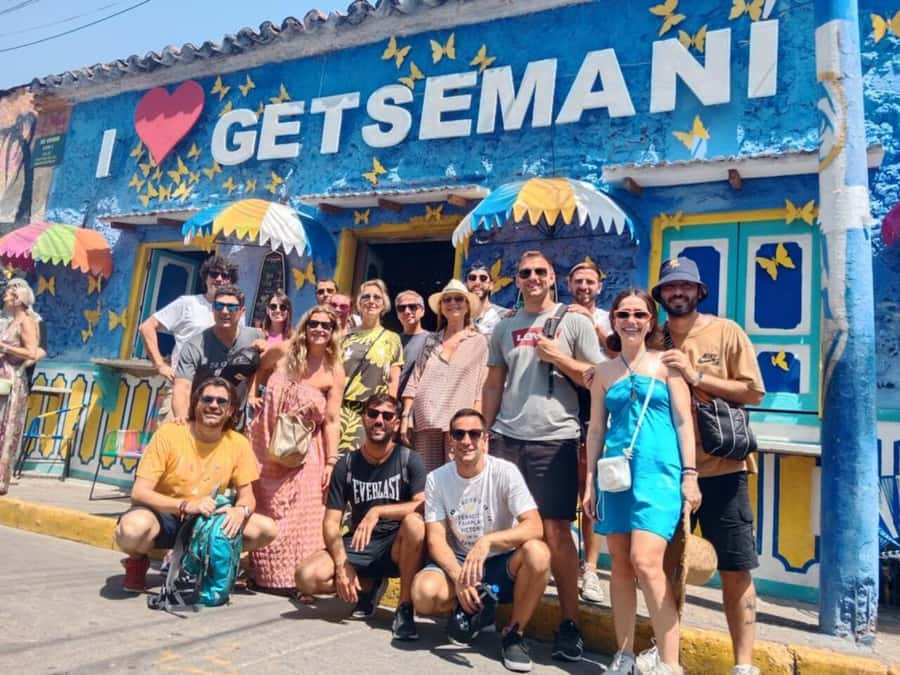
- Getsemaní adds modern Cartagena, with graffiti, umbrellas, local architecture, salsa, and champeta.
- Guides bring plenty of personality, with Dani, Legacy, Robert, Álvaro David, Ingrid, and others praised for clear storytelling and audience interaction.
- You may dance during the walk, and some guides use music and movement to explain Cartagena’s Caribbean culture.
- The tour works best early in your stay, since the advice on restaurants, street prices, and places to see can help shape the rest of your visit.
Starting beneath the Clock Tower
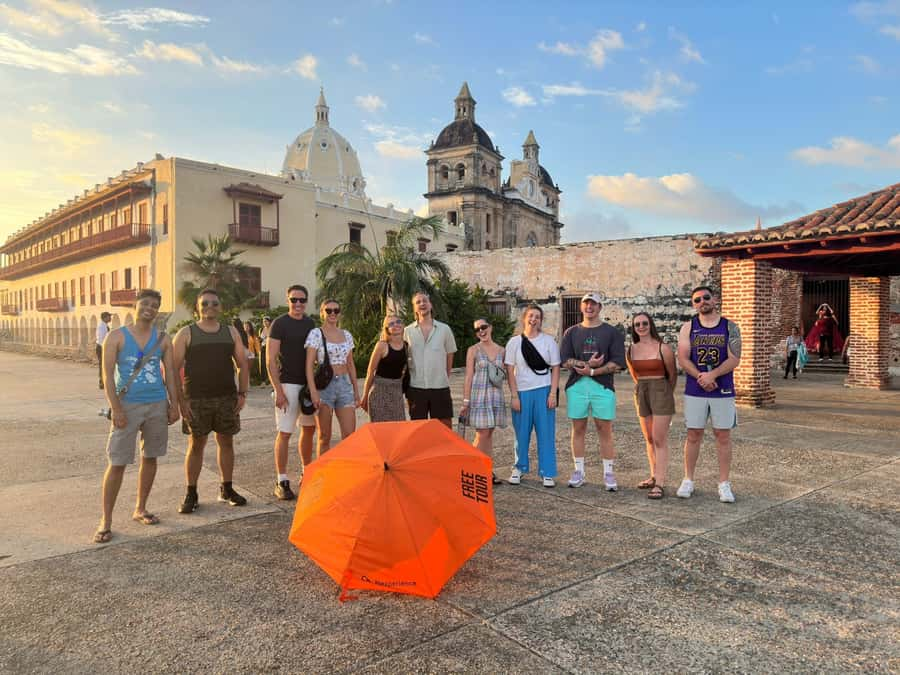
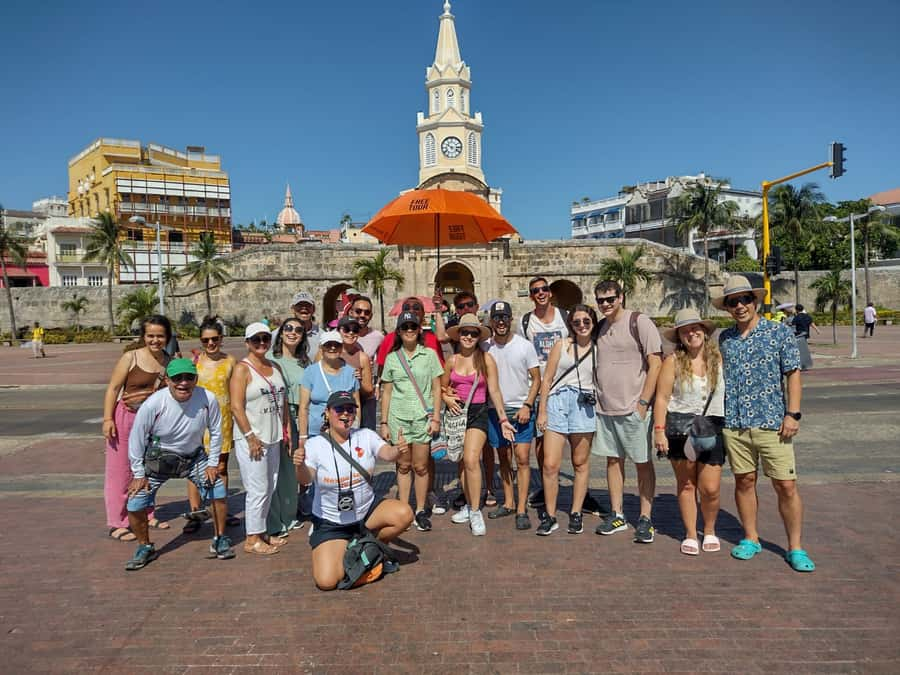
Meet at Plaza Cervantes, also called the Camellón de los Mártires, directly in front of Cartagena’s Clock Tower. The orange umbrella is the sign to look for.
This opening point places you at the edge of the Walled City and near the old entrance into Cartagena. The first story is not only about Spanish buildings. You begin with the Indigenous people who lived here before, and during, the arrival of the Spanish. That framing matters because it keeps the city’s story from becoming a parade of colonial monuments without the people who were already here.
The Clock Tower is known as Cartagena’s Golden Key. You then enter the Plaza del Ecuador, once called the Plaza del Esclavo, and follow part of the route tied to the enslavement of African people. Porto Carrero and Candilejo streets help make this history physical. You are not simply hearing dates. You are standing in the streets through which people and goods were moved.
Pedro de Heredia, the Spanish founder of Cartagena, enters the story here. The guide’s job is to explain how the city developed as a port, military stronghold, and center of commerce, while also making clear that this prosperity depended on conquest and slavery. The best guides keep both sides in view.
More Old Town Walking Tours in the world:
- Underground Vaults Walking Tour in Edinburgh Old Town
★ 4.5 · 8,506 reviews - Prague: 3-Hour Walking Tour of Old Town & Prague Castle
★ 4.7 · 5,696 reviews - Dubrovnik: Old Town Walking Tour
★ 4.8 · 5,174 reviews
The Portal de los Dulces and the old customs square
At the Portal de los Dulces, the tour shifts from broad history to a living tradition. The arcades are tied to women’s work during the slavery period, and descendants continue related food traditions today.
This is one of the more memorable stops because it connects the past with something you can still see and taste in the city. The sweets are part of Cartagena’s public life, not just a decorative stop for photographs. If you return later, this is a useful place to browse local treats, though food and drinks are not included in the tour.
The route continues to Plaza de la Aduana, the old customs square. This was a key point for the sale and movement of merchandise, including enslaved people. The Municipal Hall and surrounding buildings give the guide a chance to explain how colonial administration and trade worked.
I appreciate this section because it avoids treating Cartagena’s architecture as a pretty backdrop alone. The buildings are attractive, but they also reveal who controlled money, movement, law, and labor. You get a clearer sense of why this small area became so important.
Art, gold, emeralds, and San Pedro Claver
The walk passes the Museum of Modern Art, which presents Caribbean and Latin American art from the 1950s onward. You should not expect a full museum visit during the walk, but the stop adds a useful reminder that Cartagena is not only a colonial city. It also has a modern artistic voice.
The Gold Museum introduces Indigenous objects from the Colombian Caribbean. The Emerald Museum focuses on the stones Colombia is famous for, including their place in jewelry and popular culture. The tour does not include museum entry, so think of these as exterior orientation points unless you choose to return separately.
Religion takes a more serious turn at the Church and Museum-Monastery of San Pedro Claver. San Pedro Claver is remembered as the Slave of the Slaves because of his work with enslaved Africans arriving in Cartagena. The complex now also serves as a headquarters for human rights work.
This stop can carry emotional weight. It places faith, colonial power, enslavement, and human rights in the same frame. You will get more from it if you allow time for the difficult parts of Cartagena’s past instead of treating the walk as a quick photo circuit.
Bastions, pirates, and the walls of Cartagena
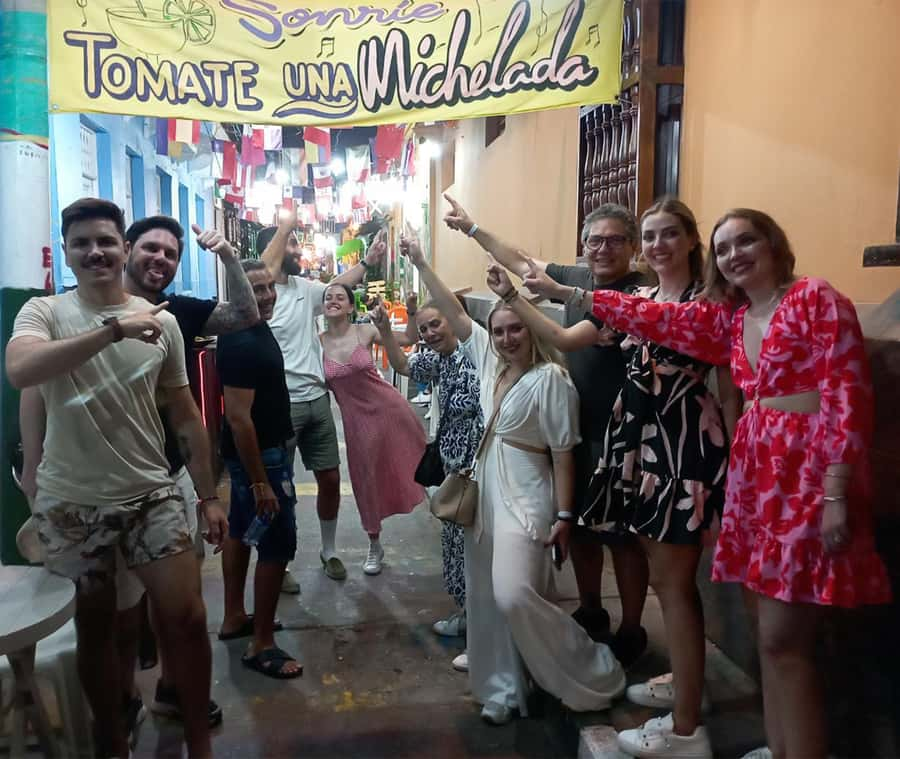
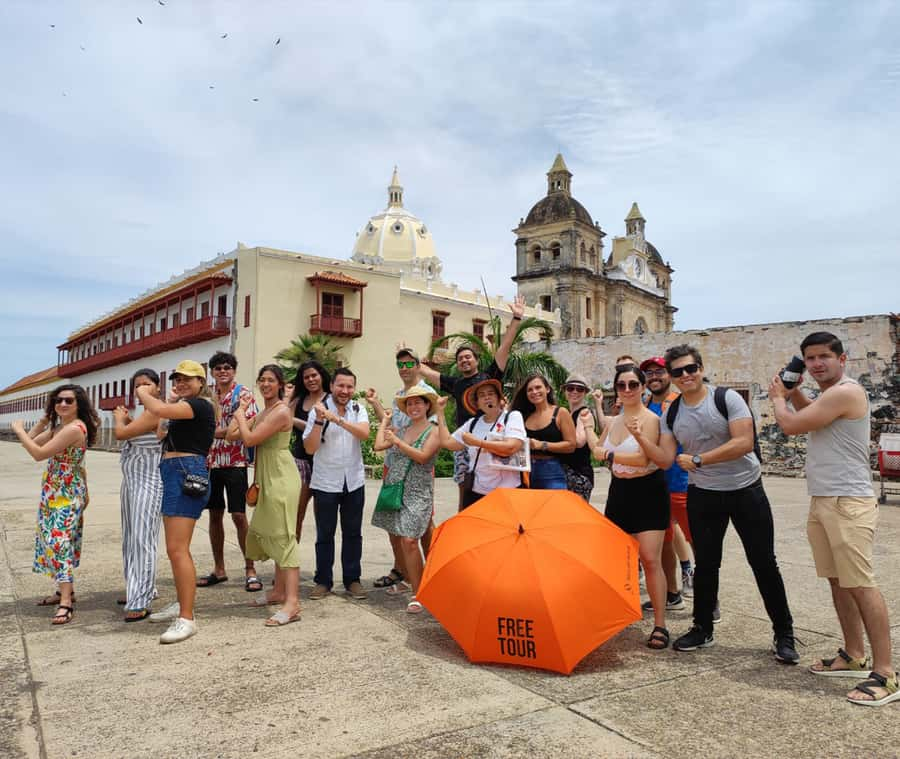
At the San Ignacio Bastion, the guide explains how Cartagena’s defenses protected the Bay of Souls from pirate attacks. This is where the city’s walls become more than a scenic walkway. They show the military planning behind Cartagena’s survival as a Spanish port.
Pirates and corsairs are part of the popular story, and guides usually make this section lively. You will hear about attacks, defensive strategy, and the Spanish methods used to protect the harbor. The bastion also helps you understand the scale of the old fortifications better than a distant view can.
The walking surface and warm weather are worth keeping in mind. Comfortable shoes are listed as essential, and that advice is sound. You are on foot for most of the experience, with no hotel pickup or drop-off and no vehicle between the stops.
The route then reaches Plaza Bolívar, named for Simón Bolívar, a major figure in South American independence. This is a natural pause point. You may have a chance to catch your breath and get out of the strongest sun before continuing.
More History Walking Tours in the world:
- History and Hauntings of Salem Guided Walking Tour
★ 5.0 · 14,564 reviews - Lisbon: History, Stories and Lifestyle Walking Tour
★ 4.8 · 10,902 reviews - Boston: Freedom Trail History Small Group Walking Tour
★ 5.0 · 6,450 reviews - Historic Charleston Guided Sightseeing Walking Tour
★ 5.0 · 6,216 reviews
Centennial Park and Cartagena’s unexpected wildlife
Centennial Park is described as one of Cartagena’s important green spaces and a remnant of tropical dry forest. It also occupies the site of a former railway station, adding another layer to the city’s changing transport and commercial story.
For many people, this is an enjoyable surprise. The park can contain sloths, squirrels, and iguanas, and several tour groups have also spotted monkeys and birds. These sightings are not guaranteed, so treat them as a possible bonus rather than the main reason to book.
The shade is valuable. Guides such as Robert have made a point of keeping groups in cooler areas when possible, and that can make a real difference in Cartagena’s heat. Still, shade is not assured at every stop. Bring water and wear sun protection from the start.
This pause also changes the pace. After churches, plazas, and military walls, the park gives you room to notice the city as a place where people, animals, trees, and old infrastructure share the same space.
Getsemaní: umbrellas, graffiti, and everyday culture
The final hour takes you into Getsemaní, one of the most characterful parts of the route. Here, the focus moves away from colonial administration and toward neighborhood identity, public art, music, and social change.
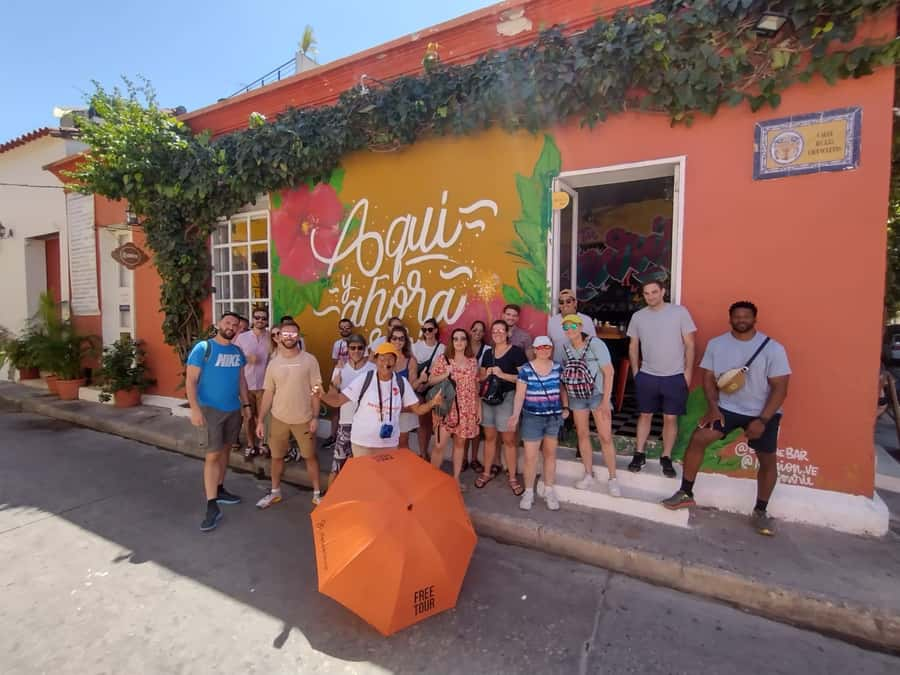
You will see a colorful corridor marked by umbrellas, graffiti, and distinctive buildings. The umbrellas are linked with advertising, but they have become part of the area’s visual identity. The painted walls and street scenes offer a different kind of history from the stone facades of the Walled City.
The guide also discusses the new social order in Cartagena and the city’s mixed cultural inheritance. African traditions, Caribbean life, Spanish influence, and present-day urban culture all appear in this section. The discussion of African braids, in particular, connects style with freedom, identity, and the history of Black communities in Colombia.
This is where the tour feels most current. The Walled City explains how Cartagena was built and controlled. Getsemaní helps you think about how people use and redefine the city now.
Salsa, champeta, and a lively finish
The walk ends around Callejón Ancho and Calle San Juan, with salsa and African champeta providing the soundtrack. Some guides teach simple dances or get the group moving several times during the route.
That participation is not for everyone. If you want a quiet architectural walk with no group interaction, the dancing may feel like a distraction. I see it as a fair trade for a tour that aims to explain culture through more than buildings and dates. Cartagena’s music is part of the city’s story, and a short dance lesson gives you a physical sense of that social energy.
Guides vary in style. Dani and Daniela are often described as warm, energetic, and proud of their city. Legacy is known for humor, movement, and a steady flow of historical facts. Robert tends to add practical recommendations and works hard to keep people comfortable. Álvaro David, Ingrid, Liz, Rebeca, and others have also led engaging walks in English or Spanish.
Your guide may not be one of these particular people, so treat the names as examples rather than a promise. The quality can also depend on pace and language. One English-speaking participant found that a guide sometimes spoke too quickly, a useful reminder to ask for a slower pace if you need it.
What $12 gets you
At $12 per person, this is a strong-value orientation walk. You get two connected neighborhoods, a professional guide, historical context, and local advice for less than the cost of many short museum visits.
The price is especially fair if you are new to Cartagena. In two and a half hours, you see enough landmarks to decide where you want to return, and you learn how the Walled City connects with Getsemaní. Advice about restaurants, drinks, street-vendor prices, and places to visit can also save you money later.
The tour is described as a shared free walking tour with the tip already paid. That wording is worth understanding before booking. You are joining a group walk, but the listed price already covers the usual tip expectation. Food, drinks, museum admissions, and transport are separate.
The tradeoff is depth. You will pass the Museum of Modern Art, Gold Museum, and Emerald Museum, but this is not a substitute for spending time inside each one. You will hear about Cartagena’s history in a lively overview rather than study every period in detail.
Heat, timing, and practical comfort
The full duration is 150 minutes, with roughly two hours in the Historic Center and one hour in Getsemaní. Starting times vary, so check the available schedule when you book.
A late-afternoon departure can help with the sun, but it does not remove the heat. One participant specifically advised bringing plenty of water and staying in shaded sections when possible. Wear comfortable shoes, sunscreen, and clothing suited to the weather.
Rain can affect the mood and comfort of the walk. The route continues in changing weather, and one person found rain made the experience less enjoyable even while praising the guide. A light weather check before leaving is sensible.
The tour is wheelchair accessible according to the activity details. Since it is a long walking route through historic streets, you should still confirm any personal mobility needs when booking.
English and Spanish tours are available. Cancellation is free up to 24 hours before the start time, and you can reserve now and pay later, which helps if your Cartagena schedule is still changing.
Who should book this walk?
I would choose this tour near the beginning of a Cartagena stay. It gives you a map in your head, explains the important plazas and churches, and points you toward places you may want to revisit on your own.
It suits you if you like history with a human angle, want an introduction to slavery and independence, and prefer to see a neighborhood beyond the postcard center. It also works well for families, since guides have been attentive to young children and kept the presentation active.
You may want something else if you dislike group walks, struggle with heat, or want long interior visits at museums and churches. The tour covers a lot of ground, and the information comes quickly. Ask questions, drink water, and speak up if you need the guide to slow down.
Should you book it?
Yes, if you want an affordable first look at Cartagena that joins the Walled City with Getsemaní. The strongest parts are the honest treatment of conquest and slavery, the clear explanation of the defensive walls, and the move from colonial monuments to music, art, and modern neighborhood life.
Book it early, wear light clothing, and bring water. Choose this walk for context and local color, not for a slow museum tour. At $12, it offers a useful amount of history, orientation, and practical advice in one afternoon.
FAQ
Where does the tour begin?
It begins at Plaza Cervantes, also called the Camellón de los Mártires, in front of Cartagena’s Clock Tower. Look for the orange umbrella.
How long does the walking tour last?
The total duration is 150 minutes. About two hours are spent in Cartagena’s Historic Center and about one hour in Getsemaní.
Which areas does the tour cover?
It covers the Walled City, including the Historic Center and San Diego area, followed by the Getsemaní neighborhood.
What languages are available?
The tour is offered in English and Spanish.
Is the tour wheelchair accessible?
Yes, the activity information describes it as wheelchair accessible.
Are food and drinks included?
No. Food and drinks are not included, and hotel pickup and drop-off are also not included.
What should I bring?
Bring comfortable shoes, sunscreen, comfortable clothing, and clothing suited to the weather. Plenty of water is also a sensible choice for the long walk in Cartagena’s heat.
Can I cancel or pay later?
You can cancel up to 24 hours in advance for a full refund. You can also reserve your place and pay later.
New routes in the world
- Baltimore Walking Foodie Tour in Fells Point★ 5.0 · 182 reviews
- Baku Oil Heritage & Old Town Walking Tour★ 5.0 · 232 reviews
- Baku Walking Tour (Old City)★ 5.0 · 127 reviews
- The Madam’s Curse Walking Ghost Tour★ 4.5 · 103 reviews
- Austin Small Group Morning Walk★ 5.0 · 412 reviews
- Austin Haunted Pub Crawl Walking Tour★ 4.5 · 232 reviews
- Austin Downtown Private Walking Food Tour With Secret Food Tours★ 5.0 · 71 reviews
- Austin Murder Walk★ 5.0 · 310 reviews
Old Town Walking Tours, compared.
Underground Vaults Walking Tour in Edinburgh Old Town
Read our review →
3-Hour Walking Tour of Old Town & Prague Castle
Read our review →
Old Town and Jewish Quarter Guided Walking Tour
Read our review →
Prague Ghost and Legend of Old Town Walking Tour
Read our review →
Browse the lists this tour appears in