
Review · HIDDEN GEMS
Seoul: Nighttime Hidden Gems Walking Tour
Seoul looks most revealing from a hillside, where palace-era walls, old homes, student streets, and towers of light share the same view. This two-hour evening walk takes you through Hyehwa, Ihwa-dong, Naksan Park, and the Hanyang City Wall, with local guides such as Leah, Jessica, Smin, Ethan, and Jun explaining how Korean society works beyond the usual sightseeing stops.
I like the tour’s mix of social context and strong night views, especially the discussion of Seoul National University and Korean student life. I also like the easygoing pace, with stops for questions, photos, and breathers. The catch is clear: this is an uphill walk with stairs, so high heels, mobility problems, and poor walking fitness will make it a bad fit.
Key points at a glance
- Hyehwa begins the story: Meet outside Exit 2 of Hyehwa Station, in an area shaped by students, theater, and local life.
- Seoul National University adds social context: Learn about education pressure, student culture, housing, and work life in Korea.
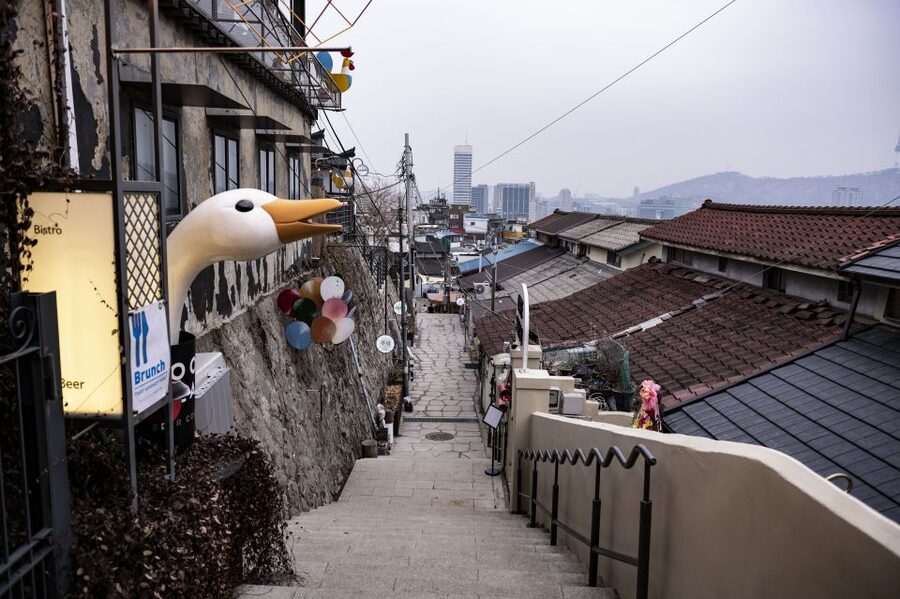
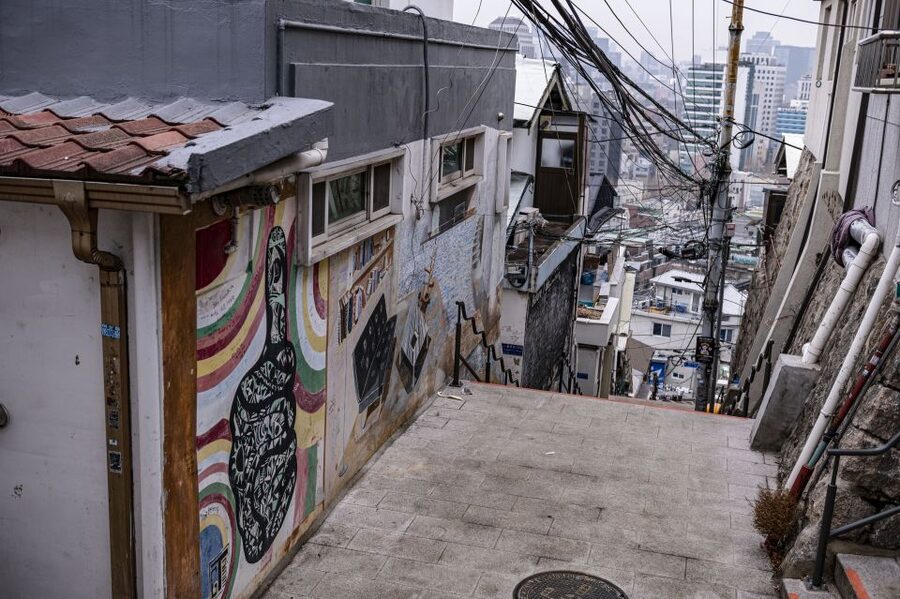
- Ihwa mural village changes after dark: Old hillside lanes and art-covered walls make good photo stops, though the climb is real.
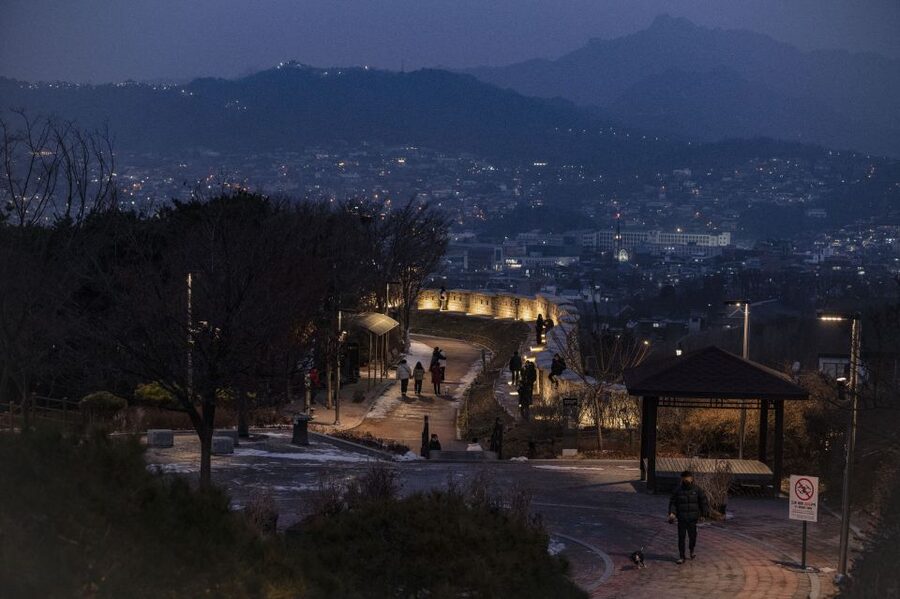
- Naksan Park gives you the city lights: The higher you walk, the more of Seoul opens below you.
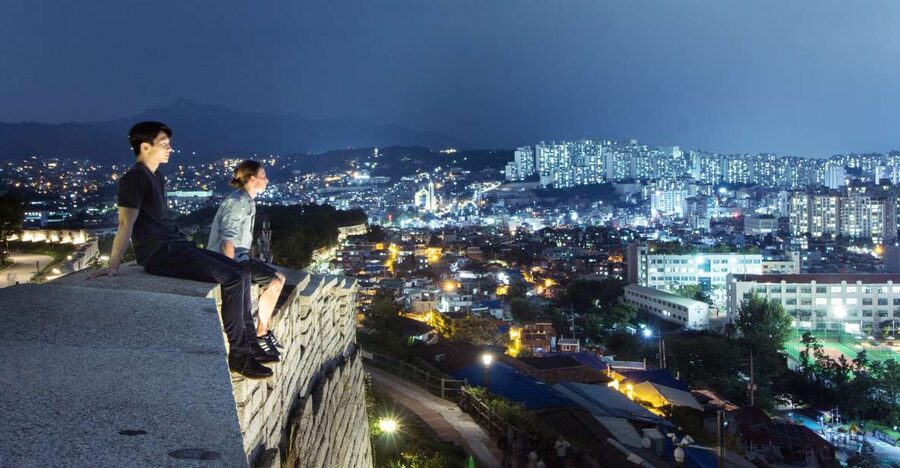
- The Hanyang City Wall links past and present: Walk beside a major historic monument and a modern nighttime skyline.
- The guide is central to the experience: English-speaking guides use stories, humor, cultural comparisons, and practical help to make the walk feel personal.
Why this short Seoul walk feels different
Many Seoul tours focus on royal palaces, shopping streets, or polished modern districts. This one takes a less tidy route through a hillside neighborhood where students, long-time residents, artists, and night-time sightseers overlap.
That matters because Seoul can be hard to understand from its grand sights alone. The city’s education system, work culture, housing pressures, and rapid change are part of daily life, but they are not always obvious when you are looking at a palace gate or a department store. Here, the guide uses the streets as a classroom.
You will hear about Korean society while moving through real neighborhoods. The discussion can include student life at Seoul National University, the story of old hillside communities, the changing character of Hyehwa, and the way Seoul developed around its walls and hills.
I like that the tour does not treat history as a list of dates. The best parts connect the old city to present-day concerns. You may discuss Joseon-era Seoul in one moment, then hear about housing or student pressure in the next.
More Hidden Gems Walking Tours in the world:
- Dublin Highlights and Hidden Gems Guided Walking Tour
★ 5.0 · 6,020 reviews - Explore Berlin: See All The Iconic Sights & Some Hidden Gems
★ 5.0 · 4,429 reviews - Kyoto Geisha Walking Tour: Gion District & Hidden Gems
★ 4.7 · 3,273 reviews
Hyehwa Station and the student side of Seoul
The meeting point is outside Exit 2 of Hyehwa Station. Your guide waits there before leading the group into the neighborhood.
Hyehwa is a useful starting point because it has a strong student and cultural identity. The nearby Marronnier Park is part of the route, and the area gives the tour an urban feel before the climb begins. Rather than starting at a famous gate with a prepared postcard view, you begin among streets that help explain everyday Seoul.
The stop at Seoul National University focuses on university culture in Korea. The point is not simply to admire a campus. You are looking at the pressure and expectations connected with education, as well as the role elite universities play in Korean society.
Several guides have been praised for making these subjects clear and approachable. Leah is described as funny, patient, and open to questions. Jessica has been particularly good at mixing useful facts with light humor, while Smin has offered detailed explanations of Korean society and local history.
The guide can make a big difference here. If you are curious about school, work, family expectations, or daily life in Korea, ask questions early. This is not a silent photo walk. The cultural conversation is one of the main reasons to book it.
Marronnier Park and the climb into Ihwa-dong
Marronnier Park helps bridge Hyehwa’s student district and the older hillside neighborhoods ahead. From here, the route begins to rise toward Ihwa mural village.
The walking is described as manageable but includes slopes and stairs. It is not a hard hike for a reasonably active person, yet you should not mistake a two-hour city walk for a flat stroll. The pace includes breaks at stops, and guides generally allow time to catch your breath and take photos.
That slower rhythm works well. You can listen without trying to climb and speak at the same time. It also gives you time to notice details in the narrow streets, although you should stay aware of residents and avoid treating the neighborhood as a film set.
Ihwa-dong is an old village on a hill, known for painted walls and photo spots. Some of the art can feel playful, while the older homes and steep lanes give the area a more grounded character. The value here is the contrast: you are seeing a part of Seoul that does not look like the broad avenues and high-rise districts seen in many city photographs.
Do not expect every wall to be dramatic or every corner to feel untouched. Mural areas change, and the village is also a residential place. The guide helps by explaining the area rather than simply pointing at painted surfaces.
One useful detail from the walk is the story of the moon village. The phrase refers to poor hillside communities that were built high above the central parts of the city. The subject can lead into housing, class, redevelopment, and the way Seoul’s older neighborhoods changed over time.
This is one of the tour’s strongest transitions. You begin with the city’s competitive education culture, then move into the physical reality of hillside housing and older communities. The two subjects are not presented as separate museum topics. They are part of the same modern city.
Naksan Park and the art of the dragon
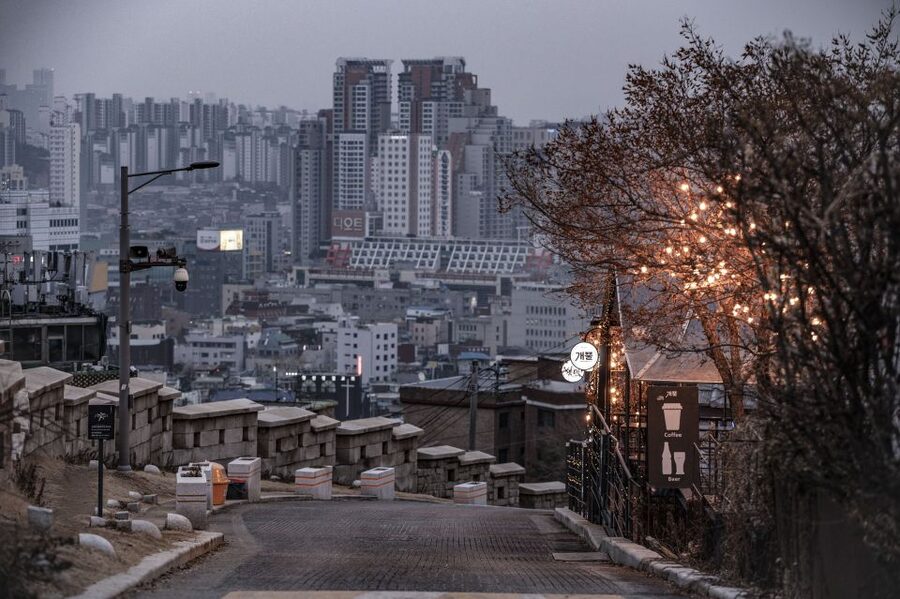
Naksan Park brings you farther up the hill and gives the route its strongest views. The tour includes the art of the Naksan dragon, along with an explanation of how the capital was located and shaped.
The dragon is more than a quick photo stop. It helps introduce the symbolic geography of Seoul, including the relationship between hills, walls, and the old capital. You get a chance to see how a city can be read from its terrain.
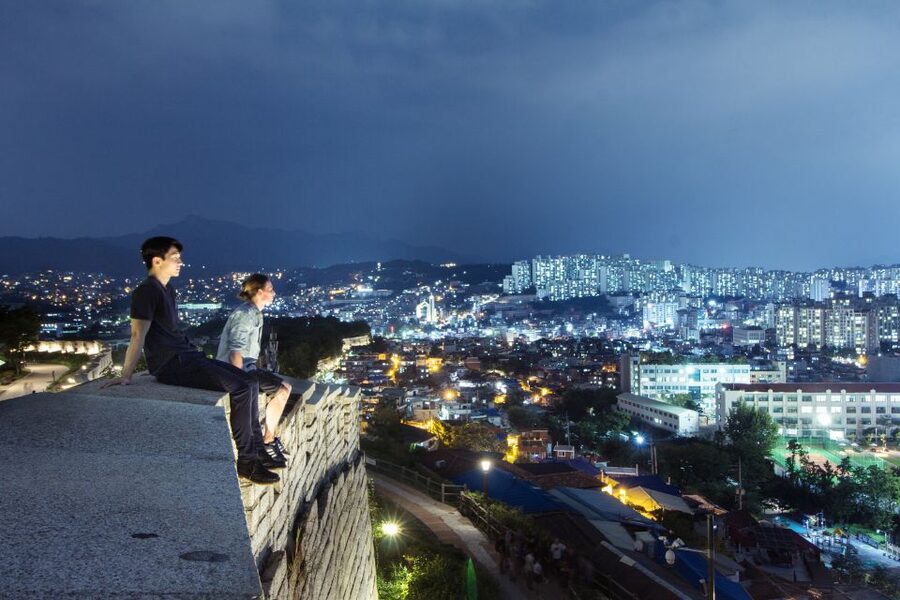
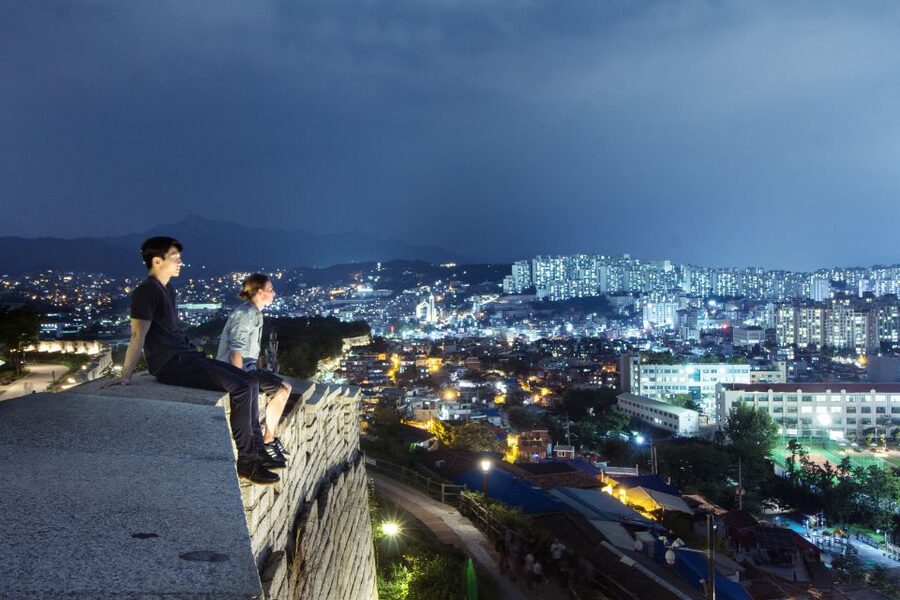
At night, Naksan Park works especially well. As the light fades, the city below becomes a broad field of lamps and building lights. The timing matters, and a start around 5:30 pm has been useful for catching the change from daylight to twilight and then full night.
You cannot count on a perfect sunset. Clouds, rain, and haze are beyond the guide’s control. Still, the view does not depend entirely on sunset color. The gradual appearance of Seoul’s lights is part of the experience, and the city often looks more impressive as darkness settles.
Bring a phone or camera, but do not spend the whole stop looking down at it. Guides offer suggestions for photos and allow time to frame the view. In wet weather, the stone and stairs may need extra care. One guide, Jessica, has been especially attentive about keeping a group comfortable in rain and helping people find better photo angles.
More Walking Tours in the world:
- Magical London: Harry Potter Guided Walking Tour
★ 4.7 · 22,044 reviews - Reykjavik Food Walk – Local Foodie Adventure in Iceland
★ 5.0 · 18,952 reviews - History and Hauntings of Salem Guided Walking Tour
★ 5.0 · 14,564 reviews - New Orleans Premier Ghost, Voodoo and Vampire Walking Tour
★ 4.5 · 12,856 reviews
Walking the Hanyang City Wall after dark
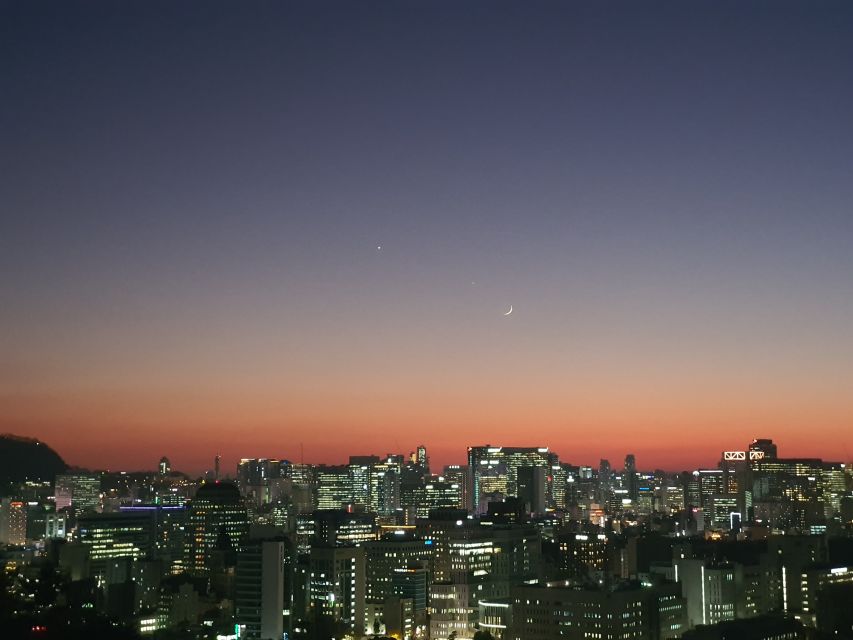
The Hanyang City Wall is the historical backbone of the route. It once marked the edge of the Joseon capital, and today parts of it run along hills above a much larger modern city.
Walking beside the wall at night gives you two views at once. Close by, you have stonework, dark paths, and the shape of the old defensive boundary. Beyond it, Seoul spreads out in lights. The contrast is the reason this route feels more thoughtful than a standard lookout stop.
The wall is also known as a K-Pop Demon Hunters location, which may appeal to fans of the series. That reference is a small part of the walk, not its entire purpose. The larger story is how Seoul keeps old structures in active contact with a fast-changing capital.
The climb rewards patience. The higher you go, the more lights appear through the night. You may pause several times, both for the view and for the guide’s explanation. The walk is described as leisurely, but some sections are steep and include steps, so careful footing matters.
A personal receiver and microphone may be used, depending on the guide and group. This is a useful touch in a hillside setting. You can hear the explanation without crowding around one person, and it helps when the group includes about a dozen or more people.
What the guide adds to the route
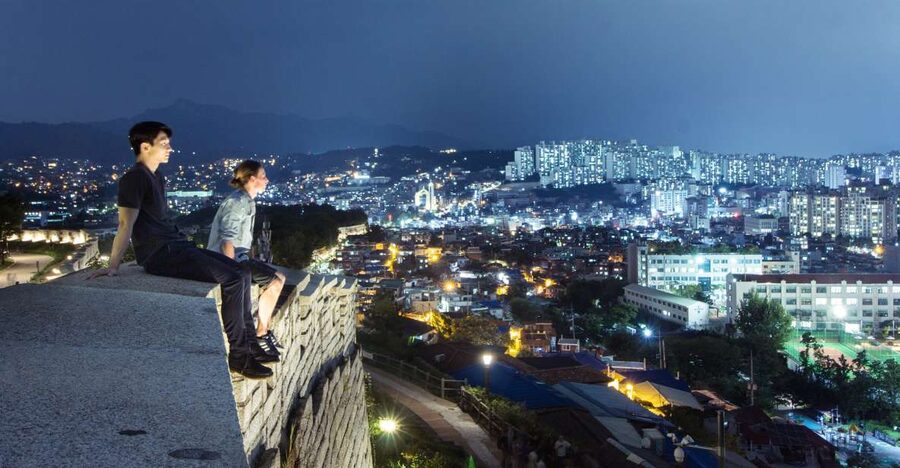
The places are worth seeing, but the guide is what turns them into a connected story. The team includes English-speaking local guides, with Leah, Jessica, Smin, Ethan, Jun, June, Lisa, Min, and others appearing among recent guide assignments.
The most useful guide style here is conversational rather than lecture-heavy. You can ask about Korea, compare the country with your own, or ask for food and neighborhood suggestions at the end. Ethan, for example, has helped people with practical matters after the walk and offered restaurant advice. That sort of help can be valuable during a first Seoul visit.
The guides also bring different strengths. Leah has been praised for humor and patience. Jessica often combines history with entertaining stories. Smin has focused strongly on Korean society and has used a microphone with individual receivers. Jun has been appreciated for clear English, humor, and willingness to answer questions.
You should still keep your expectations sensible. Guide quality can vary by person, and the tour covers several subjects in only two hours. You will not receive a full academic treatment of Korean history. You will get a useful framework, local stories, and a better sense of how the neighborhoods fit together.
That is enough to change the way you look at the rest of Seoul. After this walk, a hillside village may prompt questions about housing. A university district may bring education pressure to mind. A restored wall may make you think about the old capital’s shape rather than just its photo value.
Walking difficulty, clothing, and timing
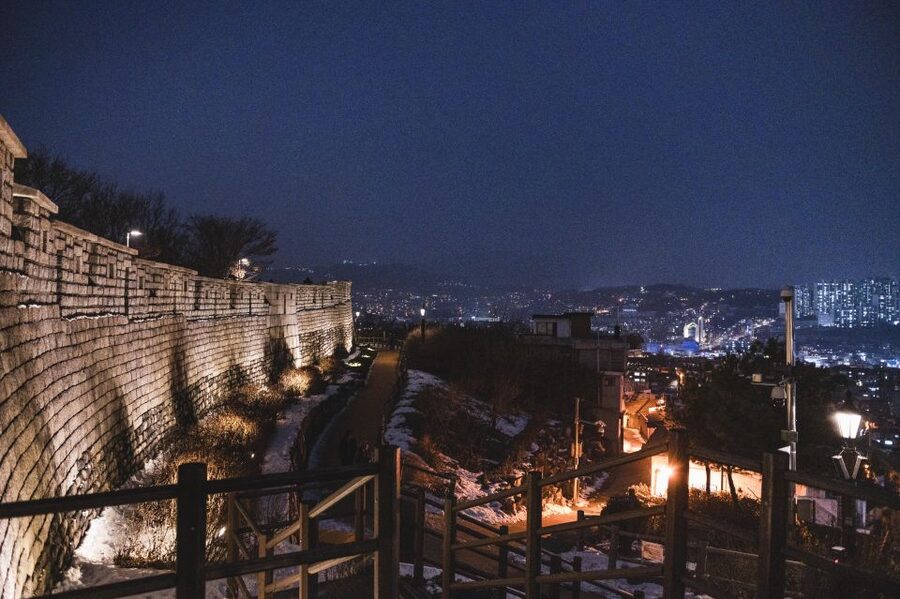
The main practical issue is the hill. You will walk uphill, use stairs, and move along paths where careful footing is sensible. The tour is described as easy with breaks, but it is not suitable for people with mobility impairments or for those who cannot manage a hill walk.
People over 70 are specifically advised against joining, and high-heeled shoes are not allowed. Wear comfortable shoes with a secure sole. In winter, hot packs are provided, which is a thoughtful addition for an evening route exposed to the cold.
A start near sunset is ideal because it lets you see the area in changing light. Check the exact departure time when booking, since starting times can vary. If rain is forecast, carry suitable protection and expect slick surfaces.
The tour ends after roughly two hours. The exact ending point is not specified, so do not plan a tight connection immediately afterward. You may also want to keep the evening flexible if you hope to accept restaurant or bar suggestions from the guide.
Is $33 a fair price?
At $33 per person, this is good value if you want a guide who explains Seoul rather than simply leading you to a viewpoint. You are paying for two hours of guiding, local context, a planned route, and the chance to visit several areas that can be confusing to connect on your own.
The price is less attractive if you only want photographs. You could visit some of the sights independently, though you would lose the social and historical explanations that give the route its purpose.
The tour also offers free cancellation up to 24 hours before departure and a reserve-now, pay-later option. Those policies make it easier to fit into a changing Seoul schedule, especially when weather may affect a night walk.
Who should book this walk?
I would choose this tour for a first visit to Seoul if you want an introduction to local society alongside sightseeing. It suits people who ask why Korean universities carry such weight, how old hillside communities developed, or how a historic wall fits beside a modern city.
It is also a good match for solo visitors and couples who want a structured evening without committing to a full-day excursion. The group size can allow questions, and the guides are used to helping with photos and practical suggestions.
You should skip it if you dislike uphill walking, need step-free access, or want a quiet, self-directed stroll. It is also not ideal for young children who tire quickly, since the route includes slopes and stairs. The tour is in English, so you should be comfortable following a live spoken explanation.
Should you book the Seoul nighttime walk?
Book it if you want Seoul explained through its neighborhoods, not just photographed from them. The combination of student culture, Ihwa-dong, Naksan Park, the dragon artwork, and the Hanyang City Wall gives you a compact look at education, housing, history, and city life.
My main advice is to wear proper walking shoes and arrive ready for a climb. If you can handle that, $33 buys a useful two-hour introduction with excellent night views and a guide who can answer the questions that standard sightseeing rarely covers.
FAQ
Where does the tour meet?
The meeting point is outside Exit 2 of Hyehwa Station. An English-speaking guide waits outside the exit.
How long does the tour last?
The walking tour lasts two hours.
What language is the tour in?
The live tour guide speaks English.
Which places are included?
The route includes Seoul National University, Marronnier Park, Ihwa mural village, Naksan Park, and the Hanyang City Wall.
Is the walk suitable for people with mobility problems?
No. The route goes uphill and includes stairs, so it is not suitable for people with mobility impairments. People over 70 are also advised not to join.
What should I wear?
Wear comfortable walking shoes. High-heeled shoes are not allowed, and careful footing is needed on slopes and stairs.
Can I cancel the booking?
Yes. You can cancel up to 24 hours in advance for a full refund. A reserve-now, pay-later option is also available.
New routes in the world
- Baltimore Walking Foodie Tour in Fells Point★ 5.0 · 182 reviews
- Baku Oil Heritage & Old Town Walking Tour★ 5.0 · 232 reviews
- Baku Walking Tour (Old City)★ 5.0 · 127 reviews
- The Madam’s Curse Walking Ghost Tour★ 4.5 · 103 reviews
- Austin Small Group Morning Walk★ 5.0 · 412 reviews
- Austin Haunted Pub Crawl Walking Tour★ 4.5 · 232 reviews
- Austin Downtown Private Walking Food Tour With Secret Food Tours★ 5.0 · 71 reviews
- Austin Murder Walk★ 5.0 · 310 reviews
Hidden Gems Walking Tours, compared.
Dublin Highlights and Hidden Gems Guided Walking Tour
Read our review →
Explore Berlin: See All The Iconic Sights & Some Hidden Gems
Read our review →
Kyoto Geisha Walking Tour: Gion District & Hidden Gems
Read our review →
Ben Youssef, Secret Garden, & Souks Walking Tour
Read our review →
Montmartre Hidden Gems and Scenic Highlights Walking Tour
Read our review →
Guided Walking Tour of City Highlights & Hidden Gems
Read our review →
Paranormal Night Walking Tour & Secret Backstreets
Read our review →
Secrets of Grand Central Station Walking Tour New York City
Read our review →Browse the lists this tour appears in