
Review · AUSTRIA
Salzburg 2.5-Hour Walking Tour: Mozart, Old Town & More
Salzburg’s best introduction may be a walk that links Mirabell Palace, Mozart, Getreidegasse, and the Old Town in one tidy route. You begin with baroque palace gardens, cross the river, then move into a compact center filled with churches, medieval buildings, iron shop signs, and musical history. I like the way the tour gives you a map of Salzburg before you spend time choosing museums and viewpoints.
I especially like the short, useful length and the human touch of guides such as Junko and June, who are known for storytelling and sometimes singing in a church. The main consideration is pace: 150 minutes covers a lot, but the opening at Mirabell can feel slow if you want to reach the Old Town immediately.
Key points at a glance
- Mirabell Palace begins the story: See the baroque palace and learn about Prince Archbishop Wolf Dietrich von Reitenau, Salome Alt, and their 15 children.
- Mozart appears on both sides of the river: Visit the Mozart Residence near Makartplatz, then reach Mozart’s Birthplace on Getreidegasse.
- The route crosses the Makartsteg: This is a practical transition from Salzburg’s New Town to the Old Town.
- Churches add atmosphere: The route may include one or two churches, with some guides offering a song inside a church.
- Mönchsberg is optional: Finish with a panoramic view if you choose to pay the separate €4 elevator fee.
- It works best early in your stay: You get orientation, photo ideas, and suggestions for what to do next.
Starting at Mirabell Palace and the baroque side of Salzburg
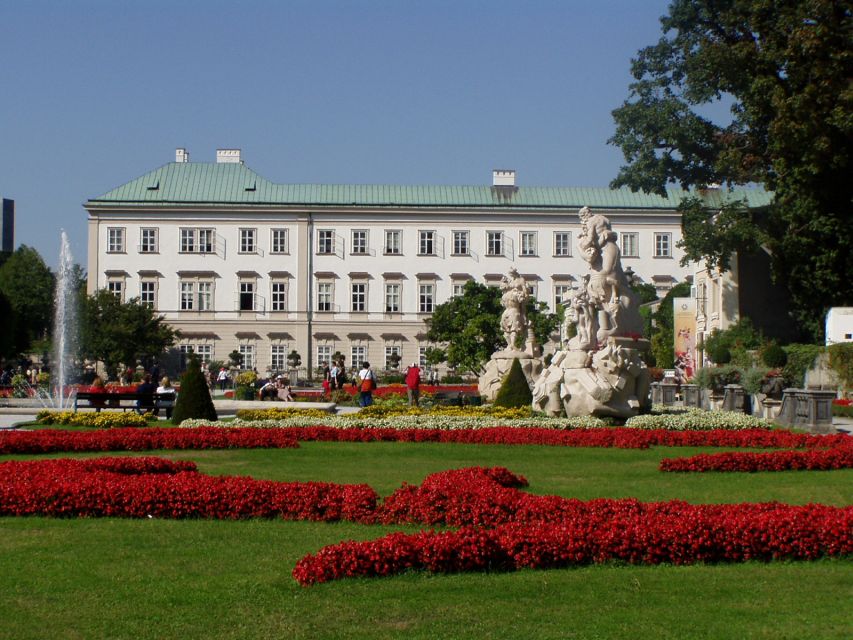
The meeting point is in front of the main entrance to Schloss Mirabell at Mirabellplatz 4. Pay attention to the instruction to meet on the street side. That small detail matters in a busy square, especially if you arrive by taxi or are trying to find the group quickly.
Mirabell Palace gives the tour a strong opening. Prince Archbishop Wolf Dietrich von Reitenau built it for Salome Alt, his mistress, and their 15 children. That family story is more memorable than a list of dates, and it helps explain Salzburg’s unusual mix of church power, private wealth, and grand baroque design.
You start on the New Town side of the river, which is useful because many people hurry straight to the Old Town and miss this part of Salzburg. The palace, its setting, and nearby Makartplatz show how the city extends beyond the famous lanes around the cathedral.
The first stop can feel slower than the rest of the walk. One person found the tour almost boring at the beginning, then much more interesting once the group moved away from Mirabell. I would not treat that as a major flaw, but it is worth knowing if you prefer action from the first minute.
More Old Town Walking Tours in Austria:
- Vienna Historic Center Small Group Walking Tour
★ 5.0 · 1,746 reviews - Salzburg: Old Town, Mozart, & Mirabell Gardens Walking Tour
★ 4.8 · 461 reviews - Underground Vaults Walking Tour in Edinburgh Old Town
★ 4.5 · 8,506 reviews
Mozart Residence and the Makartplatz connection
At Makartplatz, you see the Mozart Residence beside Mirabell Palace. This is not Mozart’s birthplace, which comes later on Getreidegasse. The distinction is easy to lose in a city where Mozart’s name appears on signs, museums, concert programs, and souvenirs.
The guide helps connect Mozart to the city rather than treating him as a single museum stop. You get a sense of Salzburg as a place shaped by music, church institutions, and powerful archbishops. If you are interested in Mozart, this route gives you useful context before you decide if you want to pay for either Mozart site.
The exact balance can depend on the guide and the group. Some guides spend more time on history, while others adjust the route to suit questions and interests. Junko, June, and several other guides are repeatedly praised for clear explanations, friendly conversation, and strong personal enthusiasm for Salzburg.
A distinctive feature of some departures is music inside a church. Junko and June are both noted for singing, including Ave Maria, and several people describe this as one of the most memorable moments of the walk. It is not listed as a formal performance, so you should not book the tour expecting a concert. Think of it as an occasional, personal addition that depends on the guide and the setting.
Crossing the Makartsteg into Salzburg’s Old Town
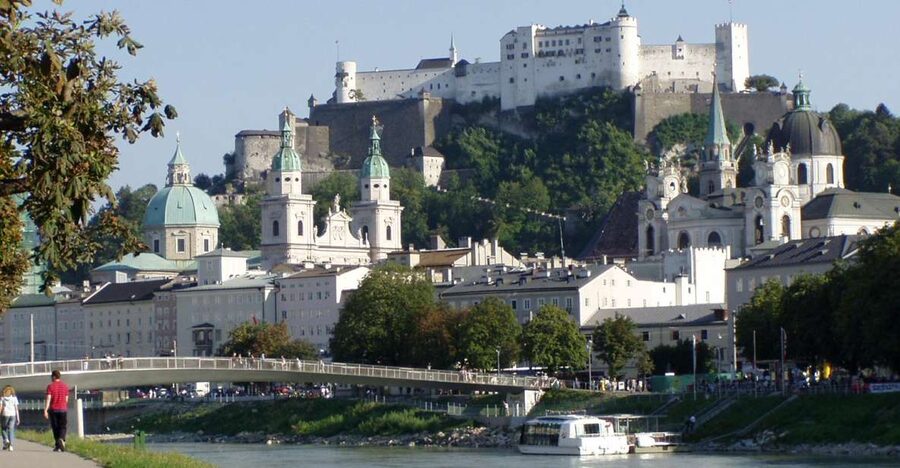
The group crosses the Makartsteg bridge to reach the Old Town. This is a simple but important change of scene. From the bridge, you move from the newer side of the river into the historic core, where the streets become tighter and the buildings carry centuries of accumulated detail.
The bridge also helps you understand Salzburg geographically. Rather than being shuffled between distant sights by vehicle, you walk through the city and see how the river divides, then connects, its main districts.
Comfortable shoes are essential. The tour lasts 150 minutes, and the route includes ordinary city walking, standing while the guide talks, and time spent looking up at buildings and church interiors. Large bags and luggage are not allowed, so arrive with only what you need. Assistance dogs are allowed, but other pets are not.
The tour is offered in English or German. If you are booking for a mixed-language group, check the departure details carefully so you choose the language that suits you best.
Getreidegasse, iron signs, and Mozart’s Birthplace
Getreidegasse is one of Salzburg’s most recognizable streets. Its wrought-iron trade signs hang above shops and entrances, creating a visual style that makes even an ordinary storefront worth a glance. The signs once helped people identify businesses in a time when many could not read. They now give the lane much of its character.
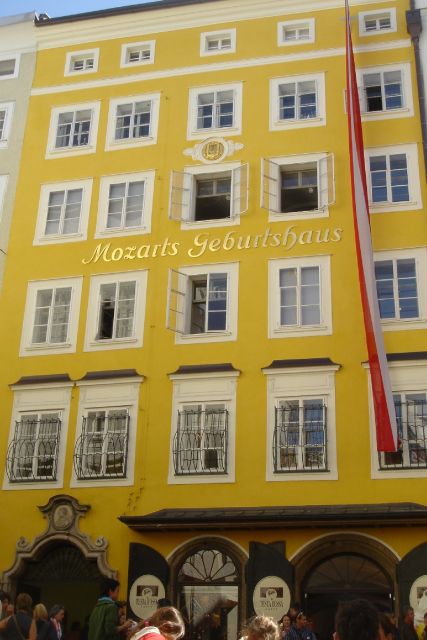
The street is also home to Mozart’s Birthplace. Even if you do not enter the museum, seeing the building in its busy urban setting adds something to the story. Mozart is not presented as an isolated genius in a distant monument. His birthplace sits in the middle of a working historic street, surrounded by shops, courtyards, and daily city life.
This is one place where the tour saves you time. You do not need to work out where Getreidegasse begins or which Mozart building you are looking at. The guide can point out the major sites while explaining how the street fits into the city’s development.
The drawback is that Getreidegasse can be crowded and visually busy. You may need patience for photographs, and the group can pause in a narrow area while other people pass. The guide’s explanations are most useful here because they give you something to notice beyond shop windows.
More Walking Tours in Austria:
- Vienna: Guided Walking Tour of City Center Highlights
★ 4.7 · 4,989 reviews - Vienna: Vienna Central Cemetery Guided Walking Tour
★ 4.8 · 3,307 reviews - Vienna: Guided Walking Tour of City Highlights & Hidden Gems
★ 4.9 · 2,180 reviews - Vienna: Viennese Underworld Guided Walking Tour
★ 4.7 · 1,865 reviews
Churches, squares, and the layers of Salzburg
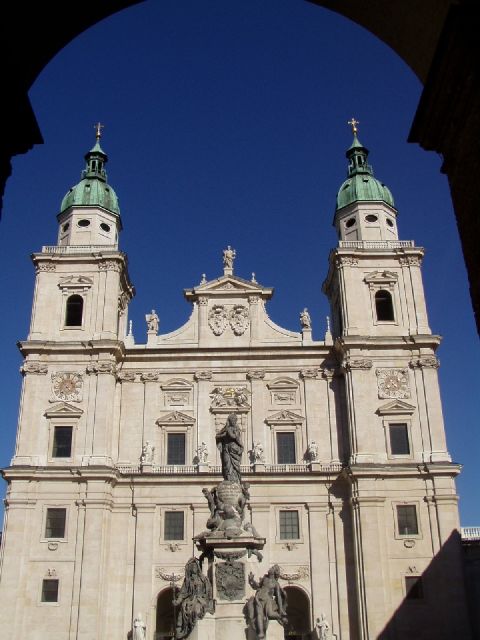
After Getreidegasse, the route continues through historic squares, churches, and old buildings. The tour may visit one or two churches, depending on the route and conditions. These interiors help explain why Salzburg can feel both like a music city and a church city.
You will see buildings dating from the Middle Ages through the baroque period. The value is not simply architectural. The buildings show how Salzburg changed over time, from a medieval settlement to a wealthy ecclesiastical center with grand churches and formal public spaces.
The guide’s role matters most here. A church facade can be impressive, but a short explanation about who funded it, how the archbishops shaped the city, or why a square looks the way it does gives the building a place in the larger story.
Several guides receive praise for bringing history to life through stories rather than a dry sequence of facts. Junko is often singled out for her passion, patience, and ability to answer questions. Other named guides include Christine, Julia, Melody, Annabell, and Aisleen. The experience may vary by departure, but the strongest pattern is a personal style rather than a scripted march from one photo stop to another.
One useful feature is the guide’s willingness to suggest what you can do after the walk. People have received advice on restaurants, photo locations, and further sights. That makes the tour more useful than a closed-off sightseeing loop, especially if you take it on your first day.
The optional Mönchsberg finish
The tour can end with a panoramic view from Mönchsberg Hill. The guide offers an additional 30 minutes for free, and the elevator to Mönchsberg costs €4 per person if you choose to use it. That fee is not included in the $53 tour price.
This final option changes the value calculation. If you want a broad look over Salzburg after walking through its streets, the extra view can make a satisfying finish. If you have already arranged another hilltop visit or are tired after two and a half hours, you can skip it without losing the central Old Town portion.
The elevator fee is modest, but you should carry a little extra money for it. The information provided does not specify how long the panoramic stop lasts or exactly which viewpoint you will use, so treat it as an optional add-on rather than the core promise of the tour.
I like that the extra time is free, but I would ask the guide at the start how the final 30 minutes will work. That lets you decide if you want to continue, especially in poor weather or if someone in your group needs a break.
Is $53 a fair price?
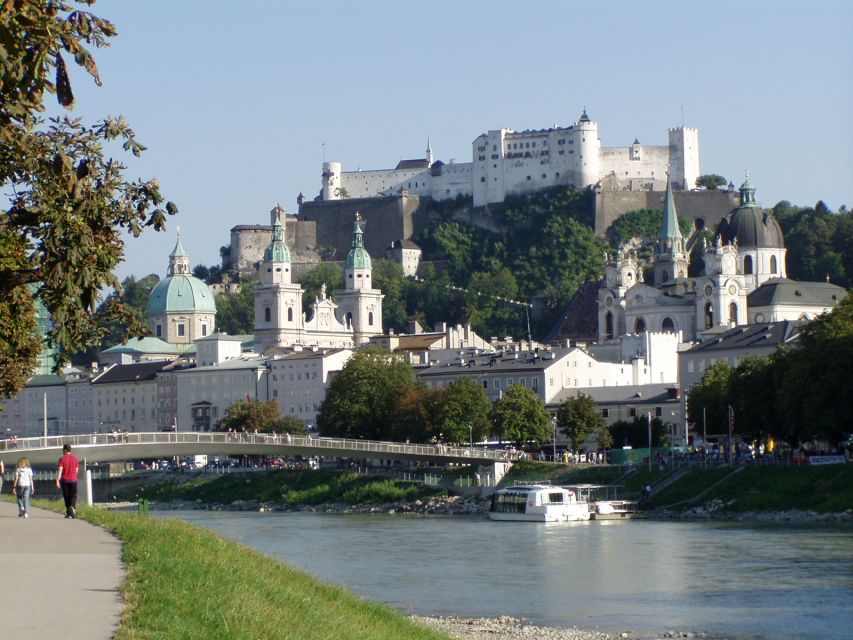
At $53 per person, this is not the cheapest way to wander Salzburg. You can walk through Getreidegasse and across the Makartsteg without paying anything. The price pays for structure, context, a live guide, and the chance to cover both sides of the river without spending your first hours guessing what matters.
The value is strongest for a first visit. In 150 minutes, you see Mirabell Palace, the Mozart Residence, the Makartsteg, Getreidegasse, Mozart’s Birthplace, historic squares, churches, and old buildings. You also get a practical sense of where to return for a museum, meal, concert, or photo.
The value is weaker if you already know Salzburg well or prefer to explore alone. This is an overview, not a long museum visit or a specialist Mozart lecture. The tour introduces the city and points you toward deeper experiences, but it does not replace them.
The booking terms also reduce some risk. You can cancel up to 24 hours before the start for a full refund, and you can reserve now and pay later. Starting times depend on availability, so check the date carefully before making other plans.
Who will enjoy this Salzburg walking tour?
I would choose this for a first-time visitor who wants a clear orientation without giving up half a day. It also suits people who like history explained in plain language, families with older children who can manage a long walk, and anyone who wants to combine Mozart with the city’s wider story.
It is a good match for solo visitors and couples because the guides appear willing to answer questions and adapt the route. One private-feeling departure had only two people, while other groups were larger, so the atmosphere can change from one start time to another.
Music lovers may especially enjoy a guide who sings in a church. Again, this is not guaranteed, but the repeated references to Junko and June singing suggest that some guides bring a real musical gift to the walk.
You might skip it if your priority is a dedicated Sound of Music tour. The route can include film-related places or suggestions, but its main focus is Salzburg, Mozart, churches, squares, and history. One person who initially thought this general tour was enough later wished for more Sound of Music material.
Practical advice before you go
Wear shoes you can comfortably use for at least two and a half hours. Bring a passport or identity card, or a copy, since identification is listed among the items to bring.
Do not arrive with luggage or a large bag. The meeting point is street-side in front of Mirabell Palace, not simply anywhere inside the palace grounds. Give yourself enough time to find the main entrance and look for the guide there.
If this is your first day, I would book the tour early in your stay. You will learn the shape of the center, hear suggestions for later, and spot places you might otherwise walk past. An evening departure may also work well, since the city orientation comes before your independent sightseeing on the following day.
Keep your schedule flexible after the tour. The guide may run longer than the advertised 150 minutes, and several departures have included extra explanations or the optional 30 minutes. That generosity can be welcome, but do not schedule a tight train connection immediately afterward.
Should you book it?
Book this Salzburg walking tour if you want a friendly introduction to the city with Mozart, churches, Getreidegasse, and baroque history in one route. The strongest reason to choose it is the guide-led storytelling, especially if you get Junko or June and enjoy the unexpected church singing.
Skip it if you want a specialist Sound of Music outing, extended time inside museums, or complete freedom to set your own pace. At $53, it earns its price through orientation and interpretation rather than exclusive access. For a first visit, that is a fair trade, and the optional Mönchsberg view gives you a useful final choice.
FAQ
Where does the Salzburg walking tour meet?
The meeting point is in front of the main entrance of Schloss Mirabell at Mirabellplatz 4, 5020 Salzburg. The meeting is street-side.
How long does the tour last?
The scheduled duration is 150 minutes, or two and a half hours. An additional 30 minutes may be available for free as an optional extension.
What languages are available?
The live tour is available in English and German.
How much does the tour cost?
The listed price is $53 per person.
Is the Mönchsberg elevator included?
No. The optional elevator to Mönchsberg costs €4 per person.
What sights are included?
The route includes Mirabell Palace, the Mozart Residence area, the Makartsteg bridge, Getreidegasse, Mozart’s Birthplace, historic squares, churches, and old Salzburg buildings.
Does the tour visit churches?
The tour may visit one or two Salzburg churches.
Can I bring luggage?
No. Luggage and large bags are not allowed.
Are pets allowed?
Pets are not allowed, although assistance dogs are permitted.
What should I bring?
Bring comfortable shoes and a passport or identity card. A copy of the document is accepted.
Can I cancel the booking?
You can cancel up to 24 hours in advance for a full refund. You can also reserve now and pay later.
New routes in Austria
- The unknown Vienna City- a guided walking tour in 3 hours★ 4.7 · 137 reviews
- Hungry in Vienna? A Food Lover’s Coffee & Market Walk★ 4.9 · 276 reviews
- Salzburg: Old Town, Mozart, & Mirabell Gardens Walking Tour★ 4.8 · 461 reviews
- 3-Hour Walking Tour of Vienna Central Cemetery★ 4.7 · 71 reviews
- Hallstatt: 2-Hour Guided Walking Tour with Photographer★ 5.0 · 152 reviews
- Vienna: City Center Guided Walking Tour★ 4.8 · 99 reviews
- Private Hidden Vienna Walk — Stories Behind Quiet Corners★ 5.0 · 137 reviews
- Vienna Private Walking Tour with a Local★ 4.5 · 131 reviews
Austria Walking Tours, compared.

Guided Walking Tour of City Center Highlights
Read our review →
Vienna Historic Center Small Group Walking Tour
Read our review →
Ghosts and Legends Guided Nighttime Walking Tour
Read our review →Browse the lists this tour appears in