
Review · BARCELONA
Barcelona: Gothic Quarter Walking Tour
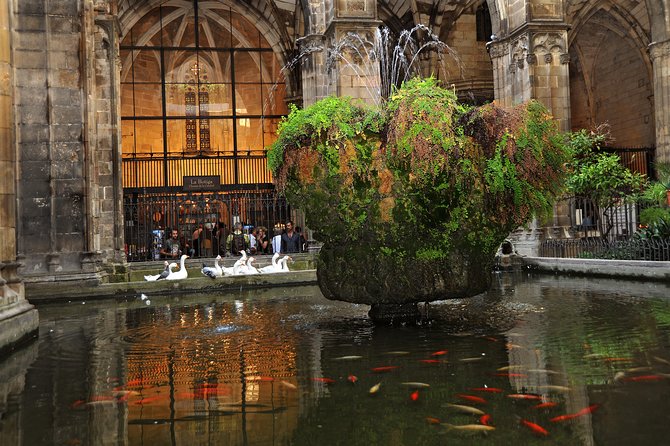
Barcelona’s old center is not a tidy museum district. It is a maze of lanes, small squares, church walls, shops, cafés, and stone buildings where Roman, medieval, and modern life crowd together. This German-language walking tour traces that story over 3.5 hours, from Plaça de Catalunya to the Born district.
I like the strong historical sweep, which runs from Roman water systems to the Crown of Aragon, the Inquisition, the Civil War, and the Bourbon era. I also like the relaxed pace, with time for photos, questions, and bathroom stops. The main drawback is clear: interiors and entry fees are not included, so you see most monuments from outside.
Key points to know before you book
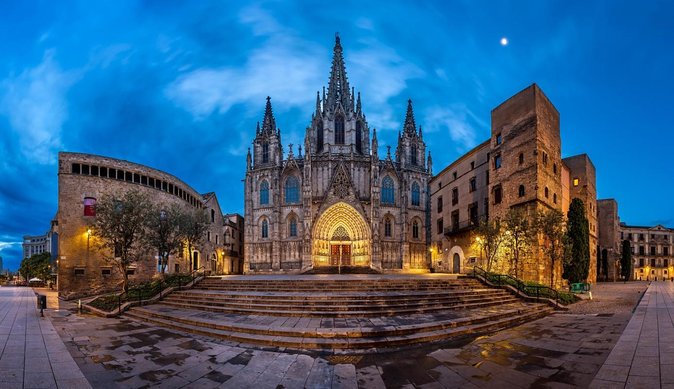
- A full old-city story: The route links Roman Barcelona, the medieval city, the Jewish Quarter, royal power, and the Ribera district.
- German-speaking guidance: The tour is conducted in German, with guide Johannes among the guides who have led it.
- Outdoor sightseeing: Expect streets, squares, façades, cloisters in limited cases, and church exteriors rather than a string of museum visits.
- A private group format: The price is $212 for up to four people, which can work well for a small party that wants personal attention.
- A relaxed but lengthy walk: At 3.5 hours, this is not a quick orientation stroll. Comfortable shoes matter.
- Weather is part of the deal: The walk runs in sun, rain, wind, and strong showers, so pack for the forecast.
From Plaça de Catalunya into the old city
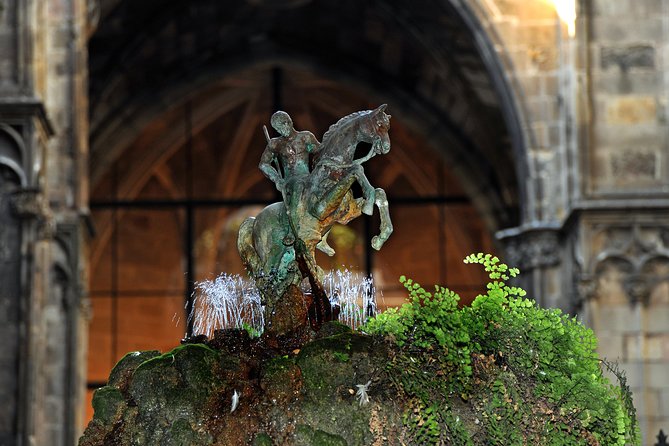
The meeting point is in front of the Hotel Olivia Plaza at Plaça de Catalunya, 19. This is a practical place to begin because the square sits between modern Barcelona and the old center. You start with a broad urban view, then move toward streets that narrow and twist as the Gothic Quarter takes over.
The route is built around stories rather than a checklist of famous doors. Your guide follows the streets and squares where Barcelona’s past actually unfolded. That makes the walk useful early in a visit, since you begin to understand how the center is arranged before exploring it on your own.
The opening historical frame reaches back to Roman times. One topic concerns Roman luxury and flowing water for a convalescent colony. That detail helps you picture Barcelona as more than a medieval city. Long before the Gothic façades, the Romans were shaping urban life, water supply, trade, and public comfort.
You will need to listen as much as look. Some of the most interesting material concerns sites that may not look spectacular at first glance. The guide’s job is to explain what a wall, lane, or square once meant, turning ordinary stone into a clue.
More Walking Tours in Barcelona:
- Barcelona Tapas and Wine Experience Small-Group Walking Tour
★ 5.0 · 5,804 reviews - Barcelona: Tapas Walking Tour with Food, Wine, and History
★ 4.8 · 4,261 reviews - Barcelona: Food Walking Tour with Tapas and Wine
★ 4.9 · 2,180 reviews
Roman Barcelona and the making of a holy city
The tour then moves through the city’s religious and political changes. One of its themes is how a holy city gained influence and how Barcelona developed from a small settlement into a major center tied to the Crown of Aragon.
This is where the route gains depth. You are not simply hearing that Barcelona was important. You are following the forces that made it important: religion, dynastic power, commerce, maritime reach, and local government.
The stories also include the birth of a nation, described through conflict and bloodshed rather than a polished patriotic tale. That tone matters. Barcelona’s past was not a neat march toward greatness. It included arguments over power, violence, fear, and people who paid the price for decisions made above them.
A good guide can make this period feel human. The tour includes tales of a young girl in the pines, a French soldier’s bayonet, a slightly eerie brotherhood, and the dragon connected with Barcelona. These stories give the walk a local flavor that a standard list of dates cannot provide.
Do not expect every legend to be presented as hard fact. In an old city, myth and record often sit side by side. The pleasure is learning how both have shaped the way Barcelona understands itself.
The Jewish Quarter and the remnants of a lost world
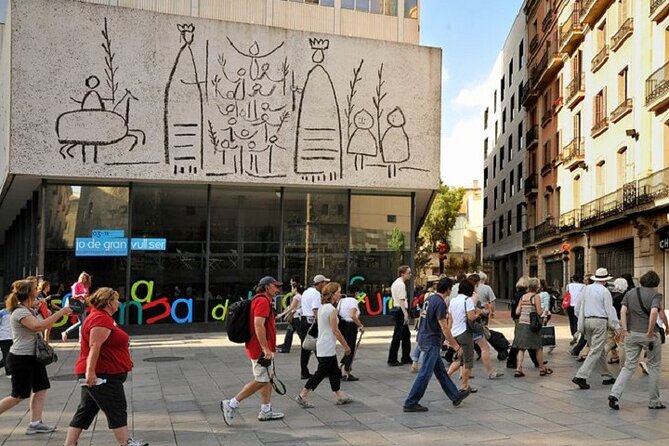
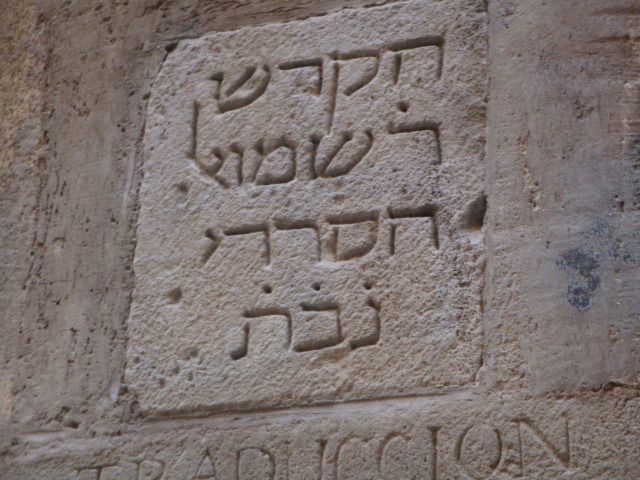
One of the most valuable parts of the route is the look at the Jewish Quarter. The focus is on what remains of a community and on the traces left behind after that world was broken apart.
This section asks you to read the city carefully. A narrow lane or altered building may carry more meaning than a grand monument. The tour connects Jewish life with the later Inquisition and with the ways political and religious authority changed the center.
You will hear about the hound kings and the warning that praise is nothing to play with. The wording is playful, but the subject is serious: power in medieval Barcelona could be dangerous, and public loyalty was not always freely given.
I appreciate this part because it resists a single heroic version of the city. Barcelona was a place of achievement, but it was also a place of exclusion and persecution. The old center makes more sense when you see both sides.
For visitors with a strong interest in Jewish history, the outdoor format may feel limited. The tour provides context and visible traces, but it does not replace a museum or a dedicated interior visit. Since entry fees are not included, plan extra time and money if you want to continue the subject elsewhere.
Royal power, local government, and a troubled succession
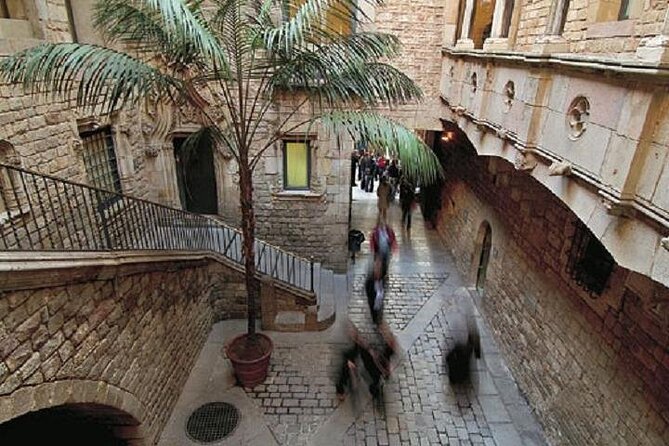
The route explores the Crown of Aragon and Barcelona’s rise from a small city to a maritime force. This is a key thread because it explains why the city’s medieval buildings are so substantial and why the waterfront districts mattered.
You will also hear about local political participation. One topic asks, in effect, who got to speak for the city, including the advice of the hundreds and the general. That brings government down from the palace and into the streets.
The death of King Martin is presented as a turning point, the beginning of the end of local co-determination. This kind of detail gives the walk a useful political edge. Medieval Barcelona was not only kings and churches. It also involved councils, city interests, competing groups, and a gradual shift in control.
The route later reaches the royal palace, where King Fernando wrestled with his fears and did not receive Columbus at home. This is a memorable way to approach a familiar historical figure. Instead of treating Columbus as a statue with a date attached, the story places him in a tense royal setting.
The palace is admired from outside. That is important to understand before booking. You get the street-level setting and the guide’s explanation, but not a full interior tour.
Same streets, a different guide:
- Barcelona Tapas Walking Tour: Food, Wine & History
★ 4.5 · 1,928 reviews - Barcelona Helicopter, Sailboat & Old Town Private Walking Tour
★ 5.0 · 1,395 reviews - Barcelona: Old Town and Gothic Quarter Walking Tour
★ 4.8 · 1,393 reviews - Barcelona: City Walking Tour with a Local Guide
★ 4.9 · 1,384 reviews
Santa Maria del Mar and the working city
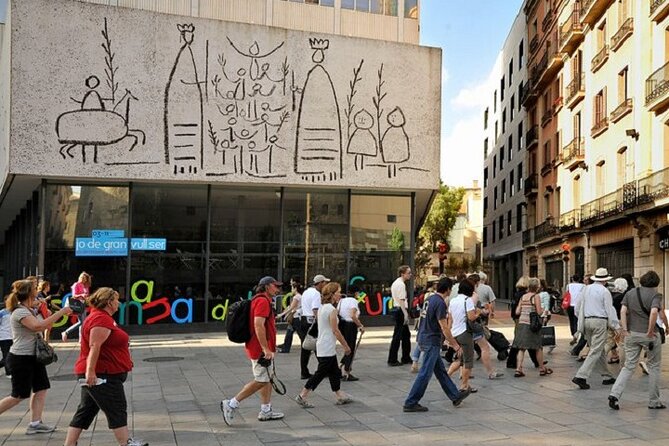
Santa Maria del Mar is one of the route’s major sights. The church connects to the idea of the first collaborative project, along with legends and heroes. Its story points toward the people who built and supported Barcelona’s maritime quarter.
The church is especially meaningful in a walking tour because its location ties religious devotion to trade and working life. You are seeing the Ribera area, not just an isolated monument. The surrounding streets help explain how the city’s sea-facing identity took shape.
Again, the normal plan is exterior viewing. If the church is open and an exception applies, the guide may include a cloister visit, but you should not assume a full interior exploration. For the cloister, wear clothing that reaches at least the knees and covers the shoulders.
That dress rule is easy to handle. It is also a reminder that this is not only a casual stroll past old façades. Some parts of the route touch active religious spaces, and respectful clothing helps you enter when access is possible.
The walking time is manageable for many people, but 3.5 hours can feel long in heat, rain, or on hard pavement. Wear shoes with good support. Bring water, especially in summer, along with a hat, sunglasses, and sunscreen. In winter, a jacket or light coat should be enough according to the practical guidance for the tour.
The Gothic Quarter as a living stage
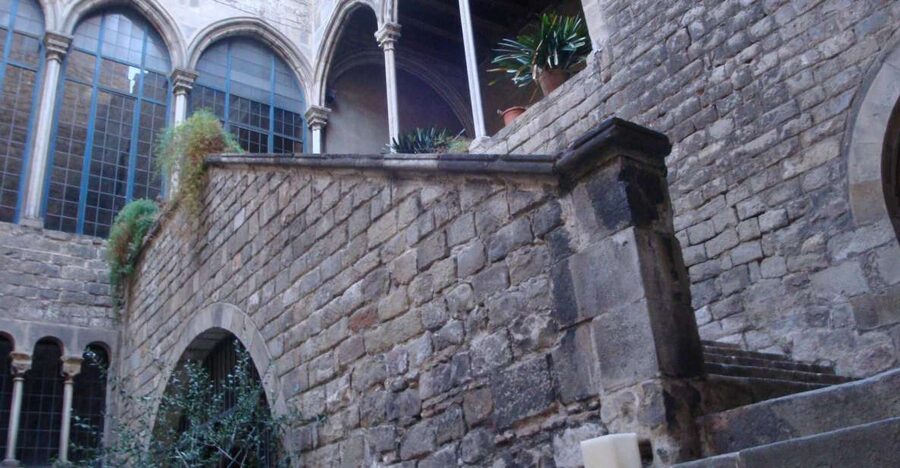
The Gothic Quarter is famous for its narrow lanes and romantic squares, but the tour does more than point out attractive corners. It asks how the district became what you see today.
One striking subject is the Gothic theme park idea, including houses moved stone by stone. That detail encourages a healthy dose of skepticism. Not everything that looks medieval has remained untouched since the Middle Ages. Some parts of the quarter were shaped, restored, or rearranged much later.
This is one of the best reasons to take a guided walk. On your own, you might photograph a picturesque alley and assume its age. A guide can explain which details are ancient, which are later additions, and how modern Barcelona has used the medieval image.
The tour also includes the dancing egg, a playful local tradition associated with Corpus Christi. It is a small subject, but it brings the city to life in a different way. After kings, battles, and religious conflict, a light custom helps you see that Barcelona’s identity is also built from odd, charming public rituals.
The streets remain active city spaces. Shops, businesses, residents, and cafés share them with history. That can make the route feel less polished than a monument circuit, but it is also the point. You are walking through a neighborhood, not a sealed historical display.
Civil War scars and Bourbon punishment
The walk reaches a romantic place tied to the idea of an immortal love story, then turns toward the scars of the Spanish Civil War. This pairing is effective because it shows how beauty and pain can occupy the same few streets.
You will also hear about the mulberry grave, the vengeance of the Bourbon kings, and the head of a general. These are not gentle stories. They concern punishment, political defeat, and the hard treatment of enemies after power changed hands.
The early 18th century is the final part of the main historical arc. By this point, the tour has moved from Roman foundations through medieval expansion and local government to the loss of political independence and the pressure of central rule.
This broad time span is a major strength, but it comes with a tradeoff. You cannot study every stop in great detail during one walk. The experience works best as a framework. It gives you enough background to decide which subjects deserve another visit.
What the pace and format mean for you
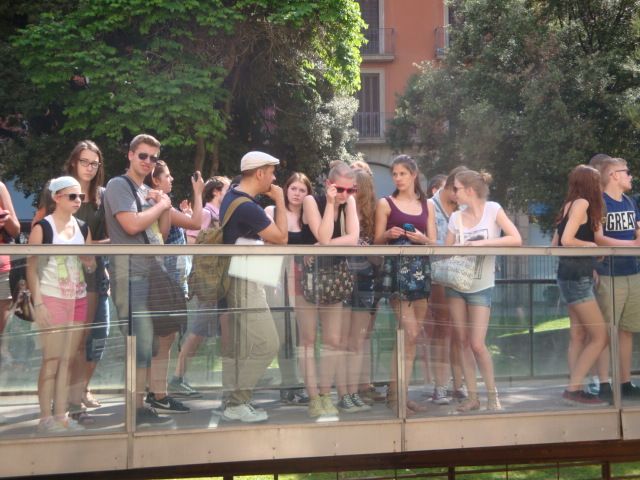
The advertised duration is 3.5 hours, with the guided walking portion described as roughly three hours and fifteen minutes. This is a real city walk, not a brief introduction followed by free time.
The pace is described as relaxed. You should have time to stop for photos, ask questions, and take a bathroom break. Still, relaxed does not mean effortless. The route runs through old streets and squares, and one recent comment described the experience as tiring even while rating it very highly.
The tour is private, which can be a strong advantage for a family or small party. At $212 for up to four people, the per-person cost is $53 when four people share it. For two people, the price rises to $106 each, so the value depends heavily on group size and how much you want a German-speaking guide focused on your interests.
The guide can adjust the conversation more easily in a small group. That matters if you want practical advice for the rest of your stay. Guide Johannes, in particular, has been praised for tailoring the walk to personal needs and for offering useful suggestions about restaurants, shopping, and local specialties. Another strong feature is the use of extra photos to clarify how places looked in earlier periods.
That kind of help can save time later. A good walking tour should not only explain what you are seeing. It should help you make better choices after the tour ends.
What is not included
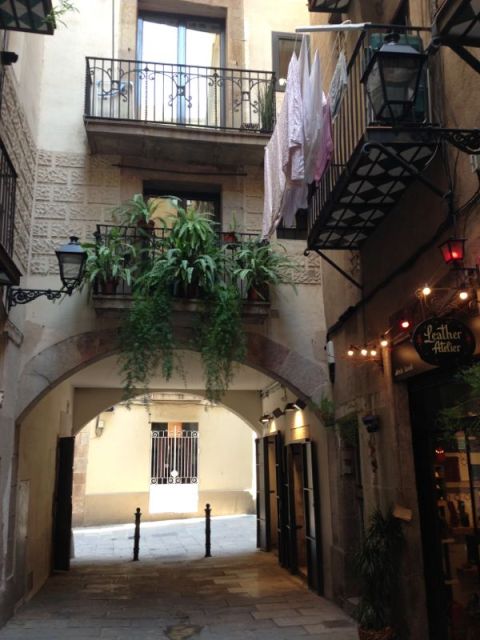
The tour does not include regular interior visits or admission fees. Most monuments are admired from the outside, with only a couple of possible exceptions.
That format keeps the group moving and lets you cover a broad area. It also means you should not book this as a substitute for visiting major interiors. If your top goal is to spend time inside Gothic churches, museums, or royal buildings, you will need separate plans.
The outdoor approach has a benefit in poor weather too. The tour runs in sun, rain, wind, and strong showers. Pack a rain layer if the forecast looks doubtful. Barcelona’s old lanes may offer some shelter, but you should not count on staying dry.
The activity is listed as wheelchair accessible. Since the tour uses streets and squares through the old city, it is still sensible to confirm your specific needs when booking, especially if certain historic lanes or surfaces are a concern.
Who will get the most from this walk
I would choose this tour if you want a serious introduction to Barcelona’s old center in German and prefer stories to a rapid list of sights. It suits couples, families, and small groups who value a private format and can share the $212 price.
It is also a good choice for anyone who likes political history, local legends, religious change, and the less polished side of old cities. You will hear about Roman engineering, Jewish life, royal succession, maritime power, the Civil War, and Bourbon reprisals in one continuous route.
I would be more cautious if you dislike long walks, need frequent indoor stops, or want extensive time inside monuments. The 3.5-hour length is a commitment, and the tour continues in bad weather.
German speakers should get the most from it. The experience is not offered as a multilingual tour with German as a side option. German is the stated language, so book it for that reason rather than expecting an English version.
Should you book the Barcelona Gothic Quarter tour?
Book it if you want a small-group historical walk with a clear story, useful local advice, and plenty of time to look around. The strongest features are the wide historical range, the personal German-language format, and the guide’s practical suggestions for food, shopping, and local specialties.
Skip it if your priority is museum admission or detailed interior sightseeing. Also think twice if your group has limited walking stamina, since the old center can be tiring even at a calm pace.
For up to four people, $212 is a fair price for a private 3.5-hour experience, particularly if the guide helps shape the walk around your interests. With only one or two people, it becomes a more expensive choice. Either way, arrive ready for weather, wear sensible shoes, and keep room in your schedule afterward for an interior visit that this tour does not cover.
FAQ
Where does the tour begin?
It begins in front of the Hotel Olivia Plaza at Plaça de Catalunya, 19, in Barcelona.
Where does the tour finish?
The walk finishes at Passeig del Born, 22, in Barcelona’s Born district.
How long does the tour last?
The stated duration is 3.5 hours. The itinerary describes about 3.25 hours of guided sightseeing and walking.
What language is the tour conducted in?
The live tour guide speaks German.
Is this a private tour?
Yes. The activity is listed as a private group tour, with the price covering up to four people.
Are museum entries or interior visits included?
No. Entry fees and interior visits are not included. The tour mainly views monuments from the outside, with a couple of possible exceptions.
What should I wear for the cloister visit?
Wear clothing that reaches at least the knees and covers your shoulders. The tour also recommends comfortable shoes, sun protection and water in summer, and a jacket or thin coat in winter.
New routes in Barcelona
- Barcelona: “The Shadow of the Wind” Literary Walking Tour★ 4.5 · 176 reviews
- Picasso Museum and Walking Tour Plus Wine Tasting Upgrade★ 4.3 · 111 reviews
- From Barcelona: Montserrat Walking and Horseback Riding Tour★ 4.8 · 81 reviews
- Barcelona: Walking tour with Montjuic Castle & Cable Car★ 4.7 · 832 reviews
- Barcelona: Gothic Quarter Walking Tour w/ Montjuïc Cable Car★ 4.4 · 90 reviews
- Barcelona: Ramblas, Old Town & Gaudí Houses Walking Tour★ 4.9 · 239 reviews
- Barcelona Walk Like a Local: El Born & Gothic 15+ Sights★ 4.9 · 88 reviews
- Barcelona: Hidden Gems Walking Tour Including 10+ Sights★ 4.9 · 121 reviews
Barcelona Walking Tours, compared.
Barcelona Tapas and Wine Experience Small-Group Walking Tour
Read our review →
Tapas Walking Tour with Food, Wine, and History
Read our review →
Barcelona Helicopter, Sailboat & Old Town Private Walking Tour
Read our review →

Helicopter Flight, Boat Ride, and Walking Tour
Read our review →
Barcelona Old Town & Gothic Quarter Small Group Tour
Read our review →
Barcelona Food Tour: Tapas, Paella, Sangria & 8+ Local Tastings
Read our review →Browse the lists this tour appears in