
Review · KRAKOW
Krakow: Old Town Guided Walking Tour
Krakow’s Old Town is best understood on foot, and this tour follows the city’s grandest line: the medieval Royal Route, from St. Florian’s Church through the old gates and market square to Wawel Hill. You get the broad story, but also the small details, local legends, customs, and odd little facts that are easy to miss alone.
I like the small-group format, which gives you room to ask questions and can allow the guide to adjust the walk. I also like the half-hour coffee break, a useful pause during three hours on foot. The main thing to watch is that entrance tickets are not included, so visits inside Wawel’s paid rooms or the Dragon’s Den will cost extra.
Key points
- The Royal Route links Krakow’s main sights: Follow the path once used by Polish kings, from St. Florian’s Church to Wawel Hill.
- The Main Market Square is the tour’s grand center: See the huge medieval square, Sukiennice Cloth Hall, and surrounding historic buildings.
- Local guides add personal context: Past guides including Andrej, Magda, Alex, Gregory, and Maximillion have brought local stories and insight into Krakow’s changes.
- You see more than the headline sights: The walk also includes the Jagiellonian University district and Planty Park.
- A coffee break is built in: You get roughly 30 minutes to rest during the three-hour walk.
- Tickets are separate: The guide is included, but admission to Wawel interiors and other paid attractions is not.
Following Krakow’s Royal Route from St. Florian’s Church
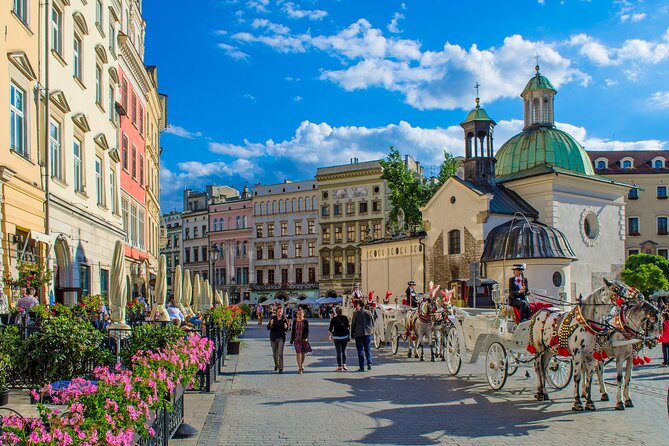
The tour begins at KrakowTIP, the Tourist Information Point at Grodzka 18. From there, the walk takes you toward the northern end of the Old Town and St. Florian’s Church, an important starting point for the Royal Route.
St. Florian is the patron saint of Poland, and the church contains his relics. That gives the first stop more weight than a quick photo opportunity. Your guide can place the church within Poland’s religious and royal story before leading you along the three streets that make up the route: Floriańska, Grodzka, and Kanonicza.
I like this structure because it gives the walk a clear direction. You are not simply zigzagging between attractions. You are tracing the path used by royalty and official processions, moving south through the heart of old Krakow.
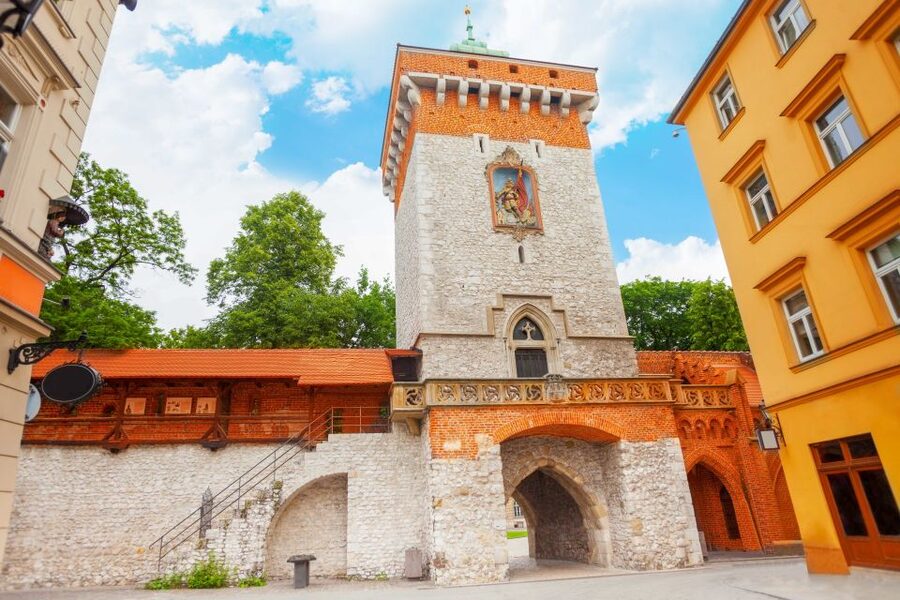
Floriańska Street leads you toward St. Florian’s Gate, the most important surviving entrance to the medieval city. The gate is a Gothic tower and the only one left of Krakow’s original eight medieval city gates. That single fact helps explain how much of the old defensive system has disappeared, and why this one section matters.
The nearby Barbican outpost adds another layer to the city’s defenses. You will want to pay attention here, since the military side of medieval Krakow can otherwise be overshadowed by churches and grand townhouses. The guide’s stories about symbols, customs, and city life help turn walls and towers into something easier to picture.
More Old Town Walking Tours in Poland
- Old Town Krakow & Wawel Castle Walking Tour
★ 5.0 · 1,508 reviews - Krakow: The Old Town Walking Tour
★ 4.8 · 794 reviews - Kraków: Old Town & Wawel Castle Walking Tour in English
★ 4.8 · 532 reviews
Reading the Main Market Square
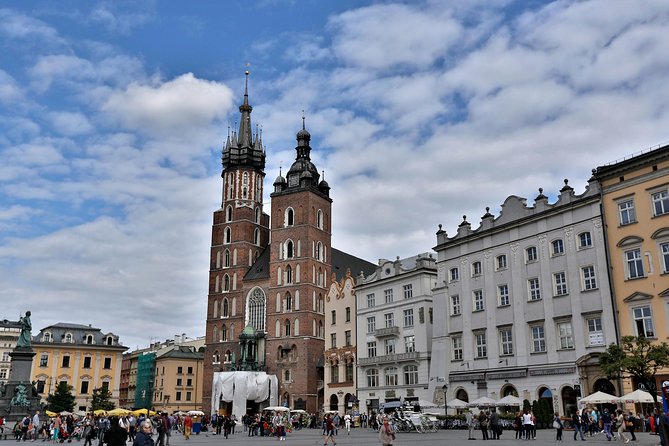
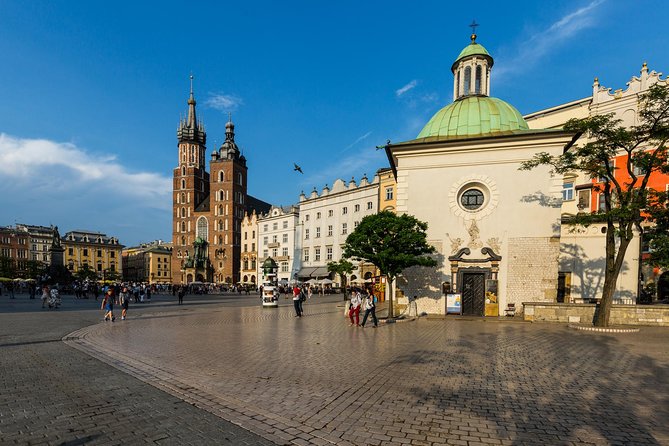
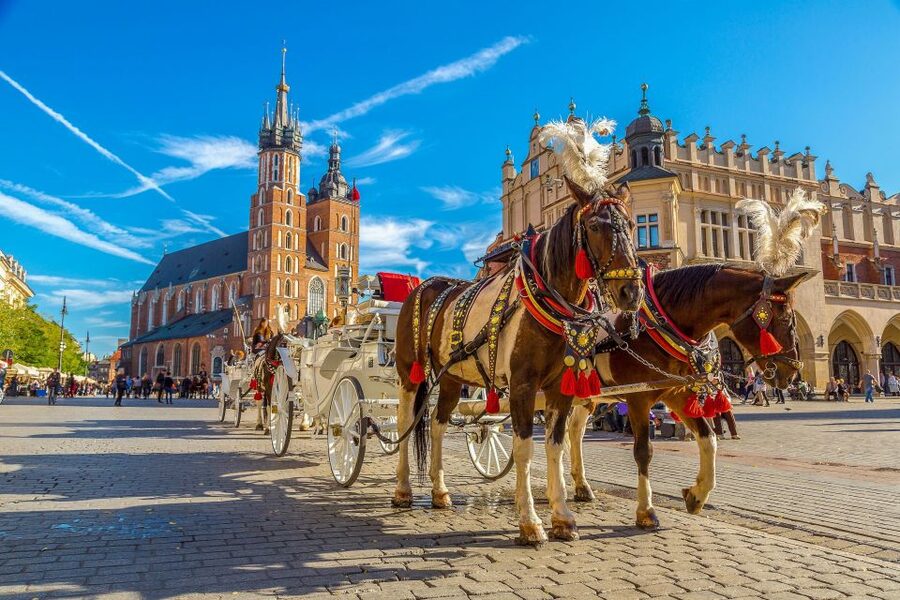
The Royal Route brings you to Krakow’s Main Market Square, the great open space at the center of the Old Town. It is described as the largest medieval square in Europe, and its scale is immediately clear. The square is not just a broad place to cross. It is the city’s main stage, surrounded by important buildings and historic streets.
The central feature is Sukiennice, the Renaissance Cloth Hall. Its arcades were designed by the Italian architect J. M. Padovano, and the building reflects Krakow’s long role as a place of trade. Even if you are not interested in shopping, the hall gives you a useful sense of how commerce shaped the city.
This is one of the tour’s most valuable stops because a guide can help you look past the postcard view. You learn what the buildings were for, how the square fit into city life, and which details deserve a closer look. The walk also covers Polish history, symbols, traditions, legends, and lighter local facts, so the talk is not limited to dates and rulers.
The square can also be the busiest part of the route. A large public space attracts people, activity, and distractions. If you want quiet photographs or time inside a building, you may need to return on your own. The tour is designed to explain the square while keeping the group moving, not to give you unlimited free time at every stop.
Kanonicza Street and the road to Wawel Hill
From the Main Market Square, the route continues along Grodzka and Kanonicza. These streets lead toward Wawel Hill, where the Royal Route reaches its natural finish.
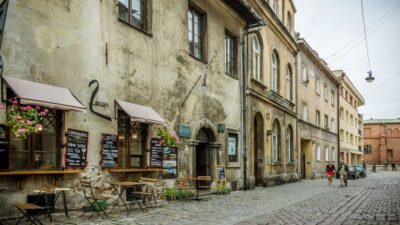
Kanonicza is a particularly useful part of the walk because it feels more intimate than the market square. The narrow street and old facades help you picture the route as a passage for church officials, nobles, and royal visitors. Your guide fills in the story as you walk, pointing out details that can disappear when you are focused only on reaching the castle.
The guide makes a real difference here. Past tours have been led by people such as Andrej, who has lived in Krakow for many years, and Magda, who grew up in the city. Their personal connections allowed them to explain how Krakow changed during recent Polish history, not just what happened in the medieval period.
That local perspective is one of the strongest reasons to choose a guided walk instead of a self-guided route. You can find the streets and monuments yourself, but you may not hear the stories behind them or know which details connect the medieval city to modern Poland.
Wawel Castle, the Cathedral, and the Dragon’s Den
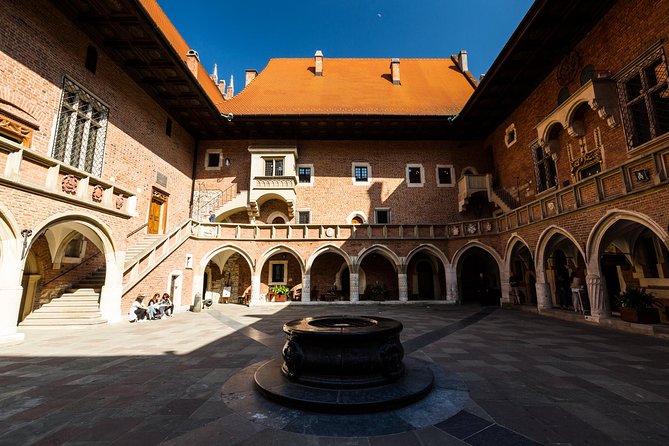
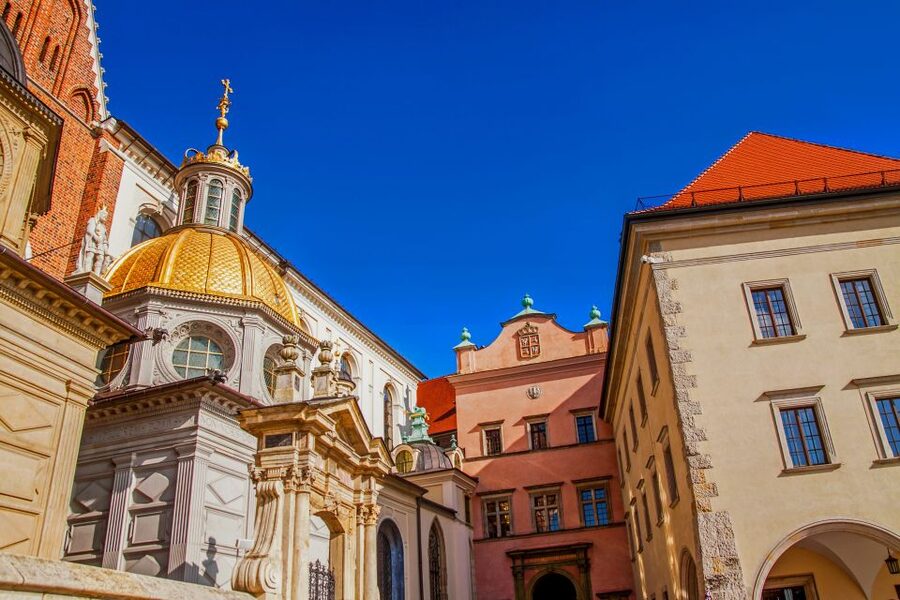
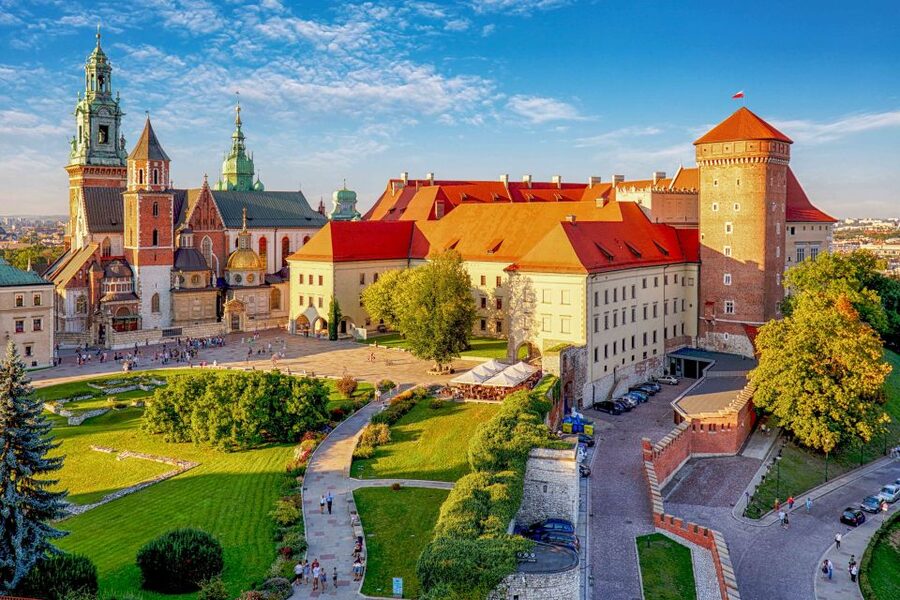
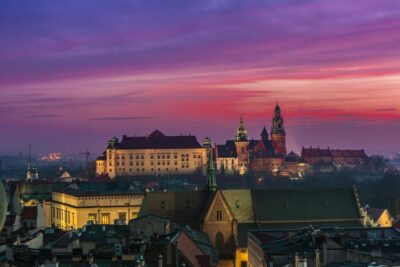
The route ends at the foot of Wawel Hill, with a view up toward Wawel Royal Castle. This is the point where the city’s royal story gathers in one place. Wawel was the residence of Polish monarchs, and the hill also contains the Cathedral Basilica of Saints Stanisław and Vaclav.
The castle area gives you several possible interests in one stop:
- The old royal residence
- The Royal Private Apartments
- The Crown Treasury
- Wawel Cathedral
- The Dragon’s Den below the hill
The tour description calls the Royal Private Apartments and Crown Treasury must-see sights, and the Dragon’s Den adds a strong dose of Krakow legend. Still, keep the ticket arrangement in mind. The English-speaking guide is included, but entrance tickets are not. The tour may introduce you to the castle area and explain what you are seeing, while access to paid interiors requires separate admission.
This matters when you plan your day. If you have already visited Wawel Castle, tell the guide. One participant had done so before the walk and appreciated the guide adjusting the experience rather than simply repeating the same material. If you have not visited, you may want to reserve extra time before or after the walking tour for the interiors you choose.
The guide may not be able to provide a full, ticketed visit to every castle room within this three-hour route. That is not a flaw, but it is an important distinction. This is primarily an Old Town walking tour with a royal focus, not a dedicated Wawel Castle admission tour.
More Old Town Walking Tours in Krakow:
- Krakow: Legends and Tales of Old Town Walking Tour
★ 4.8 · 227 reviews - Krakow: Old Town Highlights Walking Tour
★ 4.5 · 173 reviews - Krakow: Old Town Highlights Private Walking Tour
★ 4.9 · 79 reviews - Underground Vaults Walking Tour in Edinburgh Old Town
★ 4.5 · 8,506 reviews
Jagiellonian University and Planty Park
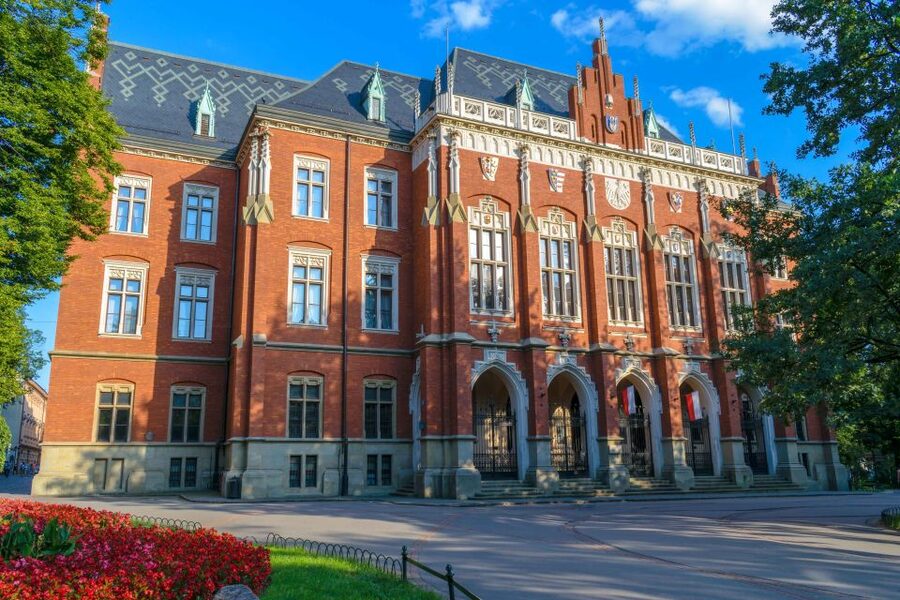
The itinerary also includes the Jagiellonian University district, home to Poland’s oldest university. This gives the tour a different rhythm after the royal buildings and market square.
A university district helps explain Krakow as a center of learning, not only a former royal capital. It also gives your guide another way to discuss Poland’s cultural life and the people who shaped the city.
Planty Park is another welcome change of pace. The park follows the line of the former medieval fortifications around the Old Town. You get greenery, open walking space, and a chance to see how the city grew beyond its defensive walls.
These stops may be less instantly famous than Wawel or the Main Market Square, but they help make the tour feel like a city walk rather than a list of monuments. You see how Krakow’s old center works as a living part of the city.
Three hours on foot, with a coffee pause
The tour lasts three hours and includes a half-hour coffee break. That break is useful, especially because the route covers a fair amount of ground. You should wear comfortable shoes and expect to walk between stops rather than remain in one place for long periods.
The pace appears to be steady rather than rushed. Guides have included rest stops, and one guide adapted the route for a group member who had already visited the castle. Another tour finished a little earlier than expected, so you should not assume that every departure will use the full three hours to the minute.
The coffee pause is not just a convenience. It gives you time to sit, ask follow-up questions, and reset before the final section of the walk. One past participant would have preferred a drink break earlier, which is a fair point if you need frequent rests. The timing may also be linked to reaching certain places at suitable times, so the pause may not fall exactly when you would choose it.
The tour is listed as wheelchair accessible, but the route includes historic streets, gates, public spaces, and the Wawel area. If you need specific accessibility arrangements, confirm the details before booking. A private group is also available, which may suit families or groups wanting more control over pace and questions.
The guides make the difference
A walking tour rises or falls on its guide, and this one has received especially strong praise for its human side. The guides are not presented as interchangeable voices. Andrej brought personal memories of major events in modern Polish history. Magda drew on growing up in Krakow. Alex was praised for lively stories and a strong grasp of the city.
Gregory was careful about safety and included rest stops. Maximillion shared his affection for Krakow along with its history. Sev kept a tired participant engaged after an overnight journey, while Michael was able to adjust the pace because his group was very small.
Those details tell you what to look for. The value is not simply in hearing a standard script. You are paying for someone who can answer questions, add context, handle different interests, and make the city easier to read.
The guide also needs to manage a group with different personalities. One past group included a person who often interrupted with personal stories, and the guide handled the situation tactfully. That matters on a walking tour, where one dominant voice can easily take time away from everyone else.
The guide’s English has also been praised as clear, which is important for stories packed with names and historical detail. Still, every departure will have a different guide and group mix. You should expect the overall route and subject matter to remain similar, but the tone and emphasis may vary.
What the $32 price buys you
At $32 per person, the tour is priced as a guided orientation to central Krakow rather than as an all-inclusive attraction pass. The guide is the main service. You are paying for three hours of explanation, route planning, local context, and the chance to ask questions as the city unfolds around you.
That can be good value on your first day in Krakow. A strong guide can help you understand where the Old Town’s main pieces fit together, saving you from treating the Main Market Square, Royal Route, and Wawel as unrelated stops.
The value is lower if you want long interior visits included. Admission tickets are extra, and the tour cannot replace a separate, slower visit to Wawel’s apartments, treasury, cathedral, or Dragon’s Den. You should budget for those separately if they are central to your plans.
The small-group setup adds value because it can make the walk more personal. A private group is available if you want a more tailored experience, but the price for that option is not provided here, so check before booking.
Free cancellation up to 24 hours before the start and reserve-now, pay-later booking make the arrangement flexible. Keep an eye on the meeting details, though. One past group found two different meeting points on its paperwork, and a guide was 15 minutes late, which caused understandable uncertainty. The stated meeting point is KrakowTIP at Grodzka 18, and the activity ends back there.
Who should book this Krakow walking tour?
I would choose this tour for a first or second day in Krakow, especially if you want a clear introduction before exploring museums and castle interiors on your own. It suits curious walkers who enjoy history, local stories, and the small details behind familiar monuments.
It is also a good fit if you want to ask questions. The strongest guide experiences came from people who were interested in Krakow as a lived-in city, not just a set of dates. You will get more from it if you speak up about your interests.
Families and older participants may appreciate the rest stops and coffee break, though the route still requires three hours of walking. Comfortable shoes are essential.
I would be more cautious if you want a slow photography walk, a dedicated castle tour, or guaranteed access to every interior. Tickets are not included, and the route covers several districts and sights in a limited time.
Should you book it?
Book this Old Town walking tour if you want the essential Krakow route explained by a local English-speaking guide, with royal history, city legends, recent Polish context, and a useful coffee break folded into the day. The best reason to go is the guide’s ability to connect streets and buildings with personal stories.
Skip it if you already know Krakow well and prefer to set your own pace, or if your main goal is spending several hours inside Wawel Castle. For most first-time visitors, though, $32 is a sensible price for getting your bearings and learning how Krakow’s Old Town fits together.
FAQ
How long does the Krakow Old Town Walking Tour last?
The tour lasts three hours. It also includes a half-hour coffee break during the walk.
Where does the tour start?
The meeting point is KrakowTIP, the Tourist Information Point at Grodzka 18, 30-001 Kraków, Poland.
Where does the tour end?
The activity ends back at the meeting point.
What language is the tour offered in?
The tour is conducted in English by a live English-speaking guide.
Are entrance tickets included?
No. Entrance tickets are not included in the tour price.
Does the tour visit Wawel Royal Castle?
The route ends at Wawel Hill and includes the castle area, with the Royal Private Apartments, Crown Treasury, Cathedral Basilica, and Dragon’s Den identified as key sights. Admission tickets are separate.
Is the tour wheelchair accessible?
The activity is listed as wheelchair accessible.
Can I book a private group?
Yes. A private group option is available.
New routes in Krakow
- Krakow: Jewish Quarter Guided Walking Tour★ 4.8 · 119 reviews
- Kraków: Old Town & Wawel Castle Walking Tour in English★ 4.8 · 532 reviews
- Krakow: Old Town Highlights Walking Tour★ 4.5 · 173 reviews
- Krakow: 2h Kazimierz (Jewish Quarter) Walking Tour★ 4.5 · 75 reviews
- Krakow: Old Town Highlights Private Walking Tour★ 4.9 · 79 reviews
- Krakow: Street Food Walking Tour★ 4.8 · 285 reviews
- Krakow: Legends and Tales of Old Town Walking Tour★ 4.8 · 227 reviews
- Krakow: Evening Walking Tour with Spooky Stories★ 4.7 · 500 reviews
Krakow Walking Tours, compared.


Browse the lists this tour appears in