
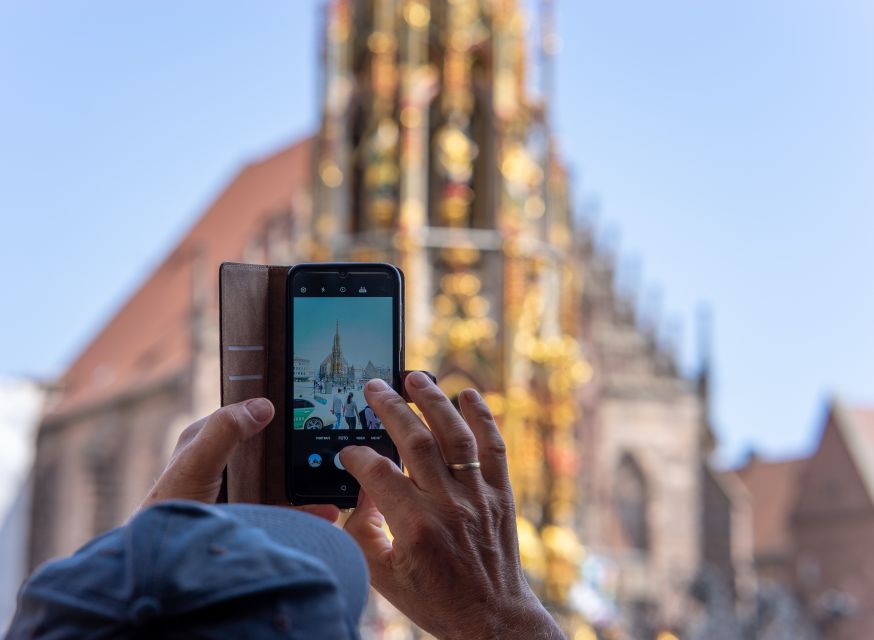
Review · NUREMBERG
Nürnberg kennenlernen: Highlights in der Altstadt
Nuremberg’s Old Town is easiest to understand on foot, and this compact tour follows a smart route through its medieval core. You’ll walk beside the Pegnitz, pass the Hauptmarkt and Frauenkirche, hear stories at St. Sebaldus Church, and finish over the old Kettensteg bridge.
I like the strong mix of landmarks and local streets, especially Weißgerbergasse, which escaped wartime destruction. I also like the guides’ storytelling style: Jo, Klemens, and Sonja have been praised for making centuries of city history clear, lively, and sometimes funny. The main consideration is language: the tour is in German, and the accessibility information is mixed, so anyone with mobility concerns should confirm conditions before booking.
Key points to know before you book
- The route follows the Pegnitz River: You get a pleasant introduction to Nuremberg while moving between major sights rather than standing in one place.
- The Hauptmarkt is a major stop: In winter, this is the setting for the famous Christkindlesmarkt.
- Weißgerbergasse offers surviving old-town character: Its historic buildings provide a sharper sense of medieval Nuremberg than the larger squares do.
- The Kettensteg gives the tour a memorable finish: This preserved metal suspension bridge leads to the Maxbrücke.
- Storytelling is a central strength: Guides including Jo, Klemens, and Sonja have been praised for clear explanations, humor, and strong local knowledge.
- The tour costs $15 and lasts 1.5 hours: That is a reasonable price for a guided introduction, especially if you are new to the city.
Starting at the Hangman’s House
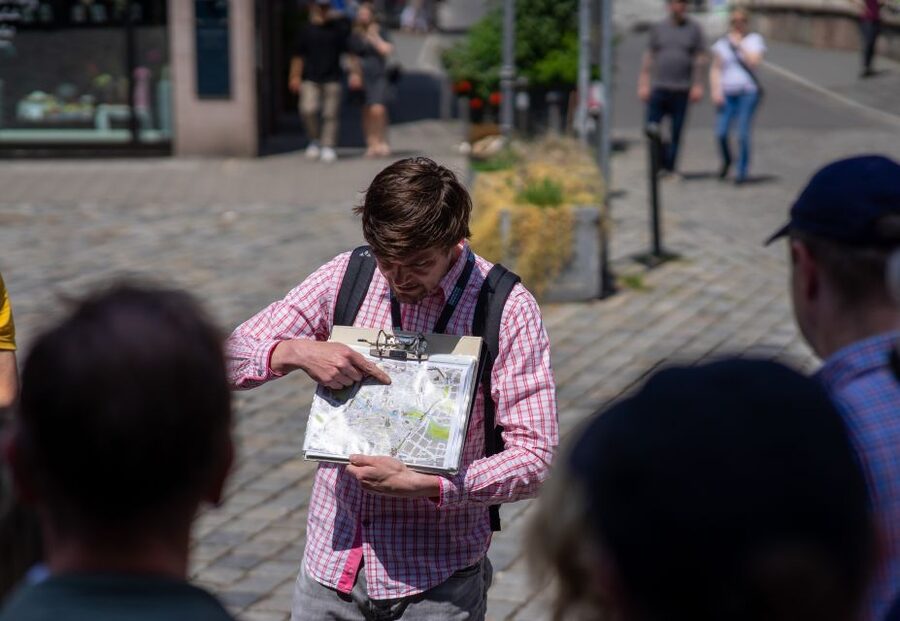
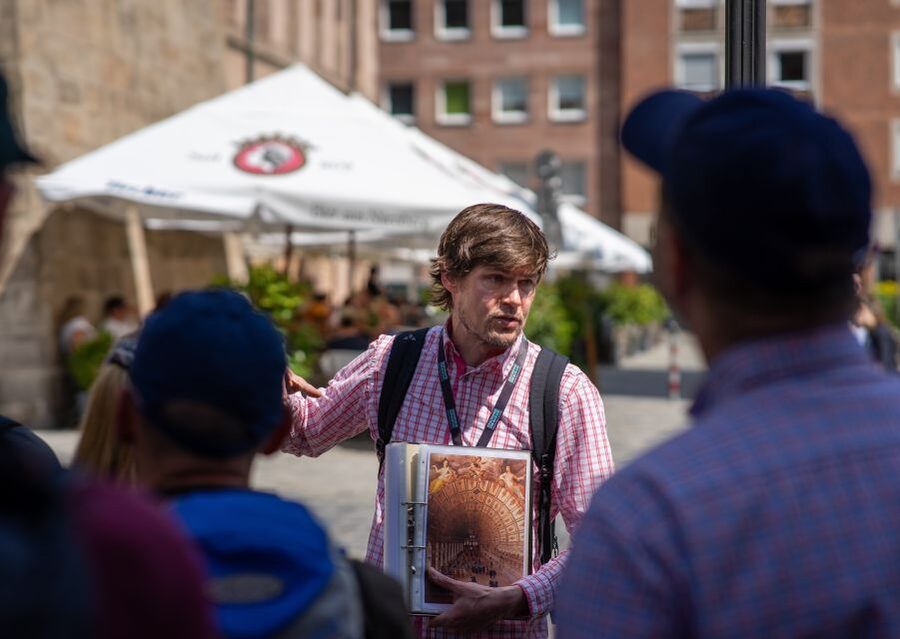
Meet your guide in front of the Henkerhaus Museum, also called the Hangman’s House. The guide carries a picture folder and wears a name tag for Geschichte Für Alle e.V., making the meeting point easier to identify.
The opening stop includes the Galerie im Henkerhaus, where the guide provides an introduction to the city and the tour ahead. Beginning here gives the walk a darker, more unusual entry point than starting at a church or market square. You are not simply dropped into a list of monuments. The tour starts with a place connected to Nuremberg’s old civic life, then moves out into the streets.
The meeting point sits beside the Pegnitz, so the route quickly shifts from a museum setting to an open-air walk. Wear comfortable shoes, since the experience is entirely on foot and includes several short walking sections between stops. Bring water and dress for the weather. The route is only 1.5 hours, but city-center paving and bridge crossings are still easier in sturdy shoes.
The guide is a key part of the experience. The German-language tour has been led by people such as Jo, Klemens, and Sonja. Jo has been praised for making the full 90 minutes pass quickly, while Klemens used small stories to break up the factual material. Sonja was noted for combining humor with a clear account of Nuremberg’s development over many centuries.
Those details matter because this is not a tour built around audio headsets or printed facts. The quality depends on how the guide connects the places along the route. A good guide can turn a short walk beside a river into a lesson in how the city grew, changed, and remembered its past.
More City Highlights Walking Tours in Germany
- Frankfurt Highlights English Walking Tour
★ 5.0 · 1,203 reviews - Cologne: Old Town Highlights Walking Tour
★ 4.6 · 1,093 reviews - Trier: Guided Old Town Highlights and History Walking Tour
★ 4.7 · 687 reviews
Following the Pegnitz to Fleisch Bridge
From the Hangman’s House, you walk along the Pegnitz River toward the Fleisch Bridge. This is one of the most appealing parts of the route because the river gives you a change of pace from busy streets and large squares.
The walk also helps you get your bearings. Nuremberg’s Old Town can feel like a tight maze when you first arrive. Following the river creates a natural line through the center, while the guide explains the surrounding buildings and the city’s long development.
The Fleisch Bridge is a short stop, but it adds another layer to the walk. Here, the guide can place the bridge within the old town’s network of crossings and streets. The route is not designed to spend a long time at each landmark. Instead, it links several locations so you see how the river, markets, churches, and civic buildings fit together.
That format suits you if you want an overview before exploring in greater detail. It is less suitable if you want lengthy interior visits or time for close architectural study. The experience is a guided city walk, not a museum tour with extended stops inside every building.
The Hauptmarkt and Frauenkirche
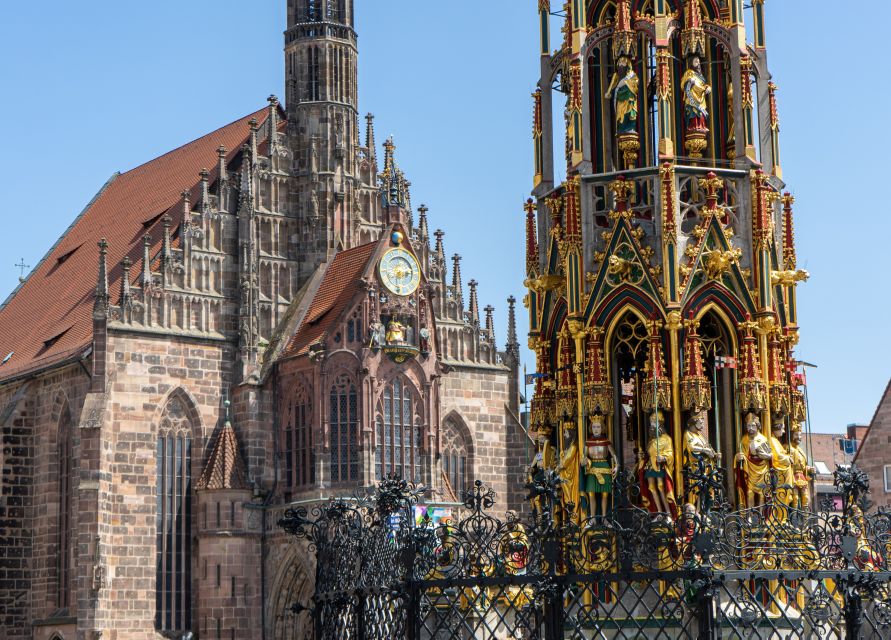
The route continues to the Hauptmarkt, Nuremberg’s central market square. In winter, this is where the Christkindlesmarkt takes place, making the square especially recognizable to visitors who have seen images of the city’s Christmas market.
The guide points out the square’s place in Nuremberg’s civic life and draws attention to the Gothic spires of the Frauenkirche. The church gives the open market a strong vertical focus. After walking beside the river and through narrower streets, the broad square creates a useful contrast.
If you visit during the Christmas market season, expect the setting to feel different from the rest of the year. The tour still provides historical context, but seasonal stalls and crowds may affect how easily you can stand close to the guide or study the buildings. The listing does not promise special Christmas market access, so think of the stop as an outdoor history lesson in the market’s setting, not a separate market tour.
The Hauptmarkt is also a good place to consider the tour’s value. On your own, you can see the square and the church for free, but you may miss the connections between them and the other stops. For $15, the guide provides a narrative that links the market to the city’s wider past. That is a modest cost if you have only a short time in Nuremberg and want more than a quick photo stop.
St. Sebaldus Church and the city’s legends
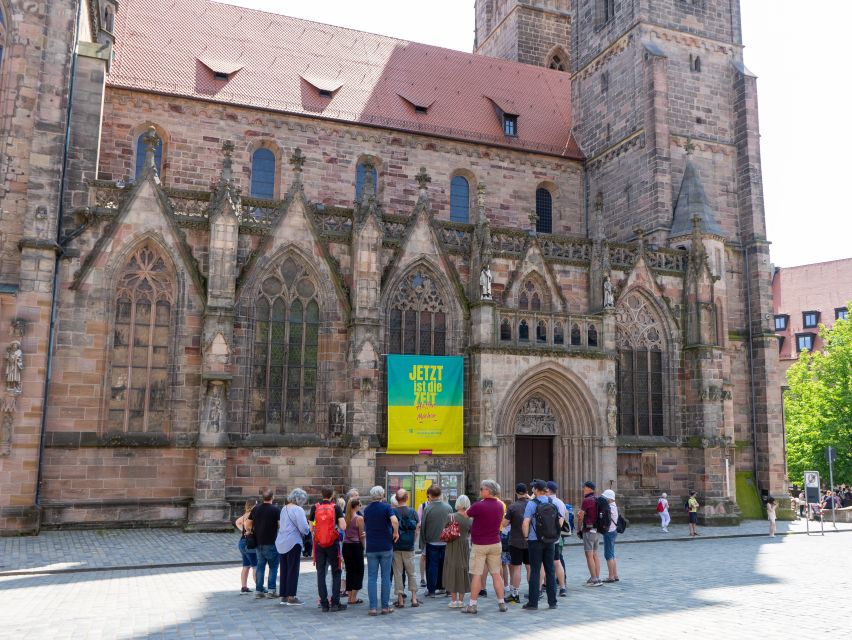
After the Hauptmarkt, the walk continues to St. Sebaldus Church. It is described as one of Nuremberg’s oldest churches, and the guide discusses Saint Sebaldus through both true and fictional stories.
That combination is valuable. Old churches are often easier to remember when you hear the stories attached to them, even when those stories mix fact, belief, and legend. You get a sense not only of the building’s age but also of how people have understood and explained it over time.
The stop also gives the tour a different tone from the market square. The Hauptmarkt is open and public, while St. Sebaldus Church brings the discussion closer to religion, local identity, and the stories that shaped the city’s imagination.
The available information does not promise an extended interior visit or a special church entrance. Plan on a guided stop connected to the church rather than a dedicated art or architecture tour. If you want detailed attention to every interior feature, you may need extra time on your own afterward.
Still, St. Sebaldus is one of the most useful stops for understanding why the tour is more than a list of pretty streets. The guide explains how a local saint became part of Nuremberg’s story, then uses the church as a bridge between documented history and traditional tales.
Same streets, a different guide:
- Discover Berlin Half-Day Walking Tour
★ 5.0 · 9,624 reviews - Berlin City walk Government District and Places of Democracy
★ 4.7 · 8,467 reviews - Berlin: Third Reich & Cold War Guided Walking Tour
★ 4.9 · 8,378 reviews - Munich: Third Reich & WWII Walking Tour
★ 4.6 · 6,181 reviews
Weißgerbergasse, where the medieval city feels closest
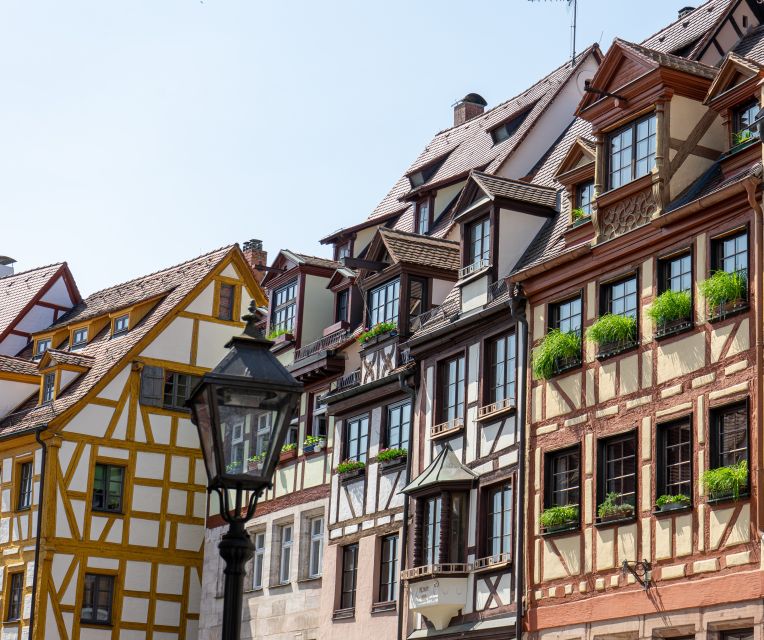
The route then reaches Weißgerbergasse, one of the strongest sections of the walk. This historic street was spared from wartime destruction, allowing you to see an older section of Nuremberg’s built character.
Here, the experience becomes more visual. Large squares and major churches tell you about public life, but a preserved street helps you picture everyday movement through the old city. The guide can explain the street’s place in medieval Nuremberg while you look at the buildings around you.
I especially like this part because it gives the tour texture. You are no longer looking only at famous landmarks. You are walking through a street that helps connect the city’s grand history with ordinary urban life.
The street is also a reminder that Nuremberg cannot be understood only through its postcard sights. The surviving fabric of Weißgerbergasse gives you a more direct sense of the old town’s scale and shape. At the same time, the stop is brief, so do not expect a long architectural lecture on every building.
If you want photographs, this is likely one of the best places along the route. Your guide’s explanation adds meaning, while the street itself gives you time to notice details. Keep in mind that the tour schedule moves on, so save the location for a return visit if you want to explore it slowly.
Crossing the Kettensteg to the Maxbrücke
The final part of the tour takes you to the Kettensteg, described as the oldest preserved metal suspension bridge in Europe. You cross the bridge and finish at the historic Maxbrücke on the other side.
This is a smart ending. A bridge is both a sight and a transition, so the tour closes with movement rather than simply stopping outside another building. After the river walk, market, church, and old street, the crossing brings you back to the Pegnitz and gives the route a clear finish.
The Kettensteg is also a distinctive final memory. Nuremberg has no shortage of impressive churches and civic buildings, but a historic metal suspension bridge feels different. It shows the city through engineering and transport as well as through religion and public life.
The tour ends at Maxbrücke, not back at the Hangman’s House. That matters when planning your next stop. You finish on the other side of the river, so check your map before booking anything immediately afterward. The end point is still within the Old Town route, but it is not the same place where you began.
How much history fits into 90 minutes?
A 1.5-hour tour cannot cover every era or major sight in Nuremberg. Its strength is selection. You move through a small area and encounter several different parts of the city: the Pegnitz, a bridge, the central market, the Frauenkirche, St. Sebaldus Church, Weißgerbergasse, the Kettensteg, and the Maxbrücke.
The short walking intervals between stops help keep the pace comfortable. The published route lists about five minutes on foot between several locations, so you are not facing long stretches of marching. The guide can keep the story moving while you change neighborhoods and settings.
The experience also has a clear historical focus. You hear about Nuremberg’s centuries-old past, the Middle Ages, Saint Sebaldus, historic streets, and the city’s old bridges. It does not promise a full treatment of every modern chapter in Nuremberg’s history, nor does it focus on attractions outside the Old Town.
That makes it a strong first-day activity. I would use it to learn the city’s layout and choose which places deserve a second look. You can then return to the Hauptmarkt, St. Sebaldus Church, or Weißgerbergasse with a clearer sense of their role.
Price, language, and practical fit
At $15 per person, the tour offers solid value for a guided 90-minute walk. You are paying for a live German-speaking guide and a carefully connected route through central Nuremberg. The price is low enough to make sense as an orientation tour, particularly if you are visiting for a short stay.
The main limitation is the language. The tour is conducted in German, and no other language is listed. If you do not understand German, this is unlikely to work as a satisfying history tour, even though the route itself is easy to follow.
The booking terms are flexible: you can cancel up to 24 hours before the start for a full refund, and you can reserve now and pay later. A booking confirmation serves as proof of payment, and no invoice can be issued for bookings made through GetYourGuide.
The information about mobility needs deserves attention. The activity details say the tour is wheelchair accessible, but the same information also says it is not suitable for people with mobility impairments. Since the route includes bridges, historic streets, and continuous walking, contact the provider before booking if you need step-free access or a slower pace.
Who will enjoy this Nuremberg walk?
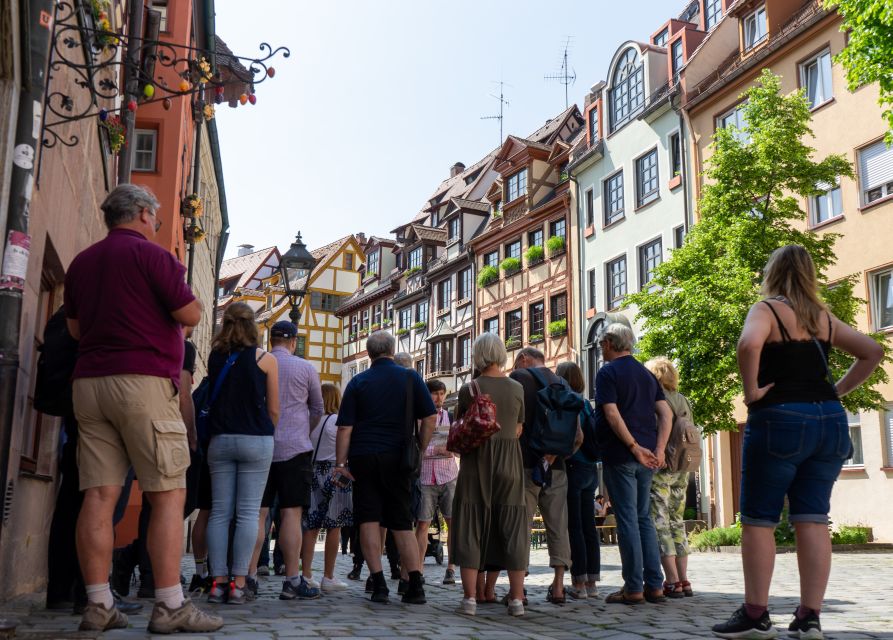
I would recommend it most strongly to first-time visitors who want a compact introduction to the Old Town. It also suits anyone who prefers history explained through streets and landmarks rather than a long indoor presentation.
Families with older children may find the changing stops easier than a single museum visit. The guides’ use of short stories and humor should help keep the walk from feeling like a lecture. Couples, solo visitors, and small groups can also use it as a practical orientation before exploring independently.
It is less suitable for you if you need an English-language tour, want extensive time inside churches, or prefer a tour centered on one subject. It may also be a poor fit for anyone who finds continuous walking difficult, given the conflicting accessibility information.
Should you book it?
Book this tour if you want a well-priced introduction to Nuremberg that combines major sights with a few less obvious stops. The best parts are the Pegnitz route, the preserved Weißgerbergasse, the stories at St. Sebaldus Church, and the unusual finish across the Kettensteg.
The guides are the deciding factor, and the strongest available feedback points to clear explanations, humor, and real affection for Nuremberg. Choose it early in your stay, wear good shoes, and treat the 90 minutes as an orientation rather than a complete account of the city.
Skip it if you need English commentary or a detailed interior tour. For German-speaking visitors who want the historic center explained by someone who knows how to tell its stories, $15 is a sensible investment.
FAQ
Where does the Nuremberg walking tour begin?
The tour begins in front of the Henkerhaus Museum, also called the Hangman’s House. The guide holds a picture folder and wears a name tag for Geschichte Für Alle e.V.
Where does the tour end?
The tour ends at Maxbrücke, on the other side of the Pegnitz from the starting point.
How long does the tour last?
The walking tour lasts 1.5 hours.
What language is the tour conducted in?
The live tour guide speaks German. German is the only listed tour language.
Does the tour visit the Christkindlesmarkt?
The route crosses the Hauptmarkt, where Nuremberg’s Christkindlesmarkt takes place in winter. The tour does not list separate market access.
What should I bring?
Bring comfortable shoes, water, and clothing suitable for the weather.
Can I cancel the booking?
Yes. You can cancel up to 24 hours before the tour for a full refund. You can also reserve now and pay later.
New routes in Germany
- Munich: Walking Tour Old Town and Viktualienmarkt★ 4.7 · 839 reviews
- Stuttgart: Guided Ghost Walking Tour★ 4.5 · 867 reviews
- Stuttgart: Private Guided Circular City Walk★ 4.7 · 129 reviews
- Stuttgart: Old Town Highlights Guided Walking Tour★ 4.2 · 101 reviews
- Stuttgart: City Highlights – Guided Walking Tour★ 4.7 · 189 reviews
- Hamburg: Private Tour Red Light District Walking Tour★ 4.7 · 227 reviews
- Small Group Walking Tour: “Wild Kreuzberg”★ 4.8 · 199 reviews
- Sachsenhausen Memorial: Walking Tour from Berlin★ 4.7 · 132 reviews
Nuremberg Walking Tours, compared.
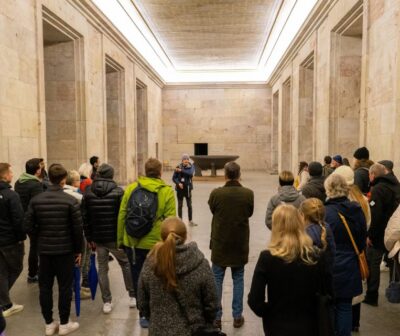
Walking Tour of Former Nazi Party Rally Grounds
Read our review →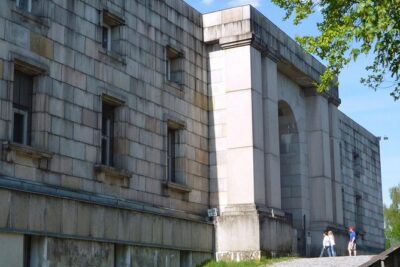
Nuremberg Old Town and Nazi Party Rally Grounds Walking Tour in English
Read our review →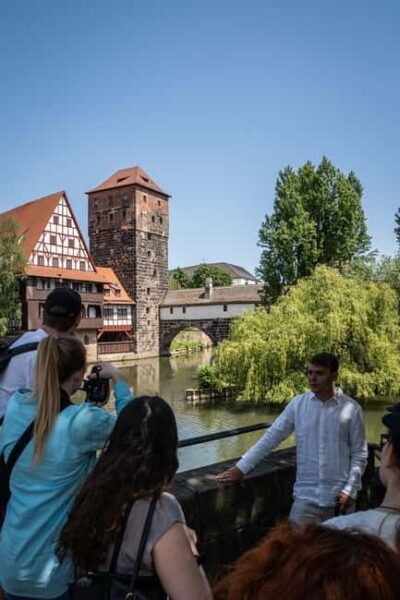

“Rotes Bier” and “Blaue Zipfel”. A historical-culinary walk
Read our review →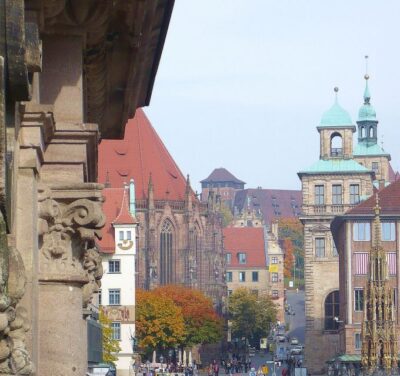
Nuremberg 2-Hour Old Town Highlights Walking Tour in English
Read our review →
Browse the lists this tour appears in