
Review · NUREMBERG
Nuremberg: Free Walking Tour
Nuremberg’s story takes you from medieval power to Nazi crimes and then to the hard work of rebuilding a city nearly destroyed in World War II. This walking tour handles that full arc in about two hours and 15 minutes, using the old town itself as your classroom. I especially like the local perspective from guides such as Andreas, who was born and raised here, and the way the route mixes major sights with personal stories.
I also like the practical side: you get food tips, bakery and bar suggestions, and time for questions after the walk. The main consideration is that this is an outdoor tour, so hot sun, cold weather, or rain can affect your comfort. Comfortable shoes are essential, and you should carry water.
Key points at a glance
- A local’s Nuremberg: Andreas grew up in the city, and guides such as Alexandra and Tom add their own local knowledge and humor.
- A full historical sweep: The route covers the medieval Golden Age, the Nazi era, wartime destruction, reconstruction, and modern efforts to face the past.
- Nine useful stops: See the Hauptmarkt, St. Sebaldus Church, the castle, Albrecht Dürer’s house, Weissgerbergasse, and Hangman’s Bridge.
- Good food advice: Expect tips on Nuremberg specialties, beer, bakeries, coffee shops, bars, and places used by locals.
- Small-group feel: A small group is available, which makes questions easier and helps you hear the guide.
- Excellent value: The listed price is $3.54 per person, with a tip for the guide not included.
Why Nuremberg makes a strong walking-tour city
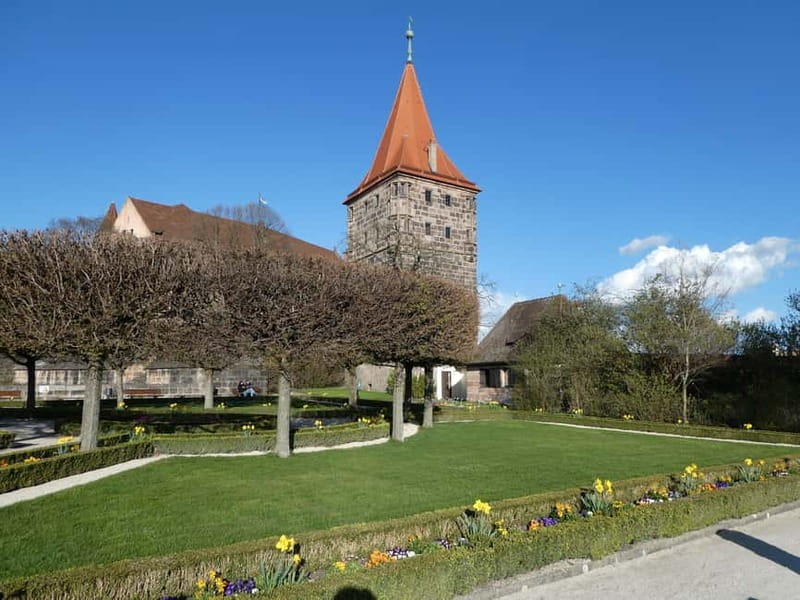
Nuremberg is compact, layered, and easy to read on foot. Within a short distance, you can see a grand market square, old churches, timber-framed houses, the imperial castle, and streets that still show how the medieval city was arranged.
The city also demands more than a pretty sightseeing loop. Nuremberg became a major center of the Holy Roman Empire, later served as a key stage for Nazi propaganda, suffered severe destruction during World War II, and then had to decide how much of its old center to rebuild. A good guide helps you connect those periods instead of treating each building as an isolated photo stop.
That is the main value here. You are not simply moving from one attraction to the next. You are learning why Nuremberg mattered, what happened to it, and how the city lives with that past today.
The tour begins at the Schöner Brunnen, the ornate fountain beside the Hauptmarkt. Look for the white umbrella with a green symbol. This is the practical detail most worth remembering, since the square can be busy and a general meeting point is not enough on its own.
More Free Walking Tours in Germany:
- English Hamburg City Center Pay-What-You-Want Walking Tour
★ 4.9 · 262 reviews - English Harbor&St. Pauli Pay-What-You-Want Walking Tour
★ 4.8 · 197 reviews - Bamberg Free Walking Tour
★ 4.7 · 84 reviews
Hauptmarkt and the city’s medieval heart
The Hauptmarkt is a natural starting point because it brings together Nuremberg’s daily life and its long civic story. The square is known for the Schöner Brunnen, and it remains one of the old town’s central gathering places.
Here, the guide can explain Nuremberg’s rise during the late Middle Ages, when its position and imperial connections helped make it an important commercial and political center. You will also get a sense of how the square functions today, rather than seeing it only as a historical backdrop.
The opening stop is useful for orientation. It gives you a basic map of the old town before you turn into smaller streets and visit individual landmarks. It is also a good place to ask the guide for help with local specialties and places to eat later in your stay.
St. Sebaldus Church and old civic power
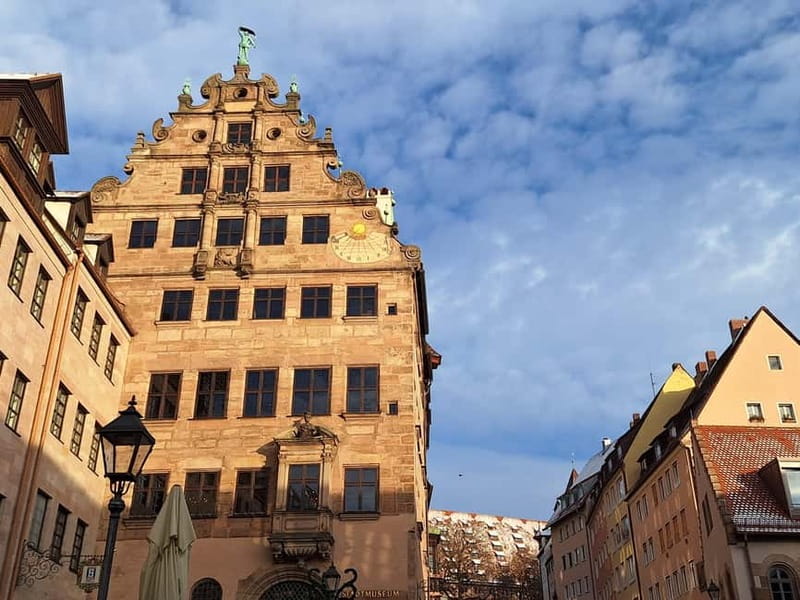
The next stop is St. Sebaldus Church, one of the major churches in the historic center. The guide discusses its place in Nuremberg’s medieval life and points out architectural details that are easy to miss when you walk past on your own.
This stop adds religious and civic context to the tour. Medieval churches were not just places for worship. They shaped the skyline, drew wealth and attention, and reflected the importance of the city’s leading families and institutions.
You should expect an exterior-focused walking-tour explanation rather than a long indoor visit. The route moves at a steady pace, with the guide speaking for several minutes at each major stop. That keeps the tour moving, but it also means you may want to return later if you wish to spend more time inside a church.
Old City Hall and the difficult work of remembering
Old City Hall shifts the focus toward government, law, and Nuremberg’s public identity. The guide connects the building with the city’s long civic story and helps explain how Nuremberg functioned as a place of local authority and public ceremony.
This is also part of the tour’s larger discussion of the Nazi era and its aftermath. Nuremberg is often reduced to its connection with Nazi rallies and the postwar trials, but the city’s past is more complicated. The guide’s job is to place those events within the older city, rather than letting the 20th century erase everything that came before it.
The tour does not include the Nuremberg courthouse where the trials took place, and it does not visit the former Nazi rally grounds. That is an important limit. If those subjects are your main reason for visiting, you will need separate time for them. This walk gives you an introduction and a framework, not a dedicated Nazi-history tour.
More Walking Tours in Germany:
- Discover Berlin Half-Day Walking Tour
★ 5.0 · 9,624 reviews - Berlin City walk Government District and Places of Democracy
★ 4.7 · 8,467 reviews - Berlin: Third Reich & Cold War Guided Walking Tour
★ 4.9 · 8,378 reviews - Munich: Third Reich & WWII Walking Tour
★ 4.6 · 6,181 reviews
The Imperial Castle above the old town
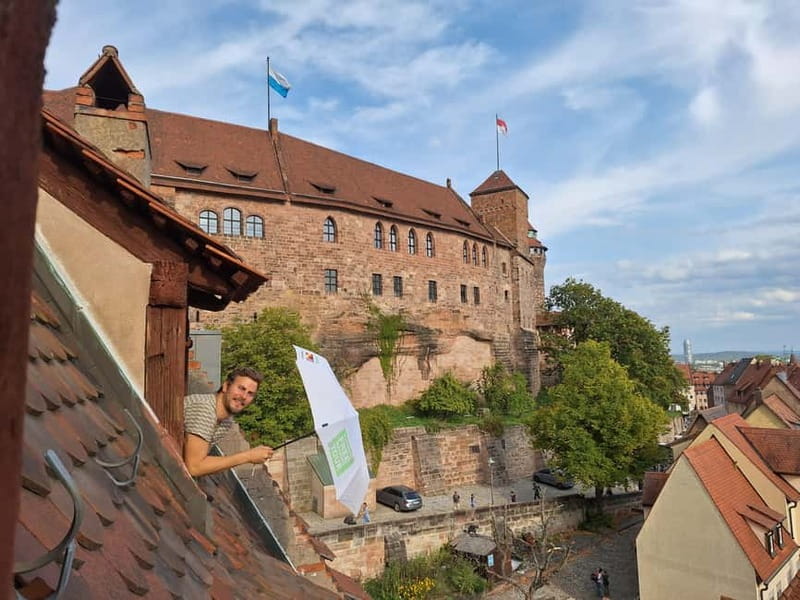
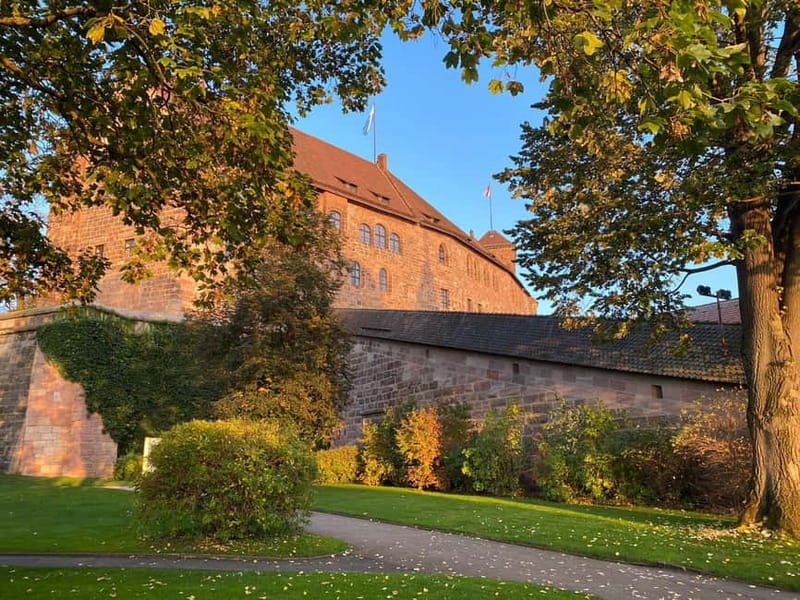
The Imperial Castle is the route’s largest architectural landmark and one of its best orientation points. From here, you can understand the old town’s position and the importance of Nuremberg during the medieval period.
The guide explains the castle’s role in the city’s Golden Age and points out how its presence shaped Nuremberg’s status. You will hear about the city as a place connected to emperors, trade, and political power.
The castle stop also works well visually. After several streets and facades at eye level, the higher position gives you a broader sense of the city. Bring a camera, as the route includes several attractive architectural views.
Do not confuse this stop with a full castle visit. The tour includes a guided stop at the Imperial Castle, but the supplied details do not include an admission ticket or a separate interior tour. If you want to explore the castle rooms at length, plan another visit.
Albrecht Dürer’s house and the artist behind the name
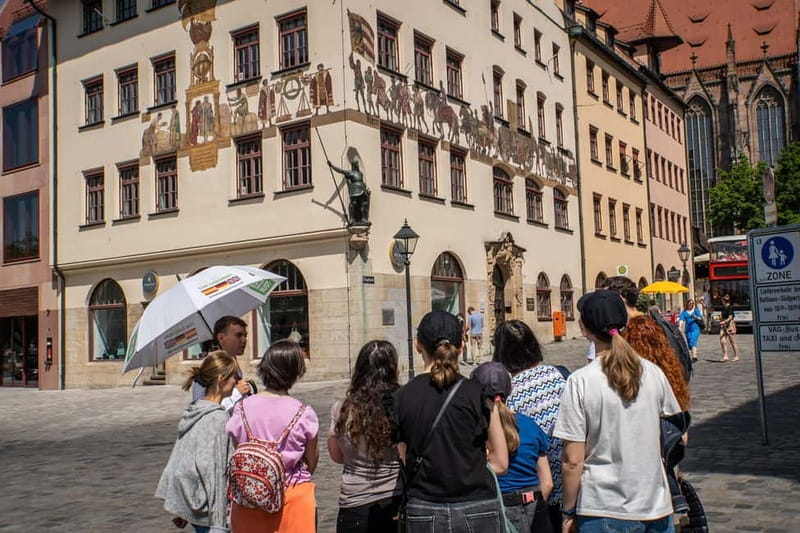
The walk continues to Albrecht Dürer’s House, the former home of one of Germany’s most important artists. This stop gives the tour a cultural angle beyond rulers, churches, and war.
Dürer links Nuremberg to the wider world of European art and printmaking. The guide uses the house to explain the artist’s importance and the kind of creative life that developed in the city. It is a more personal stop than the castle, since it focuses on a particular resident and the mark he left on German culture.
The house is also in a handsome part of the old town, close to the castle. You can expect the guide to point out the setting and share the story of Dürer’s connection to Nuremberg. As with the castle, the walk itself does not include a stated interior admission, so return later if you want a museum visit.
Weissgerbergasse and Nuremberg’s half-timbered character
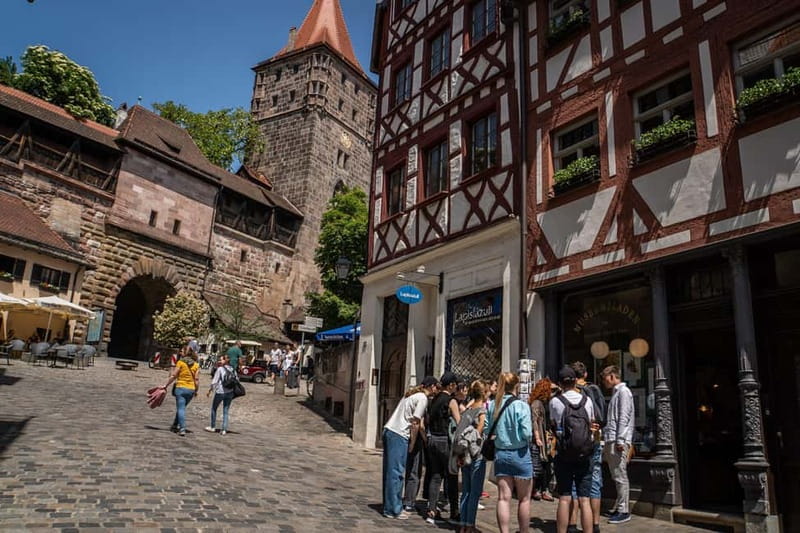
Weissgerbergasse is one of the most visually appealing parts of the route. Its historic houses show the kind of architecture many people hope to see in Nuremberg, especially the colorful and distinctive half-timbered buildings.
This street helps correct a common misconception about the old town. Nuremberg was heavily damaged in World War II, so what you see today involves both surviving buildings and careful reconstruction. The guide explains the destruction and the choices made when the city was rebuilt.
That discussion is more useful than simply hearing that a street is old. You begin to notice which parts reflect medieval forms, which buildings survived, and how reconstruction shaped the city you are walking through now.
The route is not simply a march between monuments. Several reviews describe a relaxed pace between stops, with enough time to move comfortably and listen. On a hot day, most stops may offer shade, though one sunny stop was described as especially tiring in very high temperatures. Dress for the forecast.
Hangman’s Bridge and an unexpected human story
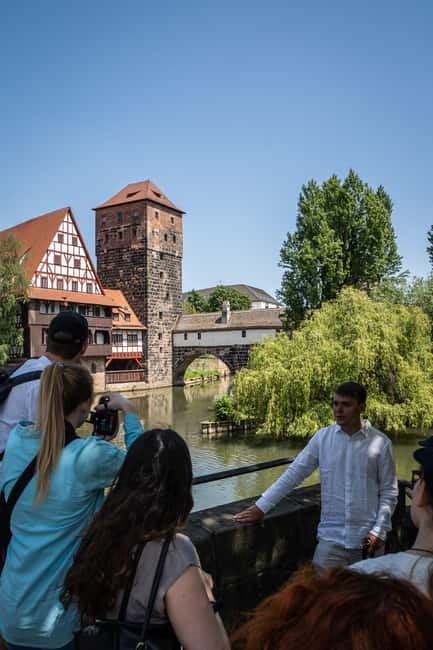
Hangman’s Bridge brings a more unusual story to the tour. Here you hear about Franz Schmidt, Nuremberg’s hangman, who held the position for many years and was apparently a more complex and approachable figure than the job title suggests.
This is exactly the kind of story that helps a city feel human. Large historical events can become a list of dates and famous names. A personal tale about an ordinary, if unusual, working life gives you a different view of how medieval society operated.
The bridge also adds variety to the route. After churches, civic buildings, and grand architecture, this stop focuses on an individual and the social rules of the old city. It is a memorable way to close the historical portion of the walk before returning to the Schöner Brunnen.
How the tour handles the Nazi past
Nuremberg’s Nazi-era story needs care, and this is one of the tour’s most important strengths. The guide discusses the city’s role in the Third Reich, its wartime destruction, and the difficult process of dealing with that heritage.
You should expect a serious conversation, but not a tour devoted only to grim subjects. The route places the Nazi era between the medieval past and the present, showing how the city changed and how it rebuilt.
Several guide styles are represented in the experience. Andreas is described as a local who is proud of his home city and eager to explain it. Alexandra is praised for direct, clear explanations and for handling difficult subjects sensitively. Tom is noted for bringing history to life with humor and energy. The exact guide matters because the tone can vary, but the common thread is an accessible presentation with time for questions.
If you want a detailed examination of the courthouse trials or the former rally grounds, book those separately. This tour helps you understand why those places matter, then returns you to the old town.
Food, beer, and useful local suggestions
A good first-day walking tour should help with the rest of your visit, and this one does more than point out buildings. You can ask about typical Nuremberg specialties and where to find them, along with local beer, bakeries, coffee shops, bars, and restaurants.
That advice is especially useful in a city where a short stay can become a hunt for the right regional food. Guides have offered suggestions based on places locals use, not just the most visible options near the main square.
Save your food questions for the end if you already have a meal in mind. The guide leaves time after the tour to answer questions and help with plans in and around Nuremberg.
Pace, group size, and practical comfort
The walk lasts about 2 to 2.5 hours, with the planned duration listed at roughly 2 hours and 15 minutes. That is enough time for a solid introduction without taking up the whole day.
The route is on foot throughout. You move between the Hauptmarkt, churches, the castle, Dürer’s house, Weissgerbergasse, and Hangman’s Bridge, then return to the starting point. Wear comfortable walking shoes, since even a compact old town becomes tiring when you are standing and walking for more than two hours.
A small group is available. That matters because the tour includes questions and personal explanations, and a smaller group makes it easier to hear the guide. The tour has also been praised for keeping people moving on cold days and for maintaining an unhurried pace during hot weather.
Guiding is offered in English, German, and Spanish. Check the available start time and language when booking. You can cancel up to 24 hours before the tour for a full refund, and the reserve-now, pay-later option keeps your plans flexible.
The listed price is $3.54 per person, but the experience is described as a free walking tour, so the guide’s tip is not included. Bring cash if you intend to tip. One useful detail from the tour information is that some participants wished they had remembered to carry cash for this purpose.
At this price, the value is excellent if you want orientation, historical context, and food advice in one outing. The low booking price should not be read as meaning that the guide’s work has no value. A tip is the normal way to recognize the time and preparation involved.
Who should book this Nuremberg walk?
I would choose this tour for a first visit, especially if you have only one or two days in Nuremberg. It covers the main old-town sights while giving you a usable timeline for the city.
It also suits you if you like history presented through stories rather than long academic lectures. The tour includes medieval politics, Albrecht Dürer, Franz Schmidt, wartime destruction, reconstruction, and the Nazi past, but the guides keep the material moving with humor and questions.
Families and mixed-age groups may appreciate the variety, though the serious wartime sections require attention. Food-focused visitors should also book it early in their stay, since the restaurant, bakery, beer, and coffee advice can shape the rest of your visit.
I would look elsewhere if your main goal is an in-depth visit to the Nuremberg Trials courthouse or the Nazi rally grounds. Those sites are not part of this route. I would also think twice if you dislike walking outdoors for more than two hours or if the forecast calls for difficult weather.
Should you book the Nuremberg Free Walking Tour?
Yes, if you want a broad and friendly introduction to Nuremberg’s old town at very little upfront cost. The best features are the local guides, the clear historical timeline, the mix of famous sights and smaller stories, and the useful food suggestions.
Book it near the start of your stay so you can use the guide’s advice afterward. Bring comfortable shoes, water, weather-appropriate clothing, and cash for a tip. Choose another or additional tour only if you want to focus heavily on the courthouse trials or former Nazi rally grounds.
FAQ
How long does the Nuremberg Free Walking Tour last?
The tour lasts about 2 to 2.5 hours, with the planned duration listed as approximately 2 hours and 15 minutes.
Where does the tour begin?
The meeting point is the Schöner Brunnen beside the Hauptmarkt in Nuremberg. Look for the white umbrella with a green symbol.
Where does the tour finish?
The walk returns to the Schöner Brunnen, the same general area where it begins.
Which languages are available?
The tour is offered in English, German, and Spanish.
Which sights are included?
The route includes the Hauptmarkt, St. Sebaldus Church, Old City Hall, the Imperial Castle, Albrecht Dürer’s House, Weissgerbergasse, and Hangman’s Bridge.
Does the tour visit the Nuremberg Trials courthouse?
No. The courthouse of the Nuremberg Trials is not included.
Does the tour visit the former Nazi rally grounds?
No. The former Nazi rally grounds are not included in this walking tour.
Is the guide’s tip included?
No. A tip for the guide is not included. Carrying cash is useful if you want to tip at the end.
New routes in Germany
- Munich: Walking Tour Old Town and Viktualienmarkt★ 4.7 · 839 reviews
- Stuttgart: Guided Ghost Walking Tour★ 4.5 · 867 reviews
- Stuttgart: Private Guided Circular City Walk★ 4.7 · 129 reviews
- Stuttgart: Old Town Highlights Guided Walking Tour★ 4.2 · 101 reviews
- Stuttgart: City Highlights – Guided Walking Tour★ 4.7 · 189 reviews
- Hamburg: Private Tour Red Light District Walking Tour★ 4.7 · 227 reviews
- Small Group Walking Tour: “Wild Kreuzberg”★ 4.8 · 199 reviews
- Sachsenhausen Memorial: Walking Tour from Berlin★ 4.7 · 132 reviews
Nuremberg Walking Tours, compared.
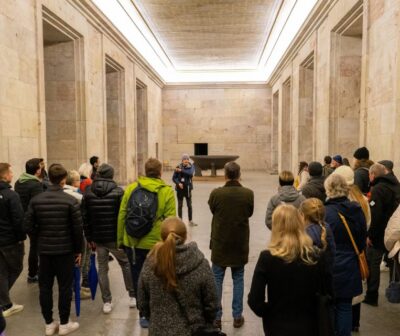
Walking Tour of Former Nazi Party Rally Grounds
Read our review →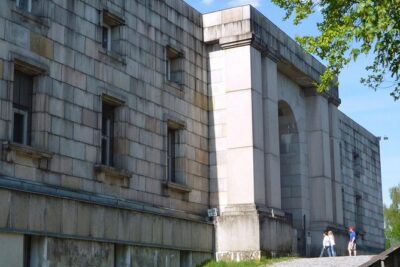
Nuremberg Old Town and Nazi Party Rally Grounds Walking Tour in English
Read our review →
“Rotes Bier” and “Blaue Zipfel”. A historical-culinary walk
Read our review →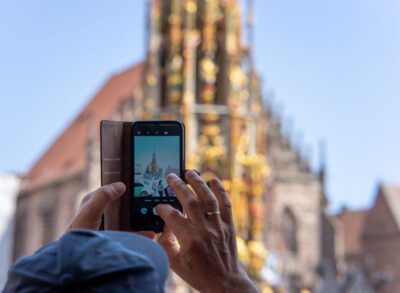
Nürnberg kennenlernen: Highlights in der Altstadt
Read our review →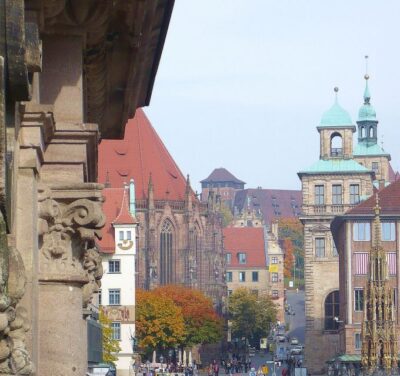
Nuremberg 2-Hour Old Town Highlights Walking Tour in English
Read our review →
Browse the lists this tour appears in