
Review · MEXICO CITY
Mexico City: Historic Downtown Walking Tour
Mexico City’s historic center packs Aztec ruins, Spanish churches, grand civic buildings, and everyday Mexican life into a surprisingly compact walk. This tour gives you a clear route through that mix, with a local guide explaining how the city’s 700-plus years fit together.
I like the way it combines the major sights with small, human details, especially the stained-glass department store ceiling and the traditional bakery. I also like the practical food advice, from ordering tacos to finding good places to eat after the tour. The main drawback is sound: street vendors, music, and traffic can make a guide hard to hear, and three hours leaves little time for a full visit inside the Templo Mayor archaeological site.
Key points to know before you book
- Start at the heart of Mexico City: Meet by the McDonald’s in Zócalo, beneath the white umbrellas marked Mexico a Pie Walking Tours.
- See the city’s layered past: The route links the Metropolitan Cathedral, Templo Mayor ruins, Hernán Cortés’s resting place, and Spanish-era architecture.
- Go beyond the usual postcard stops: You’ll enter the ornate Post Office Building, see a remarkable stained-glass ceiling, and visit a traditional bakery.
- Expect a history-heavy morning or afternoon: The guide covers ancient Mesoamerica, conquest, religion, architecture, and modern Mexico in about three hours.
- Plan for city noise and hard paving: Wear comfortable shoes and stay close to the guide, especially around vendors and crowded streets.
- Guides shape the experience: Emiliano, Mar, Nadia, Dani, Arturo, and others have received especially strong praise for clear storytelling, friendliness, and local tips.
Why this is a smart first walk in Mexico City
At $26 per person, this is a reasonably priced way to get your bearings in Centro Histórico. You are paying mainly for the guide and the route, not for a full day of transport or a series of major paid admissions. That makes the tour most useful early in your stay, when you want the story of the city before returning to specific museums and sites on your own.
The route also solves a common Mexico City problem: the center can feel like too much at once. A church façade, a pre-Hispanic stone wall, a modern shop, a street-food stand, and a government building may all appear within a few minutes. A good guide shows you how those pieces connect instead of leaving you with a pile of disconnected photographs.
The strongest part of the experience is the explanation. Guides such as Emiliano, Nadia, Mar, Arturo, Dani, and Daniella have been praised for making complicated history easy to follow. Mar has also been especially attentive about shade and whether everyone can hear, while some guides help with food choices and places to explore after the walk.
This is not a quiet museum tour. You will be outside in a busy city center, often near vendors and music. One useful criticism is that the guide can be difficult to hear in noisy areas, even when speaking clear English. Stay near the front of the group and ask the guide to repeat anything you miss.
More History Walking Tours in Mexico
- Historic Downtown Walking Tour
★ 5.0 · 1,289 reviews - Walking Tour of the Historic Center of Mexico City
★ 5.0 · 870 reviews - Historical and Cultural Walking Tour of San Miguel de Allende
★ 5.0 · 641 reviews
Meeting at Zócalo, the city’s great stage
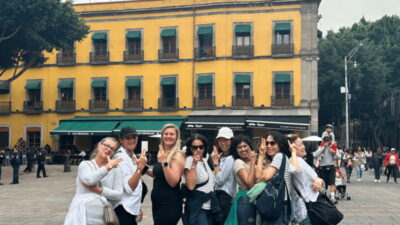
The meeting point is in front of McDonald’s on the main Zócalo square. Look for the white umbrellas used by Mexico a Pie Walking Tours. The morning meeting time is 9:30 a.m., and the afternoon meeting time is 4:30 p.m. The exact availability should be checked when booking.
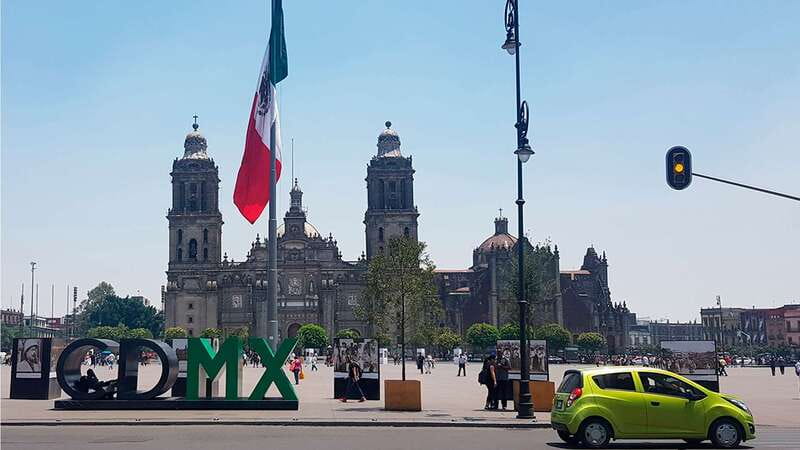
Zócalo is an effective starting point because it immediately gives you the scale of Mexico City’s center. This vast square is often called the heart of Mexico, and the tour uses it to explain the city’s political, religious, and cultural importance.
Arrive a few minutes early. The square is large, and a busy public space is not the place to hunt for a guide at the last second. A valid cellphone number is required, which matters if the group has already started or if you need help finding the white umbrellas.
The meeting point is easy to identify once you are there, but the area can be noisy and crowded. Keep the guide’s phone contact available, and do not assume the group will be directly beside the restaurant entrance.
Inside the Metropolitan Cathedral
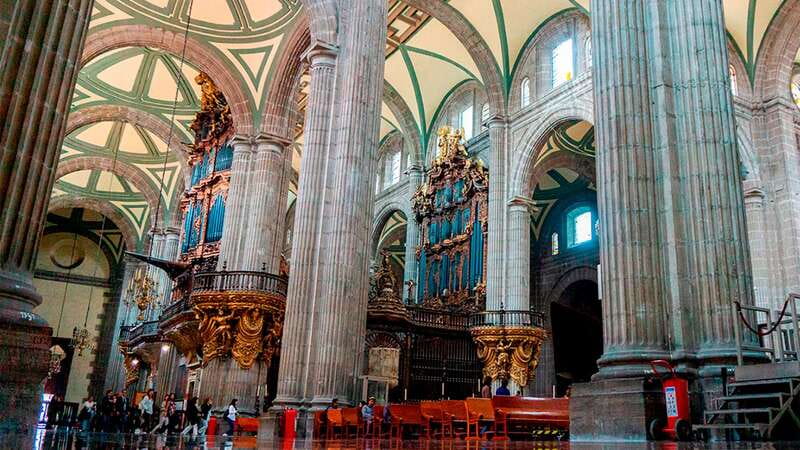
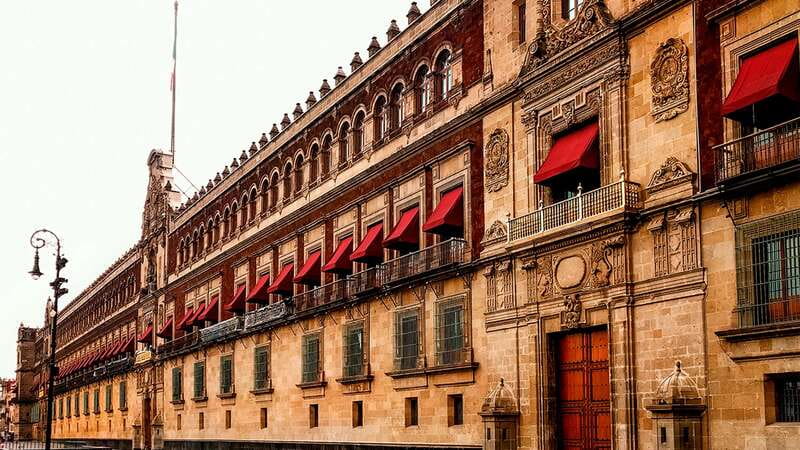
The walk begins inside the Metropolitan Cathedral, one of the great buildings on the Zócalo. It was the largest church in the Americas for more than three centuries, and its size helps explain the power of the Spanish colonial church in Mexico.
Your guide uses the cathedral to discuss religion, conquest, architecture, and the layers of history beneath modern Mexico City. The setting also calls for a quieter, more respectful part of the tour. Daniella, for example, has been praised for encouraging reverence inside the cathedral rather than treating it like just another photo stop.
The cathedral is valuable because it gives you more than an exterior view. You can see the scale of the interior and better understand why this building was such a force in the city. At the same time, some of the tour’s history can feel dense. If you prefer a light sightseeing walk with only a few facts, this experience may ask more concentration than expected.
Dress for the weather outside but keep in mind that the cathedral is a religious space. Comfortable, respectful clothing is the sensible choice.
Zócalo, Cortés, and the city beneath your feet
Back outside, the guide places the cathedral and the Zócalo in the larger story of Mexico City. The square sits at the center of a city built over the former Aztec capital, so this is where the tour’s main idea becomes clear: modern Mexico City did not replace the past cleanly. It was built on top of it.
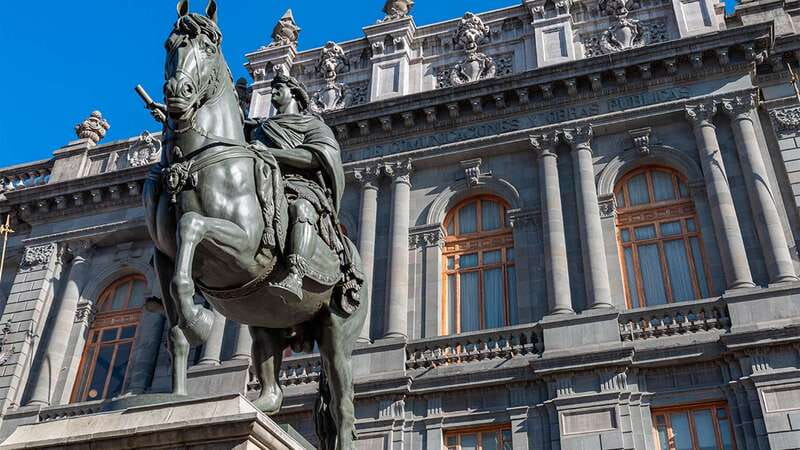
The route includes the resting place of Hernán Cortés, the Spanish conqueror. This stop is useful because it brings the conquest down from a textbook subject to a physical place in the city. The guide can connect the Spanish arrival, Catholic institutions, and the remaking of the capital.
Expect a brisk overview rather than a scholarly lecture. The guides cover more than 700 years of history in three hours, from ancient Mesoamerica through colonial rule and into present-day Mexico. That breadth is one of the tour’s strengths, though some information may be repeated or delivered quickly.
Same streets, a different guide:
- Playa del Carmen Walking Food Tour
★ 5.0 · 1,274 reviews - Frida Kahlo VIP [Museum Tickets Included] Walk, Markets & Churros
★ 5.0 · 982 reviews - Merida Walking Food Tour. Authentic & Local Cuisine
★ 5.0 · 451 reviews - Merida Street Food Walking Tour
★ 5.0 · 417 reviews
Templo Mayor and the Aztec ruins
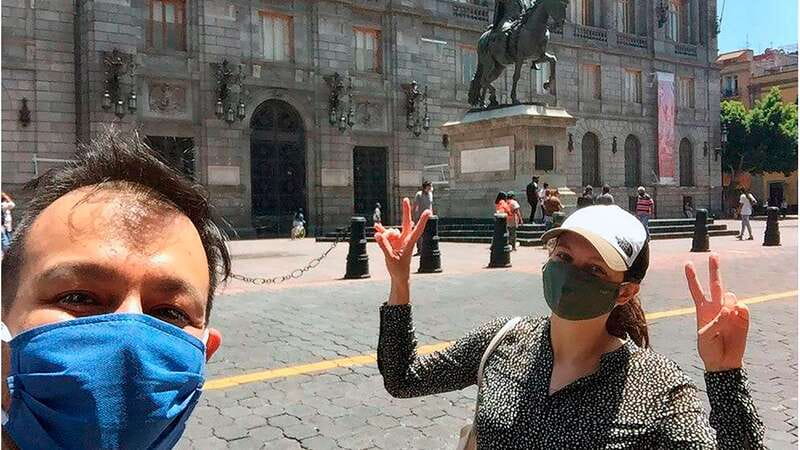
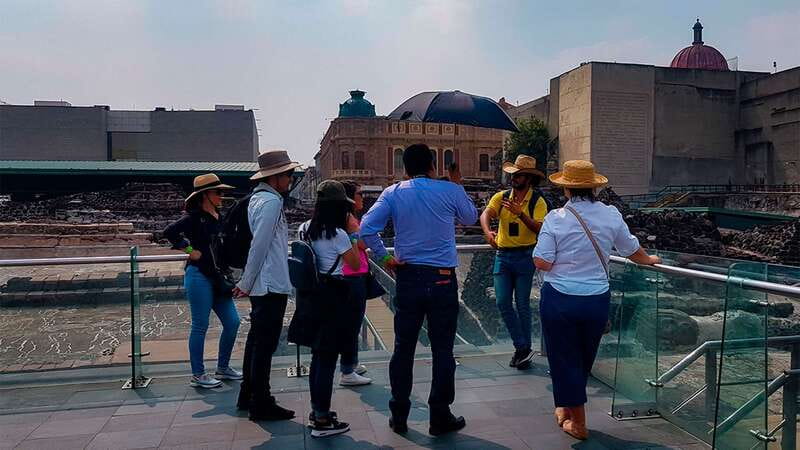
One of the most striking stops is the area beside the ruins of the ancient Aztec city, known as Templo Mayor. Here, you can stand beside exposed remains while the surrounding streets continue with modern city life. It is one of the clearest places to see how Mexico City’s old and new layers meet.
The guide explains the importance of the Aztec capital and helps you notice what you might otherwise walk past. This is where a local guide adds real value. Without context, the ruins can seem like scattered stones beside a busy square. With context, they become evidence of a powerful city that once occupied this ground.
You should set your expectations carefully. The tour may give you only a short look at the archaeological area, around ten minutes according to one detailed account of the route, rather than a full circuit of the site and museum. If Templo Mayor is high on your list, return later with enough time to explore it properly.
That limitation is not necessarily a flaw. The tour is designed as an introduction to downtown, not as a dedicated archaeological visit. The benefit is that you see Templo Mayor alongside the cathedral and Zócalo, rather than spending the entire three hours on one site.
The Post Office Building and downtown’s grand style
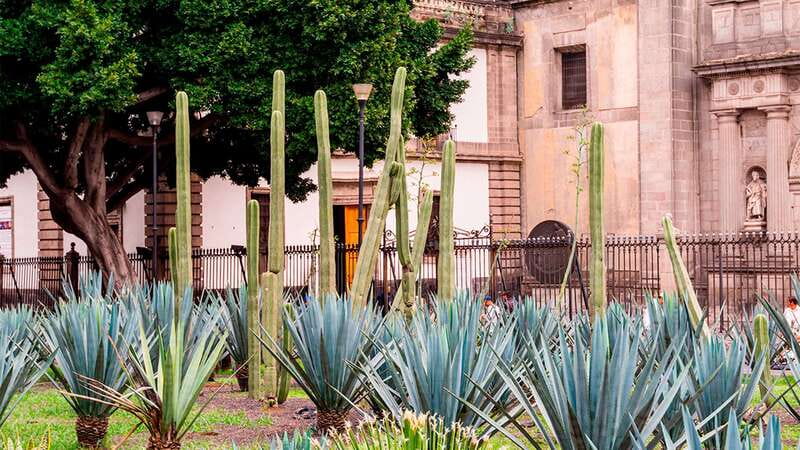
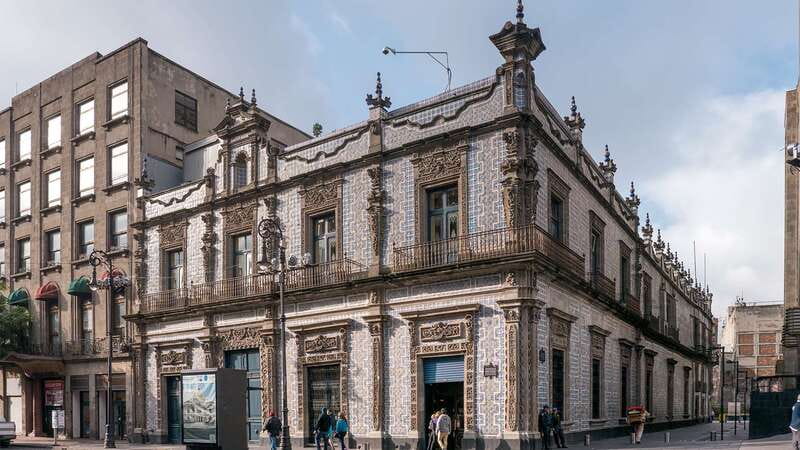
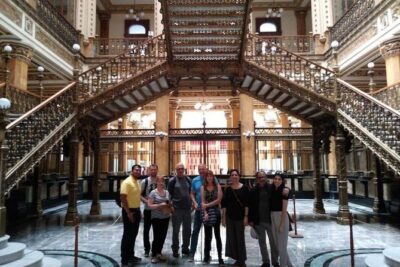
The Post Office Building is a change of mood. After the cathedral and Aztec ruins, you enter a highly decorative civic building that shows Mexico City’s early twentieth-century taste for ornament and display.
The interior is one of the route’s strongest architectural surprises. Rather than only pointing out the façade, the guide takes you inside and explains what makes the building special. This is exactly the kind of stop that can disappear from an independent walk if you do not know where to look.
The tour also includes an impressive department store with an extravagant stained-glass ceiling. The store is still part of everyday city life, which makes the visit more interesting than a polished monument standing apart from local routines. You are seeing architecture in use, not just architecture behind a museum rope.
These stops also give your eyes a break from chronological history. You move from ancient ruins and colonial religion into commercial and civic Mexico City. That variety helps the three hours pass quickly.
Palace of Fine Arts and the bakery stop
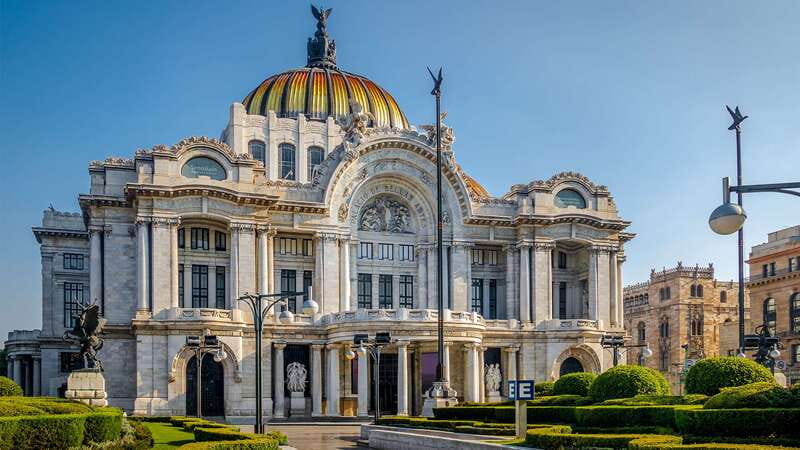
The Palace of Fine Arts is another major architectural highlight. The guide discusses its design and place in the city, giving you a useful introduction even if you do not have time for a full visit inside.
As with Templo Mayor, you should treat this as an orientation stop rather than a substitute for a museum visit. The tour gives you the building’s role and visual impact, then keeps moving. If you want to study the murals or spend time inside the cultural complex, return independently.
The final food stop brings the tour back to ordinary Mexican life. Inside a traditional bakery, you can see the wide range of sweet breads and typical baked goods. You may taste something if you wish, but food and drinks are not included in the tour price.
I like this part because it turns food into a cultural lesson without making the experience a formal food tour. The bakery also gives you a practical chance to try something unfamiliar and learn how Mexican bread differs from the pastries you may know at home. Guides have also offered useful tips on tacos, cafés, and other places to eat after the walk.
Pace, weather, and the practical side of walking
Three hours is long enough to cover a lot and short enough to fit into a first day in the city. You will be on your feet for most of it, so wear comfortable shoes. Bring sunglasses, sunscreen, and clothing suited to the weather.
The tour runs rain or shine. That matters in Mexico City, where a bright morning can turn wet later in the day. A light rain layer is a sensible addition, though the required items specifically include weather-appropriate clothing.
Shade can be limited in open areas, especially around the Zócalo. Several guides have made a point of finding shade when possible, but you should still protect yourself and carry water. Food and drinks are not included.
The route is listed as wheelchair accessible, but the same information also says the tour is not suitable for wheelchair users. That is a clear inconsistency. If you use a wheelchair, contact the operator before booking and ask about the exact route, surfaces, entrances, and current accessibility. Baby strollers are not allowed.
Language, group comfort, and guide quality
Tours are offered in English and Spanish. The guide makes a major difference, and the strongest examples include Emiliano’s relaxed delivery, Nadia’s command of Mexican history, Mar’s care with shade and questions, Arturo’s ability to keep people engaged, and Dani’s efficient pacing.
You may also find two guides leading a large group. That arrangement has been used when numbers are high and can help keep everyone together. Still, large public spaces and loud streets make it important to stay close.
If English is your tour language, the guides are generally praised for fluent, clear explanations. The main practical issue is volume, not the basic quality of the information. Street music, vendors, and traffic can overpower a normal speaking voice. Stand near the guide, avoid drifting to the back, and ask for a repeat when needed.
Who will get the most from this tour
I would choose this walk if you are visiting Mexico City for the first time and want a clear introduction before exploring alone. It suits curious adults, solo visitors who want company for an afternoon, and anyone who enjoys history explained through real buildings and streets.
It also works well for travelers with limited time. In three hours, you see the main downtown landmarks, learn the broad story of Mexico City, and collect ideas for food and museums later.
I would not choose it as your only visit to Templo Mayor or the Palace of Fine Arts. Both deserve more time than this route can provide. I would also reconsider if you dislike group walking, have difficulty hearing in noisy places, or need confirmed wheelchair access.
Cancellation is free up to 24 hours before the tour, and you can reserve while paying later. Those terms make it easier to fit the walk into a changing Mexico City schedule.
Should you book the Historic Downtown Walking Tour?
Book it if you want a strong first look at Centro Histórico for $26, especially when a good guide is more important to you than long museum visits. The mix of cathedral, Zócalo, Aztec ruins, grand architecture, bakery, and food advice gives you useful context fast.
Just plan to return to Templo Mayor or the Palace of Fine Arts if you want a full visit. Arrive early at the white umbrellas, wear good shoes, protect yourself from sun and rain, and stay close enough to hear the guide. For a first-day orientation with real local detail, this is a solid value.
FAQ
How long does the Mexico City Historic Downtown Walking Tour last?
The tour lasts three hours.
How much does the tour cost?
The listed price is $26 per person.
Where does the tour meet?
Meet in front of McDonald’s in Zócalo Main Square. Look for the white umbrellas used by Mexico a Pie Walking Tours guides.
What languages are available?
The tour is offered in English and Spanish.
Are food, drinks, and transportation included?
No. Transportation to and from the meeting point, food, and drinks are not included. You may taste bread at the bakery if you wish, but purchases are your responsibility.
Is the tour suitable for wheelchair users or baby strollers?
The information provided is inconsistent about wheelchair access, listing the tour as accessible but also saying it is not suitable for wheelchair users. Contact the operator to confirm the current route before booking. Baby strollers are not allowed.
New routes in Mexico
- Playa del Carmen: 3-Hour Local Food Walking Tour★ 4.8 · 267 reviews
- Mexico City: Lucha Libre Show, Walking Tour & Tequila★ 4.6 · 156 reviews
- Mexico City: Guided walking tour through the most historic parts of the city.★ 4.5 · 172 reviews
- Mérida: 3-Hour Walking Food Tour★ 4.9 · 287 reviews
- Historical & Cultural Walking Tour of San Miguel de Allende★ 4.8 · 225 reviews
- Guadalajara: Culture, Architecture, and Market Walking Tour★ 5.0 · 81 reviews
- Walking Tour of the Historic Center of Mexico City★ 5.0 · 870 reviews
- Historical and Cultural Walking Tour of San Miguel de Allende★ 5.0 · 641 reviews
Mexico City Walking Tours, compared.
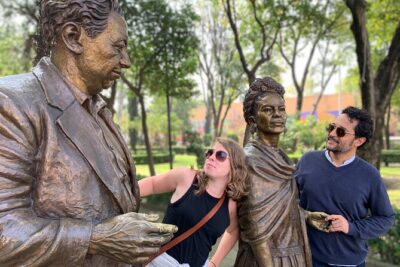
Frida Kahlo VIP [Museum Tickets Included] Walk, Markets & Churros
Read our review →
Guided walking tour through the most historic parts of the city.
Read our review →
Browse the lists this tour appears in