
Review · MALTA
Mdina and Rabat: Guided City Walking Tour
Mdina is the kind of place that can look almost too polished at first glance, with honey-colored stone, quiet lanes, and grand doorways. A good guide shows you what the stone is saying. This two-hour walk connects Mdina’s past as Malta’s capital with the more lived-in streets of nearby Rabat.
I like the easy pace, which leaves time to look up at palaces, churches, convents, and small details such as the ornate door knockers. I also like the guides’ local touch. Nadine, Angele, Marisa, Charlotte, Angela, and others have been praised for clear storytelling, humor, restaurant advice, and useful tips for seeing more after the tour.
The main consideration is that this is an orientation walk, not a museum tour. Church and museum entry fees are extra, and a bank holiday or closed attraction can limit what you see inside. The route is wheelchair accessible, but you should still confirm the meeting point and tour conditions when booking.
Key points at a glance
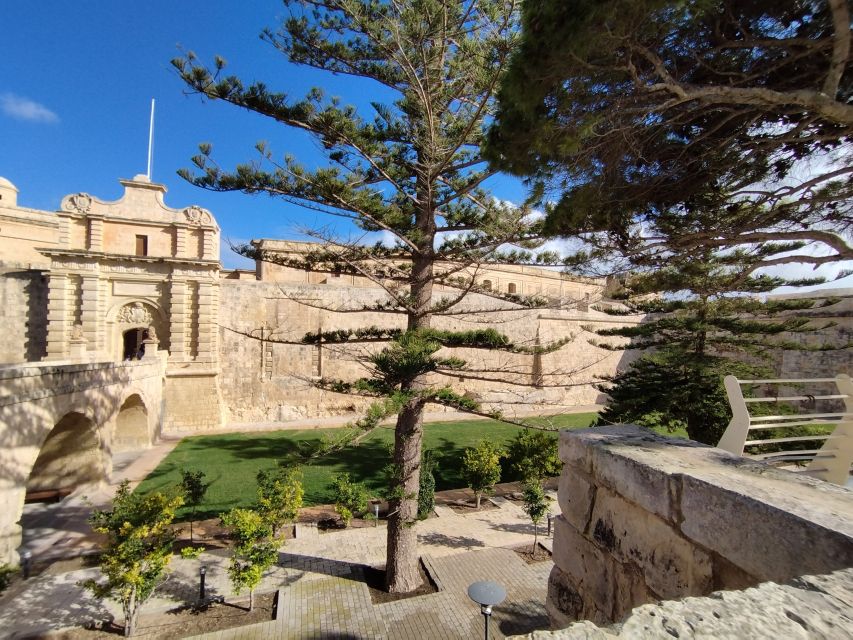
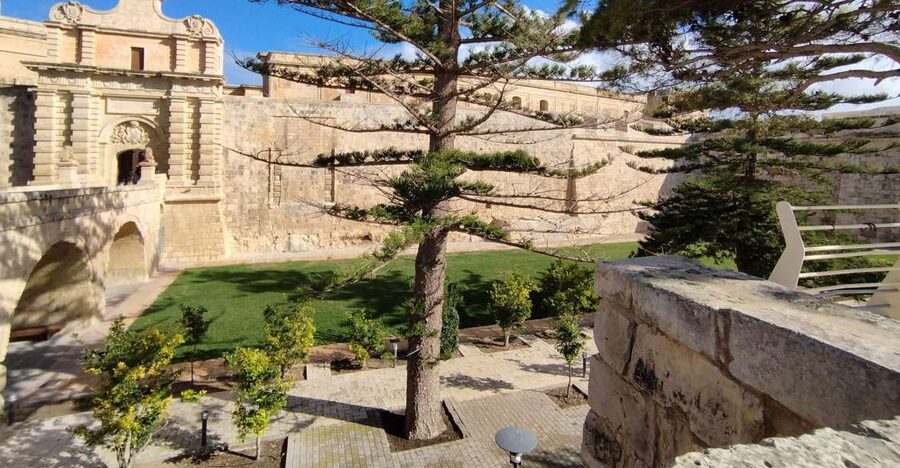
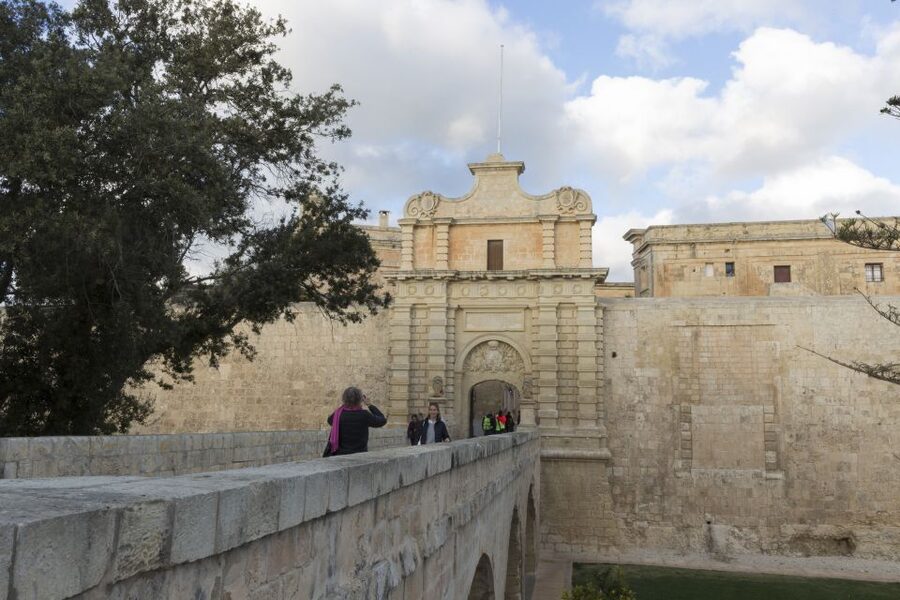
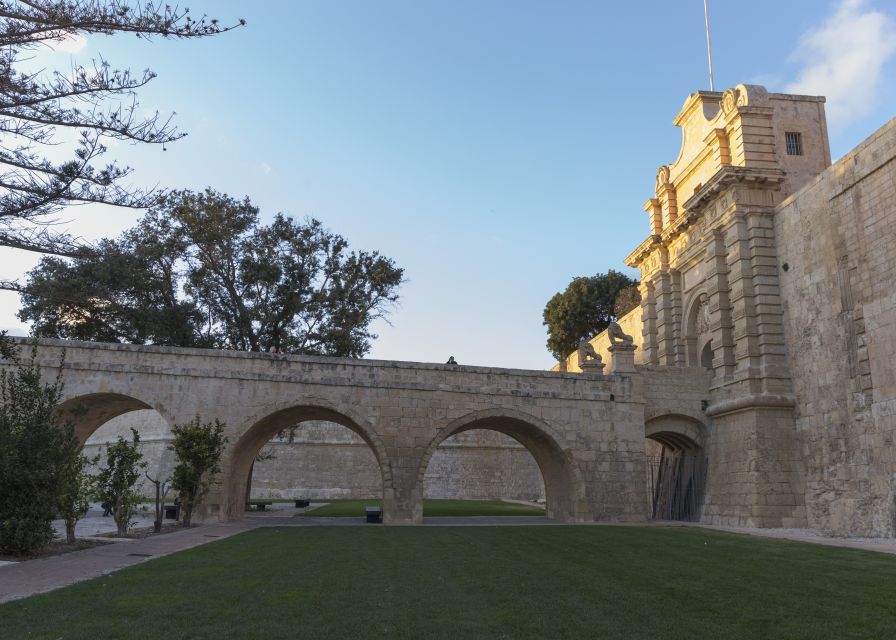
- Mdina’s Main Gate begins the story: Meet by the bridge for an introduction to the former capital and the city’s role at the center of Malta.
- Rabat adds everyday Malta: The route leaves the formal streets of Mdina for Rabat’s old quarter and its Maltese vernacular architecture.
- Guides make the difference: Nadine, Angele, Marisa, Charlotte, Angela, and other local guides are praised for clear delivery, humor, and strong knowledge of history and architecture.
- Headsets can be a real help: On busy days, individual audio equipment lets you keep listening while taking photos or moving through narrow lanes.
- You get useful local advice: Guides may suggest places to eat and sights to visit after the walk, including St. Paul’s Catacombs.
- Good value at $24: You receive two hours with a licensed guide, while entrance fees are not included.
Starting at Mdina’s Main Gate
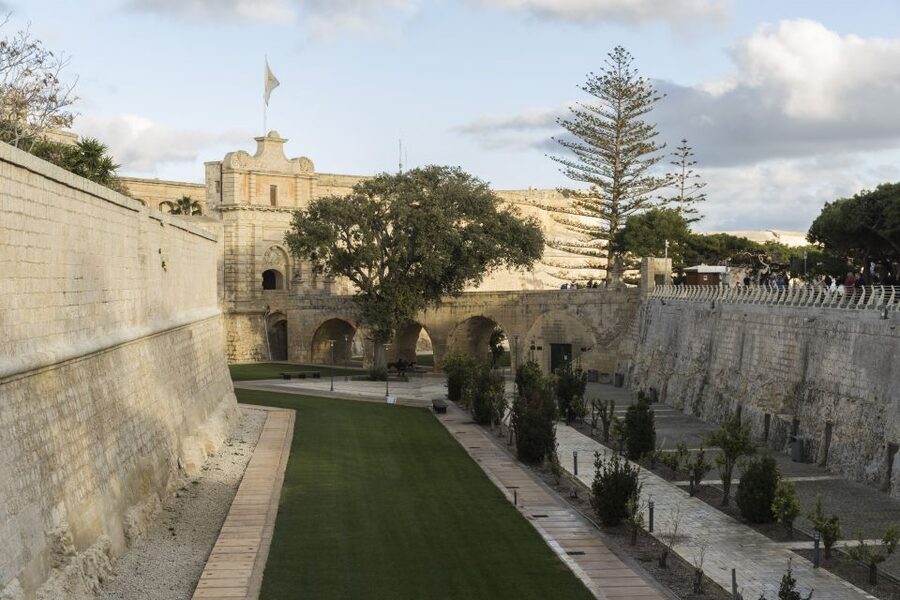
Your tour begins at Mdina Main Gate, by the bridge. This is a useful meeting point because the gate gives you an immediate sense of the city’s defensive character. Before you enter, your guide sets out the basic story: Mdina was founded by the Romans, later served as Malta’s administrative and political capital for almost two centuries, and remains the seat of the country’s episcopacy.
That short introduction matters. Mdina is more than a pretty old town. It was the center of power on the island, and its walls, grand houses, religious buildings, and narrow streets reflect that role.
The city’s medieval name was Citta Notabile, or Noble City. The name points to the families who lived here and still helps explain the formal feel of the streets. You are not simply walking between old buildings. You are moving through a former seat of government and a place associated with Malta’s noble families.
The guide-led start is especially useful if you have limited time in Malta. You get the basic timeline before the lanes begin to look alike, which makes the details easier to place.
More Guided Walks in the world:
- Magical London: Harry Potter Guided Walking Tour
★ 4.7 · 22,044 reviews - History and Hauntings of Salem Guided Walking Tour
★ 5.0 · 14,564 reviews - Amsterdam Anne Frank: Small-Group Walking Tour & Local Guide
★ 4.8 · 12,789 reviews
Mdina’s narrow streets and grand doorways
Inside the walls, the route moves at a relaxed walking pace. The streets are narrow and atmospheric, with stone buildings close enough to make every corner feel carefully framed. Your guide points out the palaces, churches, and convents that line the route, explaining how the architecture connects with Malta’s changing rulers and religious life.
This is where the tour earns its modest price. You could walk Mdina alone for free, but you would likely pass many details without knowing why they matter. A guide can turn a façade into a clue about social rank, faith, or the island’s past occupations.
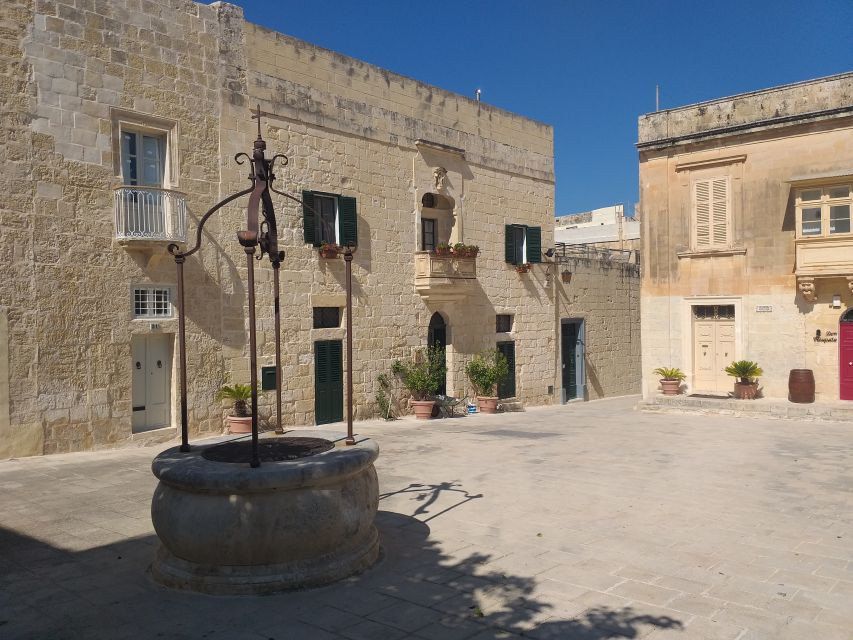
Look closely at the doors as you go. One guide specifically encouraged visitors to notice Mdina’s many door knockers, each with its own design and story. Details like these are easy to miss when you are focused only on the main cathedral or the most photographed street.
The guides also seem to use the setting well. Nadine has been praised for mixing facts with anecdotes and a dry sense of humor. Angele is noted for an easy-to-follow style that kept the information from feeling dry. Charlotte has been described as both warm and engaging, while Marisa is known for combining historical detail with practical suggestions about where to eat.
How the storytelling shapes the walk
A walking tour succeeds or fails on delivery. Mdina has plenty of history, but a list of dates would quickly become tiring. The strongest guides on this experience appear to keep a good balance between architecture, local life, political change, and small stories.
Ernest, Nadine, Angela, Angele, Marisa, Charlotte, and Visnja are among the guides praised for enthusiasm, humor, and a clear speaking style. You should not expect every departure to have the same guide, but the repeated pattern is useful: the experience depends heavily on a local person who can explain the city in a natural way.
The pace is another strong point. Several descriptions of the walk emphasize that it is gentle and unrushed. That gives you time to take photographs, look at doorways, and keep up without feeling as though you are being pushed from one stop to the next.
On hot days, the guide may also choose shaded areas when possible. One guide was specifically praised for keeping the group in the shade for most of a very hot tour. That is a practical detail worth valuing in Malta, where the sun can make a stone city feel much warmer than expected.
Audio headsets have also been used on some departures. These are particularly helpful when the group is large or the streets are busy. You can take a picture while still hearing the explanation, instead of crowding around the guide. A minor headset problem has occurred, but it was resolved quickly. Equipment can vary, so do not assume every departure will use it.
Crossing into Rabat’s old quarter
Mdina and Rabat are close neighbors, and the tour uses that proximity well. After the formal, fortified character of Mdina, you continue into Rabat, where the atmosphere shifts toward ordinary Maltese town life.
The Rabat section focuses on the old quarter and Maltese vernacular architecture. This is valuable because it broadens the visit. Mdina can feel like a preserved historic setting, while Rabat helps you see how local building traditions continue beyond the city walls.
You may notice a more everyday scale here, with less emphasis on grand palaces and more on the forms and materials of local homes. The guide explains what you are seeing rather than leaving Rabat as an afterthought.
Two hours is a sensible length for combining both places. You get enough context to understand the relationship between them, but the tour does not take up an entire morning or afternoon. If you want a detailed visit inside several buildings, you will need to return afterward on your own.
More Walking Tours in the world:
- Reykjavik Food Walk – Local Foodie Adventure in Iceland
★ 5.0 · 18,952 reviews - New Orleans Premier Ghost, Voodoo and Vampire Walking Tour
★ 4.5 · 12,856 reviews - Edinburgh: Harry Potter Magical Guided Walking Tour
★ 4.8 · 11,944 reviews - Edinburgh Castle: Guided Walking Tour with Entry Ticket
★ 4.7 · 11,699 reviews
What you will not see inside
The tour price covers the licensed guide and two-hour walk. It does not cover entrance fees to churches or museums. This keeps the base cost low, but it also means you should budget separately if you want to enter paid sites.
That arrangement suits you if your first goal is to understand the streets and choose your own interiors afterward. It is less suitable if you expect a tour with included access to every major attraction.
St. Paul’s Catacombs in Rabat is one suggested follow-up, with a quoted entrance cost of €6 in one tour tip. The catacombs are not included in the walking tour, so treat them as an optional extra rather than part of the route.
Bank holidays can also affect your visit. One participant found that several places were closed on a public holiday. That was not described as a fault with the walk, but it is a useful warning: Mdina and Rabat can still be worth seeing from the streets when interiors are closed, yet you should check local holiday dates if particular churches or museums matter to you.
Is $24 good value?
At $24 per person, this is a strong value if you want context rather than just a self-guided stroll. The fee pays for two hours with a licensed English-speaking guide, and the most praised part of the experience is the guide’s ability to connect architecture with Malta’s past.
You are also paying for efficiency. In two hours, you can cover the key relationship between Mdina and Rabat without spending your first day working out where to go or what you are looking at.
The price is less compelling if you already know Mdina well, prefer to explore entirely alone, or want long interior visits. The walk does not include museum or church entry, and the exact meeting point can vary by booking option.
Still, the cost is modest compared with a private tour. You receive local explanation, a clear route, and practical ideas for what to do afterward. Guides have also offered restaurant recommendations, which can be handy after a morning or afternoon on foot.
Who will enjoy this tour most?
I would choose this for a first visit to Malta, especially if Mdina and Rabat are unfamiliar to you. The guide gives you a framework for understanding the cities, then you can return to the places that caught your attention.
It also suits visitors who like history in manageable portions. The tour includes plenty of background, but the delivery is described as light, clear, and often humorous rather than academic.
Families and mixed-age groups may appreciate the gentle pace. You should still bring comfortable shoes, since the experience is entirely based on walking through old streets.
The tour can also work well for solo visitors. You get a fixed route and a guide to answer questions, without committing to a full-day excursion.
It is wheelchair accessible according to the activity details. Because the route passes through historic streets, confirm the meeting arrangements and any specific mobility needs before you go.
Practical tips for a smoother walk
Wear comfortable shoes. That is the one clear packing instruction, and it makes sense for a two-hour route over old streets.
Arrive with the meeting point carefully checked. The activity information says the location may vary depending on the option booked, even though Mdina Main Gate by the bridge is given as the standard starting place.
If you visit in warm weather, consider an earlier or later start if available. The guide may find shade, but Malta’s sun can still be strong around exposed stone streets.
Bring water and leave room for photographs. The slow pace is one of the tour’s strengths, and you do not want to spend the whole walk hurrying to keep up or searching for refreshments.
Listen for the small observations. The stories about door knockers, local architecture, and daily life may be more memorable than a long list of dates.
After the tour, use the guide’s suggestions. You might choose a church, museum, restaurant, or St. Paul’s Catacombs for a second look. The walking tour works best as an introduction that helps you decide where to spend more time.
Should you book it?
Book this Mdina and Rabat walking tour if you want a well-paced introduction, local stories, and a clear sense of how the two places fit together. At $24, it offers good value, particularly when you consider the repeated praise for guides such as Nadine, Angele, Marisa, Charlotte, and Angela.
Skip it if your priority is included entry to museums and churches, or if you would rather wander without a set route. For most first-time visitors, though, two hours is a useful investment. You will leave with a better understanding of Mdina’s noble, fortified past and Rabat’s more everyday character, plus a short list of places worth exploring on your own.
FAQ
How long is the Mdina and Rabat walking tour?
The tour lasts two hours.
How much does the tour cost?
The listed price is $24 per person.
Where does the tour begin?
The standard meeting point is Mdina Main Gate by the bridge. The exact meeting point may vary depending on the option you book.
Is the tour guided?
Yes. A professional licensed tour guide leads the full two-hour walk.
What language is the tour in?
The live tour guide speaks English.
Are church and museum entrance fees included?
No. Entrance fees to churches and museums are not included.
Is the tour wheelchair accessible?
Yes. The activity is listed as wheelchair accessible.
What should I wear or bring?
Wear comfortable shoes, since the experience involves walking through Mdina and Rabat.
Does the tour include Rabat?
Yes. The route includes Mdina’s historic center and Rabat’s old quarter, with attention to Maltese vernacular architecture.
Can I cancel for a full refund?
Yes. You can cancel up to 24 hours in advance for a full refund.
New routes in the world
- Baltimore Walking Foodie Tour in Fells Point★ 5.0 · 182 reviews
- Baku Oil Heritage & Old Town Walking Tour★ 5.0 · 232 reviews
- Baku Walking Tour (Old City)★ 5.0 · 127 reviews
- The Madam’s Curse Walking Ghost Tour★ 4.5 · 103 reviews
- Austin Small Group Morning Walk★ 5.0 · 412 reviews
- Austin Haunted Pub Crawl Walking Tour★ 4.5 · 232 reviews
- Austin Downtown Private Walking Food Tour With Secret Food Tours★ 5.0 · 71 reviews
- Austin Murder Walk★ 5.0 · 310 reviews
Malta Walking Tours, compared.


Valletta: Street Food and Culture Walking Tour
Read our review →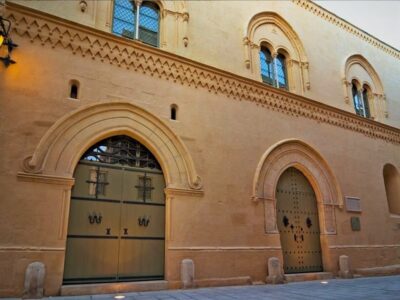
Malta: Mdina and Rabat Walking Tour with Catacombs
Read our review →
From Cospicua: Senglea, Bormla, and Birgu Walking Tour
Read our review →Browse the lists this tour appears in