
Review · LYON
Lyon: Private Walking Tour of “Traboules” in the Old Town
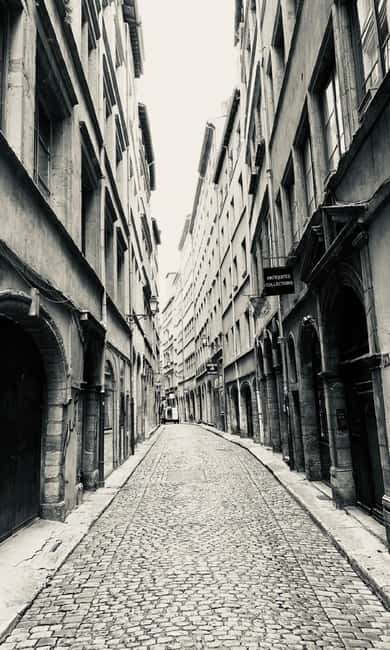
Lyon’s traboules are not grand monuments. They are passages tucked behind ordinary doors, running through courtyards and buildings in Vieux Lyon. With the right guide, these quiet shortcuts become a way to read the city, from the silk trade and church power to wartime meetings and the lives of ordinary workers.
I like the local focus and the small group limit of 10. Guides Yannick, also called Yan by some groups, are praised for sharp storytelling, humor, and a close knowledge of the neighborhood. The main drawback is practical: traboules can involve stairs and narrow stairways, so this walk is not suitable for wheelchair users or people with mobility impairments.
Key points to know
- The tour visits lesser-known traboules that are easy to miss when walking Vieux Lyon alone.
- Yannick or Yan brings Lyon’s past to life with stories about silk workers, religious power, politics, architecture, and the French Resistance.
- The route lasts 150 minutes, long enough to build a clear picture of the district rather than simply peek into a few courtyards.
- Groups are limited to 10 people, making it easier to hear the guide and ask questions.
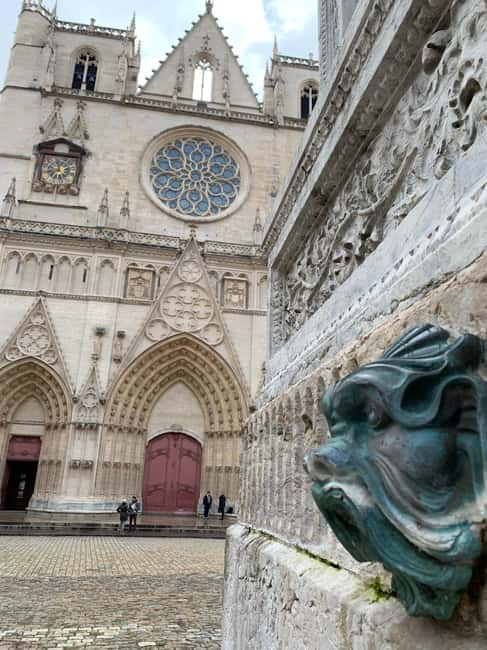
- The meeting point is simple: the old fountain in the middle of the cathedral square.
- Comfortable shoes matter, and strollers can be awkward in the stairways.
Why Lyon’s traboules are worth your time
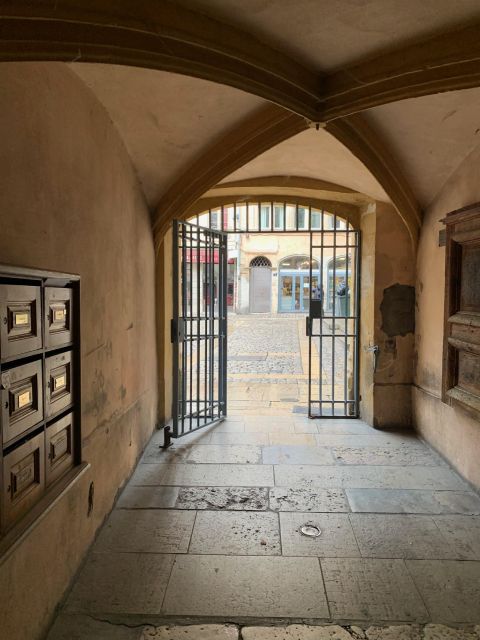
The appeal of a traboule is partly visual, but the real value is practical and historical. These corridors let you pass from one street to another through courtyards, stairways, and old buildings. From the outside, many entrances look like private doorways. Without a local guide, you could walk past several without realizing what lies inside.
This tour uses the passages as a framework for understanding Lyon. You are not just checking off a few doors. You are learning why these routes mattered, who used them, and how the buildings around them changed over time.
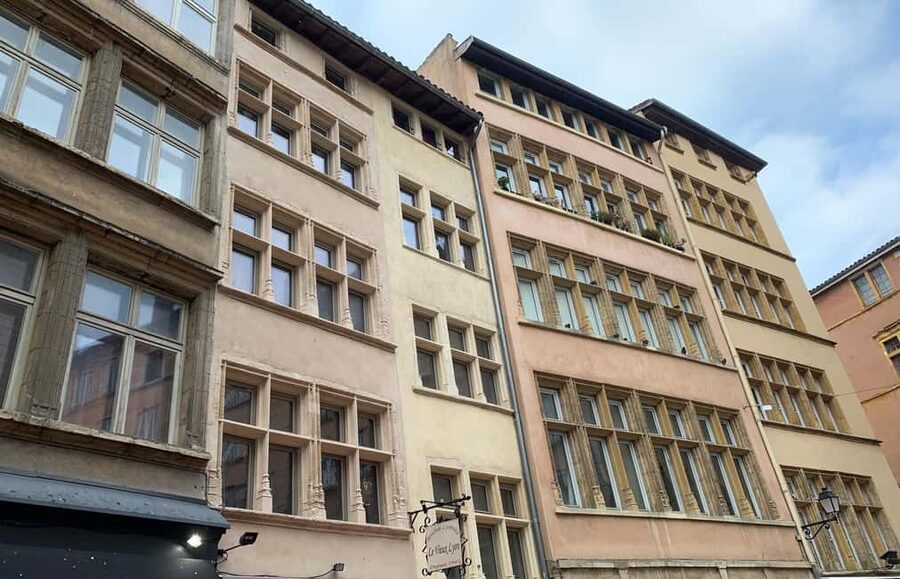
Vieux Lyon is the city’s largest Renaissance district, and the traboules help explain how that neighborhood worked. The tour connects architecture with daily life, commerce, religion, social class, and political power. That broad approach is one reason the experience suits visitors who want more than a quick sightseeing walk.
The passages also have a human scale. You may notice staircases worn by generations of feet, courtyards built for work and family life, and details that make more sense once someone points them out. The guide’s job is not simply to open a door. It is to help you understand what the door meant.
More Private Walking Tours in France
- Private Montmartre Food Tour with Wine, Cheese & Pastries
★ 5.0 · 1,027 reviews - Paris: Private Walking Tour with a Local
★ 4.6 · 506 reviews - Paris Private Walking Tour with a Personal Photographer
★ 5.0 · 262 reviews
Meeting at the cathedral square
You meet your guide in front of the old fountain in the middle of the cathedral square. This is a useful starting point because it places you directly in the heart of Vieux Lyon, rather than asking you to find an obscure office or transport stop.
Arrive ready to walk. The experience lasts two and a half hours, and the route moves through public streets as well as interior passages. There is no transport between stops, so comfortable shoes are essential.
The tour is offered in English or French. A group of up to 10 people is small enough for the guide to keep the pace personal. Several groups have especially enjoyed being able to ask questions along the way, and the guide can respond to the interests of the people in front of him.
That matters in a district where the best experience comes from noticing small things. In a large group, a narrow courtyard can become crowded and explanations can be hard to hear. A smaller group also makes it easier to respect the people who live around the traboules.
Reading Vieux Lyon through the Renaissance passages
The first part of the walk introduces Vieux Lyon as a living district, not a museum set. The Renaissance buildings provide the setting, but the guide uses them to explain how the neighborhood developed and how people moved through it.
You can expect to visit several of the roughly 50 traboules still open to the public. The exact passages can vary, since these routes pass through residential areas and access needs to be handled respectfully. That flexibility is a strength. It allows the guide to take you to lesser-known corridors rather than simply follow the most obvious sightseeing route.
Some passages are more atmospheric than dramatic. Do not expect every traboule to look like a movie set. Their appeal often lies in the way they connect street, courtyard, staircase, and another street. The guide gives those spaces purpose, showing how a simple route through a building could shape work, trade, and neighborhood life.
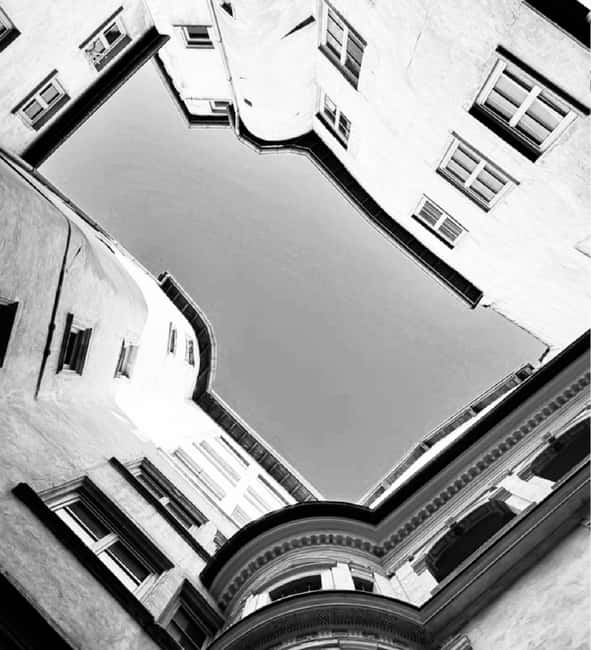
The tour also helps you look upward and around. Architecture here can reveal power and status. Religious influence, political authority, and commercial success were expressed through buildings and their details. The walk links those physical clues to the people who lived and worked in the district.
Silk workers, trade, and ordinary life
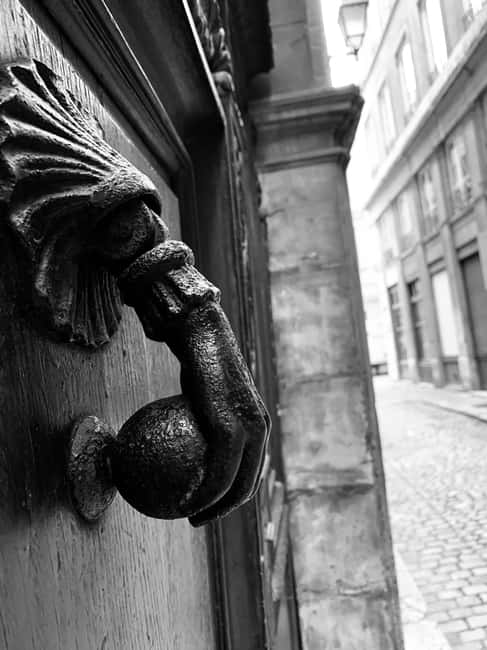
Lyon’s silk trade is one of the central themes of the walk. The traboules were tied to the movement of people and goods through the city, and the district’s buildings reflect the needs of workers, merchants, and residents.
You will hear about Lyon as a city of silk workers and gain a clearer sense of how commerce affected its streets. The tour is particularly useful if you want the story of working people included alongside the story of wealthy families, church leaders, and officials.
The guide also explains how the city was built and adapted. Staircases, courtyards, and connecting passages were not random decorations. They helped make dense urban life possible and allowed people to move between different parts of the neighborhood.
This is where the tour can change the way you explore independently. Once you understand the function of the passages and the clues in the buildings, you are more likely to notice details on your own. A later stroll through Vieux Lyon becomes less about photographing façades and more about asking who used each space and why.
More Old Town Walking Tours in France:
- Nice Old Town and Castle Hill: Guided Cultural Walking Tour
★ 4.8 · 790 reviews - Nice: Food and Wine Old Town Guided Walking Tour
★ 4.9 · 411 reviews - Nice: Old Town Treasures Walking Tour
★ 4.6 · 388 reviews - Nice: Old Town & Castle Hill Informative Guided Walking Tour
★ 4.9 · 248 reviews
Power, religion, and Lyon’s complicated past
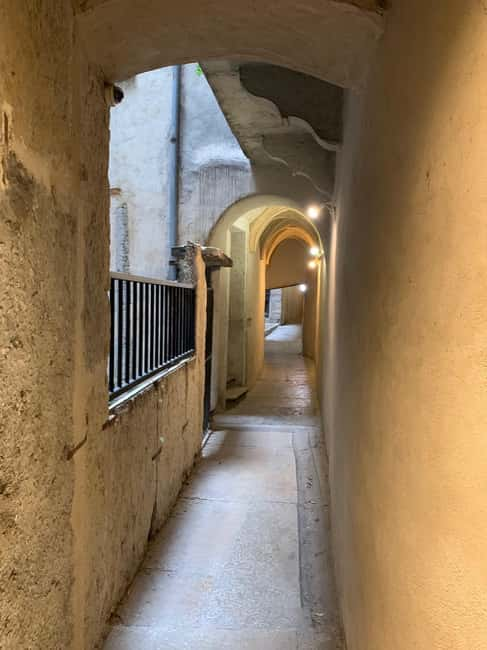
The walk does not present Lyon as a simple success story. It deals with conflict between religious and civic power, as well as the political forces that shaped the city.
One historical thread concerns the rivalry between the bishop and the governor. That contest helps explain how authority was divided and expressed in Lyon. The guide also brings in the influence of the Medici, along with other political and religious forces that touched the city.
These subjects give the architecture more weight. A courtyard or grand building is not only an attractive backdrop. It can reflect who had authority, who had money, and who had to work within systems controlled by others.
The guide’s style is a major part of the experience. Yannick is repeatedly described as witty, energetic, and skilled at turning complicated events into memorable stories. One of his comic descriptions of Swiss soldiers involved in Lyon’s sixteenth-century conflicts has become a lasting memory for some participants.
The humor is useful when it supports the history rather than replacing it. The tour appears to balance facts with stories, giving you enough context without turning the walk into a dry lecture. That makes it a good choice for mixed groups, including families with older children and teenagers.
Wartime corridors and the French Resistance
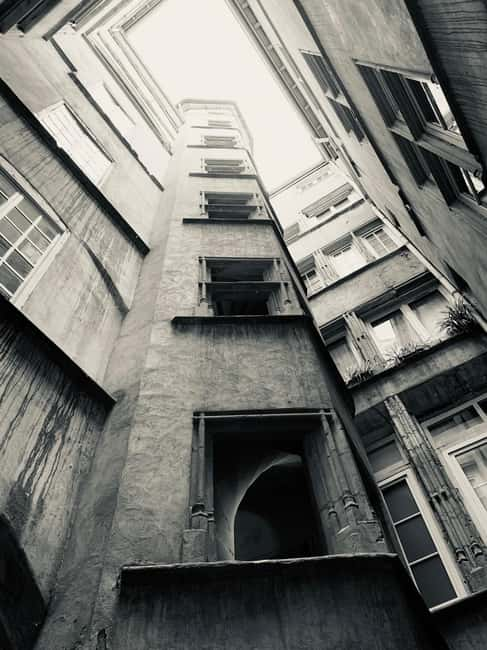
The traboules also have a twentieth-century role. During the Second World War, some of these concealed routes were used for meetings connected with the French Resistance.
This part of the tour changes the mood. The same network that once supported commerce and neighborhood movement also offered privacy in a dangerous period. The guide places those events within the physical setting, so you can understand why a passageway behind a door might matter during wartime.
The experience does not treat the Resistance as an isolated chapter. It shows how old urban features can gain new uses as a city’s circumstances change. That is one of the most interesting ideas running through the tour: the traboules are not frozen pieces of Renaissance scenery. Their meaning has shifted with the people and events around them.
If you enjoy social and political history, this section may be one of the strongest reasons to book. If you mainly want architecture and photographs, it still adds useful context, but it also means the tour goes beyond surface-level sightseeing.
The guide makes the difference
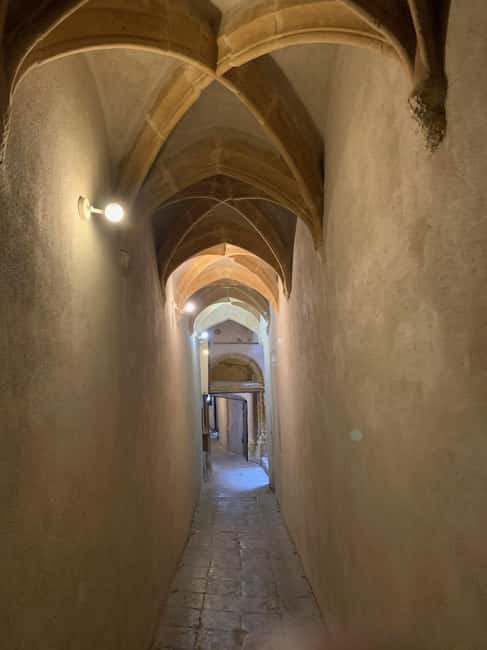
A walk through old passages can be quiet and atmospheric, but it needs a good storyteller. Here, the guide is central to the experience.
Yannick, also referred to as Yan, is the guide most often associated with this walk. He has lived in the neighborhood for more than 25 years and brings a strong personal connection to Vieux Lyon. His approach combines architectural detail, local knowledge, historical explanation, and jokes.
The most useful quality is his ability to connect past and present. He explains how political, religious, and commercial decisions affected ordinary people, then relates those ideas to the streets you are standing in. That keeps the history grounded.
He also appears attentive to the group. The walk can be adjusted to suit questions and interests, and the guide makes an effort to keep everyone engaged. That is helpful when not every person in the group has the same level of interest in history.
The guide’s personality may not be the main reason you book, but it can determine how much you take away. This is not a silent photo walk. You should expect a steady stream of explanation and conversation, delivered with energy and humor.
Timing, pace, and physical demands
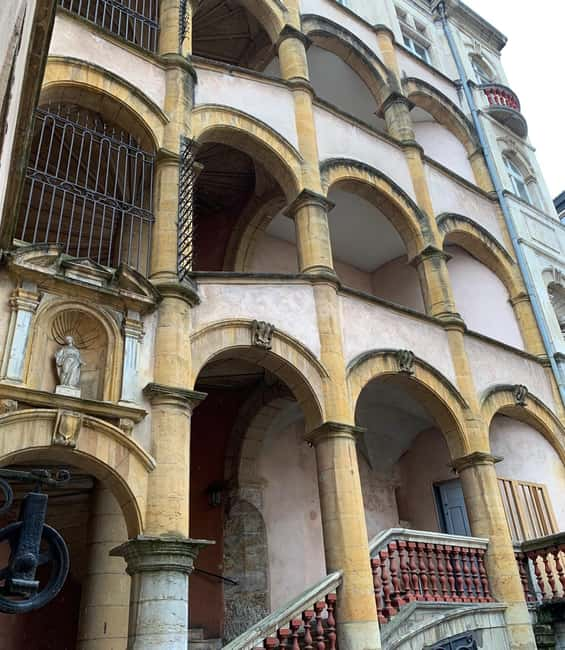
At 150 minutes, this is a substantial walking tour. It is long enough to cover several corridors and place them in a wider story, but it can feel lengthy if you are cold, tired, or not used to standing and walking on old surfaces.
A winter start can be especially demanding. One person found the tour a little long in the cold, while still considering it worthwhile. Dress for the weather and do not treat this as a quick indoor activity.
The main physical issue is the architecture itself. Stairs and stairways are part of the traboule experience. Strollers can be difficult to manage, and the tour is not suitable for wheelchair users or people with mobility impairments.
That limitation should be taken seriously. The guide may be considerate if someone is moving slowly, but the route cannot remove the basic features of the passages. If you have a slight mobility issue, ask before booking and be clear about what you can manage.
Noise is also discouraged. These corridors pass through or beside residential buildings, so the group needs to keep its voice down and behave carefully. That is not a nuisance. It is part of seeing the district responsibly.
What the $43 price gets you
At $43 per person, the walk is priced above a basic city stroll but below many private sightseeing experiences. The value rests on access, local interpretation, and time.
You could walk Vieux Lyon for free, but you would probably see only the most obvious public passages. The guide helps you locate lesser-known traboules and explains their purpose. That saves time and gives the architecture a meaning you are unlikely to get from a casual wander.
The small group also matters. With no more than 10 participants, you should be able to hear the guide and ask questions without competing with a large crowd. Some groups have been much smaller, including visits with only two participants, though you should not assume that will happen on your date.
I consider the price fair for visitors who care about history, architecture, and local stories. It is less compelling if you want a quick orientation or prefer to explore silently at your own pace.
The free cancellation option up to 24 hours before the start and the reserve now, pay later arrangement make it easier to fit the walk into a changing itinerary. Starting times vary, so check availability when booking.
Who should book this walk
I would choose this tour early in a Lyon visit. The guide gives you a better way to read Vieux Lyon, and that can improve later independent walks through the district.
It is especially suitable for:
- First-time visitors who want context before exploring alone
- People interested in architecture, urban design, and social history
- Visitors curious about the silk trade and the lives of workers
- Families with older children or teenagers who enjoy stories and humor
- Couples or small groups who prefer a personal walking experience
- History fans interested in wartime Lyon and the French Resistance
It is less suitable if you dislike guided commentary, have difficulty with stairs, need a fully accessible route, or want a short photo stop rather than a two-and-a-half-hour walk.
The content can work for a wide age range. One family found that both a teenager and a toddler stayed engaged, though the stairs and length still need to be considered. The guide’s humor helps, but the tour remains information-heavy.
Should you book the Lyon traboules tour?
Book it if you want to understand why Vieux Lyon looks and functions as it does. The corridors are the hook, but the real subject is the city itself: silk workers, merchants, religious leaders, political rivals, wartime networks, and residents who still live around these passages.
The strongest reasons to go are the lesser-known routes, the small group size, and Yannick’s gift for linking serious history with memorable stories. The main reasons to hesitate are the stairs, the length, and the need to keep quiet around homes.
For most visitors who can walk comfortably, $43 is a sensible price for a focused introduction to Lyon’s oldest Renaissance district. I would schedule it near the start of your stay, wear sturdy shoes, and leave room afterward for your own slower wander through Vieux Lyon.
FAQ
Where does the tour meet?
Meet your guide in front of the old fountain in the middle of the cathedral square.
How long does the tour last?
The walking tour lasts 150 minutes, or two and a half hours.
What languages are available?
The tour is offered in English and French.
How many people can join the group?
The group is limited to 10 participants.
Who leads the tour?
The guide is commonly named Yannick, and some participants refer to him as Yan. The experience provider is Visage des pentes.
How many traboules will I see?
The tour explores some of the traboules that remain open to the public. Lyon has about 50 publicly accessible passageways, but the exact number visited is not specified.
Are the traboules suitable for wheelchair users?
No. The tour is not suitable for wheelchair users or people with mobility impairments because the passages can include stairs and stairways.
Can I bring a stroller?
Strollers can be difficult to manage inside the traboules because of the stairs and narrow routes.
What is the cancellation policy?
You can cancel up to 24 hours in advance for a full refund. You can also reserve now and pay later.
New routes in France
- The Official Emily in Paris Locations Walking Tour★ 4.9 · 383 reviews
- Strasbourg: Historic Center Walking Tour★ 4.7 · 88 reviews
- Strasbourg: Private Walking Tour of the Historical Center★ 4.2 · 107 reviews
- Strasbourg: Guided Walking Tour★ 4.7 · 127 reviews
- Strasbourg : European District Walking Tour★ 5.0 · 95 reviews
- Paris: Montmartre Food Tasting Walking Tour with Secret Dish★ 4.8 · 107 reviews
- Paris: Emily Inspired Walking Tour★ 4.9 · 312 reviews
- Saint-Germain: Gourmet Chocolate & Pastry Walking Food Tour★ 4.8 · 495 reviews
Lyon Walking Tours, compared.
Vieux Lyon Cultural & Historical Walking Guided Tour (English)
Read our review →

Lyon Highlights & Secrets Walking Guided Tour (small group) including Funicular
Read our review →

Browse the lists this tour appears in