
Review · VIETNAM
Hue Imperial City Walking Tour: Citadel & Forbidden City
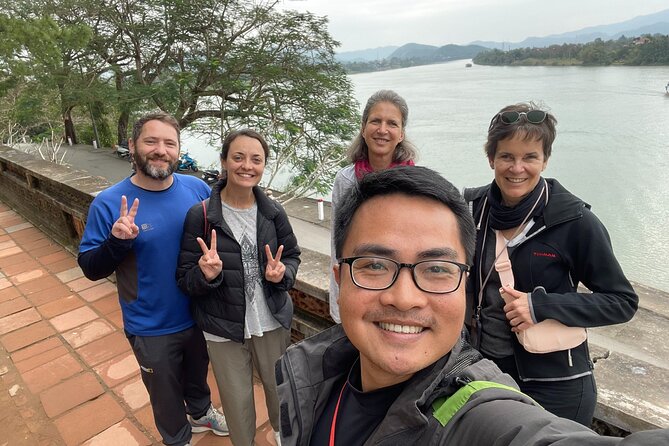
Hue’s Imperial City is far too large for a quick look. This guided walk takes you from Ngo Mon Gate through the royal court, temples, palaces, gardens, and Forbidden City, giving each stone and courtyard a place in the Nguyen Dynasty story. The best guides, including Ngoc, Nhien, Ha, Hoa, Huong, Sue, and Xi, explain both grand events and small details of daily court life.
I like two things here: the tour gives you time to walk rather than rush from photo stop to photo stop, and the guides are praised for clear English, patient pacing, and lively answers. I also like the chance of a private-feeling visit when a small group booking has only one or two people. The main consideration is practical: entry tickets cost extra, and the broad grounds can be tiring in Hue’s heat or rain.
Key points at a glance
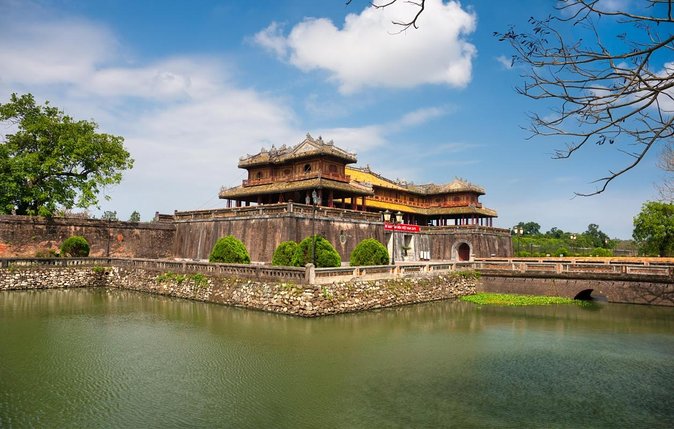
- Enter through Ngo Mon Gate: Begin at Hue’s grand ceremonial entrance and get your bearings before walking into the palace grounds.
- Follow the Nguyen Dynasty story: Thai Hoa Palace, The Mieu Temple, and the Forbidden City help explain royal power, worship, family life, and succession.
- See restored and weathered buildings together: Kien Trung Palace and other structures show both careful restoration and the damage of time and war.
- Expect strong guiding: Guides such as Ngoc, Nhien, Huong, Ha, Hoa, Sue, and Xi have been praised for clear English, detailed answers, and an easy pace.
- Allow at least three hours if you can: The listed duration ranges from 150 to 330 minutes, and the site is too large to appreciate properly in a hurry.
- Plan for a walking visit: The tour is not suitable for wheelchair users, and food, drinks, and entry tickets are not included.
Why a guide matters inside Hue’s vast citadel
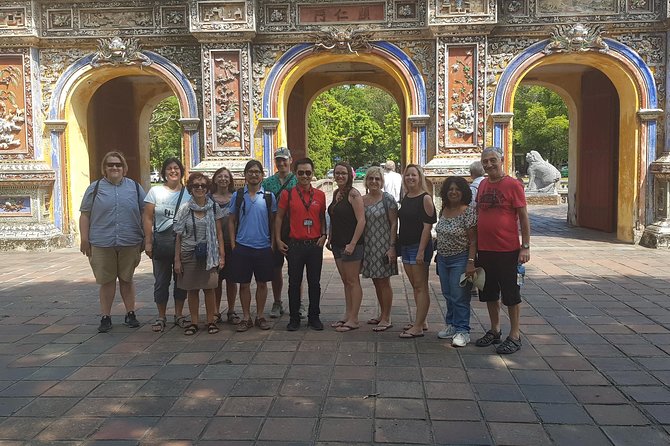
Hue’s Imperial City is not one isolated palace. It is a large walled complex with ceremonial halls, religious buildings, gardens, royal residences, gates, pavilions, and theater spaces. On your own, you can admire the roofs and painted woodwork, but it is easy to miss why one building mattered more than another.
A good guide turns the site into a connected story. You learn how the Nguyen emperors organized court life, where ceremonies took place, how the royal family lived, and why certain emperors were not worshiped inside The Mieu Temple. That kind of context is the main reason I would choose this tour over simply buying an entry ticket and wandering.
The guides also appear to adjust their delivery to the group. Huong was praised for answering questions patiently and judging the pace well. Sue was able to explain slowly for a visitor translating into another language for a parent. Ngoc is repeatedly praised for precise historical explanations and strong English. Those details matter because a history tour is only useful if you can follow it.
The tour is offered in English or French, and private or small-group formats are available. A small group gives you a better chance to ask about architecture, royal customs, or the complicated succession of the emperors without losing the guide in a crowd.
More Walking Tours in Vietnam:
- Ho Chi Minh City Street Food Tour & Sightseeing By Motorbike
★ 5.0 · 9,413 reviews - Private Street Food Evening Walking Tour in Ho Chi Minh City
★ 5.0 · 3,175 reviews - [HOT] Hanoi Old Quarter Walking Street Food – Small Group Tour
★ 5.0 · 2,163 reviews
Starting at the Nine Holy Cannons
The meeting point needs careful attention. Google Maps may label the area as the Nine Holy Cannons, but the cannons are split between two places: four are near Cua Ngan, while five are near Quang Duc Gate. This tour meets at the four-cannon location.
That is a useful detail to settle before you leave your hotel. The guide waits at the meeting point, and the operator asks for your WhatsApp number so the exact map location can be sent. Pickup may be available if you select that option and provide your hotel name and WhatsApp contact.
You begin with a short walk toward the main entrance. If you are meeting independently, build in enough time to find the correct cannon location. This is not the moment to rely on a vague search for Nine Holy Cannons.
Passing through Ngo Mon Gate
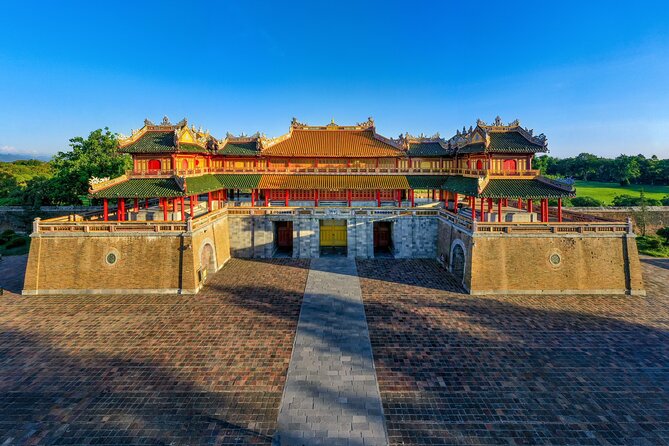
Ngo Mon Gate is the natural opening chapter. It is the major southern entrance to the Imperial City and a strong place for photographs, but the guide’s explanation adds the important part: this was not simply a decorative gateway.
The walk and guided visit here take about 20 minutes. You can look up at the layered roof, study the broad defensive setting, and begin to understand the formal layout of the royal compound. Your guide will help explain how movement through the gates reflected status and ceremony.
I like starting here because it gives the rest of the tour a sense of direction. Instead of seeing a string of attractive buildings, you begin with the idea of entering a carefully ordered seat of power.
Thai Hoa Palace and the formal court
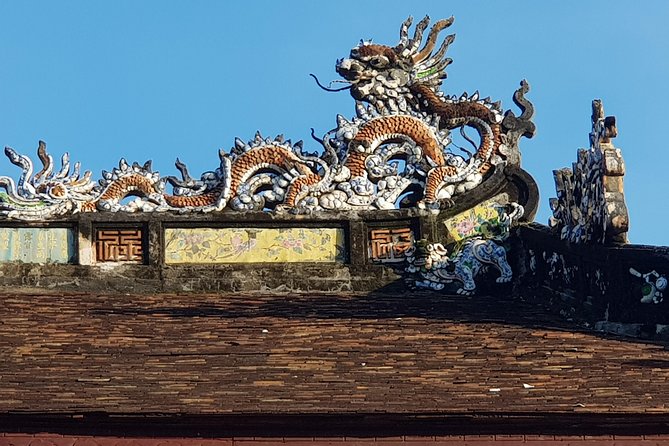
Thai Hoa Palace, also called the Palace of Supreme Harmony, receives about 30 minutes. This is one of the most important stops because it lets you picture public royal ceremonies rather than private palace life.
The building’s name points to the ideals the court wanted to project: order, harmony, authority, and continuity. Your guide can explain what happened in this ceremonial setting and how the architecture supported the court’s formal image.
This is one place where questions improve the visit. Ask about the emperor’s role, court officials, ceremony, and the meaning of the architectural details you are seeing. Guides such as Nhien and Florence have been praised for explaining the complex parts of Vietnamese history in clear language, which is especially helpful here.
The palace may be your first major interior or architectural focus, but do not rush past the surrounding courtyards. The open spaces help you understand how large groups could gather and how the royal compound was arranged.
Same streets, a different guide:
- Super Niche Walking Street Food Tour in Ho Chi Minh City
★ 5.0 · 1,636 reviews - Private Walking Tour of Hanoi City
★ 5.0 · 1,251 reviews - Hanoi: Small-Group Street Food Walking Tour
★ 4.8 · 1,165 reviews - Private Hanoi Street Food Walking Tour With Real Foodie
★ 5.0 · 1,042 reviews
Hien Lam Pavilion and The Mieu Temple
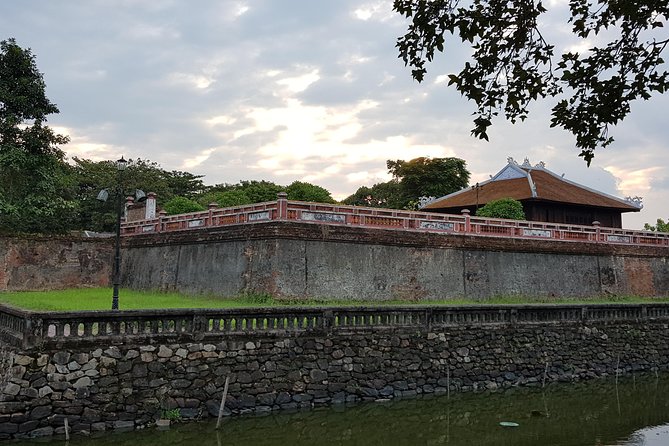
The next section brings the story from living authority to royal memory. Hien Lam Pavilion is a shorter stop, around 10 minutes, but its position near The Mieu Temple gives it more weight than its timing suggests.
The Mieu was used to worship the emperors. The guide explains why some kings were not allowed to receive worship there, a detail that reveals how politics, family lines, and official judgment shaped the royal record. This is one of the most interesting parts of the walk because it moves beyond architecture into the rules that controlled memory.
You are not only looking at a temple. You are seeing how a dynasty decided which rulers deserved an honored place and which did not. That is the sort of detail you could easily miss without someone explaining the reason.
The itinerary also includes a roughly 20-minute stop in this central ceremonial area, with time for photographs and questions. Expect a mixture of formal courtyards, temple buildings, and open walking space rather than a single compact room.
Gates, cannons, and the practical work of walking
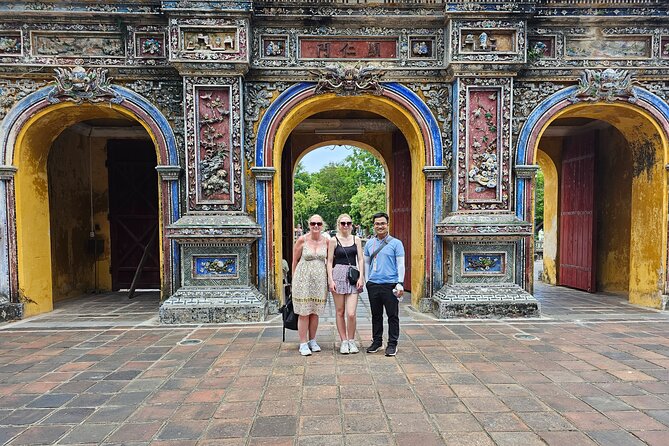
Cua Chuong Duc is listed as another short guided stop, about 10 minutes. Like Ngo Mon Gate, it helps show that the Imperial City is a system of entrances and controlled movement, not merely a collection of palaces.
There is also a photo stop and a brief break of around 10 minutes. That pause is welcome. The grounds are large, and the tour involves steady walking under changing weather conditions. Several guides have been praised for choosing a comfortable pace and allowing time to stop, sit, or find a cooler place to listen.
You should wear shoes suited to walking and bring water. Food and drinks are not included, so plan ahead rather than expecting refreshments during the tour.
Entering the Forbidden City and seeing Kien Trung Palace
The walk continues into the Forbidden City, the most private part of the royal compound. This is where the tour shifts from public ceremony to the royal household.
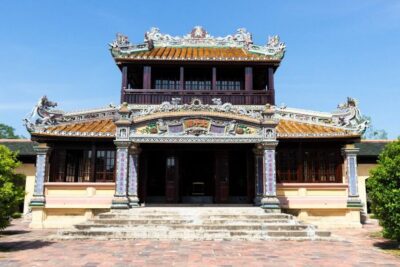
Kien Trung Palace is a major highlight, with about 20 minutes for photographs, explanation, and walking. It was used as a residence for the king’s family, so the guide can help you picture a different side of imperial life. The contrast with Thai Hoa Palace matters: one space projected power to officials and ceremony, while the other served the royal family.
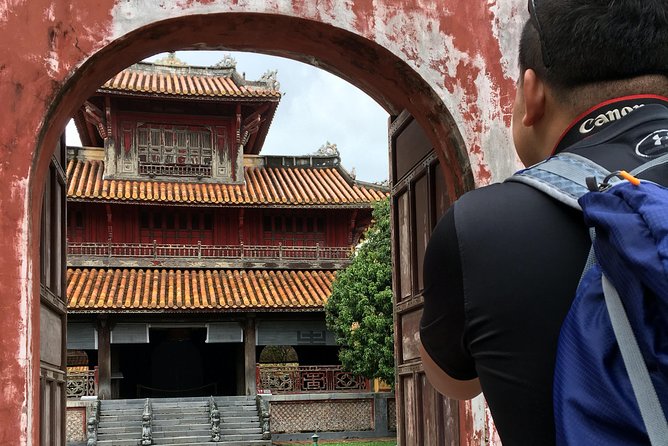
Kien Trung Palace is also a useful reminder that Hue is a work in progress. Some structures have been restored, while others remain weathered or incomplete. That mix can be visually uneven, but it gives you a more honest sense of what survived and what has been rebuilt.
If you like photography, allow extra time mentally even if the official stop is short. Victor, one of the visitors who booked the walk, appreciated that his guide showed him useful angles and spots. The tour is not a dedicated photography outing, but a private or very small group may give you more room to ask for a few extra pauses.
Thai Binh Pavilion and Thieu Phuong Garden
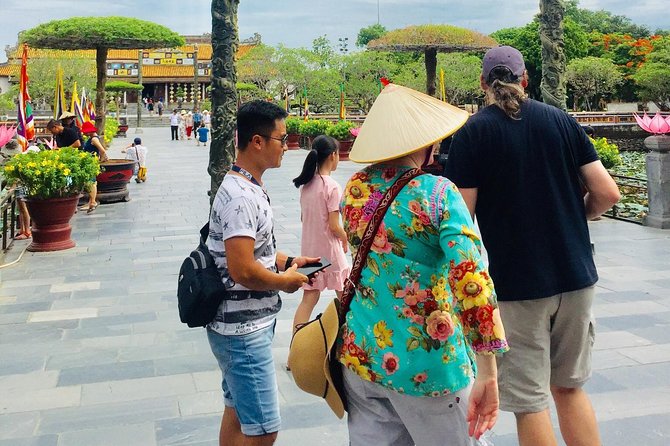
Thai Binh Pavilion is a short stop of about 10 minutes, followed by the Thieu Phuong Garden with roughly 20 minutes of sightseeing and walking. These spaces soften the mood after the formal halls and temples.
The garden stop is valuable because royal architecture was not only about grand halls. Paths, planted areas, pavilions, and quiet spaces helped shape the daily setting of the court. Your guide can connect these places with the routines of the royal family and explain how the compound worked as a lived-in residence.
Do not expect every garden feature to look perfectly preserved. Parts of the Imperial City have been affected by time, weather, conflict, and restoration. The reward is seeing different layers of the site together, from carefully repaired buildings to quieter sections where the passage of time is obvious.
Duyet Thi Duong Royal Theater
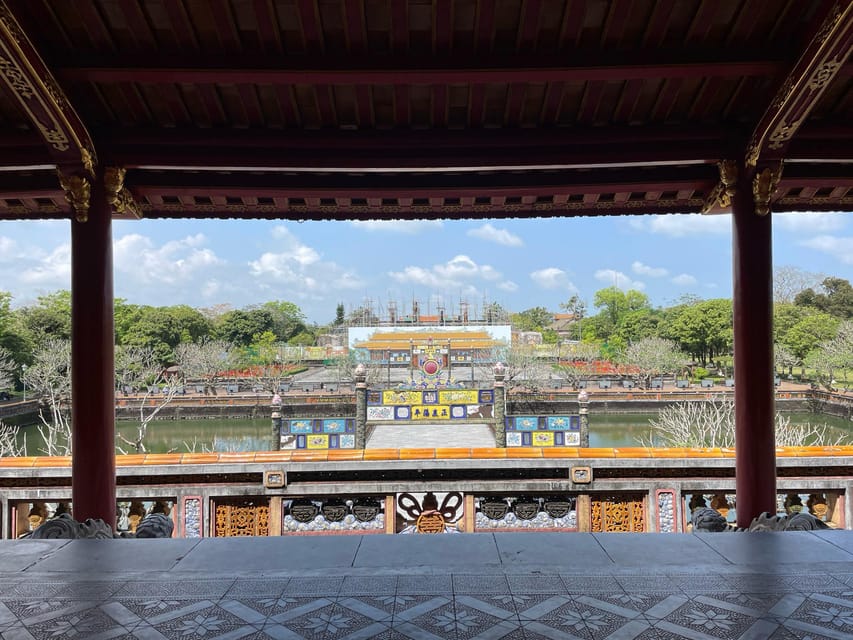
The final named stop is Duyet Thi Duong Royal Theater, with about 10 minutes for a visit and explanation. It adds another piece to the picture of court life: the imperial compound was a place for performance and culture as well as administration and worship.
A theater stop can seem less essential than the main palace, but it rounds out the experience. You are reminded that royal life included music, ceremony, entertainment, and artistic traditions, not only official business.
The itinerary also includes a final short photo stop before you leave the complex. Drop-off may be arranged in Hue or at Cua Hien Nhon, depending on the option selected.
What the $11 price really gives you
At $11 per person, this is a low-cost way to add interpretation to one of Hue’s major sights. The price covers the local guide and walking tour, not admission, food, or drinks. You should check the current entry fee when booking so the final cost does not surprise you.
The value is strongest if you care about context. A ticket gets you inside, but it does not explain why The Mieu excluded certain emperors, how the public and private zones differed, or what you are looking at when a building is partly restored.
A private or small-group option may cost more than the basic advertised rate, but it can be worthwhile if you want to ask many questions or need a slower pace. Several visitors ended up with one-on-one guiding or a very small group, which made it easier to discuss family history, Vietnamese culture, food, photography, and the rest of a Hue itinerary.
The duration ranges from 150 to 330 minutes, depending on the option and schedule. I would aim for the longer version if your day allows. The Imperial City is too broad for a rushed 2.5-hour visit, especially if you want photographs and time to listen.
Who will enjoy this walk most
I would choose this tour if you are visiting Hue for the first time, enjoy historical sites but do not want to read every sign yourself, or want to understand how the Nguyen Dynasty shaped the city.
It also suits curious couples, solo visitors, families with older children, and anyone who likes asking questions. Guides are available in English and French, and the private format can help if someone in your group needs a slower explanation.
It is less suitable if you want a quick photo circuit, dislike walking, or need step-free access. The activity is not suitable for wheelchair users, and the broad grounds can be demanding in heat or rain. A gray, wet day does not erase the appeal of the site, but it does make good footwear, water, and a flexible pace more important.
Small details that improve the experience
Send your WhatsApp number and hotel name if you are using pickup or want the guide to send the exact meeting map. The cannon meeting point is specific, and the Google Maps label can be confusing.
Give yourself time to reach the four-cannon location near Cua Ngan rather than the five-cannon location near Quang Duc Gate. This simple check can prevent a late start.
Ask questions. The strongest part of this tour is the human explanation, not just the route. Ask why certain emperors were honored, how the royal family used the Forbidden City, and what restoration has changed.
If you are interested in food or the rest of Hue, ask your guide for suggestions at the end. Guides have offered restaurant and coffee recommendations, including advice about local dishes such as nem lui.
Should you book the Hue Imperial City walking tour?
I would book it if you want the Imperial City to make sense, not merely look impressive. The site is beautiful, but the explanation of royal succession, court rules, religious practice, and family life is what turns a long walk into a meaningful visit.
The tour’s strongest qualities are its low base price, detailed guiding, flexible group sizes, and generally relaxed pace. Guides including Ngoc, Nhien, Huong, Ha, Hoa, Sue, Xi, and Florence have received especially strong praise for clear English, patience, historical detail, and personal warmth.
Skip it if you prefer complete independence, want only a short visit, or cannot manage extended walking. Also remember that admission is extra. For most first-time visitors who have at least three hours and want more than surface-level sightseeing, this is a sound investment in understanding Hue.
FAQ
How much does the Hue Imperial City walking tour cost?
The advertised price is $11 per person. Entry tickets, food, and drinks are not included.
How long does the tour last?
The duration ranges from 150 to 330 minutes. Starting times depend on availability and the option you select.
Where does the tour meet?
The meeting point is at the location of the four cannons near Cua Ngan. Google Maps may show Nine Holy Cannons, but five cannons are displayed at a different site near Quang Duc Gate.
Is hotel pickup available?
Pickup is optional. If you select it, the driver and guide can come to your hotel. You should provide your hotel name and WhatsApp number.
Which languages are available?
The tour is offered with a live guide in English or French.
Is the tour private or shared?
Private and small-group options are available. The exact group type depends on the option you choose.
Are entry tickets included?
No. Entry tickets are not included in the tour price.
Does the tour include food or drinks?
No. Food and drinks are not included.
Is the tour suitable for wheelchair users?
No. The activity is listed as unsuitable for wheelchair users.
Where does the tour finish?
The tour ends after you walk out of the Imperial City. Drop-off options include Hue and Cua Hien Nhon, depending on the selected arrangement.
New routes in Vietnam
- Ho Chi Minh City: Super Niche Walking Street Food Tour★ 5.0 · 438 reviews
- Hanoi: Street Food Walking Tour & Water Puppet Show★ 4.8 · 205 reviews
- Saigon: Private Backstreets Walking Food Tour★ 4.9 · 83 reviews
- Ninh Binh Sunset Tour And Visit Hoa Lu Walking Town At Night★ 4.4 · 94 reviews
- Hue Imperial Ancient City Walking Tour★ 4.8 · 308 reviews
- Hoi An/Da Nang: Private Photoshoot & Guided Walking Tour★ 5.0 · 160 reviews
- Hoi An Ancient Town – Walking Tour with Local Guide★ 4.9 · 385 reviews
- Hoi An: Ancient Town Guided Walking Tour★ 4.9 · 766 reviews
Vietnam Walking Tours, compared.
Ho Chi Minh City Street Food Tour & Sightseeing By Motorbike
Read our review →
Private Street Food Evening Walking Tour in Ho Chi Minh City
Read our review →
[HOT] Hanoi Old Quarter Walking Street Food – Small Group Tour
Read our review →
Private Hanoi Street Food Walking Tour With Real Foodie
Read our review →
Hue Customizable Tour with Imperial Citadel & Forbidden City
Read our review →Browse the lists this tour appears in