
Review · VIETNAM
Hue Customizable Tour with Imperial Citadel & Forbidden City
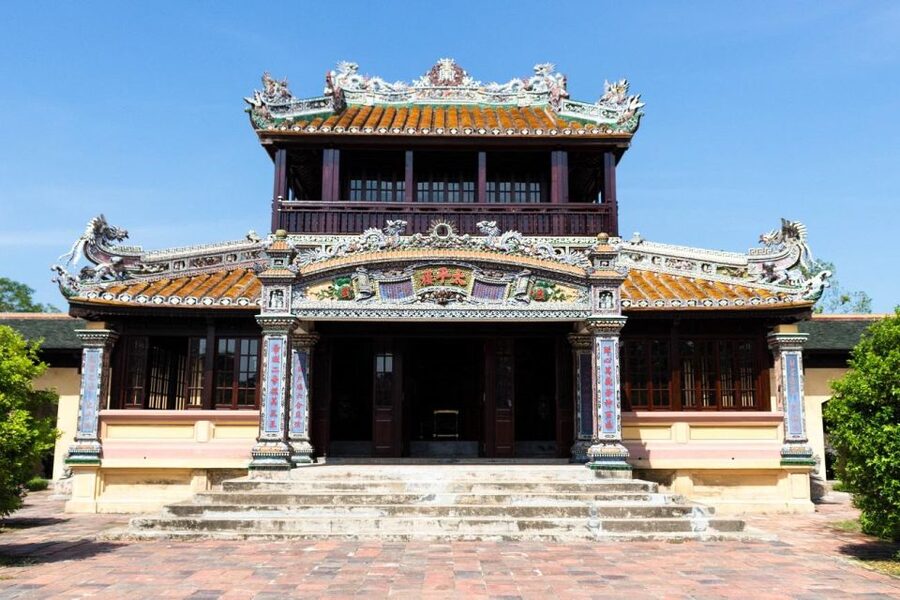
Hue’s Imperial Citadel makes far more sense when someone points out what you are seeing. This flexible experience lets you choose a 2.5-hour guided walk through the royal compound or a longer private-car outing to tombs, pagodas, and other Hue sights. I like the focus on royal life, including emperors, queens, minor wives, concubines, and eunuchs, and I like that guides such as Misa, Nhi, Ha, and Nhien explain symbols and architecture in clear English.
The main catch is that the advertised $12 price does not include entrance tickets. The private-car option includes a driver, not a licensed tour guide, so choose the walking option if detailed interpretation matters most to you.
Key points at a glance
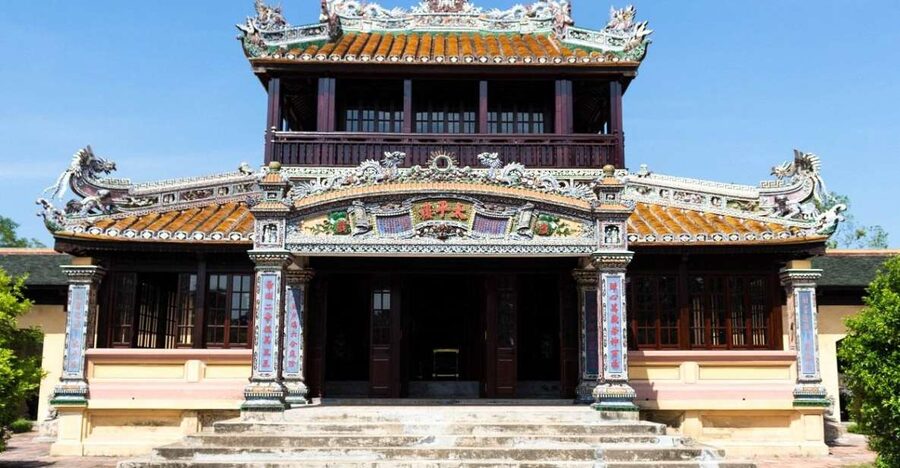
- See the Imperial Citadel with context: The walking route covers the Noon Gate, Supreme Harmony Palace, Nine Dynastic Urns, temples, gardens, and the Forbidden Purple City.
- Choose your level of independence: Take a guided citadel walk, or use a private car and set your own sightseeing plan.
- Meet at the correct cannons: The walking tour begins at the four bronze cannons near Ngan Gate, not the five cannons across the way.
- Expect strong English guiding: Misa, Nhi, Ha, Duy, Nhien, Linh, and other local guides are praised for clear explanations, warmth, humor, and patience.
- Budget for admission: Imperial City entry is listed at 200,000 Vietnamese dong per adult, with combination tickets available for the citadel and royal tombs.
- Allow for heat and walking: Shade, water, comfortable shoes, and an early start make the two-and-a-half-hour route easier.
The best choice for most people: a guided walk through royal Hue
If your main goal is to understand Hue’s Imperial Citadel, I would choose the walking tour. The route lasts about 150 minutes and keeps the focus on the walled royal compound, where the Nguyen emperors ruled Vietnam from 1802 until 1945.
You meet the guide at the four bronze cannons near Ngan Gate, also called Cua Ngan. This detail matters because five more cannons sit on the opposite side. Your guide holds an A4 sheet with your name, which makes the meeting point easier to spot.
The first stop is the Nine Holy Cannons, cast by Hue artisans in 1803 during Emperor Gia Long’s reign. They are large bronze works with both military and ceremonial meaning. From here, the route moves toward the Flag Tower and the main southern entrance of the citadel.
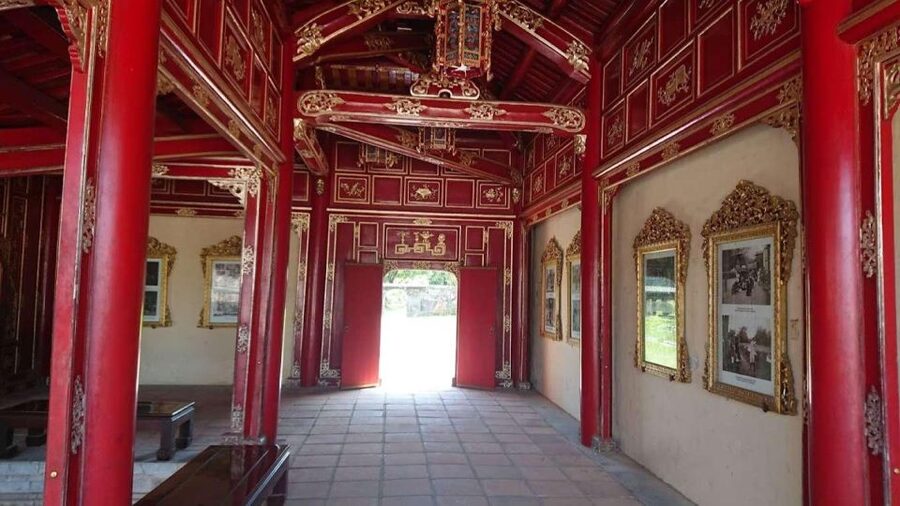
This is not a museum-style tour where you simply march from one building to the next. The guides use the structures to explain royal customs, Confucian ideas, Buddhist influence, feng shui, and the symbolic use of numbers and animals. That extra layer is valuable because many buildings can look alike if you do not know what to notice.
Other routes people walk in Vietnam:
- Ho Chi Minh City Street Food Tour & Sightseeing By Motorbike
★ 5.0 · 9,413 reviews - Private Street Food Evening Walking Tour in Ho Chi Minh City
★ 5.0 · 3,175 reviews - [HOT] Hanoi Old Quarter Walking Street Food – Small Group Tour
★ 5.0 · 2,163 reviews
From the Noon Gate to Supreme Harmony Palace
The Noon Gate, or Ngo Mon, is the grand southern entrance to the Imperial City. Built in 1833 under Emperor Minh Mang, it was used for ceremonies and troop movements. You will have time for photographs and a guided explanation, but do not expect to linger at every stop for a long period. The listed schedule assigns roughly 15 minutes to several early points, with more time inside the Imperial City itself.
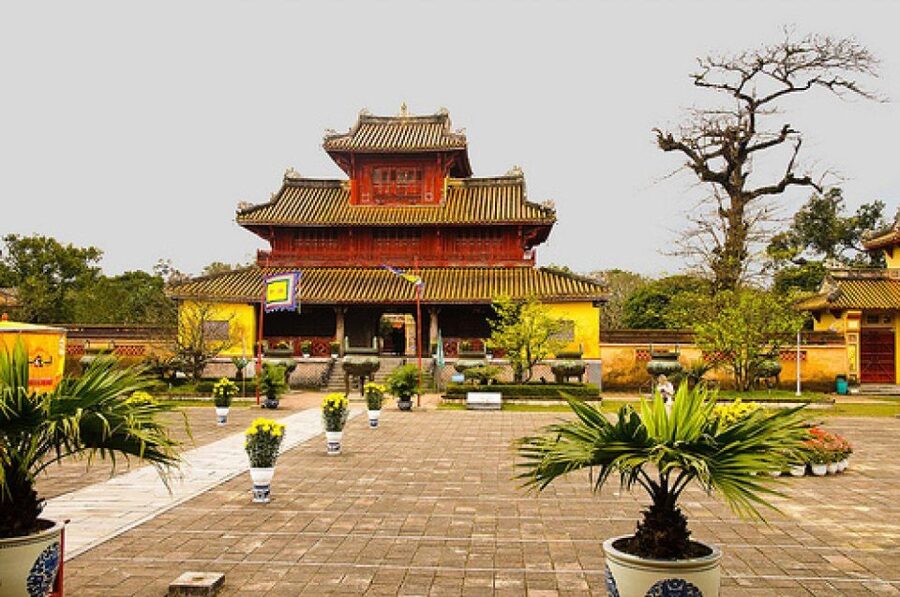
The Flag Tower rises near the southern wall. It served as the place where the royal flag was displayed, and it gives you an immediate sense of the citadel’s scale. The route then leads to Supreme Harmony Palace, one of Hue’s most important buildings.
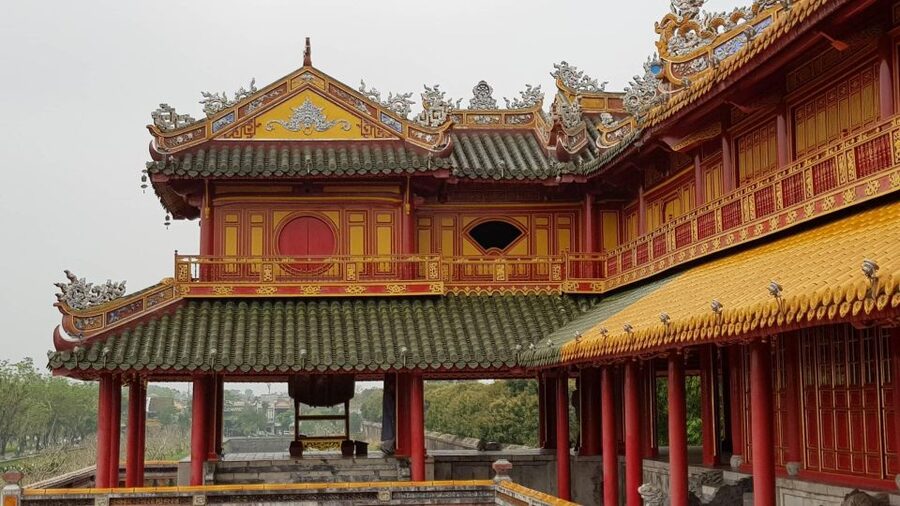
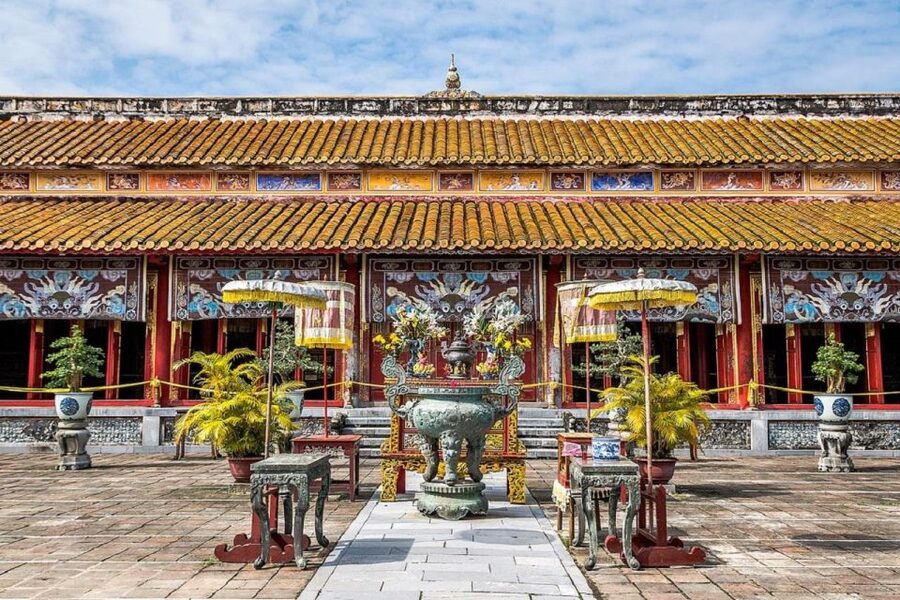
Supreme Harmony Palace, or Thai Hoa Palace, was the ceremonial center of the Nguyen court. Thirteen emperors, from Gia Long to Bao Dai, were crowned there. Your guide can help you picture the formal rituals that took place inside, along with the strict order of the court.
The palace is also a good place to ask questions. Guides such as Misa have been praised for using questions and conversation rather than delivering a nonstop speech. That style works well for families and for anyone who wants to understand the meaning behind the decoration instead of simply collecting photographs.
The urns, temples, and the Nguyen royal family
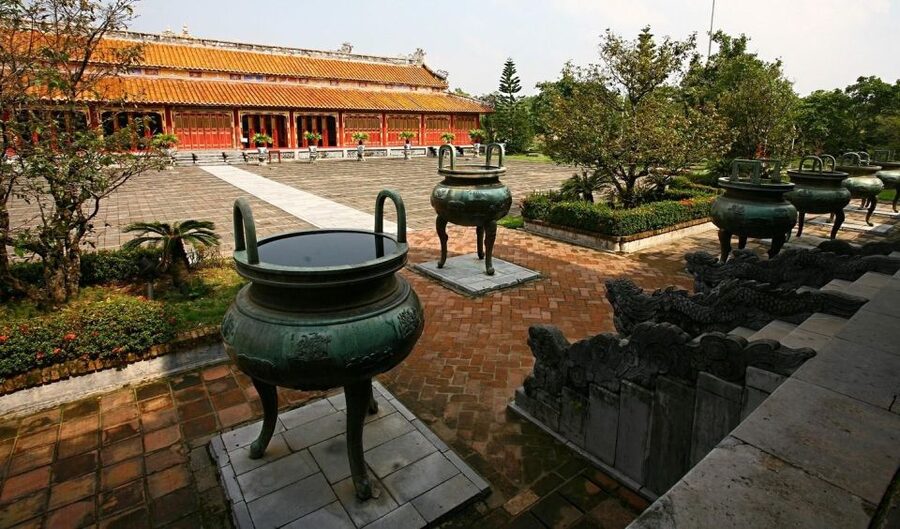
Near The Mieu Temple, you see the Nine Dynastic Urns, commissioned by Emperor Minh Mang in 1835 and completed in 1837. Each large bronze urn represents a Nguyen emperor and carries symbolic images connected with the empire. The guide explains why these objects matter, which turns a quick photo stop into a useful lesson in royal power.
The Mieu, also called The To Mieu, was built in 1821 as a temple for the Nguyen emperors. The tour also passes Hien Lam Pavilion, Hung To Mieu, Hung Mieu, and Trieu To Mieu. These names can blur together during a first visit, so the guide’s role is especially useful here.
I particularly like that the tour addresses the people behind the official ceremonies. You learn about emperors, their wives, minor wives, concubines, and eunuchs, as well as the daily life of the royal household. The Forbidden Purple City was not simply a ceremonial space. It was the private center of court life, and the tour helps you understand who lived and worked there.
Entering the Forbidden Purple City
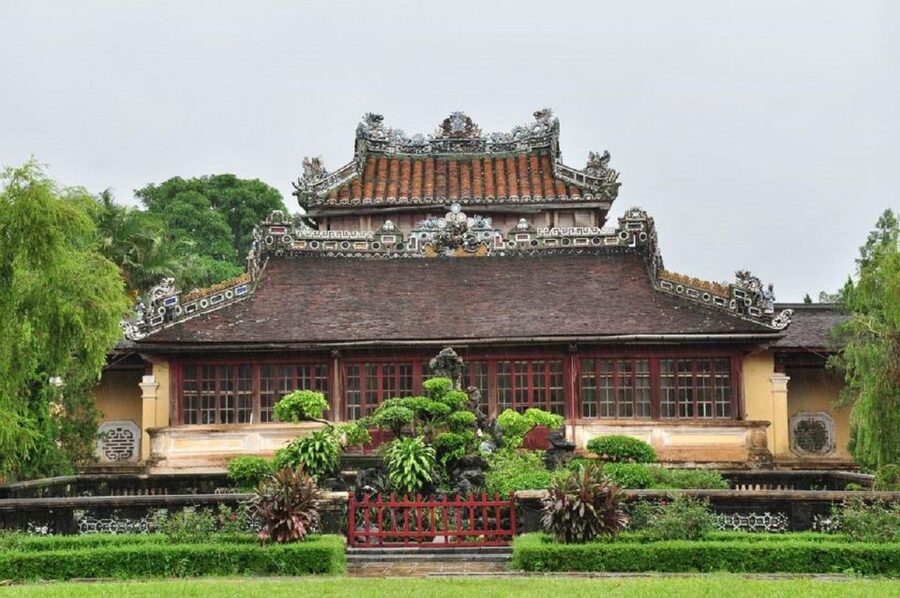
The Forbidden Purple City sits behind Supreme Harmony Palace. Emperor Gia Long began it in 1804, and Emperor Minh Mang renamed it in 1822. It was once reserved for the emperor and the inner court, so this is the part of Hue where the subject matter becomes most personal.
Much of the complex has been damaged and rebuilt over time. That is part of the story. You are not walking through an untouched royal palace, and some areas may feel open or incomplete. Still, the remaining gates, courtyards, foundations, gardens, and restored buildings help you grasp the original plan.
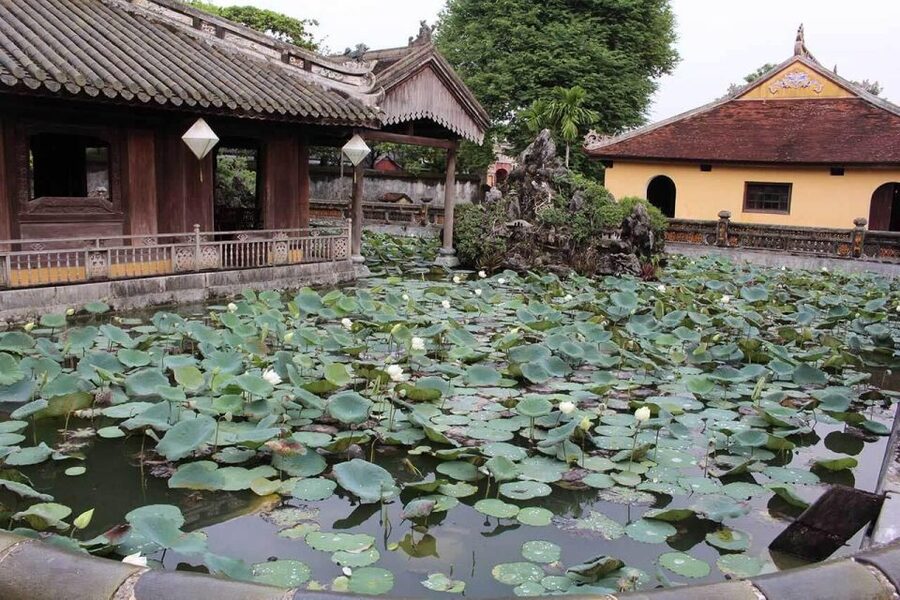
The itinerary includes the Imperial City for about two hours, with shorter stops at places such as Kien Trung Palace, Thai Binh Pavilion, Thieu Phuong Garden, and Duyet Thi Duong Royal Theater. Kien Trung Palace and other structures have strong visual appeal, while the gardens and theater help explain how the court used the complex beyond official ceremonies.
The walking pace receives frequent praise for being unhurried. You should have time for pictures, questions, and brief independent looks. In hot weather, that matters. Guides have adjusted the route by using shade and allowing cooling breaks, but you still need sun protection and water.
Same streets, a different guide:
- Super Niche Walking Street Food Tour in Ho Chi Minh City
★ 5.0 · 1,636 reviews - Private Walking Tour of Hanoi City
★ 5.0 · 1,251 reviews - Hanoi: Small-Group Street Food Walking Tour
★ 4.8 · 1,165 reviews - Private Hanoi Street Food Walking Tour With Real Foodie
★ 5.0 · 1,042 reviews
What makes the local guides useful
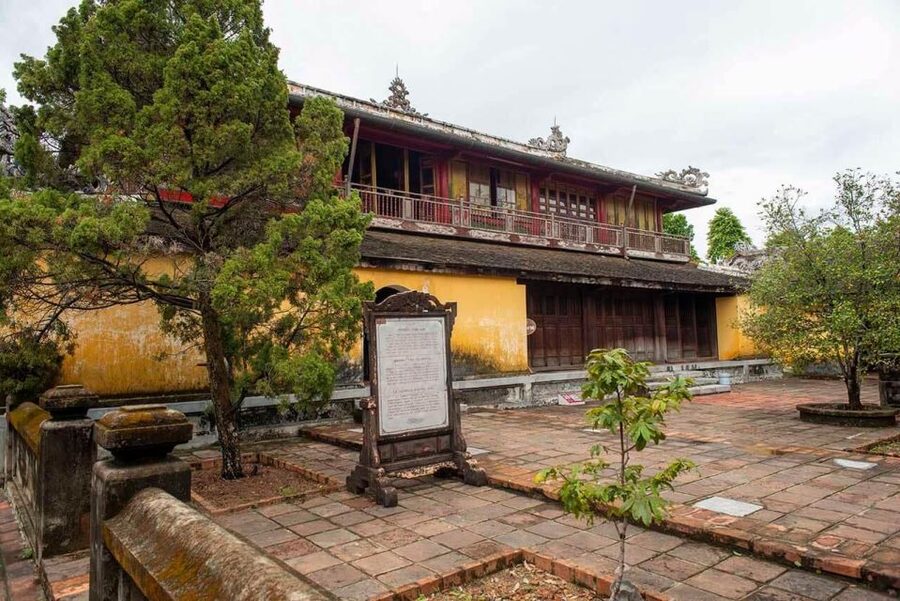
The strongest part of this experience is the human explanation. Misa, also identified as Minh Sang, is praised for her clear English, humor, warmth, and ability to explain architecture without making it feel like a lecture. She has also been noted for keeping groups in the shade during hot weather.
Nhi is another frequently praised guide. She explains the Nguyen dynasty in detail, answers questions, and brings energy to the walk. Her explanations of royal symbols have worked well for families, including children who might otherwise lose interest in palace architecture.
Ha is described as enthusiastic and easy to follow. Nhien is especially good for travelers who want a flexible, conversational experience, including solo visitors who may want extra time for questions or photographs. Linh has been praised for storytelling and for pointing out good places to rest and take pictures.
You should not assume you will receive a particular guide. Names can change according to availability. The useful point is that the guiding team appears to place a high value on English communication, friendliness, and personal attention.
The private-car option for a wider day in Hue
The private-car option works differently. An English-speaking driver picks you up from a city-center hotel, Hue Railway Station, or another agreed location, then takes you to the sights you select.
This is not the best option if you want detailed commentary inside every monument. The driver is described as helpful for communication, but not as a licensed professional guide. You gain comfort and flexibility, but you give up the deeper interpretation provided by the walking option.
The available stops include:
- Imperial City: The essential Hue sight and the natural anchor for your day.
- Thien Mu Pagoda: A major religious and cultural site on the Perfume River.
- Minh Mang Tomb: One of the Nguyen royal tomb options.
- Tu Duc Tomb: Another major imperial tomb, linked to one of Hue’s best-known emperors.
- Khai Dinh Tomb: A later Nguyen tomb with a distinctive architectural style.
- Thuy Tien Abandoned Water Park: A visually unusual stop that appeals to people who want something outside the standard royal route.
The exact order and length of the private-car outing depend on the option you book. The stated duration ranges from 150 minutes to eight hours, so check the selected itinerary rather than assuming every attraction is included.
For a full day, I would use the car to connect the Imperial City with two or three tombs. The distances make private transport more practical than trying to arrange each ride separately. If you want stories at every stop, consider arranging a licensed guide separately or choose the walking tour for the citadel itself.
Price, tickets, and what the $12 really covers
The starting price of $12 per person is attractive, especially for a small-group guided walk. It is best understood as the cost of the guiding or transport service, not the complete cost of sightseeing.
Imperial City admission is not included. The listed adult price is 200,000 Vietnamese dong. Combination tickets are available at 420,000 dong for the Imperial City plus two tombs, or 530,000 dong for the Imperial City plus three tombs. These combination tickets are valid for two days and can make sense if you plan to visit several royal sites.
Food and drinks are also not included, though you can buy them during the day. For the walking tour, there is no hotel pickup. You go to the cannons near Ngan Gate. Private-car pickup and drop-off are included at city-center hotels in Hue and Hoi An, Hue train station, and Phu Bai Airport, with an extra charge possible for locations outside the central area.
The cancellation policy is friendly: you can cancel up to 24 hours before departure for a full refund. You can also reserve now and pay later, which helps if your Hue schedule depends on train or flight plans.
Timing, weather, and group size
Hue can be hot, and the citadel involves substantial walking on exposed paths. An early start is the smart choice. One morning outing began at 8:30, before the sun became too strong, and guides have adjusted the pace during very hot or rainy conditions.
Wear comfortable shoes. Bring water, sunscreen, and something to cover your head. Rain is a real possibility in central Vietnam, so a light rain jacket or umbrella is useful. The tour can continue in wet weather, but photographs and walking comfort will suffer.
The experience is offered privately or in small groups. A booking marked as a group tour may sometimes turn into a private or nearly private walk if demand is low. That can be a pleasant surprise, but you should book for the stated group format rather than count on having the guide alone.
Who should book this Hue experience?
I would recommend the walking option to first-time visitors, families, solo visitors, and anyone who wants the Nguyen court explained in plain English. It is also a good second visit if you previously wandered through the citadel and felt you missed the meaning of the buildings.
The private car suits couples, families, and small groups who want to combine Hue’s major sights in one day. It is especially useful if your time is limited or you are arriving by train or flying through Phu Bai Airport.
You may want to skip this experience if you prefer exploring entirely alone, dislike fixed meeting points, or want a formal archaeological lecture at every stop. The walking tour is informative and friendly, but it is designed for a broad audience rather than advanced specialists.
Should you book it?
Book the walking tour if the Imperial Citadel is your main reason for visiting Hue. The price is good once you add the entrance ticket, and a strong guide can save you from seeing a long list of buildings without understanding their purpose.
Choose the private car if you want several tombs and pagodas in one outing. Just remember that the driver provides transport and basic communication, not the same level of historical explanation. For most first-time visitors, the best value is the guided citadel walk, followed by independent exploration or a separate car trip to the tombs.
FAQ
How long is the Hue walking tour?
The walking tour lasts about 2.5 hours, or 150 minutes. It covers the Imperial Citadel and Forbidden Purple City.
Where does the walking tour meet?
You meet the guide at the four bronze cannons near Ngan Gate, also called Cua Ngan, at the Citadel. The guide holds an A4 sheet with your name. Five cannons are located across the way, so check that you are at the correct group of four.
Is the entrance ticket included?
No. Imperial City admission is listed at 200,000 Vietnamese dong per adult. Combination tickets are also available for the Imperial City with two or three royal tombs.
Does the walking tour include hotel pickup?
No. The walking tour does not include pickup. You must reach the meeting point at the four cannons near Ngan Gate.
What does the private-car option include?
The private-car option includes a private vehicle and an English-speaking driver. Pickup is available from selected city-center hotels, Hue Railway Station, and Phu Bai Airport.
Is the private-car driver a tour guide?
No. The driver speaks English for communication but is not described as a licensed professional tour guide. Choose the walking option if detailed guiding inside the Imperial City is important to you.
Can I cancel the booking?
Yes. You can cancel up to 24 hours in advance for a full refund. The experience also offers a reserve-now, pay-later option.
New routes in Vietnam
- Ho Chi Minh City: Super Niche Walking Street Food Tour★ 5.0 · 438 reviews
- Hanoi: Street Food Walking Tour & Water Puppet Show★ 4.8 · 205 reviews
- Saigon: Private Backstreets Walking Food Tour★ 4.9 · 83 reviews
- Ninh Binh Sunset Tour And Visit Hoa Lu Walking Town At Night★ 4.4 · 94 reviews
- Hue Imperial Ancient City Walking Tour★ 4.8 · 308 reviews
- Hue Imperial City Walking Tour: Citadel & Forbidden City★ 4.8 · 245 reviews
- Hoi An/Da Nang: Private Photoshoot & Guided Walking Tour★ 5.0 · 160 reviews
- Hoi An Ancient Town – Walking Tour with Local Guide★ 4.9 · 385 reviews
Vietnam Walking Tours, compared.

Ho Chi Minh City Street Food Tour & Sightseeing By Motorbike
Read our review →
Private Street Food Evening Walking Tour in Ho Chi Minh City
Read our review →
[HOT] Hanoi Old Quarter Walking Street Food – Small Group Tour
Read our review →
Private Hanoi Street Food Walking Tour With Real Foodie
Read our review →
Tasting 8 Different Street Foods + Local Drink at Evening Time by Walking
Read our review →Browse the lists this tour appears in