

Review · NETHERLANDS
The Hague: Courtyard Walking Tour
Behind The Hague’s grand streets and official buildings is a quieter city of walled courtyards. This 1.5-hour walk leads you through places that can be almost invisible from the pavement, where charity housing once gave poor and older residents a safe home. I like the contrast between busy central streets and these calm pockets, and I like that the tour connects buildings to the people who lived in them. The main drawback is that the walk may include fewer courtyards than you expect, with part of the time spent on other monuments and city history.
I also like the small-group format, limited to 10 people. It gives the Dutch-speaking guide room to explain details and adjust the pace. Guides Hans and Kees have been singled out for their enthusiasm and clear storytelling, and Hans adapted his Dutch presentation when two foreign guests joined. Do check the Dutch-only format before booking, and note that pets are not allowed, except assistance dogs.
Key points at a glance
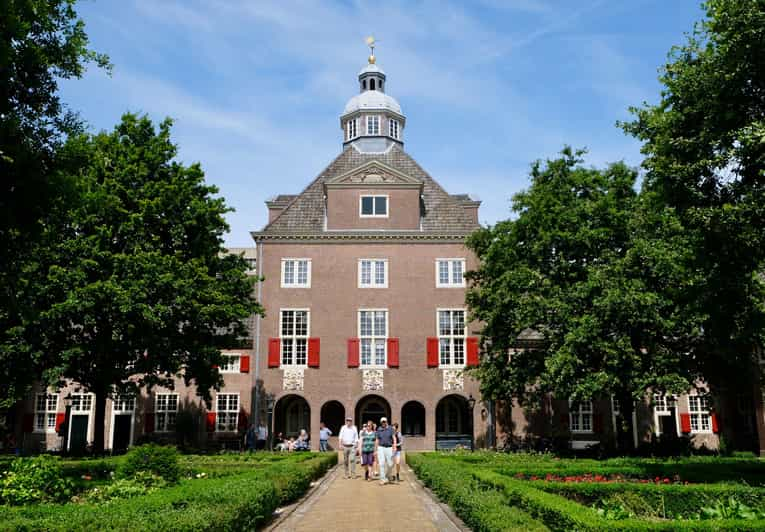
- Sixteenth-century courtyards: See a traditional form of Dutch housing that has lasted for roughly four centuries.
- A quiet world behind city walls: Look for courtyards that are barely visible from the main street.
- Charity with a practical purpose: Learn how poor and older residents once lived in these sheltered homes.
- More than courtyards: The route also includes monuments and other interesting places in central The Hague.
- Small Dutch-speaking group: The maximum of 10 people makes questions and conversation easier.
- Good value at $9: For 90 minutes of guided local context, the price is modest, especially for a first look at central The Hague.
Finding the courtyards behind The Hague’s streets
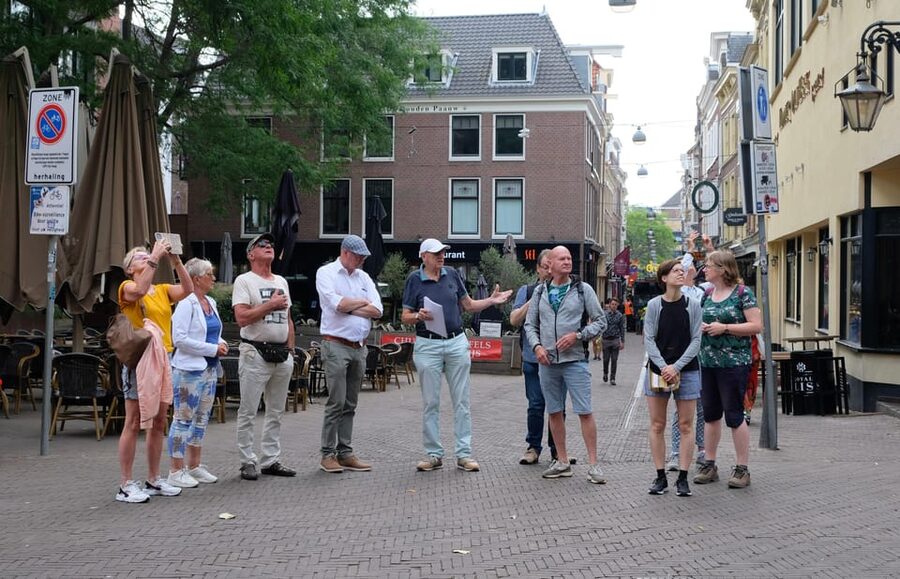
The appeal of this walk begins with the entrance. You meet at the small square beside ’t Goude Hooft, then move into a part of the city that is easy to miss if you are sightseeing on your own.
The courtyards are not grand palace gardens. They are enclosed residential spaces, often protected by walls or by rows of houses. From the street, an entrance may be narrow or barely noticeable. Once inside, the mood changes. Traffic and city noise fall away, and the space feels private, modest, and separate from the city around it.
That change is the heart of the experience. The Hague is known for government buildings, urban squares, and monuments, but these courtyards show how ordinary people lived. They give you a more human view of the city, one based on housing, charity, age, and community rather than only on power and public architecture.
I would not book this expecting a long series of spectacular sights. The value lies in learning to notice spaces that you could easily pass without seeing. The guide helps you understand why these places were built and why they still matter.
More Walking Tours in the Netherlands:
- Amsterdam Anne Frank: Small-Group Walking Tour & Local Guide
★ 4.8 · 12,789 reviews - Anne Frank’s Story – Guided Walking Tour through Amsterdam
★ 5.0 · 11,619 reviews - Absolutely Amsterdam – the Essential Introductory Walking Tour
★ 5.0 · 3,629 reviews
What sixteenth-century charity housing tells you
The courtyards date from the 16th century, when charitable housing offered a practical response to poverty and old age. The homes were intended for people with limited means, and they were arranged around shared, protected spaces.
That history gives the courtyards their particular character. They were not simply attractive retreats. They were part of a social system that provided shelter and some degree of security. As you walk, the guide explains this background and helps you read the layout as a record of how the city cared for vulnerable residents.
The word charity can sound abstract in a museum label. Here, it becomes physical. You see the small homes, the enclosing walls, and the shared space that shaped daily life. You can also consider the limits of the arrangement. These were homes for people in need, not luxury residences, and the peaceful appearance today should not hide their original purpose.
The courtyards have changed over time, but their basic appeal has lasted. Residents now enjoy quiet surroundings while living close to the center of The Hague. That combination is one of the most interesting things about them: they are historic places that remain part of ordinary city life rather than frozen monuments.
The Renaissance details and nearby monuments
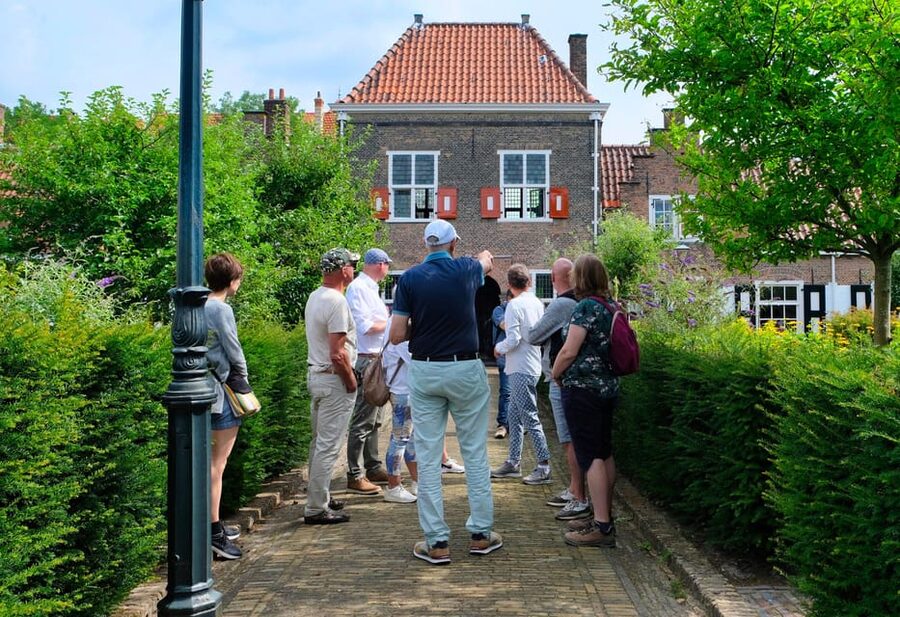
The tour includes Renaissance features, but you should expect the guide to place those details within the wider walk rather than offer a formal architectural lecture. A doorway, facade, decorative detail, or courtyard plan can reveal the period in which the housing was created and the values behind it.
The route also passes other interesting locations and monuments. The guide takes time to explain their history or a feature that makes them worth noticing. This gives the walk a useful rhythm. You move from an enclosed courtyard to a more public city setting, then back into a quieter corner.
That broader route is important if you want to understand central The Hague as a whole. It also explains the one common disappointment: if your main goal is to count as many hofjes as possible, the walk may feel less focused than expected. One participant hoped to see more genuine courtyards, but found that the other places and stories made up for it.
I see this as a tradeoff rather than a flaw. A route made only of courtyards could be repetitive, and access to residential spaces may be limited. The extra monuments give the guide room to connect the courtyards with the city around them.
How the 90-minute route feels
At 1.5 hours, the walk is long enough to develop a theme without taking over your day. I would place it early in a visit to The Hague if you want a useful introduction to the historic center, or later if you prefer a quieter break from larger attractions.
The pace should suit people who want to stop and listen rather than rush from one sight to the next. Each courtyard has a story, and the guide needs time to explain its purpose, architecture, and present-day setting. You will also pause at monuments and other locations along the way.
Because the route moves through residential areas, respect matters. These courtyards are not empty film sets. People live there now and value the peace. A good guide, such as Hans, pays attention to the surroundings and to the residents. That sensitivity is part of what makes the experience feel like a city walk rather than a parade through private space.
The small group helps here. With no more than 10 participants, the guide can keep the group together without making the courtyards feel crowded. You can ask a question or request clarification without shouting across a large group.
Same streets, a different guide:
- Amsterdam: Anne Frank Guided Walking Tour in DE/EN/IT/ES
★ 4.9 · 3,107 reviews - Amsterdam: Anne Frank Guided Small Group Walking Tour
★ 4.8 · 2,722 reviews - Amsterdam: Cultural Highlights Walking Tour
★ 4.9 · 2,629 reviews - Amsterdam: Ganja Walking Tour
★ 4.2 · 2,127 reviews
Dutch-only guiding and the role of Hans and Kees
The official language is Dutch, so language is the most important booking consideration. If you understand Dutch, you should get the full benefit of the historical explanations and wordplay that may arise naturally during the walk.
Guides Hans and Kees are both described as enthusiastic and well informed about the city. Hans is also noted for treating the courtyards respectfully and adjusting his Dutch presentation for two foreign guests. That suggests some flexibility in delivery, but it does not turn the tour into an English-language experience.
If you do not speak Dutch, I would choose this only if you are comfortable following along with limited explanation. The courtyards are interesting to see, but the social history is a major part of the value. The tour is best for Dutch speakers, people studying the language, or visitors joining Dutch-speaking friends and family.
The guide style appears personal rather than scripted. Kees is described as enthusiastic and able to offer new impressions even to someone familiar with the city. That matters in a walk focused on small details. You want a guide who notices the setting and brings out its meaning without treating every stop as a memorized speech.
What the small group changes
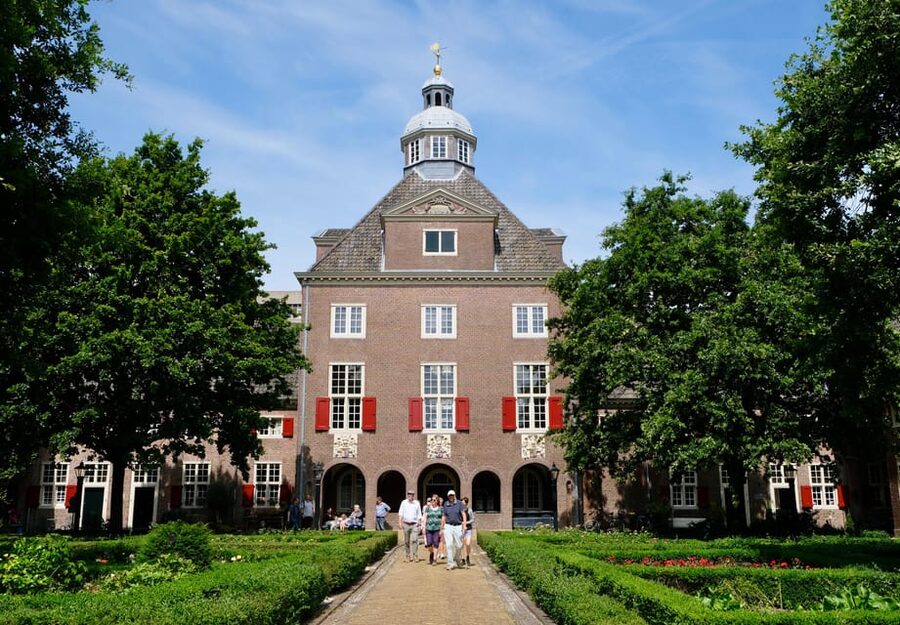
A group limit of 10 is a real advantage for this type of walk. Courtyards are enclosed by nature, so a large crowd would change the atmosphere and make it harder to hear. A small group allows you to stand close to the guide while leaving space for residents and other people using the area.
It also makes the tour more adaptable. Hans adjusted the Dutch tour when foreign guests joined, and the smaller format likely helped him do so. I would still treat that as a courtesy, not a promise of translation or a different language.
The group can include different comfort levels. One person on a walk had a fear of dogs and found it difficult when a dog joined the group. The stated rule is that pets are not allowed, although assistance dogs are permitted. Another participant reported that a dog was allowed as an exception after conflicting information.
The practical lesson is simple: if you are traveling with a dog, ask before arriving and do not assume that permission is automatic. If you are uncomfortable around dogs, the stated no-pets rule should normally work in your favor, but unusual exceptions can occur.
Wheelchair access and practical comfort
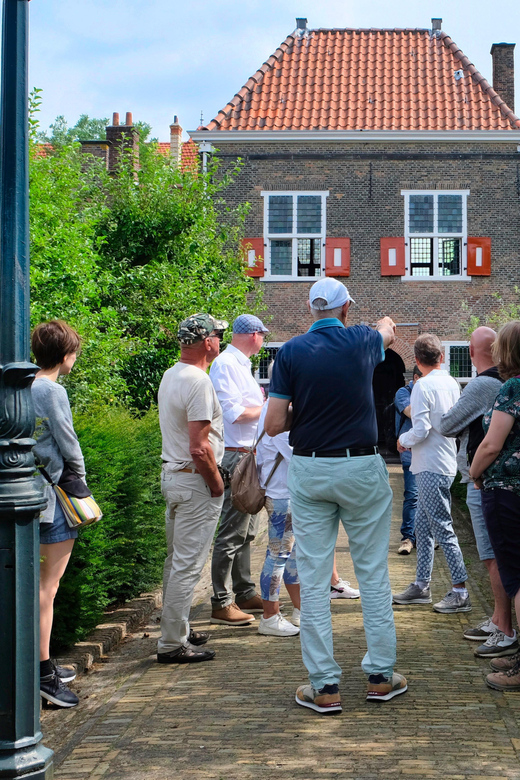
The activity is listed as wheelchair accessible, which makes it a useful option for visitors who need an accessible city walk. Still, courtyards are older urban spaces, and the specific conditions at each entrance or passage are not described. I would confirm any detailed mobility needs before booking, especially if you require information about surfaces, door widths, or restroom access.
The meeting point is ’t Goude Hooft, at the small square beside it. Arriving with a little extra time should help you identify the group without turning the start into a scavenger hunt. The tour is in central The Hague, and the route is a walking experience rather than a transport-based excursion.
Comfortable shoes make sense, though the supplied information does not specify the exact surfaces or distance. The walk lasts 90 minutes, and you should be prepared to stand while the guide explains buildings and courtyards.
Free cancellation is available up to 24 hours before the start for a full refund. You can also reserve now and pay later, which is useful if your day-by-day plans are still changing. Check the available start times when choosing a date.
Is $9 a fair price?
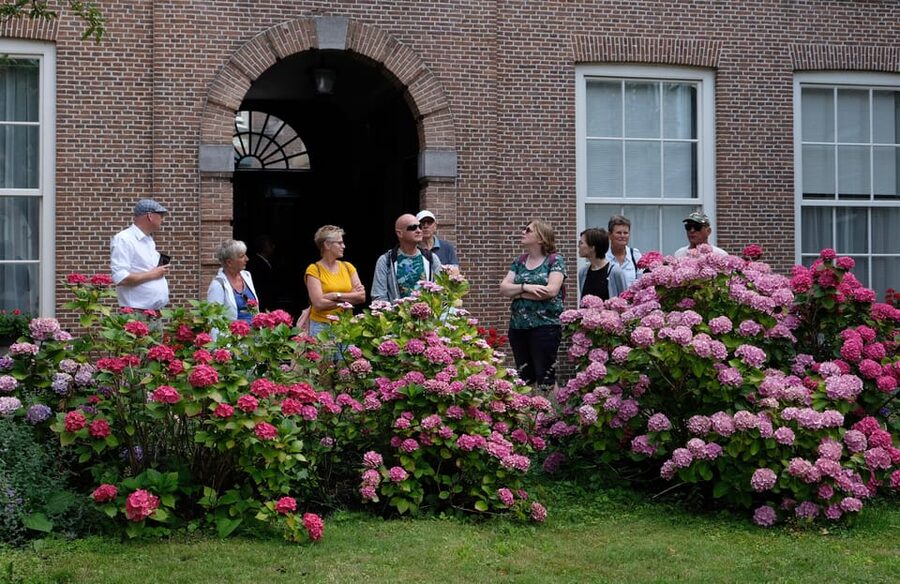
At $9 per person, this is an easy experience to justify if you speak Dutch and have even a modest interest in urban history. You get 90 minutes with a local guide, access to knowledge that is hard to gather from a quick solo walk, and a look at places that are not always obvious from the street.
The price is especially strong for a first visit. You can use the walk to understand the city center, then return to a courtyard or monument that caught your attention. It also leaves room in your budget for a museum or another paid sight later in the day.
The value is less clear if you want a polished architectural tour in English or a route devoted almost entirely to courtyards. The experience is modest by design. Its strength is local context, not a long list of major attractions.
I would also keep expectations in line with the rating of 4.5 from 71 bookings. That suggests broad satisfaction, but not a perfect match for everyone. The main variables are the number of courtyards you see, the Dutch-only guiding, and how comfortable you feel around residential spaces.
Who should book this walk?
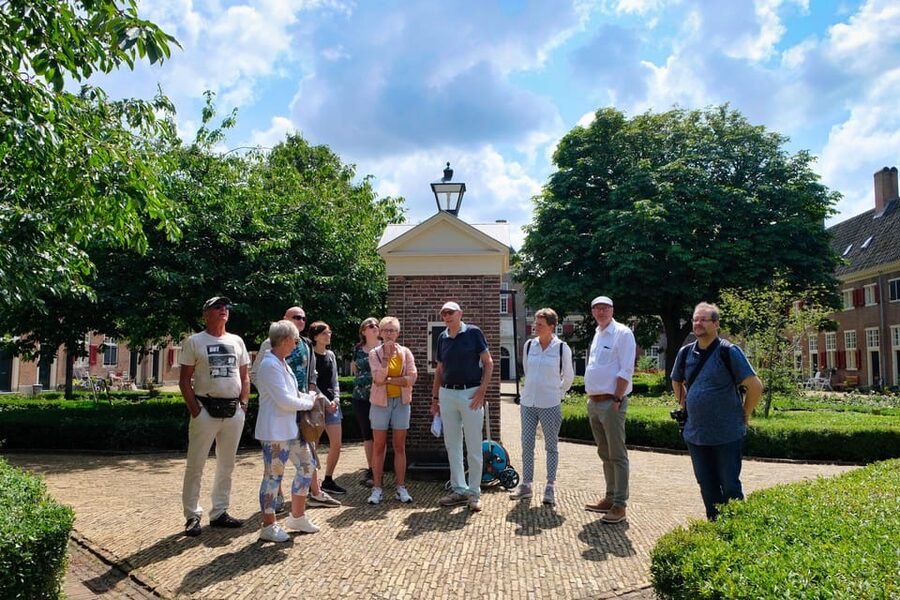
I would recommend it to Dutch-speaking visitors who enjoy small details, social history, and traditional city housing. It is also a good choice if you have already seen The Hague’s better-known public sights and want a different side of the center.
The walk suits people who prefer a small group and a measured pace. It is useful for repeat visitors, local residents who want to notice familiar streets differently, and anyone curious about how charitable housing shaped Dutch cities.
I would be more cautious if you want dramatic architecture, a large number of formal attractions, or extensive English commentary. Families with assistance dogs can use the stated exception, but ordinary pets are not allowed. Anyone with a strong fear of dogs may want to confirm the policy before joining.
My booking advice
Book this tour if you speak Dutch and want to see how The Hague’s quiet courtyards connect to charity, age, housing, and Renaissance design. The $9 price, 90-minute length, and 10-person limit make it a practical addition to a city visit.
Skip it if your priority is a fully English tour or a courtyard-only route. For the right audience, though, this is a thoughtful way to see a less obvious part of The Hague, with guides such as Hans and Kees adding the local detail that makes modest places memorable.
FAQ
Where does the Courtyard Walking Tour begin?
The meeting point is the small square beside ’t Goude Hooft in The Hague.
How long does the tour last?
The walk lasts 1.5 hours, or 90 minutes.
What language is the tour in?
The live guide conducts the tour in Dutch.
How many people can join the group?
The group is limited to 10 participants.
Is the walk wheelchair accessible?
Yes. The activity is listed as wheelchair accessible.
Are pets allowed?
Pets are not allowed. Assistance dogs are permitted.
Can I cancel for a refund?
Yes. You can cancel up to 24 hours in advance for a full refund.
New routes in the Netherlands
- Small Group Walking Tour in Amsterdam with Friendly and Fun Guide★ 5.0 · 281 reviews
- Humans of Amsterdam: Cultural Walking Tour incl. meeting 2 locals★ 5.0 · 320 reviews
- Private Tour: Amsterdam City Walking Tour and Canal Cruise★ 4.5 · 142 reviews
- Amsterdam: Private Introduction Walking Tour (TOP RATED)★ 5.0 · 223 reviews
- Amsterdam: Anne Frank and World War II Walking Tour (TOP RATED)★ 4.5 · 72 reviews
- Anne Frank and Jewish Quarter Amsterdam Private Walking Tour★ 5.0 · 684 reviews
- Secrets of Amsterdam Walking Tour plus Dutch Sweets Tasting★ 5.0 · 111 reviews
- Amsterdam Private Historical Walking Tour★ 5.0 · 75 reviews
Netherlands Walking Tours, compared.

Amsterdam Anne Frank: Small-Group Walking Tour & Local Guide
Read our review →
Absolutely Amsterdam – the Essential Introductory Walking Tour
Read our review →
Anne Frank Guided Walking Tour in DE/EN/IT/ES
Read our review →


Anne Frank Walking Tour Amsterdam Including Jewish Cultural Quarter
Read our review →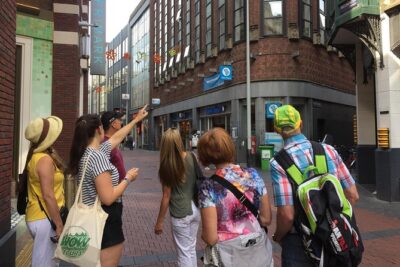
Amsterdam Highlights Walking Tour: Small Group Experience
Read our review →
Anne Frank’s Last Walk & See Anne Frank House in Virtual Reality
Read our review →Browse the lists this tour appears in