
Review · MALTA
From Cospicua: Senglea, Bormla, and Birgu Walking Tour
The best part of this tour is that it takes you beyond Valletta’s grand streets into Malta’s older working harbor towns. I like the yacht-lined waterfronts and the chance to walk Birgu’s Collacchio, where narrow lanes and Knights of Malta palaces tell a more intimate story. I also like that guides such as Karl, Chris, Lorraine, Christian, and Kris bring local anecdotes and humor into the history.
The main drawback is simple: despite its name, most of the detailed walking time is in Cospicua and Birgu, with Senglea seen from the starting waterfront rather than explored at length. You also finish in Birgu, and the dghajsa ride back to Valletta costs extra, so allow more time and money if you want the full boat-and-walk experience.
Key points at a glance
- Start at the Cospicua ferry landing: Meet your guide exactly where passengers leave the Valletta to Three Cities ferry.
- See Birgu’s Collacchio quarter: Walk narrow, winding streets lined with palaces built by the Knights of Malta after 1530.
- Hear the wartime story: Birgu was the most heavily bombed area in the Maltese Islands during World War II.
- Connect old and modern Malta: Learn how the British Navy, drydocks, and Mediterranean headquarters shaped the Three Cities.
- Enjoy a manageable 2.5-hour route: The schedule includes about 30 minutes in Cospicua, 75 minutes in Birgu, and a short viewpoint stop.
- Finish beside St. Laurence Church: From here, you can pay separately for a traditional dghajsa boat to Valletta.
Why Malta’s Three Cities deserve your time
Valletta gets much of the attention, and rightly so. Its churches, palaces, and orderly streets are easy to visit in a short break. But across the harbor, Cospicua, Senglea, and Birgu offer a different side of Malta.
These towns grew around the Grand Harbour and were shaped by military power, shipbuilding, religion, and ordinary neighborhood life. Their stone walls are not just scenery. They explain why this part of Malta mattered to the Knights of Malta, then to the British Navy, and later to the people who endured World War II bombing.
I like this tour because it gives you a useful framework before you wander around on your own. Instead of seeing a fortress as just an impressive wall, you learn what it protected and why the harbor mattered. Instead of treating Birgu as a pretty old town, you understand how its lanes connect to the arrival of the knights in 1530 and to the later British naval period.
The route also gives you a break from Valletta’s busier feel. Birgu is historic but often calmer, and its small streets reward a slow pace. You will still see handsome stone buildings and strong fortifications, but the setting feels more residential and local.
More Walking Tours in the world:
- Magical London: Harry Potter Guided Walking Tour
★ 4.7 · 22,044 reviews - Reykjavik Food Walk – Local Foodie Adventure in Iceland
★ 5.0 · 18,952 reviews - History and Hauntings of Salem Guided Walking Tour
★ 5.0 · 14,564 reviews
Meeting at Cospicua’s ferry landing
The tour begins at the Valletta Ferry Service landing in Cospicua. The meeting point is specifically at the unloading place, so you should get off the boat and look for the guide there rather than walking around town first.
This is a sensible starting point. The ferry puts you right beside the harbor, and the water gives you an immediate sense of how closely the Three Cities are tied together. You are not beginning beside a ticket office or a hotel lobby. You begin at the edge of the place that shaped these communities.
The Cospicua section lasts about 30 minutes. Your guide introduces the Three Cities and explains their historic role, including the later importance of the shipyards and British naval facilities. This opening helps you place the towns on the map before the route turns toward Birgu.
You should wear comfortable shoes. This is a walking tour on old streets and around fortifications, not a coach excursion with frequent stops. The distance is manageable, but stone surfaces, narrow lanes, and occasional uphill or downhill sections can make good footwear important.
Cospicua and Senglea: the harbor story begins
Cospicua, also called Bormla, is one of the Three Cities. The tour uses its waterfront as the opening chapter, with Senglea nearby across the harbor. The exact route gives more attention to Cospicua and Birgu than to a full walk through all three towns, so set your expectations correctly.
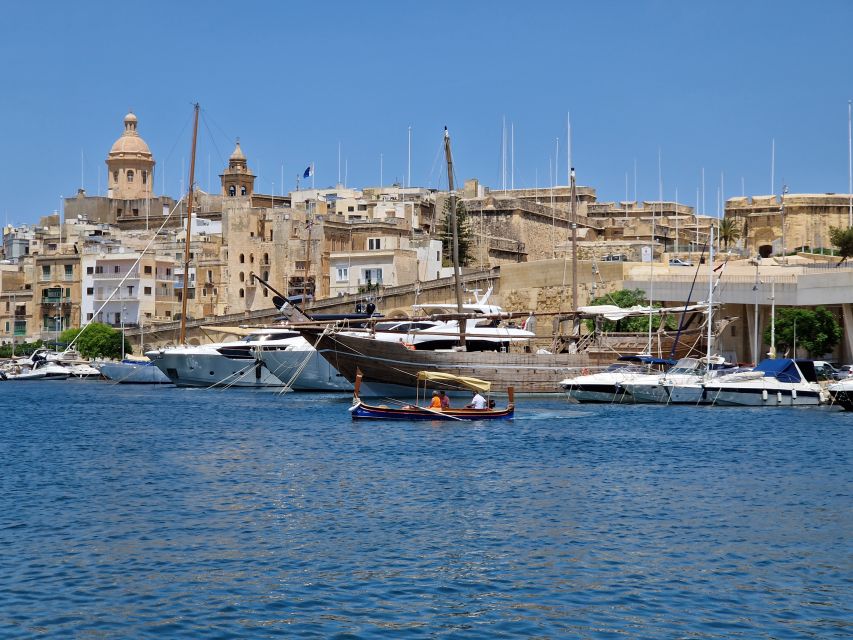
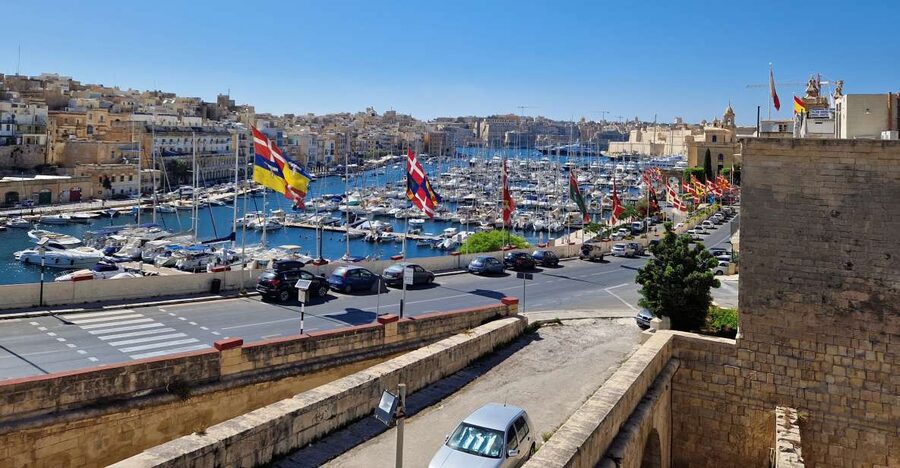
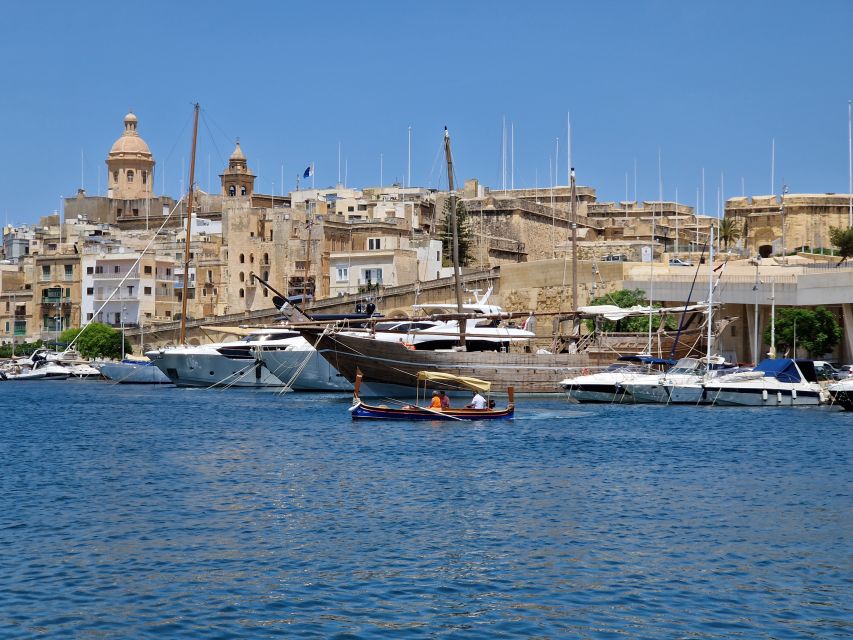
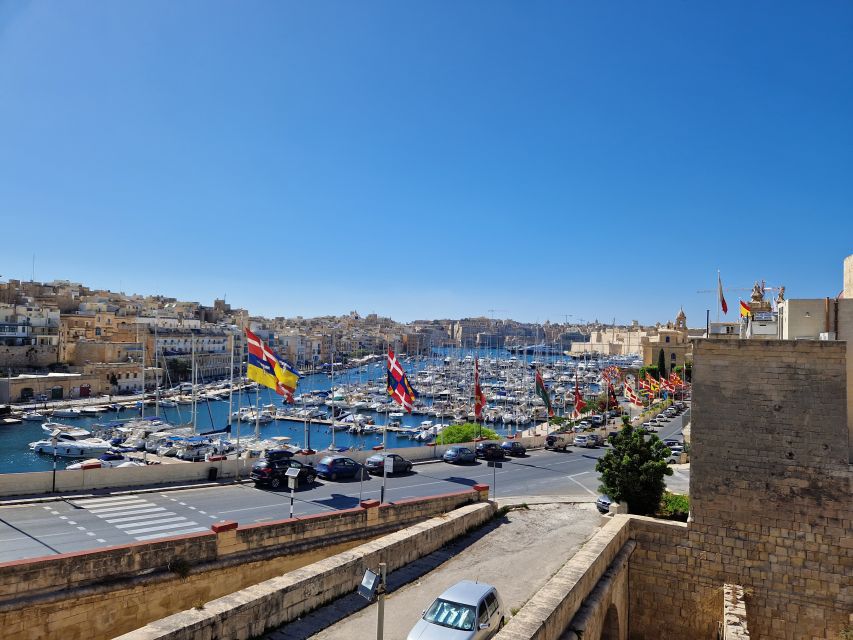
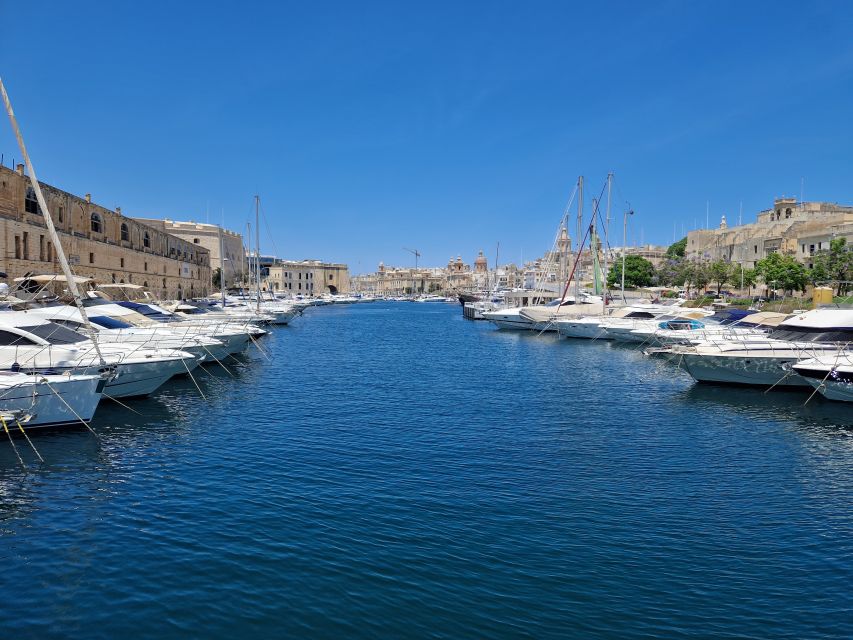
The waterfront is one of the strongest visual parts of the outing. Yachts line the harbor, while the surrounding walls and old buildings show why this was a place of defense and naval activity. The contrast is useful: modern pleasure boats sit in water once crowded with military and commercial vessels.
Your guide also explains the British Navy’s role in the area. Drydocks and the headquarters of the British Royal Navy in the Mediterranean helped shape employment, buildings, and daily life here. That connection gives the towns a broader story than the usual Knights of Malta tale.
If you are interested in modern history, listen closely during this part. The Three Cities were not frozen in the sixteenth century. Their identity continued to change through British rule, naval development, and the destruction and rebuilding that followed World War II.
Crossing toward Birgu and its massive defenses
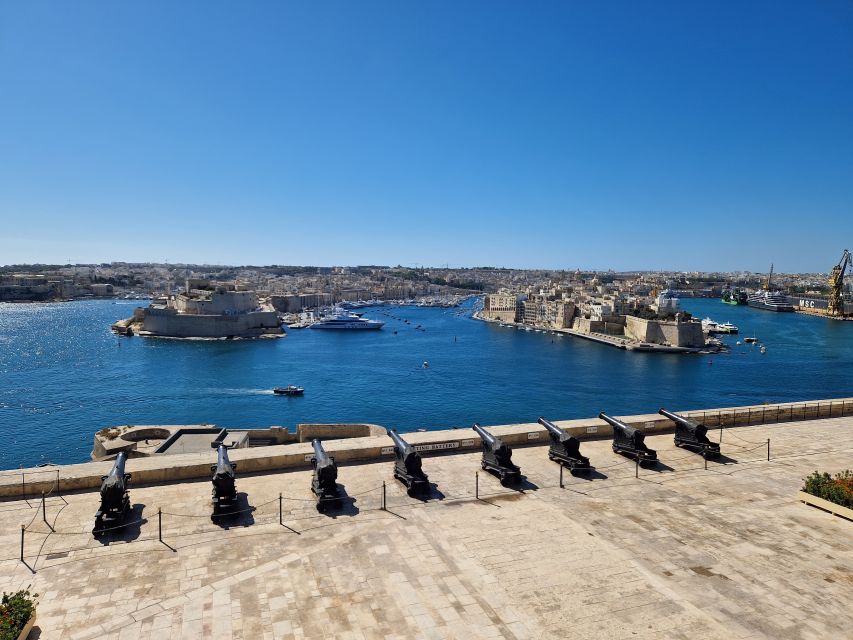
The route then brings you toward Birgu, also known as Vittoriosa. The fortifications become the main feature here. From the harbor and viewpoints, you can see how thick walls, towers, and defensive positions dominate the approach.
This is where a guide adds real value. Malta has so many walls and bastions that it can be hard to understand what you are looking at alone. A clear explanation turns the stonework into a readable plan: harbor entrance, defensive walls, military access, and the protected town behind them.
The viewpoint stop lasts about 15 minutes and includes time for photographs, sightseeing, and a short explanation. It is not a long pause, so have your camera ready and listen for the broader picture rather than expecting a formal visit inside a major monument.
The tour is primarily outdoors. The supplied details do not include entry to museums, churches, or palaces, so you should think of this as a street-level history walk rather than an indoor attraction tour. That keeps the price low, but it also means you will not receive a full interior visit to every landmark.
Same streets, a different guide:
- New Orleans Premier Ghost, Voodoo and Vampire Walking Tour
★ 4.5 · 12,856 reviews - Amsterdam Anne Frank: Small-Group Walking Tour & Local Guide
★ 4.8 · 12,789 reviews - Edinburgh: Harry Potter Magical Guided Walking Tour
★ 4.8 · 11,944 reviews - Edinburgh Castle: Guided Walking Tour with Entry Ticket
★ 4.7 · 11,699 reviews
Birgu’s Collacchio quarter and knightly palaces
Birgu is the heart of the tour. The Collacchio area is a compact historic quarter of narrow, winding streets and old palaces. These lanes are the kind of place where a guide can point out details you would probably pass without noticing.
The Knights of Malta built palaces here after arriving in 1530. Their presence made Birgu an important center of power, and the buildings still give the streets a formal, fortified character. At the same time, the lanes are close and human in scale. You are walking through a neighborhood, not just along a grand ceremonial avenue.
I particularly like the way this section combines architecture with daily life. The guide can discuss the knights, but also show how the town works as a living place. Several guides, including Chris and Karl, are praised for using local stories, personal observations, and humor instead of reciting dates without context.
The Birgu portion lasts about 75 minutes, making it the longest part of the walk. That is a good balance. You get enough time to understand the quarter without spending the entire morning on one cluster of streets.
World War II and Birgu’s wartime scars
One of the more striking parts of the tour is Birgu’s World War II story. This area was the most bombed part of the Maltese Islands, largely because of its military and naval importance.
That fact changes how you see the town. The stone streets and palaces may look untouched at first, but the guide explains the pressure the local population faced and how residents endured repeated attacks. The story adds a human layer to the fortifications. These walls were not only medieval defenses or attractive backdrops. They were part of a community’s survival.
You will want to listen for the guide’s anecdotes here. The strongest parts of the tour are not just lists of battles and dates. They are the links between global events and local families, streets, docks, and homes.
This is also where a local guide can make the subject easier to grasp. Guides such as Chris and Lorraine have been praised for explaining Malta’s past in clear English and for answering questions without making the walk feel like a classroom lecture. The tone is friendly, but the subject is serious.
The British Navy, drydocks, and a changing harbor
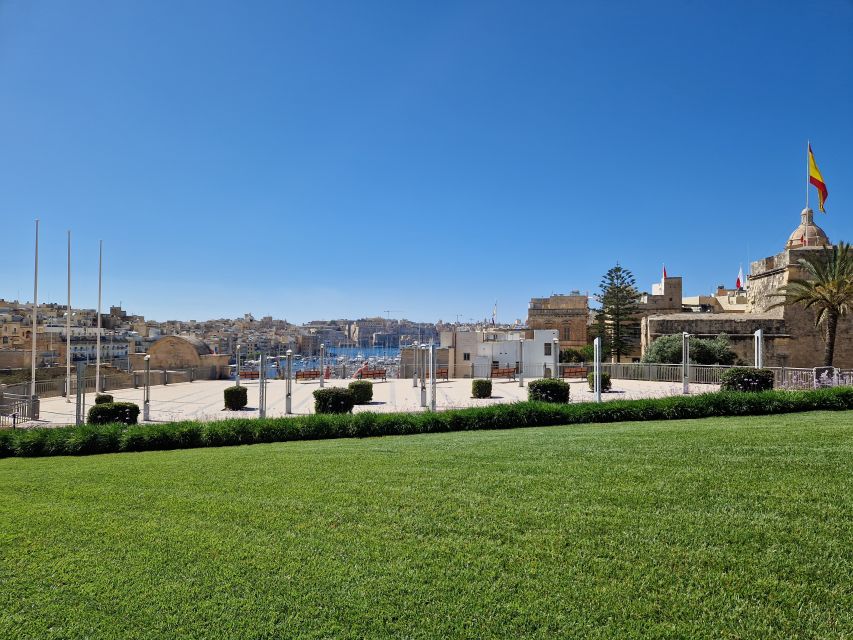
The tour does not stop with the Knights of Malta. It also follows the harbor into the British period, when the Three Cities became a major base for the Royal Navy in the Mediterranean.
You learn about the drydocks and naval headquarters that shaped the area. This helps explain why the towns remained important long after the knights had gone. The harbor was a working engine, tied to ships, repairs, defense, and employment.
For me, this is one of the most useful parts of the route because it connects several centuries in one place. A palace from the era of the knights, a fortress built for defense, a naval dock, and a yacht-filled waterfront are all part of the same story.
The guide’s delivery matters here. Past departures have included Karl, Carl, Chris or Christopher, Lorraine, Christian, and Kris. Their styles differ, but the most consistently praised qualities are clear storytelling, local knowledge, energy, humor, and an ability to answer questions. You may not receive the same guide on every departure, so treat those names as examples rather than a guarantee.
The final stop at St. Laurence Church
The walk finishes at the Birgu waterfront, in front of St. Laurence Church. This gives you a practical ending point, not just a final photo stop.
From here, you can continue exploring Birgu, find a place to eat, or board a dghajsa to Valletta. A dghajsa is a traditional Maltese boat with a gondola-like shape. The ride is not included in the $24 tour price, so you need to budget for it separately.
I like having this choice. If you are tired, you can end the experience after the walking tour. If you want to return to Valletta by water, the boat adds a fitting final chapter and lets you see the harbor from the same angle that made these cities important in the first place.
Do not assume the boat is part of the guided service. The guide finishes at the waterfront, and the dghajsa is an optional extra. Confirm the boat’s current availability and fare locally on the day.
Is $24 a fair price?
At $24 per person, this is a strong value if you want context rather than just a route map. The tour lasts 2.5 hours and includes a live English-speaking guide who explains the Three Cities, fortifications, knightly buildings, World War II, and the British naval period.
You are paying for interpretation, not admissions. The guide is the main service, and that distinction matters. If you prefer to walk silently and take photographs, you can see much of the area without booking. But you would miss the connections between the sites, and you would need to research the history yourself.
The price does not include hotel pickup or drop-off, and it does not include the dghajsa. The ferry to Cospicua is also not listed as part of the tour price, so plan your own way to the meeting point.
The tour can be especially good value for a first visit to Malta. It gives you enough orientation to return later and explore at your own pace. It also saves you from spending half a day trying to work out which walls, streets, and harbor buildings matter most.
Who should book this walking tour?
I would recommend it to first-time visitors staying in or near Valletta who want to understand the harbor towns across the water. It suits history fans, cruise passengers with a free morning, and anyone who prefers a small-scale walking experience to a large bus tour.
It also fits people who like a guide with personality. The strongest guide feedback centers on humor, personal stories, good pacing, and the ability to make complicated history easy to follow. You can ask questions along the way, and some departures have been very small, including groups of five, while another recorded group had 10 people.
It may be less suitable if you want extensive interior sightseeing. No museum, palace, or church entry is included in the stated tour. It is also not the right choice if you want a complete, equal-length walk through Senglea, Cospicua, and Birgu. The detailed route centers on Cospicua and Birgu, with Senglea mainly part of the waterfront and harbor setting.
Give yourself extra time if you want lunch, further sightseeing in Birgu, or the boat back to Valletta. The advertised duration is 2.5 hours, but your morning will last longer once you add transport and optional stops.
Should you book it?
Book this tour if you want the Three Cities to make sense, not just look attractive in photographs. For $24, you get a focused walk through Cospicua and Birgu, clear explanations of the Knights of Malta, World War II, and the British Navy, plus time for harbor views and photographs.
Skip it if you need a full architectural tour with interior admissions or a long visit in every one of the three towns. Otherwise, this is a practical way to see the quieter side of Malta and finish beside the harbor with the option of a traditional boat ride back to Valletta.
FAQ
Where does the tour start?
It starts at the Valletta Ferry Service landing in Cospicua, exactly where passengers get off the Valletta to Three Cities ferry.
How long does the walking tour last?
The tour lasts 2.5 hours.
Which cities are included?
The experience covers Senglea, Bormla, also called Cospicua, and Birgu, also called Vittoriosa. The detailed walking time focuses mainly on Cospicua and Birgu.
What language is the tour conducted in?
The live tour guide speaks English.
What does the $24 price include?
The price includes the tour guide.
Is hotel pickup included?
No. Hotel pickup and drop-off are not included.
Is the dghajsa boat ride included?
No. The dghajsa ride from Birgu to Valletta is optional and costs extra.
Where does the tour finish?
It finishes at the Birgu waterfront, in front of St. Laurence Church.
What should I bring?
Bring comfortable shoes for walking through the waterfront areas, old streets, and fortifications.
Can I cancel for a full refund?
Yes. You can cancel up to 24 hours in advance for a full refund. You can also reserve now and pay later.
New routes in the world
- Baltimore Walking Foodie Tour in Fells Point★ 5.0 · 182 reviews
- Baku Oil Heritage & Old Town Walking Tour★ 5.0 · 232 reviews
- Baku Walking Tour (Old City)★ 5.0 · 127 reviews
- The Madam’s Curse Walking Ghost Tour★ 4.5 · 103 reviews
- Austin Small Group Morning Walk★ 5.0 · 412 reviews
- Austin Haunted Pub Crawl Walking Tour★ 4.5 · 232 reviews
- Austin Downtown Private Walking Food Tour With Secret Food Tours★ 5.0 · 71 reviews
- Austin Murder Walk★ 5.0 · 310 reviews
Malta Walking Tours, compared.

Valletta: Street Food and Culture Walking Tour
Read our review →
Malta: Mdina and Rabat Walking Tour with Catacombs
Read our review →
Browse the lists this tour appears in