
Review · NEW YORK CITY
NYC: Fifth Ave Gilded Age Mansions Guided Walking Tour
Fifth Avenue’s Millionaire’s Row is easy to miss. You see the Plaza, the Frick, Ralph Lauren, and the Metropolitan Museum of Art, but the street once held a parade of private palaces. This tour reconstructs that lost avenue of wealth with old images, family stories, and a look inside one Gilded Age mansion.
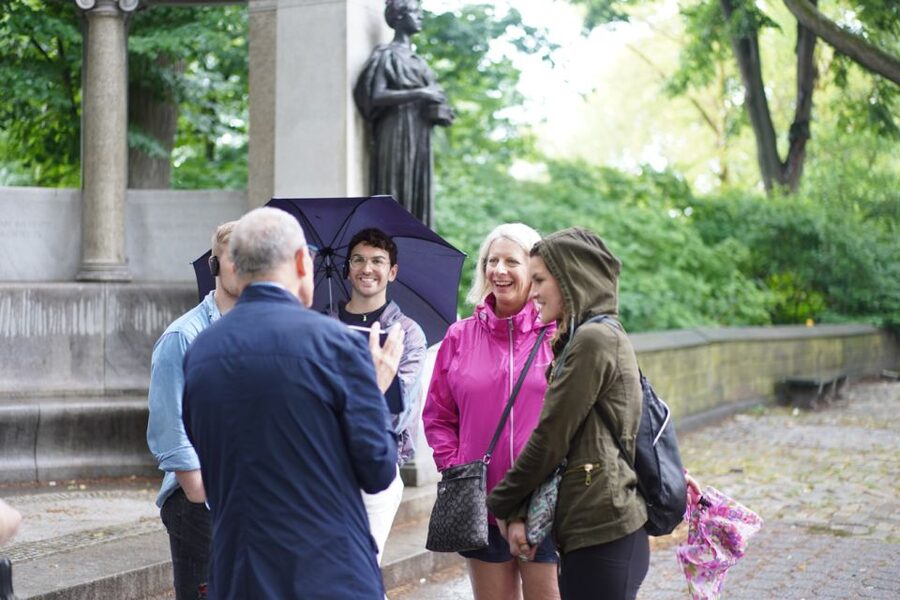
I like two things in particular: the guide keeps the pace moving while leaving room for questions, and the headsets let you study a doorway or cornice without losing the story. The chance to enter a mansion and visit Albertine, a bookstore tucked into a former mansion, adds real variety.
The main drawback is simple: this is an outdoor walking tour in all weather. You cover about 1.3 miles in two hours, and some of the best buildings are viewed only from the sidewalk. Wear good shoes and dress for the forecast.
Key points about the Fifth Avenue mansion walk
- See the footprint of Manhattan’s largest single residence, a vanished palace whose scale is easier to grasp with historic photographs.
- Enter one former Gilded Age mansion, a rare chance to get beyond Fifth Avenue’s locked doors.
- Walk from the General Sherman statue to the Metropolitan Museum, passing surviving clubs, private residences, cultural institutions, and grand façades.
- Visit Albertine, a charming French bookstore occupying part of a former mansion.
- Hear stories of Astors, Vanderbilts, Dukes, and other old New York families, including the social rivalries and affairs behind the architecture.
- Use personal headsets throughout the walk, helpful on a busy avenue and when the group spreads out.
Why Millionaire’s Row is worth two hours
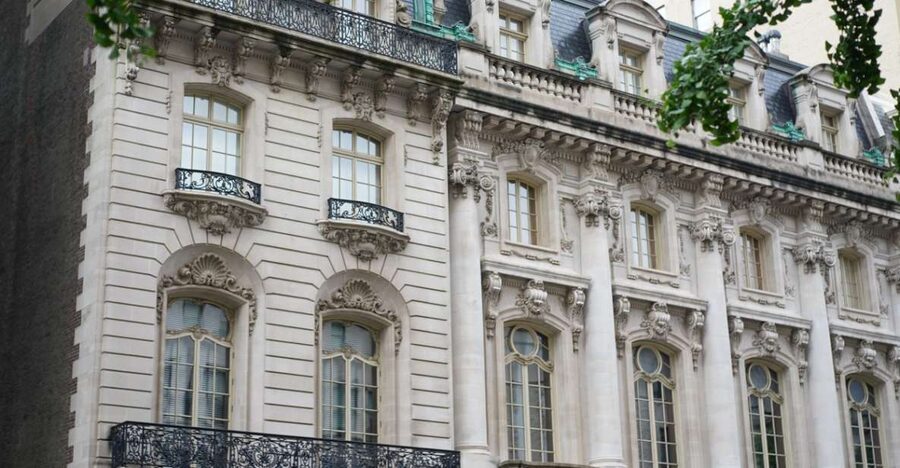
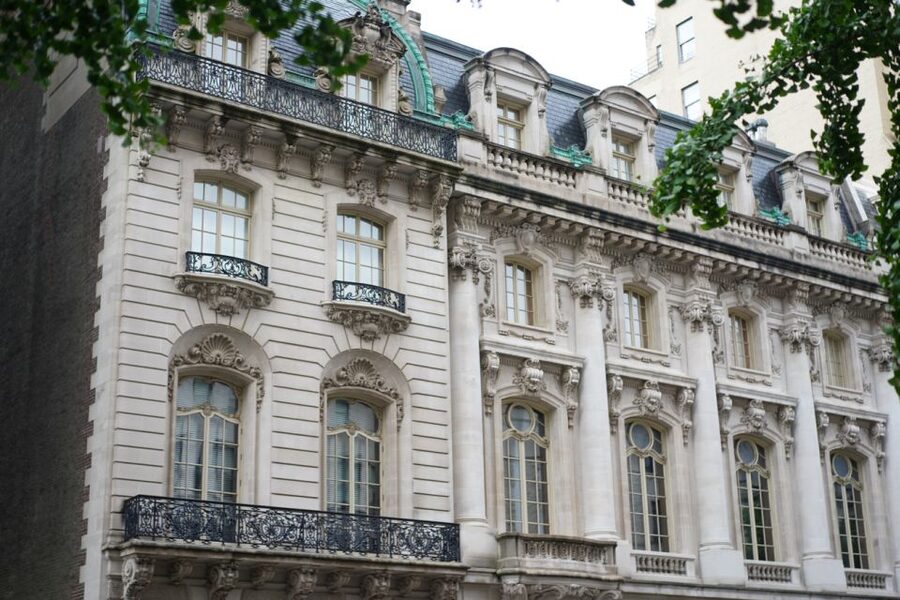
The best part of this walk is the change in scale. Fifth Avenue today is a mix of traffic, shops, embassies, museums, and apartment buildings. During the Gilded Age, this stretch was lined with private homes built to display fortunes that had grown at startling speed.
You are not simply looking at old stone. You are learning how the city’s richest families used houses to announce rank. A mansion could have a ballroom, formal dining rooms, servants’ corridors, private galleries, and enough spare space to make a modern townhouse seem modest.
The tour also deals with what is no longer there. Many of the grandest residences disappeared as land values rose and tastes changed. Historic photographs help you picture the missing façades, while the guide explains which family lived where and why the house mattered.
That visual comparison is useful. Without it, you may walk past a surviving building and see only another handsome façade. With it, you begin to read Fifth Avenue as a record of social competition, demolition, preservation, and reinvention.
The tone is lively rather than academic. Guides including Richard, Laura, Katy, Hazel, Bill, Rosemary, AJ, and Victor have been praised for combining clear explanations with humor and room for questions. Richard, in particular, is noted for his enthusiasm and for knowing the route well enough to add small details without slowing the group.
More Guided Walks in New York City:
- NYC Greenwich Village Italian Food Guided Walking Tour
★ 5.0 · 627 reviews - NYC Professional Photoshoot and Walking Tour with Private Guide
★ 5.0 · 608 reviews - SoHo, Little Italy, and Chinatown 2-Hour Guided Walk
★ 4.6 · 566 reviews
Starting beneath the General Sherman statue
Meet at the gold statue of General William Tecumseh Sherman, located at 764 Doris C Freedman Place on Fifth Avenue between 59th and 60th Streets. Look for the guide holding an Untapped New York sign.
This is a practical meeting point beside Central Park and close to the south end of the route. Arrive ready to walk, since the tour begins in the middle of the city rather than inside a visitor center. There is no need to bring special equipment. Headsets are provided so you can hear the guide while looking up at buildings or standing a short distance away.
The opening stop also sets the mood. The Sherman Monument sits near Grand Army Plaza, where Fifth Avenue begins its long run along Central Park. From here, you can quickly see why this section became one of New York’s most coveted addresses.
The guide uses the surroundings to explain how the avenue developed and why wealthy families wanted a Central Park address. You get the broad picture first, then move into the personal stories that make the buildings memorable.
Grand Army Plaza, the Plaza Hotel, and old club life
At Pulitzer Fountain and Grand Army Plaza, the tour pauses for photographs and orientation. The plaza gives you a useful view of the relationship between Fifth Avenue, Central Park, and the buildings facing the park.
The Plaza Hotel is a pass-by stop rather than an interior visit. Its familiar name can distract from the larger story, so the guide places it in the context of the avenue’s old social world. This is one of those moments when the tour is more valuable than simply taking photographs. You learn to connect a famous address with the era of private clubs, formal calls, grand dinners, and carefully guarded social circles.
The Metropolitan Club and Knickerbocker Club follow. Both represent the institutions that helped wealthy New Yorkers organize their social lives. You see them from outside, but their façades make sense once you understand that the avenue was not only lined with houses. It also included clubs where business, family connections, and status overlapped.
The guide may discuss how access to these circles was controlled and how the city’s leading families competed for position. That social angle helps explain why the houses were so large. They were not only homes. They were stages for entertaining, receiving guests, and showing that a family belonged at the top.
The Arsenal and the vanished mansions
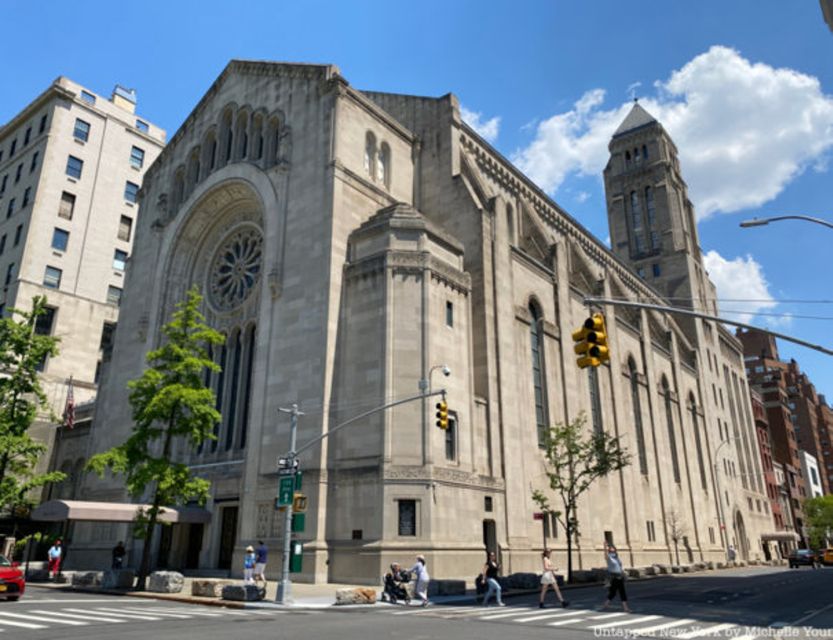
The Arsenal offers a change of mood. It is one of the older structures along this part of the route and helps anchor the avenue’s transformation over time. The tour does not treat Fifth Avenue as a frozen museum street. Instead, it shows layers of use, from earlier civic buildings to private palaces and modern institutions.
The most striking historical idea arrives when you consider the mansion that once occupied one of the avenue’s largest plots. The tour explains the footprint of the largest single residence ever built in Manhattan and uses images to show how extreme that house was.
You should expect more than a quick fact. The point is to understand the space such a residence consumed and what that says about Gilded Age wealth. The city was growing denser, yet a single family could claim an enormous urban compound for private life.
These vanished buildings are among the strongest reasons to take the tour. Surviving façades are easy to photograph on your own. Reconstructing a demolished palace requires context, images, and someone who knows the story. This tour supplies all three.
More Walking Tours in New York City:
- SoHo, Little Italy, and Chinatown Walking Tour in New York
★ 5.0 · 3,153 reviews - Secrets of Grand Central Station Walking Tour New York City
★ 5.0 · 1,796 reviews - Greenwich Village Walking and Food Tasting Tour
★ 5.0 · 1,572 reviews - Artistic, Alternative Greenwich Village Walking Tour
★ 5.0 · 971 reviews
Richard Morris Hunt and the architects of excess
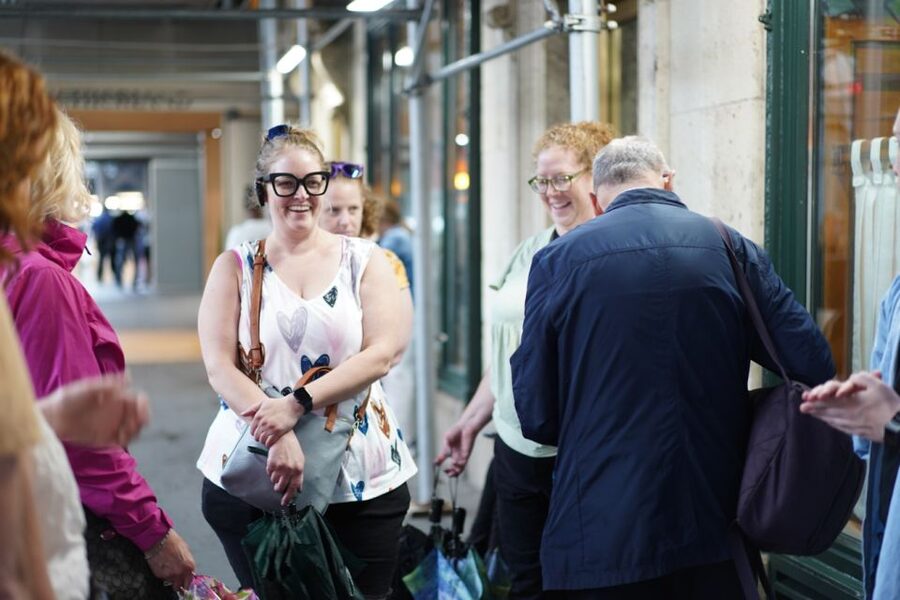
The Richard Morris Hunt Memorial is another guided stop. Hunt was closely linked with the grand architectural taste of the period, and the memorial gives the guide a natural opening to discuss the designers behind Millionaire’s Row.
Architecture here was never just decoration. Families hired prominent architects to borrow the prestige of European palaces, create new American symbols of power, and outdo their neighbors. The guide explains how materials, proportions, entrances, and ornament helped turn a private address into a public statement.
You will hear about the people who commissioned these houses as well as the architects who shaped them. That balance matters. A façade tells only part of the story. The family’s ambitions, household structure, art collection, and social life explain why the building looked the way it did.
The walking pace is generally steady, with frequent stops for explanations. That helps in hot weather, and one guide was especially praised for choosing shady spots during a summer tour. Still, the route is not a relaxed park stroll. You remain on city sidewalks, crossing streets and standing as the guide speaks.
The Frick Collection from the sidewalk
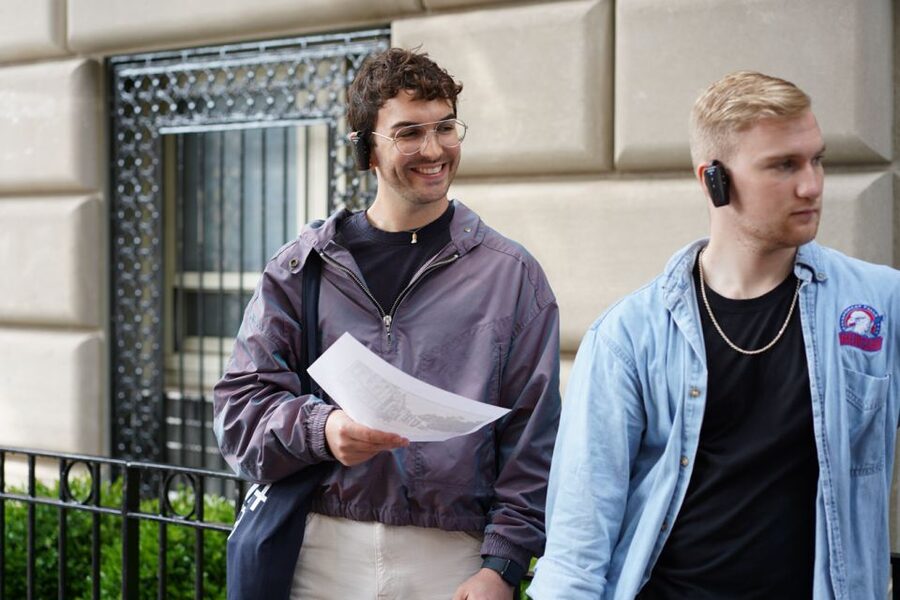
The Frick Collection is one of the route’s most important pass-by points. The tour does not include admission to the museum, so plan a separate visit if you want to see its galleries.
From the street, the guide reveals some of the building’s connections to old New York wealth, art collecting, and private domestic life. The Frick is useful here because it links the mansion story with the art story. These families did not only compete through houses. They also competed through paintings, furnishings, sculpture, and cultivated taste.
The tour’s approach is especially helpful if you already plan to visit the Frick. You will have a stronger sense of the building’s original role before entering on another day. If the Frick is a priority, check its current opening arrangements separately, since this walking tour only passes by.
From private homes to public institutions
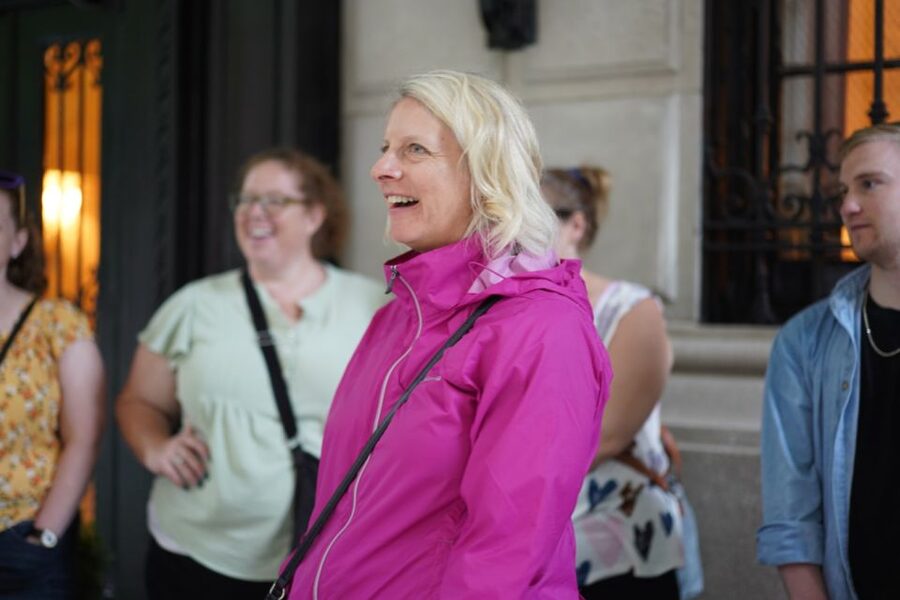
As you continue north, the route passes buildings that now serve as private residences, clubs, consulates, and cultural organizations. This is where Fifth Avenue’s present life collides with its Gilded Age past.
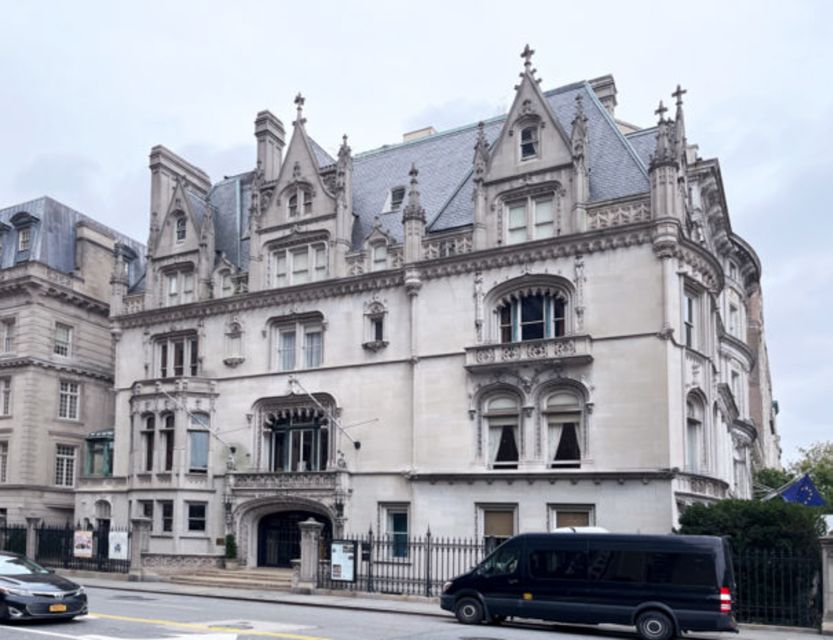
The Consulate General of France and the Ukrainian Institute of America show how former private architecture can take on a new public or institutional use. The American Irish Historical Society adds another cultural layer. You are still seeing grand buildings, but their meaning has shifted from family display to heritage, diplomacy, and public memory.
The Benjamin N. Duke House is another highlight. It is one of the last single-residence mansions remaining on Fifth Avenue, making it a key stop for understanding how much of the old avenue has disappeared.
You will not enter every building. Most remain private or operate as institutions, and the tour is clear about that. This limitation is also part of the point. Fifth Avenue’s mansions were built for privacy, and even today many cannot be casually opened to the public.
A bookstore inside a former mansion
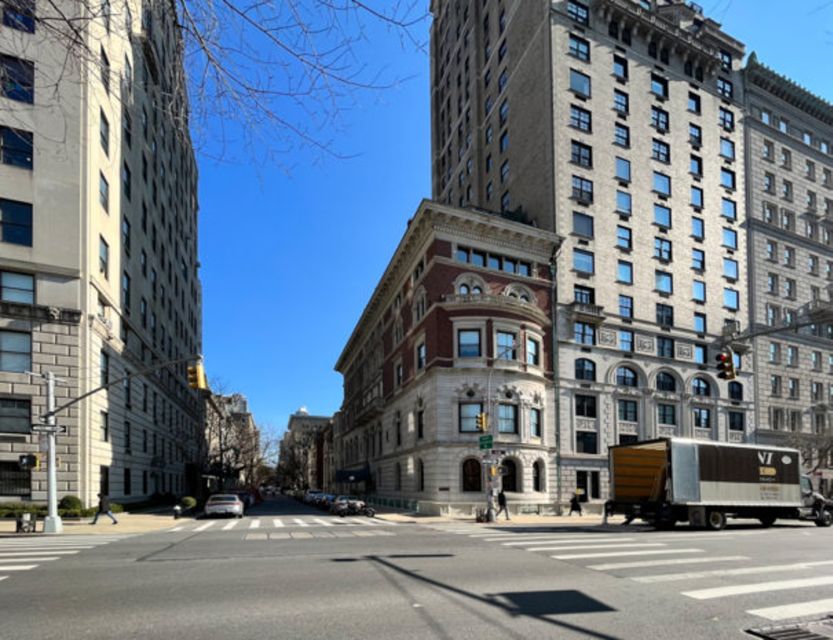
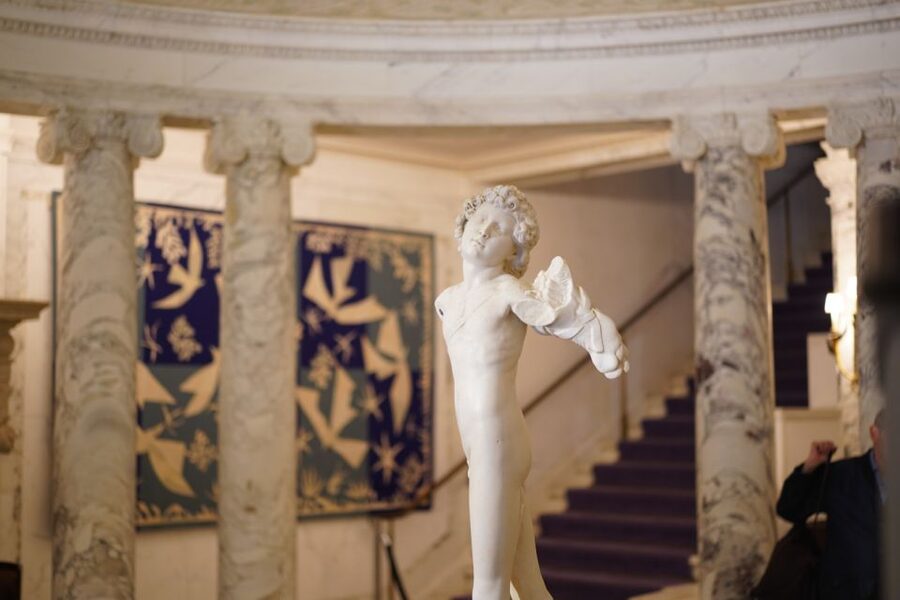
Albertine is the tour’s most unexpected stop. This French-language bookstore occupies part of a former Gilded Age mansion, giving you a chance to enter a grand interior rather than view everything from the pavement.
The visit is brief, but it changes your sense of the buildings. You can see how a lavish private setting has been adapted for a cultural purpose, with books replacing the original household routines. It is a pleasant pause in the walk and a good place to appreciate the relationship between architecture and present-day use.
The tour also includes access inside a Gilded Age mansion, one of its strongest practical advantages. Since so many Fifth Avenue houses are private clubs, residences, or restricted institutions, even limited interior access adds something you cannot get from a self-guided walk.
Do not expect a full-house museum visit. This is still an outdoor tour, and the interior portion is one element within a two-hour route. But it gives the experience a physical dimension that photographs cannot provide.
What the guides do well
The guides are central to this tour. The strongest accounts describe people who know the material, speak clearly, invite questions, and keep the group moving without rushing.
Richard receives especially warm attention for his energy, humor, and passion for the subject. Other guides, including Laura, Katy, Hazel, Bill, Rosemary, Victor, AJ, and Ro, are also praised for making the families and buildings easy to follow.
That range of guide personalities means the exact feel can vary. One guide may focus more on architecture, another on family drama, and another on modern connections. The common thread is a local perspective and a willingness to explain rather than simply recite dates.
The headsets matter more than you might expect. Fifth Avenue traffic, pedestrians, and city noise can make ordinary walking tours hard to follow. Here, you can move toward a doorway for a closer look or stop to take a photograph while still hearing the commentary.
A few technical problems have been reported, including occasional interference and an earpiece that did not sit comfortably for one person. Most of the time, the system is considered a major help. If your headset slips, tell the guide promptly rather than trying to follow from a distance.
Pace, weather, and accessibility
The walk covers about 1.3 miles and lasts two hours. That is a manageable distance for many people, but the route includes standing, city sidewalks, and several blocks of steady movement. A visitor using a cane was accommodated with a considerate pace, and the tour is listed as wheelchair accessible.
Comfortable shoes are important. There are no long stretches of countryside or soft paths, only urban pavement. Bring weather-appropriate clothing, since the tour runs rain or shine.
Heat, wind, and rain can shape the experience. In warm weather, the guide may stop in shaded areas, but you should still bring water. On a cold or wet day, the buildings remain interesting, yet you may spend less time lingering at each stop.
This is best for adults and older children who enjoy architecture, New York history, and stories about social power. One past participant specifically advised against bringing young children. I agree with that practical judgment: the pace, subject matter, and family scandals are better suited to people who can stay focused during a long city walk.
Is $39 a fair price?
At $39 per person, the tour offers solid value if you want interpretation rather than a simple route map. You receive two hours with a live English-speaking guide, headsets, historic images and stories, and access inside a former mansion.
The price is especially reasonable for first-time visitors who might otherwise walk this stretch of Fifth Avenue without realizing what has vanished. It also suits repeat New York visitors who have already seen Central Park and the Met but want a more focused view of the Upper East Side.
You should not judge the cost as a substitute for museum admission. The Frick and Metropolitan Museum are exterior stops, and the interior mansion visit is limited. If you want long indoor visits and elaborate exhibits, spend your money on museum tickets instead.
For a focused introduction to old New York wealth, though, $39 buys useful context in a compact format. The tour finishes at the Metropolitan Museum of Art, so you can continue with art afterward, subject to the museum’s admission and opening arrangements.
Who should book this walk?
Book it if you like architecture with a human story attached. You will hear about the Astors, Vanderbilts, Dukes, and other families, but the tour is not only a roll call of wealthy names. It explains why they built such huge houses, how social status worked, and what happened when those houses became too expensive or outdated to keep.
It is also a good choice if you have watched a drama about New York’s Gilded Age and want to connect that world with real addresses. The tour adds historical context without requiring prior study.
Skip it if you dislike outdoor walking, need frequent indoor breaks, or want to enter every building you see. Most of the mansions remain closed to the public, and the tour cannot change that.
For everyone else, I would book this early in a New York visit. It will make the Frick, Fifth Avenue, the clubs, and the Upper East Side easier to read afterward. Choose comfortable shoes, check the weather, and leave room for questions. The stories are the reason to come, but the façades are what you will keep noticing for the rest of your trip.
FAQ
Where does the tour begin?
It begins at the gold General William Tecumseh Sherman statue on Fifth Avenue between 59th and 60th Streets. The exact address is 764 Doris C Freedman Place.
Where does the tour finish?
The walk finishes at the Metropolitan Museum of Art on Fifth Avenue and 80th Street.
How long is the tour?
The tour lasts two hours and covers about 1.3 miles.
Is the tour conducted in English?
Yes. It includes a live English-speaking guide and English audio through the provided headsets.
Do I enter any of the mansions?
Yes. Access inside one Gilded Age mansion is included.
Does the tour include entry to the Frick Collection?
No. The Frick Collection is a pass-by stop, so museum admission is not included.
What should I wear or bring?
Wear comfortable shoes and clothing suited to the weather. The tour takes place rain or shine.
Is the tour wheelchair accessible?
Yes, the activity is listed as wheelchair accessible.
Can I cancel the booking?
You can cancel up to 24 hours in advance for a full refund. A reserve-now, pay-later option is also available.
New routes in New York City
- New York City: Superheroes of NYC Guided Walking Tour★ 4.5 · 271 reviews
- West Harlem: Gospel Church Service and Sunday Walking Tour★ 4.3 · 411 reviews
- SoHo, Little Italy, and Chinatown 2-Hour Guided Walk★ 4.6 · 566 reviews
- New York City: Food Walking Tour of Chinatown & Little Italy★ 4.8 · 195 reviews
- NYC: Brooklyn Graffiti & Street Art Walking Tour in Bushwick★ 4.8 · 492 reviews
- NYC: Brooklyn Bridge and Dumbo Guided Walking Tour★ 4.5 · 186 reviews
- NYC: Walking Tour with Local Guide and 30+ Top NYC Sights★ 4.5 · 248 reviews
- NYC: History of Slavery & Underground Railroad Walking Tour★ 4.7 · 87 reviews
New York City Walking Tours, compared.
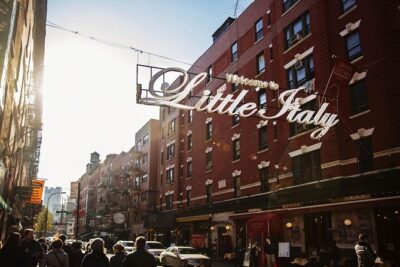
SoHo, Little Italy, and Chinatown Walking Tour in New York
Read our review →
Secrets of Grand Central Station Walking Tour New York City
Read our review →
Greenwich Village Walking and Food Tasting Tour
Read our review →
Artistic, Alternative Greenwich Village Walking Tour
Read our review →
True Crime NYC: Mafia Walk w/Ret. NYPD Detective and Local Food
Read our review →

NYC Greenwich Village Italian Food Guided Walking Tour
Read our review →Browse the lists this tour appears in