Review · TOURS
Walking Tour with a Local in Asuncion “The Mother of Cities”
Asunción’s story makes far more sense when you walk from its Pantheon of Heroes to the old colonial houses, government buildings, and riverfront with a local guide. Mathias gives the city a clear timeline, from Spanish rule and independence to the War of the Triple Alliance, the Chaco War, and the Stroessner era.
I like the tour’s small private format, which lets you ask questions and set a comfortable pace. I also like that it includes places you could easily pass without noticing, especially the Cabildo and Manzana de la Rivera. The main consideration is the heat and the amount of standing. One guide had to shorten the Costanera visit when time ran out, so pace yourself if the bay matters to you.
Key points at a glance
- Mathias leads a strong history-focused walk, with clear English and broad knowledge of Paraguay and South America.
- Eight central stops fit into about 3 to 4 hours, covering politics, religion, independence, war, art, and the riverfront.
- The private format keeps the visit flexible, with only your own group taking part.
- Every listed admission is free, so the $35 price mainly pays for the guide’s time and interpretation.
- The walk suits first-time visitors, especially if you have limited time in Asunción.
- Sun protection and moderate fitness matter, since the tour involves walking and standing outdoors.
Why this walk helps Asunción make sense
Asunción can be a tricky city to read at first. Its historic center has grand public buildings, old houses, museums, and open spaces, but the connections between them are not always obvious. A building may matter because of independence, a war, a president, or a period of military rule, yet that meaning is easy to miss when you are walking alone.
This tour gives you a working map of the city and the country. You are not simply checking off monuments. You are moving through the political and cultural core of Paraguay, with each stop adding another piece to the story.
Mathias is the central reason this works. He explains Paraguay in fluent, easy-to-follow English and handles questions patiently. His background extends beyond Asunción, so he can place Paraguayan events within the wider story of South America. That context matters here. Without it, names such as López, Triple Alliance, and Stroessner can feel like disconnected facts.
The walk also leaves room for conversation. Several parts of the experience can be adjusted to your interests, and you have a better chance of asking about modern politics, society, or culture than you would on a large group excursion.
More Walking Tours in the world:
- Magical London: Harry Potter Guided Walking Tour
★ 4.7 · 22,044 reviews - Reykjavik Food Walk – Local Foodie Adventure in Iceland
★ 5.0 · 18,952 reviews - History and Hauntings of Salem Guided Walking Tour
★ 5.0 · 14,564 reviews
Start at the Pantheon of Heroes
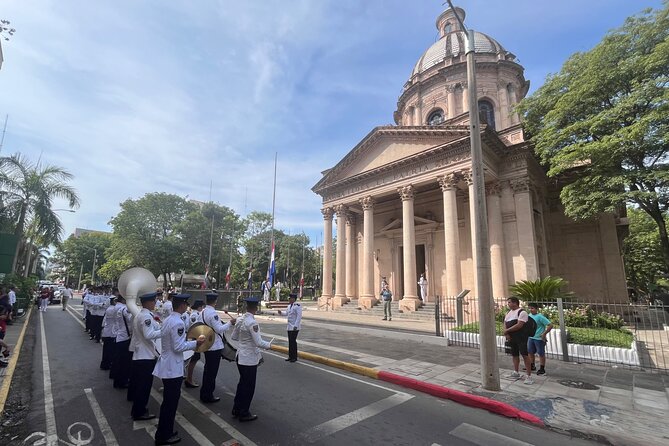
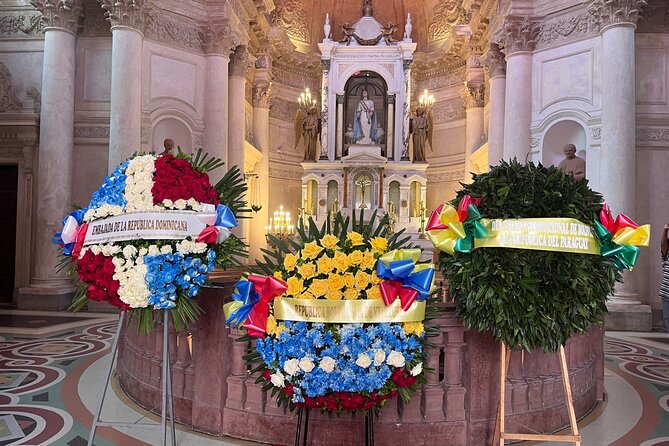
The meeting point is at Palma and Chile, in central Asunción. The first stop is the Panteón Nacional de los Héroes, a compact and highly symbolic building known as the House of the Virgin of the Assumption.
You spend about 20 minutes here. It is a good opening because the building introduces major figures from Paraguay’s modern past and gives you a first look at the country’s national memory. It is also the resting place of several important Paraguayan figures.
This is not a long museum visit. Think of it as a scene-setting stop. Mathias explains who is honored and why the Pantheon matters, then uses it to orient you to the country’s political story. If you enjoy taking photographs, you will want to allow a little extra time, since the building has a strong ceremonial character.
Casa de la Independencia and the birth of Paraguay
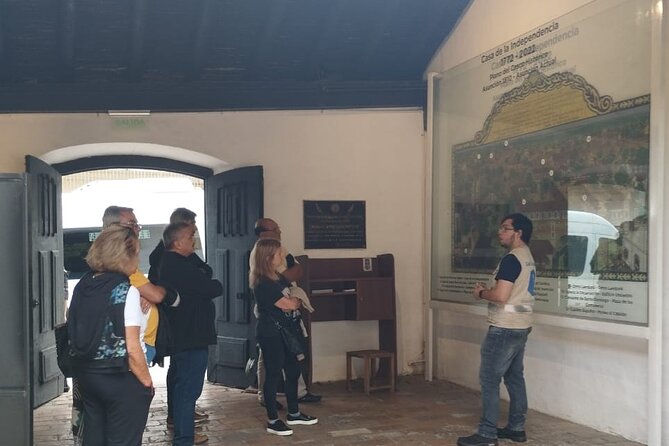
The Casa de la Independencia is one of the most useful stops for understanding Asunción before it became a modern capital. This surviving colonial house is where independence leaders planned the revolution against the Spanish Crown.
You spend about 25 minutes inside or around the site. Its value comes from its scale. Unlike a monumental government building, this is a domestic space, giving you a more direct sense of how people lived and met around 200 years ago.
I especially like this stop for visitors who know little about Paraguayan independence. The guide can connect the rooms and the political planning that took place there, making the independence movement feel less abstract. It also provides a contrast with the grander public buildings later in the walk.
The visit is brief, so do not expect a long museum session. The benefit is the focused explanation and the chance to see one of the few colonial houses still preserved in central Asunción.
The cathedral and Paraguay’s religious life
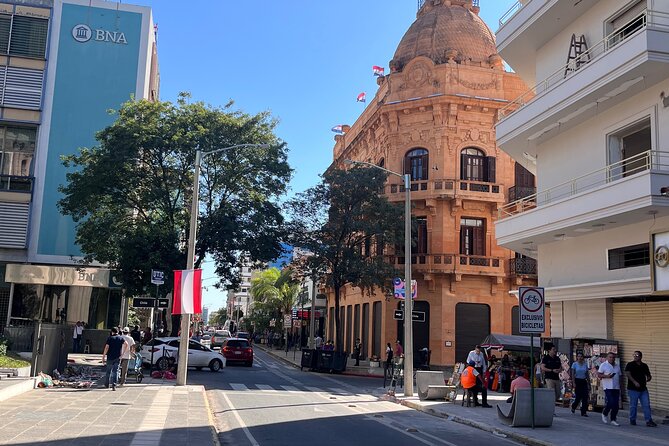
The Catedral de Nuestra Señora de la Asunción takes about 15 minutes. Built in the 19th century by the country’s first president, it is the city’s most important religious building.
The stop helps explain the place of Catholicism in Paraguayan life and gives the tour a needed pause from political history. The building is not treated as an isolated church. Instead, it becomes part of a wider conversation about the country’s leaders, public institutions, and religious identity.
Fifteen minutes is enough for an overview, but not for a long architectural study. If you want extensive time for quiet reflection or detailed photographs, you may need to mention that to Mathias at the start.
Same streets, a different guide:
- New Orleans Premier Ghost, Voodoo and Vampire Walking Tour
★ 4.5 · 12,856 reviews - Amsterdam Anne Frank: Small-Group Walking Tour & Local Guide
★ 4.8 · 12,789 reviews - Edinburgh: Harry Potter Magical Guided Walking Tour
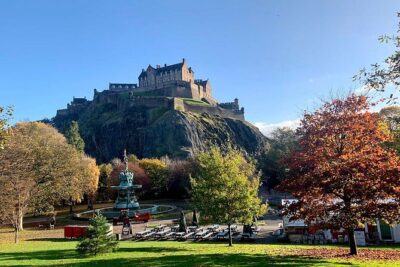
★ 4.8 · 11,944 reviews - Edinburgh Castle: Guided Walking Tour with Entry Ticket
★ 4.7 · 11,699 reviews
Forty minutes at the Cabildo
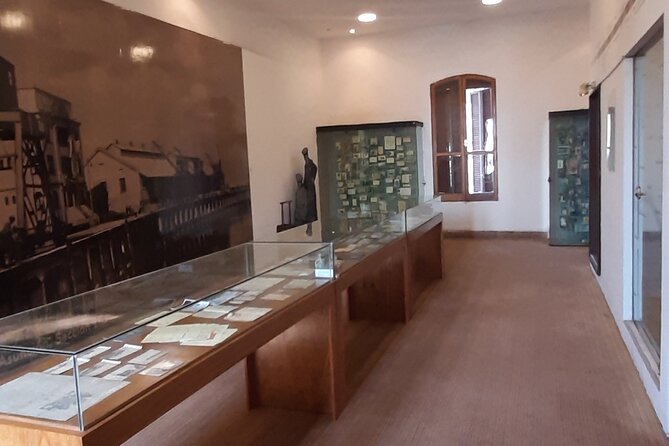
The Centro Cultural de la República Cabildo receives one of the longest visits, about 40 minutes. The building was once the country’s government house. Today it is a cultural center where you can see art and learn about Paraguay’s origins.
This is one of the tour’s strongest stops because it broadens the subject beyond presidents and wars. Exhibits can help you connect political history with art, identity, and the people who shaped the country.
The Cabildo is also a useful place to slow down. Much of the tour is outdoors, and this longer stop gives you time to look around rather than hurry from one facade to the next. The exact exhibits can vary, so the guide’s explanation is important in making sense of what you see.
If museums are a priority for you, tell Mathias early. He has been able to take visitors to central museums they did not know existed, but the total walking time still has limits.
Paraguay’s government, past and present
The Congreso Nacional de la República de Paraguay is a short stop of about 10 minutes. This is where Paraguayan legislators work, and the guide uses it to explain how democracy operates in the country.
The building itself is only part of the point. The real value is the chance to ask about Paraguay’s political system and how its current institutions relate to its past. Since the tour covers dictatorship, war, independence, and national leadership, this stop brings the discussion into the present.
You will not receive a long parliamentary tour. Treat it as an outdoor introduction to the country’s legislature, followed by a concise political explanation.
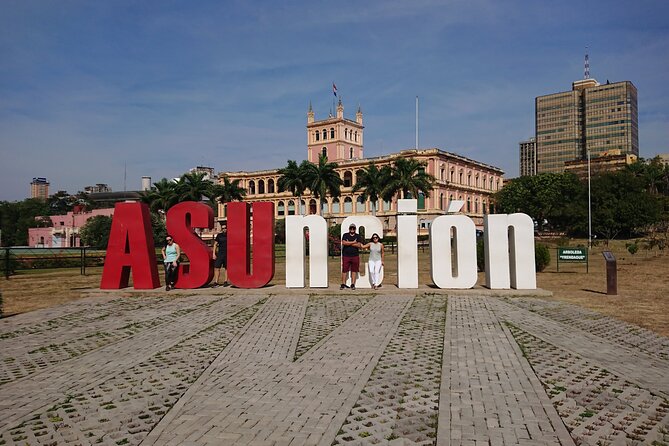
Nearby, the Palacio de López adds another ten-minute stop. The palace is the workplace of the president today. It was originally intended as the home of Francisco Solano López, the second president of Paraguay and commander in chief during the War of the Triple Alliance.
That war devastated Paraguay, and the palace provides a useful point for discussing the country before and after the conflict. The guide can help you understand why López remains such a major figure and why the war still matters to Paraguayan identity.
The short visit is partly practical. Access inside the palace is not included as a museum visit, so you mainly view and discuss it from outside.
Manzana de la Rivera, a block of old houses
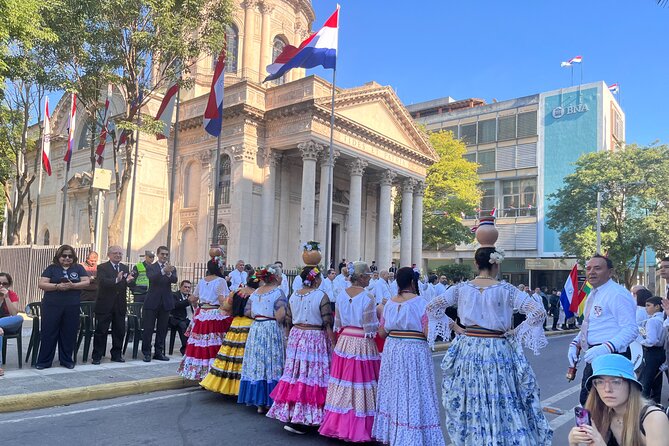
Manzana de la Rivera takes about 40 minutes and is another highlight. This cultural center occupies a group of old houses, now used for art and historical displays.
The name means Block of the Rivera, and the arrangement matters. You are not looking at one isolated historic building. You are seeing a cluster of structures that helps show how Asunción changed from its early beginnings to the modern city.
This is a good place for visitors who want more than political monuments. The site adds architecture, local culture, and city history to the tour. It also offers another chance to get out of the strongest sun for a while.
The displays may appeal most to people who enjoy smaller cultural centers rather than major national museums. The guide’s commentary is what ties the rooms and buildings together, so stay close enough to hear the explanation.
The Costanera and Asunción’s life as a port
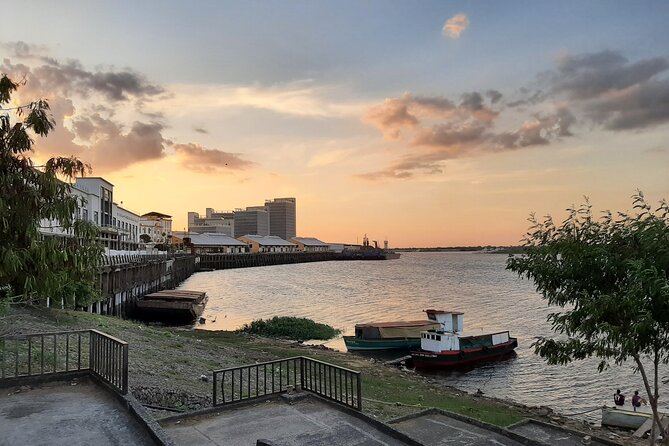
The final listed stop is the Costanera de Asunción, the avenue along the bay. You spend about 20 minutes here, looking at the bay and discussing Asunción as a port city.
This change of setting is welcome after the historic center. The city’s river connection is important to its identity, and the Costanera helps you see Asunción as more than a collection of government buildings and old houses.
The stop also depends on timing. The full route can take closer to four hours, and the amount of time at each site may vary. If you want a proper look at the bay, tell Mathias near the beginning. One visitor found that the Costanera portion had to be shortened after earlier stops took longer.
The tour ends back at the meeting point. That makes the route easy to fit into a day of sightseeing, especially if you plan to continue exploring the central area or stop for lunch afterward.
What $35 buys you
The price is $35 per person, with all fees and taxes included. The listed attractions do not charge admission, so you are paying mainly for Mathias’s time, walking route, language skills, and explanations.
That is a fair value if you want a guided introduction rather than a self-guided stroll. In three to four hours, you cover eight major sites and several subjects that are hard to piece together alone. You also get a private experience, not a large group moving at someone else’s pace.
The value is strongest for first-time visitors and people with only a short stay in Asunción. It is also useful if you want to ask direct questions about modern Paraguay, not just hear prepared facts.
The value is weaker if you prefer to move slowly, spend long periods inside museums, or photograph every building without interruption. This is a walking overview with substance, not a full museum day.
Pace, weather, and practical comfort
You need a moderate level of fitness. The route involves steady walking and standing at several sites, with outdoor sections between buildings. The walk is described as comfortable and well paced, and it can suit families with older children, but summer sun can be strong.
Bring a hat, sunscreen, and water. Some parts of the route offer shade, but you should not count on being protected throughout. Wear shoes you can use comfortably for several hours.
The tour runs daily between 8:00 a.m. and 5:00 p.m. The private setup is useful here because your own group can discuss pace and questions with Mathias. It does not guarantee unlimited time, though. There are many stops, and lingering too long at one can reduce time at the next.
The tour is also subject to good weather. If poor weather causes cancellation, you can choose another date or receive a full refund. Free cancellation is available until 24 hours before the start time. The average booking point is about 21 days ahead, so reserving early is sensible if your Asunción dates are fixed.
Who will get the most from it
I would choose this tour if you are new to Paraguay, have three or four hours free, and want the country’s history explained in plain language. It is especially helpful if Asunción is one stop in a larger South American trip and you want a fast but serious orientation.
It suits solo visitors, couples, friends, and families with a moderate walking pace. The private arrangement also works well if your group has different interests. You can ask more about politics, architecture, religion, war, or daily life instead of following a fixed lecture.
Mathias’s strong English is a major advantage for English-speaking visitors. He also speaks Portuguese, which may help some groups. His style combines facts with stories, regional connections, and humor, making a difficult national history easier to follow.
I would hesitate only if you dislike walking in warm weather or need extensive time at each museum. In that case, you may prefer to use the tour as an introduction, then return independently to the places that interest you most.
Should you book this Asunción walk?
Book it if you want a clear introduction to Asunción and Paraguay, especially during a short stay. The route covers the essential historic center, but its real strength is the way Mathias connects independence, religion, government, war, dictatorship, culture, and the river.
At $35, the private format and three to four hours of guidance make good sense. Plan for sun, standing, and a brisk sightseeing rhythm. If you tell Mathias what matters most to you, particularly the Costanera or museum time, you will have a better chance of shaping the walk around your priorities.
FAQ
How long does the walking tour last?
The tour lasts approximately 3 to 4 hours.
What is the price?
The price is $35 per person, including all fees and taxes.
Where does the tour start?
The meeting point is at Palma and Chile, 001101 Asunción, Paraguay.
Where does the tour end?
The activity ends back at the meeting point.
Is this a private tour?
Yes. Only your group participates in the activity.
Are admission fees included?
Yes. All listed stops have free admission, and the tour price includes all fees and taxes.
What happens if the weather is poor?
The experience requires good weather. If it is canceled because of poor weather, you can receive a full refund or choose a different date.
New routes in the world
- Baltimore Walking Foodie Tour in Fells Point★ 5.0 · 182 reviews
- Baku Oil Heritage & Old Town Walking Tour★ 5.0 · 232 reviews
- Baku Walking Tour (Old City)★ 5.0 · 127 reviews
- The Madam’s Curse Walking Ghost Tour★ 4.5 · 103 reviews
- Austin Small Group Morning Walk★ 5.0 · 412 reviews
- Austin Haunted Pub Crawl Walking Tour★ 4.5 · 232 reviews
- Austin Downtown Private Walking Food Tour With Secret Food Tours★ 5.0 · 71 reviews
- Austin Murder Walk★ 5.0 · 310 reviews
Tours, compared.
Magical London: Harry Potter Guided Walking Tour
Read our review →
History and Hauntings of Salem Guided Walking Tour
Read our review →
New Orleans Premier Ghost, Voodoo and Vampire Walking Tour
Read our review →
Amsterdam Anne Frank: Small-Group Walking Tour & Local Guide
Read our review →
Edinburgh Castle: Guided Walking Tour with Entry Ticket
Read our review →