
Review · INDONESIA
Sidemen Trekking: A Walk from a Different Perspective
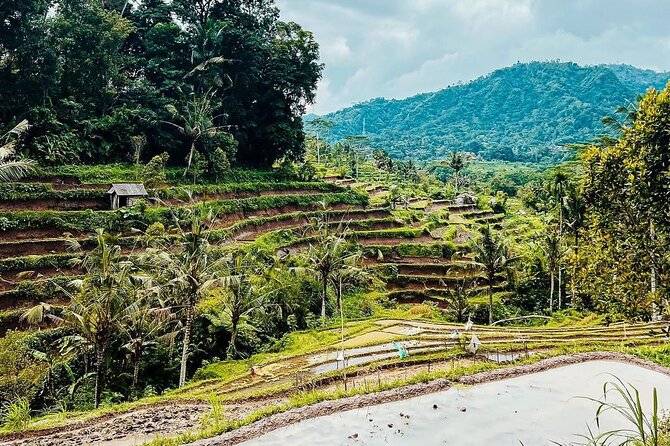
Sidemen’s best views are not always found from a road or a resort terrace. This two-hour walk through working rice fields takes you along narrow paths, village lanes, irrigation channels, and a motorbike-sized wooden bridge, with Mount Agung often appearing beyond the terraces. It gives you a close look at farming and ordinary village life rather than a quick photo stop.
I like two things especially: the route keeps moving through different scenery instead of turning back, and the local guides, including Adi, Daria, Adidas, Wayan, and Komang, add useful detail about crops, Subak irrigation, temples, and Balinese customs. The $13 price is excellent for a guided walk with water included.
The main consideration is the footing. Rice-field paths can be narrow, muddy, slippery, and bordered by tall grass. You need decent balance and proper sports or hiking shoes. This is not a gentle paved stroll, and the finish point is several kilometers from the start.
Key points at a glance
- A one-way route through real working fields: You walk from Sidemen Market toward Babakan Dukuh rather than retracing the same path.
- Local farming explained on the spot: Guides describe plowing, planting, cultivation, harvesting, crops, and the traditional Subak water system.
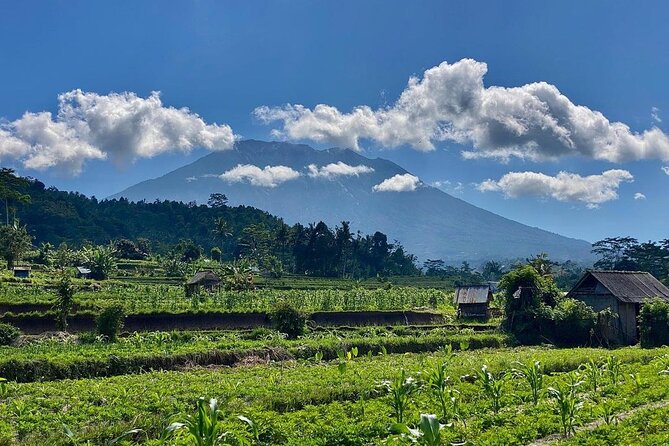
- Mount Agung viewpoints: Clear sections offer broad views across the terraces toward Bali’s famous volcano.
- The Yellow Bridge crossing: Jembatan Kuning Tukad Yeh Unda adds a short, slightly wobbly section to the walk.
- Small groups and a low price: Groups are limited to 10, with an English-speaking guide and bottled water included.
- Transport needs planning: The trek ends at Warung Ume Anyar in Ogang Village, not back at the market.
Why this Sidemen walk feels different
Sidemen is a good place to see Bali at a slower pace. The village sits among rice terraces and mixed plantations, and farming is still part of the daily rhythm. This walk puts you inside that setting instead of keeping you on the main road.
You begin near the traditional market, then leave the busy edge of the village for smaller lanes and field paths. The change is quick. One moment you are near shops and local traffic, and soon you are following water channels between rice plots.
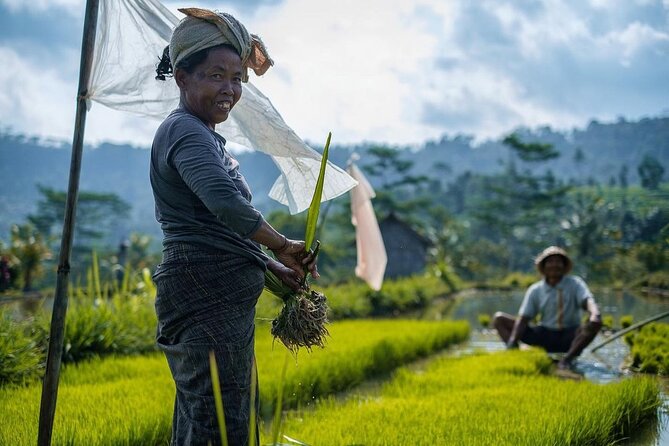
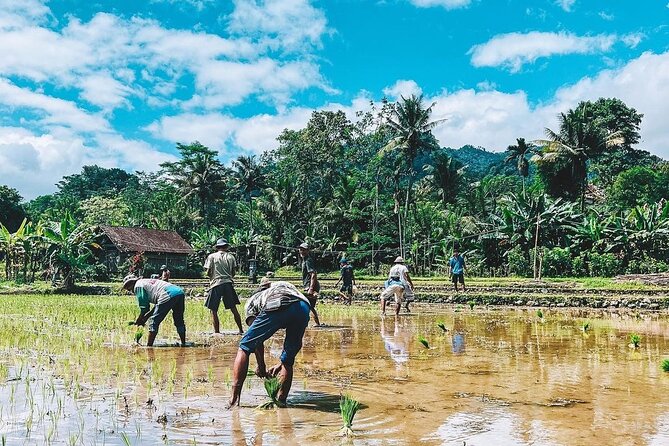
I like the way the route mixes scenery with practical local life. You may see farmers plowing, planting seedlings, tending crops, or harvesting. The point is not simply to photograph a terrace. You get a clearer idea of how the terrace works and how much labor goes into the rice on a Balinese table.
The guides also point out native plants and other crops. Several guides, including Adidas and Daria, are praised for their humor and their ability to explain local customs in clear English. Adi and Wayan are also mentioned as guides with strong local knowledge and an easy pace.
This is a small-group experience, capped at 10 people. That matters on narrow paths. A large group would make the walk awkward, while a smaller one gives you more room to stop for photos or ask about farming.
More Walking Tours in the world:
- Magical London: Harry Potter Guided Walking Tour
★ 4.7 · 22,044 reviews - Reykjavik Food Walk – Local Foodie Adventure in Iceland
★ 5.0 · 18,952 reviews - History and Hauntings of Salem Guided Walking Tour
★ 5.0 · 14,564 reviews
Starting at Sidemen Traditional Market
The meeting point is Pasar Sidemen, on the main road, at the shop marked Upa Boga. The guide comes to meet you there, so look for that sign rather than waiting in the middle of the market.
The market is open from 5:00 AM to 10:00 AM. If you choose a morning departure, you can spend about 10 minutes looking at the food market before the walk begins. This is a useful addition if you want to see local shopping and produce, but do not assume every departure includes market time. A later session may begin after the market has closed.
From the market, the route heads into the traditional village. This opening section helps you get your bearings and shows how closely daily commerce, homes, temples, and agriculture are tied together in Sidemen.
Rice fields, water channels, and changing views

The first major part of the walk leads uphill and downhill through village streets before entering the paddy fields. The route is designed as a one-way walk, so the scenery keeps changing. You do not simply walk to one viewpoint, take a picture, and return along the same track.
The rice terraces are best appreciated from more than one angle. Some views open across the valley, while other sections put you close to the field walls and irrigation channels. From higher points, you may see toward Mount Agung, Bali’s major volcanic peak.
The route also passes through mixed plantations. This makes the walk more varied than a pure rice-field circuit. Your guide can point out plants and explain how different crops fit into village life. In this setting, the guide is not just leading the way. The guide helps you understand what you are seeing.
That is important because the paths are not always obvious. One person specifically noted that the route would be difficult to find alone, especially when walking along the narrow field divisions. A local guide also knows where people are working and how to move through the fields respectfully.
Understanding Subak irrigation in Ogang
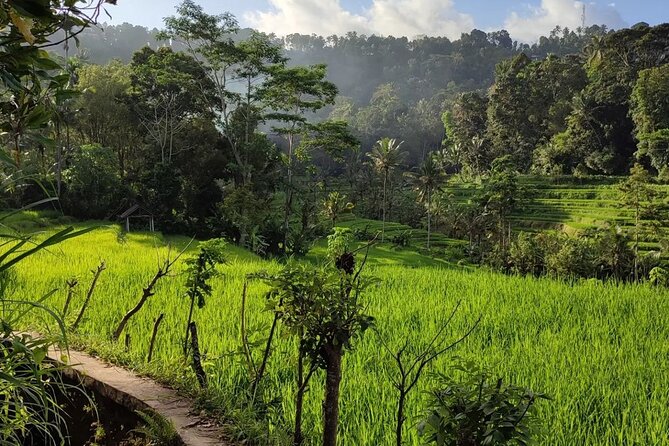
One of the most worthwhile parts of the walk is the explanation of Subak. This is Bali’s traditional system for managing irrigation water among rice farmers. You follow water coming through the channels and pass through the Subak area of Ogang.
The value here is practical. Instead of hearing a general description of Balinese farming, you see the water route as it passes through the fields. The guide can connect the canal, the planted plots, and the work taking place around you.
You also pass a village temple used by local people for prayer. It is a reminder that farming, community life, and religious practice are closely linked in Bali. The walk does not treat the temple as a stage set. You pass it as part of a living village, so modest dress and respectful behavior are sensible.
Same streets, a different guide:
- New Orleans Premier Ghost, Voodoo and Vampire Walking Tour
★ 4.5 · 12,856 reviews - Amsterdam Anne Frank: Small-Group Walking Tour & Local Guide
★ 4.8 · 12,789 reviews - Edinburgh: Harry Potter Magical Guided Walking Tour
★ 4.8 · 11,944 reviews - Edinburgh Castle: Guided Walking Tour with Entry Ticket
★ 4.7 · 11,699 reviews
Crossing Jembatan Kuning Tukad Yeh Unda

The Yellow Bridge, or Jembatan Kuning Tukad Yeh Unda, is a short but memorable stop. It is a wooden bridge used by people and motorbikes, and it can feel slightly shaky as you cross.
This is not a grand engineering attraction. That is part of its charm. The bridge shows the practical connections between villages and fields, and it adds a little excitement to an otherwise steady walk. Stop for a photo if conditions allow, but watch your footing and give local riders room.
The bridge section also shows why sandals are a poor choice. Even if the weather is dry, the route has uneven surfaces and narrow approaches. Shoes with a good grip are a much better match.
Dukuh village and Babakan Dukuh Rice Terrace
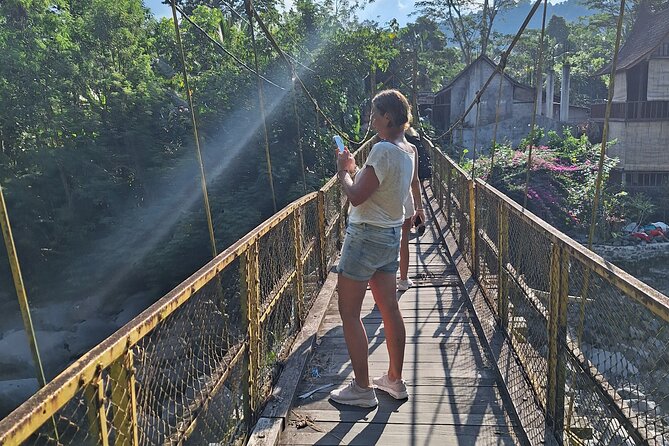
After the bridge, the walk continues through Dukuh village. You move between village streets, homes, field edges, and small paths before reaching the Babakan Dukuh rice terraces.
This section gives you the strongest sense of ordinary Sidemen life. You may see people working in the fields, and the guide explains stages from plowing and cultivation to planting and harvesting. The pace is generally calm, with time to stop at good viewpoints and take photographs.
The final rice terrace section lasts about 45 minutes, making it the longest part of the route. Expect the most walking here, along with the narrowest paths. You may need to balance along raised strips between plots, and wet weather can make them slick.
Tall grass and insects are also possible. Long trousers can be useful, and sunscreen, a hat, and sunglasses are sensible in strong sun. One useful packing tip is to bring a light rain jacket. A walk can still be enjoyable in rain, but the paths become more slippery and your clothing can get wet quickly.
What the two-hour duration really means
Two hours is enough to see several sides of Sidemen, but it is not a strenuous mountain hike or a full-day nature walk. The time includes stops at the market area, viewpoints, the bridge, village sections, and rice terraces.
The walk includes regular changes in elevation. You go up and down village streets, then across field paths. If you have a low fitness level, trouble with balance, or difficulty walking on uneven ground, this may be harder than the short duration suggests.
The activity is not considered suitable for children under five, pregnant women, people with heart problems, people over 60, or people with a low level of fitness. A six-year-old has completed the trek with careful support from a guide, but families should still judge the child’s balance and stamina before booking.
Price, group size, and what is included
At $13 per person, this is one of the better-value ways to see Sidemen. You receive a guide, an English-language walking tour, and bottled water. The price is especially fair because the route is difficult to follow independently and the guide adds context about farming, plants, temples, and village customs.
The group limit is 10 people. That is small enough for a personal feel without requiring the cost of a private tour. Some visitors have also arranged private walks for families, but the standard activity is described as a small group.
Hotel pickup and drop-off are not included. This is the main logistical catch. If you stay in Sidemen, arrange transport to the market through your hotel. Grab is not recommended because some hotels do not allow Grab drivers to collect passengers from their property.
The finish point is Warung Ume Anyar in Ogang Village. Arrange pickup before you start, and ask your driver to collect you around two to two and a half hours after the start time. If needed, you can walk back to the meeting area along the main road. It is about 3 kilometers and takes roughly 30 to 40 minutes.
The activity allows free cancellation up to 24 hours before departure, and you can reserve now and pay later. Those options help if your Bali plans are still shifting.
The best time to book
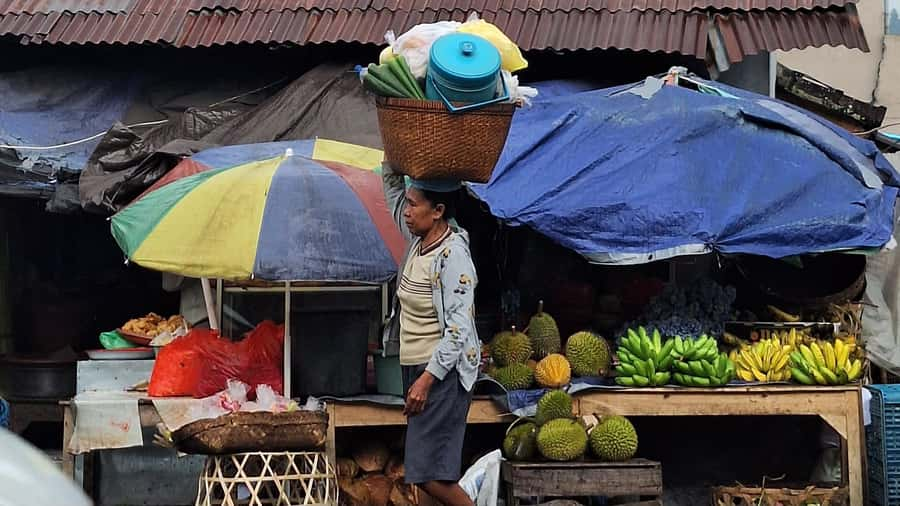
Choose a morning session if the traditional market matters to you. The market closes at 10:00 AM, so a later walk will not include that part of the experience.
For cooler walking conditions, an early start is sensible, though the exact departure times depend on availability. Sun can be strong in open fields, and there is limited shade in some sections. Bring water even though one bottle is supplied.
Rain does not automatically ruin the walk, but it changes the footing. The field paths are narrow and can become slippery, so shoes with proper grip matter more than fashionable footwear. Sandals and flip flops are not allowed, and sports shoes are the minimum practical choice.
Who should book this walk
I would choose this trek if you want to see Sidemen through farming, village life, and local roads rather than through a resort window. It suits people who enjoy a calm pace, photo stops, short explanations, and direct contact with the working countryside.
It is also a good choice if you have already seen the terraces around Ubud and want a quieter setting. The Sidemen route feels less arranged for mass sightseeing. You walk beside active fields, pass through village areas, and see how water and agriculture shape the community.
I would think twice if you want a flat, polished path or a workout with clearly marked trails. The footing is uneven, some sections are slippery, and the finish requires a separate transport plan. The tour is also not suitable for several groups listed by the operator, including people with heart problems, pregnant women, and those with low fitness.
Should you book the Sidemen Trekking walk?
Yes, if you want an affordable and grounded introduction to Sidemen. The best parts are the changing route, the close view of rice farming, the Subak irrigation explanation, the Mount Agung viewpoints, and the easy conversation with a local guide.
Book a morning departure if you want the market, wear shoes with grip, and arrange your ride from Warung Ume Anyar before setting out. If you are comfortable with narrow paths and a little mud, this two-hour walk offers far more than its low price suggests.
FAQ
Where does the Sidemen trekking tour start?
It starts at Pasar Sidemen, the traditional market on the main road. Look for the shop with the sign Upa Boga, where the guide will meet you.
Where does the trek finish?
The walk finishes at Warung Ume Anyar Restaurant in Ogang Village.
How long does the Sidemen trek last?
The trek lasts about two hours. A return walk to the starting area is optional and takes around 30 to 40 minutes along the main road.
Is hotel pickup included?
No. Hotel pickup and drop-off are not included. You should arrange transport to the market and organize a pickup from Warung Ume Anyar after the walk.
What should I wear and bring?
Bring hiking shoes or sports shoes, sunglasses, a hat, and sunscreen. A rain jacket and long trousers can also be useful. Sandals and flip flops are not allowed.
Can I visit the market before the trek?
Yes, if you choose a morning session. Pasar Sidemen is open from 5:00 AM to 10:00 AM, and the market visit takes about 10 minutes.
Is this trek suitable for everyone?
No. It is not suitable for children under five, pregnant women, people with heart problems, people over 60, or people with a low level of fitness. The route includes narrow, uneven, and sometimes slippery paths.
New routes in the world
- Baltimore Walking Foodie Tour in Fells Point★ 5.0 · 182 reviews
- Baku Oil Heritage & Old Town Walking Tour★ 5.0 · 232 reviews
- Baku Walking Tour (Old City)★ 5.0 · 127 reviews
- Austin Small Group Morning Walk★ 5.0 · 412 reviews
- The Madam’s Curse Walking Ghost Tour★ 4.5 · 103 reviews
- Austin Haunted Pub Crawl Walking Tour★ 4.5 · 232 reviews
- Austin Downtown Private Walking Food Tour With Secret Food Tours★ 5.0 · 71 reviews
- Austin Murder Walk★ 5.0 · 310 reviews
Indonesia Walking Tours, compared.

Tetebatu Walking Tour – Rice Terraces, Waterfall & Monkey Forest
Read our review →
Small-Group Walking and Food Tour by Night in Yogyakarta
Read our review →
Jakarta Walking Tour: Explore Jakarta as the Locals do
Read our review →Browse the lists this tour appears in