Review · TOURS
Seoul moonlight walking tour with local historian
Seoul’s best evening views are not all found from a tower. This two-hour walk climbs from the theater district around Hyehwa to Ihwa Mural Village, Naksan Park, and the Seoul City Wall, where the city lights spread below the old fortress. Along the way, local guides connect royal history with university pressure, hillside housing, and present-day Korean life.
I like the route for two reasons: it shows you a part of Seoul you might otherwise miss, and it gives the views a story. Guides such as Jessica, Ethan, June, Smin, and Leah are praised for mixing humor with clear explanations, especially around education, social class, and the city’s growth. The main catch is simple: this is an uphill walk with stairs, so good shoes and a little stamina matter.
Quick points before you book
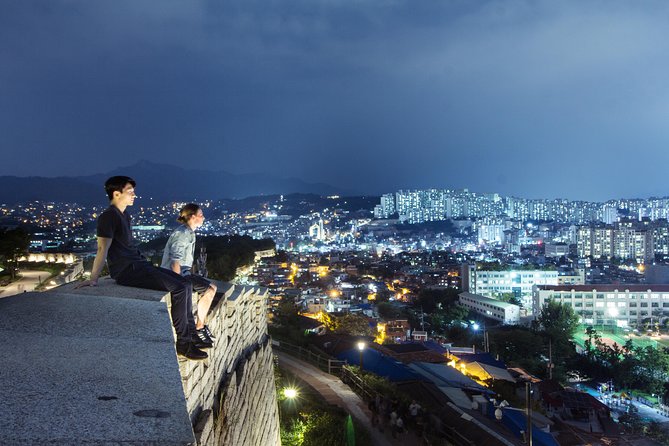
- Sunset-to-city-lights route: The walk begins around Hyehwa and finishes with broad night views from Naksan Park and the city wall.
- Local subjects, not just landmarks: You learn about university culture, hillside communities, Seoul’s changing capital, and modern Korean society.
- Several praised guides: Jessica, Ethan, June, Smin, Sumin, Leah, and Shin are named in the feedback, with especially strong comments about humor and clear English.
- Two hours, maximum 20 people: The group limit is small enough for questions without making this a private tour.
- Bring comfortable shoes and a charged phone: You will want both for the uphill walk and evening photos. Bug spray may also be useful.
- Optional food afterward: A food session follows the walk, but it costs extra.
Starting in Hyehwa, where Seoul feels young
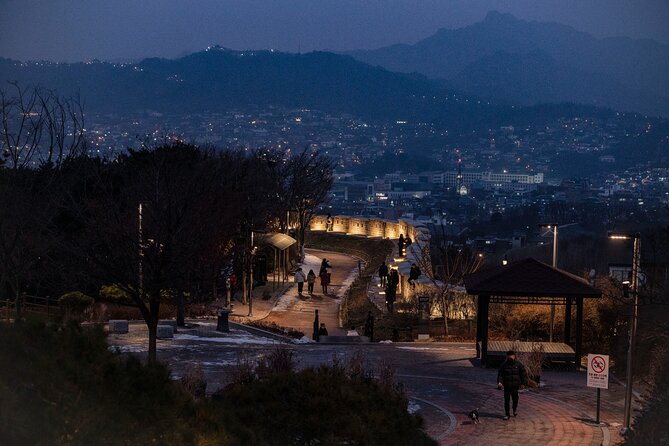
The meeting point is at Hyehwa120 Daehak-ro in Jongno District. This puts you near Marronnier Park and Daehak-ro, an area tied to live theater, performances, and university life. You begin in a part of Seoul with a social energy that feels different from the grand palace districts or shopping zones.
The first stop is the Seoul University Hospital Medical Museum. The visit is brief, about 10 minutes, and admission is included. The subject here is less about medical exhibits and more about Korean university culture. The tour uses the setting to explain how students experience campus life and why education carries such weight in South Korea.
That is a smart opening. Instead of starting with a date-heavy history lecture, the guide begins with something connected to modern daily life. You get an early sense that this walk will cover more than old walls and pretty views.
English delivery can depend on the guide assigned to your date. Jessica, Ethan, June, Smin, and Leah receive particularly warm comments for their humor, patience, and ability to answer questions. One lower-scoring account found the English and storytelling less effective, so I would treat the guide’s individual style as a variable rather than expecting one fixed host every time.
More Walking Tours in the world:
- Magical London: Harry Potter Guided Walking Tour
★ 4.7 · 22,044 reviews - Reykjavik Food Walk – Local Foodie Adventure in Iceland
★ 5.0 · 18,952 reviews - History and Hauntings of Salem Guided Walking Tour
★ 5.0 · 14,564 reviews
Marronnier Park and the theater district
Marronnier Park is only a short stop, about five minutes, but it helps explain the character of Hyehwa. This is a cultural area known for live theaters and shows. You may see the neighborhood as more than a pass-through point on the way to the hill.
I like this transition because it links the city’s creative life with its student culture. Seoul can change mood within a few blocks, and Hyehwa offers a good example: subway exits, theater activity, university buildings, and older residential streets all sit close together.
Do not expect a long performance or a formal museum visit here. The park is used as a quick orientation point. The value comes from the guide’s local explanation and from seeing how the area fits into ordinary Seoul life.
Naksan Park and the question of Seoul’s capital
The walk then heads toward Naksan Park, with a stop of roughly 10 minutes. Here the guide asks a bigger question: why was Korea’s capital located in Seoul, and how did that decision shape the city?
This is where the tour shifts from neighborhood observation to national history. Naksan is tied to the old capital and to the city’s changing form. The guide explains how Seoul developed around its historic boundaries and how those boundaries still affect the city you see today.
The path climbs, and the views improve as you go. That sounds obvious, but it changes the rhythm of the experience. You are not simply taken to a viewpoint by vehicle. You earn the panorama in stages, with the city opening up as the route rises.
You should be comfortable walking uphill at a moderate pace. Some people find the route easy, while others focus more on the stairs than the commentary. The walk is not described as difficult, but repeated comments about hills and steps make the practical advice clear: wear supportive shoes and do not arrive tired from an all-day trek.
Ihwa Mural Village and Seoul’s hillside communities
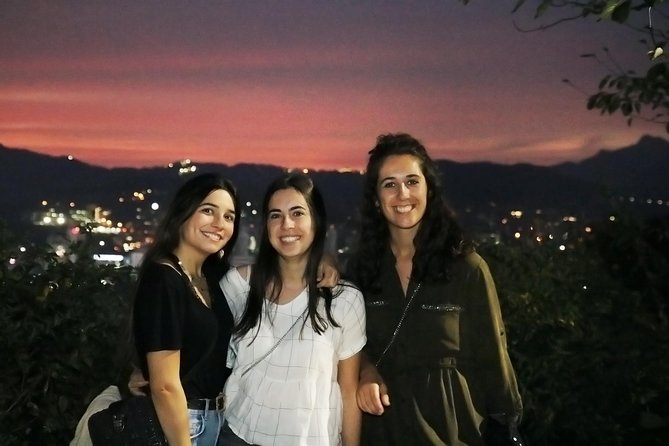
Ihwa Mural Village receives about 20 minutes. Its painted walls and stairways are visually attractive, but the guide also uses the area to discuss the people who live on Seoul’s hillsides and the economic reasons these communities developed there.
That context gives the stop more weight. Without explanation, a mural village can become a photo stop. With a local guide, you begin to consider why housing was built in steep areas, who could afford those neighborhoods, and how Seoul’s rapid growth affected people with fewer resources.
The subject is handled as part of a wider conversation about class and city life. One especially strong part of the tour is the way guides connect old neighborhoods with current social concerns rather than presenting Korea as a collection of palace gates and pop-culture references.
You will have time for photos, but this is not a long art tour. The murals are one part of the stop. The larger benefit is the setting, where narrow lanes, hillside homes, public art, and views toward central Seoul come together.
Same streets, a different guide:
- New Orleans Premier Ghost, Voodoo and Vampire Walking Tour
★ 4.5 · 12,856 reviews - Amsterdam Anne Frank: Small-Group Walking Tour & Local Guide
★ 4.8 · 12,789 reviews - Edinburgh: Harry Potter Magical Guided Walking Tour
★ 4.8 · 11,944 reviews - Edinburgh Castle: Guided Walking Tour with Entry Ticket
★ 4.7 · 11,699 reviews
Walking the Seoul City Wall after dark
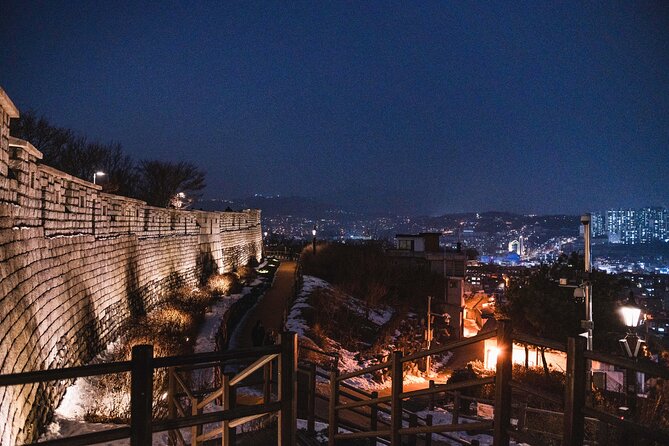
The high point is the Seoul City Wall, a historic monument with a romantic evening setting and wide views over the city. This is the moment when the route’s earlier climb pays off.
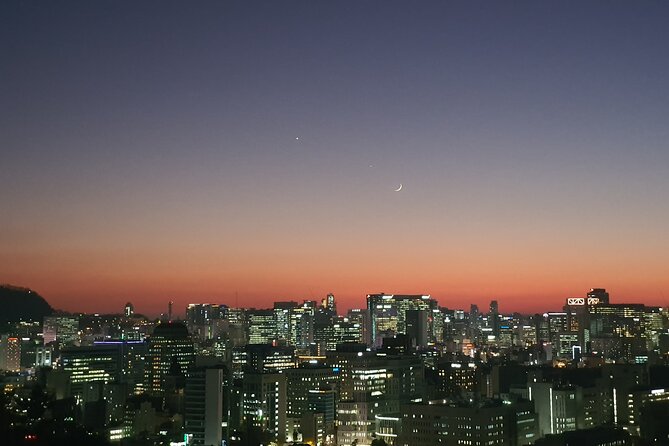
As daylight fades, Seoul’s lights begin to spread across the view. The wall gives you a sense of the old capital’s edge, while the modern city rises beyond it. The contrast is the tour’s strongest visual idea: an old defensive structure overlooking one of Asia’s largest modern cities.
The route is also linked with a location recognized by fans of K-Pop Demon Hunters. That detail may appeal if you enjoy connecting screen locations with real places, though the main attraction remains the wall and the view.
Plan to use this part for photos, but keep your phone charged. Several people specifically recommend having a full battery, and that is sound advice for an evening route with city lights, sunset color, and plenty of picture stops.
The final wall section lasts about 20 minutes. It is long enough to enjoy the scenery without turning the tour into a late-night hike. The activity returns to the original meeting point, so you are not left at an unfamiliar part of Seoul at the end.
What the guides do best
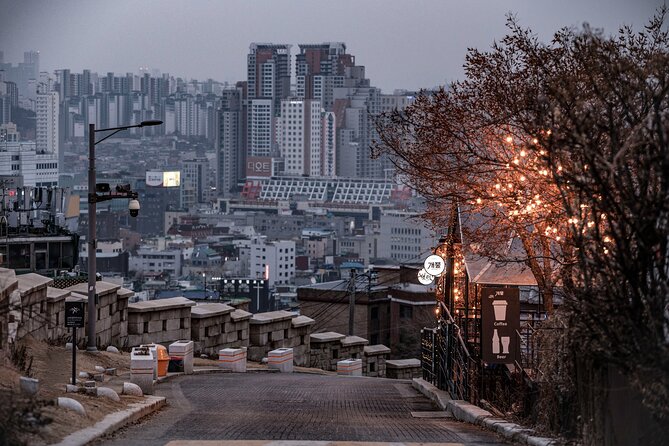
The strongest part of this experience is the guide’s role. You are not just following a route. You are listening to explanations about university entrance pressure, social values, housing, old capitals, and everyday life in Korea.
Jessica is praised for detailed explanations and a lively sense of humor. Ethan is described as calm, funny, and open when discussing Korean society. June receives strong marks for making history entertaining, while Smin is noted for clear English, kindness, and useful answers. Leah is praised for making the walk feel like an outing with a friend, and Sumin is remembered for explaining education and university entrance culture.
Those details matter because this route depends on conversation. The sights are good, but the wall, park, and village can be visited without a guide. You are paying for interpretation, local context, and the chance to ask questions as the city changes around you.
The experience can also work well on your first evening in Seoul. It gives you an early look at local food areas, public spaces, hills, and transit-connected neighborhoods. The guide may also offer suggestions for food and other activities, although you should not treat that as a guaranteed part of the formal route.
Is $31.98 good value?
At $31.98 per person, I consider this a fair price for a two-hour guided walk, particularly if you want history and social context rather than only scenic stops. The key value is the combination of a local guide, several distinct neighborhoods, and a sunset-to-night setting.
You could walk through Naksan Park and Ihwa Mural Village on your own for less. But independent visitors may miss the explanation of university culture, hillside housing, and Seoul’s development. You also might not choose the same route or know which wall sections offer the best evening views.
The value is strongest for solo visitors, first-time visitors, and anyone who enjoys asking questions. A maximum of 20 people keeps the group from becoming unwieldy, though it is not a private tour. If you prefer a quiet walk with no commentary, the price may feel less worthwhile.
Dinner is not included. An optional food session takes place after the walk, with a separate fee. Keep that in mind when planning your evening budget.
Who should book this walk?
I would choose this for you if you want:
- A night view reached on foot rather than from a paid observation deck
- A guide who discusses modern Korean society as well as older history
- A relaxed two-hour introduction to Hyehwa, Ihwa, and Naksan
- A social activity suitable for a solo visitor
- A route that combines art, theater, city walls, and hillside streets
I would hesitate if steep paths are a serious problem, if you dislike stairs, or if you want a detailed museum tour. The route includes hills, and the guide’s speaking style may vary. One account found the English and storytelling weaker than expected, although most of the available feedback gives the guides very high marks.
This is also better for people who enjoy learning while walking. The stops are fairly brief, so you should not book it expecting long periods at each site.
Practical details for a smoother evening
The tour lasts about two hours and ends back at the starting point. It is near public transportation, and most people can take part, but the uphill sections deserve attention.
Wear comfortable shoes. Charge your phone before leaving. Bring water if you prefer having it with you, and consider bug spray, especially in warmer weather. Seoul’s evening air can feel pleasant, but the climb and stairs still make sensible clothing and footwear useful.
The walk requires good weather. If poor weather cancels it, you are offered another date or a full refund. You can cancel for a full refund up to 24 hours before the start time. Changes or cancellations within 24 hours are not accepted for a refund.
Final call: Is the Seoul Moonlight Walking Tour worth booking?
Yes, if you want Seoul explained as a living city rather than shown as a string of famous photo stops. The combination of Hyehwa’s theater culture, university life, Ihwa’s hillside setting, Naksan Park, and the old city wall gives you a fuller picture of the capital.
Book it for the local commentary and night views, not for a strenuous hike or a long visit at each stop. Choose comfortable shoes, arrive with a charged phone, and be ready for stairs. At $31.98, it is a sensible introduction to a side of Seoul that is easy to miss when you stick to the major palace and shopping routes.
FAQ
How long does the Seoul moonlight walking tour last?
The tour lasts approximately two hours.
Where does the tour start?
It starts at Hyehwa120 Daehak-ro in Jongno District, Seoul.
Where does the tour end?
The activity ends back at the meeting point.
What places does the tour visit?
The route includes the Seoul University Hospital Medical Museum, Marronnier Park, Naksan Park, Ihwa Mural Village, and the Seoul City Wall.
Does the tour include dinner?
No. An optional food session takes place after the tour, but its fee is not included.
How many people can join the tour?
The group can include a maximum of 20 people.
Do I need special equipment?
No special supplies are required, but comfortable shoes are important because the route includes hills and stairs. A charged phone is useful for photos, and bug spray may help.
Can I cancel for a full refund?
Yes. You can cancel at least 24 hours before the start time for a full refund. If poor weather cancels the activity, you are offered another date or a full refund.
New routes in the world
- Baltimore Walking Foodie Tour in Fells Point★ 5.0 · 182 reviews
- Baku Oil Heritage & Old Town Walking Tour★ 5.0 · 232 reviews
- Baku Walking Tour (Old City)★ 5.0 · 127 reviews
- The Madam’s Curse Walking Ghost Tour★ 4.5 · 103 reviews
- Austin Small Group Morning Walk★ 5.0 · 412 reviews
- Austin Haunted Pub Crawl Walking Tour★ 4.5 · 232 reviews
- Austin Downtown Private Walking Food Tour With Secret Food Tours★ 5.0 · 71 reviews
- Austin Murder Walk★ 5.0 · 310 reviews
Tours, compared.
Magical London: Harry Potter Guided Walking Tour
Read our review →
History and Hauntings of Salem Guided Walking Tour
Read our review →
New Orleans Premier Ghost, Voodoo and Vampire Walking Tour
Read our review →
Amsterdam Anne Frank: Small-Group Walking Tour & Local Guide
Read our review →

Edinburgh Castle: Guided Walking Tour with Entry Ticket
Read our review →