
Review · ICELAND
Reykjavik: Guided Folklore Walking Tour
Icelandic folklore gets wonderfully strange fast. On this 90-minute Reykjavik walk, you hear about elves, trolls, ghosts, sea monsters, the 13 Yule Lads, their child-eating mother Grýla, old runes, and a supposed elfstone in the city center. Guides such as Einar, Stefan, Matthias, and Dui bring the tales alive with songs, sound effects, humor, and personal stories.
I like the way the tour uses real Reykjavik places rather than treating folklore as a stage show. The old graveyards give the ghost stories some bite, while Lake Tjornin and the cathedral add local history and everyday city life. I also like that the guides adjust their delivery to the group, although some stories are genuinely creepy and may not suit very young children.
Key points to know before you book
- Folklore with a dark Icelandic edge: Expect elves and trolls, but also ghosts, murder, magic, monsters, and unsettling legends.
- A city walk with several atmospheric stops: The route includes Ingólfstorg, an old cemetery, the Catholic cathedral, Lake Tjornin, and Austurvöllur.
- The guide makes the difference: Strong storytellers use songs, acting, sound effects, and personal Icelandic connections.
- A good first activity in Reykjavik: The tales give you cultural context for the rest of your stay and help you see ordinary streets differently.
- Good value for story lovers: At $54, the price is fair if you want interpretation and entertainment, not just a walk between landmarks.
- Dress for the weather: Rain, snow, wind, and cold do not stop the walk, so proper clothing matters.
Why Reykjavik folklore works so well on foot
Reykjavik can feel modern and easygoing, with colorful houses, cafés, shops, and broad streets. Yet Icelandic stories often belong to the darker spaces around the city: graveyards, water, lava fields, winter nights, and places where people once feared getting lost.
That contrast is the point of this tour. You are not simply looking at old buildings and hearing dates. You are learning how Icelanders have explained the unknown, entertained themselves through long winters, and passed stories from one generation to the next.
The guide may describe elves as the hidden people, tell you why trolls are linked to Iceland’s rugged terrain, or explain why ghosts remain such a strong part of local storytelling. The tone is playful, but the stories often carry older beliefs about danger, family, nature, and the limits of human control.
I especially like the use of music. Guides have sung Icelandic lullabies and folk songs during the walk, sometimes with a surprisingly fine voice. A song can make a story feel more local than a long explanation, and it gives the group a moment to listen rather than simply move from one stop to another.
More Guided Walks in the world:
- Magical London: Harry Potter Guided Walking Tour
★ 4.7 · 22,044 reviews - History and Hauntings of Salem Guided Walking Tour
★ 5.0 · 14,564 reviews - Amsterdam Anne Frank: Small-Group Walking Tour & Local Guide
★ 4.8 · 12,789 reviews
Meeting at Ingólfstorg with an elfstone nearby
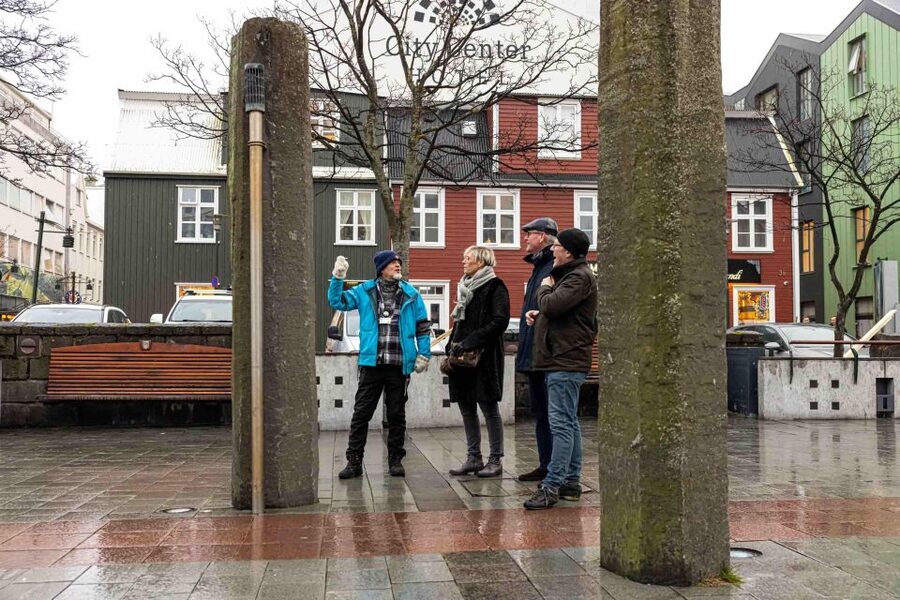
The walk begins outside Hlöllabátar sandwich shop, facing Ingólfstorg Square and two tall stone pillars. CenterHotel Plaza is on your right, and benches, tables, and a covered ceiling provide a practical place to wait.
Look for a guide wearing a light blue jacket marked Your Friend in Reykjavik. This is useful in a busy central area, especially if you arrive early and several groups are gathering nearby.
Ingólfstorg is a fitting starting point. It places you in the middle of modern Reykjavik before the guide begins pulling you toward sagas, old beliefs, and hidden beings. The opening section usually sets up the difference between Icelandic folklore and the polished version of fantasy familiar from films and books.
You will also hear about the influence of Norse mythology and Icelandic sagas on J.R.R. Tolkien. The comparisons with The Lord of the Rings and The Hobbit are a fun extra, especially if you already enjoy Tolkien. The tour does not turn into a literary lecture, but it gives you a clearer sense of where some familiar fantasy ideas came from.
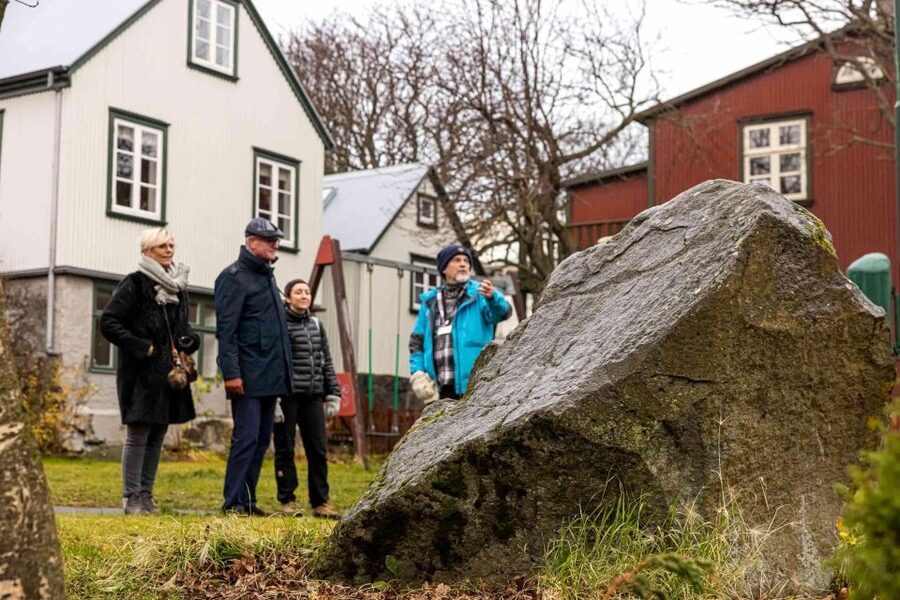
The elfstone is one of the most memorable small details. It is not a grand monument, and that is part of its appeal. The guide uses it to explain the place of elves in Icelandic culture and the way old beliefs can remain part of modern life without being treated as a simple tourist prop.
Graveyards, ghosts, and the Deacon of the Dark River
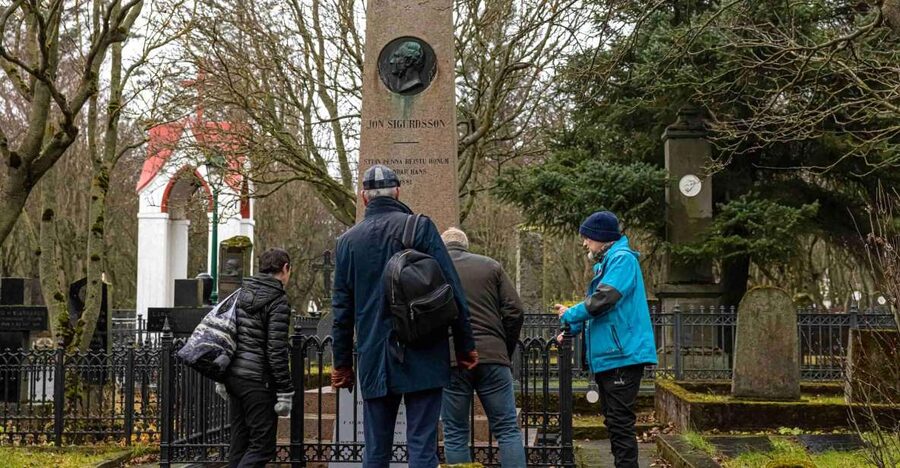
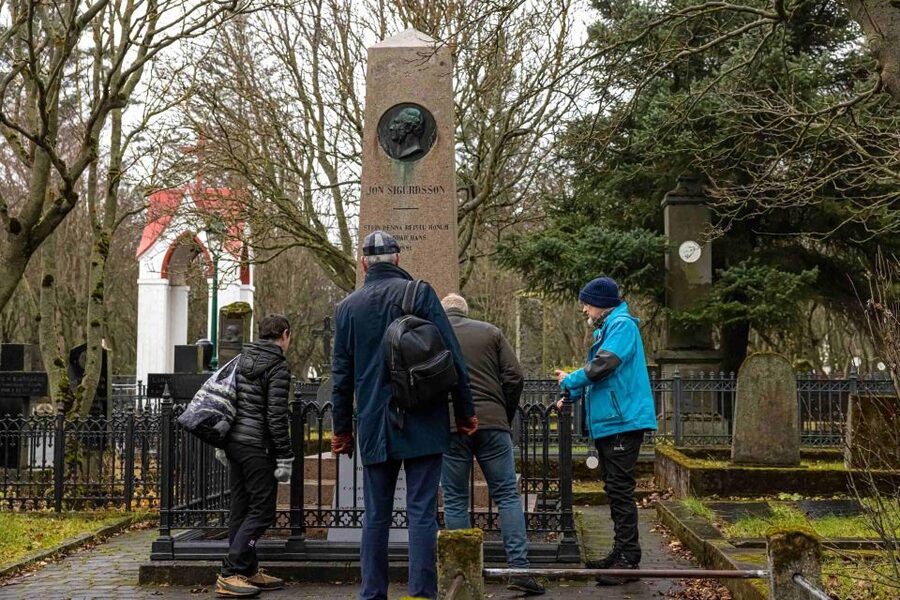
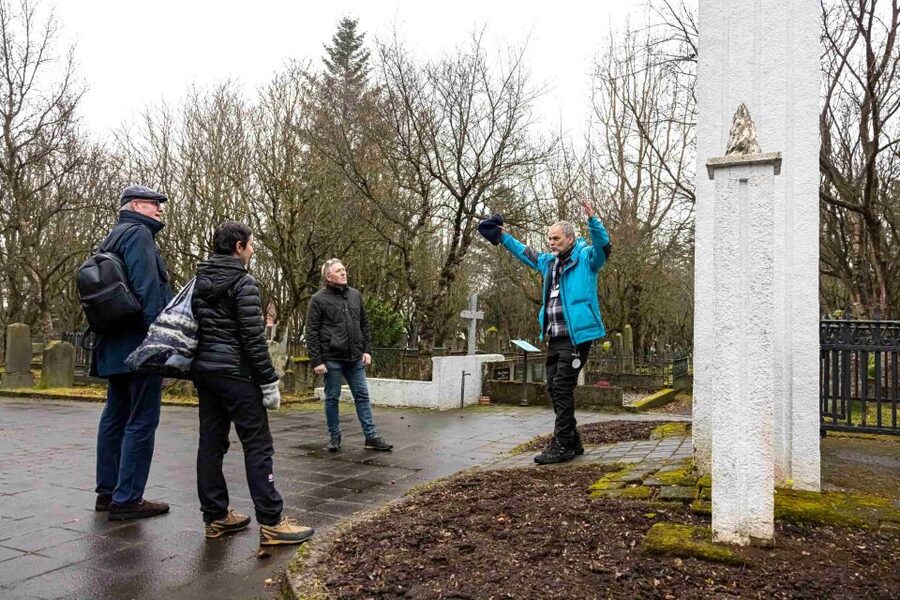
The cemetery portion gives the walk its strongest atmosphere. The tour includes two of Reykjavik’s oldest graveyards, with Kirkjugarðurinn við Suðurgötu named as one of the main stops.
Here, the pace changes. Instead of looking at a square or street, you are surrounded by graves and stories tied to the dead. This is where the ghost material becomes more effective, particularly the tale of the Deacon of the Dark River.
I will put it plainly: this is not a soft, cheerful fairy-tale walk. The ghost stories can be macabre, and guides sometimes act them out with voices, gestures, or sound effects. That theatrical touch is a major reason the tour works, but it can be too much for a small child who is easily frightened.
The cemetery stop also shows why place matters. A ghost story told in a café would be entertaining. A ghost story told among old graves, in changing Icelandic weather, has a different weight. You do not need to believe the tale for the setting to make it effective.
The guides often add historical background and personal details here. Einar, for example, has been praised for connecting folklore with Icelandic traditions and family stories. Other guides, including Stefan and Matthias, have been especially good at drawing the group into the tale rather than delivering it like a memorized script.
The Catholic Cathedral and Iceland’s layers of belief
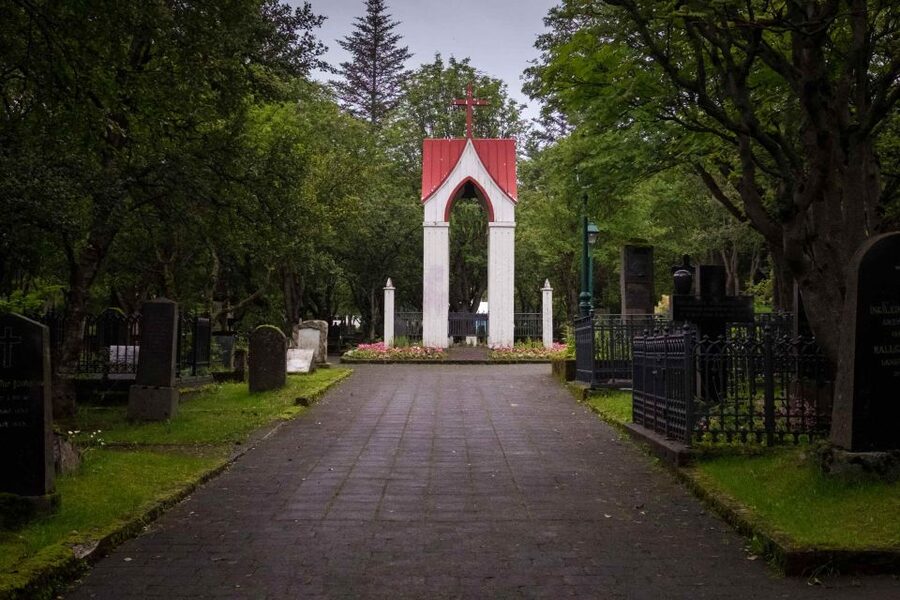
The Cathedral of Christ the King introduces a different side of Icelandic culture. It is the country’s Catholic cathedral, and its presence helps broaden the tour beyond elves and trolls.
The guide explains the building and its place in Reykjavik while continuing the larger conversation about belief. Icelandic culture contains many layers: Norse gods, Christian traditions, local superstitions, folk magic, and modern secular life. You do not get a full religious history course in 20 minutes, but the cathedral makes the point that folklore exists alongside formal religion.
This part of the walk is also a useful pause after the cemetery. You move from ghost stories and pagan legends toward a more visible institution in the city. The shift keeps the tour from becoming a string of spooky tales with no wider context.
The guide may also explain old Icelandic magic and runes. This is one of the more distinctive parts of the experience. You are not just hearing what people believed. You get an introduction to symbols, spells, and the way magic appears in old Icelandic stories.
If you are interested in medieval culture, mythology, or the way belief survives in everyday life, this section adds real value. If you only want a fast city orientation, it may feel less essential than the central squares and lake.
More Walking Tours in the world:
- Reykjavik Food Walk – Local Foodie Adventure in Iceland
★ 5.0 · 18,952 reviews - New Orleans Premier Ghost, Voodoo and Vampire Walking Tour
★ 4.5 · 12,856 reviews - Edinburgh: Harry Potter Magical Guided Walking Tour
★ 4.8 · 11,944 reviews - Edinburgh Castle: Guided Walking Tour with Entry Ticket
★ 4.7 · 11,699 reviews
Lake Tjornin, monsters, and everyday Reykjavik
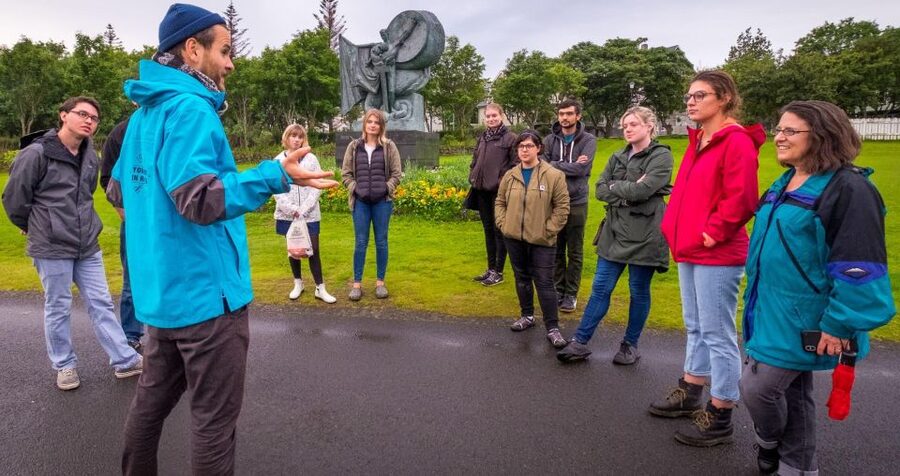
Lake Tjornin gives you one of the route’s most pleasant settings. The water sits close to central Reykjavik, surrounded by buildings and open space. It is a familiar city view, but folklore changes how you look at it.
Icelandic stories include unusual creatures, many of them linked to water. The guide may discuss the country’s mostly aquatic monsters and show how lakes, rivers, the sea, and remote shores became natural places for strange tales to take hold.
This is also where the tour can connect old stories with modern curiosity. One guide showed a video related to Iceland’s answer to the Loch Ness monster, while other guides have used humor and personal experience to make the monster stories memorable.
The lake stop is not frightening in the same way as the cemetery. It gives the group room to breathe and lets the guide move between folklore, local geography, and modern Icelandic life. You might find this section particularly good for children who enjoy monsters but do not want a constant run of ghost stories.
Keep in mind that this remains a walking tour, not a wildlife outing. You are hearing about creatures and beliefs, not setting out to spot one.
Austurvöllur and the 13 Yule Lads
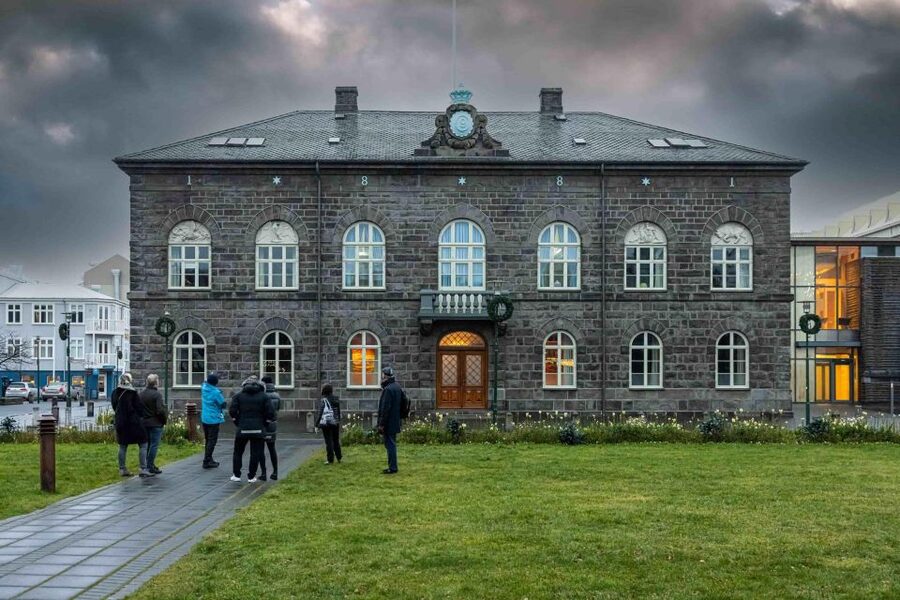
The route finishes at Austurvöllur, a central square with an important place in Reykjavik life. It is a practical ending point because you remain in the heart of the city, close to places where you can continue sightseeing, eat, or warm up.
The Yule Lads are usually one of the most entertaining subjects on the walk. Iceland does not settle for one Santa Claus. It has 13 mischievous figures, each with his own habits and personality, along with Grýla, their frightening mother.
The stories are funny, strange, and sometimes grim. Grýla is described as a child-eating troll, which tells you something about the sharper edge of traditional Icelandic storytelling. These tales were not designed only to comfort children. They also warned them, amused adults, and gave winter a cast of memorable characters.
The guide may link the Yule Lads with Christmas customs and Icelandic family life. This is one reason I would consider taking the tour early in your visit, especially if you are in Reykjavik during winter. You will notice the holiday traditions differently after hearing where they come from.
Austurvöllur is also a good place for questions. Guides have answered everything from folklore and buildings to mountains and modern Icelandic life. The tour is scripted around key stories, but strong guides leave space for curiosity.
What the guides add to the experience
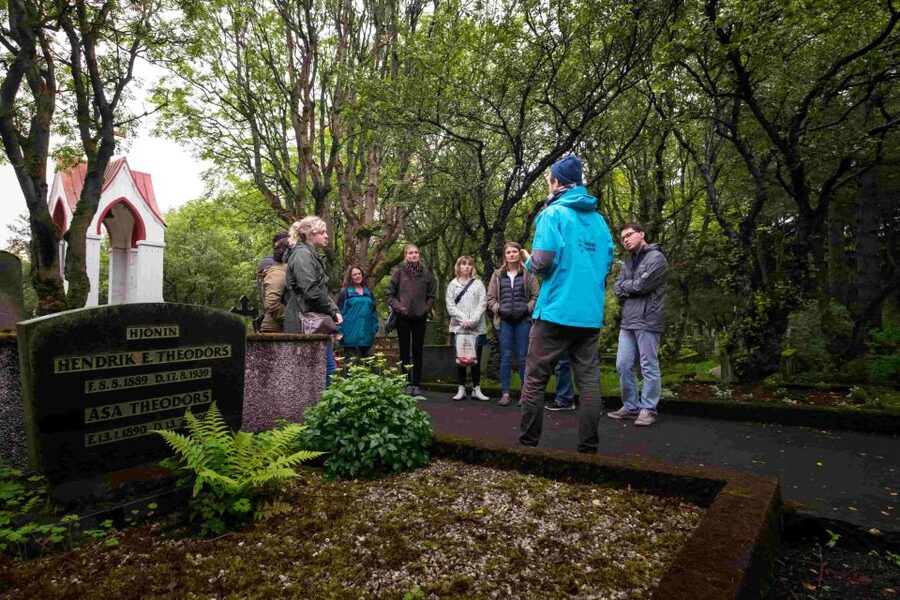
The subject matter is good, but the guide determines whether the walk becomes memorable or merely informative. The strongest guides use performance without turning the tour into a comedy routine.
Einar has been especially praised for his storytelling, humor, singing, and personal connection to Icelandic traditions. Stefan has a lively style, with sound effects and a talent for making sure everyone in the group is included. Matthias has been described as engaging and funny, with a strong ability to connect Viking history to folklore.
Other guides have brought their own background to the walk. One was a retired Icelandic fisherman with many local stories. Another took photos for a couple during the tour. Dui has used stories and songs. These details matter because they show that the experience is not built only around an audio script.
You should still allow for some variation. A storytelling tour depends on the person leading it, and not every guide will perform a tale in exactly the same way. The overall format remains consistent, but the humor, singing, personal examples, and level of scariness can shift.
The tours are offered in English, Spanish, and French. A private group is also available, which may be useful if you want the guide to soften the darker stories for younger children or shape the walk around your interests.
Is $54 a fair price for 90 minutes?
At $54 per person, this is not the cheapest way to walk around central Reykjavik. You can see many of the streets and squares without paying anything. The price makes sense when you value the guide’s storytelling, cultural explanation, and access to places you might otherwise pass without understanding.
You are paying for interpretation rather than transportation or admission tickets. The experience includes an entertaining guide, but no separate attraction entry is listed. If you want a long list of landmarks, the price may feel high. If you want to understand Icelandic beliefs and hear well-told local tales, it is a fair city-tour price.
The official duration is 90 minutes. That is a strength for many people. You get enough time for several stops without giving up half a day, and the length suits a busy Reykjavik schedule. One account described a longer experience, so allow a little flexibility if the group spends extra time on questions or stories.
I think the best value comes from taking it near the start of your stay. The folklore gives you a cultural frame for later drives, museum visits, and conversations. You may also find that ordinary Icelandic place names and local customs make more sense afterward.
Practical advice for weather, children, and access
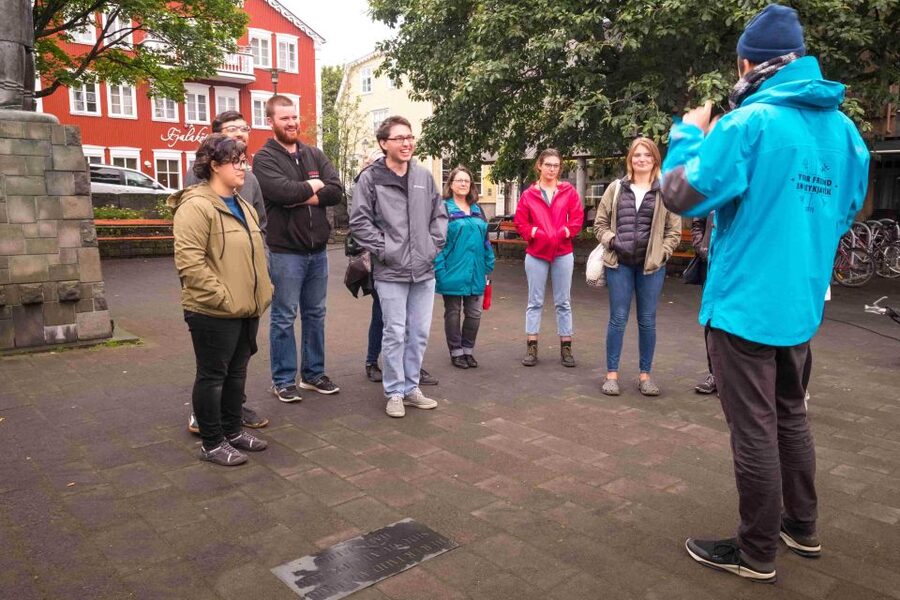
Wear proper outdoor clothing. Reykjavik weather can change quickly, and the walk continues in rain or snow. Warm layers, a waterproof outer layer, and comfortable shoes are more useful than dressing for a polished city outing.
The route is wheelchair accessible, which makes it a practical choice for many visitors. You should still dress for cold and wet conditions, since access does not remove the need to deal with the weather.
Families need to make a clear choice. Children who enjoy monsters, magic, and dramatic stories may have a wonderful time. The darker ghost tales and Grýla’s child-eating reputation can frighten younger children, so ask about a private walk if you want the guide to reduce the scariness.
Solo visitors can also fit in well. The route has natural conversation points, and the guide actively engages the group. It is less passive than walking around with an audio guide, and the stories give you easy subjects to discuss with other people.
Free cancellation is available up to 24 hours before the start, and you can reserve now and pay later. Starting times vary, so check availability for your date.
Who should book this Reykjavik folklore walk?
Book it if you like myths, ghosts, old beliefs, and strong storytelling. It is also a good pick if you have already seen the main central sights and want a different way to understand the city.
I would recommend it early in a Reykjavik visit. The route covers enough central ground to help you get oriented, while the stories give the city a personality that a standard sightseeing walk may miss.
Skip it if you want a quiet architectural tour, a fast list of landmarks, or a completely child-friendly activity with no frightening material. The cemetery and ghost sections are central to the experience, not minor extras.
For most adults, older children, and teenagers who enjoy unusual stories, the combination works very well. You get a manageable walk, several important city locations, and a generous serving of Icelandic weirdness for the price.
FAQ
How long is the Reykjavik folklore walking tour?
The tour lasts 90 minutes.
How much does the tour cost?
The price is $54 per person.
Where does the tour begin?
It begins outside Hlöllabátar sandwich shop, facing Ingólfstorg Square and the two tall stone pillars. CenterHotel Plaza is to your right.
How can I identify the guide?
Local guides usually wear a light blue jacket with Your Friend in Reykjavik written on the back.
Where does the tour finish?
The walk finishes at Austurvöllur.
Which places are included on the route?
The route includes Ingólfstorg, Kirkjugarðurinn við Suðurgötu, the Cathedral of Christ the King, Lake Tjornin, and Austurvöllur. The experience also includes visits to two of Reykjavik’s oldest graveyards and an elfstone in the city center.
What stories will I hear?
The subjects include Icelandic elves, trolls, ghosts, the Deacon of the Dark River, aquatic monsters, the 13 Yule Lads, Grýla, Icelandic magic, runes, and a notorious Icelandic serial killer.
Is the tour suitable for children?
Some stories may scare younger children. A private walk can be arranged with the level of scariness reduced.
What languages are available?
Tours are available in English, Spanish, and French.
Is the tour wheelchair accessible?
Yes, the activity is wheelchair accessible.
Can I cancel the booking?
You can cancel up to 24 hours in advance for a full refund.
Can I reserve without paying immediately?
Yes. Reserve now and pay later, so you do not need to pay at the time of booking.
Should I take the tour in winter?
You can take it in winter, but bring weather-appropriate clothing. The walk can continue in rain or snow, and winter darkness may add to the mood of the stories.
New routes in the world
- Baltimore Walking Foodie Tour in Fells Point★ 5.0 · 182 reviews
- Baku Oil Heritage & Old Town Walking Tour★ 5.0 · 232 reviews
- Baku Walking Tour (Old City)★ 5.0 · 127 reviews
- The Madam’s Curse Walking Ghost Tour★ 4.5 · 103 reviews
- Austin Small Group Morning Walk★ 5.0 · 412 reviews
- Austin Haunted Pub Crawl Walking Tour★ 4.5 · 232 reviews
- Austin Downtown Private Walking Food Tour With Secret Food Tours★ 5.0 · 71 reviews
- Austin Murder Walk★ 5.0 · 310 reviews
Iceland Walking Tours, compared.

Reykjavik Food Walk – Local Foodie Adventure in Iceland
Read our review →
Reykjavík Small group Walking Tour – by CityWalk
Read our review →
City Walking tour in Small Group with Local Guide
Read our review →
Browse the lists this tour appears in