

Review · NAPLES
Naples: Panoramic Walking Tour with Funicular
Naples reveals itself best from two directions: from the high terraces of Vomero, where Capri, Vesuvius, and the Gulf spread out below, and from the narrow streets below, where daily life moves at full speed. This two-hour tour links both views with a funicular ride and a downhill walk.
I like the smart route and the local focus. You get the calm, polished side of Naples first, then walk through the Petraio stairways into the Spanish Quarters and Pignasecca Market. The main drawback is physical: the descent includes many steps, and it is not suitable for wheelchair users, strollers, or people with heart problems or low fitness.
Key points at a glance
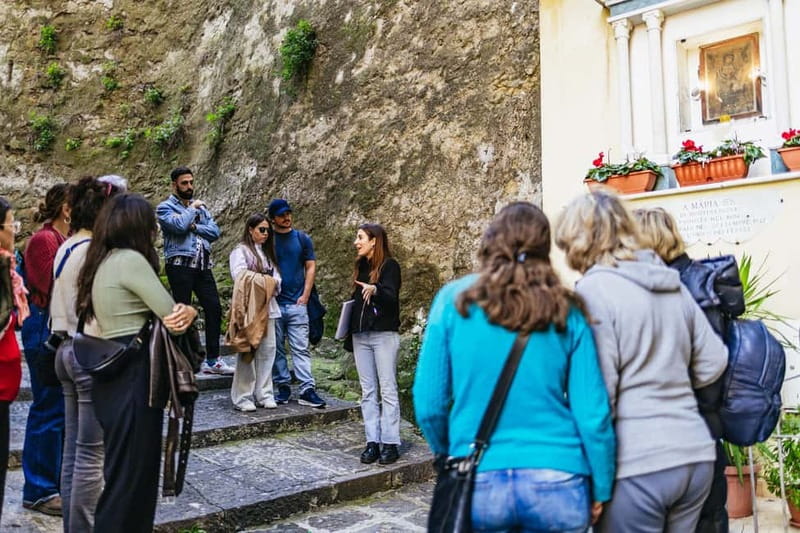
- A downhill route with a funicular ride: The Funicolare Centrale saves your legs for the scenic walk down.
- Views beyond the usual lookout: Via Palizzi opens wide views toward Capri, Mount Vesuvius, Sorrento, and the Amalfi Coast.
- Three very different parts of Naples: Quiet Vomero, the Spanish Quarters, and Pignasecca Market give you a useful feel for the city’s contrasts.
- Guides who make the city readable: Guides including Roberta, Stefano, Virginia, Barbara, Serena, and Miriam are praised for clear stories, humor, and local insight.
- A strong first-day orientation: You finish near food stalls, produce sellers, and street life, with a better sense of where to explore next.
- A modest price for a focused outing: At $24 per person, the tour offers transport, a guide, and two hours of structured sightseeing.
Why this route shows Naples so well
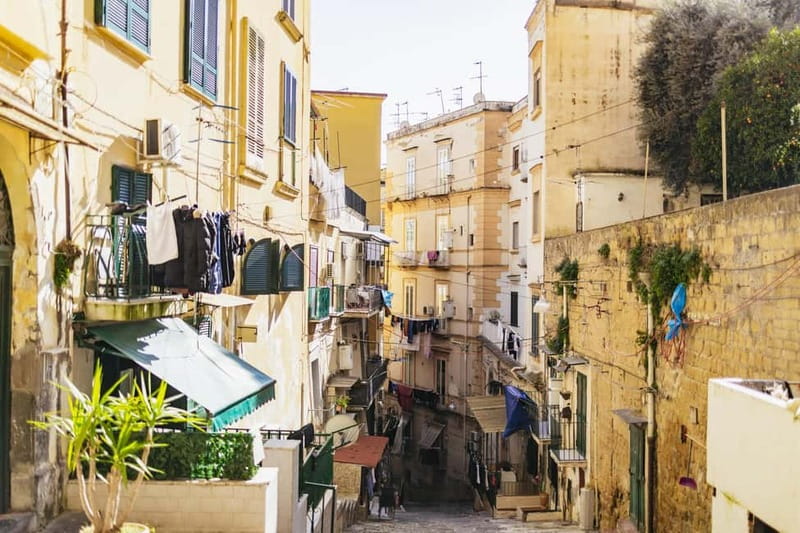
Many Naples tours concentrate on churches, castles, or ancient ruins. This one takes a different approach. It uses the city’s steep shape as the main attraction.
Naples climbs sharply from the waterfront toward Vomero. That change in height creates a change in mood, architecture, and street life. At the top, you find quiet roads, Liberty-style buildings, and a more polished residential district. Below, the Spanish Quarters feel tighter, louder, and more intensely local.
I like that the route does not treat these areas as separate sights. The downhill walk explains how they connect. You see the city change around you instead of simply being driven from one attraction to another.
The experience also gives you a useful first look at Naples’ geography. From above, you can place the Gulf, Capri, Vesuvius, and the coast. Once you reach the lower streets, you will recognize those same directions on a map and have a better idea of how the city fits together.
More Walking Tours in Naples:
- Naples: Street Food Walking Tour with Local Guide
★ 4.9 · 4,976 reviews - Authentic Naples Food Tour with 8+ Tastings of Pizza, Wine & More
★ 5.0 · 824 reviews - Naples Spanish Quarters Walking Tour Street Art, Folklore & Sweet
★ 5.0 · 797 reviews
Starting at Pasticceria Galiero near Augusteo
The meeting point is Pasticceria Galiero near Augusteo. That puts you close to the lower end of the Funicolare Centrale and the central city streets.
You meet your guide here before boarding the funicular. The experience includes a one-way ticket, so you do not need to arrange that part yourself. The ride lasts about 10 minutes and provides a practical transition from the busy center to Vomero.
The funicular is not just a way to save time. It helps explain Naples as a hill city. You leave the dense lower streets and climb toward a district with a very different feel. The ride also breaks up the walking, which matters on a tour that later uses stairways.
Start with comfortable shoes and clothes. This is not a long tour by distance, but the route is uneven and includes a sustained downhill section. You should also keep your hands free for the steps and photo stops.
Vomero: calm streets above the city

At the top, the guide introduces you to Vomero. This hilltop district is known for tree-lined streets, Liberty-style architecture, and a quieter residential mood.
That contrast is one of the best parts of the outing. Naples is often presented only through its old center, but Vomero shows another side of the city. It feels more open and measured, with handsome buildings and broad views.
Guides such as Roberta have been especially good at explaining the area because she is local to it and knows its streets and buildings well. Other guides, including Virginia, Stefano, Barbara, Serena, Miriam, and Simone, have also been praised for combining history with present-day life.
The information is not limited to dates and names. You can expect stories about how the districts developed, how residents use them now, and why Naples can feel so different from one block to the next. That local context gives the walk more value than a quick stop at a viewpoint.
Via Palizzi and the wide Gulf view
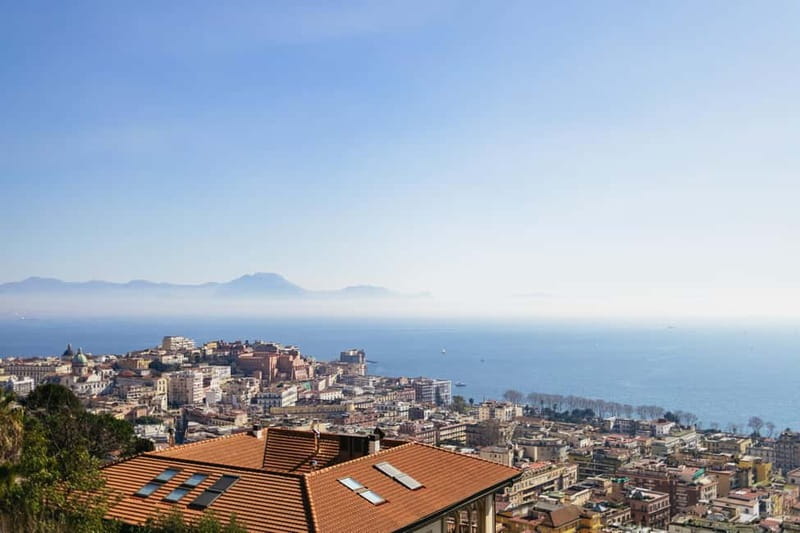
The route continues toward Via Palizzi, one of the main photo points. Here, the city opens up in a way that is difficult to grasp from street level.
You can look across the Gulf toward Capri and Mount Vesuvius. On a clear day, the view may extend toward Sorrento and the Amalfi Coast. The exact visibility depends on weather, but the high position gives you a strong chance to understand the shape of the coast.
This is where you should slow down. The itinerary allows photo stops, and the views are a major reason to book the tour. You may have heard of Castel Sant’Elmo as the classic high viewpoint, but one recent experience of visiting it independently found it crowded, while this route offered quieter places to look out over the city.
That does not mean this tour replaces every other viewpoint. It does mean you get a less obvious angle and a guide who can point out what you are seeing. A view becomes more useful when you know which island, volcano, or coastal town lies beyond the rooftops.
Same streets, a different guide:
- From Naples: Guided tour of Pompeii skip-the-line and round-trip train
★ 4.5 · 811 reviews - Naples: Old Town Guided Walking Tour
★ 4.8 · 553 reviews - Naples: Street Food Experience With 6 Stops
★ 4.7 · 392 reviews - Naples: City Walking Tour w/ Underground Roman Ruins Ticket
★ 4.6 · 284 reviews
The Petraio stairways and the long descent

The Petraio stairways are the physical heart of the tour. This old pedestrian route connects upper Naples with the districts below, and it gives the walk its sense of discovery without requiring a long vehicle transfer.
You will walk downhill through a series of steps and sloping passages. The route offers changing views, old residential details, and a gradual shift from the quiet upper district toward central Naples.
The descent is easier than climbing the same route, but it is still active. Your knees may notice the steps, especially if you move quickly or carry a heavy bag. The guide can help keep the group together, and one guide was praised for adjusting the pace to the group.
This is the point where honest expectations matter. You should not book this as a flat city stroll. It is a short, active walk with stairs. People with low fitness, heart problems, or mobility limits should choose another way to see Naples.
The reward is the transition itself. You are not simply told that Naples has contrasts. You feel the change as the streets become denser, the views narrow, and the city’s sound grows stronger.
Corso Vittorio Emanuele and the changing city
The route reaches Corso Vittorio Emanuele, a major road marking the shift between the upper and lower parts of Naples. The guide uses this section to explain the city’s layout and the connection between its neighborhoods.
This is a useful orientation point. You can look back toward the hill you have just walked down and see how much ground you covered. You also begin to understand why the funiculars and stairways matter so much to local movement.
The tour does not attempt to cover every major Naples sight. You will not get a full visit to a museum, castle, or archaeological site during these two hours. Instead, you get a compact introduction to the city’s structure, architecture, and everyday character.
For a first visit, that can be a better use of time than rushing through several unrelated monuments. The route gives you a framework for later sightseeing.
The Spanish Quarters: close-up Naples
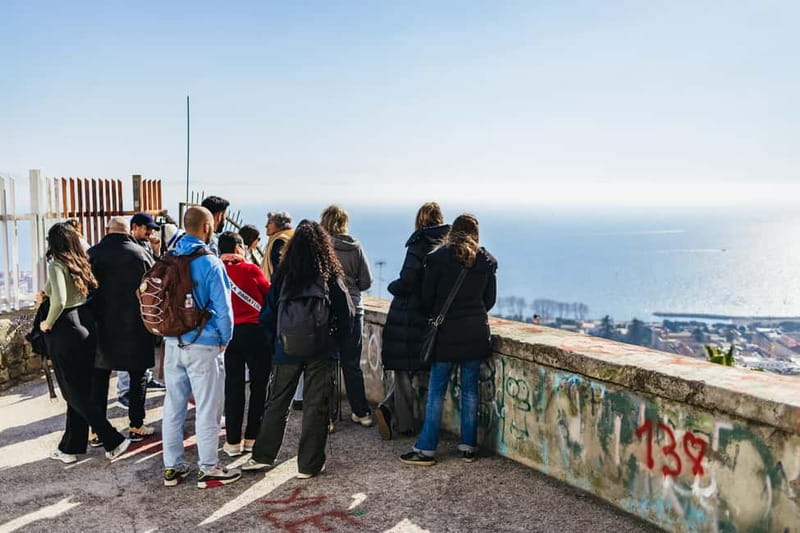
The final neighborhood section takes you into the Quartieri Spagnoli, or Spanish Quarters. Here the mood changes sharply from Vomero’s calm streets.
You will walk through narrow roads, see colorful murals, and pass through an area where ordinary city life takes place close to the pavement. The Spanish Quarters are historic, crowded, and full of personality. They are also less polished than Vomero, which is part of the point.
A good guide helps you read the area without reducing it to a postcard. Simone, Serena, Barbara, and Miriam have been especially well received for explaining both past events and present-day Naples. The best commentary here connects architecture, local habits, and history in plain language.
You should expect noise, tight spaces, and a less tidy environment. Naples is not known for perfect order, and one past participant specifically advised watching where you step because of dog waste. That is not a reason to avoid the neighborhood, but it is a reason to wear practical shoes and stay alert.
The Spanish Quarters are valuable because they show Naples as a lived-in city rather than an open-air museum. You see laundry, shops, murals, scooters, and people going about their routines. The guide keeps the experience focused, so you can take in the surroundings without losing the historical thread.
Pignasecca Market: a lively finish

The tour ends at Via Pignasecca, beside Pignasecca Market. This is a strong finish because it brings you into Naples’ food culture without adding a formal tasting program.
You will find produce stands, street food stalls, vendors, and the constant talk of market life. Since food and drinks are not included, plan to pay for anything you want to eat or drink after the tour.
I like ending here rather than at a monument. The market gives you an immediate choice: continue exploring, stop for a snack, or use the area as a base for the next part of your day. It also gives the guide’s final explanation a practical setting. Naples is not only churches and grand views. It is markets, meals, noise, and people buying what they need.
If you are sensitive to crowds or strong smells, the market may feel intense after the quieter upper streets. That contrast is exactly what makes the route work, but it is worth knowing before you book.
The guides make the difference

The route is well designed, but the guide determines how much you get from it. The experience is offered in Italian, English, French, and Spanish, and guides have handled mixed-language groups with care.
Stefano has been praised for keeping a tour engaging even when participants spoke different languages. Virginia is known for lively explanations of architecture, culture, and neighborhood history. Roberta brings strong local familiarity, while Barbara has been praised for clear explanations, humor, and warmth.
Miriam and Serena also receive repeated praise for combining local knowledge with an easy manner. That matters on a walk through neighborhoods that can otherwise seem confusing. You want someone who can explain what you are seeing without turning every stop into a lecture.
The provider may assign different guides, so you cannot book with certainty based on one particular name. Still, the pattern is encouraging: the guides are expected to explain, answer questions, and adjust the experience to the group.
Private groups are available if you want a more personal format. The standard price is $24 per person, which is reasonable for a two-hour guided route that includes the one-way funicular ticket and visual material. The value is strongest if you want orientation and local explanation, not just transportation to a viewpoint.
Who should book this walk
I would recommend this tour to first-time visitors who want to understand Naples quickly. It works especially well at the start of a stay because you finish with a clearer sense of the city’s neighborhoods and can choose later sights with better direction.
It also suits anyone who likes views but does not want to spend the whole day at a formal lookout. You get several photo stops, then a walk through streets that many visitors would not find easily on their own.
The tour is a good choice for people with a moderate level of fitness who are comfortable with stairs. It is not a good match for wheelchair users, people using baby strollers, anyone with heart problems, or anyone who finds downhill steps difficult.
The two-hour length is another advantage. You can fit it into a morning or afternoon, and the finish near Pignasecca gives you plenty of options afterward. If you have only a few hours before a flight, this route can provide a useful overview, though you should allow extra time after the scheduled finish for your onward plans.
Practical details before you go
Wear shoes with good grip. The route includes stairways and uneven walking surfaces, and comfortable clothes will make the descent easier.
The tour lasts two hours, with starting times depending on availability. Late arrivals and no-shows are not refundable, so arrive at Pasticceria Galiero near Augusteo with time to spare.
Food and drinks are not included. That is not a serious drawback because the tour ends at Pignasecca Market, where you can explore the stalls on your own.
Free cancellation is available up to 24 hours before the start, and you can reserve now and pay later. Pets, alcohol, drugs, and baby strollers are not allowed.
Should you book the Naples panoramic walking tour?
Book it if you want a clear introduction to Naples’ shape and neighborhoods, with big views followed by real street life. The funicular makes the uphill part easy, and the downhill route gives you the best of Vomero, the Petraio stairways, the Spanish Quarters, and Pignasecca in one compact outing.
Skip it if you need a flat route, a museum visit, or a tour centered on major monuments. For everyone else, $24 is a fair price for a well-planned two-hour orientation, especially when the guide adds the local stories that turn a scenic walk into a useful understanding of Naples.
FAQ
How long does the Naples panoramic walking tour last?
The tour lasts two hours.
Where does the tour begin?
Meet your guide at Pasticceria Galiero near Augusteo.
Where does the tour end?
The tour ends at Via Pignasecca, near Pignasecca Market.
Is the funicular ride included?
Yes. The experience includes a one-way ticket for the Funicolare Centrale.
What languages are available?
The live tour guide service is available in Italian, English, French, and Spanish.
What places does the walking route include?
The route includes Vomero, Via Palizzi, the Petraio stairways, Corso Vittorio Emanuele, the Spanish Quarters, and Pignasecca.
Are food and drinks included?
No. Food and drinks are not included in the tour price.
What should I bring?
Bring comfortable shoes and comfortable clothes. The route includes a downhill walk and stairways.
Is the tour suitable for wheelchair users or people with low fitness?
No. The tour is not suitable for wheelchair users, people with heart problems, or people with a low level of fitness. Baby strollers are also not allowed.
New routes in Naples
- Naples: Street Food Experience With 6 Stops★ 4.7 · 392 reviews
- Napoli: Walking Tour of Naples with Local Tour Guide★ 4.9 · 95 reviews
- Naples: Spanish Quarters Walking Tour★ 4.6 · 72 reviews
- Naples: Old Town Guided Walking Tour★ 4.8 · 553 reviews
- Naples: Street Art, Wine and Food Tasting Walking Tour★ 5.0 · 163 reviews
- Naples: City Walking Tour w/ Underground Roman Ruins Ticket★ 4.6 · 284 reviews
- Naples: Historic Center and Sansevero Chapel Walking Tour★ 4.8 · 208 reviews
- Naples Essentials: Monuments, Local Life & Street Art★ 4.9 · 79 reviews
Naples Walking Tours, compared.

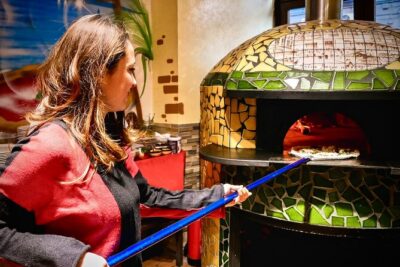
Authentic Naples Food Tour with 8+ Tastings of Pizza, Wine & More
Read our review →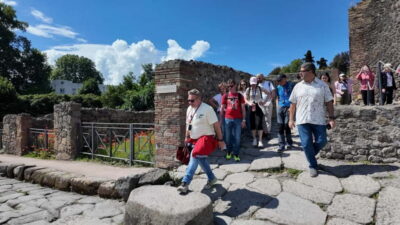
Guided tour of Pompeii skip-the-line and round-trip train
Read our review →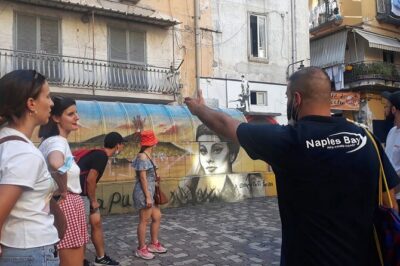
Naples Spanish Quarters Walking Tour Street Art, Folklore & Sweet
Read our review →

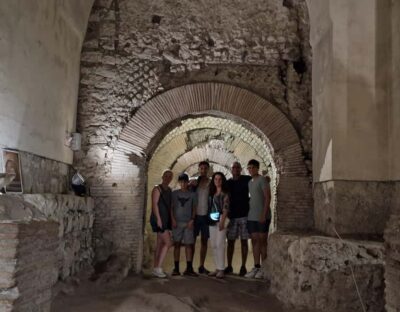
City Walking Tour w/ Underground Roman Ruins Ticket
Read our review →
Historic Center and Sansevero Chapel Walking Tour
Read our review →Browse the lists this tour appears in