Review · TOURS
Nairobi Downtown Walking Tour
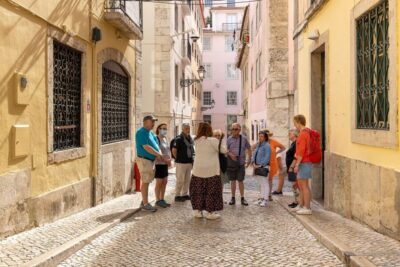
Nairobi’s city centre makes the most sense on foot, where grand government buildings, working markets, matatu stops, churches, mosques, and side streets all sit close together. This tour gives you a local guide to explain what you are seeing, rather than leaving you to guess at the city’s layers.
I like the small, personal feel and the chance to see ordinary downtown life around Maasai Market and City Market. I also like that guides such as David, William, Daniel, and Ibrahim have been praised for answering questions, adjusting the pace, and helping solo visitors feel looked after.
The main consideration is that this is an outdoor walk through an active city centre, not a polished sightseeing loop. You need comfortable shoes, light belongings, and some tolerance for crowds, traffic, weather, and changing street conditions. The tour ends near the Hilton, but hotel drop-off is not included.
Key points to know before you book

- Two and a half hours on foot: The 150-minute route covers a useful slice of central Nairobi without taking up a full day.
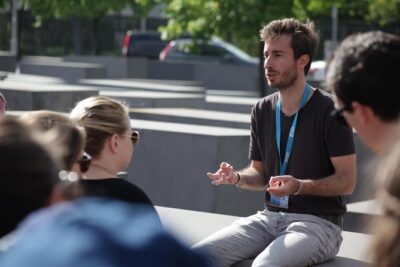
- Local guides make the difference: David, William, Daniel, Ibrahim, Eric, and other guides explain history, city customs, markets, religion, and matatu culture.
- McMillan Memorial Library is included: You get a visit rather than merely passing the building.
- Markets are part of the experience: Maasai Market is aimed at crafts and souvenirs, while City Market serves everyday local shopping, including flowers and meat.
- KICC costs extra: Entry to the rooftop viewpoint is listed at $4 per person.
- Hotel pickup is included, return transport is not: A vehicle collects you from a Nairobi hotel or apartment, but you arrange or pay for the ride back.
Why walking Nairobi’s CBD is worth your time
Nairobi’s centre can feel confusing at first. Streets change character quickly, and the places that matter are not always obvious from the pavement. A local guide gives you the missing links: why a building matters, how people move around the city, where local shopping happens, and how modern Nairobi grew around older landmarks.
This is not a safari or a museum tour. Its value comes from connecting small details. You may pass a newspaper headquarters, a mosque, a cathedral, a library, government offices, a market, and a rooftop viewpoint within a couple of hours. That range gives you a useful first look at the capital.
The guides also discuss matatu culture, city religion, and the daily work of street vendors and market sellers. Those subjects help you see Nairobi as a working city rather than just a set of photo stops.
The route begins with pickup in Nairobi County and starts around Simba Street, where the guide gives a safety briefing. That opening matters. It lets you ask practical questions before setting off and gives you a clear meeting point for the walking portion.
More Walking Tours in the world:
- Magical London: Harry Potter Guided Walking Tour
★ 4.7 · 22,044 reviews - Reykjavik Food Walk – Local Foodie Adventure in Iceland
★ 5.0 · 18,952 reviews - History and Hauntings of Salem Guided Walking Tour
★ 5.0 · 14,564 reviews
Simba Street and Kimathi Street: getting your bearings
Simba Street introduces you to the central business district at street level. Expect a guided walk rather than a formal attraction, with the guide setting the pace and explaining how to move through the area.
The route then reaches Kimathi Street for sightseeing and photographs. This is a good early stop because you are still fresh and can get a sense of the city’s layout before the market sections. If you want photos, take them here and at the larger landmarks, since later streets may be less convenient for stopping.
Traffic and foot movement are part of the experience. Keep your phone and camera secure, stay close to the guide, and avoid carrying more than you need. The tour specifically advises against luggage or large bags, jewelry, alcohol, and drugs.
Nation Media Group and McMillan Memorial Library

The walk passes the headquarters of Nation Media Group. You do not appear to enter the building, but it adds useful context to the city’s public life and media institutions.
The strongest architectural stop early in the route is McMillan Memorial Library. A visit is included, making this more than a quick look from the pavement. Your guide can place the library within Nairobi’s older civic story and explain why the building matters.
Several people who took the tour singled out the guides’ ability to explain history in an easy, conversational way. That is important here. A library can be easy to overlook if you do not know what you are looking at, while a few clear facts can turn a short stop into one of the most memorable parts of the walk.
Allow time for photographs, but do not expect a long library program. The whole tour lasts 150 minutes, so each stop is necessarily selective.
Jamia Mosque and Nairobi’s religious life
Jamia Mosque is a pass-by stop, not a listed interior visit. The guide uses it to explain part of Nairobi’s religious and architectural character.
The tour also discusses city religion more broadly. That is a useful addition because Nairobi’s centre is not defined by one faith or one tradition. You see religious buildings alongside offices, shops, markets, and government sites, and the guide helps connect those places to everyday city life.
Since this section involves normal street traffic, dress and behavior should be respectful around religious sites. The tour data does not promise entry into Jamia Mosque, so treat it as an exterior viewing stop unless your guide tells you otherwise.
Same streets, a different guide:
- New Orleans Premier Ghost, Voodoo and Vampire Walking Tour
★ 4.5 · 12,856 reviews - Amsterdam Anne Frank: Small-Group Walking Tour & Local Guide
★ 4.8 · 12,789 reviews - Edinburgh: Harry Potter Magical Guided Walking Tour
★ 4.8 · 11,944 reviews - Edinburgh Castle: Guided Walking Tour with Entry Ticket
★ 4.7 · 11,699 reviews
Maasai Market: crafts, shopping, and conversation
Maasai Market is one of the tour’s most obvious shopping stops. Local people and visitors come here for souvenirs and handmade goods, so this is the place to browse for something to take home.
The guide’s presence is useful even if you do not plan to buy anything. You can ask about the market, the vendors, and the products, while also getting a better sense of how commerce works in central Nairobi. Several accounts describe guides allowing time for souvenir shopping rather than rushing straight through.
You should still keep your expectations realistic. This is a working market, not a quiet gallery. Prices and bargaining may be part of the experience, and your time is limited. If you already know you want gifts, decide early how much time you wish to spend here. If shopping is not your priority, use the stop to watch the market’s rhythm and ask questions.
This is also a good point to remember that the tour is designed around real city life, not only famous monuments. You see where people buy and sell, not just where visitors take pictures.
Smoking Zone and the walk through the city centre
The route includes a sightseeing stop at Smoking Zone and scenic views along the way. The name may sound like an attraction, but the supplied details do not describe a formal venue or special activity there. Think of it as part of the city walk, where the guide points out local surroundings and explains what you are seeing.
This middle stretch connects the historic buildings and markets with the civic district. It is also where the tour’s practical character becomes clearest. You are moving through working streets, so comfortable shoes are essential and a small bag is easier than a daypack stuffed with gear.
The pace can be adjusted. David was specifically praised for walking slowly and considerately, while Daniel was described as patient and accommodating. That does not guarantee the same guide on every departure, but it gives you a good reason to tell the operator in advance if you need a gentler pace.
Cathedral Basilica and Parliament of Kenya
The Cathedral Basilica of the Holy Family is a pass-by sightseeing stop. It gives the route another strong religious landmark and creates a contrast with Jamia Mosque earlier in the walk.
Parliament of Kenya is also viewed from the outside. The tour covers the government district, so this section helps explain how Nairobi’s commercial centre meets its national political centre.
Do not expect long interior visits at these locations. The value is in the sequence: you move from streets and markets into areas connected with national institutions, then continue toward KICC. Your guide fills in the historical and civic background while you walk.
The route is especially useful if you have just arrived in Nairobi and want an orientation to the centre. You can identify key areas, understand which sights are close together, and decide what you may want to revisit independently.
KICC rooftop: the extra $4 viewpoint
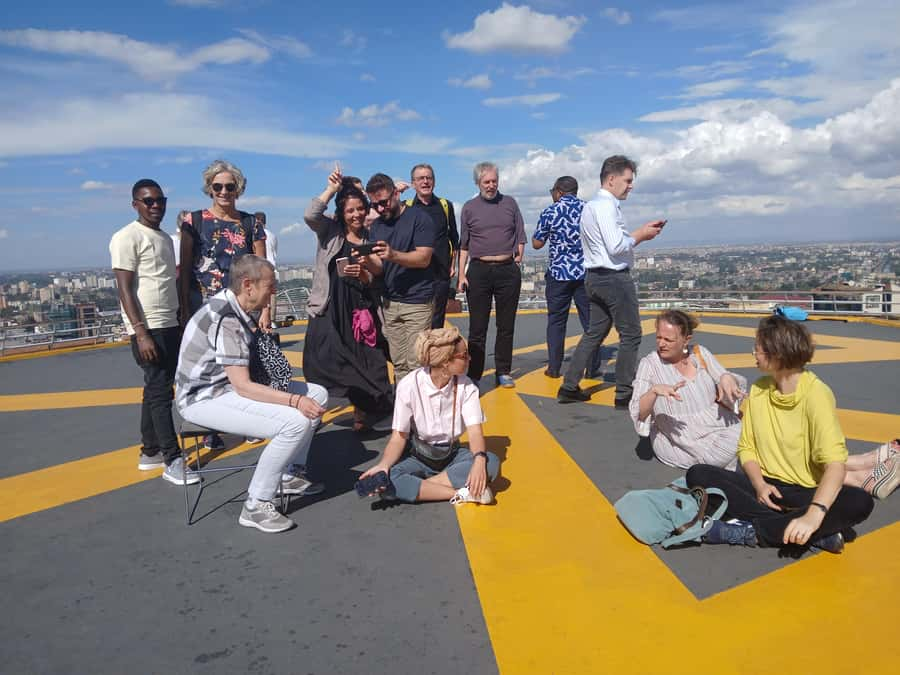
Kenyatta International Convention Centre is the route’s main high viewpoint. The tour includes a photo stop and rooftop visit, but entrance is not included. The listed cost is $4 per person.
That extra fee is modest, but you should carry the money and confirm the access arrangement with your guide. The itinerary also describes the stop as sightseeing and passing by, so the exact rooftop access may depend on current opening conditions and the separate admission process.
The rooftop is valuable because it changes your view of Nairobi. After walking through streets at ground level, you can look back over the central area and understand how the buildings, roads, and civic district fit together. One account specifically called the city view a highlight.
If you dislike heights or are trying to keep the price strictly at $27, you can treat KICC as an exterior stop. If you want the best photo opportunity on the route, the additional $4 is likely worth considering.
City Market: Nairobi’s everyday shopping stop
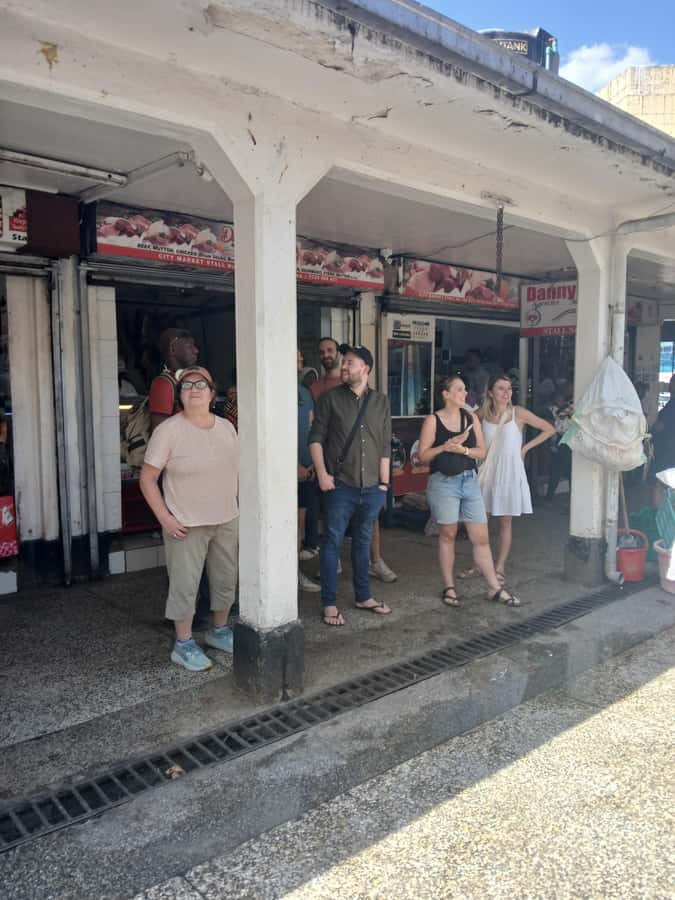
City Market is the final major sightseeing and shopping point. It serves local shoppers buying flowers and meat, so it offers a different feel from Maasai Market’s souvenir trade.
That contrast is one of the tour’s best features. You see a market aimed at visitors and a market used for everyday needs. Together, they show two sides of downtown commerce without requiring a separate full-day market tour.
As with Maasai Market, keep your belongings close and follow your guide’s advice. The details provided do not promise a food tasting or a dedicated cooking demonstration, so book this for observation, local context, and shopping rather than a culinary activity.
After City Market, you walk for about 10 minutes to City Walk Kenya Ltd at the Hilton, where the listed break takes place. This gives you a clear end point, but remember that the operator does not include hotel drop-off.
Pickup, timing, and the return journey
Hotel or apartment pickup in Nairobi is included. You will receive vehicle details before pickup, which is useful because it removes the uncertainty of finding an unfamiliar guide at the start.
The return trip is different. Drop-off is not included, and some guides have helped arrange a taxi or Uber at the end. That assistance is helpful, especially on your first day in Nairobi, but you should budget for the ride and confirm your onward plan before the walk begins.
The scheduled duration is 150 minutes. Traffic can affect the pickup, and one delayed start was linked to heavy congestion after a protest. Build a little flexibility into your day, especially if you have a flight, train, or timed reservation afterward.
You can cancel up to 24 hours before the tour for a full refund, and the reserve-now, pay-later option lets you keep your plans open. Starting times depend on availability.
Is $27 a fair price?
At $27 per person, the price is reasonable if you want guided context and included pickup. You are paying for a 150-minute walk, a local guide, the McMillan Memorial Library visit, and help navigating the city centre. The guide is the part that gives the tour its value.
The price is less attractive if you only want a quick list of landmarks or prefer to explore on your own. Several major sites are viewed from outside, and KICC costs another $4. You also need to pay for your ride after the tour.
I would compare the total cost with what you would spend on separate transport, a guide, and the time needed to find these places yourself. For a first visit, the combination of orientation, history, markets, and pickup makes the fee a fair deal.
Who will enjoy this walk most?
I would choose this tour if you are staying in Nairobi for a short time, have a stopover, or want an introduction before visiting other parts of Kenya. It also suits solo visitors who prefer company in an unfamiliar city centre.
Families can manage it too. A family with a nine-year-old completed the route comfortably, and other families with children aged 10 and 14 enjoyed it. Still, this is a city walk, not a child-focused activity, so young children need to handle nearly two and a half hours outdoors.
The tour is offered in English and Spanish. It is not suitable for wheelchair users or people with hearing impairments. High heels are a poor choice, and the operator advises sunglasses and a hat in hot weather, plus a raincoat during the rainy season.
Should you book the Nairobi Downtown Walking Tour?
Book it if you want Nairobi explained by a local person, not just photographed from a vehicle. The strongest reasons are the guide-led history, the mix of markets and civic landmarks, the included pickup, and the chance to see everyday downtown life.
Skip it if you need step-free access, guaranteed indoor visits, hotel drop-off, or a tightly timed schedule. For everyone else, $27 buys a useful first look at central Nairobi, with enough structure to feel secure and enough street life to feel genuine.
FAQ
How long does the Nairobi Downtown Walking Tour last?
The tour lasts 150 minutes, or two and a half hours.
What is the price of the tour?
The listed price is $27 per person.
Is hotel pickup included?
Yes. Pickup is included from any hotel or apartment in Nairobi. Vehicle details are sent before pickup.
Is hotel drop-off included?
No. The tour ends at City Walk Kenya Ltd near the Hilton, and hotel drop-off is not included.
Is entry to KICC included?
No. KICC entry costs an additional $4 per person.
Which languages are available?
The tour is offered in English and Spanish.
What should I bring?
Wear comfortable shoes. Sunglasses and a hat are useful in hot seasons, while a raincoat is recommended during the rainy season.
Is the tour suitable for wheelchair users or people with hearing impairments?
No. The activity is not suitable for wheelchair users or people with hearing impairments.
New routes in the world
- Baltimore Walking Foodie Tour in Fells Point★ 5.0 · 182 reviews
- Baku Oil Heritage & Old Town Walking Tour★ 5.0 · 232 reviews
- Baku Walking Tour (Old City)★ 5.0 · 127 reviews
- The Madam’s Curse Walking Ghost Tour★ 4.5 · 103 reviews
- Austin Small Group Morning Walk★ 5.0 · 412 reviews
- Austin Haunted Pub Crawl Walking Tour★ 4.5 · 232 reviews
- Austin Downtown Private Walking Food Tour With Secret Food Tours★ 5.0 · 71 reviews
- Austin Murder Walk★ 5.0 · 310 reviews
Tours, compared.
Magical London: Harry Potter Guided Walking Tour
Read our review →
History and Hauntings of Salem Guided Walking Tour
Read our review →
New Orleans Premier Ghost, Voodoo and Vampire Walking Tour
Read our review →
Amsterdam Anne Frank: Small-Group Walking Tour & Local Guide
Read our review →

Edinburgh Castle: Guided Walking Tour with Entry Ticket
Read our review →