
Review · SPAIN
Cáceres: City Highlights Walking Tour with Local Guide
Cáceres gives you a rare medieval city center where Moorish walls, Gothic churches, and Renaissance palaces sit within a compact walking route. This 90-minute tour starts at Plaza Mayor, passes through the Arco de la Estrella, and leads you into the UNESCO-listed Old Town without wasting time on transfers.
I like the included entries to Carvajal Palace and the House of the Becerra, plus the guide’s focus on local families and patrons rather than just dates and names. I also like the low $11 price. The main catch is that the tour is in Spanish, so you need enough Spanish to follow the guide’s stories.
Key points
- Start at Plaza Mayor: Meet beside the municipal tourist information office before crossing into the walled city.
- Enter through the Arco de la Estrella: This distinctive gate takes you through the 12th-century Arab fortifications.
- See Cáceres’s noble palaces: The route includes the palaces of Obando, Blázquez-Mayoralgo, Golfín, Becerra, and Carvajal.
- Visit two historic interiors: Entry to Carvajal Palace and the House of the Becerra is included when they are open.
- Finish with an unusual treasure: The Cáceres Museum houses a large Andalusian cistern beneath the Palacio de las Veletas.
- Expect Spanish guiding: The official guides are authorized Tourism Guides of Extremadura, and one guide named in the feedback is Javier, who speaks enthusiastically about his hometown.
Why Cáceres works so well on foot
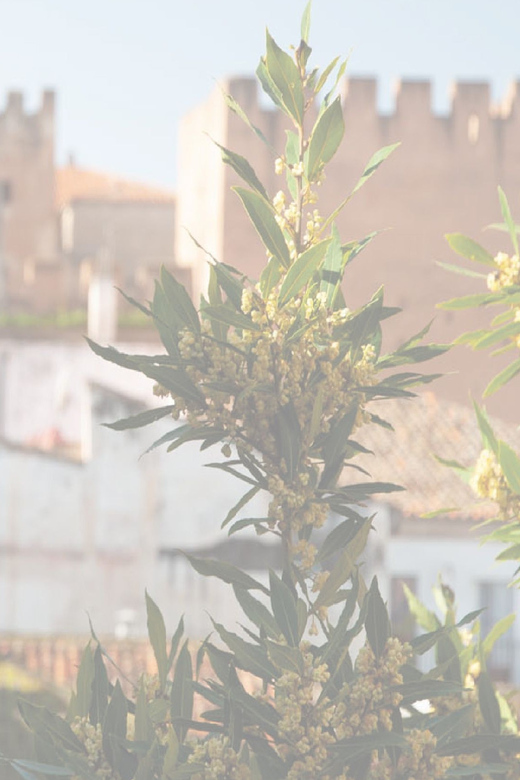
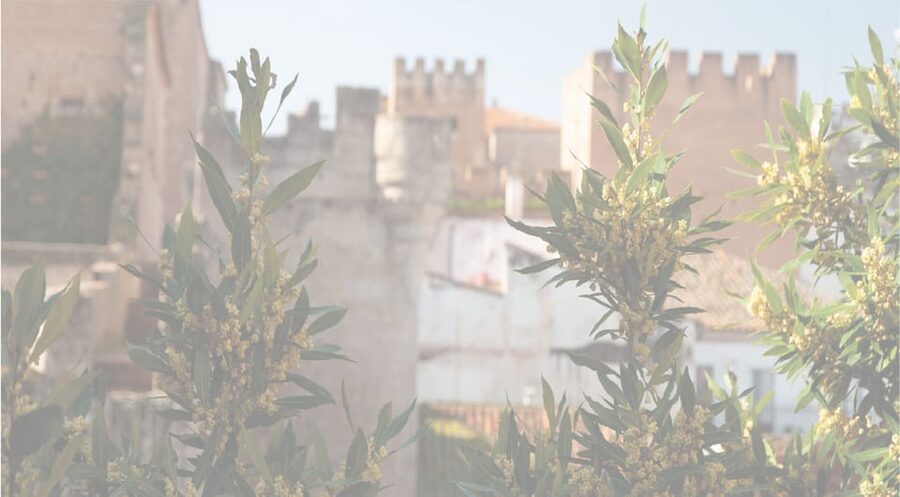
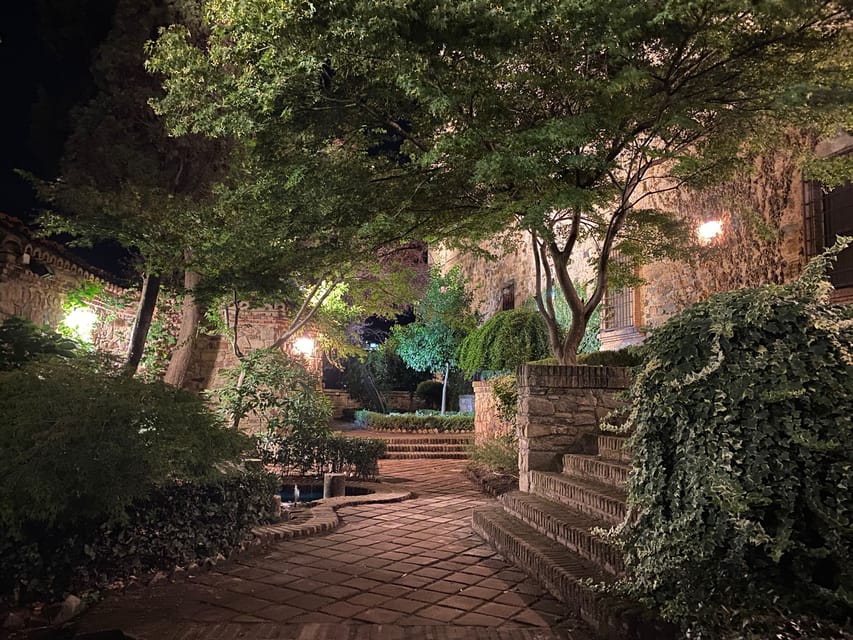
Cáceres is the kind of city where the route itself is part of the attraction. You are not simply moving between isolated monuments. You walk along cobbled streets, pass fortified homes, and watch the architecture change from defensive medieval buildings to more polished Renaissance residences.
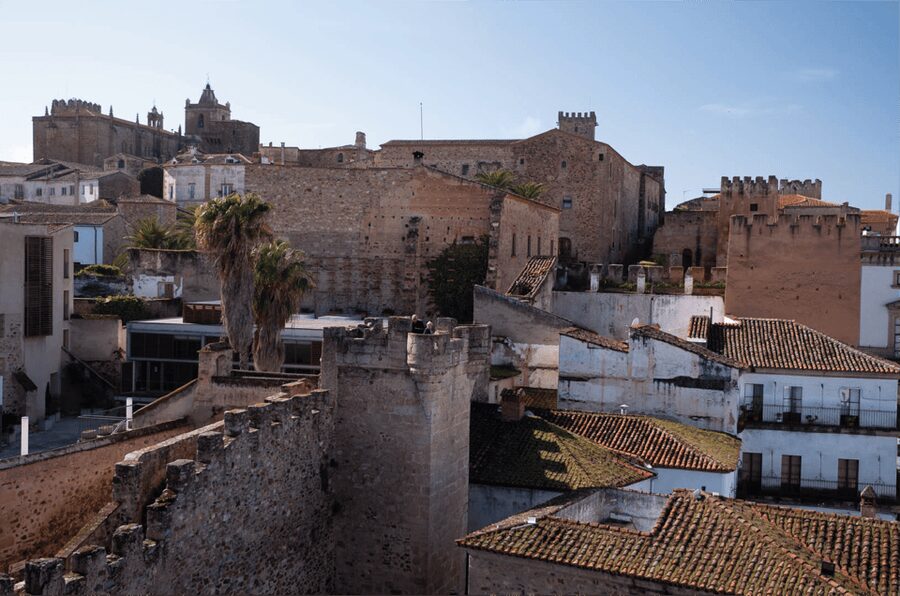
The old city is surrounded by 12th-century Moorish walls and towers. Those fortifications explain the mood of Cáceres better than a museum label can. This was a place shaped by conflict, rank, religion, and family power. Behind the walls, leading lineages built grand homes close to churches and civic squares.
The tour gives you a useful first look because the Old Town can feel like a maze. Narrow lanes and enclosed squares make wandering enjoyable, but they can also leave you unsure about what you are seeing. A local guide helps connect the buildings, families, and religious sites into one clear story.
At $11 per person, the tour is priced more like a city orientation than an all-day cultural program. That is fair for 90 minutes, especially since two palace entries are included. You will still want extra time afterward if you plan to enter the cathedral or spend longer at the Cáceres Museum.
More City Highlights Walking Tours in Spain:
- Seville: Small-Group City Highlights Walking Tour
★ 5.0 · 1,204 reviews - Madrid: City Highlights Guided Walking Tour
★ 4.8 · 347 reviews - Salamanca Sightseeing Walking Tour with Local Guide. Spanish
★ 4.7 · 312 reviews
Starting at Plaza Mayor and crossing the Arab walls
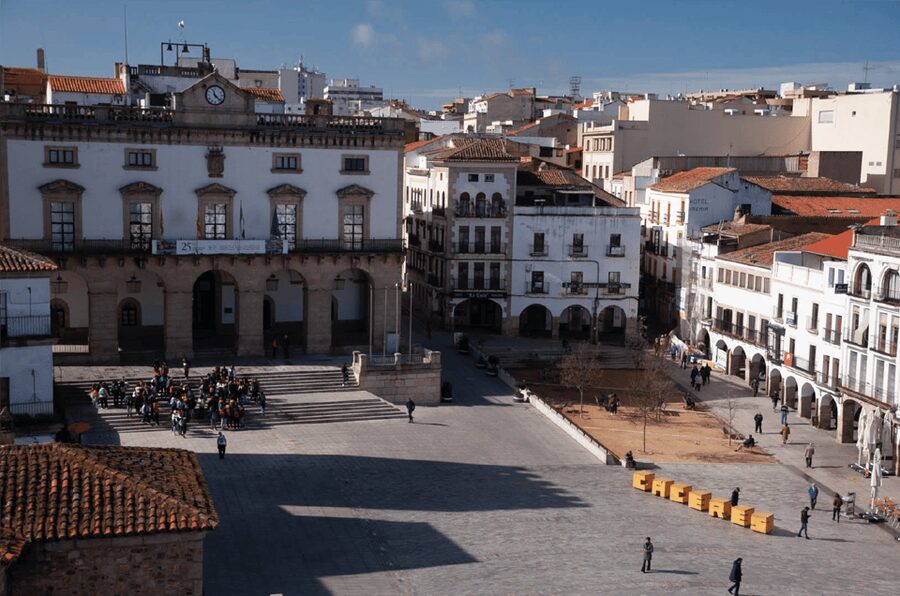
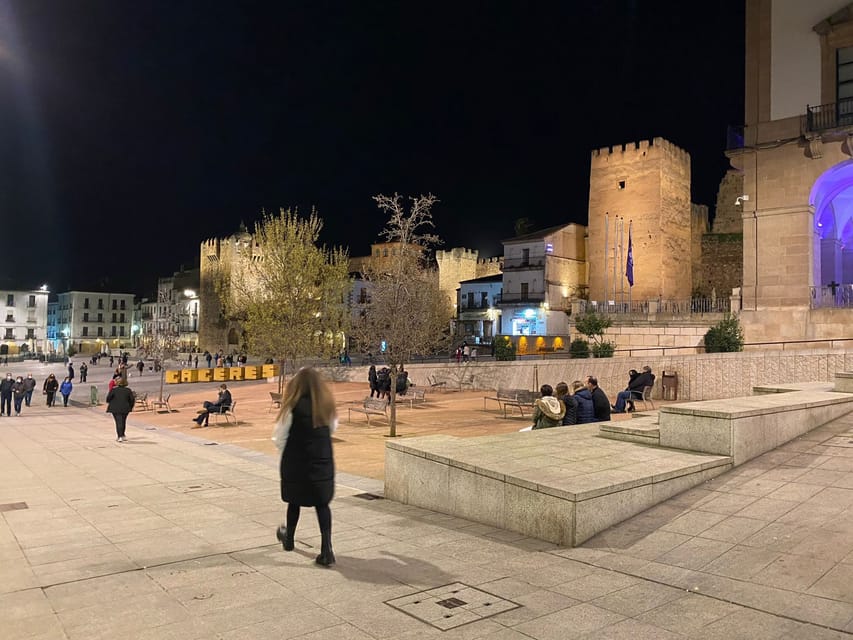
Meet at Plaza Mayor, beside the municipal tourist information office. This is a practical starting point because it places you directly outside the historic center and gives you a clear landmark for meeting your guide.
From the square, the route heads toward the Arco de la Estrella, the main gateway into the walled city. Passing through it is a memorable beginning. One moment you are in a broad public square, and the next you are under a stone arch and moving into a tighter medieval street plan.
The walls and towers around this section date from the 12th century and reflect the city’s Moorish past. Your guide sets up the transition from the era of fortified battles and chivalrous families to the later period when wealthy residents built Renaissance manor houses.
This part of the route is especially useful if you are seeing Cáceres for the first time. It gives you a sense of the city’s physical layers before the tour settles into its main architectural stops.
The cobbles are part of the charm, but they can make walking less comfortable for anyone who moves slowly or has trouble with uneven surfaces. The activity is listed as wheelchair accessible, though you may still want to confirm the exact route and access to each interior before booking.
Plaza de Santa Maria and Cáceres’s great families
The tour then reaches Plaza de Santa Maria, the main religious and architectural center of the Old Town. The square is framed by the Episcopal Palace and the Co-Cathedral of Santa Maria, which gives the place a strong sense of civic and religious authority.
The co-cathedral combines Gothic masonry with Romanesque remains from an earlier building. That mixture is worth noticing. It shows that Cáceres was not built in one clean architectural period. Instead, the city was repeatedly altered, repaired, and expanded as its fortunes changed.
Around the church, your guide points out the palaces of the Obando, Blázquez-Mayoralgo, Golfín, and Carvajal families. These are not just decorative facades. They represent the old power structure of Cáceres, when prominent families placed their homes close to the main religious and civic institutions.
I like this section because it gives the buildings a human scale. Rather than hearing a long list of construction dates, you learn to read the square as a record of status and rivalry. Look for the contrast between heavy defensive features and more refined Renaissance details.
The tour includes a 20 percent discount on entry to the Co-Cathedral of Cáceres. The cathedral itself is not listed as a full included admission, so treat the discount as an optional extra rather than part of the 90-minute visit.
Carvajal Palace and the House of the Becerra
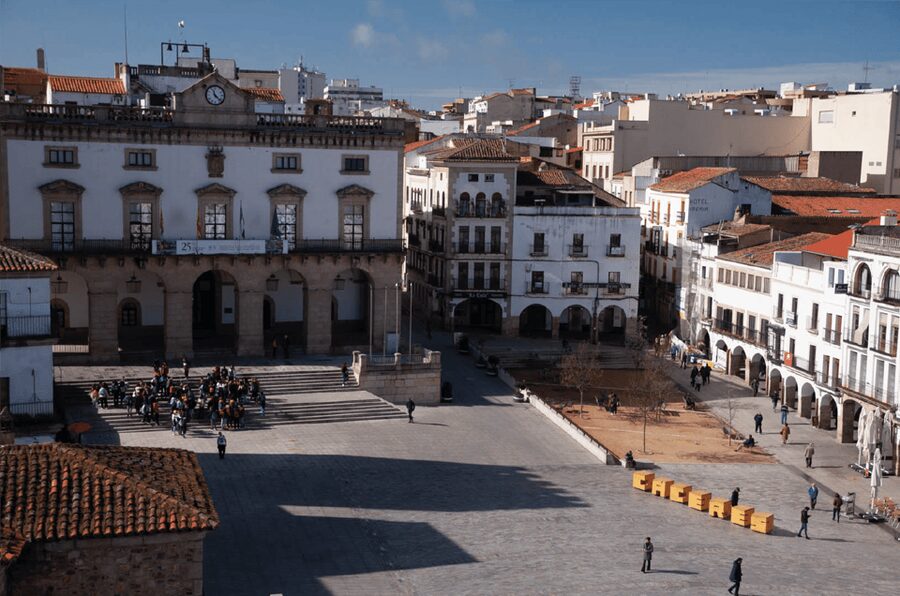
Two interior visits add real value to the tour: Carvajal Palace and the House of the Becerra. Admission is included, but access depends on whether the sites are open when your group arrives.
Carvajal Palace is one of the key family residences in the Old Town. Seeing a palace interior helps you understand how the noble houses functioned, rather than judging them only from the street. The building belongs naturally in the route because the Carvajal name is part of the architectural story around Plaza de Santa Maria.
The House of the Becerra is connected with the Mercedes Calles-Carlos Ballestero Foundation. It also contains a private collection associated with Mercedes Calles, one of Cáceres’s important patrons. That gives the stop a different character from the medieval walls and religious buildings.
You should listen for how your guide explains the relationship between the house, the collection, and the city’s cultural life. The point is not simply to tick off another palace. It is to see how private wealth and personal collecting helped preserve and present Cáceres’s past.
Because opening hours can affect entry, do not build your whole day around seeing both interiors at a precise time. The tour includes the tickets, but the practical wording is clear: you can enter if they are open.
More Guided Walks in Spain:
- Granada: Albaicín and Sacromonte Guided Sunset Walking Tour
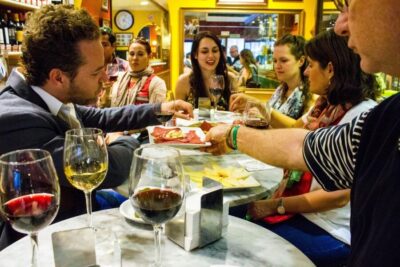
★ 4.9 · 2,962 reviews - Madrid: Tapas & Wine Tasting Tour with Local Guide
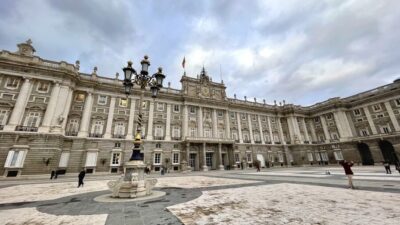
★ 4.8 · 2,171 reviews - Madrid: Royal Palace Skip-the-Line Guided Tour
★ 4.5 · 2,140 reviews - Madrid: Welcome to Madrid Guided Walking Tour
★ 4.9 · 1,738 reviews
San Francisco Javier and the world of St. George
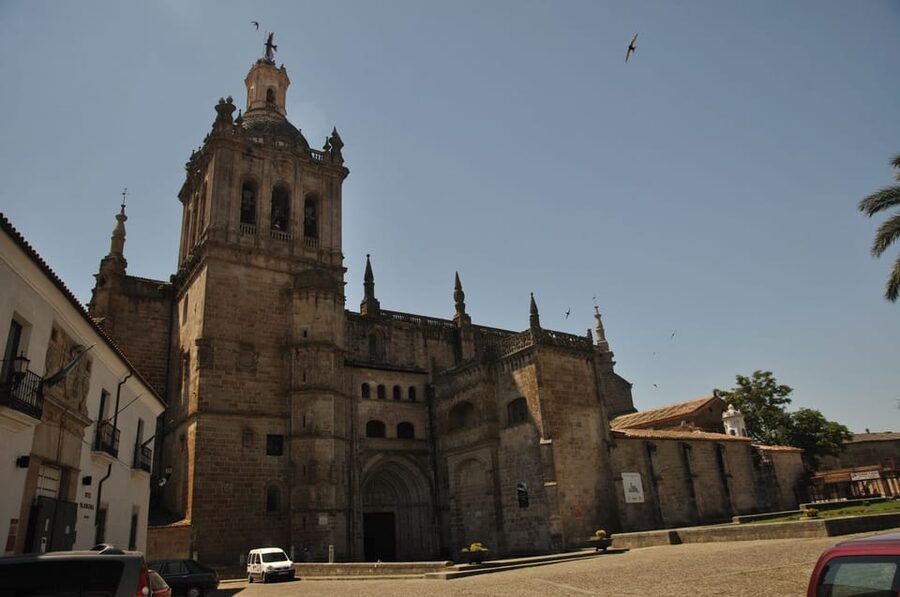
From Plaza de Santa Maria, the route continues to the square dedicated to St. George, the patron saint of Cáceres. Here, the Church of San Francisco Javier and its attached school create a strong visual focus.
These buildings reflect the city’s Jesuit legacy. Their role gives the tour another useful shift in subject. You move from Moorish defenses and noble households to religious education and Catholic influence.
The church and school also help show how different institutions shaped the Old Town. Military defenses protected the city, noble families controlled property and influence, and religious orders guided public and private life. A short walking tour cannot cover every detail, but this sequence gives you a workable framework.
The Mercedes Calles collection is another feature of this section. It brings attention back to the role of individual patrons. You are not looking only at famous monuments. You are also seeing how one person’s interest and resources helped maintain Cáceres’s cultural identity.
The guide’s delivery matters here. The available feedback repeatedly points to an engaging, professional style, with Javier specifically praised for speaking about his birthplace with enthusiasm. That does not guarantee the same guide on every departure, but it suggests that the experience depends heavily on live storytelling rather than a fixed audio script.
The Palacio de las Veletas and the Andalusian cistern
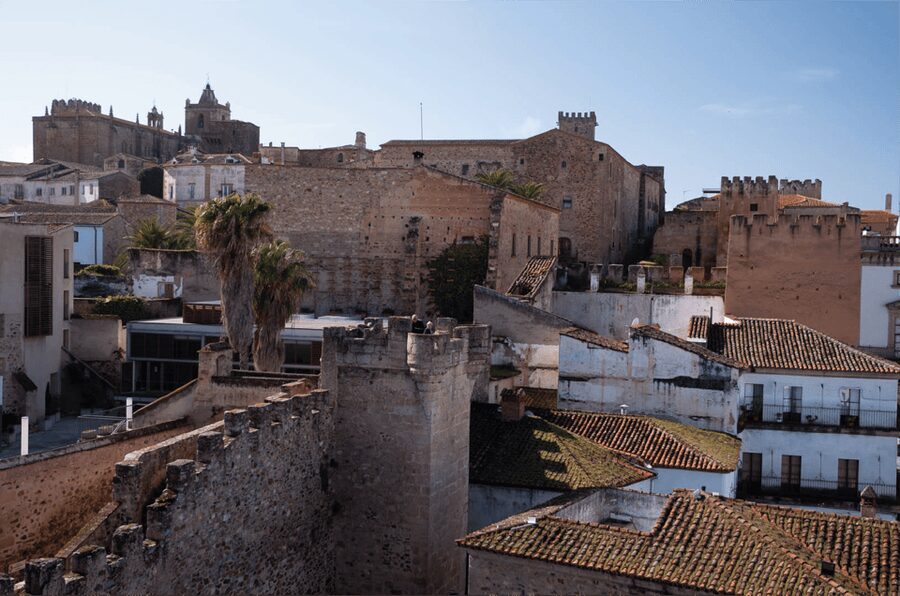
The tour ends in front of the Palacio de las Veletas, home to the Cáceres Museum. This is a strong final stop because the building contains what is described as the city’s most precious feature: an Andalusian cistern.
The cistern is the largest medieval water tank on the Iberian Peninsula. Its practical purpose makes it more compelling than another grand facade. Water storage was essential in a fortified city, especially during periods when access beyond the walls could be dangerous or restricted.
As you look at the museum building and learn about the cistern, the earlier parts of the route begin to make more sense. The walls were not only symbols of power. They also helped protect a working urban community, including its water supply.
The tour ends outside the museum rather than becoming a full museum visit. If the cistern is a priority, check how much extra time you have and consider entering after the guided walk. The 90-minute schedule gives you an introduction, not enough time for a slow museum visit.
This ending is one reason I prefer the route to a simple palace-and-church walk. It finishes with infrastructure, survival, and daily life, not only wealthy families and grand religious buildings.
The Spanish language and guide style
The live guiding is in Spanish. That is the most important booking consideration. If you understand conversational Spanish, the tour should give you useful context and a more personal connection to Cáceres. If you understand only a few words, the architecture will still be visible, but much of the explanation will be difficult to follow.
The guides are official Tourism Guides of Extremadura and are authorized by the regional administration. That matters because the tour is led by professionals who meet the tourism rules of Extremadura, rather than by an informal escort with limited local credentials.
The feedback describes the guiding as clear, professional, amusing, and enthusiastic. Javier is specifically identified as a guide who speaks warmly about Cáceres as his home city. Another booking from Spain praised an entertaining guide, while a Portuguese visitor highlighted strong communication and detailed knowledge of the city.
You should still keep expectations sensible. This is a short group walking tour, not a private lesson tailored to your interests. The guide must keep the group moving and cover several major sites within 90 minutes.
Who will get the most from this $11 tour
I would recommend this tour to you if you want a fast, structured introduction before exploring Cáceres on your own. It is especially useful if palace names, noble families, and architectural periods start to blur together when you walk without context.
It also suits visitors who want several major sights in one compact route:
- The Moorish walls and towers
- The Arco de la Estrella
- Plaza de Santa Maria
- The Co-Cathedral exterior
- Carvajal Palace
- The House of the Becerra
- San Francisco Javier
- The Palacio de las Veletas and its cistern
The price is excellent for this list, particularly with two entry tickets included. You are paying $11 for a local orientation plus access to interiors that would be harder to interpret from the street.
I would be more cautious if you need an English-language tour, want a very relaxed pace, or hope to spend a long time inside each palace. The route covers a lot of ground quickly, and the Spanish-only format limits its usefulness if you cannot follow Spanish explanations.
It is also not a food tour, and food and drinks are not included. Plan a separate stop before or after the walk if you want a meal or refreshment.
Timing, cancellation, and practical planning
The experience lasts 1.5 hours, with departure times depending on availability. A morning tour can work well as an introduction to the Old Town, while a later departure may fit better if you want to arrive in Cáceres without rushing.
Wear shoes that are comfortable on cobbled streets. The activity is walking focused, and the historic center includes old paving and enclosed streets rather than smooth modern sidewalks throughout.
You can cancel up to 24 hours before the activity for a full refund. The reserve now and pay later option is useful if your itinerary is still changing, particularly when you are linking Cáceres with other stops in Extremadura.
The meeting point is easy to identify: Plaza Mayor, next to the municipal tourist information office. You do not need transport during the tour. The walk begins at the edge of the old city and continues through the main historic center.
Should you book the Cáceres walking tour?
Book it if you want an affordable first look at Cáceres, can follow Spanish, and value a guide who explains how the walls, churches, palaces, and families fit together. The included entries to Carvajal Palace and the House of the Becerra make the $11 price particularly strong.
Skip it if you need English, dislike quick guided walks, or want a full museum and cathedral visit in one sitting. In that case, explore independently and allow extra time for the interiors.
For most Spanish-speaking visitors, this is a practical way to get oriented before wandering farther into the Old Town. The route is short, the price is modest, and the final cistern gives the walk a memorable finish.
FAQ
Where does the Cáceres walking tour meet?
Meet at Plaza Mayor, next to the municipal tourist information office.
How long does the tour last?
The tour lasts 1.5 hours.
What language is the tour conducted in?
The live tour guide conducts the experience in Spanish.
Is the tour led by an official guide?
Yes. The tour is carried out by Official Tourism Guides of Extremadura, authorized by the regional administration and compliant with tourism regulations in Extremadura.
What is included in the ticket?
The tour includes a guide, entry to Carvajal Palace, entry to the House of the Becerra, and a 20 percent discount on entry to the Co-Cathedral of Cáceres.
Is the Co-Cathedral admission included?
No. The activity includes a 20 percent discount on entry to the Co-Cathedral of Cáceres, rather than full admission.
Can I visit Carvajal Palace and the House of the Becerra?
Entry to both is included when the sites are open.
Is the tour wheelchair accessible?
Yes, the activity is listed as wheelchair accessible.
Can I cancel for a refund?
Yes. You can cancel up to 24 hours in advance for a full refund.
New routes in Spain
- Toledo: Guided Walking Tour with Cathedral Ticket and Tour★ 4.2 · 98 reviews
- Toledo: Guided Monument Walking Tour with Wristband Pass★ 4.5 · 487 reviews
- Valencia: Fallas Festival Walking Tour with Entry Ticket★ 4.6 · 86 reviews
- Barcelona: “The Shadow of the Wind” Literary Walking Tour★ 4.5 · 176 reviews
- Tenerife: Underwater Walk – Sea Trek Experience★ 5.0 · 237 reviews
- Tarragona: Roman Heritage Guided Walking Tour★ 4.7 · 261 reviews
- Seville: Sunset Roof Top Walking Tour★ 4.2 · 131 reviews
- Seville: Paranormal and Legends Guided Walking Tour★ 4.7 · 336 reviews
Spain Walking Tours, compared.
Barcelona Tapas and Wine Experience Small-Group Walking Tour
Read our review →
Tapas Walking Tour with Food, Wine, and History
Read our review →
Madrid Tapas & Wine Tasting Walking Tour – Small Group Local Bars
Read our review →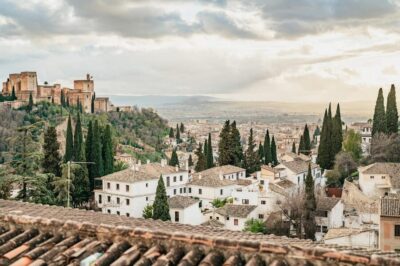
Albaicín and Sacromonte Guided Sunset Walking Tour
Read our review →
Toledo Tour & Vineyard Walk with Wine Tasting from Madrid
Read our review →
Browse the lists this tour appears in