
Review · ATHENS
Athens: History of Rebellion Walking Tour
Athens is more than temples and marble. This walking tour follows the city’s history of resistance, from the final years of Ottoman rule to the protests, political struggles, and community movements that still shape daily life. You move from Monastiraki to Syntagma and Exarchia, linking famous squares with less obvious stories.
I like two things right away. First, the tour fills a major gap in the usual Athens visit: modern Greek history, not just ancient Greece. Second, Maelle brings a personal, thoughtful approach, using questions, humor, and clear explanations rather than firing dates at you. The main consideration is that this is a serious political and social tour, with two to three hours of walking and standing. It is not designed for people with mobility impairments or for anyone seeking a light sightseeing stroll.
Key points to know before you book
- Ottoman rule to modern protest: Follow Athens through roughly two centuries of rebellion and political change.
- Exarchia is the destination: End in a neighborhood known for anarchist, refugee, LGBT+, and artist communities.
- Maelle leads the experience: Expect an engaged guide who connects political history with everyday life.
- Small groups help: Private and small-group options allow time for questions and discussion.
- The route mixes landmarks and local context: See Syntagma Square, the Parliament, the Academy of Athens, and less familiar corners.
- Bring practical walking gear: Comfortable shoes, water, sunscreen, and a hat matter in Athens.
Why this Athens walking tour feels different
Many first visits to Athens begin with the Acropolis, the Ancient Agora, and other sites from the classical period. Those places deserve your time, but they explain only one part of the city. This tour asks a different question: how did Athens become the politically charged, creative, argumentative city you see today?
The answer unfolds through resistance. You hear about Athens under Ottoman rule, the Greek Revolution roughly 200 years ago, the formation of the modern Greek state, resistance to fascism, political violence, popular movements, and current fights over social justice.
That approach gives familiar places new meaning. Syntagma Square is not simply a good spot for photographs of the Parliament. It is also a central stage for protests and public disagreement. Exarchia is not just another neighborhood near the center. It is a place where politics, art, community organizing, and conflict meet.
I especially like the way this experience connects major events with individual people. The stories include figures who became symbols of resistance, along with larger popular movements. You are not asked to memorize a list of heroes. Instead, you are encouraged to consider why certain people become legends and why other stories are often left out of standard city tours.
The tone is not neutral in the sense of pretending every side of a political question is equal. The tour openly focuses on resistance movements and social justice. At the same time, the guide’s role is to give you context and encourage thought, not simply deliver a slogan. That makes this a good choice if you want to understand how politics affects public space and ordinary city life.
More History Walking Tours in Athens:
- Acropolis, Parthenon & Athens Old City Heritage Walking Tour
★ 4.5 · 876 reviews - Athens: Women in Ancient Greece Guided Walking Tour
★ 5.0 · 86 reviews - History and Hauntings of Salem Guided Walking Tour
★ 5.0 · 14,564 reviews
Starting in Monastiraki, where old Athens meets modern life
Meet in Monastiraki Square, in front of Pantanassa Church. Look for a guide holding a sign marked Athens City of Rebellion. This is one of the easiest central meeting points in the city, though the square can be crowded and noisy, so arrive with enough time to find the church and guide.
The tour opens with Monastiraki and the period when Athens was under Ottoman rule. The setting works well. The square is now surrounded by shops, cafés, food stalls, and constant foot traffic, yet the area also carries layers of religious, political, and commercial history.
You spend only a short time at Monastiraki itself, but the point is not to inspect every building. The guide uses the area as a starting point for stories of resistance and the forces that helped lead to the Greek Revolution. This makes the opening useful even if you already know the square from another Athens walk.
From there, the route passes the Metropolitan Church of Athens. You do not stop for a full church visit, so treat this as a transition rather than a major sightseeing appointment. The value comes from the larger story, as the route shifts from older political control toward the creation of modern Greece.
A short stop at an unspecified less familiar site adds another layer. The exact details are not given in advance, which is part of the appeal, but you should not expect a full archaeological visit or a long indoor break. This is a street-based tour built around explanation and conversation.
Syntagma Square and the public life of protest
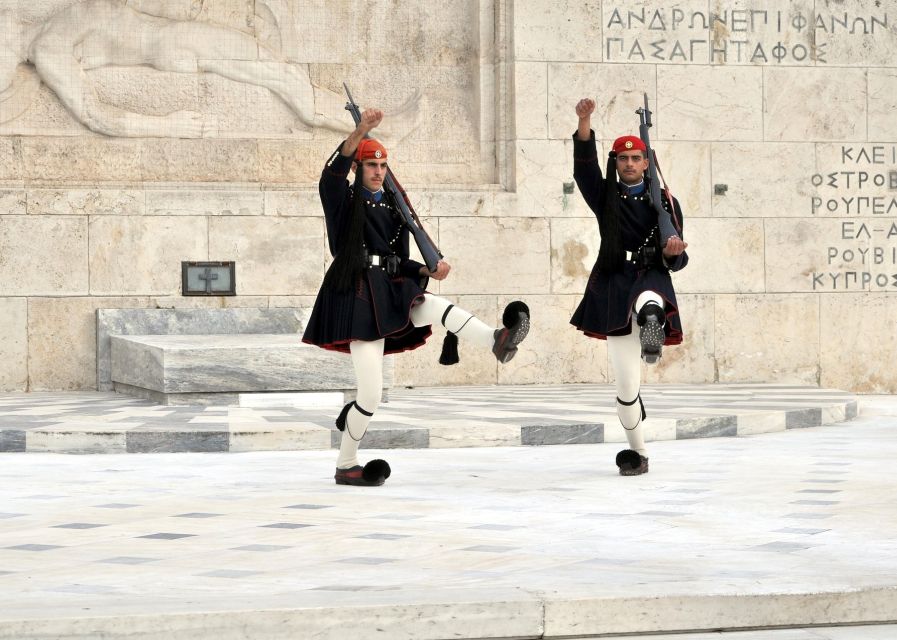
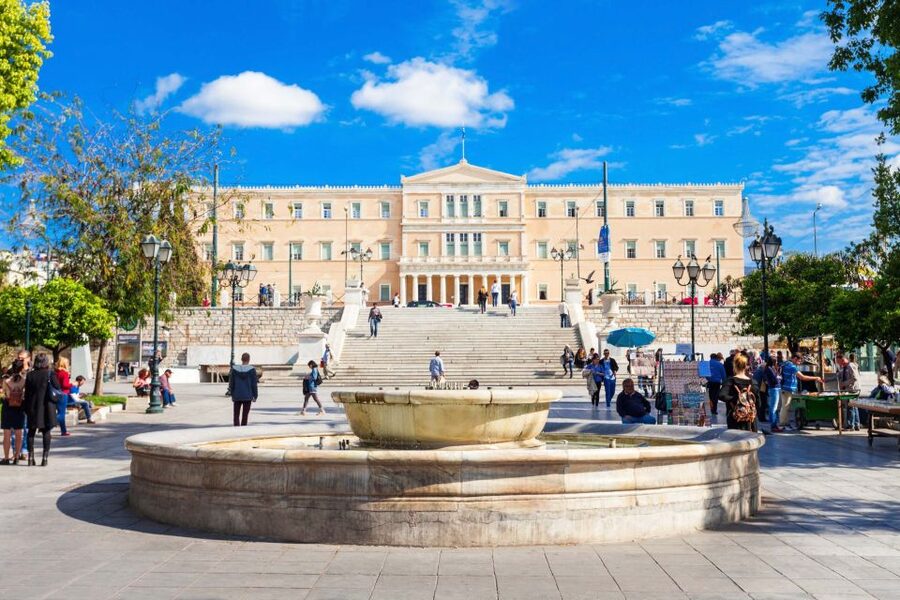
The walk continues toward Syntagma Square, the center of modern Athens and one of the most important places on the route. You spend time discussing the square, the Parliament, and the Tomb of the Unknown Soldier.
Syntagma is where the tour’s past and present meet most clearly. It has been the setting for major public gatherings and demonstrations, making it a useful place to discuss how Athenians have responded to fascism, violence, oppression, and political decisions. Instead of seeing the square as a backdrop for the changing of the guard, you consider how public space becomes a tool for popular action.
At the Hellenic Parliament, the guide explains the building’s role in the modern state. The stop is brief, so do not expect a formal interior visit. You are there to understand the political meaning of the building and the square in front of it.
The Tomb of the Unknown Soldier adds a more symbolic note. It allows the tour to discuss national memory and the way states honor sacrifice. The stop is short, but it fits the larger theme: who gets remembered, how resistance is presented, and which forms of courage become part of public history.
This part of the route can be busy, especially around Syntagma. That is worth keeping in mind if you prefer quiet, slow-paced tours. The upside is that you are seeing the city’s public life as it really functions, with traffic, pedestrians, demonstrations, ceremonies, and everyday movement all sharing the same space.
Kolonaki and the Academy of Athens
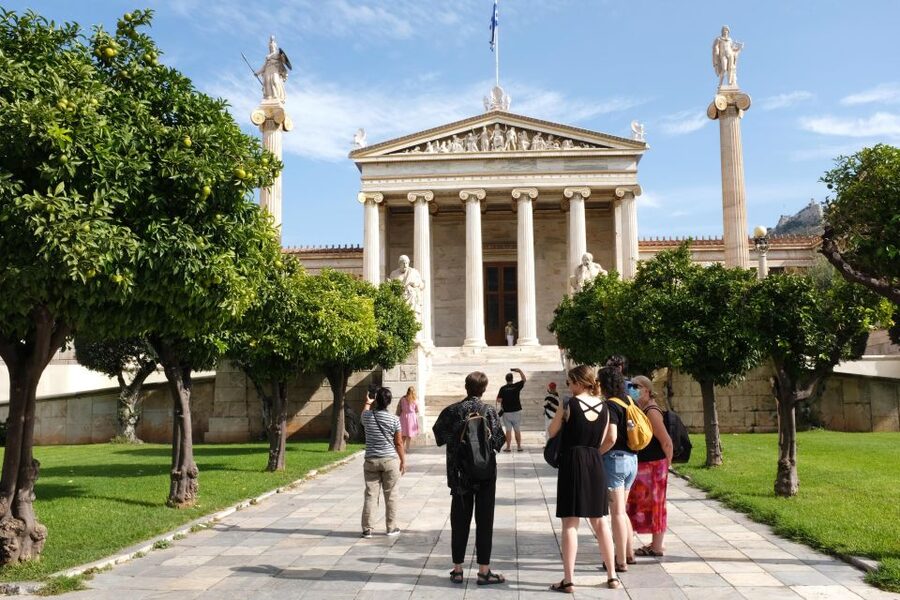
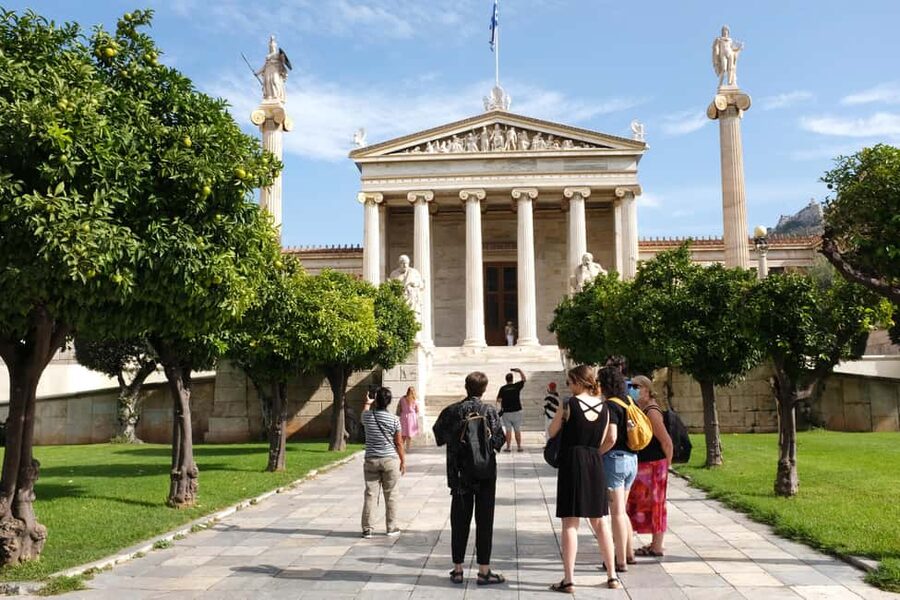
After Syntagma, the route passes through Kolonaki and continues toward the Academy of Athens. Kolonaki is a useful contrast to Exarchia, even though the tour does not treat the two areas as opposites in a simplistic way.
The short passage through Kolonaki helps you see how different parts of central Athens carry different social identities. You will not get a long neighborhood walk here, but the change in surroundings supports the tour’s wider discussion of class, politics, and public life.
The Academy of Athens brings another formal landmark into the story. Its architecture and institutional role provide a sharp contrast with the street art, collectives, and activist spaces associated with Exarchia later in the walk.
Again, this is not a classical Athens tour, even though the Academy’s design refers to ancient Greek ideals. The stop is valuable because it lets you consider how modern Greece presents itself through national institutions, monuments, and symbols. The guide uses familiar buildings to explain the modern state rather than treating them as isolated sights.
If you have already taken a standard center-city walking tour, you may recognize some of this route. The difference lies in the questions being asked. You are not simply being told what a building is. You are looking at what it represents and whose story it helps tell.
More Walking Tours in Athens:
- Athens: Acropolis and Parthenon Guided Walking Tour
★ 4.6 · 5,882 reviews - Acropolis and Parthenon Guided Walking Tour
★ 5.0 · 4,755 reviews - Greek Food Walking Tour in Athens
★ 5.0 · 4,740 reviews - Acropolis: Acropolis and Parthenon Guided Walking Tour
★ 4.7 · 3,442 reviews
Entering Exarchia, Athens’ center of dissent
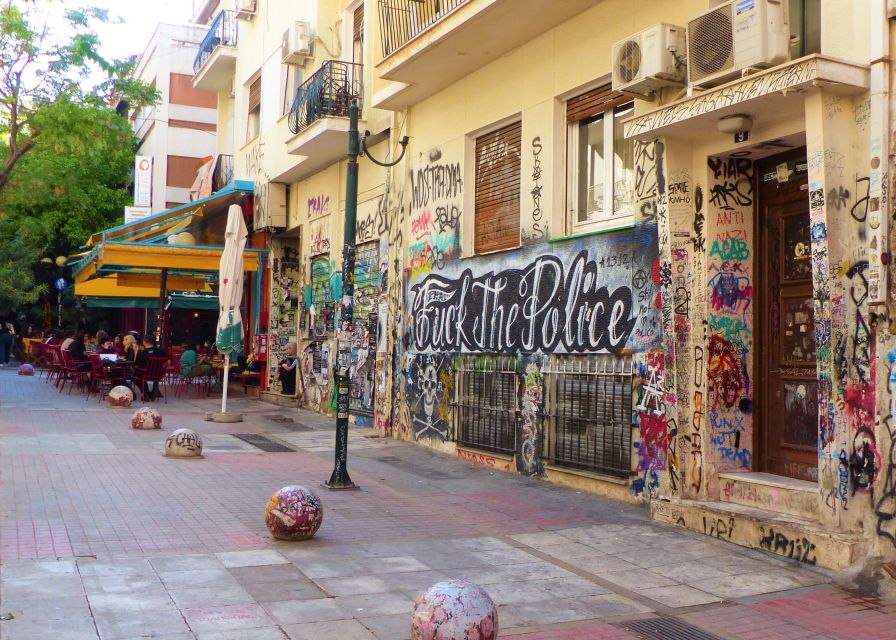
The strongest section comes in Exarchia. The neighborhood is widely associated with activism, anarchist politics, student movements, artists, refugees, LGBT+ communities, and opposition to police repression and gentrification.
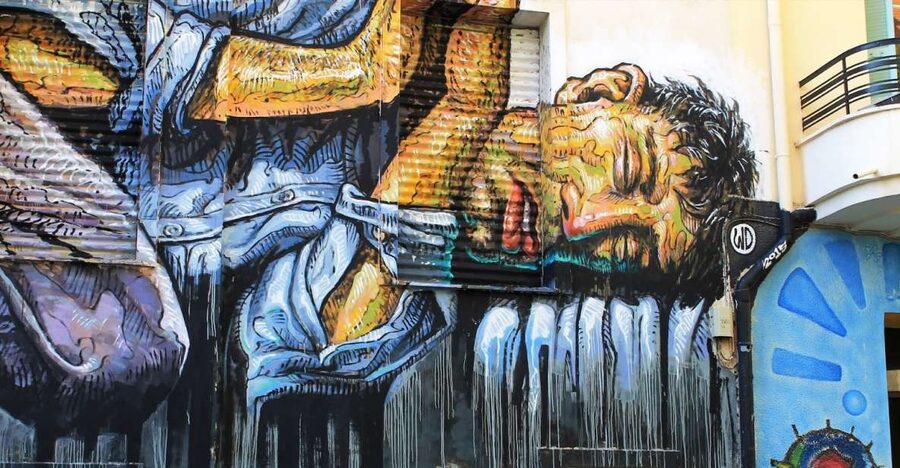
The tour treats Exarchia as a living community, not a spectacle. That distinction matters. You are not being taken into a neighborhood simply to photograph graffiti or find an edgy backdrop. You are given context for the people and movements connected with the area, along with the conflicts that have shaped its reputation.
You stop at several places in and around Exarchia, including an unspecified stop, another less familiar location, and Exarchion Square. The exact sites can vary in feel because this is a neighborhood shaped by current events, art, and community activity. The guide may use street art, public spaces, and local surroundings to open discussions about political ideas and daily life.
One especially useful part of the experience is the attention to graffiti and street art. Rather than treating every painted wall as decoration, Maelle encourages you to think about who made it, what it says, and how public art can carry political messages. This gives you a better way to read Athens after the tour ends.
Exarchion Square is the final named stop. It is a fitting place to end because the square represents the neighborhood’s collective identity and ongoing arguments about who has the right to shape urban space. You may leave with more questions than answers, which is a strength here. The tour does not try to turn a complicated neighborhood into a neat tourist story.
You should also understand that Exarchia is not presented as a polished attraction. Its appeal comes from its political energy and community life, not from tidy streets or a checklist of monuments. Stay attentive to the guide’s requests about respectful behavior. The goal is to learn about the neighborhood without treating its residents as part of an exhibition.
What Maelle adds to the experience
The guide is central to the value of this tour. Maelle is praised for being warm, funny, patient, and deeply prepared, but the more important point is how she explains modern Greek history. She helps put events in order and connects them to political movements, culture, and ordinary life.
That matters because modern Greek history can feel fragmented when you encounter it in small pieces. A monument, a protest, a neighborhood, and a political reference may seem unrelated. A good guide connects those pieces so you can understand why Athens feels the way it does.
Maelle also leaves room for conversation. Small groups make it easier to ask about politics, social movements, Greek society, street art, and everyday life. Private bookings may offer an even more personal format, though the activity information does not specify how much the route changes for private groups.
Another useful extra is local advice after the tour. Maelle provides suggestions for places to eat, shop, visit in Athens, and sometimes see on the Greek islands. That can be especially helpful if you take the walk early in your stay, since the tour can give you a better sense of which parts of the city you want to explore next.
Several people who enjoyed the tour also booked another Culture Hunters experience, including a tour focused on women in ancient Greece. You do not need to book anything else to make this walk worthwhile, but it shows how this experience can work as part of a wider Athens program.
Walking conditions, languages, and timing
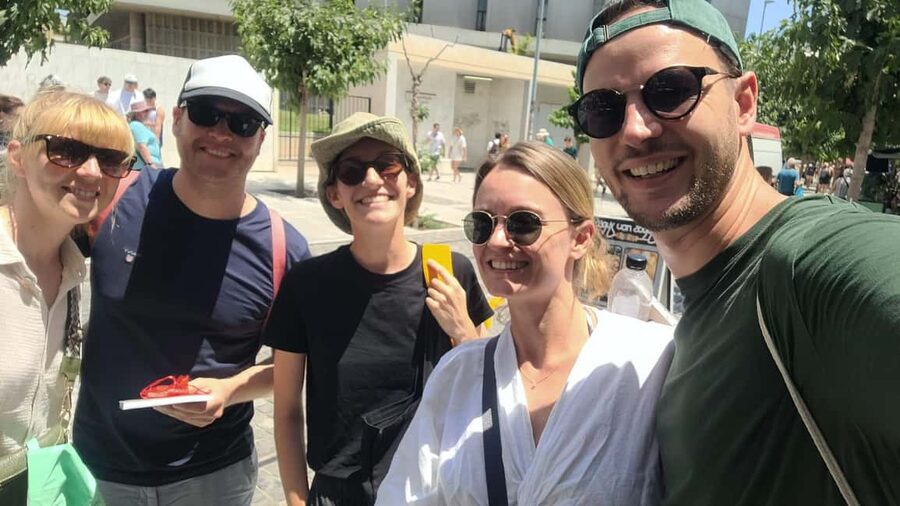
The tour lasts about 2.5 hours. You should expect steady walking and periods of standing, with no indication of a dedicated seated break. Wear comfortable shoes and carry water. A sun hat and sunscreen are sensible, particularly during hot weather.
The route covers central neighborhoods, but Athens streets can be uneven, crowded, and exposed to the sun. The activity is not suitable for people with mobility impairments. If you have a condition that makes long periods on foot difficult, ask before booking rather than relying on the short distance between stops.
Tours are offered in English and French. Private and small-group formats are available. Smaller groups are a real advantage here because the subject invites questions, and the political material works better when you can discuss it rather than listen from the back of a large crowd.
The listed price is $44.04 per person. That is more than a basic sightseeing walk, but the value depends on what you want from Athens. If you only want landmark facts and photographs, a cheaper general tour may suit you better. If you want a guided explanation of modern Greek politics, resistance, Exarchia, and social movements, the cost is reasonable for 2.5 hours with a live guide and the chance for real conversation.
The activity offers free cancellation up to 24 hours before the start, and you can reserve now and pay later. Those terms help if your Athens schedule is still moving around.
One practical point needs checking before you go. The meeting information says the walk begins in Monastiraki Square, while the route details identify Exarchion Square as the finish. Another note says the activity ends back at the meeting point. Since those details do not fully match, confirm the final meeting and end location when you book.
Who should book this Athens rebellion tour?
You should book it if you want more than ancient monuments. It suits readers interested in modern history, political movements, social justice, street art, community organizing, and the way cities remember conflict.
It is also a good first or second-day activity. The route helps you understand the city’s neighborhoods, and Maelle’s recommendations can guide the rest of your stay. One practical tip: if you already know you want this tour, do it early rather than saving it for your last day. The context can change how you see Syntagma, Exarchia, and other parts of Athens afterward.
I would not choose it for a family seeking a purely lighthearted walk, a visitor who cannot stand for long, or someone interested only in ancient Greece. The tone can be serious, and the focus is openly sympathetic to resistance movements. That is not a flaw, but it is important to know what you are booking.
FAQ

Where does the History of Rebellion Walking Tour begin?
It begins in Monastiraki Square, in front of Pantanassa Church. The guide carries a sign that says Athens City of Rebellion.
Where does the tour end?
The route information names Plateia Exarcheion as the finish. Another activity note says it ends back at the meeting point, so confirm the final end location when booking.
How long does the walking tour last?
The tour lasts 2.5 hours. You should expect walking and standing for roughly two to three hours.
Which languages are available?
The live tour is offered in English and French.
Is this a private tour or a group tour?
Private and small-group options are available.
What should I bring?
Bring comfortable shoes, a sun hat, sunscreen, and water.
Can I cancel for a full refund?
Yes. You can cancel up to 24 hours in advance for a full refund. You can also reserve now and pay later.
Should you book it?
Book this tour if you want to understand the Athens behind the postcard. Its best qualities are the focus on modern Greek history, the thoughtful treatment of Exarchia, and Maelle’s ability to connect politics, place, and daily life.
At $44.04, it is a fair buy for a small-group or private experience with a strong subject and a useful local guide. Just bring water, prepare for a serious discussion, and confirm the ending point. If you do that, this walk can give you a clearer sense of Athens than another circuit of famous ruins alone.
New routes in Athens
- The Acropolis, Athens Walking City Tour and Acropolis Museum★ 5.0 · 442 reviews
- Athens Street Food Walk★ 5.0 · 385 reviews
- Acropolis monuments, Parthenon and Plaka, Monastiraki walking tour★ 5.0 · 182 reviews
- Athens Shore Excursion: Acropolis Walking Tour★ 4.5 · 131 reviews
- Athens Street Art Walk★ 5.0 · 309 reviews
- Athens at Night Small-Group Walking Tour with Dinner★ 5.0 · 230 reviews
- Athens Off the Beaten Track Private City Walking Tour★ 5.0 · 304 reviews
- Athens Highlights: Myths & Philosophers Walking Tour★ 5.0 · 125 reviews
Athens Walking Tours, compared.


Acropolis monuments & Parthenon Walking Tour with Optional Acropolis Museum
Read our review →
Acropolis, Parthenon & Athens Old City Heritage Walking Tour
Read our review →
The Acropolis Walking Group Tour with a French Guide
Read our review →
Athens Food Tour with 10+ Tastings of Greek Traditional Dishes
Read our review →Browse the lists this tour appears in