
Review · QUEBEC CITY
Private Tour: Quebec City Walking Tour
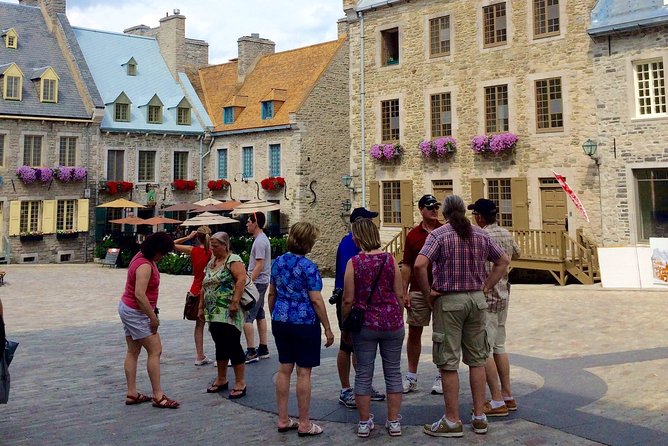
Québec City’s best introduction comes on foot, where stone walls, steep lanes, and grand squares tell the story better than any bus window could. This private tour links Upper Town with Old Québec, Place Royale, the Plains of Abraham, Petit-Champlain, and the river views from Terrasse Dufferin.
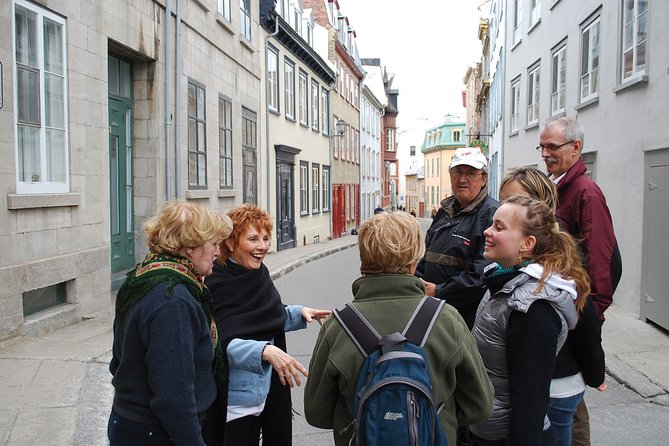
I like the private format, which lets you ask questions and slow down when a building or story catches your attention. I also like the local personality built into the experience: guides such as Robert, Carole, Guy, Yves, and Chantal are praised for making the past easy to follow rather than turning the walk into a lecture.
The main caution is physical. Québec City is hilly, with cobblestones, stairs, and a few demanding climbs. Weather matters, too. A cold day can make two and a half hours outside feel much longer, so dress for the forecast and wear solid walking shoes.
Key points to know before booking
- Private from start to finish: Only your own group joins the guide, so the pace and interests can shape the walk.
- A strong first-day orientation: The route connects Upper Town, Lower Town, Place Royale, Petit-Champlain, and major landmarks.
- Local guides make the difference: Robert, Carole, Guy, Yves, Chantal, Véronique, Terry, and others are praised for warmth, patience, humor, and clear storytelling.
- Expect hills and stairs: The walk includes Québec City’s historic slopes, cobblestones, and the Breakneck Stairs area.
- Good value for the right group: At $112.88 per person, the price makes more sense for couples, families, or friends who want personal attention.
- Plan ahead: The tour is often reserved about 45 days in advance and requires at least two people.
A smart introduction to Old Québec
This tour works best as a first look at Québec City. You begin near the Centre Infotouriste de Québec at 12 Rue Sainte-Anne in Upper Town, then walk with a local guide through the city’s historic core. The route finishes at the foot of the funicular on Rue du Petit-Champlain, giving you a useful starting point for your own afternoon exploring.
The guide explains Québec City from 1608 to the present. That broad time span matters because the city is not simply an old quarter preserved for visitors. It remains the capital of Québec, an active city, and a place where French and British chapters overlap in the streets, walls, churches, military sites, and public squares.
You can name places or subjects you care about before or during the walk. If you want architecture, military history, religious buildings, family connections, or a general orientation, say so. If you would rather not plan, the guide can lead the way.
That flexibility is the tour’s strongest feature. A fixed group walk has to keep moving for everyone. Here, your guide can adjust the pace and spend more time on the subjects that hold your attention. Several guides, including Robert, Yves, Guy, and Carole, are praised for answering questions and adapting their explanations to the group.
More Private Walking Tours in Canada
- Old Quebec City: Grand Walking Tour with Private Option
★ 4.8 · 2,609 reviews - Montreal: Private Walking Tour with a Local
★ 4.4 · 420 reviews - Old Montreal Private Walking Tour
★ 5.0 · 314 reviews
Upper Town sets the scene
The opening hour takes place largely in Haute-Ville, or Upper Town. This is a good place to begin because it gives you the city’s grandest views and its strongest concentration of major landmarks.
You will pass along main routes and smaller lanes, with commentary about how Québec developed from a French colony into the capital of the province. The guide may point out details you would otherwise walk past, including old stonework, defensive features, religious buildings, and the changing role of the city.
The format is informal. You are not simply marched from one photo stop to the next. You can ask why a street is shaped as it is, how the city defended itself, or how the old quarter fits into modern Québec.
Place d’Armes is one of the key sights in this area. From here, you can look toward the Fairmont Le Château Frontenac, the huge hotel that has become Québec City’s most familiar visual symbol. The building is photogenic from nearly every angle, but the guide adds context about its place in the city rather than treating it as just a backdrop.
The tour also passes Québec City Hall and the square in front of it. This stop helps connect the old district with the city’s civic life. You will see the impressive façade, hear about its role, and continue through an area where historic buildings and present-day city business sit side by side.
Fortifications and the Citadelle
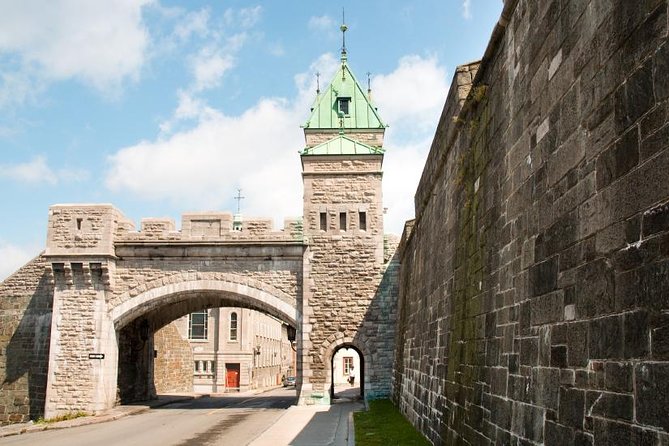
Québec City is the only walled city north of Mexico, and the fortifications are not a minor detail. They explain why this location mattered so much to both French and British powers.
As you walk near the walls, the guide describes their defensive purpose and helps you understand the city’s position above the St. Lawrence River. The walls are easier to appreciate once you see the steep ground and river access they protected. Without that context, they can look like attractive old masonry. With it, they become part of a larger military plan.
The Citadelle of Québec adds another layer. It remains an active military installation and serves as the official residence of the Canadian monarch and the Governor General of Canada. The walking tour gives you a look at its importance from the outside and places it within Québec’s military story.
The tour information does not promise a formal interior visit to every site. Think of this as an outdoor walking experience with commentary, not a museum admission package. If entering a particular building is important to you, ask the guide at the start about what may be possible.
Terrasse Dufferin and Château Frontenac
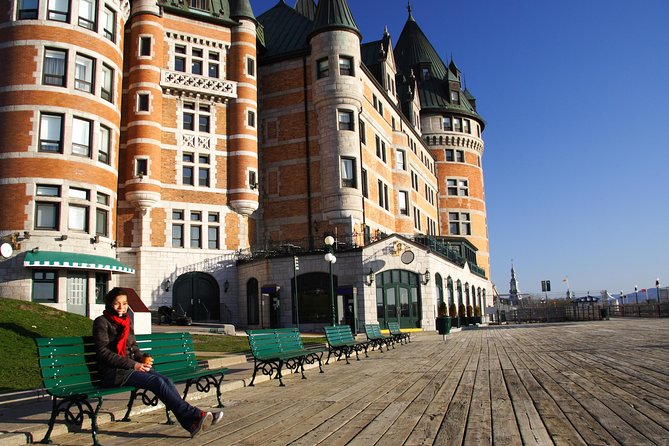
Terrasse Dufferin is one of the best visual pauses on the route. From the terrace, you look down toward the St. Lawrence River and across a setting that explains Québec City’s strategic value.
The river view also helps you understand the city’s shape. Québec’s Upper Town sits high above the lower district, and the drop between them is part of the city’s character. Your guide explains the river’s role and the history tied to the waterfront.
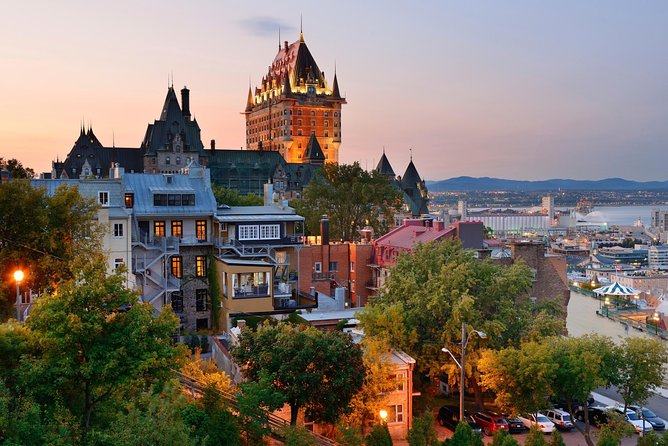
Château Frontenac dominates the scene. The hotel is often described as Canada’s most beloved, and its towers make an easy symbol for the city. The useful part of the stop is not just taking a picture. You learn why the hotel became so closely tied to Québec City’s identity and how it relates to the older streets around it.
Terrasse Dufferin is also where you may notice the practical challenge of this walk. The views are rewarding, but the route involves uneven surfaces and changes in elevation. Take your time with photographs, and do not feel pressured to rush.
Same streets, a different guide:
- Quebec City Walking Tour
★ 5.0 · 4,716 reviews - Montreal Mile End Authentic Food Tour with 7 Delicacies Tastings
★ 5.0 · 2,598 reviews - The Original Old Montréal Walking Tour by Guidatour
★ 4.5 · 2,217 reviews - Old Montreal Small-Group Walking Tour | Max 10 | by MTL Detours
★ 5.0 · 2,088 reviews
Churches that mark Québec’s beginnings
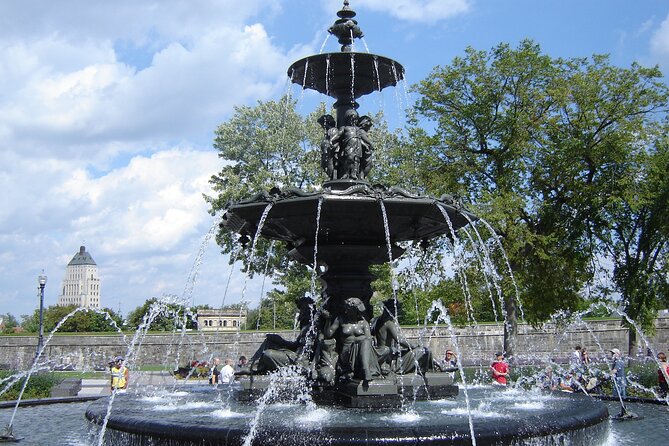
The Notre-Dame de Québec Basilica Cathedral has been at the center of Québec’s religious life for nearly four centuries. If conditions allow, the guide may take you inside. Even a short visit gives the walking tour a quieter pause after the open terraces and busy streets.
The itinerary also includes Notre-Dame-des-Victoires Church in Place Royale. It is one of Canada’s oldest stone churches and occupies the site where Québec began. The church is small compared with the basilica, but its location gives it unusual weight. You are looking at a building tied directly to the early French colony.
These stops are useful if you want more than military stories and viewpoints. Québec’s development was shaped by religion as much as by defense and trade, and the churches make that clear.
Because the tour lasts about two and a half hours, time inside may be brief. This is an overview rather than a dedicated church tour. If religious art or architecture is your main interest, tell the guide early so the route can give those details more attention.
Place Royale and the French beginnings
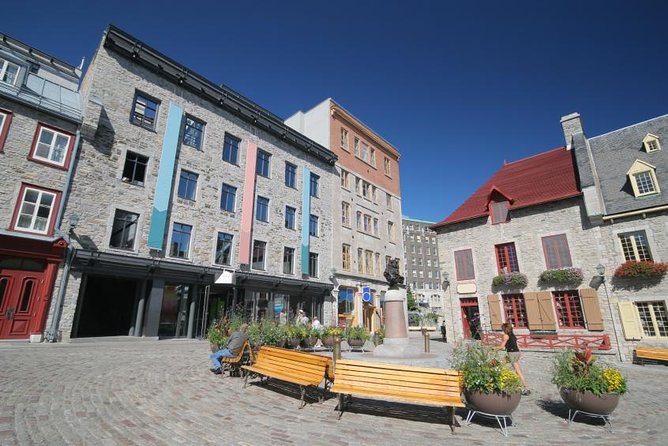
Place Royale is one of the most atmospheric parts of the walk. Here, the narrow streets and old stone buildings make it easier to picture Québec as it looked during the early French colony.
The square is often called the birthplace of French America. That phrase can sound grand, but the setting gives it meaning. The area connects the first stages of settlement with the trading and waterfront life that followed.
You will hear about the buildings around the square and the way the district developed. The guide’s job here is especially valuable because the visual details are easy to notice but harder to interpret on your own. A doorway, roofline, or church may look charming, but the story explains why it is there and what it tells you about the city.
Place Royale is also a good point to ask for food, shopping, or further walking suggestions. The guide can explain how to continue into the lower district after the tour ends.
Petit-Champlain and the final descent
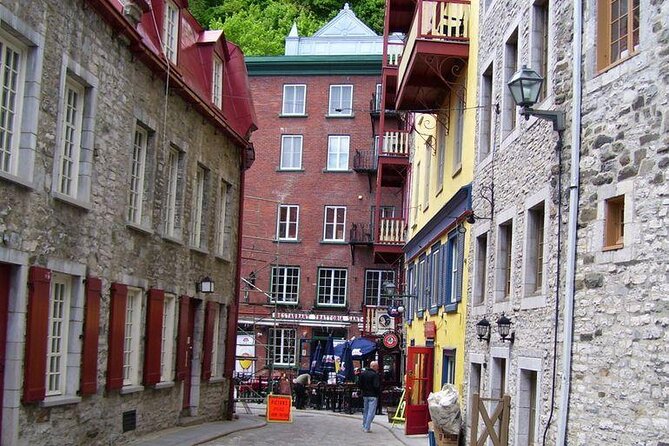
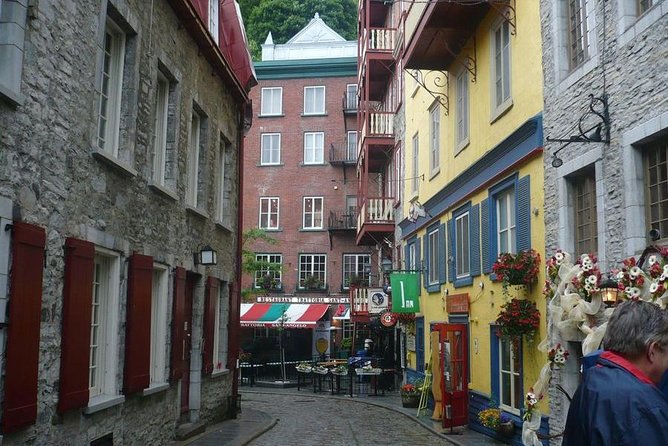
The route finishes in the Quartier Petit-Champlain, one of the prettiest parts of Old Québec. Its narrow street, stone façades, and small-scale feel make a sharp contrast with Upper Town’s broad terraces and grand public buildings.
You will see the Breakneck Stairs, one of the city’s best-known stairways. The name gives you a fair warning. The descent is part of the city’s charm, but it is not effortless, especially on wet, icy, or crowded days.
Petit-Champlain is a strong ending because it leaves you in a lively area with plenty to do afterward. The guide finishes at the foot of the funicular at 16 Rue du Petit Champlain. From there, you can continue exploring the lower district, use the funicular, or get directions back to your hotel.
The ending does not return you to the original meeting point. That is useful if you want to keep exploring, but you should know where the walk finishes before booking. Your guide can explain how to get back to your hotel if needed.
How the private format changes the experience
A private tour is not automatically better than a group tour. It costs more, and the quality depends heavily on the guide assigned to you. Here, the format earns its price when you use it properly.
Tell the guide what you want. If your group includes children, older adults, or anyone who needs a slower pace, say so at the beginning. One group completed the route comfortably with two people in their eighties because the guide adjusted the walking speed. Another guide, Francine, was praised for responding to a slower pace.
You can also shape the subject matter. Robert is described as especially good at adding local details and personal experiences. Chantal brings family ties reaching back to the 1600s. Amee is a native of the city, and several guides are praised for making the city feel personal rather than distant.
The strongest recurring qualities are warmth, patience, humor, and the ability to explain history without making it dry. Carole is noted for being funny and engaging. Terry adjusted his information once he understood what interested his group. Yves was praised for making history easy to follow while leaving time for shopping and independent exploring.
There is one important warning. Personal attention can work against you if the guide misreads your interests or the pace becomes unfocused. One very negative experience involved a guide repeating points, pushing activities the group did not want, and ending up covering fewer sites than expected. That appears to be an exception within the supplied feedback, but it is a reminder to speak clearly about your priorities and time.
Price, timing, and physical effort
The price is $112.88 per person. That is not a bargain introductory walk, but it can be fair for a private group that wants a custom route and a guide available for every question.
For two people, the cost buys privacy, flexible pacing, and a focused introduction to one of North America’s most historic cities. For a larger family or group of friends, the value improves because everyone shares the guide rather than paying for separate individual tours.
The walk lasts about two and a half hours, although the itinerary also refers to a three-hour walking tour. Allow roughly three hours in your day so you are not rushing to another appointment. The route covers a lot: Upper Town, the walls, major squares, churches, viewpoints, Place Royale, and Petit-Champlain.
Wear comfortable shoes with good grip. The route includes cobblestones, hills, and stairs. Most people can take part, but mobility concerns should be discussed in advance. Québec City’s historic design is part of its appeal, yet it is not flat or especially easy underfoot.
Weather can change the experience. A cold day may make it harder to absorb a long stream of stories, especially when you stop outdoors. Bring warm layers in cooler months and plan for the conditions rather than relying on the city’s attractive appearance in photographs.
Who should book this Québec City walk?
I would choose this tour for a first visit, especially if you want to understand how the upper and lower districts fit together. It is also a strong pick for families, couples, and small groups with different interests.
History fans will get military, religious, colonial, and civic stories in one walk. Architecture fans will have plenty to look at around Place Royale, the basilica, City Hall, and Château Frontenac. Visitors with limited time can use the tour to get oriented before returning to favorite areas on their own.
The tour is less suitable if you dislike hills, need a fully accessible route, or prefer a quiet museum-style experience with long indoor visits. It is also not ideal if you want to see every attraction in depth. The route gives you a broad look, then leaves you with ideas for later.
Should you book it?
Book this private Québec City walking tour if you want a flexible first look and are willing to pay for personal attention. Its best features are the guide-led storytelling, the ability to adjust the pace, and the way it links Upper Town with Place Royale and Petit-Champlain.
Before the walk, send your guide a short list of priorities. Ask for a slower pace if needed, wear proper shoes, and remember that the tour ends in the lower district rather than at the starting point.
I would be especially comfortable booking with a group that values conversation and questions. The guides have earned strong praise for making history clear and personal, with Robert, Carole, Guy, Yves, Chantal, and others frequently singled out for their friendly approach. If you want a low-cost, flat, self-guided stroll, save the money and explore on your own. If you want Québec City to make sense quickly, this is a solid choice.
FAQ
How long is the private Québec City walking tour?
The tour lasts approximately two and a half hours. Some tour details describe it as a three-hour walking tour, so you should allow about three hours in your schedule.
Where does the tour begin?
The meeting point is the Centre Infotouriste de Québec at 12 Rue Sainte-Anne in Upper Town.
Where does the tour finish?
The tour ends at the foot of the funicular at 16 Rue du Petit Champlain in the Quartier Petit-Champlain.
Is the tour private?
Yes. Only your own group participates, and the guide can adjust the route, pace, and topics to your interests.
What language is offered?
Live commentary is available in English.
What sights are included?
The route can include Upper Town, Old Québec, the fortifications, Terrasse Dufferin, Château Frontenac, Québec City Hall, Notre-Dame de Québec Basilica Cathedral, Place Royale, Notre-Dame-des-Victoires Church, Petit-Champlain, and the Breakneck Stairs area.
Is the tour suitable for people with mobility concerns?
Most people can participate, but Québec City has hills, cobblestones, and many stairs. Comfortable walking shoes are recommended, and you should discuss pace or mobility needs with the guide.
How much does the tour cost?
The listed price is $112.88 per person. A minimum of two people is required per booking, and group discounts are available.
Can I cancel for a full refund?
Yes. You can cancel at least 24 hours before the start time for a full refund. Cancellations or changes made less than 24 hours before the tour are not accepted for a refund.
New routes in Canada
- Toronto: Private Walking Tour with a Local★ 4.7 · 150 reviews
- Toronto: Dark History Nighttime Walking Tour★ 4.7 · 273 reviews
- Toronto: City Walking Tour★ 4.9 · 185 reviews
- Toronto: 2-Hour Downtown Walking Tour★ 4.4 · 101 reviews
- Toronto: Distillery District Historic Walking Tour★ 4.8 · 267 reviews
- Quebec City: Christmas Magic Walking Tour in Old Quebec★ 4.7 · 146 reviews
- Quebec City: Old Quebec Classic Walking Tour with Funicular★ 4.9 · 695 reviews
- Ottawa: Private Walking Tour with a Local★ 4.5 · 80 reviews
Quebec City Walking Tours, compared.
Old Quebec City: Grand Walking Tour with Private Option
Read our review →
Old Quebec Classique Walking Tour with Funicular
Read our review →
Old Quebec City Food Tour with 10+ Autentic Local Tastings
Read our review →
Quebec: Crimes of New France Animated Walking Tour
Read our review →
Browse the lists this tour appears in