
Review · SPAIN
Walking Tour in Bilbao
Bilbao’s best introduction is on foot, where the old city’s Seven Streets give way to the grand Ensanche and then to the Guggenheim-era riverfront. This two-hour walk links those very different parts of Bilbao without making you choose between Basque tradition and modern architecture.
I like the small group limit of 10, which gives you room to ask about food, politics, language, and daily life. I also like the practical advice built into the walk, from affordable places to eat to the best local bars. The main consideration is pace: two hours gives you a fine overview, but not time to enter and explore the Guggenheim or linger at every stop.
Key points at a glance
- Seven Streets first: Begin in Casco Viejo, Bilbao’s oldest quarter, with Santiago Cathedral, San Antón Church, and La Ribera Market.
- A city in three chapters: Follow Bilbao from its medieval center through its nineteenth-century expansion and into its modern riverfront.
- Guides with local voices: Beatriz, Miguel, José, Adur, Victoria, and others bring personal stories, Basque language, food advice, and humor to the route.
- Small groups matter: With no more than 10 people, you can ask questions and hear the guide clearly.
- Useful for a first day: The walk gives you a map in your head and suggestions for the rest of your stay.
- Good practical value: At $41, you pay for a focused city overview, a local guide, and advice that can save you time and poor restaurant choices later.
Bilbao in two hours, from medieval lanes to modern design
I like tours that explain how a city changed, not just tours that point at attractive buildings. This one has a clear story: Bilbao began around its old riverfront quarter, grew wealthy through industry and commerce, spread into the Ensanche, and later reshaped its public image through architecture and culture.
You meet the guide in front of the main entrance to the Arriaga Theater. That is a useful starting point because it places you right beside the old center and close to the river. It also avoids the confusion of meeting at a small side street or inside a large building.
The walk is designed as an overview rather than a museum visit. You will see major buildings and public spaces from the outside, hear how they fit into Bilbao’s story, and gather ideas for places to return to later. If you want long interior visits, this is not the right format. If you want to get oriented quickly, it works well.
More Walking Tours in Spain:
- Barcelona Tapas and Wine Experience Small-Group Walking Tour
★ 5.0 · 5,804 reviews - Barcelona: Tapas Walking Tour with Food, Wine, and History
★ 4.8 · 4,261 reviews - Madrid Tapas & Wine Tasting Walking Tour – Small Group Local Bars
★ 5.0 · 3,644 reviews
Casco Viejo and the Seven Streets
The first part takes you into Casco Viejo, Bilbao’s Old Town. The famous Seven Streets form the core of this district, and walking them gives you a much better sense of the city than seeing them on a map.
The lanes are compact and easy to connect on foot. Your guide can explain how this old center relates to the river, trade, religion, and everyday life in Bilbao. The most useful part is not simply learning names. It is understanding why this part of town still feels like the city’s social center.
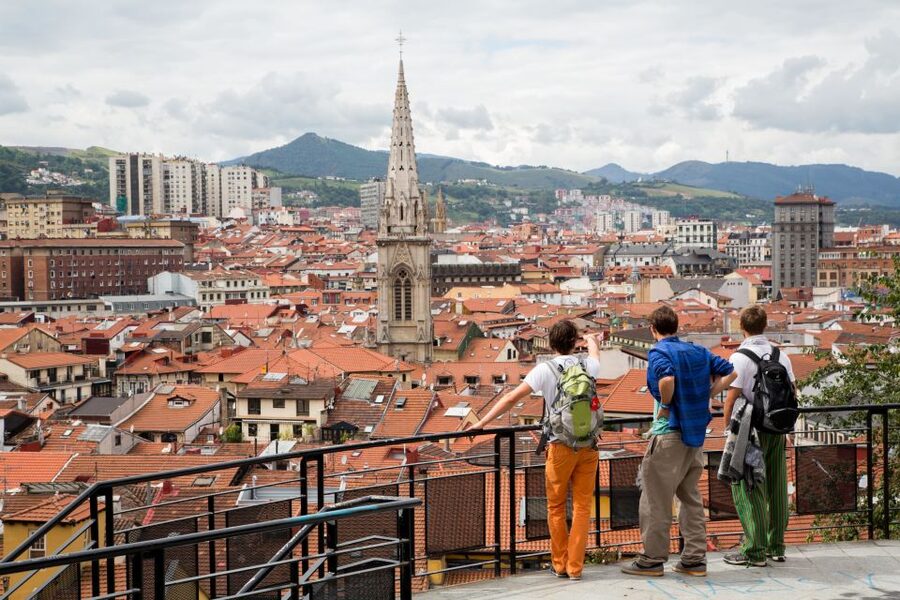
Santiago Cathedral is one of the main landmarks on the route. The Church of San Antón is another key stop, tied closely to Bilbao’s older riverfront identity. These buildings help anchor the story in visible places, so you are not trying to remember a lecture without a setting.
The guides bring different strengths. Beatriz is especially good for travelers interested in Basque language and culture, since she speaks Basque fluently. Miguel has a relaxed style and often asks what the group wants to learn before shaping the walk. José is known for local stories about buildings, the river, and old Bilbao customs.
That flexibility matters. A group curious about architecture may spend more time on facades and urban change. A group interested in food may get more advice about pintxos bars and tabernas. You still follow the main route, but the conversation does not have to feel fixed.
La Ribera Market and the taste of local life
La Ribera Market is one of the most useful stops because it connects Bilbao’s past with the way people eat today. A market can tell you more about a city than a string of monuments, especially when your guide explains what to look for and where the market fits into the neighborhood.
You should not expect a dedicated market tasting or a long shopping session. The tour includes a guided look at several emblematic areas, not food purchases or a meal. Still, the stop gives you a better idea of where local food culture belongs in the city.
This is also where the guides’ restaurant advice becomes practical. José, Beatriz, and Miguel have all been praised for suggesting places to eat, drink, and try local cuisine. You can ask for recommendations that match your budget and interests instead of relying on a generic list.
The advice is one reason I would take this walk early in a Bilbao visit. A good food suggestion can shape several later meals. You can also return to the market or nearby streets when you have more time, now knowing what you are looking at.
The Ensanche and Bilbao’s nineteenth-century expansion
After the Old Town, the route moves toward the Ensanche. This shift is important because it shows that Bilbao is not only a medieval quarter with a famous museum attached.
The Ensanche grew during the city’s industrial and financial expansion. Its broader streets and bourgeois architecture reflect a different period from the tight lanes of Casco Viejo. Your guide uses that contrast to explain how Bilbao changed as its economy grew and the city needed more room.
I find this part valuable because it gives context to the city center you might otherwise walk through without noticing. The buildings are not simply attractive backdrops. They represent the ambitions of a growing commercial city and the social world that came with that growth.
The walk does not promise a detailed architectural survey, and two hours would not allow one. You will get a readable explanation of the urban change, with time for questions. That is enough for most people who want a first orientation, but architecture fans may want to explore the Ensanche again on their own.
Same streets, a different guide:
- Granada: Albaicín and Sacromonte Guided Sunset Walking Tour
★ 4.9 · 2,962 reviews - Toledo Tour & Vineyard Walk with Wine Tasting from Madrid
★ 5.0 · 2,546 reviews - Madrid Walking Tour from Puerta del Sol to Retiro Park
★ 5.0 · 2,285 reviews - Barcelona: Food Walking Tour with Tapas and Wine
★ 4.9 · 2,180 reviews
Zubizuri Bridge and the modern riverfront
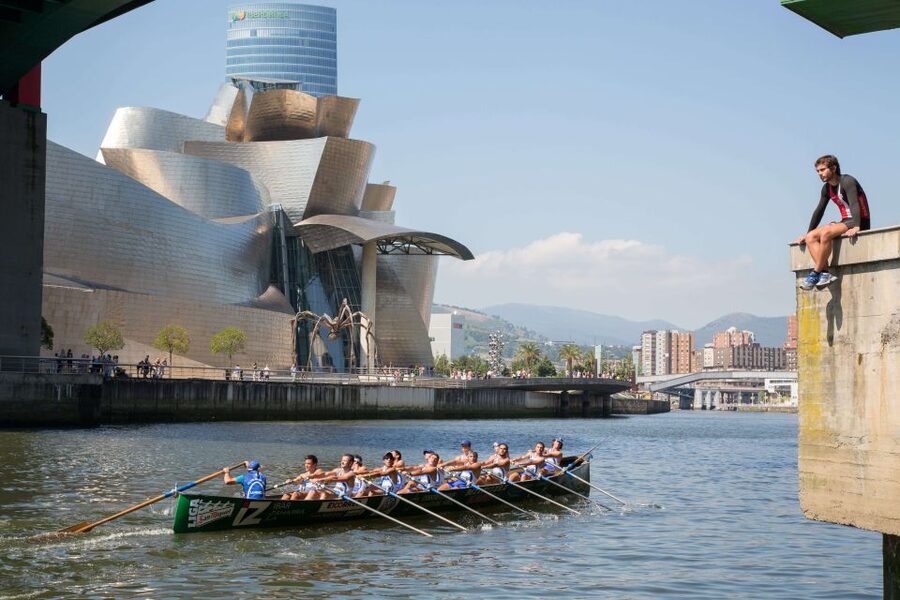
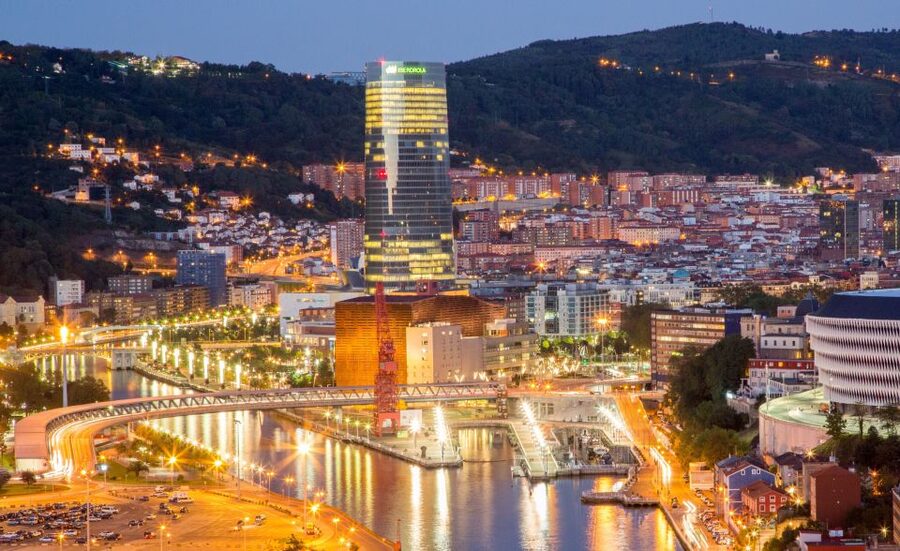
The final part leads toward contemporary Bilbao, including the Zubizuri Bridge and the Guggenheim Museum area. This is where the tour connects the city’s older commercial identity with its modern cultural image.
The Zubizuri Bridge is a striking river crossing and an easy way to talk about Bilbao’s changing public spaces. The river itself is also central to the city’s story. José, in particular, has been praised for explaining how the river shaped Bilbao’s development.
The Guggenheim is treated as a major exterior landmark and a symbol of the city’s cultural renewal. This is an important distinction: the walking tour does not include admission to the museum, and the two-hour schedule does not leave time for a full museum visit.
If the Guggenheim is your main reason for coming to Bilbao, plan a separate visit. Use this walk to understand where the museum fits in the city rather than expecting it to replace a museum ticket and several hours inside. The guide can help you place the building within Bilbao’s wider transformation.
The route’s ending also makes sense as a conclusion. You have moved from old streets and religious landmarks to commercial expansion and modern design. In a short time, you see the city as a sequence of changes rather than a collection of unrelated sights.
What the guides add to the walk
The strongest part of this experience is the human explanation. The route itself is attractive, but a map can show you the Seven Streets and a guidebook can list the Guggenheim. The guide adds tone, local memory, and answers to the questions that appear as you walk.
Several guides lead this experience, so your exact style depends on the schedule. Beatriz and Beatrice are praised for their warmth, clear English, and passion for Bilbao and the Basque Country. Miguel often adapts the walk to group interests and mixes historical facts with personal stories. José is a good fit for people who want restaurant suggestions and stories about city life.
Adur has also led walks for groups interested in Basque culture and local history. Victoria brings a friendly, welcoming approach and has helped visitors with directions after the walk. Azier has been praised for humor, hospitality, and his explanations of Basque people and culture.
Those details make the experience feel less like a fixed script. You can ask about the Basque language, local politics, food, architecture, family stories, or the city’s industrial past. The exact answer depends on your guide, but the format encourages questions.
The walk is available in English and Spanish. If hearing Basque language is important to you, ask the operator which guide is scheduled rather than assuming every guide will offer the same language background.
Group size, walking comfort, and the weather
The maximum group size is 10. That is small enough for a conversational walk and large enough that solo visitors are not left with a private-tour price. Solo travelers are welcome when availability allows.
The tour is wheelchair accessible, which is an important advantage. Still, accessible does not mean every historic surface will feel equally easy. Casco Viejo is an old district, so you should confirm any specific mobility needs with the local provider before booking.
Bilbao is known for wet weather, and rain is a real planning issue. Rain clothing is not included, so bring your own waterproof layer or umbrella. One walk continued in good spirits after rain, but it is wiser to prepare than hope for a dry forecast.
Wear comfortable shoes. The route is only two hours, but you are walking through several districts rather than standing in one plaza. The tour does not include hotel pickup or drop-off, so you need to reach the Arriaga Theater independently.
The minimum group size is two people. If that number is not reached, the activity can be canceled, with an alternative date or full refund offered. You are normally contacted 24 hours before the activity in that situation.
Is $41 a fair price?
At $41 per person, I consider this a fair price for a small-group introduction to Bilbao. You are paying for two hours with a local guide, a maximum group of 10, and a route that covers the Old Town, Ensanche, and modern riverfront in one sitting.
The value is strongest if you take it near the start of your stay. You can use the guide’s advice on restaurants, bars, markets, and later sightseeing. The information may save you from spending your limited time wandering without a plan.
It is less good value if you only want to see one landmark or take photographs. You could walk through some of these areas for free, but you would lose the connections between them and the chance to ask questions. You also would not get the same local suggestions.
The price does not cover food, museum admission, weather gear, or transportation to and from the meeting point. Think of it as a city orientation with personal guidance, not a full sightseeing package.
Who should book this Bilbao walk?
I would recommend it to first-time visitors, solo travelers, couples, and anyone with only a short stay in Bilbao. It is also a strong choice for people who want history explained in plain language rather than a formal academic lecture.
Food-focused visitors should pay attention to the guide’s recommendations around La Ribera Market and the Old Town. Architecture fans will appreciate the change from medieval streets to the Ensanche and the Guggenheim area, though they may want extra time afterward.
This is also useful for visitors who want a gentle introduction to Basque identity. The guides discuss language, culture, and the relationship between Bilbao and the wider Basque Country. Beatriz and some of the other guides can add a personal layer that you will not get from a standard audio guide.
I would be cautious about booking it as your only Guggenheim experience. The museum is part of the route’s modern Bilbao story, but museum entry is not included. Plan a separate visit if you want to see the collections and interior spaces.
Should you book it?
Book this tour if you want to understand Bilbao quickly and prefer a small, conversational group. The combination of Casco Viejo, La Ribera Market, the Ensanche, Zubizuri Bridge, and the Guggenheim area gives you a useful city map in two hours.
I especially like it as a first-day activity. You will leave with a clearer sense of where to eat, which districts deserve more time, and how Bilbao’s old and new sides connect. At $41, that is a sensible investment for a short visit.
Skip it if you prefer exploring alone, already know Bilbao well, or want extended time inside the Guggenheim. For most first-time visitors, though, this is a practical and personable way to get oriented.
FAQ
How long does the Bilbao walking tour last?
The tour lasts two hours.
Where does the tour meet?
Meet your guide in front of the main entrance to the Arriaga Theater.
Which parts of Bilbao does the walk cover?
The route covers Casco Viejo and its Seven Streets, the Church of San Antón, Santiago Cathedral, La Ribera Market, the Ensanche, Zubizuri Bridge, and the Guggenheim Museum area.
Is the Guggenheim Museum entrance included?
No. The Guggenheim is included as part of the walking route and city explanation, but museum admission is not listed as included.
What languages are available?
The live tour is available in English and Spanish.
How large is the group?
The group is limited to 10 participants.
Can solo travelers join?
Yes, solo travelers are welcome when availability allows.
Is the tour wheelchair accessible?
Yes, the activity is listed as wheelchair accessible.
What happens if fewer than two people book?
If the minimum group size of two people is not reached, the tour may be canceled. You would be offered an alternative date or a full refund, with contact expected 24 hours before the activity.
New routes in Spain
- Toledo: Guided Walking Tour with Cathedral Ticket and Tour★ 4.2 · 98 reviews
- Toledo: Guided Monument Walking Tour with Wristband Pass★ 4.5 · 487 reviews
- Valencia: Fallas Festival Walking Tour with Entry Ticket★ 4.6 · 86 reviews
- Barcelona: “The Shadow of the Wind” Literary Walking Tour★ 4.5 · 176 reviews
- Tenerife: Underwater Walk – Sea Trek Experience★ 5.0 · 237 reviews
- Tarragona: Roman Heritage Guided Walking Tour★ 4.7 · 261 reviews
- Seville: Sunset Roof Top Walking Tour★ 4.2 · 131 reviews
- Seville: Paranormal and Legends Guided Walking Tour★ 4.7 · 336 reviews
Spain Walking Tours, compared.
Barcelona Tapas and Wine Experience Small-Group Walking Tour
Read our review →
Tapas Walking Tour with Food, Wine, and History
Read our review →
Madrid Tapas & Wine Tasting Walking Tour – Small Group Local Bars
Read our review →
Albaicín and Sacromonte Guided Sunset Walking Tour
Read our review →
Toledo Tour & Vineyard Walk with Wine Tasting from Madrid
Read our review →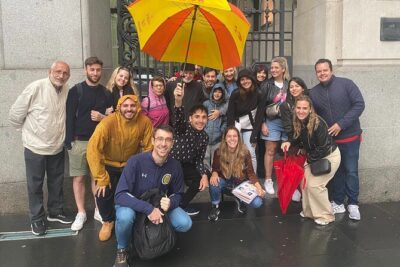
Browse the lists this tour appears in