
Review · ATHENS
Athens Highlights: Myths & Philosophers Walking Tour
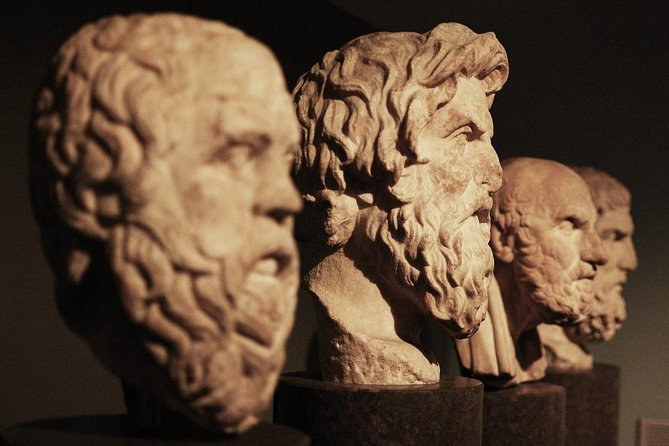
Athens has a fine way of turning a city walk into a thinking exercise. This private tour links the Academy of Athens, the Agora, Plaka, and Areopagus Hill with stories about Socrates, Plato, and the early Greek thinkers, so you see the city while asking why its ideas still matter.
I like the one-to-one format, which lets you stop and question your guide instead of following a fixed lecture. I also like the mix of famous sights and quieter corners, from the National Garden to Anafiotika, with the changing of the guard and an Acropolis view added along the way.
The main drawback is the pace and length. Four hours on Athens pavements can feel long in hot weather, and admission fees are not included at the Ancient Agora, the Tower of the Winds, or other paid sites. This is best for people who enjoy discussion, not just sightseeing.
Key points to know before you book
- A private English-language walk: Only your group takes part, so you can ask questions and shape the conversation.
- A philosophy-led route: Socrates, Plato, Thales, Stoicism, Cynicism, mythology, democracy, physics, and ethics all enter the story.
- A strong city walk: The route connects the Academy, Parliament, National Garden, Ermou Street, the Ancient Agora, Plaka, and Areopagus Hill.
- A memorable finish: Areopagus Hill gives you a broad view toward the Acropolis while the guide discusses Olympian gods and ancient Athens.
- About four hours on foot: Wear sensible shoes and plan for sun, uneven ground, and regular pauses.
- Good value for the right group: At $102.80 per person, the cost makes more sense for people who want a personal guide and real conversation.
Athens as a classroom, from the Academy to Areopagus
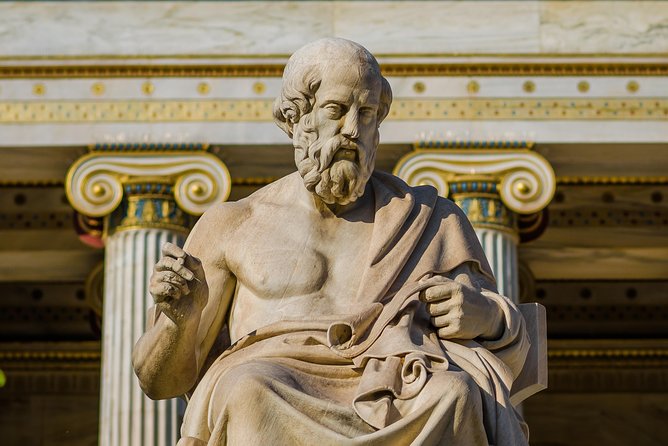
This is not a standard highlights walk with a few names from a history book added on top. The main idea is to connect places in Athens with the questions that grew from them: What is justice? How should a city govern itself? What can people know? How do myths explain the world?
Your guide leads the conversation in English and can respond to the level of your group. The strongest feedback comes from this personal exchange. Bianca is especially praised for making philosophy clear and conversational, while John is noted for working well with parents, teenagers, and young adults. Gianni and Effrosyni are also named as guides who brought strong subject knowledge and energy to the walk.
That does not mean you are guaranteed a particular guide, so ask when booking if a specific person matters to you. The guide’s style will shape the experience. A good match can turn a difficult subject into a lively discussion. A group hoping for a quick checklist of monuments may find the philosophical approach slower than expected.
The private format matters. You can ask for more on the pre-Socratics, spend extra time on Socrates, or connect Plato’s ideas to modern life. Families with different levels of interest can also benefit, since the guide can give a short explanation to one person and go further with another.
More City Highlights Walking Tours in Athens:
- Athens: City Highlights Nighttime Walking Tour in Spanish
★ 4.8 · 101 reviews - Ho Chi Minh City Street Food Tour & Sightseeing By Motorbike
★ 5.0 · 9,413 reviews - Historic Charleston Guided Sightseeing Walking Tour
★ 5.0 · 6,216 reviews
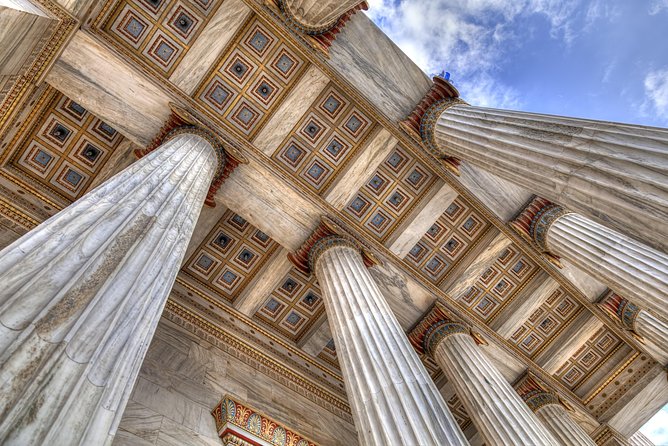
The Academy of Athens and the Trilogy
The walk begins at Panepistimiou in central Athens, near the Academy of Athens. You pause for about 15 minutes to view the Trilogy of Athens and set the scene for the intellectual movements of ancient Greece.
This is a fitting starting point because the tour begins with ideas before moving into the ancient civic spaces where those ideas took shape. The Academy building itself also gives the opening a grand visual setting, although the stated admission arrangement means you should not assume an interior visit. The tour is primarily a walking experience, and entrance fees are not included.
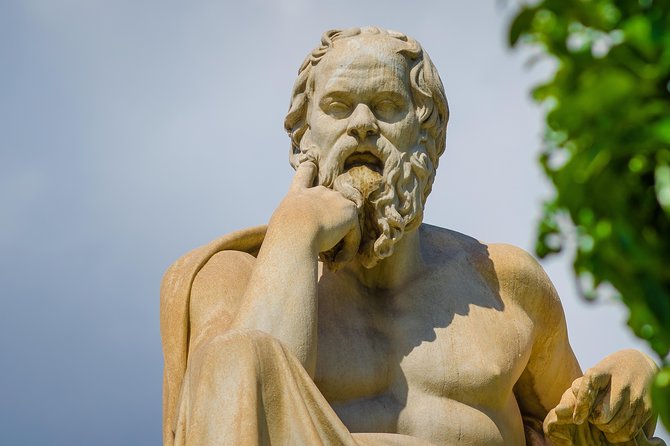
At this first stop, expect the guide to introduce the broad sequence of Greek thought. Thales of Miletus and the pre-Socratics appear early in the story, followed by Socrates, Plato, Aristotle, and later schools such as Stoicism and Cynicism.
You do not need a philosophy degree. The best approach is to arrive curious and willing to ask simple questions. The guide’s job is to explain how these thinkers tried to understand nature, knowledge, ethics, and public life, not to make you memorize dates.
The coin collection stop
A museum stop is also part of the route, described as a place with one of the world’s great collections of ancient and modern coins. The supplied tour details do not specify the museum’s name, time allowed, or whether entry is included, so I would confirm those points before paying for admission or planning extra time.
The stop adds a useful physical link to the discussion. Coins are small objects, but they can show rulers, symbols, gods, political power, and changing ideas about public identity. If you like material history, this may be one of the more interesting pauses. If your priority is the philosophers themselves, it may feel like a short side note.
The Hellenic Parliament and the changing guard
At the Hellenic Parliament, you spend about 15 minutes in front of the building and watch the changing of the Presidential Guard. This is one of the route’s clearest links between ancient civic life and modern Greece.
The guard ceremony is visual and easy to enjoy even if you are not focused on philosophy. Your guide can place it within the wider story of Greek public tradition, then bring the discussion back to citizenship, law, and the way Athens has shaped political language.
The stop is free, and you do not need to enter the Parliament building. The main practical point is timing. The tour says you will witness the changing of the guard, but it does not state a specific departure time or guarantee a particular ceremony schedule. Confirm the meeting time and ceremony details if this is a major reason for booking.
More Walking Tours in Athens:
- Athens: Acropolis and Parthenon Guided Walking Tour
★ 4.6 · 5,882 reviews - Acropolis and Parthenon Guided Walking Tour
★ 5.0 · 4,755 reviews - Greek Food Walking Tour in Athens
★ 5.0 · 4,740 reviews - Acropolis: Acropolis and Parthenon Guided Walking Tour
★ 4.7 · 3,442 reviews
The National Garden: democracy, science, and ethics

The National Garden offers a welcome change from stone streets and traffic. You walk for about 15 minutes while the guide connects Greek philosophy with democracy, physics, astronomy, ethics, and other applied fields.
This is one of the tour’s better teaching settings. A garden gives you room to pause, and the guide can explain ideas without competing with a major monument at every turn. The walk is not simply about listing philosophers. It asks how ancient questions became part of science, government, and daily conduct.
The stop is free, but the tour remains outdoors. In warm months, shade and water matter. Bottled water, coffee, or tea are included, which is useful during a four-hour walk, but you should still plan for Athens sun and comfortable shoes.
Ermou Street and the story of Hermes
On Ermou Street, the subject shifts to Hermes, the mischievous god associated with travel, messages, trade, and cleverness. The setting brings mythology into modern city life, since Ermou is one of central Athens’ best-known commercial streets.
I like this change of tone. After serious discussion of ethics and political thought, a myth about a quick-witted god keeps the route from becoming too academic. It also shows how old names and stories continue to sit inside the modern city.
The stop is free and lasts about 15 minutes. Expect a short talk while standing or walking in a central urban area, not a formal museum presentation. If you want long shopping time on Ermou Street, build that into another part of your day.
Monastiraki and the Church of Pantanassa
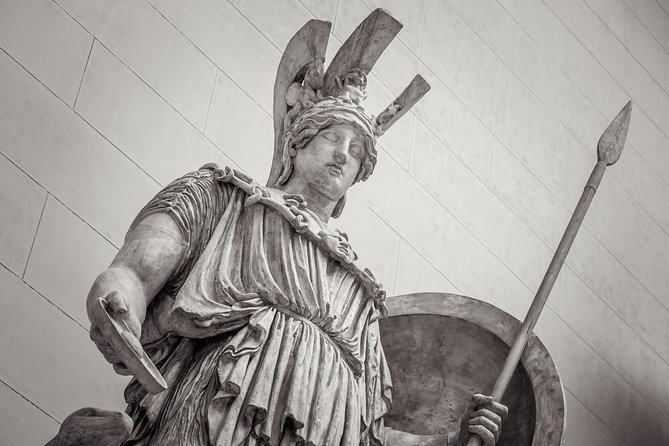
The route includes a stop in the area named after the Church of the Pantanassa, located within the square. The supplied details do not give a separate stop number or duration, so this appears to be a brief connection point rather than a long scheduled visit.
This part of Athens helps link the old city to everyday urban life. You may find the guide using the square and church to explain how place names, religious buildings, and older neighborhoods survive as the city changes around them.
Since the tour covers many subjects, do not expect a long church visit unless your guide confirms one. The value here is the setting and the way it helps you move from central Athens toward the ancient sites.
The Ancient Agora and the birth of Stoicism
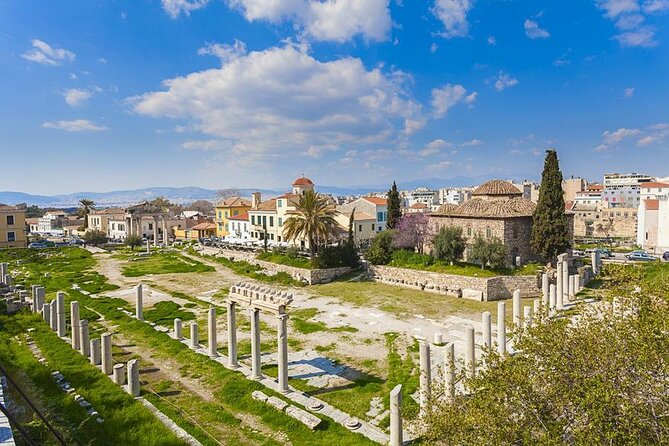
The Ancient Agora is one of the most important stops. You learn about the Poikile Stoa, the painted porch associated with the beginnings of Stoic philosophy.
The Agora was a civic center, so it is an especially useful place to discuss how philosophy worked in public life. The ideas were not confined to classrooms. They were argued in spaces where people met, traded, governed, and watched city affairs unfold.
The scheduled stop is about 15 minutes. Admission is not included, so check whether your tour involves viewing the site from outside or entering the archaeological area. If entry is required, add the ticket cost to the advertised $102.80 per person.
I would not book this tour expecting a full archaeological-site visit unless that is confirmed. The route has many stops, and the listed times are short. The philosophy talk is the main product, with the monuments providing context.
The Tower of the Winds and Aiolos
The Tower of the Winds gives the tour another chance to connect a real building with myth and science. While looking at this famous structure, you hear about Aiolos, keeper of the winds.
This stop works on two levels. The myth explains the winds through the gods, while the tower points toward observation, measurement, and the practical study of weather and time. That blend of story and science is typical of the walk.
The stop lasts about 15 minutes, and admission is not included. As with the Agora, confirm whether the plan is an exterior look or an optional entrance. You can enjoy the explanation without entering, but the ticket question matters when comparing the total cost with other Athens walks.
Anafiotika and the Cynic philosophers
The route then climbs into Anafiotika, in the Plaka area beneath the Acropolis. You spend about 20 minutes learning about the Cynic philosophers.
This is one of the most atmospheric sections of the walk. Anafiotika is known for its small-scale setting and position below the Acropolis, so the surroundings feel different from the formal avenues near Parliament. The guide uses that change of place to discuss Cynic ideas and their challenge to comfort, status, and social convention.
The stop is free, but the ground may be uneven and the route includes walking uphill toward the Acropolis area. This is not a serious hiking tour, yet anyone with mobility concerns should ask about the exact route before booking. Service animals are allowed, and the activity is near public transportation.
The guide may also adjust the conversation here based on your interests. A family with teenagers might focus on the unusual lives of the Cynics. A philosophy student may want to compare Cynicism with Stoicism or Socratic teaching.
Areopagus Hill and the final Acropolis view
The tour ends on Areopagus Hill, also called Mars Hill, with a view toward the Acropolis. The final 15-minute stop brings in myths about the Olympian gods and gives the route a clear visual finish.
This is a good place to end because the view gathers the day’s subjects into one scene. You have moved through modern government, ancient civic space, myth, science, and philosophy, and now you can look across the city from a historic hill.
The rock can be uneven and slippery, particularly if conditions are poor. The tour requires good weather, and bad weather can lead to a new date or a full refund. Even on a clear day, shoes with a firm grip are a sensible choice.
The end point is Areopagus Hill, not the starting point. That matters if you have an evening reservation, a ferry connection, or a fixed hotel transfer. You finish near the Acropolis and Plaka area, which can be convenient for further sightseeing, but it is not the same location where you began.
Is $102.80 per person good value?
The price is high for a four-hour walking tour, especially because entrance fees are not included. Yet this is not priced like a basic group orientation walk. You are paying for a private experience, an English-speaking guide, and time to ask questions.
For two people, the cost buys privacy and a conversation shaped around your interests. For a family or larger group, group discounts may improve the value. I would compare the final cost with the price of a standard shared tour plus any private museum or archaeology guide you might otherwise add.
The value is strongest if you want philosophy to be the main subject. Bianca’s ability to adjust between a beginner and a more advanced student is exactly the kind of flexibility that makes a private tour worthwhile. Several guides are described as extending conversations beyond the official four hours, but you should not count on extra time when arranging your day.
Coffee or tea and bottled water are included. Personal spending and all entrance fees are not. The experience is booked, on average, about 53 days ahead, which suggests you should reserve early if your Athens dates are fixed.
Who should take this walk?
I would choose this for:
- Adults who studied philosophy and want to revisit the ideas in Athens itself.
- Families with teens or young adults who enjoy myths, debate, and ancient history.
- Couples who prefer a thoughtful private walk to a large group tour.
- First-time visitors who want major sights with a clear theme.
- Repeat visitors who have already seen the Acropolis and want a different way to understand the city.
I would think twice if you dislike long conversations, want to enter every monument, or have limited walking stamina. Four hours is a substantial commitment, and the route covers central streets, archaeological areas, garden paths, Plaka, and a rocky hill.
The activity is offered in English. Most people can take part, it is close to public transportation, and service animals are allowed. Confirmation arrives at booking. Free cancellation is available up to 24 hours before the start time, while later cancellations and changes are not refunded or accepted.
Should you book Athens Highlights: Myths & Philosophers?
Book it if you want Athens to be more than a set of impressive ruins. The tour gives you a personal guide, a clear intellectual theme, and a route that joins famous landmarks with less obvious links to myths and philosophy.
I especially like it for families with mixed levels of interest. A skilled guide can keep a teenager involved while giving a serious philosophy student enough room to ask harder questions. The strongest guides named in the feedback, including Bianca and John, are praised for making the discussion feel like a conversation rather than a school lesson.
Skip it if your main goal is maximum monument access or a fast overview of Athens. With short stops, excluded admission fees, and four hours of walking, this is not the cheapest or most efficient way to tick off sights.
For the right group, though, $102.80 buys something more useful than a list of dates. You leave with places attached to ideas, which makes the rest of your time in Athens easier to understand.
FAQ
Where does the tour start?
It starts at Panepistimiou, Athens 106 79, Greece.
Where does the tour end?
It ends at Areopagus Hill, Theorias 21, Athens 105 55, Greece.
How long does the tour last?
The tour lasts approximately four hours.
Is this a private tour?
Yes. Only your group takes part in the activity.
What language is the tour offered in?
The tour is offered in English.
Who are the guides?
Guides named in the available information include Bianca, John, Gianni, and Effrosyni. A particular guide is not guaranteed unless confirmed when booking.
Are entrance fees included?
No. Entrance fees to points of interest are not included. The Ancient Agora and Tower of the Winds are specifically listed with admission not included.
Are food and drinks included?
Coffee or tea and bottled water are included. Personal expenses are not included.
Is the tour suitable for most people?
Most people can participate, and the tour is near public transportation. It is a walking activity that includes Anafiotika and Areopagus Hill, so you should consider your comfort with four hours of walking and uneven ground.
What happens if the weather is poor?
The activity requires good weather. If it is canceled because of poor weather, you will be offered a different date or a full refund.
New routes in Athens
- The Acropolis, Athens Walking City Tour and Acropolis Museum★ 5.0 · 442 reviews
- Athens Street Food Walk★ 5.0 · 385 reviews
- Acropolis monuments, Parthenon and Plaka, Monastiraki walking tour★ 5.0 · 182 reviews
- Athens Shore Excursion: Acropolis Walking Tour★ 4.5 · 131 reviews
- Athens Street Art Walk★ 5.0 · 309 reviews
- Athens at Night Small-Group Walking Tour with Dinner★ 5.0 · 230 reviews
- Athens Off the Beaten Track Private City Walking Tour★ 5.0 · 304 reviews
- Athens Gourmet Food Small Group Walking Tour★ 5.0 · 213 reviews
Athens Walking Tours, compared.


Acropolis monuments & Parthenon Walking Tour with Optional Acropolis Museum
Read our review →
Acropolis, Parthenon & Athens Old City Heritage Walking Tour
Read our review →
The Acropolis Walking Group Tour with a French Guide
Read our review →
Athens Food Tour with 10+ Tastings of Greek Traditional Dishes
Read our review →Browse the lists this tour appears in