
Review · SPAIN
Toledo: Guided Monument Walking Tour with Wristband Pass
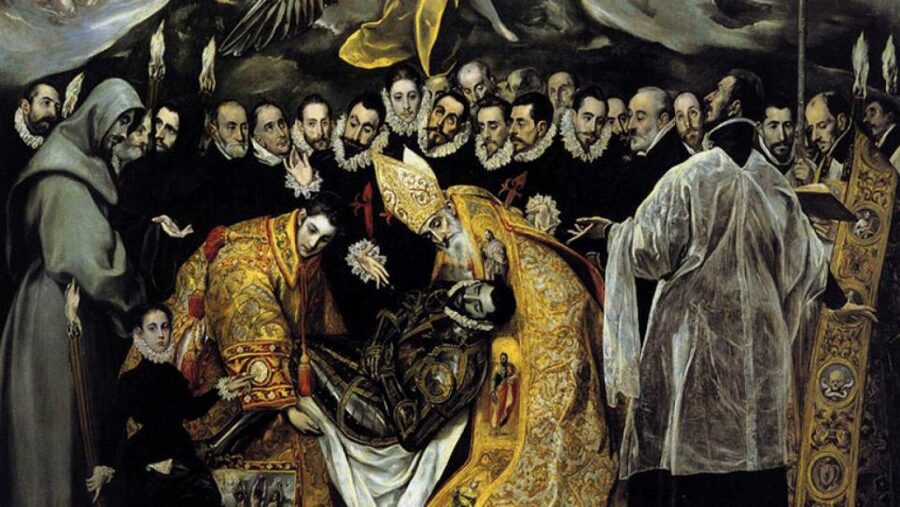
The emotional high point comes inside Santo Tomé, where El Greco’s Burial of the Lord of Orgaz fills the chapel with an unforgettable mix of color, movement, and solemn faces. I like that this three-hour walk gives you both a clear introduction to Toledo and a wristband for seven monuments, so you can keep exploring after the guide leaves.
I also like the personal touch of local guides such as Raquel, Jesus, Tamara, and Carmen, who explain the city through stories rather than a string of dates. The main consideration is the bilingual format: if English and Spanish are spoken together, the tour can take longer and some English speakers may find a strong accent or repeated explanations harder to follow.
Key points to know before you book
- El Greco’s Burial of the Lord of Orgaz: See Toledo’s most famous painting inside the Church of Santo Tomé.
- Three major monuments with a guide: Visit Santo Tomé, Santa María la Blanca, and San Juan de los Reyes.
- Seven sites on one wristband: Continue independently to four additional monuments during your stay.
- A useful first-day orientation: The walk helps you understand Toledo’s old streets and the story of its three faiths.
- Bilingual tours are possible: English and Spanish may be spoken at the same time.
- Comfortable shoes matter: Expect narrow streets and a moderate amount of walking, though one review found the route avoided excessive hill walking.
Why this Toledo walk works so well
Toledo can feel confusing at first. Its old town is a tight maze of lanes, small squares, churches, former synagogues, and stone walls. The city is easy to walk once you understand its shape, but less easy to interpret when each corner seems to offer another layer of history.
This tour gives you that first map in your head. You meet at Zocodover Square, beside the yellow mailbox, then walk with a guide to three important monuments. Along the way, you hear how Christian, Jewish, and Muslim communities shaped Toledo, a theme often called the city’s Three Cultures.
I like this approach because the tour does not try to show you every church and doorway in one rushed sweep. Instead, it uses three strong examples: a church famous for a major painting, a former synagogue with striking architecture, and a monastery tied closely to Spain’s Catholic Monarchs.
The guides are a large part of the experience. Names praised in the feedback include Raquel, Jesus, Tamara, Carmen, Susanna, Olga, and Marianne. Their strengths vary, but the pattern is clear: you can expect a guide who explains the setting, answers questions, and adds local details that are easy to miss on your own.
The tour is listed as a private group experience, although the precise group size may vary. Several people appreciated small groups and personal attention. One family found the pace comfortable, while another person liked having time to take photographs and look around instead of listening every second.
More Guided Walks in Spain:
- Granada: Albaicín and Sacromonte Guided Sunset Walking Tour
★ 4.9 · 2,962 reviews - Madrid: Tapas & Wine Tasting Tour with Local Guide
★ 4.8 · 2,171 reviews - Madrid: Royal Palace Skip-the-Line Guided Tour
★ 4.5 · 2,140 reviews
Meeting in Zocodover Square
Zocodover Square is a practical starting point. It is central, easy to identify, and a sensible place to begin learning how Toledo fits together. Look for the yellow mailbox and arrive 10 to 15 minutes early.
That early arrival matters. Toledo’s lanes can be confusing, and arriving at the last moment leaves little room for a wrong turn. It also gives the guide time to check the group before setting off.
The starting point places you near the heart of the old town, but the monuments are not lined up in a simple row. The order of visits can change, so you should treat the route below as the main content rather than a guaranteed sequence.
From the square, expect a walking tour through old streets and squares. The city’s UNESCO World Heritage status, granted in 1986, is not hard to understand once you begin moving through its compact historic center. The buildings do not tell one single story. They show how religious, political, and artistic power changed hands over many centuries.
Santo Tomé and El Greco’s great painting
The Church of Santo Tomé is the tour’s artistic centerpiece. Inside, you see El Greco’s Burial of the Lord of Orgaz, one of the best-known paintings in Spanish art.
The subject comes from the story of the burial of Gonzalo Ruiz, Lord of Orgaz. The painting brings together a funeral scene below and a heavenly vision above. Even without a long art lecture, the contrast is easy to notice: the lower section feels crowded and earthly, while the upper section stretches upward through elongated figures and unusual color.
A good guide helps you look at the painting in stages. You can first take in the overall scene, then examine the faces, clothing, gestures, and division between the human and divine worlds. The painting rewards a few quiet minutes, so I appreciate that this stop is not treated as a quick photo opportunity.
The church itself is more than a container for the artwork. It connects the painting to Toledo’s religious life and to the city’s long relationship with El Greco, who lived and worked here. The guide’s explanation gives the picture a place in the city rather than presenting it as an isolated masterpiece.
For many people, this is the clearest reason to book the walk. If you already know Toledo’s basic history, El Greco may be your main target. If you know little about the city, the painting gives you an immediate, memorable entry point.
Santa María la Blanca in the Jewish Quarter
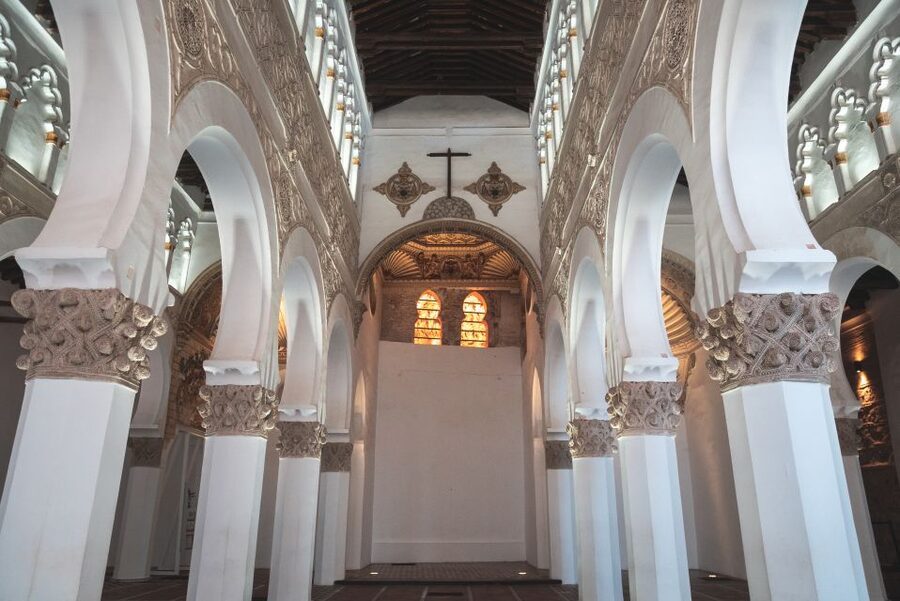
The next major stop is the Synagogue of Santa María la Blanca, described as the oldest standing synagogue in Europe. Built in the 12th century, it was converted into a Catholic church in the 15th century. Today it functions as a cultural and historical monument.
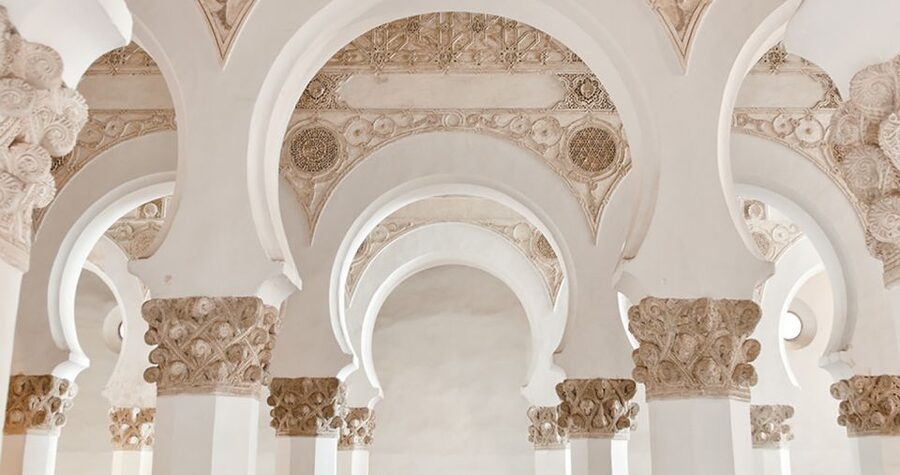
The change of use is central to understanding the building. Its present name reflects its Christian history, but its design preserves the character of a medieval synagogue. Inside, the white walls and rows of horseshoe arches create a calm, unusually spacious effect.
This is the monument that best shows why Toledo cannot be reduced to a single religious identity. The building carries Jewish origins, Christian use, and the memory of a city where different faiths lived alongside one another, sometimes peacefully and sometimes under great strain.
I would listen closely here, especially if you want more than attractive architecture. The guide can explain how the building’s form, history, and later use fit into the wider story of Toledo’s Jewish Quarter. It is also one of the places where a few minutes of quiet observation pay off. Look up at the repeated arches and let the space speak before moving on.
The description of Toledo as a place of interfaith coexistence is useful, but you should hear it as part of a complicated past, not as proof that every period was peaceful. A thoughtful guide, such as Raquel, Carmen, or Jesus, can give that theme more balance by placing the buildings within Spain’s changing political and religious history.
More Walking Tours in Spain:
- Barcelona Tapas and Wine Experience Small-Group Walking Tour
★ 5.0 · 5,804 reviews - Barcelona: Tapas Walking Tour with Food, Wine, and History
★ 4.8 · 4,261 reviews - Madrid Tapas & Wine Tasting Walking Tour – Small Group Local Bars
★ 5.0 · 3,644 reviews - Toledo Tour & Vineyard Walk with Wine Tasting from Madrid
★ 5.0 · 2,546 reviews
San Juan de los Reyes and the Catholic Monarchs
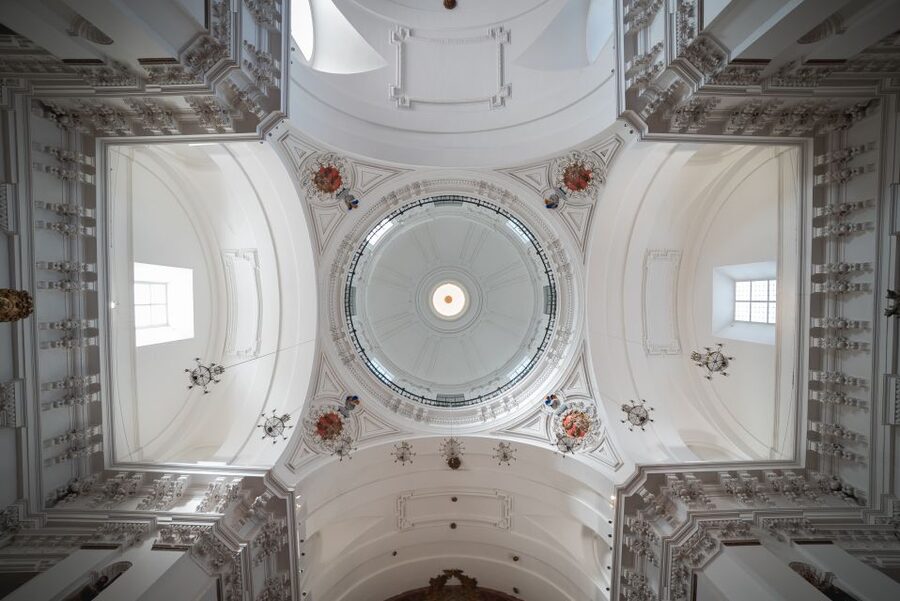
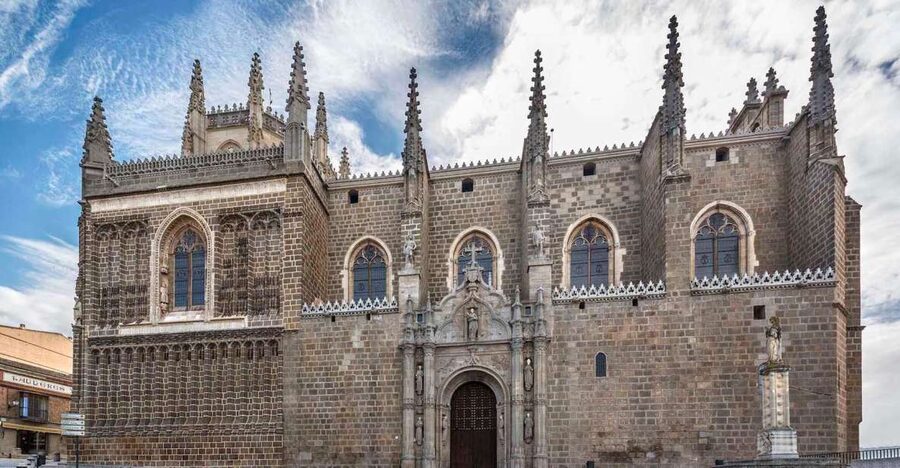
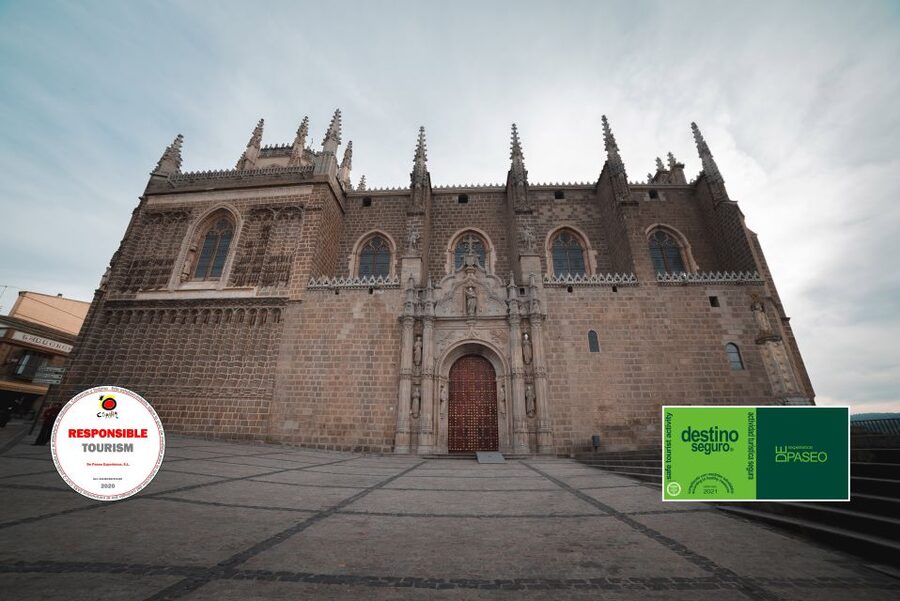
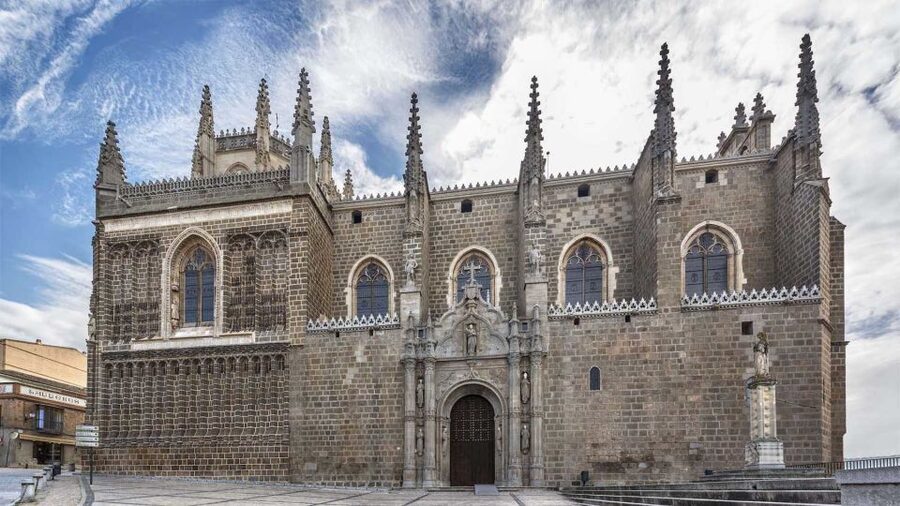
The Monastery of San Juan de los Reyes is the third guided monument. Its architecture is generally described as Spanish-Flemish Gothic, and it has a strong connection to Queen Isabella and King Ferdinand, the Catholic Monarchs.
This is the most politically charged stop on the route. The monastery was linked to the personal and political life of the monarchs, so its design and purpose tell you something about royal ambition as well as faith.
The building’s Gothic character can feel more elaborate than the quiet interior of Santa María la Blanca. Look for the contrast between structural lines, decorative detail, and the monastery’s sense of royal purpose. The guide’s job is to help you see how architecture can act as a political statement.
This stop also completes the tour’s three-part structure. Santo Tomé brings art to the front. Santa María la Blanca focuses attention on Jewish history and changing religious use. San Juan de los Reyes shows the power of the Christian monarchy. Together, the sites give you three different ways to read Toledo.
The walking between them is part of the lesson. Toledo’s old streets are narrow, and the city rises and falls. You will not simply move from doorway to doorway on a flat route. Wear shoes with good support and expect a moderate amount of walking.
What the wristband adds after the guided walk
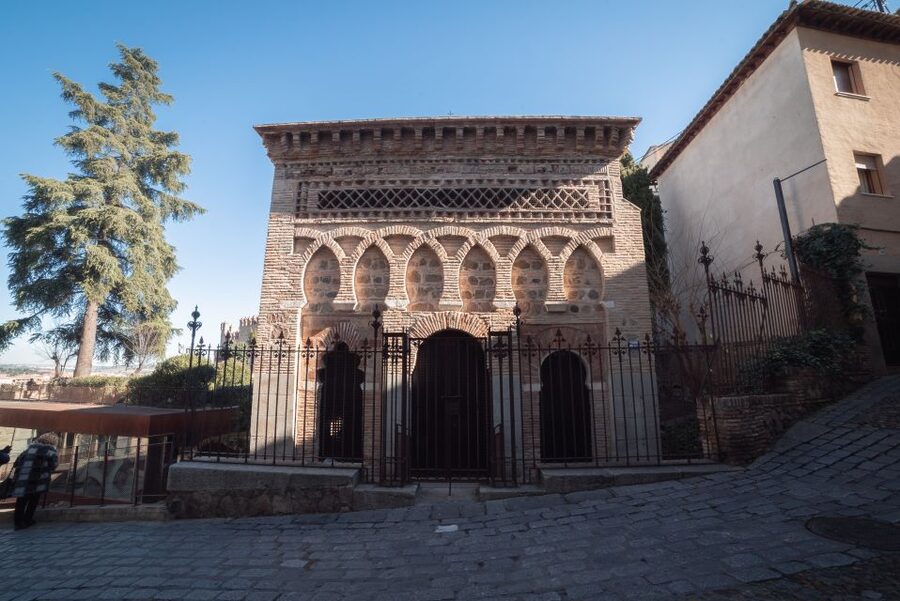
The wristband is more than a small extra. It gives you access to seven monuments in total:
- Monastery of San Juan de los Reyes
- Synagogue of Santa María la Blanca
- Church of Santo Tomé
- Jesuit Church
- Mosque of Cristo de la Luz
- Church of El Salvador
- Royal College of Noble Maidens
The first three are part of the guided visit. The other four give you a reason to keep exploring on your own. This is especially useful if you are staying overnight, since the wristband remains valid throughout your stay in Toledo.
I like the freedom this creates. The guide can explain the main places, then you can choose the sites that match your interests. The Jesuit Church may appeal if you want another Christian monument. The Mosque of Cristo de la Luz adds an important Islamic chapter. El Salvador and the Royal College of Noble Maidens broaden the picture beyond the three headline stops.
The wristband also changes the value calculation. At $125 per person, the tour is not a cheap way to enter three buildings. You are paying for a three-hour guided introduction, live interpretation in English or Spanish, skip-the-ticket-line access, and entry to seven monuments over the course of your stay.
If you use the pass well, it can make more sense. A visitor staying only a few hours and unable to see the additional sites may find the price harder to justify. Someone with a full afternoon, an overnight stay, or a strong interest in Toledo’s religious buildings gets more from the package.
One useful detail came through clearly: the wristband is issued as part of the tour, not as an advance pass that you can collect before the meeting. If your tour starts after noon and you have only one day, you may lose some time that could otherwise be spent visiting the extra monuments.
The bilingual format and guide quality
The tour runs in English and Spanish, and it may be conducted in both languages at once. This can work well when the guide is skilled. Jesus received praise for keeping a bilingual walk inclusive, and Olga was noted for giving Spanish and English explanations without making the English speakers feel left out.
The tradeoff is time. Each explanation may be repeated, and you may spend part of the tour listening in a language you do not speak. One person found a strong accent difficult to understand, while another preferred not to book a bilingual tour again.
I would book it if you are comfortable with a slower rhythm and can use the pauses to take photographs or study the monuments. I would think twice if every minute matters or if you need very crisp English interpretation.
The strongest guide comments focus on warmth, local pride, clear explanations, and humor. Jesus was repeatedly described as enthusiastic and passionate about Toledo. Raquel was praised for connecting the city’s history to Spain as a whole. Tamara was valued for answering questions and keeping the experience comfortable. Carmen was especially good at transitions between sites and engaging different members of a group.
Guide assignments can change, so you cannot book a particular personality. Still, the repeated praise suggests that the human side of this tour is a major part of its appeal.
Walking, access, and practical comfort
The route involves a moderate amount of walking through Toledo’s historic center. Comfortable shoes are essential. The streets are narrow, and some uphill or downhill sections are likely, although one person specifically appreciated that the walk did not involve excessive hill climbing.
The activity is marked as wheelchair accessible. Toledo’s old center can still present physical challenges because of its historic streets and changing levels, so you should confirm any individual access needs when booking.
Food is not allowed inside the monuments. Plan to eat before the tour or save snacks for later. You should also leave room in your schedule after the walk, since the wristband works best when you are not rushing immediately to another appointment.
The tour lasts three hours. That is long enough for proper explanations at the three main monuments, but short enough to leave time for lunch, further sightseeing, or a return to one of the included sites.
Free cancellation up to 24 hours before the start and reserve-now, pay-later booking add flexibility. These details matter if your Toledo day depends on trains, weather, or a changing Madrid schedule.
Who should book this tour?
I would recommend it to a first-time Toledo visitor who wants a strong orientation before exploring alone. It suits anyone interested in art, medieval religious buildings, Spanish royal history, or the relationship between Toledo’s Christian, Jewish, and Muslim traditions.
Families can benefit from the clear structure and guide-led storytelling. The moderate pace and time for photographs also make it easier for a mixed-age group than a lecture-heavy indoor tour.
It is less suited to someone who wants a completely private, self-guided experience with no bilingual explanations. It may also be poor value if you cannot use the wristband after the guided portion.
Should you book the Toledo wristband tour?
Book it if you want context as well as entry tickets. Santo Tomé, Santa María la Blanca, and San Juan de los Reyes are more rewarding when you understand the people, beliefs, and political changes behind them. The extra four monuments make the pass useful for a longer stay.
Think carefully about the $125 price if you have only a short stop in Toledo, especially if your start time is late. Also accept that the route order can change and that English and Spanish may be spoken together.
For most first visits, I would choose this as an opening activity, then use the wristband to continue independently. It gives you a firm sense of place without trying to explain every corner of the city in one sitting.
FAQ
Where does the Toledo tour meet?
The meeting point is Zocodover Square, next to the yellow mailbox.
How long does the walking tour last?
The guided experience lasts three hours.
Which monuments are visited with the guide?
The guided tour includes the Church of Santo Tomé, the Synagogue of Santa María la Blanca, and the Monastery of San Juan de los Reyes.
What painting can I see at Santo Tomé?
You can see El Greco’s Burial of the Lord of Orgaz, one of the most important works of Spanish painting.
How many monuments does the wristband include?
The wristband provides access to seven monuments in total.
Which additional sites can I visit with the wristband?
The additional sites are the Jesuit Church, Mosque of Cristo de la Luz, Church of El Salvador, and Royal College of Noble Maidens.
How long does the wristband remain valid?
The wristband remains valid throughout your stay in Toledo.
Is the tour offered in English?
Yes. The live guide can conduct the tour in English and Spanish. Both languages may be used during the same visit.
Is the tour wheelchair accessible?
The activity is listed as wheelchair accessible. The route still involves a moderate amount of walking through Toledo’s historic center.
Can I cancel the booking?
You can cancel up to 24 hours in advance for a full refund. Reserve-now, pay-later booking is also available.
New routes in Spain
- Toledo: Guided Walking Tour with Cathedral Ticket and Tour★ 4.2 · 98 reviews
- Valencia: Fallas Festival Walking Tour with Entry Ticket★ 4.6 · 86 reviews
- Barcelona: “The Shadow of the Wind” Literary Walking Tour★ 4.5 · 176 reviews
- Tenerife: Underwater Walk – Sea Trek Experience★ 5.0 · 237 reviews
- Tarragona: Roman Heritage Guided Walking Tour★ 4.7 · 261 reviews
- Seville: Sunset Roof Top Walking Tour★ 4.2 · 131 reviews
- Seville: Paranormal and Legends Guided Walking Tour★ 4.7 · 336 reviews
- Seville: Small-Group Jewish Quarter Discovery Walking Tour★ 4.9 · 499 reviews
Spain Walking Tours, compared.
Barcelona Tapas and Wine Experience Small-Group Walking Tour
Read our review →
Tapas Walking Tour with Food, Wine, and History
Read our review →
Madrid Tapas & Wine Tasting Walking Tour – Small Group Local Bars
Read our review →
Albaicín and Sacromonte Guided Sunset Walking Tour
Read our review →
Toledo Tour & Vineyard Walk with Wine Tasting from Madrid
Read our review →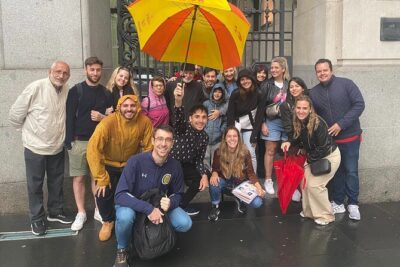

Browse the lists this tour appears in