
Review · SYDNEY
Sydney: City & The Rocks 3.5-Hour Walking Tour with a Drink
Sydney’s story is best understood on foot, and this tour connects the pieces unusually well. You start at Customs House, consider the impact of British colonisation on the Cadigal people of the Eora nation, then move through civic buildings, shopping arcades, old lanes, The Rocks, and the harbourfront. It is a city orientation with real historical weight, not just a march past famous facades.
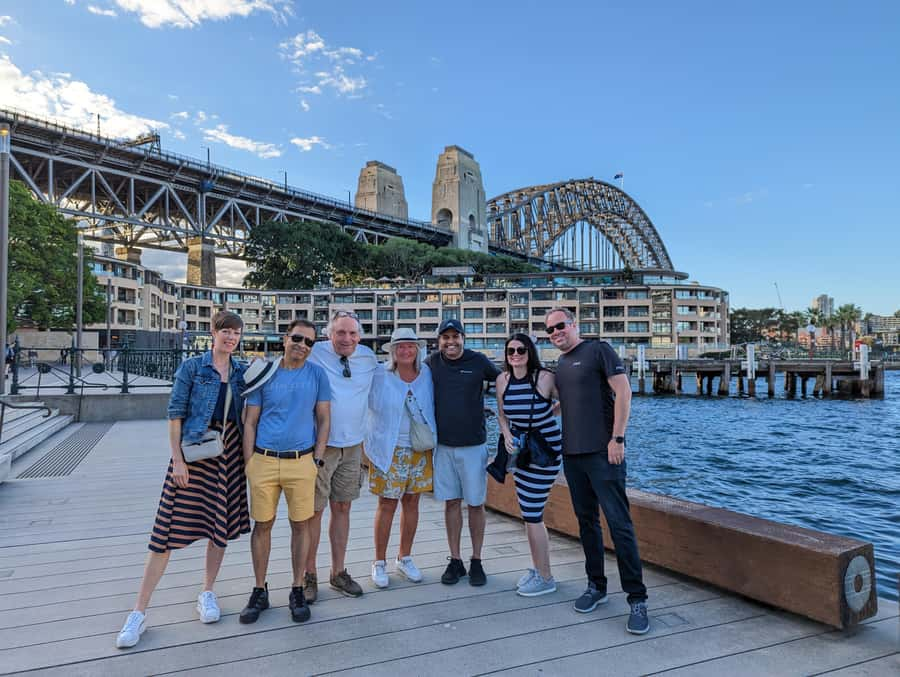
I like the small group of no more than 12 and the generous route of about 4 kilometres. You can hear the guide, ask questions, and find your bearings without fighting through a crowd. I also like the practical finish: a craft beer or soft drink at The Squire’s Landing, views of the Opera House and Harbour Bridge, and a custom map packed with food, nightlife, art, and bar suggestions.
The main catch is time on your feet. Three and a half hours of walking, some inclines, and uneven surfaces may be tiring, especially in strong sun. The tour is aimed at people aged 12 and older, and it is not normally recommended for wheelchair users or people with vision impairments without advance arrangements.
Key points to know before you book
- Start at Customs House: Meet on the steps near the small access ramp, with Circular Quay close by.
- History has several viewpoints: The route covers the Cadigal people, British governors, convicts, entrepreneurs, and later migrants.
- A proper city sweep: See the Museum of Sydney, Hyde Park Barracks, Hyde Park, the Queen Victoria Building, Angel Place, The Rocks, the Opera House, and the Harbour Bridge.
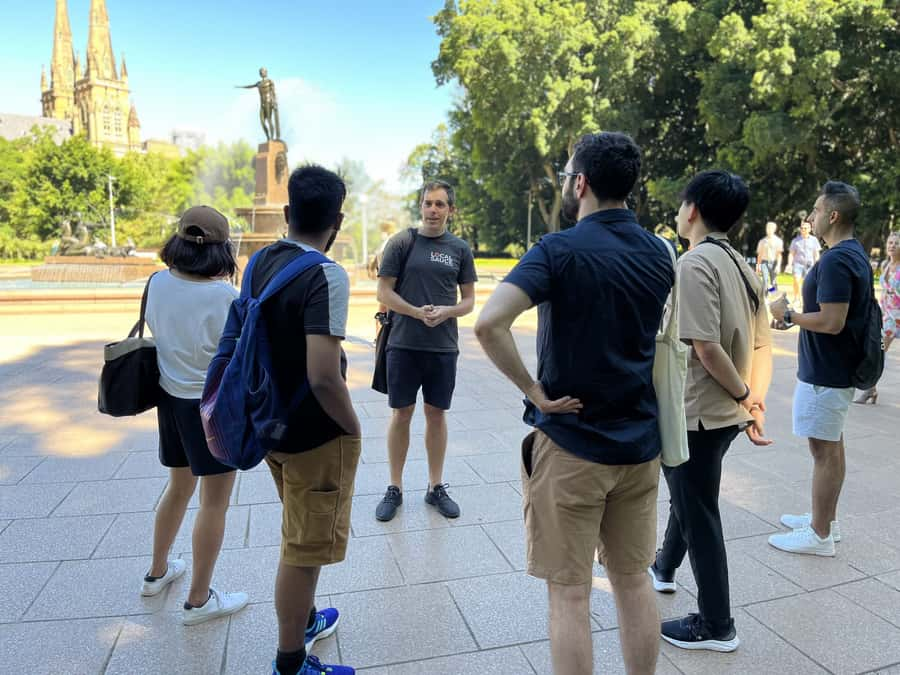
- Small groups make a difference: With up to 12 people, the guide can answer questions and keep the pace comfortable.
- Finish with a harbour view: Your included drink comes at The Squire’s Landing, with both major harbour icons in sight.
- Useful local advice is part of the value: You receive a map with suggestions for eating, drinking, art, and nightlife.
Why this is a strong first Sydney walk
Sydney can feel scattered at first. Circular Quay, the central business district, Hyde Park, the Queen Victoria Building, and The Rocks each have a different mood, and a map alone does not explain how they fit together. This walk gives you a route through the city centre while placing the buildings and streets in a wider story.
The guide does not treat Sydney as a collection of postcard stops. The opening discussion at Customs House sets up the difficult part of the city’s past: British settlement changed life for the Cadigal people of the Eora nation, whose connection to this place long predates the modern city.
That framing matters. You hear about Aboriginal people alongside British governors, convicts, business builders, and migrants from different backgrounds. The result is a more balanced account than a tour that presents colonial architecture without discussing the people and cultures affected by settlement.
I would book this near the start of a Sydney visit. The route covers enough ground to help you understand where things are, while the guide’s food and drink suggestions can shape the rest of your stay. Several guides have been praised for answering questions, offering restaurant advice, and pointing out small places you could easily miss alone.
More Walking Tours in Australia:
- Sydney Opera House Official Guided Walking Tour
★ 4.5 · 3,770 reviews - From Sydney: Blue Mountains Tour with Waterfall Walk & Lunch
★ 4.8 · 2,400 reviews - Sydney The Rocks Guided Walking Tour
★ 5.0 · 1,546 reviews
Customs House and the opening view of Sydney
The meeting point is just outside Customs House, on the steps near the small access ramp on the right as you face the building. This is a sensible start because it places you beside Circular Quay, one of Sydney’s key transport and harbour areas.
The opening section lasts about 15 minutes. You begin with Sydney’s colonisation and the Cadigal people of the Eora nation, then use that first location to understand how the harbour shaped the city’s early development.
The location is easy to find, but give yourself enough time to locate the correct steps. The group does not include hotel pickup, so you make your own way to Customs House. Once the walk begins, the route is on foot from one central stop to the next.
Civic buildings and the city’s early chapters
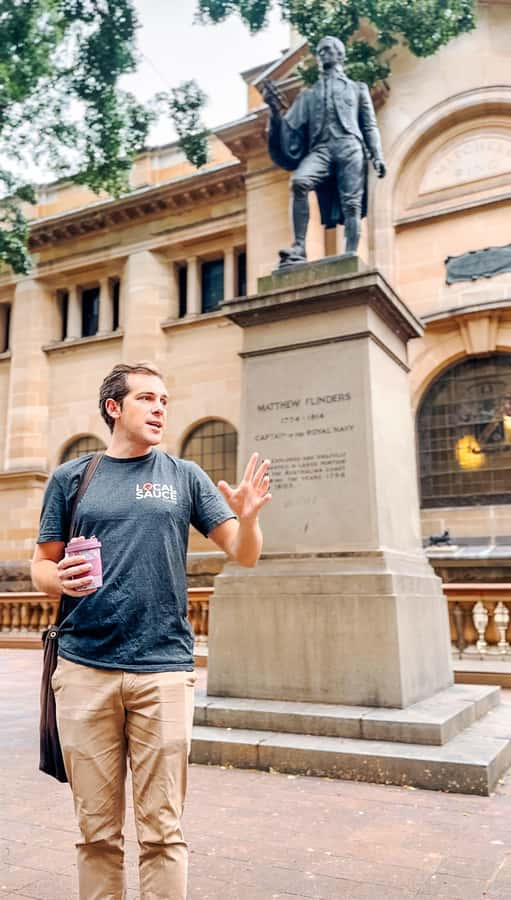
You pass the Museum of Sydney next, with another short walking and storytelling section. The museum itself is not listed as an interior visit, so think of this as an exterior stop and a chance to place the building within the city’s story.
The walk then continues past Hyde Park Barracks. This former colonial building brings the early settlement period into focus, including the role of convicts and the institutions that helped shape the new colony. Again, you pass by rather than take an extended indoor visit, so the value comes from the guide’s explanation.
That distinction is useful when deciding what to expect. This is not a museum tour with long indoor stops. It is a moving lesson, with buildings acting as prompts for stories about power, punishment, work, migration, and city growth.
At Hyde Park, you have a photo stop and a short pass through the area. The open space gives you a break from dense city streets and a different view of central Sydney. You may appreciate the pause, though the schedule is still active and does not promise a long rest.
The Queen Victoria Building and Sydney’s commercial centre
The route then reaches the Queen Victoria Building, one of Sydney’s most recognisable architectural landmarks. You have a short break and walk past the building rather than spend a long period inside.
This is a good place to notice how the tour shifts from early colonial institutions to the city’s commercial and civic identity. The route does not stay in one period. It moves from settlement and government to shopping, public life, design, and modern city use.
You also pass through the Strand area according to the route described by one guide, adding another piece of central Sydney’s built environment. The value here is contrast. You see grand public architecture, retail spaces, lanes, and newer developments within a fairly compact walk.
The stop can feel brief if you want time to browse or take detailed photographs. Keep that in mind: the tour aims to introduce the city rather than give you shopping time at the QVB.
Same streets, a different guide:
- Ultimate Melbourne Walking Tour: History, Laneways & Culture
★ 5.0 · 1,451 reviews - Sydney: The Rocks 90-Minute History Walking Tour
★ 4.7 · 1,092 reviews - Great Ocean Road Tour Plus Koalas, Forest Walk and Morning Tea
★ 4.5 · 1,068 reviews - Sydney Cricket Ground (SCG) and Museum Walking Tour
★ 4.9 · 616 reviews
The Cenotaph and Angel Place
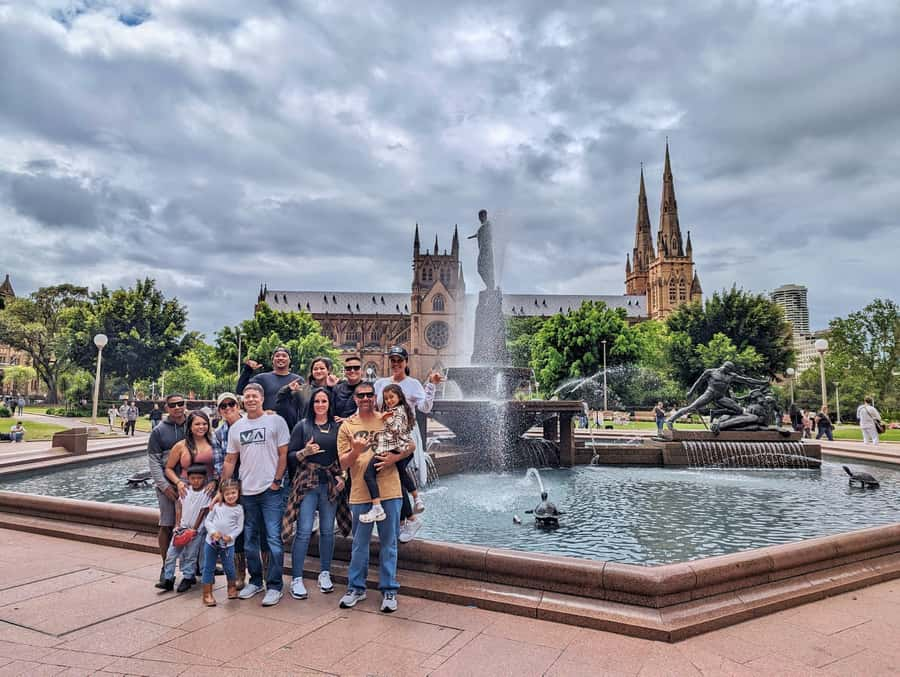
The Cenotaph provides another photo stop and a guided section of about 10 minutes. It adds a civic and memorial dimension to the walk, moving the story beyond the first settlement period and toward the public memory of modern Australia.
From there, the group heads toward Angel Place. This laneway stop is one of the more interesting details in the route because it shows a quieter side of Sydney. Instead of only visiting grand landmarks, you pass through a smaller urban space that many people might miss when following the main shopping streets.
Angel Place also helps show how Sydney’s centre has changed over time. Old lanes, offices, art, and newer uses sit close together. The guide can connect those layers without requiring you to spend the day in a museum.
The stop is brief, around 10 minutes, with time for photos. If you enjoy street details and small urban spaces, this part may be more memorable than another major building.
The Rocks, where Sydney’s stories become more layered
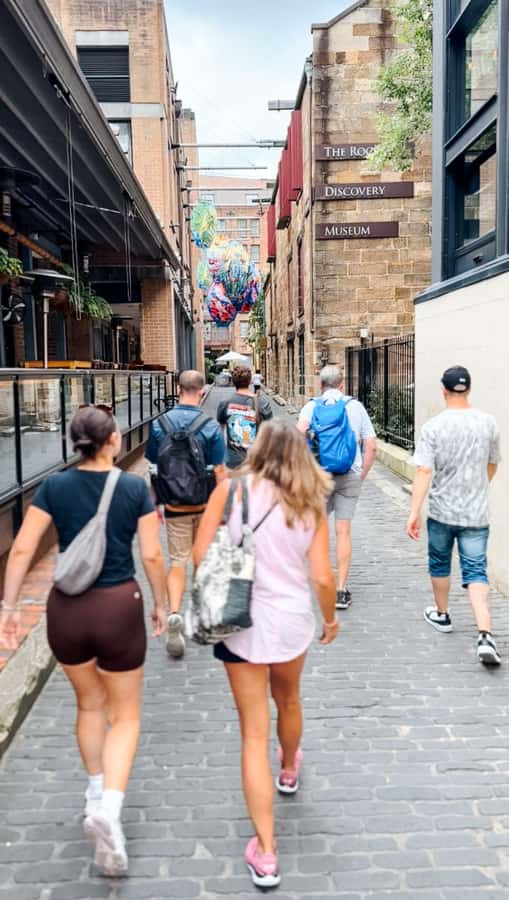
The tour spends about 30 minutes in The Rocks, the longest single section on the route. That makes sense. This precinct brings together early settlement, old streets, harbour commerce, tourism, heritage buildings, and the city’s modern identity.
You walk through part of the area rather than receive a full day in The Rocks. The guide explains the streets and buildings as you go, helping you see why the precinct matters. It is also where the route begins to feel strongly connected to the harbour and the city’s famous skyline.
The Rocks can be busy, and some surfaces are uneven. A small group helps here because the guide can keep everyone together without forming a large moving crowd. Still, stay alert when crossing streets and walking along crowded footpaths.
This is also a useful point to ask for recommendations. The guides are expected to provide advice on bars and restaurants, and several have been singled out for particularly helpful suggestions. If you have dietary needs or a strong preference for food, art, or nightlife, ask before the tour ends.
The Opera House and Harbour Bridge finale
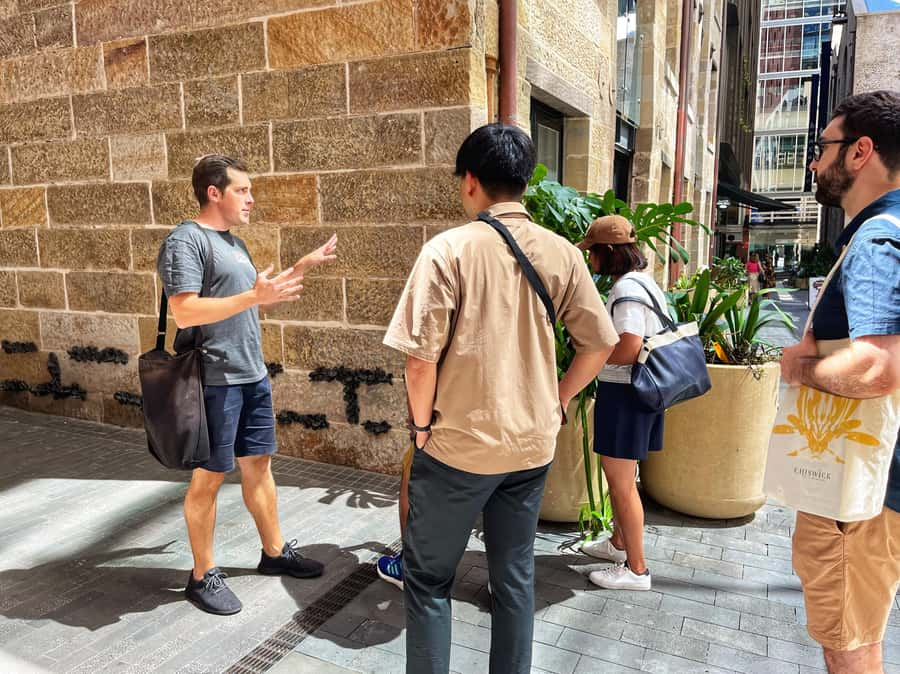
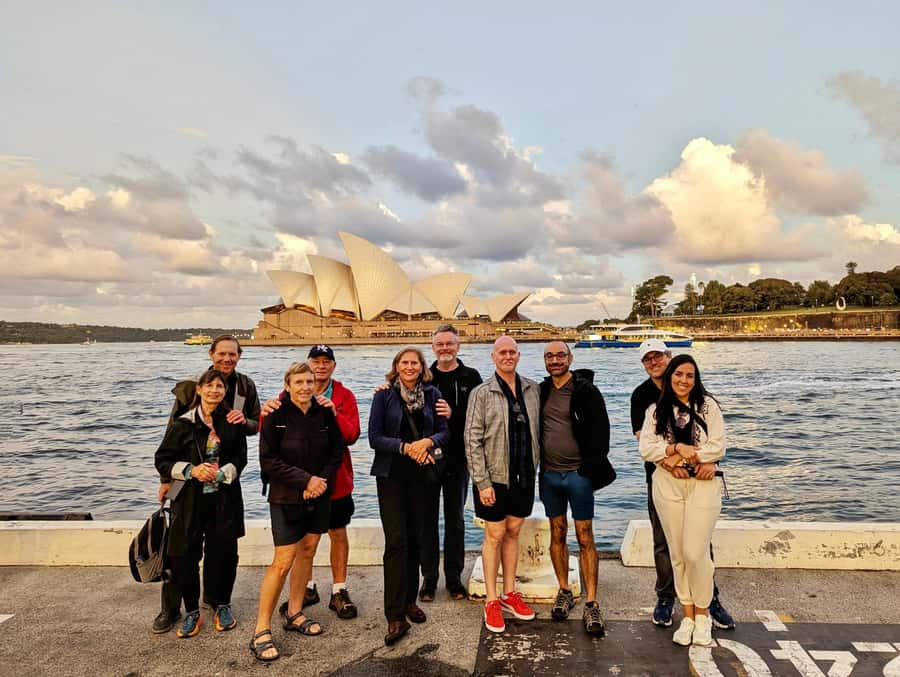
The final walking section takes you toward the Sydney Opera House and Sydney Harbour Bridge. You do not enter either landmark, but the route provides scenic views and photo stops along the way.
This is a satisfying finish because the tour has moved from the city’s colonial beginnings through its central streets and finally to the images most associated with Sydney. Seeing both structures from the harbour area gives you a clear sense of how the old city and the modern waterfront meet.
The Opera House and bridge are not treated as isolated photo props. By this point, you have heard how the city grew around the harbour, so the views carry more meaning. You also have time to take photographs, although the exact amount depends on the group pace and street conditions.
The walk finishes at The Squire’s Landing. That means you do not return to Customs House, so plan your next activity from the harbour area. The finish is convenient for continuing around The Rocks or Circular Quay, but you should not expect hotel drop-off.
What the drink, snack, and map add
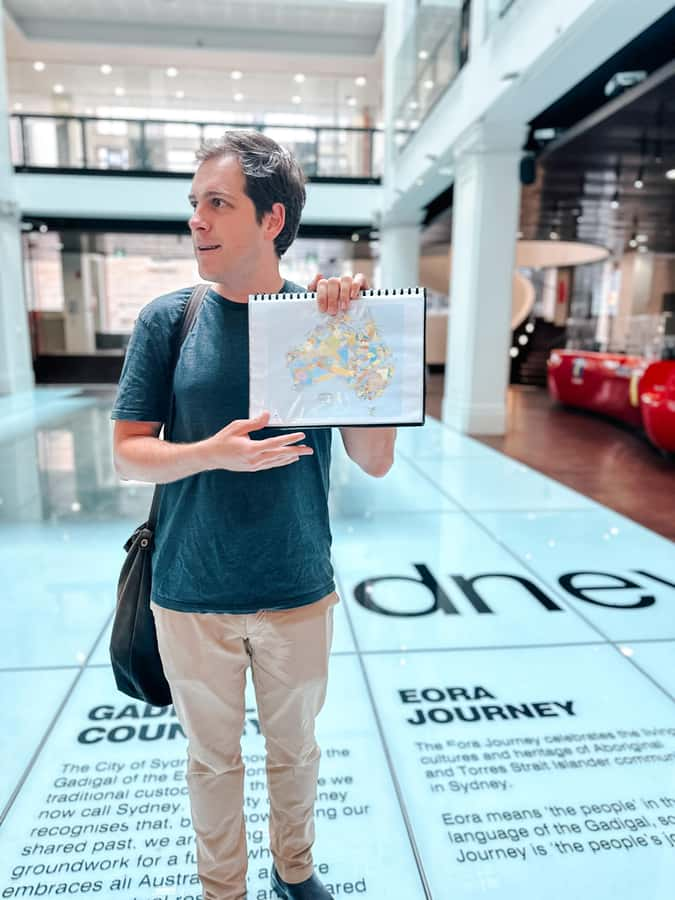
The price is $53 per person. For that amount, you receive a three to three and a half hour guided walk, an Australian snack or biscuit, a craft beer or a nonalcoholic drink, group photos, and a recommendation map.
The drink is not the main reason to book, but it improves the ending. After roughly 4 kilometres, sitting down with a beer, juice, or soft drink and views of the Opera House and Harbour Bridge gives the tour a clear finish rather than simply ending on a pavement.
The map may be the most useful extra. It includes suggestions for food, nightlife, art, and other places that may not appear in a standard guidebook. If you are staying in Sydney for only a few days, this advice can save time and help you choose places near the areas you have just walked through.
The value is strongest if you want both orientation and explanation. If you only want quick photos of the Opera House and bridge, a shorter sightseeing walk may cost less and suit you better. If you want context, local suggestions, and a guide who can respond to questions, the price is reasonable for the length and small group size.
The guide can shape the whole experience
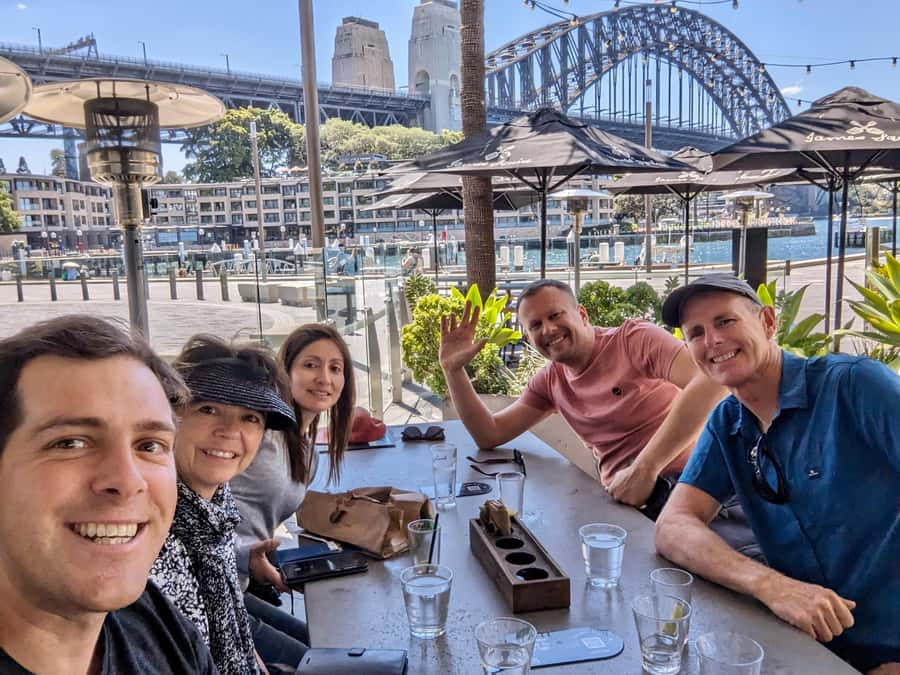
Guide quality matters on a history walk, and the feedback here repeatedly highlights warmth, humour, clear explanations, and enthusiasm. Guides named Steve, Daniel, Matt, Michael, Jake, and Dan have all led this experience at different times.
You cannot choose a particular guide based on the information provided, so book for the route and format rather than a guaranteed personality. Still, the pattern is useful: this tour works best when the guide tells stories instead of reciting dates.
One guide was praised for balancing facts about First Nations people and European settlement with humility. Others were noted for their funny anecdotes, answers to questions, and strong advice on what to do after the walk. Even an Australian visitor found new details about Sydney, which suggests the content is not limited to basic tourist facts.
The small group is important. With a maximum of 12 people, you can hear the guide in a city setting and ask questions without holding up a large crowd. Some departures may be much smaller, but the group size can vary.
Walking comfort, weather, and age limits
You cover about 4 kilometres at a leisurely pace. That is manageable for many people, but it is still a long period of walking with several hours of standing and listening.
Wear comfortable shoes. Bring sunscreen and a reusable water bottle, especially because the route moves through open areas as well as city streets. The experience includes some inclines and uneven surfaces, so avoid treating it as a flat promenade.
The tour is not recommended for children under 12. Three hours of historical stories can be a lot for younger children, even when the guide is lively. Older children and teenagers who enjoy cities and history may find it more suitable, but the operator should be contacted if you need advice.
Mobility needs require advance contact. The route can sometimes be adjusted, but wheelchair users and people with vision impairments are not normally advised to book without discussing arrangements first. Do this before booking, not on the morning of the walk.
The tour runs in English. If you need frequent toilet or coffee stops, ask about that before you reserve. One past participant specifically wanted more breaks during the three and a half hours, so this is worth considering if you prefer a slower sightseeing day.
Who should book this Sydney walking tour
I would choose this tour for a first visit, a short stay, or a return visit when you want more than the usual harbour photographs. It suits adults and older children who like stories, architecture, city planning, and Australian history.
It is also a good choice for Australians visiting from another state. The route covers familiar landmarks but adds details about early Sydney, First Nations culture, colonial leadership, and the city’s changing streets. You do not need to be a history specialist, though you should enjoy listening while walking.
I would be more cautious if you dislike group tours, need lots of free time at each landmark, or have difficulty walking for several hours. The itinerary is full, and most stops are brief. You see many places, but you do not enter every attraction or spend long periods browsing.
Book at least early in your stay if possible. The route gives you a mental map of central Sydney, and the restaurant, bar, art, and nightlife suggestions become more useful when you still have time to act on them. Free cancellation up to 24 hours before the start and a reserve-now, pay-later option also make it easier to fit into a changing schedule.
Should you book it?
Book this tour if you want Sydney explained through its streets, not just photographed from the waterfront. The combination of Customs House, colonial sites, the QVB, Angel Place, The Rocks, and the harbour icons gives you a broad introduction in one morning or afternoon.
The strongest reasons are the small group, the thoughtful treatment of First Nations and colonial history, the guides’ practical local advice, and the pleasant beer or soft drink finish. Skip it if 4 kilometres sounds too much, if you want indoor museum visits, or if you prefer to explore each landmark at your own pace.
For most first-time visitors who can walk comfortably, $53 buys a useful start to Sydney rather than a simple checklist of sights.
FAQ
Where does the Sydney walking tour start?
It starts just outside Customs House in Sydney. Meet on the steps near the small access ramp, on the right-hand side as you face the building.
Where does the tour finish?
The tour finishes at The Squire’s Landing, near the harbour. It does not include transport back to your hotel.
How long does the walking tour last?
The activity lasts about 3 to 3.5 hours, or 210 minutes.
How far do you walk?
You walk approximately 4 kilometres, or 2.5 miles, at a leisurely pace.
What landmarks are included?
The route includes Customs House, the Museum of Sydney, Hyde Park Barracks, Hyde Park, the Queen Victoria Building, the Cenotaph, Angel Place, The Rocks, the Sydney Opera House, and Sydney Harbour Bridge.
Is a drink included?
Yes. You receive a craft beer, soft drink, or juice at the end of the tour at The Squire’s Landing.
Is food included?
You receive one classic Australian snack or biscuit. Lunch is not included.
Is the tour suitable for children?
It is not recommended for children under 12 because it includes about three hours of historical stories and plenty of walking.
Is the tour suitable for wheelchair users?
Wheelchair users are not normally advised to take this tour. The route includes inclines and uneven surfaces, but adjustments may be possible with advance contact before booking.
New routes in Australia
- Welcome to Adelaide Walking Tour★ 5.0 · 119 reviews
- Ultimate Adelaide Walking Tour★ 5.0 · 222 reviews
- Cultural Caper Adelaide Walking Tour★ 5.0 · 122 reviews
- Melbourne: 3-Hour Foodie Discovery Walking Tour★ 4.9 · 313 reviews
- Sydney: Spirits of the Rock and Dark Past Walking Tour★ 4.0 · 144 reviews
- Sydney Cricket Ground (SCG) and Museum Walking Tour★ 4.9 · 616 reviews
- Sydney Convicts, History & The Rocks 2.5-Hour Walking Tour★ 4.9 · 181 reviews
- Best of Uluru – Segway and Walking Tour★ 4.8 · 204 reviews
Sydney Walking Tours, compared.
Sydney Opera House Official Guided Walking Tour
Read our review →
Blue Mountains Tour with Waterfall Walk & Lunch
Read our review →
Sydney Cricket Ground (SCG) and Museum Walking Tour
Read our review →
Sydney Convicts, History & The Rocks 2.5-Hour Walking Tour
Read our review →
Browse the lists this tour appears in