
Review · SOUTH AFRICA
Stellenbosch: Guided Historical Walking Tour
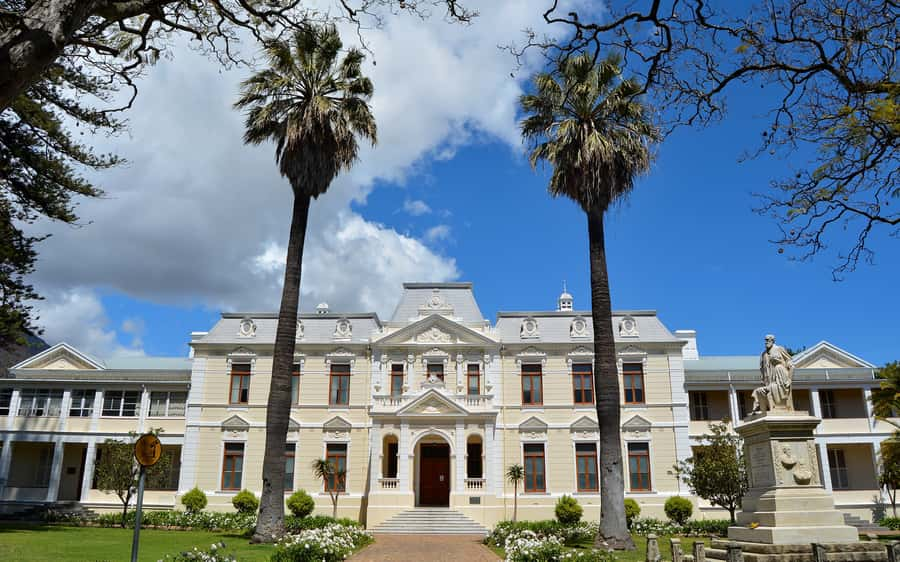
Stellenbosch’s story is written into its oak-lined streets, water furrows, white Cape Dutch buildings, and old village green. This 90-minute walk connects those sights with stories of colonial founders, devastating fires, university life, famous residents, and even a possible ghost near the Moederkerk graveyard.
I like the way the tour gives you a town-sized introduction without eating half your day. I also like the guides’ lively approach: Johan Nepgen is praised for humor and clear storytelling, while Marlene, Juliana, Julietta, and Maureen have each brought their own local detail and warmth to the walk.
The main consideration is that this is a history tour, not a wine tasting or countryside outing. You will stay in central Stellenbosch, and the experience depends on listening as much as walking. Bring comfortable shoes, and allow extra time afterward if you want to explore the shops, cafés, or wine bars yourself.
Key points at a glance
- A 90-minute introduction to Stellenbosch: The route gives you a useful first look at the town without requiring a full-day commitment.
- Oak avenues and water furrows: Shaded streets and the Mill Stream help explain why Stellenbosch feels so distinctive.
- The Braak and Dorp Street: You’ll see the historic village green and walk along what is described as South Africa’s oldest residential street.
- Stories beyond architecture: Expect tales of fires, colonial beginnings, university graduates, colorful residents, and local legends.
- Guides with different strengths: Johan, Marlene, Juliana, Julietta, and Maureen have led recent tours, with a shared focus on clear, friendly storytelling.
- Good value at $18: For a guided look at the town’s past, the price is modest, especially if you are new to Stellenbosch.
Start at 47 Church Street in central Stellenbosch
The tour begins at 47 Church Street, in the center of Stellenbosch. Arrive 15 minutes early so you can find the meeting point without rushing. There is no transport included, so you need to make your own way into town.
That central location makes sense. Stellenbosch is best understood on foot, and the main sights here are close enough to connect through a leisurely walk. You are not spending the tour moving between distant stops in a vehicle. Instead, the streets themselves become the subject.
The format also works well as your first activity in town. You get a broad sense of how Stellenbosch developed, then you can return to the places that catch your interest. A later visit to Dorp Street, The Braak, or the old church district will mean more once you know the stories behind them.
The tour is conducted in English, with a live guide. The activity is listed as wheelchair accessible, though it remains sensible to ask about the exact route if you have particular mobility needs.
More History Walking Tours in South Africa:
- Cape Town: Art, Culture & History Walking Tour
★ 4.9 · 392 reviews - History and Hauntings of Salem Guided Walking Tour
★ 5.0 · 14,564 reviews - Lisbon: History, Stories and Lifestyle Walking Tour
★ 4.8 · 10,902 reviews
The oak avenues make the town’s history feel close
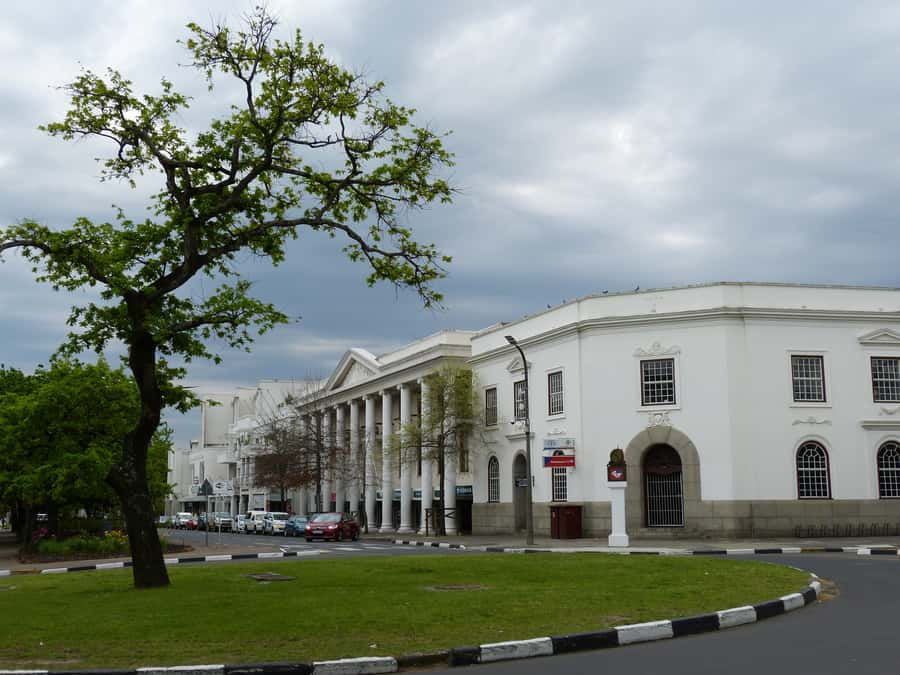
Stellenbosch is often called the village of the oaks, and you will quickly see why. Shady avenues frame the old center, while the water furrows of the Mill Stream run alongside roads and buildings.
These details do more than make a pleasant backdrop. They show how the town was shaped by water, agriculture, shade, and settlement patterns. A guide can point out connections you might miss while wandering alone, especially when the explanation links an ordinary-looking street to the town’s earliest years.
I like this part of the walk because it lets you see history at eye level. You are not standing in front of a single grand monument while reading a plaque. You are looking at a street, a stream, a tree, or a house and learning how it fits into the life of Stellenbosch.
The shade is useful in the Western Cape sun, but do not treat the route as a completely effortless stroll. Comfortable shoes are specifically recommended, and you should be prepared to walk for the full 90 minutes.
The Eerste River explains the town’s beginning
One of the most useful stories concerns Simon van der Stel, the colonial founder associated with Stellenbosch. The tour shows where he set up camp beside the Eerste River and explains how the river received its name.
This gives the town a clear starting point. Instead of hearing a string of dates, you can connect the founding story to an actual place. That is one of the advantages of a local walking guide: geography helps hold the history together.
The explanation also gives you a chance to think about the town’s colonial past rather than treating the old buildings as pretty scenery alone. The guides have been praised for placing Stellenbosch within the broader history of South Africa, including its political and social development.
That wider context matters. A short walk cannot cover every part of the country’s past, but it can show you that Stellenbosch is more than an attractive wine-country stop. It is also a university town, an old settlement, and a place shaped by difficult chapters as well as architectural charm.
The fires changed the town you see today
The town’s old buildings are not simply survivors from one unbroken period. Fires in the 18th century destroyed large sections of early Stellenbosch, and the tour explains how the settlement was rebuilt and altered.
This is one of the most interesting parts of the experience because it adds tension to the polished appearance of the historic center. The architecture may look harmonious today, but that appearance came after repeated loss and rebuilding.
The fire stories also make the streets easier to read. You begin to understand why some buildings, materials, and layouts differ from others. Rather than seeing a collection of unrelated old façades, you get a sense of a town repeatedly adapting to disaster.
If you have already visited Stellenbosch several times, this material can still add something new. One recent visitor who knew the town well found that the tour revealed details and systems they had never noticed. That is a good sign for repeat visitors who want more than a first introduction.
More Guided Walks in South Africa:
- Soweto: Walking Tour with a Local Guide and Lunch
★ 4.9 · 648 reviews - Durban: Local Markets and Culture Guided Walking Tour
★ 4.9 · 89 reviews - Magical London: Harry Potter Guided Walking Tour
★ 4.7 · 22,044 reviews - Amsterdam Anne Frank: Small-Group Walking Tour & Local Guide
★ 4.8 · 12,789 reviews
The Braak offers the clearest historic setting
The Braak, or village green, is one of the central points of the walk. Historic buildings surround it on three sides, giving you a compact view of how the early town was organized.
This is a good place to pause and let the guide tie together architecture, public life, and the town’s growth. The buildings are important, but the open space between them matters just as much. It shows how an old settlement created a shared center for civic and community activity.
The Braak is also a useful photo stop, though the value of the visit is not just visual. The guide’s explanation helps you understand why these buildings were placed here and how the space fits into the larger story of Stellenbosch.
You may find this stop especially useful if you prefer a clear overview before exploring individual museums or historic houses. In a short amount of time, it gives you a framework for the rest of the town.
Dorp Street brings the old residential town into view
Dorp Street is described as the oldest residential street in South Africa. The tour uses it to show a different side of Stellenbosch from the village green.
A public square tells you about shared life. A residential street tells you how people lived, moved, and built their homes. Walking along Dorp Street helps you notice the relationship between houses, gardens, roadways, and the wider town plan.
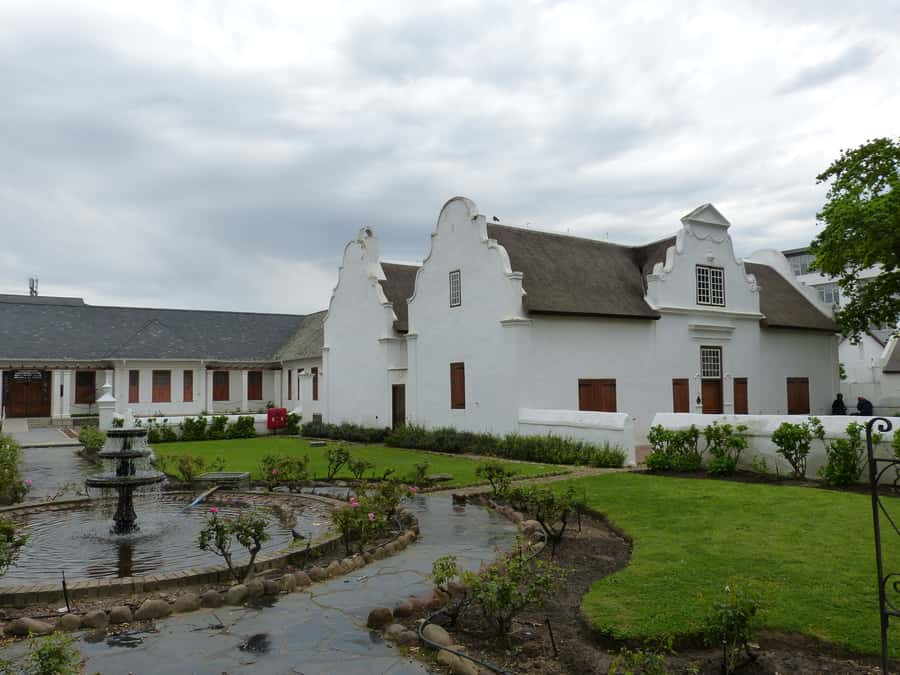
This is also where the Cape Dutch architectural style becomes especially easy to appreciate. You can look at the proportions, façades, and street setting while hearing about the people who once occupied these buildings.
The route does not ask you to admire architecture without context. Stories of colorful inhabitants and changing local life give the buildings human scale. That approach was repeatedly praised by people who found the anecdotes more memorable than a dry list of dates.
Cape Dutch buildings are only part of the story
The tour highlights the harmony of Stellenbosch’s Cape Dutch architecture, but it does not treat the town as a museum frozen in time. The guides also discuss present-day Stellenbosch and the ways its past still affects local identity.
That balance is important. A purely decorative tour might leave you with attractive photographs but little understanding. A purely academic talk could make a short holiday walk feel like a classroom. The best guides on this experience appear to aim between those extremes.
Johan has been described as easy to listen to, humorous, and willing to answer questions in detail. Marlene is praised for a relaxed, well-paced style. Juliana has been noted for responding carefully to questions and pointing out details that ordinary sightseeing can miss.
Your guide will shape the tone. The experience is not presented as a recorded audio route, so expect a personal conversation rather than a fixed script delivered at one speed. Small groups may allow more questions, and some tours have had only a few people or even one guest.
Expect stories of angels, ghosts, and local characters
The route includes more than official dates and famous buildings. You might hear about the Angel Factory, where the story suggests you may meet an angel, or the ghost associated with the graveyard of the Moederkerk.
These touches give the walk some fun. They also help break up the heavier material about colonial settlement, fires, and political history. A good town walk needs both, and the guides seem comfortable moving between serious context and local folklore.
You will also hear about famous graduates of Stellenbosch University, including prime ministers and sportsmen. That detail helps explain the town’s modern character. Stellenbosch is not only an old colonial settlement. It is also a university town with a strong public and sporting identity.
The stories are best enjoyed as part of the overall picture. Do not book this expecting a dedicated ghost tour. The supernatural references are small pieces in a wider history walk.
What the guides do especially well
The strongest feature is the human delivery. The tour has been led by Johan, Marlene, Juliana, Julietta, and Maureen, among others, and each has been praised for making the walk engaging rather than stiff.
Johan’s style appears to suit people who like humor and plenty of background. Several accounts describe him as clear, enthusiastic, and good at answering questions. Marlene is a strong match if you prefer an easy pace and a calm explanation of how the town developed.
Juliana has received praise for her energy, attention to detail, and ability to tailor the walk to the people in front of her. Julietta has been described as pleasant and generous with information. Maureen has been credited with making the story of the fires and the town’s development come alive.
Because guide assignments can change, you cannot guarantee a particular person unless the operator confirms it. Still, the repeated pattern is useful: expect a personal, conversational tour rather than a formal lecture.
Is $18 good value for 90 minutes?
At $18 per person, I consider this a strong-value introduction to central Stellenbosch. You are paying for a professional guide and a focused walking route, not for transport, meals, tastings, or entry to a separate attraction.
That distinction matters. If you want vineyards, cellar visits, or mountain scenery, this is not the right product. You would need a different activity for those experiences. If your goal is to understand the town itself, $18 is modest for 90 minutes of local interpretation.
The value improves if you take the tour early in your stay. You can use the guide’s orientation to choose where to return, which streets deserve more time, and which parts of the old center you might otherwise overlook.
There is no need to rush through the walk to make it worthwhile. The route is short enough to fit before lunch or another activity, and the comments indicate that the pace is easy rather than punishing.
Who should book this Stellenbosch walk?
I would recommend it to first-time visitors who want a clear introduction before exploring alone. It also suits people who enjoy architecture, local stories, university towns, and South African history.
Repeat visitors can benefit too, especially if you have previously seen Stellenbosch only through restaurant visits or wine-country drives. The guide may show you a different side of places you thought you already knew.
Families with older children may appreciate the mix of fires, founders, ghosts, and famous people, though the tour is still history-led rather than designed as a children’s activity. Solo visitors can also benefit from the guide’s conversation, particularly when the group is small.
You should think twice if you dislike walking, want a food-focused experience, or have only enough time for a quick photo stop. The tour’s purpose is to slow down and understand the town.
Booking is flexible, with free cancellation up to 24 hours before the start and a reserve-now, pay-later option. Pets, alcohol, and drugs are not allowed, and you should wear comfortable shoes.
Should you book the guided historical walking tour?
Yes, if you want to understand why Stellenbosch looks and feels the way it does. The oak avenues, Mill Stream, Eerste River, The Braak, Dorp Street, Cape Dutch buildings, old fires, and university stories form a useful map of the town.
I especially recommend it as a first morning activity. You get an efficient 90-minute orientation, plenty of local detail, and a guide who can make the old streets easier to read. At $18, it offers more substance than simply wandering past façades with no context.
Skip it only if your priority is wine tasting, transport into the countryside, or a self-guided visit with no scheduled time. For almost everyone else who wants the story behind Stellenbosch, this is a sensible and well-priced start.
FAQ
How long is the Stellenbosch historical walking tour?
The tour lasts 90 minutes.
How much does the tour cost?
The listed price is $18 per person.
Where does the tour meet?
Meet at 47 Church Street, Stellenbosch Central, Stellenbosch, 7599.
How early should I arrive?
You should arrive 15 minutes before the activity begins.
What language is the tour conducted in?
The live tour is conducted in English.
Is transportation included?
No. Transportation to and from the starting location is not included.
Is the tour wheelchair accessible?
Yes, the activity is listed as wheelchair accessible.
What should I bring, and what is not allowed?
Bring comfortable shoes. Pets, alcohol, and drugs are not allowed.
New routes in South Africa
- Cape Town: Street Art Walking Tour in Woodstock★ 4.8 · 293 reviews
- Johannesburg: City Centre Walking Tour★ 4.8 · 152 reviews
- Durban: Local Markets and Culture Guided Walking Tour★ 4.9 · 89 reviews
- Durban: City Sightseeing and Walking Tour★ 4.6 · 98 reviews
- Cape Town: Private Walking Tour with a Local★ 4.6 · 243 reviews
- Cape Town Walking Tour: Bo-Kaap & City Highlights★ 4.8 · 161 reviews
- Cape Town: Bo-Kapp Walking Tour and Malay Cooking Class★ 4.7 · 105 reviews
- Cape Town: Langa Township Walking Tour★ 4.8 · 272 reviews
South Africa Walking Tours, compared.

Soweto: Walking Tour with a Local Guide and Lunch
Read our review →
Plettenberg Bay: Bungee Jumping with Zipline and Sky Walk
Read our review →


Cape Town: Street Art Walking Tour in Woodstock
Read our review →

Cape Town Walking Tour: Bo-Kaap & City Highlights
Read our review →
Browse the lists this tour appears in